
Step off the train at Umeda or Namba, and the first thing that hits you isn’t the neon glow or the sizzle of takoyaki on a hot griddle. It’s the sound. Osaka has a different frequency, a buzzing, clattering, laughing energy that you can feel in your bones. Walk into a small, family-run restaurant, a hardware store packed to the ceiling with mysteries, or a stall selling impossibly fresh tuna, and you’ll hear it. A gruff, warm, rolling sound from the owner: “Maido!” It’s not the crisp, formal “Irasshaimase!” you’ve been trained to expect in every other part of Japan. It lands differently. It feels like a welcome mat, a knowing nod, a secret shared. And for any foreigner trying to find their footing in this city, the immediate, burning question is: what does that even mean? And, more importantly, can I say it, too? This single word is a key, unlocking the intricate, unwritten social rules that make Osaka tick. It’s a piece of the city’s soul, a sonic signature of its merchant past, and understanding its use is a rite of passage from being a visitor to feeling, even just a little bit, like a local. Navigating the world of ‘Maido’ is your first real lesson in the Osaka mindset, a world away from the careful choreography of Tokyo.
Embracing the local vibe goes hand in hand with discovering how golden week travel surges are reshaping the hotel’s dynamic in Kansai.
The Sound of Commerce: What ‘Maido’ Actually Means
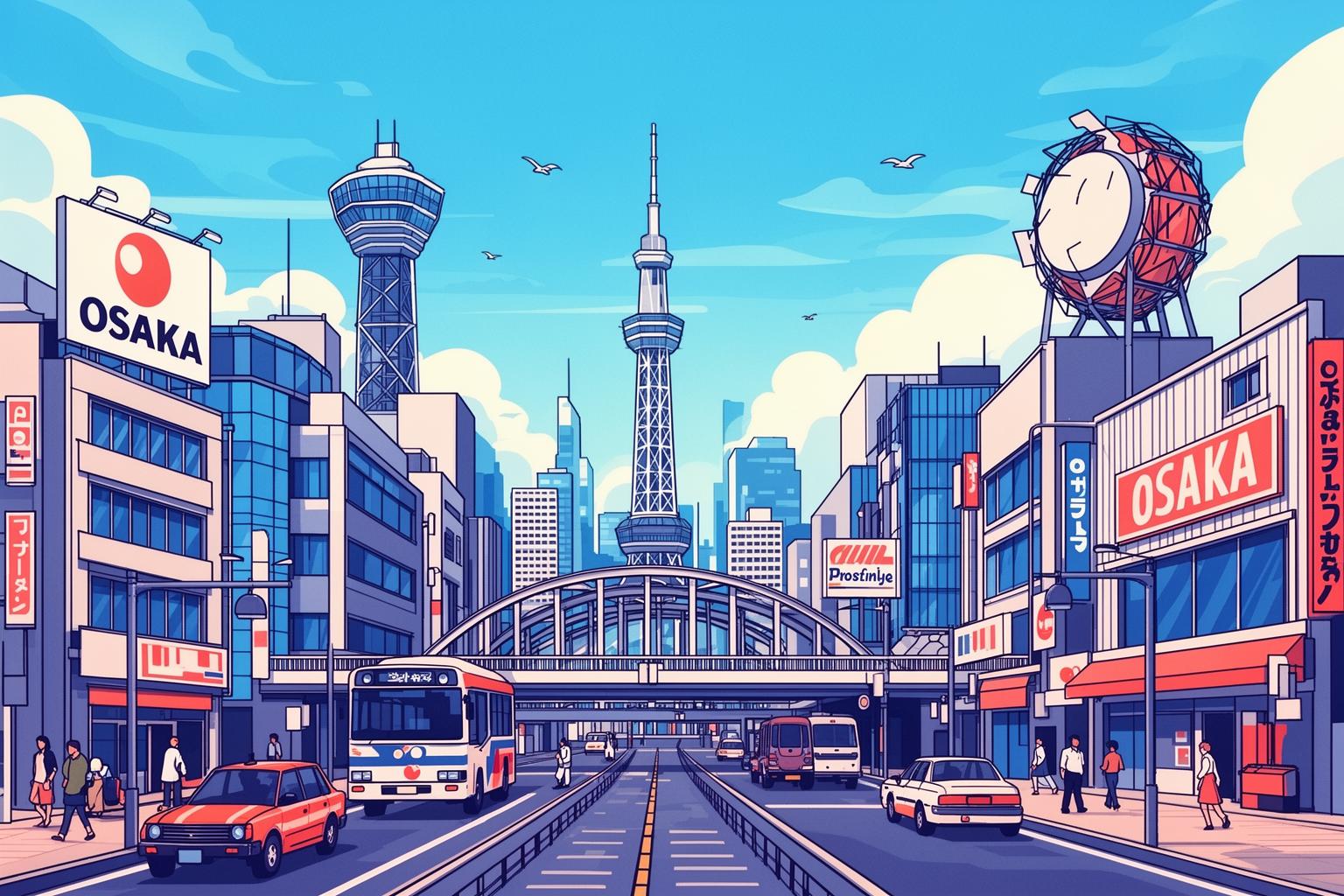
Before you decide whether to use it, you first need to understand what it means. At its core, ‘Maido’ is a classic Osaka shortcut—a linguistic life-hack born from a city that has always prioritized efficiency over elaborate language. It’s a condensed version of the much longer, more formal phrase “maido arigatou gozaimasu,” which roughly means, “Thank you, as always, for your continued patronage.” By reducing it to just two punchy syllables, Osaka merchants crafted a greeting that blends “hello,” “thanks,” and “welcome back” into a single, friendly burst.
More Than Just a Greeting
Unlike the typical “Irasshaimase” (Welcome), which is a one-way announcement to anyone who enters, “Maido” assumes a relationship. It acts as a verbal bridge. When a shopkeeper uses it, they instantly include you in their circle, treating you not as a nameless customer but as a returning character in the story of their business. Even if it’s your first visit, the word suggests you will come back. It’s an optimistic, forward-looking greeting that says, “I see you, I value you, and I look forward to seeing you again.” This subtle linguistic choice shifts the dynamic of the interaction before it even begins. It lowers the barrier between seller and buyer, creating a feeling of shared community and mutual respect. It’s the difference between a formal handshake and a friendly clap on the shoulder.
The Rhythm of the Shoutengai
To truly grasp “Maido,” you need to step away from the polished department stores and sterile chain shops. You have to walk through a local shoutengai, one of Osaka’s covered shopping arcades that serve as the lifeblood of neighborhood life. Imagine yourself in Tenjinbashisuji, Japan’s longest. Here, the air is alive with vendors’ calls. An elderly man selling pickles shouts “Maido!” at a passing cyclist. A woman at a fish stall yells it over the noise of ice being shoveled. The owner of a tiny tea shop, seemingly unchanged since the 1960s, murmurs it with a deep bow to an older customer. This is the soundtrack of local Osaka commerce. It’s constant, rhythmic, and deeply human. “Maido” is the voice of independent business, spoken by those who truly own the ground beneath their feet. It’s a declaration of pride and heartfelt thanks—far removed from the polite but impersonal greetings piped through corporate stores’ speakers.
The Unspoken Rules: Who Gets to Say ‘Maido’?
This is where we reach the core of the matter for every non-Japanese resident. You’ve heard the word, appreciate its warmth, and want to join in. Your natural instinct is to be polite and mirror the language you hear. You enter a shop, the owner says “Maido!” and you think, “I should say it back!” This is a crucial moment. How you handle this simple exchange will immediately reveal your level of cultural understanding. And the unspoken rule, never written on any sign, is overwhelmingly clear.
The Giver: The Shopkeeper’s Prerogative
Rule number one: “Maido” belongs to the provider. It is the shopkeeper’s word. The merchant’s call. The mise no hito (person of the shop) is the one who says it. When the owner of an okonomiyaki joint greets you with a hearty “Maido,” he’s doing more than just welcoming you. He’s identifying himself. He’s saying, “This is my place. I am the host. I am the one providing this service, and I thank you for choosing my establishment.” It’s a statement of his role. This tradition is deeply rooted in the city’s identity. Osaka rose to prominence as the “nation’s kitchen,” a city of akindo (merchants) who built a culture on trade, negotiation, and straightforward relationships. “Maido” is a direct descendant of that heritage. It’s a word carrying the weight of centuries of commerce, a verbal badge of honor for the person behind the counter. For a customer to use it is to unknowingly assume that role, creating a moment of social confusion.
The Receiver: The Customer’s Role
So, what is your role? As the customer, the receiver of this warm greeting, your responsibility is simple: to accept it graciously. Responding with “Maido” right back is, frankly, strange. It’s like someone welcoming you into their home and you replying, “Welcome to your home!” It disrupts the fundamental flow of the social contract. You are the guest. You are the patron. Your role is to be the appreciated customer. The correct response is not to mirror, but to complement. A simple, friendly nod and smile often make the best and most natural reaction. It’s a non-verbal acknowledgment that you have received their welcome. If you want to use words, a light “doumo” (thanks) works well. A standard “konnichiwa” is also perfectly fine. You are responding in your role as the customer, completing the social circuit properly. Think of it like a call and response. The shopkeeper calls out with “Maido!” and you respond with a gesture or word of acknowledgment. It’s a simple, elegant exchange, and your part is to be the graceful partner, not the one who leads.
The Grey Areas and The Exceptions
Certainly, this is Japan, a land rich in subtlety, and Osaka stands out as its hub of rule-bending. While the main guideline is that customers shouldn’t say “Maido,” there are exceptions and nuanced variations, as with anything. These represent the advanced levels, social contexts that demand a deeper understanding of the situation and the relationship involved. Approach this area cautiously, as diving in without the necessary experience can backfire, making you appear more awkward rather than more integrated.
When You Become a ‘Jouren-san’ (A Regular)
This is the most notable exception. A jouren-san is more than just a customer; they are a regular, an established part of the place. You become a jouren-san after frequenting the same small curry shop every Tuesday for a year. When the local bar owner starts pouring your favorite drink the instant you arrive. When the woman at the fruit stall knows exactly how you prefer your apples. After earning this status through time and loyalty, the relationship changes. It becomes less transactional and more personal. In this setting, the rules about “Maido” can become more flexible. For example, as you leave the establishment, you might say warmly, “Maido, o-kini!” meaning, “Thanks, as always!” Here, you use “Maido” to enhance your gratitude, reflecting the established, ongoing nature of your connection. This is a subtle yet important distinction. You’re not using it as an entry greeting; rather, you’re incorporating it into a farewell, reinforcing your position as a valued regular. This is a privilege earned over time, not a default behavior.
Business-to-Business ‘Maido’
Another important exception is found in business-to-business dealings. If you watch a delivery driver drop off a crate of beer at a local izakaya, you might hear a rapid exchange of “Maido, maido!” between the driver and the owner. In this setting, both individuals are service providers. They are equals within the commercial world. The greeting serves as a mutual acknowledgment of their ongoing business relationship. It’s the sound of the city’s economic system in action. As a resident buying dinner or a few beers, you’re outside this particular circle. This context highlights that “Maido” is primarily a professional term, used by those directly engaged in the exchange of goods and services.
What ‘Maido’ Tells You About Osaka vs. Tokyo
The contrast between Osaka’s “Maido” and Tokyo’s near-universal “Irasshaimase” stands as one of the clearest illustrations of the profound cultural differences between Japan’s two largest cities. It’s not merely a different word; it embodies a distinct philosophy of interaction, service, and social distance. Grasping this difference is essential to understanding the character of each city.
Directness Over Formality
Tokyo often follows the principle of tatemae, the outward display of politeness and strict adherence to social norms. “Irasshaimase” perfectly embodies this: it’s impeccably polite, universally recognized, and establishes a clear, professional boundary between staff and customers. It keeps interactions smooth, predictable, and comfortably impersonal. Osaka’s “Maido,” by contrast, embraces honne, the expression of genuine feelings and intentions. It’s a direct, personal, and informal greeting meant to bridge social distance rather than maintain it. It breaks through formality to foster a human connection, reflecting a culture that prioritizes efficiency and sincere rapport over pristine yet detached etiquette.
Relationship-Based Society
This single word choice reveals a fundamental truth: Osaka is rooted in relationships. Being a regular customer, or jouren-san, holds genuine social value here. The service you receive often depends on the personal bond you share with the provider. In Tokyo, you can expect flawless, standardized service almost anywhere, whether it’s your first visit or your hundredth. It’s professional but can sometimes feel impersonal. In Osaka, the best experiences tend to develop over time. The obachan at the corner store, whose “Maido!” grows warmer with each visit, might start slipping you an extra croquette for free. The bartender you chat with weekly may introduce you to other regulars, weaving you into the neighborhood’s social fabric. This is why “Maido” exists—it serves as the gateway to that relationship-based world.
Your Practical ‘Maido’ Field Guide
So, let’s distill everything into a straightforward, practical guide for everyday life. How do you navigate your sonic surroundings and respond confidently? It all comes down to context. Knowing where you’ll hear it and how to react is the last piece of the puzzle.
Where You’ll Hear It
Keep your ears tuned to the places that form the heart of neighborhood life. You’ll hear “Maido” ringing through the covered shoutengai arcades, bouncing off the walls of cozy family-run eateries, and coming from behind the counters of independent shops like butchers, fishmongers, and tofu vendors. It’s the hallmark sound of the small-scale entrepreneur, the places with a familiar face and name behind their products.
Where You Won’t Hear It
On the flip side, you’re unlikely to hear “Maido” in the city’s more corporate or standardized settings. The staff at the huge department stores in Umeda, the impeccably dressed employees at upscale boutiques, and the part-time workers at national chain stores and convenience stores—all greet customers with a polished “Irasshaimase.” Their training manuals are produced in Tokyo, both figuratively and often literally. The absence of “Maido” in these places is as telling as its presence elsewhere.
How to Respond Like a Local
When greeted with that warm, inviting “Maido!”, you now have several fitting responses to help you come across as a seasoned local rather than a puzzled visitor.
- The Nod and Smile: This is the gold standard. It’s universal, polite, and impossible to mess up. It communicates that you heard them and appreciate the greeting.
- The “Doumo”: This versatile, casual word for “thanks” makes a perfect verbal reply. It’s brief, respectful, and matches the informal tone seamlessly.
- The Standard Greeting: Offering a simple “Konnichiwa” (during the day) or “Kombanwa” (in the evening) is also perfectly fine. You’re just returning the greeting with one of your own.
And the golden rule, above all else: don’t respond by saying “Maido” back. Your role isn’t to imitate the shopkeeper; it’s to embrace your position as the valued customer—the very reason they said it to you. Enjoy the warmth of the greeting. It’s one of Osaka’s most charming and distinctive traits.
Ultimately, “Maido” is much more than just another word in Japanese. It’s a cultural key. It offers a glimpse into the merchant spirit of Osaka, a city that values human connection, straightforward warmth, and lasting relationships. Knowing when to use it—and more importantly, when not to—is a sign of genuine respect for local culture. It shows you’re not merely living in Osaka; you’re truly listening to it. So next time you step into a small shop and that heartfelt greeting washes over you, just return it with a smile and a nod. In that simple exchange, you’re taking part in a tradition that has united this city for centuries. You’re no longer just a stranger; you’ve become part of the community.