Moving to a new city is a numbers game. You’re juggling rent, security deposits, key money, and the sudden shock of your first utility bill. In Osaka, a city famous for its financial prudence and no-nonsense approach to life, locals have long mastered a strategy that sidesteps some of these costs. It’s a solution that’s hiding in plain sight, steaming behind the traditional ‘noren’ curtains of nearly every neighborhood: the public bath, or ‘sentō’. Foreigners often see the sentō as a cultural curiosity, a one-time experience to check off a list. But for many Osakans, it’s not a novelty; it’s a core component of a savvy financial strategy. It’s the ‘Sentō Economy,’ a way of life that outsources your bathing needs to the community, and in doing so, unlocks significant savings on both housing and monthly bills. This isn’t about romanticizing the past. It’s a practical, modern-day life hack rooted in the city’s collective mindset that values efficiency, community, and getting the most bang for your yen. Forget what you think you know about public baths. Let’s talk about how they can make your life in Osaka more affordable, more connected, and frankly, a whole lot better.
This practical, community-oriented approach to daily life is a hallmark of the city’s character, much like the distinct atmosphere you’ll find when comparing the subway manners on Osaka’s Midosuji Line to Tokyo’s Yamanote Line.
The Hidden Costs of Your Private Bathroom
When you sign a lease for a new apartment in Japan, the bathroom may appear to be a standard feature. However, that private bathtub comes with a series of costs that aren’t immediately apparent. In a city where every square meter and every yen matters, understanding these hidden expenses is the first step to appreciating the elegant logic behind the sentō economy.
The Gas Bill Challenge
Japanese apartments are known for their deep, luxurious bathtubs, or ‘ofuro’. They’re designed for a full-body soak, a cultural ritual that offers great comfort, especially during cold, damp winters. The downside? Heating that much water significantly increases your gas bill. Most modern apartments have control panels to set the water temperature and volume, but filling a tub to a comfortable 42°C (107°F) every evening adds up quickly. Then there’s the ‘oidaki’ function—the reheating feature. If one person bathes and another wants to use the water later, you simply press a button, and the system reheats the water. It’s convenient, but it also adds more to the gas meter. In January or February, it’s not unusual for a household that enjoys daily baths to see their gas bill double or even triple compared to summer months. It’s a quiet budget drain that sneaks up on you, one relaxing soak at a time.
The Water Factor
Water is cheaper than gas, but it’s not free. A standard Japanese bathtub holds around 200 liters (about 53 gallons) of water. Filling it daily will be reflected in your bi-monthly water bill. While quick showers are more economical, the cultural draw of the ofuro is strong. Many people feel they haven’t fully washed away the day’s stress until they’ve had a proper soak. This daily ritual, though mentally rewarding, represents a significant and steady outflow of both water and money.
The Initial Impact: How a Bathtub Raises Your Rent
This is the most important, and often overlooked, part of the financial equation. In Osaka‘s highly competitive rental market, amenities drive the price. An apartment with a separate, modern bathroom featuring a deep tub and reheating functions commands noticeably higher rent than one with a simpler layout. Many older or smaller apartments have what’s called a ‘unit bath’—a prefabricated module with a toilet, sink, and a small, often cramped shower/tub combo. Some, especially in older buildings popular with students or singles, may only have a shower stall.
Opting for an apartment without a tub or with a basic unit bath can save you anywhere between ¥5,000 and ¥15,000 per month on rent. Over a year, that adds up to ¥60,000 to ¥180,000 in savings. This is the core of the sentō economy. By choosing not to have a premium bathing experience inside your own apartment, you fundamentally reduce your largest monthly expense: your housing.
Deconstructing the Sentō Price Tag: Is It Really Cheaper?
At first glance, the economics might appear counterintuitive. Currently, the standard adult price for a sentō in Osaka is regulated by the prefectural government, hovering around ¥520. If you attended every single day, you would spend more than ¥15,000 monthly. Compared to the few thousand yen in direct utility costs for bathing at home, the sentō seems like a luxury. However, this is a classic example of misunderstanding the value proposition. The true financial advantage of the sentō lifestyle is found in a hybrid approach combined with a significant reduction in rent.
The Hybrid Model: Your Path to Savings
Very few people, even the most enthusiastic sentō fans, go daily. The common method is a hybrid model. You opt for a cheaper, shower-only apartment, saving roughly ¥10,000 on rent each month. You use your shower for quick and practical rinses on busy workdays. Then, three or four times weekly—say, Wednesday, Friday, and Sunday—you indulge in the full sentō experience. Let’s examine the numbers for this more realistic scenario.
Scenario A: Apartment with a Full Bath
- Monthly Rent: ¥70,000
- Estimated Gas & Water for Daily Baths: ¥5,000
- Monthly Total: ¥75,000
Scenario B: ‘Sentō Economy’ Apartment
- Monthly Rent (shower only): ¥60,000
- Sentō Visits (15 times a month @ ¥520): ¥7,800
- Estimated Gas & Water for quick home showers: ¥1,500
- Monthly Total: ¥69,300
In this practical comparison, you save over ¥5,000 a month. Annually, that adds up to more than ¥60,000 back in your pocket. Yet, the financial benefits don’t end there. The ¥520 admission fee offers far more than just a hot bath.
Beyond a Bath: The ‘Plus Alpha’ Value
Your home bathroom has a single tub. A quality sentō features a variety of wellness amenities included in the basic price.
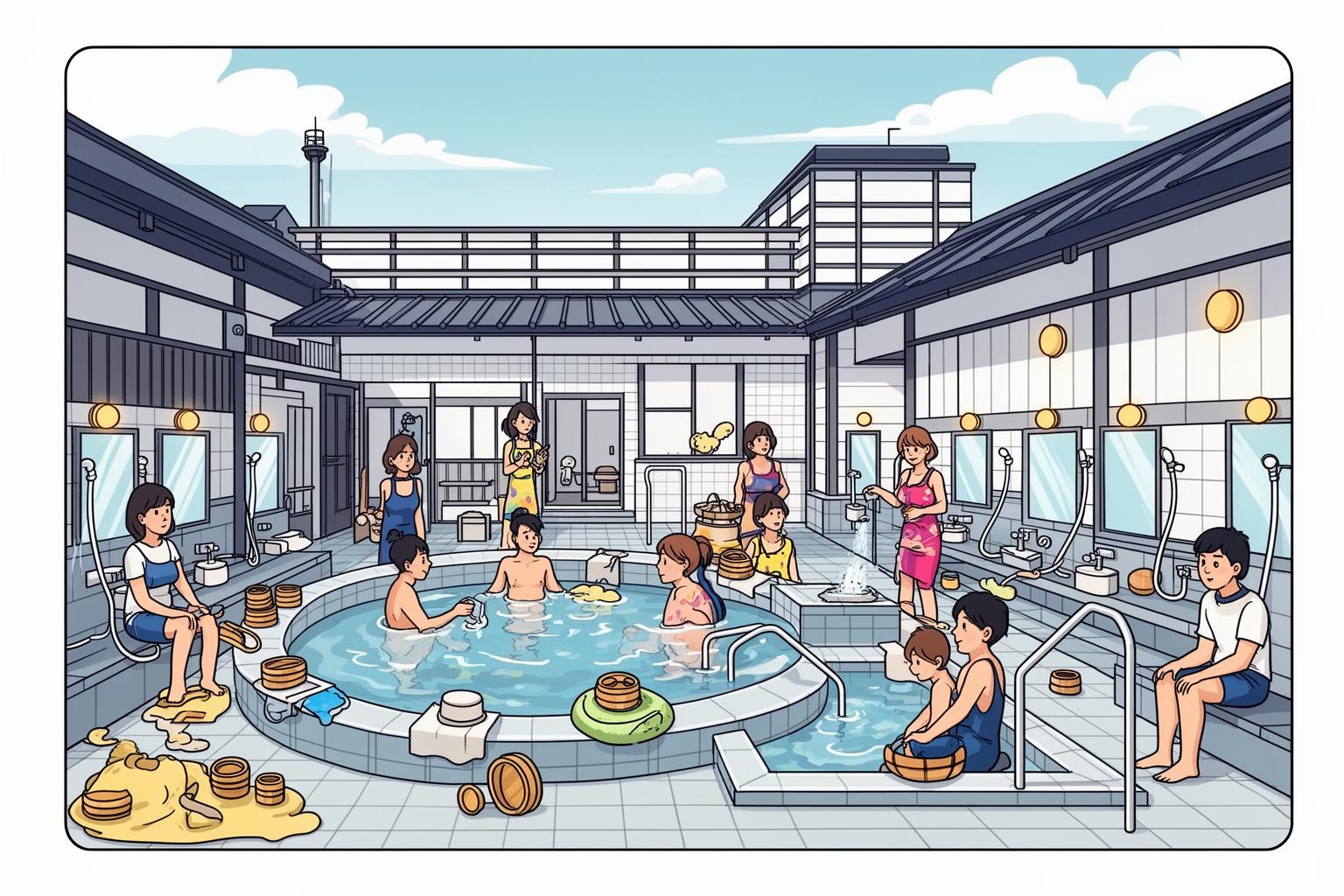
- Variety of Baths: Many have multiple pools—a large main hot bath, a jet-massage bath (`denki buro`) to soothe muscles, a daily or weekly herbal bath, and sometimes even an outdoor bath (`rotenburo`).
- Sauna and Cold Plunge: Most sentō include a dry sauna. The tradition of sweating out toxins followed by a plunge into an icy cold bath (`mizuburo`) is central to Japanese bathing culture and is believed to boost circulation and overall health. Access to a sauna alone would cost a fortune at a private gym.
- Unlimited Hot Water: You can shower as long as you like without worrying about the gas meter. Water pressure is almost always excellent.
- Zero Maintenance: No scrubbing mold off tile grout, no purchasing harsh cleaning chemicals, no plumbing worries. The sentō is professionally maintained for you.
When you consider these wellness advantages, the value of that ¥520 ticket soars. You’re not simply paying to get clean; you’re paying for access to a mini-spa, a place of deep relaxation your tiny apartment bathroom could never achieve.
The Sentō as a Social Hub: Osaka’s ‘Third Place’
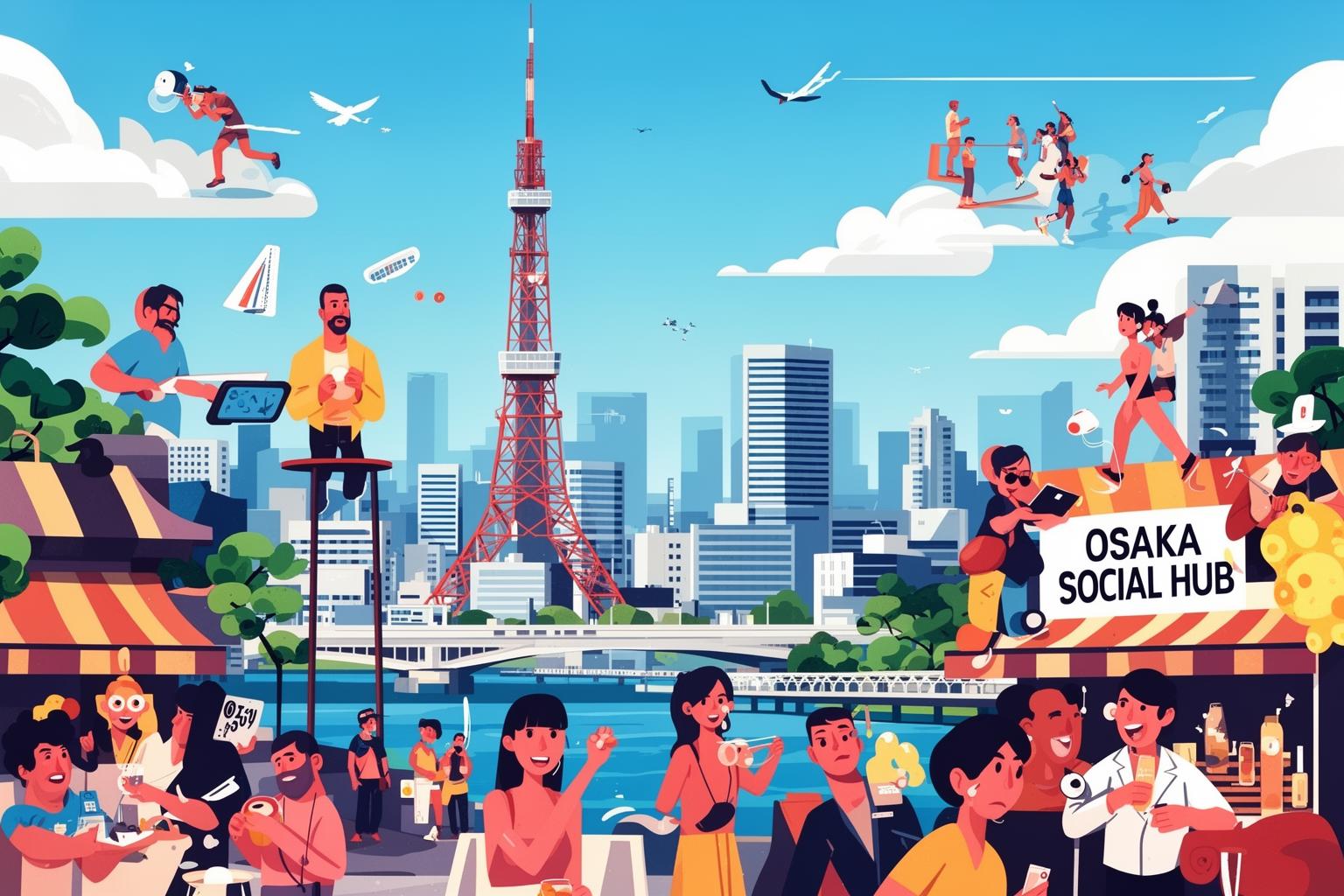
This is where Osaka’s character truly stands out, setting it apart from Tokyo’s more reserved atmosphere. The sentō is more than just a place to wash; it serves as the neighborhood’s living room. It’s a quintessential “third place”—a social environment distinct from the two usual spheres of home and work. While Tokyo certainly boasts beautiful, historic sentō, they often feel like carefully curated, retro exhibits. In many of Osaka’s dense, working-class neighborhoods—such as Nishinari, Taisho, or parts of the eastern city—the sentō remains a raw, vibrant, living part of the daily social fabric.
A Community Unclothed
There’s a saying that at the sentō, everyone is equal (`hadaka no tsukiai`, or “naked communion”). Stripped of the uniforms, suits, and brand names that define us elsewhere, people are simply people. This creates a uniquely open social space. In Osaka, a city that values directness and humor, this space buzzes with lively chatter. You’ll hear old men loudly debating the latest Hanshin Tigers game, neighbors exchanging recipes or grumbling about the weather, and parents teaching their children the proper way to wash. It’s a place of casual intimacy that’s becoming increasingly rare in modern urban life.
This is the practical reality behind the cliché that “Osaka people are friendly.” It’s not an abstract trait; it’s a warmth born from shared spaces and everyday, low-pressure interactions. Unlike the polite but often distant atmosphere you might experience in Tokyo, the Osaka sentō invites engagement. Don’t be surprised if an elderly woman corrects your washing technique or a man in the sauna strikes up a conversation about where you’re from. It’s not intrusive; it’s inclusive. It’s the neighborhood checking in, making sure you’re part of the community.
This strong sense of local belonging, or `gotokinjo`, is a defining element of Osaka life. People feel connected to their immediate area, and institutions like the sentō are the glue that holds it together. By becoming a regular, you’re no longer just an anonymous foreigner in a concrete apartment block; you become the person from down the street, a familiar face, part of the local ecosystem.
How to Integrate the Sentō into Your Daily Osaka Life
Adopting the sentō lifestyle is simpler than you might expect. It’s a straightforward routine that soon becomes a treasured ritual. Here’s an easy guide to help you get started.
Finding Your Local Spot
Begin by exploring your neighborhood on foot. Look for the distinctive temple-like roofline (`karahafu`) typical of many older sentō, or more commonly, a tall smokestack. The universal symbol for a bathhouse is the kanji `湯` (yu, meaning hot water) or the hiragana `ゆ`. You’ll spot these on signs and on the `noren` curtains at the entrance. Naturally, a quick search for 「銭湯」 on Google Maps will reveal all the nearby options.
Assembling Your Sentō Kit
Although you can usually rent or purchase what you need on site, regular visitors bring their own kit in a small plastic basket or waterproof bag. Essential items include:
- A Small Towel: This serves as both your washcloth and modesty cover—what you see people carrying around inside the bathing area.
- A Large Towel: Used for drying off completely in the changing room after your bath. It should never enter the wet area.
- Soap, Shampoo, and Conditioner: Bring your preferred products in travel-sized containers. While many places offer inexpensive body soap and “rinse-in-shampoo,” the quality is often subpar.
- Some Coins: Keep ¥100 coins handy for the shoe locker, your main locker, and perhaps for the hair dryer or massage chair afterward.
Etiquette 101: The Unspoken Rules
Don’t worry about breaking rules. The etiquette is straightforward and sensible.
- Shoes Off: Leave your shoes in the locker at the entrance.
- Pay Up: Pay the fee at the front desk, known as the `bandai`. You’ll then be directed to the men’s (`男`) or women’s (`女`) side.
- Get Undressed: In the changing room (`datsuijo`), find an empty locker for your clothes and belongings.
- Wash First: This is the most crucial rule. Before stepping into a tub, take your small towel and soap to the shower area. Sit on one of the plastic stools and thoroughly wash your entire body. Rinse off all soap completely.
- Soak, Don’t Swim: The tubs are meant for soaking and relaxing—not swimming or splashing. Keep your small towel out of the bath water; most people fold it and place it on their head or at the side of the tub.
- Dry Off Before Returning: After you finish, use your small towel to remove as much water as possible before returning to the changing room. This helps keep the floor clean and dry.
The Post-Bath Ritual
The experience doesn’t end once you’re dry. The lobby is a key social space. Grab a classic post-bath drink from the vintage vending machines or coolers—coffee milk, fruit milk, or a cold bottle of Ramune are traditional favorites. Many regulars prefer a cold beer. Find a bench, watch a sumo or baseball game on the lobby TV, and unwind. Here, conversations from the bath continue, and the sense of community grows stronger.
Beyond the Balance Sheet: The Unspoken Value of the Public Bath
While the economic case for the sentō is strong, its real value goes beyond money. It serves as a powerful remedy to some of the stresses of modern urban life.
A Needed Disconnect
Your apartment doubles as your office, dining area, and entertainment hub, making it difficult to mentally disengage. Physically leaving your home to visit the sentō establishes a clear boundary. For the hour spent there, you disconnect completely. No phones, no laptops, no distractions—just steam, water, and the gentle sounds of the neighborhood. This enforced mindfulness is deeply restorative. The bath ritual not only cleanses the physical dirt of the city but also clears the mental clutter accumulated throughout the day.
Physical and Mental Health
The health benefits of a proper soak are well-recognized. It soothes muscles, enhances blood flow, and encourages better sleep. The intense heat of a sauna followed by a cold plunge acts as a form of stress-testing for your body, leaving you feeling refreshed and mentally sharp. In a lifestyle often dominated by sitting and screens, the sentō offers a profoundly physical, grounding experience. It helps you reconnect with your body.
Becoming a Local, Not Just a Resident
Perhaps the greatest advantage is the deep sense of belonging it fosters. When you visit the sentō, you engage with the rhythm of your neighborhood. You recognize familiar faces, learn local customs, and become part of the community. You move beyond being a mere observer; you become an active participant in city life. This is how you truly come to know Osaka—not through its famous castles or glowing neon landmarks, but through the simple, shared daily rituals that shape its essence.
A Final Word from the Tub
The sentō beautifully encapsulates Osaka’s core philosophy: pragmatic, communal, and profoundly human. It raises a simple, elegant question: why should everyone bear the cost and space for a private, premium bathtub when we can collectively share a far superior version and save money together? It rejects isolated, hyper-individualistic living in favor of a more connected and efficient way of life.
For any foreigner aiming to build a sustainable and meaningful life in this city, embracing the sentō economy is more than a financial choice. It’s a cultural commitment and a step toward truly understanding the city’s spirit. So find your local `yu`, bring a small towel, and go take a bath. You’re not just cutting costs on rent; you’re investing in a richer, more authentic Osaka experience.