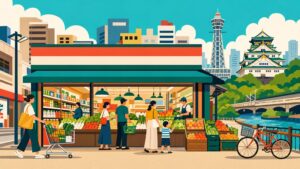
Landing in Osaka feels like plugging directly into an electrical socket. The city hums with a raw, unfiltered energy that’s worlds away from Tokyo’s polished composure. That energy powers everything, right down to the way people buy their groceries. My first trip to a local supaa—a neighborhood supermarket—was a lesson in humility. The aisles looked familiar, a comforting landscape of produce and packaged goods. But a closer look revealed a minefield of unfamiliar characters and hidden ingredients. For someone navigating a plant-based diet, every label was a puzzle. For my friends seeking Halal options, it was a near-impossible quest. You quickly learn that being the “Kitchen of Japan” doesn’t mean Osaka readily caters to every global palate right out of the box. It means the city has a deep, intricate, and intensely local food culture you have to learn to navigate. It’s a system built on relationships, neighborhood knowledge, and a shared love for a good bargain, and cracking its code is your first real step to living, not just staying, in this city. Forget the sprawling international markets of Tokyo for a moment; Osaka’s secrets are tucked away in plain sight, in the bustling corridors of a shotengai or the chaotic shelves of a discount mart. Your culinary survival depends less on finding a dedicated store and more on understanding the local rhythm.
Understanding the local pace means that, while decoding grocery aisles is crucial, exploring monthly bicycle parking fees in Osaka offers another window into the city’s intricate everyday costs.
The Supaa Spectrum: From Mega-Marts to Neighborhood Haunts

Your daily grocery shopping in Osaka will probably center around a local supermarket, or supaa. These range from the multi-level Life or Aeon, bright under fluorescent lighting, to the smaller and more chaotic Mandai or the iconic Gyomu Super. Each has its own character, but all share a common challenge for those with dietary restrictions: the dilemma of hidden ingredients. Japan’s food labeling is accurate, but it assumes a basic knowledge you likely don’t possess. This is where the real effort starts, transforming you from a passive shopper into a grocery detective.
Reading Between the Aisles: Cracking the Code
The first hurdle is the language. Your phone’s camera translation app will become your best ally, hovering over ingredient lists like a digital magnifier. But technology can be imperfect and occasionally inaccurate. Your next move is to learn the kanji of your culinary adversaries. For plant-based eaters, the main ones are 動物性 (dōbutsu-sei, animal-derived), 豚 (buta, pork), 牛 (gyū, beef), 鶏 (tori, chicken), 魚 (sakana, fish), 乳 (nyū, dairy), and 卵 (tamago, egg). You’ll be surprised where they turn up. That seemingly innocent loaf of bread? It might contain lard (ラード) or dairy. That savory snack? Almost certainly flavored with bonito flakes (katsuobushi) or some other fish-based dashi. This isn’t an attempt to deceive foreigners; rather, it reflects a culinary tradition where these ingredients are foundational to flavor. For Halal diets, the challenge is even tougher, as pork-derived gelatin (ゼラチン) and non-Halal meat extracts are widespread. You have to scrutinize everything, from sauces and soups to candies and desserts. The key is to find trusted brands and stick to them. Over time, you’ll build a mental map of “safe” products, a hard-earned knowledge that feels like a superpower.
Gyomu Super: The Budget-Conscious Global Pantry
Then there’s Gyomu Super. This place is an institution, offering a direct glimpse into the pragmatic heart of Osaka. The name means “Business Supermarket,” and it lives up to that image—large, no-frills, concrete floors, and products stacked high to the ceiling. Originally designed for restaurant owners, it has won over the general public, especially families and foreigners. Why? Because it’s meccha yasui—insanely cheap. This resonates deeply with the Osakan love of a good bargain. People here value cost-effectiveness and care less about polished presentation. Gyomu is the physical embodiment of that mindset. For those with dietary needs, it’s a lifeline. You’ll find massive one-kilogram bags of frozen spinach, broccoli, and edamame. Giant jars of chickpeas, cans of coconut milk, and spices from around the world are available at a fraction of the price you’d pay elsewhere. Most importantly, Gyomu Super has an expanding selection of imported goods, which sometimes includes certified Halal chicken or other products. It’s a treasure hunt every visit, and often the only place where you can get certain staples without overspending. It’s not a specialty store, but its wholesale, international focus makes it an unexpected ally in your dietary journey.
Shotengai Wisdom: The Soul of Osaka’s Kitchen
If the supaa serves as the functional brain of Osaka’s food supply, then the shotengai is its beating heart. These covered shopping arcades act as the true nerve centers of Osaka’s neighborhoods—vibrant arteries of commerce and community that evoke a sense of a bygone era. While Tokyo has its share, they often come across as either overly commercialized or charmingly preserved. In Osaka, shotengai are raw, living ecosystems: loud, crowded, and unapologetically local. Here, you move beyond simply buying food to building relationships, which is the secret to truly unlocking the city’s pantry.
More Than Just a Market: The Community Hub
A stroll through a shotengai like Tenjinbashisuji—the longest in Japan—is a full sensory experience. The air is thick with the aromas of grilled eel, fried croquettes, and fresh daikon. Shopkeepers call out greetings and daily specials (irasshaimase! kyou no osusume ya de!). Bicycles weave through shoppers, and the murmur of the Osakan dialect creates a constant, rhythmic backdrop. This isn’t a place for quiet, anonymous shopping; it’s a performance, a daily ritual. You don’t just buy things—you engage. Here, the stereotype of the “friendly Osakan” becomes a practical reality. People are direct, curious, and often remarkably helpful, especially if you show some effort and interest yourself.
The Tofu Master and the Pickle Lady: Your Plant-Based Allies
For those following a plant-based diet, the shotengai is a paradise. You skip the confusing supermarket labels and go straight to the source. Locate the local tofu-ya, usually a small, steamy shop where a family has crafted tofu for generations. You can buy silky smooth kinugoshi tofu for soups, firm momendōfu for stir-fries, and deep-fried aburaage pockets for stuffing with rice. They’ll also offer atsuage (thick fried tofu), ganmodoki (tofu fritters with vegetables), and fresh soy milk (tōnyū). You can point and ask questions—there are no hidden ingredients here; it’s just soybeans, water, and skill. The same applies to the yaoya, the local greengrocer, where produce is often fresher, more seasonal, and cheaper than supermarket plastic-wrapped goods. The shopkeeper can tell you what’s currently in shun (season), which means it’s at its tastiest and most affordable. Building a rapport with these vendors is invaluable. Before long, the pickle lady (tsukemono-ya) will know you avoid bonito flakes and will guide you to vegan options. The rice cracker maker (osenbei-ya) will confirm which crackers are free from shrimp or animal-based flavorings. These small interactions weave you into the neighborhood’s fabric.
Sourcing Halal: A Treasure Hunt with a Human Touch
Finding Halal meat in a traditional shotengai is admittedly much more difficult, as the local butcher (niku-ya) almost certainly won’t carry it. But the shotengai offers a different kind of resource: information. This is where the Osakan network effect shines. Osakans are conversational and well-connected. Ask the butcher. They might not know immediately but could call over to the fishmonger, who might recall a customer with the same question just last week. Though it can feel daunting, this human-powered search engine is surprisingly effective. It often leads to small, specialized Halal grocery stores and butchers scattered around the city, typically located in areas with larger Muslim communities. These places aren’t advertised on billboards; their existence spreads through word-of-mouth and the very community networks fostered within shotengai. It’s a hunt—with a human touch—far removed from a sterile Google search.
The Unspoken Rules of Osaka Grocery Shopping

Navigating the what and where of shopping is only part of the challenge. You also need to grasp the how. Osaka’s daily commerce moves to a distinct rhythm, governed by unspoken rules rooted in the city’s core values of efficiency, pragmatism, and value for money.
It’s Not Rude, It’s Efficient: The Checkout Dance
The checkout line at an Osaka supermarket during peak hours is a showcase of social efficiency. There’s a tangible sense of forward motion. As soon as the person ahead of you finishes, you’re expected to place your basket on the counter, have your payment method ready, and open your bags. The cashier scans items at lightning speed. While this happens, you begin bagging your own groceries. There’s no idle conversation, no lingering. The aim is to clear the way for the next customer as quickly as possible. To newcomers, this might seem abrupt or even rude, but it isn’t. It reflects the sekkachi (impatient, hurried) nature of Osakans. It’s a collective, silent agreement to avoid wasting anyone’s time. This practical courtesy is expressed through speed and preparedness.
The Art of the Bargain: Knowing When and How
Osakans take pride in their financial savvy. The phrase “nambo?” (“how much?”) is practically a mantra. Though haggling isn’t allowed in supermarkets, you can still engage in the city-wide passion for finding a bargain. The ultimate symbol of this is the hangaku (半額) sticker, meaning half-price. As closing time nears, supermarket staff roam the aisles with sticker guns, marking down perishable goods like bentos, sushi, and baked treats. This sparks a quiet, respectful rush. Shoppers who were casually browsing quickly gather, tactfully selecting discounted items. Snagging a great hangaku deal is a small triumph and a source of daily pride. It’s a smart, anti-waste strategy that perfectly matches the local mindset of maximizing value for every yen.
Bridging the Gap: The Rise of Specialty and Online Stores
Let’s be honest. Despite its many charms, the local-first approach can sometimes be tiring. There will be days when all you want is a block of vegan cheese or a certified Halal sausage without having to question three shopkeepers and visit four different stores. Fortunately, Osaka is evolving. Specialty stores like Kaldi Coffee Farm and Seijo Ishii serve as an important link. These stores can be found in most major train stations and shopping districts. While they are pricier, they provide a carefully selected range of imported goods you won’t find elsewhere: oat milk, vegan pasta sauces, gluten-free products, and a broader variety of spices and international ingredients. They are your dependable fallback, the places you turn to when the local treasure hunt falls short. Additionally, a growing network of online stores and dedicated Halal food delivery services now operates in the Osaka area, delivering frozen meats, specialty spices, and other necessities right to your doorstep. Using these services is not a failure to integrate; rather, it’s a practical complement to your local shopping, a modern solution to contemporary needs.
The Osaka Way: Community Over Convenience
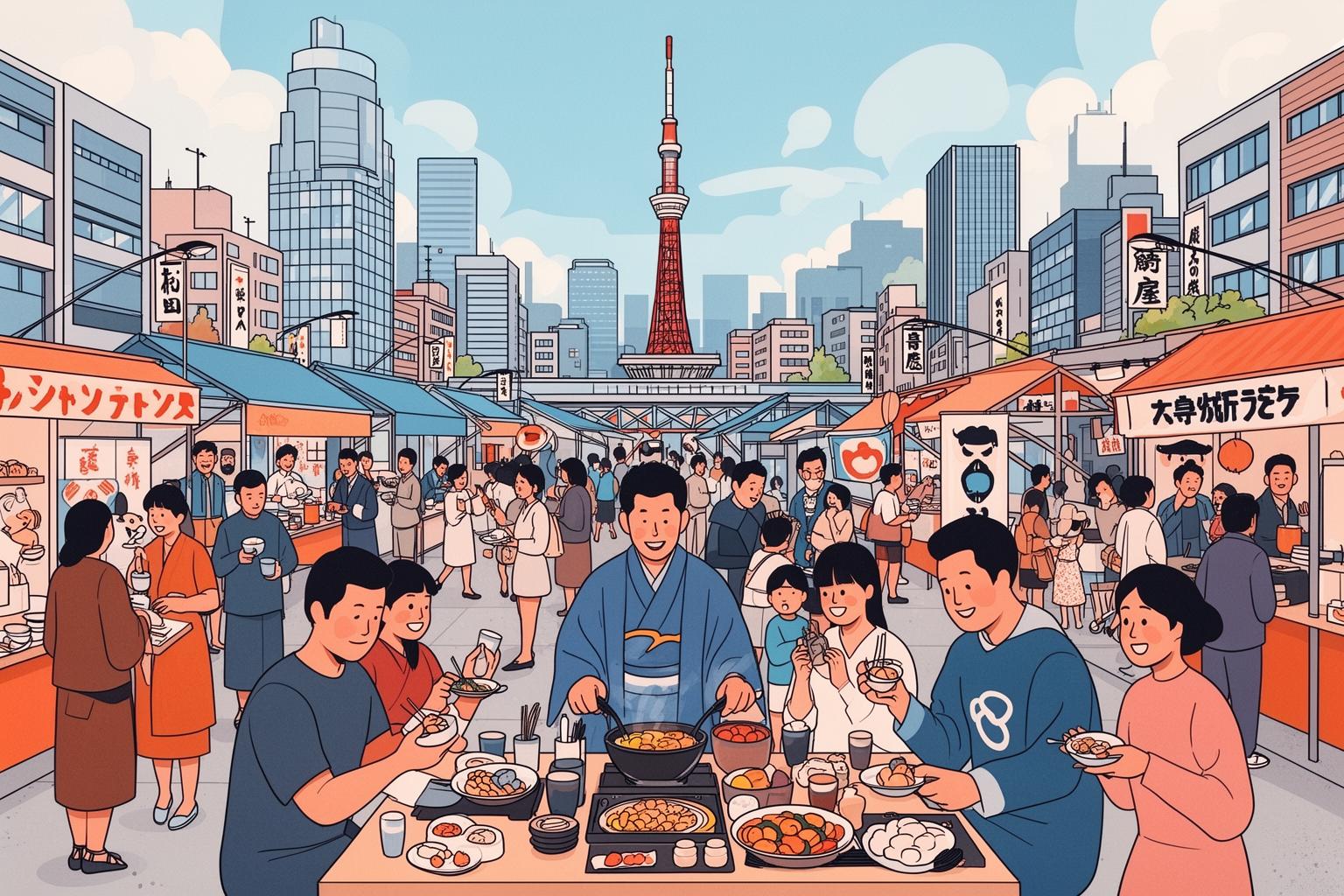
Ultimately, solving the food puzzle in Osaka reveals something fundamental about the city itself. In Tokyo, solutions often come in the form of a product or service—a perfectly curated store or a slick app. Convenience reigns supreme. In Osaka, however, the answer is often a person. It’s a conversation, a relationship cultivated over time with the man selling your vegetables or the woman making your tofu. Your search for Halal or plant-based food pulls you out of the anonymous consumer bubble and into the community. It’s certainly more effortful, requiring patience, a bit of courage, and a willingness to communicate, even if awkwardly at first. But the payoff is immense. You’re not simply finding food; you’re discovering your place within the city’s intricate social fabric. You learn to navigate not only its grocery aisles but also its human connections. And that, more than anything else, is what makes living in the Kitchen of Japan a truly enriching experience.