When you first arrive in Osaka, you’re hit with the slogan. It’s plastered on souvenirs, splashed across travel blogs, and shouted from the neon-drenched facades of Dotonbori. Kuidaore. The word, a feisty mashup of “to eat” (kui) and “to fall into ruin” (daoreru), is usually translated as “eat until you drop,” or more dramatically, “eat yourself into bankruptcy.” The popular image is one of glorious, unrestrained gluttony—a city of people happily devouring mountains of takoyaki and okonomiyaki until their last yen is spent. And sure, wandering through the steamy, fragrant chaos of the city’s main tourist artery, watching people line up for crab legs and gyoza, you might think you understand it. You might think it’s just about having a big appetite.
But you’d be wrong. That’s the postcard version, the simple story sold to visitors. After living here, you start to see that the real kuidaore philosophy has very little to do with financial ruin and everything to do with financial genius. It isn’t a call to reckless spending; it’s a deeply ingrained cultural operating system based on a single, sacred principle: maximizing value. The true spirit of kuidaore isn’t found under the Glico Running Man sign. It’s in the fluorescent glare of a 24-hour supermarket at 9 PM. It’s in the heated lunchtime debates over which neighborhood diner has the best 600-yen teishoku. It’s a city-wide, multi-generational obsession with wringing every last drop of quality and satisfaction out of every single yen. This isn’t gluttony. This is economics as a competitive sport, and in Osaka, everyone is an athlete.
This value-driven mindset extends beyond groceries and meals, as seen in the clever ways locals manage daily expenses, such as utilizing public baths to lower utility and housing costs.
Deconstructing ‘Kuidaore’: It’s Not Gluttony, It’s Economics

To truly grasp daily life in Osaka, you must first set aside the tourist-friendly interpretation of kuidaore and embrace a concept that influences nearly all commercial transactions in the city: kosupa. This Japanese portmanteau of “cost performance” is used throughout Japan, but in Osaka, it attains the status of a near-religious creed. A high kosupa item isn’t merely inexpensive—being cheap is simple. Instead, a high kosupa item offers quality and satisfaction far beyond its price. It’s the 100-yen piece of fatty tuna that tastes as if it should cost 500 yen, the bottomless bowl of rice that accompanies a 700-yen fried chicken set, or the jacket purchased in a clearance sale that lasts a decade.
The Gospel of ‘Kosupa’ (Cost Performance)
This unwavering focus on kosupa fuels the city’s consumer culture and marks one of the clearest contrasts with Tokyo. In Tokyo, value often ties to presentation, branding, and exclusivity. People may pay a premium for the ambiance, the elegant packaging, or the social prestige attached to dining at a renowned venue. A Tokyoite might recount the extravagant meal they secured months in advance, while an Osakan will eagerly share details of an extraordinary ramen found in a dim alley for 650 yen, explaining why the broth-to-noodle-to-pork ratio offers superior value compared to a pricier, more famous competitor.
In Osaka, the product reigns supreme. The story, brand, and fancy décor are secondary noise. If a place charges a premium, it must deliver an experience worthy of every yen; if it fails, it is swiftly dismissed. Conversely, if a spot is inexpensive but serves outstanding food, it gains admiration and cult-like loyalty. This mindset fosters a delightfully democratic food scene where the most respected critics aren’t columnists but local grandmothers, salarymen, and taxi drivers possessing encyclopedic knowledge about which butcher offers the leanest mince or which tofu shop produces the silkiest tofu.
A Merchant City’s DNA
This fixation on tangible value is not a recent development but ingrained in the city’s identity. For centuries, Osaka was known as tenka no daidokoro, or “the nation’s kitchen.” As Japan’s central rice trade hub and commercial heart, Osaka was shaped by merchants, artisans, and deal-makers rather than samurai or aristocrats. This heritage fostered a culture of pragmatism, frankness, and savvy negotiation, endowing Osaka’s residents with a sharp eye for quality and a strong distaste for being overcharged.
This historical background forged a unique buyer-seller relationship that endures today—one based on a tough kind of mutual respect. Customers are expected to be discerning and demanding, while merchants must offer honest goods at fair prices. Compared to the deferential, almost ceremonial politeness often found in Tokyo or Kyoto, Osaka’s interactions are more direct and grounded. It’s a transactional culture, but not a cold one; rather, it reflects a shared understanding that everyone seeks a good deal, and the best businesses deliver it without pretension or fluff.
The Battlefield of Daily Sustenance: Osaka’s Supermarkets and Shotengai
The kuidaore philosophy of kosupa is most evident in the everyday ritual of grocery shopping. While Tokyo boasts its share of pristine, upscale department store food halls and meticulously curated Kinokuniya supermarkets, Osaka’s spirit thrives in its bustling, competitive, and brilliantly chaotic neighborhood markets.
Super Tamade: The Neon Shrine of Unbelievable Deals
For a true immersion into Osaka’s shopping mindset, a pilgrimage to Super Tamade is essential. Calling it a supermarket barely does it justice; it feels more like a grocery-themed pachinko parlor. From afar, its gaudy neon lights blaze in vivid yellows, pinks, and greens, lighting up the night sky. Inside, a relentlessly upbeat and slightly warped jingle loops continuously, creating a hypnotic, almost manic energy. The aisles are narrow, shelves piled high, and every surface plastered with handwritten signs in eye-popping colors, shouting phrases like gekiyasu (insanely cheap) and kakumei kakaku (revolutionary price).
Super Tamade is renowned for its legendary 1-yen sales. That’s right—one yen. You might snag a carton of eggs, a block of tofu, or a bag of bean sprouts for just a single coin, provided you spend at least 1,000 yen on other items. It’s a brilliant piece of psychological marketing designed to draw customers in, primed for the hunt. The store also holds “Time Services,” or hourly flash sales, where a bell signals a drastic discount on specific items—like bento boxes or sushi packs—for a limited window, igniting a polite yet determined rush. Shopping at Tamade isn’t a calm or leisurely experience. It’s a game: about timing your visit, knowing the specials, and savoring the thrill of scoring a bargain that feels like outsmarting the system.
The Craft of the ‘Nebiki’ Sticker
Beyond Super Tamade’s unique chaos, a nightly ritual unfolds in every Osaka supermarket: the application of the nebiki (discount) sticker. As closing time nears, a staff member emerges with a sticker gun, and a silent, almost choreographed dance begins. Shoppers, who were moments before wandering casually, now converge near the prepared foods section—the sozai, sushi, bento boxes, fried cutlets—hovering at a respectful distance, eyes fixed on the prize, waiting for items to be tagged with stickers advertising 20% off, 30% off, and, most coveted, hangaku—half price.
In some cultures, this might appear cheap or undignified. In Osaka, it’s celebrated as a mark of savvy intelligence. Why pay full price for a delicious pork cutlet at 5 PM when you can get the exact same one for half price at 8 PM? It’s not about poverty but about efficiency. Wasting money is a cardinal sin, as is wasting food. The nebiki system perfectly balances these principles, benefiting both store and customer: the store clears inventory while the shopper scores a fantastic meal at a bargain. Taking part in this nightly ritual is a rite of passage for locals. Mastering the timing and discerning which store discounts what and when is a skill refined over time, a quiet source of pride.
Shotengai: The Community’s Competitive Crucible
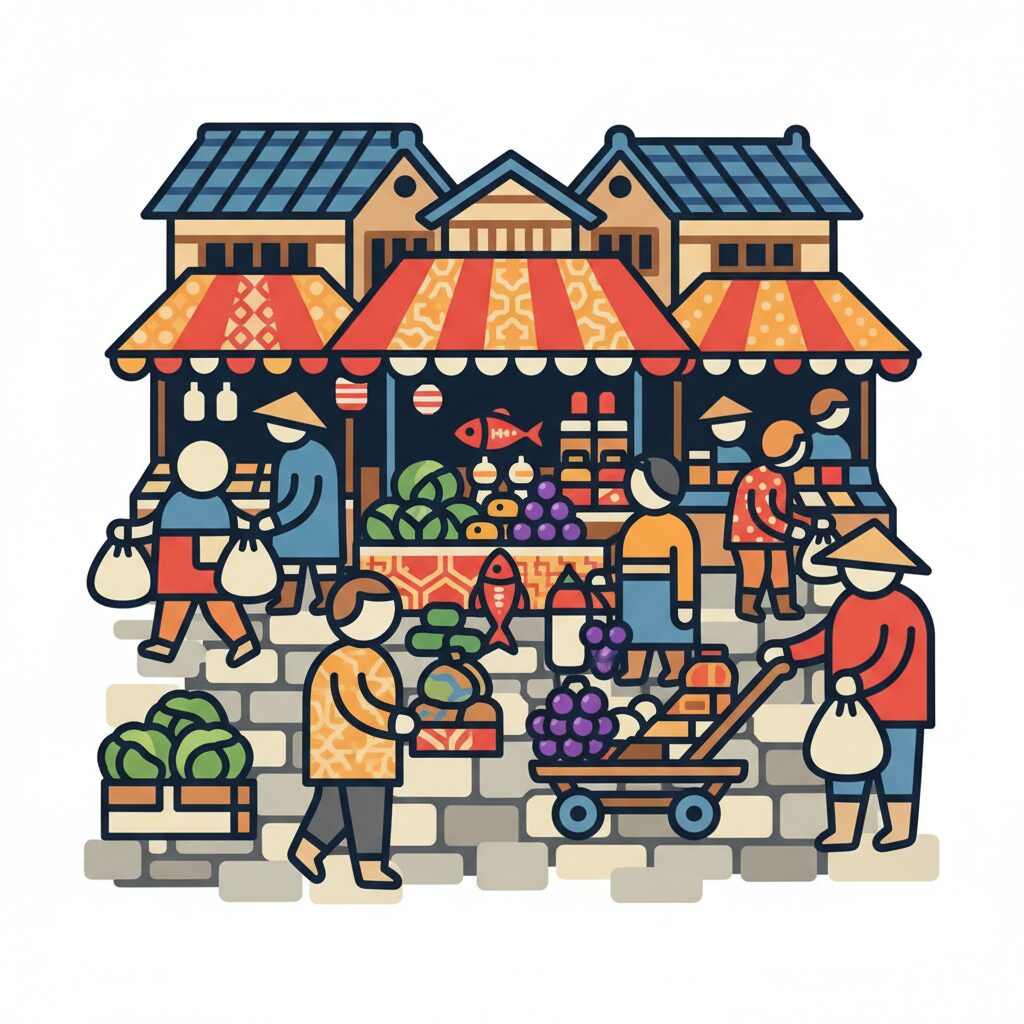
While supermarkets offer one-stop convenience, Osaka’s true culinary heart pulses in its shotengai—long, covered shopping arcades that weave through countless neighborhoods. Some, like Tenjinbashisuji, span kilometers, creating mini-cities within the city. Unlike the increasingly touristy Kuromon Ichiba, these local shotengai serve as the vibrant, living pantries of their communities. Here, competition takes on a tangible, vibrant form.
Within a fifty-meter stretch, you might find three fruit stands, each boasting handwritten signs proclaiming the price of their mikan oranges. Two butchers might stand directly opposite each other in the narrow arcade, compelled to compete through quality cuts and friendly service. A fishmonger neighbors a pickle shop, which sits beside a kombu and dried goods specialist. This density fosters fierce competition, where vendors survive only by providing good quality at fair prices. Their reputations, built through decades of daily customer interactions, are everything.
Shopping in a shotengai is also a social experience. You build relationships with vendors: the tofu lady knows you prefer firm cotton tofu for your nabemono; the butcher asks if you want your pork sliced thin for shabu-shabu. It’s a conversation. You can inquire, “What’s fresh today?” and receive a candid, direct answer because that vendor counts on your returning patronage. This is the kuidaore philosophy realized at the community level—a network of savvy shoppers and specialized merchants holding each other accountable, ensuring the neighborhood eats well and affordably.
Fueling the City: Where Value Meets the Plate
The principles guiding grocery shopping naturally apply to dining out as well. In Osaka, enjoying a good meal doesn’t demand a hefty budget. The city is brimming with small, independent restaurants that have mastered the art of offering tasty, satisfying, and remarkably affordable dishes. This extends beyond street food; it is a core aspect of the restaurant scene.
The Ubiquitous 500-Yen Lunch
One of the first things that surprises many foreigners—especially those from Tokyo—is the widespread availability and quality of the “one-coin” (500 yen) or slightly above one-coin lunch. Throughout the city, particularly in business areas like Honmachi and Yodoyabashi, you’ll discover modest eateries serving a teishoku, or set meal, priced between 500 and 800 yen. This isn’t a meager sandwich or oily pizza slice. It’s a full, balanced meal featuring a main dish such as grilled mackerel, chicken karaage, or ginger pork, accompanied by a generous bowl of rice (often with unlimited refills), a cup of miso soup, and a small side of pickled vegetables.
These meals fuel Osaka’s workforce. They are quick, nutritious, and offer incredible value. The establishments serving them tend to be simple, no-frills places—just a basic counter, a few small tables, and a handwritten menu taped to the wall. The emphasis is entirely on the food. The owners understand their customers are discerning, budget-minded office workers who won’t hesitate to walk away if quality declines or prices rise unjustifiably. The daily survival of these businesses proves their skill in delivering maximum kosupa.
Standing Room Only: The Pragmatism of ‘Tachigui’ and ‘Tachinomi’
For the purest example of Osaka’s function-over-form dining mindset, look no further than the culture of tachigui (stand-and-eat) and tachinomi (stand-and-drink). These tiny spots can be found inside train stations and tucked away in narrow alleys. Most consist of little more than a counter, with room for about half a dozen people to stand shoulder-to-shoulder.
To foreign visitors, this may seem like a novelty, but for locals, it’s an exercise in efficiency. By forgoing chairs, tables, and extensive service staff, these shops drastically cut overhead costs. Those savings are passed directly onto customers. You can enjoy a fantastic bowl of udon or soba for 300 yen, or a beer and a plate of grilled skewers for less than 1,000 yen. The experience is pared down to essentials: good food, good drink, served quickly and affordably. It’s the ideal option for a speedy lunch or a brief stop after work. It perfectly captures the Osaka spirit of valuing the substance of the meal over the formality of dining.
What This Means for You, the Foreign Resident
Grasping the deep-rooted kuidaore mindset is essential not only for surviving but for thriving in Osaka. It can turn your everyday routine from a string of simple errands into an exciting and fulfilling adventure. Here’s how to begin thinking like a local.
Embrace the Hunt
Don’t settle for the closest, most convenient supermarket. Tune into the rhythms of your neighborhood. Find out which store runs a huge egg sale every Tuesday. Identify the local grocer with the freshest vegetables. Remember the time when half-price stickers appear at the supermarket in the evening. See shopping as a strategic game rather than a chore. Exploring the local shotengai is crucial. Don’t be shy—point to what you want, practice your basic Japanese, and start building relationships with local vendors. They are your best guide to eating well and affordably.
Recalibrate Your Definition of ‘Good’
In Osaka, a long queue of locals outside a shabby-looking restaurant is a more trustworthy sign of quality than any online review or magazine mention. Let go of the idea that good food must come in fancy packaging. Trust the crowd. Be bold. Try the tiny curry shop with steaming windows or the ramen place where everyone slurps quietly. Some of your best meals in this city will come from places lacking aesthetic charm but full of culinary soul. Judge a restaurant by the smiles on its customers’ faces, not its menu design.
Talk About Money—It’s Not Rude, It’s Practical
In many Western countries, and even other parts of Japan, openly discussing prices and bargains might be considered impolite. In Osaka, it’s a central topic. People will happily and loudly chat about cabbage prices, the deals they scored on beef, or the incredible kosupa of a new lunch spot they found. This isn’t seen as rude or cheap; it’s sharing essential, practical information. It’s a way of caring for each other and celebrating a shared cultural value. Don’t hesitate to ask neighbors or coworkers where they shop or if they know a good place for cheap, delicious udon. It shows you’re engaging with the local culture and thinking like an Osakan.
Ultimately, the spirit of kuidaore isn’t about mindless consumption leading to bankruptcy. It’s quite the opposite. It’s about being a mindful, savvy, and involved consumer. It’s a philosophy that empowers everyday people, turning the necessities of eating and shopping into a continuous quest for quality and value. Living here means you’re automatically part of this city-wide game. You learn to read the signs, trust your instincts, and relish the simple yet profound joy of a delicious meal that didn’t break the bank. This is the true soul of Osaka—a city that proves, day after day, that eating well isn’t a luxury but a right secured with a bit of knowledge, a keen eye, and a genuine appreciation for a great deal.