Step off the Shinkansen at Shin-Osaka Station, and you feel it instantly. The air buzzes with a different frequency. The pace is a little faster, the voices a little louder, the unspoken rules of engagement rewritten. If Tokyo is a meticulously arranged symphony, Osaka is a vibrant, improvisational jazz session. It’s a city that pulls you in, asks you questions, and expects an answer. Many foreigners, myself included, first label this as simple “friendliness.” But after living here, I’ve realized that’s a surface-level reading. It’s not just friendliness. It’s pragmatism. It’s a direct, transactional, and deeply human approach to life forged over centuries in the crucible of commerce. This is Osaka, the merchant city, or shōnin no machi, and to understand its rhythm, you have to understand the deal. The city’s entire social operating system is built on the principles of business: trust, negotiation, mutual benefit, and long-term relationships. This isn’t a cold, calculated reality; it’s a worldview where good business and good living are one and the same. It shapes everything from how you buy your vegetables to how you make friends. For anyone trying to build a life here, grasping this merchant mindset is the key that unlocks the city’s complex, challenging, and ultimately rewarding heart. Forget the tourist guides for a moment. Let’s talk about the real Osaka, the one that lives and breathes in the crowded shōtengai and echoes in the boisterous greetings of its people.
To truly put this merchant mindset into practice, you can start by embracing Osaka’s ‘value for money’ philosophy in your everyday shopping.
More Than Money: The Philosophy of ‘Akindo’
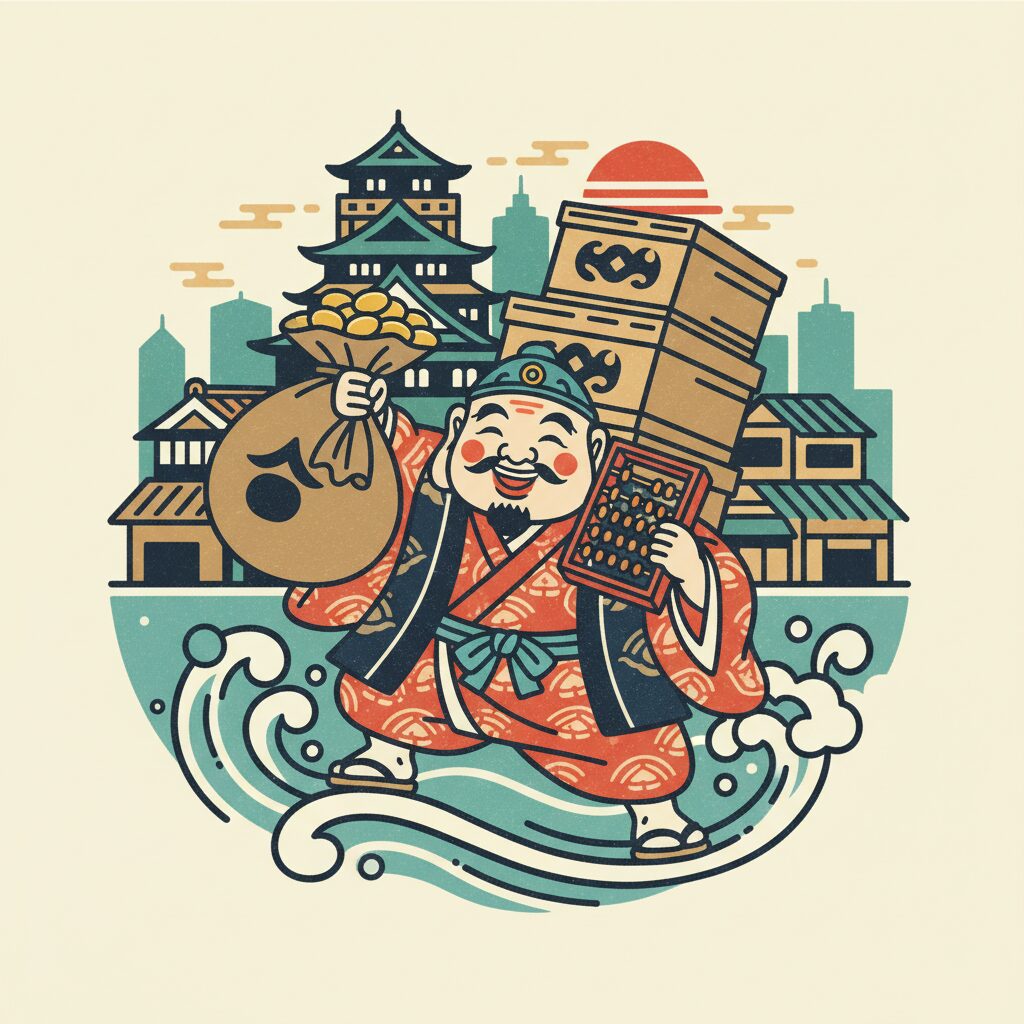
At the heart of Osaka’s identity lies the figure of the akindo, the merchant. Yet, this concept extends far beyond that of a mere shopkeeper. In historical Osaka, the akindo was a respected community pillar, a master trader whose success relied not only on clever bookkeeping but also on a refined philosophy of human interaction. This philosophy, deeply embedded in the city’s DNA, emphasizes practicality and concrete results over strict formality. While the samurai class in Edo (now Tokyo) cultivated a culture centered on honor, protocol, and hierarchy, Osaka’s merchants built theirs on something much more dynamic: trust. This fundamental contrast explains why navigating social situations in Osaka can feel strikingly different from the rest of Japan. The city operates less on unspoken, layered meanings and more on clear, mutually understood agreements, whether closing a business deal or choosing where to eat dinner.
The Currency of Trust (Shinyō)
For Osaka merchants, the most valuable asset isn’t gold but shinyō (信用). Although this term translates as credit, trust, or reputation, in Osaka, it functions as a living, active currency. Your shinyō is your social and economic lifeline, built through honesty, reliability, and fulfilling promises. It is lost through ambiguity, inconsistency, or failing to uphold agreements. This principle directly influences daily communication. People in Osaka are often unexpectedly direct because clarity forms the foundation of trust. Vague pleasantries and non-committal answers are viewed as inefficient and potentially untrustworthy, creating friction within the system. Why waste time guessing someone’s meaning when you can simply ask and receive a straightforward answer? This sharply contrasts with Tokyo’s communication style, which often values harmony above all, employing layers of tatemae (public face) and honne (true feelings) to sidestep direct conflict. In Osaka, the gap between tatemae and honne is significantly narrower. This doesn’t mean people are blunt without cause, but rather they prioritize directness. I once observed a fishmonger at Kuromon Market tell a customer, “Don’t buy this one today; it’s not the best. Get the mackerel instead; it’s perfect.” In Tokyo, this might be seen as poor salesmanship. In Osaka, it’s an exemplary demonstration of building shinyō. The vendor sacrificed a small immediate sale to prove his expertise and honesty, ensuring the customer’s trust and future loyalty. That long-term trust outweighs the price of a single fish. This is the merchant’s calculation, applicable to friendships, neighborhood relations, and all aspects of life.
‘Mōkari makka?’ – The Pragmatic Greeting
Nothing captures the blend of business and daily life better than the classic Osaka greeting: “Mōkari makka?,” which literally means, “Are you making a profit?” The traditional reply is “Bochi bochi denna,” or “So-so, bit by bit.” A newcomer might hear this and mistakenly think Osakans are money-obsessed. This is a common misunderstanding. The exchange isn’t a literal inquiry into one’s finances. Rather, it’s Osaka’s version of “How’s it going?” or “How’s life treating you?” The greeting is a cultural shorthand, acknowledging a shared history where prosperity, hard work, and well-being were tightly connected. It’s an expression recognizing that everyone is striving, working, and finding their way. It serves as a check-in on a person’s overall state—health, family, business—all wrapped in the practical language of commerce. The greeting roots the conversation in a reality everyone comprehends. From my East Asian perspective, it resonates with pragmatic greetings in Chinese communities, where questions like “Chīfànle ma?” (“Have you eaten?”) similarly express care through a tangible, universal concern. In Osaka, this concern is filtered through a distinctive commercial lens. It’s a way of saying, “I see you, I see your effort, and I hope it’s going well.” It’s a beautiful, efficient piece of social technology.
The Art of the ‘Nego’: Negotiation as a Social Dance
One of the most intimidating yet essential elements of Osaka culture is the art of negotiation, or nebiki kōshō. Throughout most of Japan, haggling is considered a social taboo, suggesting that the seller’s price is unfair and potentially causing a mutual loss of face. In contrast, in Osaka, it is often anticipated and even welcomed as part of the transaction. It becomes a game, a performance, a social dance that transforms a simple exchange of money for goods into a memorable human interaction. However, it comes with a complex set of unspoken rules that can easily confuse outsiders. Grasping the reason behind the haggle is more important than simply learning the mechanics.
It’s Not About Being Cheap; It’s About Connection
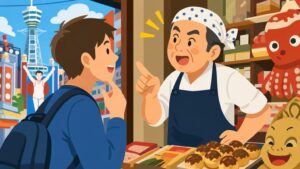
The common misconception foreigners have is believing that negotiation in Osaka is solely about saving money. While scoring a small discount is a pleasant bonus, it’s often not the main objective. The true purpose of the back-and-forth is to build rapport and establish a personal connection with the seller. Engaging in a lighthearted haggle signals that you are more than just a passive consumer—you are an active participant. You demonstrate interest in the product, respect for the seller’s business, and a willingness to engage in the local custom. It’s a form of communication. The playful banter, the mock surprise at the price, the seller’s exaggerated sigh before offering a modest discount—all part of the expected script. A successful negotiation leaves both parties feeling good: the buyer feels they achieved a small victory with a special price, and the seller completes a sale while creating a positive memory, turning a one-time customer into a potential regular. I’ve witnessed this numerous times in the electronics maze of Den Den Town. A tourist might ask for a discount only to receive an abrupt “no.” Moments later, a local will approach the same clerk, share a joke, discuss a different product, and then casually ask, “Chotto dake makete kureru?” (“Can you knock a little off?”). The clerk laughs, punches some numbers into the calculator, and shows a slightly lower price. The difference wasn’t the request but the approach: the local established a connection first, making the negotiation a friendly extension of the conversation rather than a demand.
Knowing When (and When Not) to Haggle
However, this social dance is not suitable everywhere. Mastering the art of the nego means knowing the right stage. Attempting to haggle at a sleek department store like Daimaru or a major chain like Uniqlo will only result in puzzled looks. It’s just not done there. This dance typically takes place in independent, owner-operated shops. Think of the busy stalls in a shōtengai (covered shopping arcade), family-run souvenir shops in Shinsekai, or the stalls in Den Den Town or Kuromon Market mentioned earlier. The key sign is the presence of the owner or a long-term employee who has the authority and willingness to engage. The aim should never be to dramatically slash the price. You’re not trying to win a battle; you’re working to build a bridge. A reasonable request might be a 10% discount or having the seller round down the price to an even number. Pressing too hard is seen as rude and greedy, breaking the unspoken rule that this is a game of mutual respect. A smart approach is to purchase multiple items. This gives the seller a reason to offer a “service” discount, allowing them to feel generous while still making a good sale. The ultimate victory isn’t the money saved but the smile and the “Maido, ōkini!” (“Thanks for your business!”) you receive at the end—the unmistakable sound of a successful Osakan transaction.
Community as a Marketplace: The Logic of ‘Give and Take’
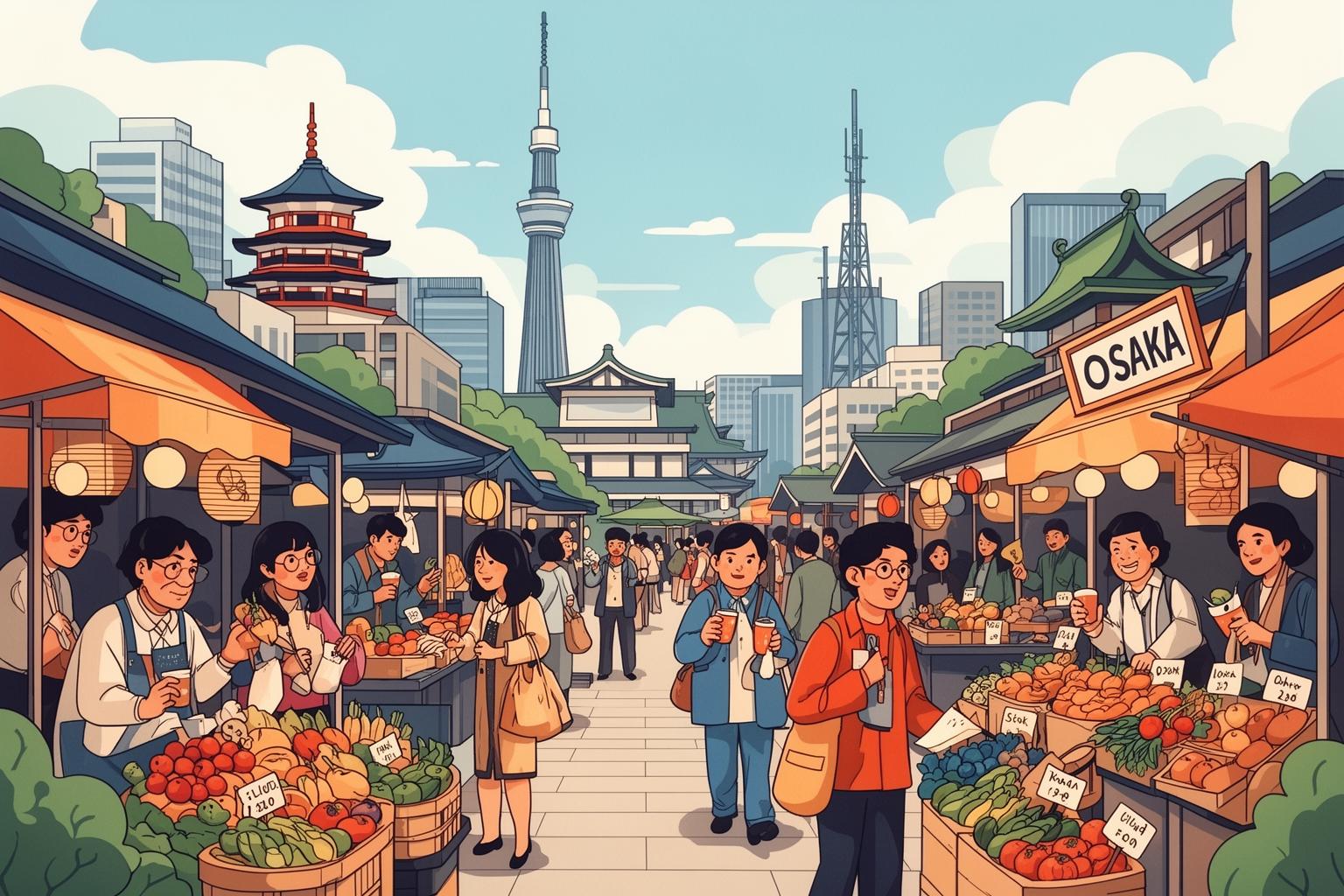
The merchant’s pragmatic and reciprocal mindset extends well beyond the marketplace, shaping the very core of community and personal relationships in Osaka. While social life in Tokyo can sometimes resemble navigating a complex web of formal obligations, life in Osaka feels more like a lively, ongoing market of favors, information, and support. There is a continual, fluid exchange occurring at all levels, from casual neighborhood chats to deep friendships. It operates on a clear, if often implicit, logic of give and take.
Relationships Based on Mutual Benefit
In Osaka, there’s a strong belief that relationships, much like good business partnerships, should be mutually beneficial. This might sound cold or calculating to Western ears, but it actually fosters strong, resilient, and highly practical bonds. It’s not about keeping a formal tally of debts owed. Rather, it’s an organic understanding that a healthy relationship is reciprocal. This plays out in countless small, everyday gestures. Your neighbor might drop off some daikon radishes they received from relatives in the countryside, with no explicit expectation of repayment, but a social understanding is formed. Weeks later, when you bake cookies, you bring some to them. If their newspaper is mistakenly delivered to your door, you walk it over promptly. This steady, low-key flow of tangible exchanges reinforces the connection. It’s a system of mutual investment. This mindset also shapes how friendships develop. Friendships often arise from shared practical needs or goals—students aiding each other with exams, colleagues collaborating on difficult projects, or parents coordinating kindergarten pickups. The relationship begins with a clear, shared purpose, and the emotional bond grows from this practical base. It’s a refreshingly straightforward way to build a social network: be useful to others, and they will be useful to you. From this mutual utility, genuine affection naturally emerges.
‘Osekkai’ as a Form of Investment
One of the most misunderstood traits in Osaka is osekkai. Often translated as “nosy” or “meddlesome,” it can certainly feel intrusive. An obachan (older woman) you’ve never met might stop you on the street to tell you your jacket is unbuttoned or ask why your child isn’t wearing a hat in the sun. In many cultures, this would be seen as unwelcome interference. But in Osaka, osekkai is frequently a form of proactive community care—a social investment. From the pragmatic Osaka perspective, a problem for one person can quickly become an issue for the broader community. A poorly sorted trash bag can cause trouble for an entire apartment building. Someone who appears lost or unwell might need assistance, which reflects on the neighborhood’s safety and cohesion. So people step in directly. They spot a potential issue and address it efficiently and without ceremony. This is the merchant’s instinct for loss prevention applied to social harmony. That obachan isn’t simply being nosy; she’s conducting a quick, informal check to ensure things are running smoothly. She invests a bit of her time and energy to maintain the collective well-being. It’s a form of care, albeit a direct and unsentimental one. Learning to accept osekkai not as a personal criticism but as a sign of inclusion—a signal that you’re recognized as part of the local community—is a crucial step toward feeling at home in Osaka.
Misunderstandings and Realities: Decoding the Osaka Mindset
For any foreigner, living in Osaka demands a period of cultural adjustment. The city’s distinctive mix of straightforwardness, humor, and practicality can easily be misunderstood from an outsider’s perspective. What may seem rude is often just efficiency, and what feels like teasing can actually be a sign of acceptance. Understanding these cues is essential for navigating daily life and avoiding common frustrations.
Are They Rude or Just Efficient?
This is likely the most frequent confusion for newcomers. The pace of life, especially in commercial hubs like Umeda or Namba, is rapid. People walk quickly, speak quickly, and expect things to happen quickly. There’s little room for the elaborate politeness common in other parts of Japan. A cashier might simply state your total without the lengthy polite phrases you’d hear in Tokyo. Someone might physically guide you out of the way on a crowded train platform instead of waiting patiently. On escalators, the rule of standing on the right and walking on the left is strictly enforced. A soft cough often escalates quickly to a direct “Sumimasen, tōshite kudasai” (“Excuse me, please let me pass”). It’s easy to interpret this as rudeness or impatience, but it’s almost never personal. It’s about system efficiency. In a city designed around the flow of goods and people, obstacles affect everyone. A person standing on the wrong side of the escalator isn’t just inconveniencing themselves; they’re disrupting the entire flow. The direct correction is simply a way to return the system to its optimal state. It’s the merchant’s imperative: time is valuable, so don’t waste it. Once you reframe this directness as a shared commitment to efficiency rather than a personal offense, the city becomes much less intimidating and far more understandable.
The Role of Humor as a Social Lubricant
If pragmatism is Osaka’s engine, then humor is the oil that keeps it running smoothly. Osaka is famously the heart of Japanese comedy, but humor here is not confined to the stage; it’s a vital tool for everyday communication. It softens direct requests, builds instant rapport, and helps navigate potentially awkward moments. A sharp, witty comeback (tsukkomi) to a silly statement (boke) demonstrates high social intelligence. It shows you’re attentive, engaged, and in tune with the rhythm of Osakan conversation. Shopkeepers often tease their customers, commenting on your clothes, your Japanese skills, or the odd mix of items you’re buying. This is almost always a positive sign. They are feeling out your response, inviting you into playful banter. A foreigner who responds with stiff formality or offense is likely to shut down the interaction, while one who laughs and teases back will be welcomed as an insider. This use of humor as a social lubricant is a brilliant invention. It lets people be direct without being offensive. The joke softens the pragmatism, making transactions feel collaborative and fun. Mastering even a bit of this comedic timing can greatly improve your interactions in the city. It signals that you don’t just live in Osaka; you get Osaka.
To thrive here, you learn to see the world through the eyes of an akindo. You come to understand that your reputation is your most valuable currency, that direct communication is a form of respect, and that a good laugh can seal any deal. You begin to appreciate the logic behind the meddlesome neighbor, the charm in a hard-bargained discount, and the warmth in a greeting that asks about your bottom line. Life in Osaka is a constant negotiation, a continuous exchange. It’s a city that doesn’t just allow you to live in it; it invites you to participate, to engage, and to contribute your own energy to its vibrant, chaotic, and delightfully pragmatic marketplace. And once you master the art of the deal, you’ll find yourself not just surviving in Osaka—you’ll be part of it, creating something together, one handshake, one shared joke, one mutually beneficial relationship at a time.