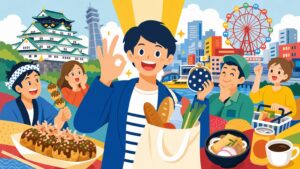
Osaka never really sleeps. It doesn’t just hum; it buzzes, clatters, and shouts with a relentless, infectious energy. From the glowing canyons of Namba to the packed shopping arcades of Tenjinbashi, life is lived out loud, on the streets, at full volume. It’s a city of incredible convenience and endless stimulation, a place where the next delicious meal or hilarious conversation is always just around the corner. But for families, especially those with young children, that constant buzz can start to feel like a low-grade fever. The concrete parks, the crowded trains, the sheer density of it all—it builds up. By the time Friday rolls around, you can feel a collective city-wide yearning for one thing: space. A place to breathe. A place to let the kids run without apology.
In Tokyo, that escape might mean a meticulously planned Shinkansen trip to a hot spring town, a journey defined by precision timetables and quiet elegance. But this is Osaka, where practicality and a good value proposition often trump prestige. So, where do Osaka families really go to decompress? Forget the bullet train. The answer, more often than not, is found on four wheels, heading southwest across a spectacular bridge. The destination is Awaji Island, a teardrop of land floating in the Seto Inland Sea. It’s not a world-famous cultural mecca, nor is it a luxury resort destination. And that is precisely the point. The weekly exodus to Awaji is more than just a trip; it’s a ritual that reveals the very core of the Osaka family mindset—pragmatic, food-obsessed, and masters of engineering a perfect, low-stress, high-value escape.
Many Osaka families complement their island escape by indulging in a refreshing neighborhood sentō digital detox that perfectly contrasts with the city’s nonstop energy.
The Osaka Family Car: A Symbol of Pragmatic Freedom
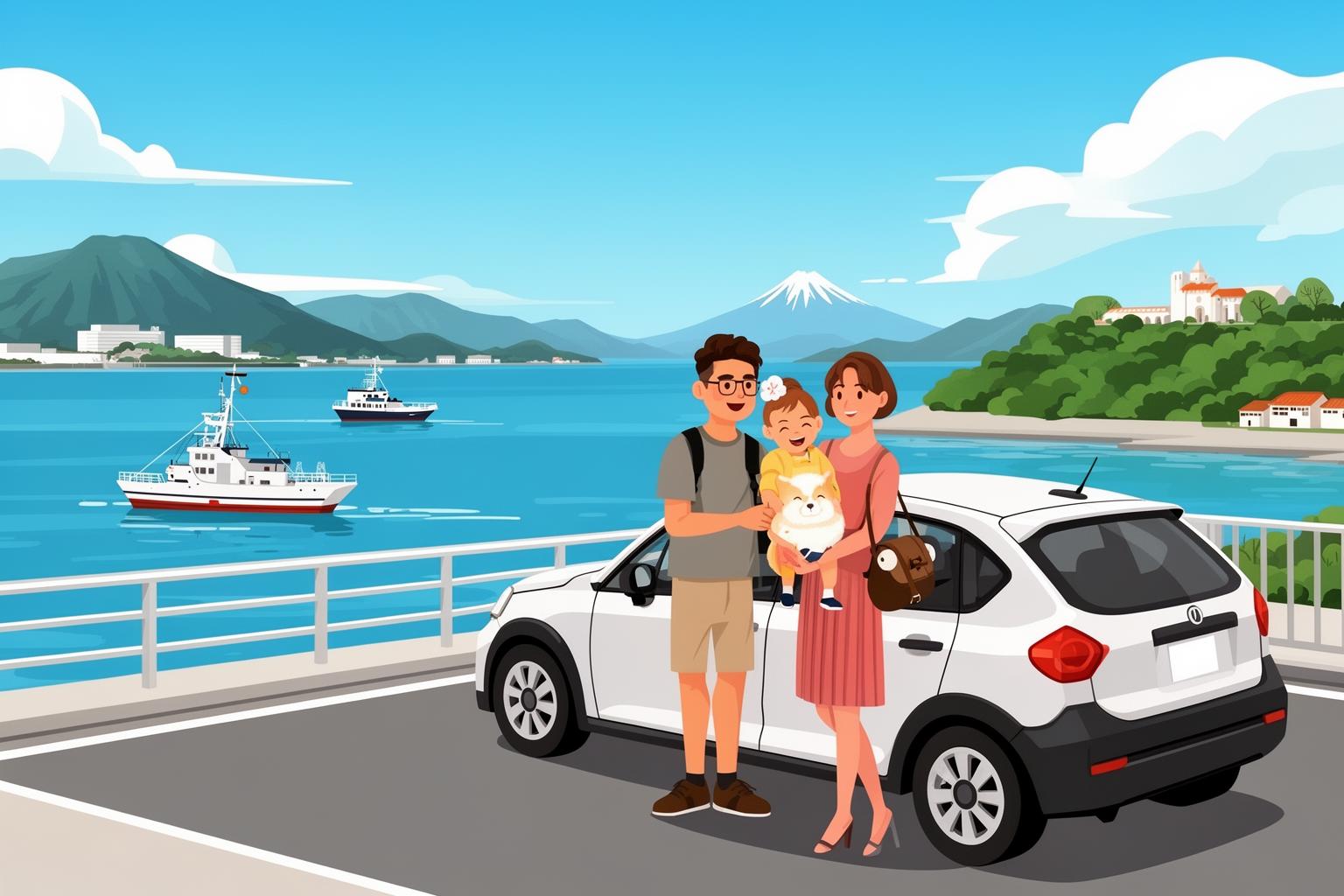
To grasp the Awaji pilgrimage, you first need to understand the role of the family car in Osaka. In Tokyo, owning a car can seem like a luxury, complicated by exorbitant parking fees and narrow streets that are difficult to navigate. The world’s most efficient public transport system renders cars largely unnecessary. Many Tokyo residents, even those with children, organize their lives entirely around the train and subway network. In Osaka, the situation is different. While the city’s train system is excellent, car ownership is far from uncommon; for many families, it is essential. It’s a practical tool. It represents freedom.
This isn’t about status. You won’t find a procession of European luxury sedans cruising the Hanshin Expressway on a Saturday morning. Instead, you’ll see a lineup of practical, spacious minivans—the Toyota Alphards, Nissan Serenas, and Honda Stepwagons. These vehicles are the unsung heroes of the Osaka family weekend. They are selected not for their stylish appearance but for their sliding doors, vast interiors ideal for transporting strollers and coolers, and their ability to transform into a mobile living space for tired children on the way home. This choice reflects pure Osaka pragmatism. The question isn’t “What does this car say about me?” but “How well does this car solve my family’s needs?” The car is an investment in peace of mind, a key that unlocks the region in ways trains cannot.
Watching the traffic leaving the city is like witnessing a cultural ritual in motion. The atmosphere differs from a weekday commute. There’s a sense of joyful anticipation. Windows are rolled down, kid-friendly music plays, and the car is packed with the gear of a family on a mission: sand toys, portable chairs, a cooler stocked with barley tea and rice balls. This act of driving out of the city is a collective breath of relief. It’s a rejection of the vertical, crowded urban life in favor of a more horizontal, expansive weekend. For that brief journey, the family car becomes a self-contained bubble of freedom, heading toward somewhere green, open, and easy.
Awaji Island: The Goldilocks Destination
So why Awaji? What makes this particular island so cherished by families from Osaka? The secret lies in its perfect balance. It’s the Goldilocks of escapes: not too distant, not too nearby; not too wild, not too commercialized; not too pricey, not too cheap. It’s just right.
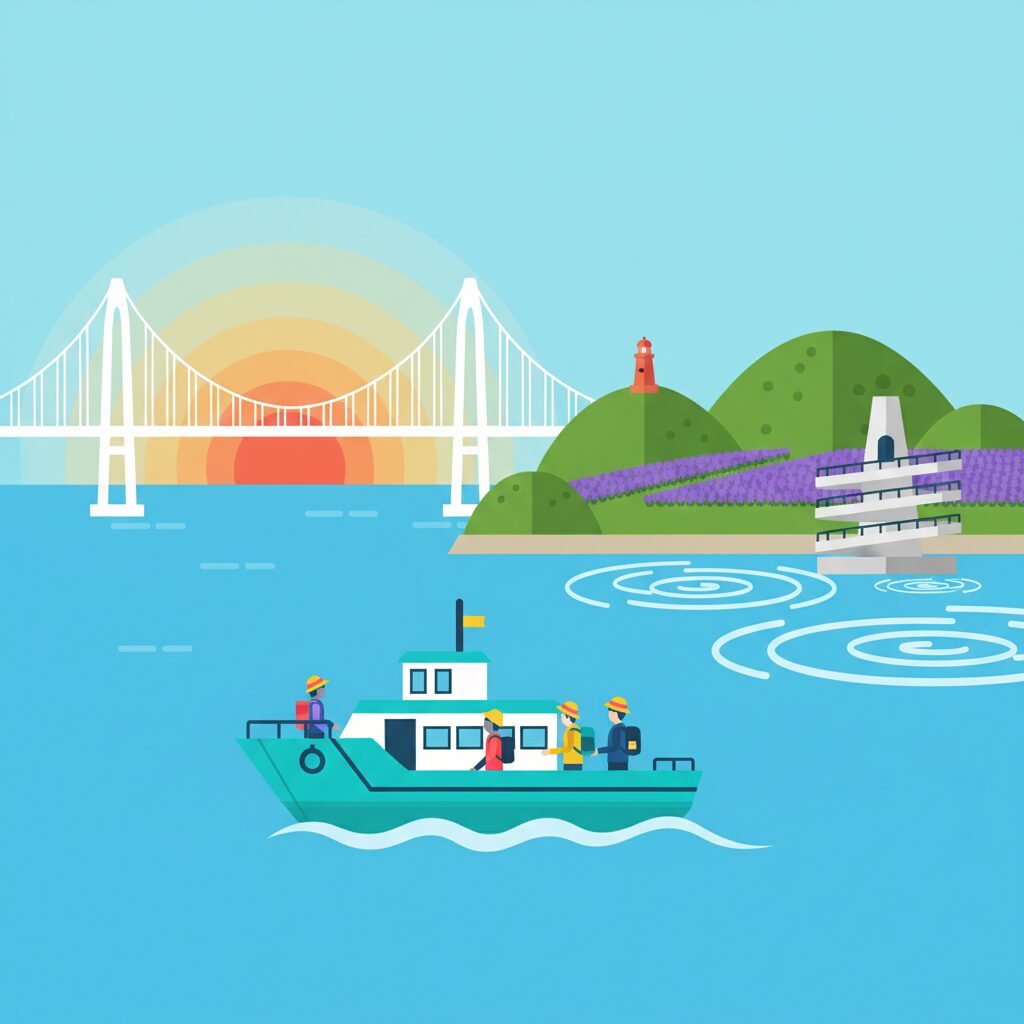
The journey itself adds to the charm. Driving from central Osaka, you pass through Kobe and then cross the Akashi Kaikyo Bridge. This isn’t just any bridge. It’s one of the world’s longest suspension bridges, an awe-inspiring engineering marvel that feels like a gateway to another realm. Crossing it marks a vivid psychological shift. On one side lies the crowded urban expanse of the mainland. On the other, the lush hills and shimmering coastline of Awaji. The drive usually takes about an hour, hitting the perfect travel duration for families with young children. It’s long enough to feel like an adventure, but short enough to avoid the dreaded chorus of “Are we there yet?”
Awaji’s true brilliance, though, is its atmosphere. It provides a complete sensory escape from city life. A weekend in Kyoto, though close by, is an entirely different experience. Kyoto demands a sense of reverence. It’s filled with quiet temples, meticulously tended gardens, and cultural significance. It’s magnificent but can be tiring for parents trying to keep lively kids from disrupting the calm. Awaji requires nothing of you. It’s a place for laid-back, unpretentious enjoyment. Its main attractions are nature, open space, and exceptional food. The dress code is shorts and sandals. The schedule is flexible. The aim is simple: unwind and savor the moment.
Here another central Osaka value shines through: kosupa, or cost performance. People of Osaka have an almost intuitive knack for maximizing value, and Awaji delivers abundantly. You get stunning natural scenery, breathtaking ocean views, and top-tier local produce without the steep prices of a high-end tourist spot. Families can rent roomy homes, spend the day at free public beaches, and feast like royalty on fresh seafood and locally grown vegetables. It’s an affordable indulgence—a weekend that feels luxurious and memorable without overspending. It stands for a smart, savvy choice—a concept deeply ingrained in Osaka’s culture.
What Happens on Awaji? It’s Not What You Think
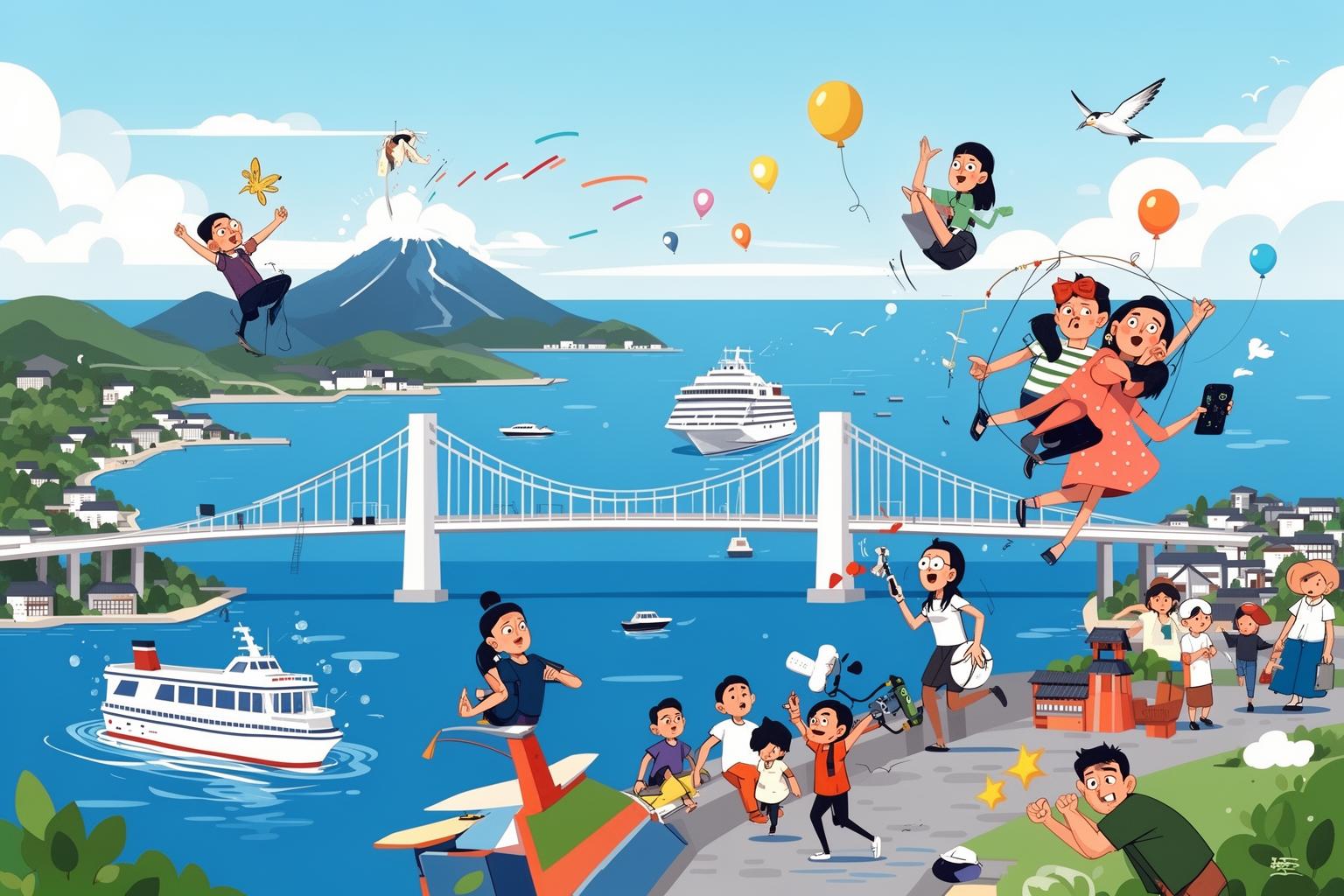
If you asked a family from Osaka to show you their Awaji photo album, you wouldn’t find a checklist of famous landmarks. The experience isn’t about visiting tourist spots; rather, it’s a collection of simple, sensory joys that together offer a perfect escape from city life. It’s a weekend centered around the pleasures of eating, playing, and simply being.
The Onion Obsession and the Joy of Simple Food
It’s impossible to discuss Awaji without mentioning its onions. Awaji onions are renowned throughout Japan for their remarkable sweetness and mild pungency. For families from Osaka, they are far more than just a vegetable—they are an emblem, a treasure, and a key part of the experience. A must-visit during any Awaji road trip is a michi-no-eki, or roadside station. These aren’t ordinary highway rest stops—they are bustling marketplaces, culinary hotspots, and community centers all rolled into one.
At a place like the Uzunooka Onaruto Bridge Memorial Museum, you’ll find an onion-themed gift shop, onion soup dispensers, and even a giant onion photo spot. It’s quirky, slightly playful, and wholeheartedly embraced. Families eagerly queue up for an “Awaji Burger,” a gourmet creation with a thick beef patty and, naturally, a generous helping of local onions. They’ll fill their car trunks with net bags of these prized alliums to take home, a tangible trophy from their weekend adventure. This fondness reflects Osaka’s food-centric identity. Here, good food is never a side note; it’s the main attraction. The delight of a perfectly grilled squid or a bowl of transcendently sweet onion soup is no small matter—it’s a peak experience. It’s the unpretentious, top-quality, deeply satisfying food culture of Osaka, simply set against an island backdrop.
Space to Breathe, Space to Play
The greatest asset Awaji offers is space. In a city where parks are crowded and apartments cramped, the island’s wide-open fields and long, sandy beaches feel like the ultimate luxury. Spots like Akashi Kaikyo National Government Park or Awaji Island Park are expansive green landscapes dotted with seasonal flowers and elaborate playgrounds. Here, the invisible rules of urban confinement melt away.
For parents, this is a moment of genuine relaxation. They can spread out a picnic blanket and watch their children truly run across a vast lawn—without the fear of them disappearing into crowds or darting into traffic. The soundscape shifts from the city’s sirens and train announcements to the rustle of wind through trees and distant calls of seagulls. For kids, it’s pure freedom—they can climb, explore, and shout without constant parental corrections. This act of unwinding, of breaking free from the rigid structure of city life, is a core purpose of the trip. It recalibrates the family dynamic, replacing stress over directions and schedules with simple joy found in shared play and rest. It’s a physical and mental reset that urban dwellers deeply need.
The Rise of “Modern” Awaji
Lately, Awaji has also become home to a range of decidedly modern, and some might say eccentric, attractions, mainly spearheaded by the Pasona Group. This includes huge anime-themed adventure parks like Nijigen no Mori, featuring a life-sized Godzilla head, and whimsical character-themed restaurants such as Hello Kitty Smile, which sports a giant cat face on its facade. From a traditionalist’s view, these might seem gaudy or out of place.
Yet, the typical Osaka response is often one of amused enthusiasm. After all, this is the culture that gave us the giant moving crab of Dotonbori. There’s a deep-rooted appreciation for bold, entertaining, and unabashedly commercial creations. The question isn’t “Is this high art?” but “Is this fun?” These new attractions are seen as another reason to visit, adding more layers of entertainment to an island that already excels at the basics. This openness to the new, the novel, and even the slightly absurd is a classic Osaka trait. It stands in contrast to the more reserved, preservation-minded attitudes found elsewhere in Japan. In Osaka, if it’s big, bright, and makes you say “Wow,” it’s likely a hit. It contributes to the island’s charm as a place that doesn’t take itself too seriously, where the sole aim is to have a good time.
The Return Trip: Recharged and Ready for the City
The Sunday evening drive back across the Akashi Kaikyo Bridge is a ritual in its own right. The car has grown quieter now. The kids, worn out from a weekend filled with sun and activity, are probably asleep in the back, their faces marked with a mix of dirt and ice cream. The trunk is heavy with bags of onions and local produce. The atmosphere is one of calm satisfaction. As you climb the bridge, the sparkling panorama of the Kobe and Osaka skylines appears, a sea of endless lights stretching to the horizon.
It’s a breathtaking sight, serving as a strong reminder of what you’re returning to. The energy, the convenience, and the countless opportunities of the city await. But seeing it from this distance, after two days away, shifts your perspective. You’re not hesitant to dive back into the chaos; you’re coming back recharged, your reserves replenished. The weekend on Awaji wasn’t an escape from Osaka but rather a strategic retreat to make life there more joyful and sustainable.
This is the rhythm of life for many Osaka families. The intense, fast-paced week is balanced by an accessible, restorative weekend. The Awaji road trip perfectly embodies the Osaka approach to life: be practical, seek value, prioritize family, enjoy good food, and never underestimate the importance of a fun, slightly quirky getaway. It’s how you stay sane, stay connected, and maintain your love for a city that demands so much from you—by knowing exactly when and how to leave it behind, even if only for a short time.