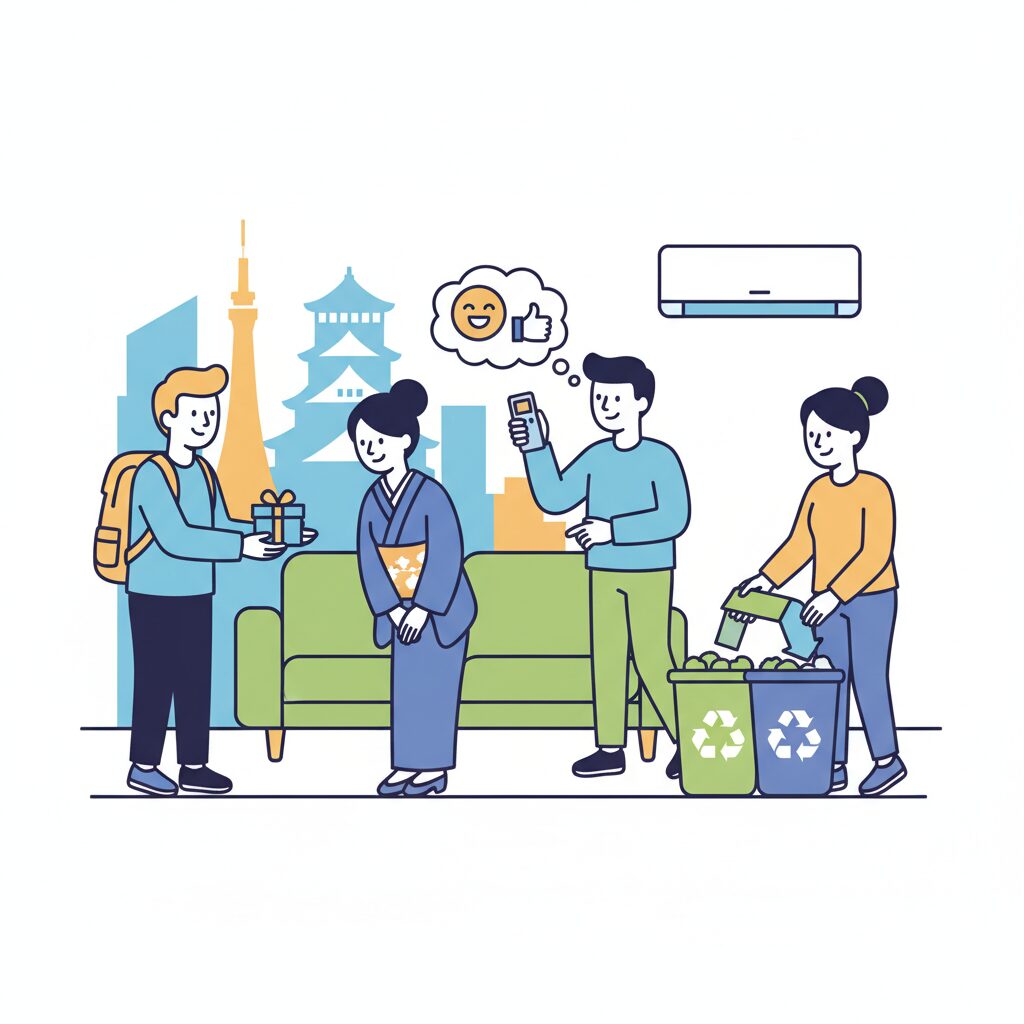
So you did it. You navigated the labyrinth of Japanese real estate, conquered the mountain of paperwork, paid the dizzying initial fees, and now you’re standing in your new, empty apartment in Osaka. The key feels heavy in your hand, a tiny metal trophy symbolizing your victory. The silence of the room is a blank canvas. This is it. Your new life begins now. But here’s a little secret nobody puts in the rental brochure: signing the lease was the easy part. The real test isn’t about contracts or key money; it’s about navigating the intricate, invisible web of social rules that govern life in a Japanese apartment building. In the West, your relationship with your landlord and neighbors might be transactional, a simple matter of paying rent on time and not burning the place down. In Osaka, it’s a delicate dance of consideration, communication, and community. This isn’t Tokyo, where anonymity can be a shield in the sprawling metropolis. Here, in the vibrant, close-knit neighborhoods of Osaka, you’re not just a tenant in a numbered box; you’re a member of a vertical village. And your success in this village depends less on your lease agreement and more on your understanding of the unspoken code. This code is your key to a peaceful life, to feeling truly at home. Get it right, and you’ll discover the genuine warmth and community spirit that makes Osaka special. Get it wrong, and you’ll find yourself in a state of quiet, bewildering friction. Let’s pull back the curtain on the real rules of renting in Osaka.
Understanding this unspoken code is as crucial as knowing the proper etiquette for socializing at a local standing bar.
The Oya-san is More Than Just a Landlord

First, let’s discuss an important figure in your new life: your Oya-san, or landlord. In many modern, large-scale apartment complexes, you might only interact with an impersonal management company, a kanri-gaisha. These interactions tend to be formal, conducted over the phone or through standardized letters—efficient, neat, but distant. However, in numerous smaller buildings, such as the traditional apaato or older manshon that give Osaka’s neighborhoods their unique charm, the Oya-san is very much a real person. They might be an elderly couple living on the first floor or just nearby. They own the building, care for it deeply, and see it as their legacy and community.
This changes the entire relationship. Your connection with them is not merely business; it’s personal. They aren’t a faceless company, but neighbors with a strong interest in maintaining the building’s harmony. When you move in, if your Oya-san is local, a simple greeting is expected. It’s customary, though not obligatory, to bring a small gift, a temiyage. It doesn’t need to be elaborate—a box of cookies, a set of nice towels, or something from your home country will do. The gesture itself is what counts. You knock on their door and say, “Hajimemashite. Kono tabi hikkoshite kimashita. Kore kara osewa ni narimasu.” (Nice to meet you. I’ve just moved in. I look forward to your support.)
This single gesture sets the tone for your entire tenancy. It signals to your Oya-san that you are considerate and respectful of local customs. It turns you from simply Tenant #302 into Alex-san, the polite foreigner who lives upstairs. This small goodwill can pay off later. When your air conditioner inevitably breaks on the hottest summer day, or if you need some leniency for any reason, an Oya-san who knows you personally is much more likely to be understanding and helpful than one who only sees you as a name on a rent transfer. On the other hand, beginning with aloofness or invisibility can create difficulties. They are the keepers of the building’s peace and will not hesitate to enforce rules, written or unwritten, if they believe that peace is at risk.
The Sound of Silence: Mastering the Art of Quiet Living
Now, let’s tackle the single biggest source of conflict in Japanese apartment living: noise. You might consider yourself a quiet person, but by Japanese standards, you’re likely mistaken. The idea of acceptable noise levels here is completely different, shaped by high-density living and a cultural focus on not disturbing others. Walls, especially in older wooden buildings, are often thinner than expected, and sound travels in surprising ways.
Your Floor is Their Ceiling: The Battle Over Footsteps
One of the most frequent grievances among neighbors is the noise of footsteps. You’re not stomping—you’re simply walking. Yet, to the person downstairs, it can sound like a herd of elephants. This phenomenon is called ashioto. Heavy heels, dropping objects, dragging furniture, or even a child running can become significant stressors for those below. The solution is straightforward: be mindful. Walk gently. Wear soft indoor slippers, which not only help keep floors clean but also soften your footsteps. Consider adding thick rugs or sound-absorbing mats in high-traffic zones or beneath your desk chair. It might seem minor, but consciously adjusting how you move within your home is a vital sign of respect for your downstairs neighbors.
The Midnight Spin Cycle: Courtesy with Appliances
Your daily chores have a strict timeframe. Using a vacuum cleaner or washing machine early in the morning or late at night seriously breaches etiquette. These appliances produce low-frequency vibrations that easily travel through the building. The generally accepted hours for such tasks are between 9 AM and 8 PM. Doing laundry at 11 PM because you forgot will likely result in a polite but firm notice from management or a complaint from neighbors. The same applies to other noises. Keep your TV volume in check. Headphones are best for music. Even slamming sliding doors or balcony windows can produce a loud bang in an otherwise quiet building. The key is to go about your day with a gentle, conscious regard for the noise you create.
When Friends Come Over: Rethinking “Party”
The Western idea of a “house party” doesn’t really fit in an Osaka apartment building. Having a few friends over for a quiet meal is fine, but having a dozen people with loud music, talking, and laughter that goes late into the night is a disaster waiting to happen. Most socializing in Japan happens outside the home—at restaurants, izakayas, or karaoke bars—for precisely this reason. Your apartment is regarded as a place for rest and quiet. If you do host guests, be extremely aware of the noise level. Voices carry; laughter carries. Make sure the gathering ends or moves elsewhere by a reasonable hour. Consistently throwing loud parties is the fastest way to become the building’s pariah and invite a visit from your Oya-san.
Garbage Day is Judgment Day: The Sacred Ritual of Waste Disposal

If noise tops the list of conflict causes, garbage ranks a close second. Garbage disposal in Japan is not a mere suggestion; it is a strict, complex, and socially enforced system. Handling it correctly is a fundamental test of your ability to function as a responsible community member. Getting it wrong results in a public and embarrassing failure.
Know Your Colors, Know Your Days
First, you must master the art of sorting. Although rules may vary slightly by municipality, they are always stringent. You will have separate categories: burnable refuse (moeru gomi), non-burnable refuse (moenai gomi), plastics (pura), PET bottles, cans, glass bottles, and oversized items (sodai gomi). Each category requires a specific bag (sometimes designated by the city) and has a designated collection day. Mixing is not allowed. You cannot place plastic bottles with burnable trash. Containers must be rinsed, and labels and caps removed from PET bottles for separate sorting. Your ward office will provide a detailed calendar, often illustrated, which serves as your bible. Study it, memorize it, and live by it.
The Walk of Shame: Why You Don’t Put Trash Out Early
Once your garbage is sorted perfectly, you must follow the correct timing. The rule is to place your garbage out on the morning of collection, usually before 8 AM. Putting it out the night before is a major offense. Why? Two reasons: first, it’s an eyesore and can cause unpleasant odors for neighbors; second, and more importantly, it attracts pests—especially the notoriously clever and ruthless Japanese crows. They will tear open bags left out overnight, scattering trash around the collection site. This creates a disgusting mess that someone—often a neighborhood volunteer or building manager—must clean up. It’s a direct burden on your community. If your bag is the one ransacked, everyone knows it was yours. Nothing is more humbling than seeing your incorrectly sorted bag left behind at the collection point, often marked with a bright red sticker of shame for all neighbors to see.
The Crow Protocol
In many areas, the designated garbage collection point is covered by a large, weighted net as the primary defense against the crow menace. It is your solemn duty to ensure that after placing your bag under the net, it is securely closed. Tossing your bag beside the pile or leaving a corner of the net lifted is a communal betrayal. You invite chaos. The system only works if everyone participates correctly. Following garbage rules with military precision is one of the clearest and most important ways to demonstrate to your neighbors that you respect the shared space you all inhabit.
Aisatsu: The Social Glue of Your Apartment Building
Beyond the primary rules regarding noise and garbage, the everyday rhythm of life in your building is gently smoothed over by the simple practice of aisatsu, or greetings. This is where the well-known friendliness and openness of Osakans become truly tangible in daily life. Unlike in Tokyo, where it’s common to ignore strangers in the elevator, a quiet elevator ride in Osaka can feel uncomfortable. A simple greeting changes everything.
The Elevator Nod and Other Small Interactions
You don’t need to have a lengthy conversation. Passing a neighbor in the hallway, a simple “Ohayo gozaimasu” (Good morning), “Konnichiwa” (Hello), or “Otsukaresama desu” (a versatile evening greeting) is sufficient. When sharing an elevator with someone, a slight nod and a soft “doumo” work wonders. This isn’t about becoming close friends; it’s about recognizing each other’s presence. It’s a small interaction that fosters a sense of familiarity and safety. It says, “I see you. You are my neighbor. We’re in this together.” This simple habit makes approaching someone easier if an actual issue arises and creates a general atmosphere of goodwill throughout the building.
The Moving-In Greeting: A Small Gift Makes a Big Impact
Just as you would greet your Oya-san, it’s also customary and considerate to greet your closest neighbors—the ones next door, and directly above and below you. Again, a small, inexpensive gift accompanied by a brief introduction is the norm. This practice, called hikkoshi no aisatsu, is extremely important. It’s your opportunity to make a positive first impression and, importantly, to apologize in advance for any noise caused by your move. You might say, “I’ve just moved in next door. I apologize for any noise during the move. It’s nice to meet you.” This act of consideration demonstrates great respect and can prevent potential future conflicts before they start. It presents you as a thoughtful neighbor from day one.
Navigating Common Area Minefields

Your apartment is your private space, but once you step outside your door, you enter a shared environment. How you treat common areas—such as hallways, elevators, lobbies, and balconies—reflects your character as a neighbor.
The Balcony is Not a Storage Space
In many Western countries, balconies serve as spaces for personal expression, with plants, furniture, or even grills. However, in a Japanese apartment, the balcony has a very specific and limited purpose: drying laundry. Crucially, it also functions as part of the building’s emergency escape route. Therefore, using your balcony as an extra storage area for boxes, old tires, or clutter is strictly prohibited. It’s not only unsightly to the entire building but also a serious safety hazard. Keep your balcony neat and clear. What you place there is visible to everyone and affects the building’s overall appearance.
Hallways, Lobbies, and Shared Responsibilities
The hallway outside your apartment must remain completely clear. Leaving umbrellas, shoes, or strollers outside your front door is prohibited, as these items pose fire hazards and obstruct passage. The same rule applies to the lobby and other shared spaces. These areas are maintained by the management company or the Oya-san, and it is your duty to help keep them clean and orderly. Do not leave trash in the elevator and always clean up after yourself. This is a straightforward extension of the core principle: avoid creating extra work or inconvenience for others.
When Things Go Wrong: How to Communicate Problems Effectively
Despite your best efforts, problems will occur. A pipe may leak, an appliance might fail, or you could accidentally create an issue yourself. How you manage these situations is crucial to maintaining a positive relationship with your landlord and neighbors.
Report Early, Report Politely
If something breaks in your apartment, notify your Oya-san or management company right away. Don’t wait for a small drip to become a major flood causing damage to the apartment below. When reporting the problem, be polite, clear, and specific. Describe what the issue is, when it began, and any relevant details. A panicked or demanding tone won’t help. A calm and respectful approach will earn you quicker and more cooperative assistance. Remember, it’s often their property and they want to fix problems, but they respond far better to a partner than to an adversary.
Taking Responsibility: The Power of a Sincere “Sumimasen”
If you caused the problem—whether it’s making too much noise or your washing machine overflowing—the Japanese way is to apologize promptly and sincerely. Avoid making excuses or shifting blame. A straightforward, heartfelt apology can resolve nearly any interpersonal issue. Approach your neighbor, bow, and say, “Gomeiwaku wo okake shite, moushiwake arimasen deshita.” (I am truly sorry for the trouble I have caused you.) If fitting, offer a small apology gift (owabi no shina). Taking responsibility in this way is highly valued. It shows you acknowledge breaking the social contract and genuinely regret the inconvenience. This will almost always be met with forgiveness and understanding, helping to maintain the building’s harmony.
Why This Matters More in Osaka

These communal living rules are found throughout Japan, but they have a unique character in Osaka. In Tokyo, the rules can seem like an extension of the city’s vast, impersonal system—you follow them simply because they exist. In Osaka, however, the rules feel more personal and closely connected to the people around you. The city has a strong sense of neighborhood identity, rooted in a tradition of merchants and artisans living and working side by side. Community is not just an abstract idea; it’s a practical necessity.
People in Osaka tend to be more direct and less formal than those in Tokyo. They might tell you outright if your music is too loud, but they are also more inclined to start a conversation in the elevator or offer assistance if you appear lost. This culture of straightforward, human-to-human interaction means your reputation as a neighbor truly matters. You’re not merely an anonymous tenant; you are Tanaka-san’s upstairs neighbor, the foreign resident in #302. Your behavior, both good and bad, is noticed. Following these unwritten rules is how you earn your place in this community. It’s how you move beyond the stereotypes of “friendly Osaka” and encounter the genuine article: a community built on mutual respect and consideration.
Your Apartment is a Community, Not Just a Contract
Living in an Osaka apartment constantly teaches you social awareness. It encourages you to consider how your behavior affects those around you, which may initially feel unfamiliar. This isn’t about a strict set of rules meant to limit your freedom. Rather, it’s a practical system that enables millions to live peacefully and comfortably in a densely populated area. Learning these unwritten rules—keeping quiet, sorting garbage, greeting neighbors—is not merely about avoiding conflict. It’s about showing respect. It’s about being a considerate neighbor. It’s your gateway to the genuine, daily life of the city. Set aside the lease for a moment. This unspoken social contract is the most important one you’ll agree to. Respect it, and you won’t just have an apartment in Osaka; you’ll have a true home.