Step off the train in Osaka, anywhere from the polished corridors of Umeda to the neon-drenched canyons of Namba, and you will immediately notice them. They flow in a silent, ceaseless river along sidewalks, through shopping arcades, and against the designated flow of traffic. They are the pack mules, the family wagons, the get-there-now engines of the city. They are the mamachari, the humble “mom’s chariot,” and they are the key to understanding the kinetic, pragmatic soul of Osaka. Before I moved here, I saw bicycles as a simple mode of transport. But after years of observing this city’s asphalt ballet, I’ve come to realize that how a person rides a mamachari in Osaka reveals more about the local mindset than any textbook ever could. It’s a rolling declaration of independence from formal rules, a testament to a philosophy of practical efficiency that feels worlds away from the studied grace of Kyoto or the mountain-forged grit of Kobe. For the newcomer, this urban ecosystem can seem like pure chaos—a lawless jumble of bells, baskets, and bewildering trajectories. But it’s not chaos. It is a system, a complex, unwritten social contract played out at ten kilometers per hour. To truly live in Osaka, you must learn to read its streets, and that lesson begins with the humble, indestructible mamachari.
Residents seeking to further understand the city’s intricate social fabric can explore the distinct Osaka lifestyle divide between Kita and Minami to gain deeper insights into its unique urban character.
The Osaka Standard: Pragmatism on Two Wheels
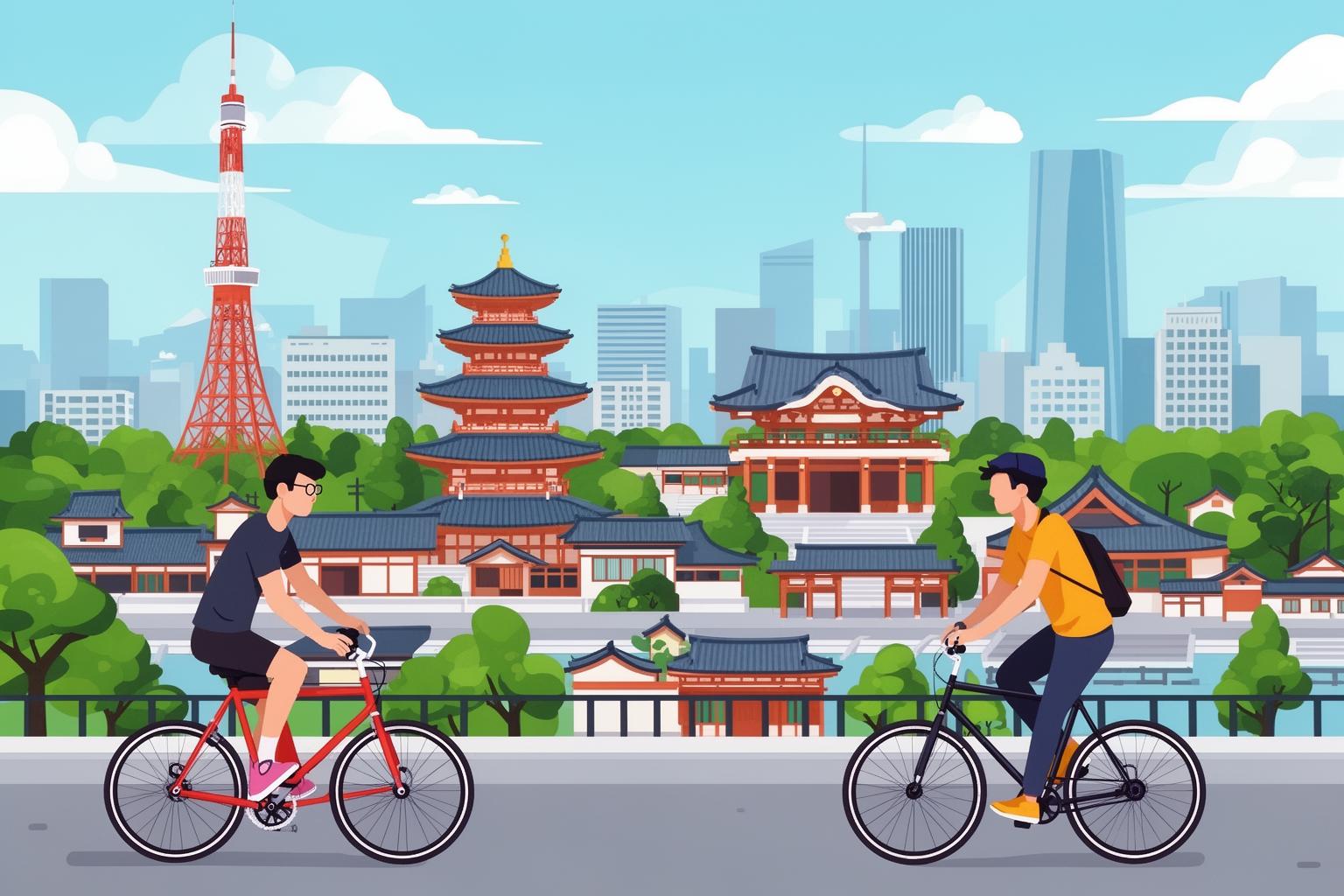
In Osaka, the bicycle is not used for leisure; it is an extension of one’s will. Its sole purpose is to transport you, your groceries, your children, and sometimes an unexpectedly large amount of hardware from point A to point B with as little hassle as possible. This mindset shapes the entire cycling culture, establishing norms that often seem to contradict the official traffic laws.
A Symphony of Bells and Baskets
The typical Osaka cyclist is adept at multitasking. You might see them weaving through crowded sidewalks with a phone pressed to their ear, a cigarette hanging from their lips, or holding an umbrella overhead in the rain with a device called a “kasa sutaando” (umbrella stand). Officially, bicycles should be ridden on the road alongside cars, but in Osaka, sidewalks are the favored route. Why? The reasoning is straightforward: roads are narrow, cars move fast, and although the sidewalks are busy, they offer a more predictable environment. Dodging a pedestrian is easier than avoiding a delivery truck. This approach isn’t due to negligence or disregard for safety—it’s a calculated risk. The unwritten understanding is that sidewalks are shared spaces, where bicycles travel at a pace slightly faster than pedestrians, and the ringing of a bell is a courteous signal, not a forceful demand, essentially saying, “Excuse me, just passing on your right.” It’s a continuous, low-key negotiation for space that everyone recognizes. While foreigners might perceive this as rudeness, it’s quite the opposite: a sophisticated, cooperative system tailored to a densely populated urban setting.
The Shotengai Superhighway
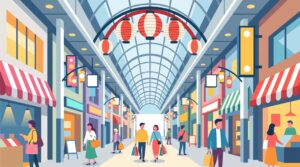
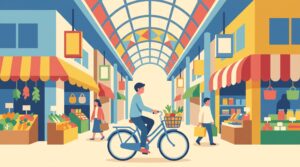
This system is most evident in the shotengai—the covered shopping arcades threading through Osaka’s neighborhoods. Technically pedestrian zones, these arcades function as the city’s bicycle superhighways. Observe the flow in places like Tenjinbashisuji, Japan’s longest shotengai. Cyclists weave through crowds of shoppers like fish maneuvering through a coral reef. There are no marked lanes or traffic signals—only movement. Pedestrians instinctively yield, cyclists modulate their speed, and shopkeepers hardly glance up from their stalls. It’s a beautiful, functional chaos. This behavior reflects Osaka’s mercantile heritage. Time is money, and efficiency is essential. Any rule that would stop a shop owner from cycling through the arcade to deliver an order or a mother from fetching vegetables is seen as a hindrance rather than a cornerstone of civic order. The system works because everyone shares a common understanding: to stay alert, anticipate others’ actions, and adjust accordingly. It is a high-trust environment based not on laws but on mutual respect and the shared aim of getting things done.
The Kyoto Contrast: Aesthetics and Order
Take the 30-minute train ride to Kyoto, and you step into a different cycling realm. The bikes may appear the same—mamachari remain the predominant type—but the atmosphere is completely transformed. The frantic, pragmatic rhythm of Osaka yields to a more deliberate, almost theatrical, sense of order. Here, the bicycle serves less as a workhorse and more as an element of the city’s carefully curated aesthetic.
Cycling as a Scenic Art
In Kyoto, the context of cycling shifts noticeably. You encounter students on sleek, single-speed bikes gliding along the Kamo River, tourists on bright red rental bikes pedaling between temples, and locals moving at a distinctly more relaxed pace. The city’s grid layout, a remnant of its imperial history, combined with its relatively flat terrain, makes cycling on the roads feel more practical and less daunting than in Osaka. The environment itself invites a more orderly approach. Journeys seem less about straightforward A-to-B travel and more about savoring the experience of moving through a beautiful city. As a result, behavior adapts accordingly. There is an unspoken expectation to align with the city’s cultivated atmosphere of refined grace. A cyclist cutting through pedestrians with Osaka-style boldness would not be quietly tolerated but met with disapproving glances and perhaps a pointed clearing of the throat. Such behavior would disrupt the `wa`, the harmony, that Kyoto strives so diligently to uphold.
The Sidewalk is Sacred (Relatively)
While cycling on the sidewalk is not absent in Kyoto, it carries a distinct social significance. It feels more hesitant, more courteous. Sidewalk cyclists tend to ride slower, give pedestrians greater space, and are more prone to dismounting in crowded areas. This is partly due to the heavy foot traffic in central Kyoto, which makes sidewalks genuinely challenging to navigate. Yet it also reflects a different social priority. In Osaka, efficiency is paramount. In Kyoto, the focus is on preserving public face, or `tatemae`. The ideal is to adhere to rules and sustain a sense of public order. Departing from that standard—like treating the sidewalk as a personal lane—feels like a minor social breach. It’s not that Kyoto residents are inherently more law-abiding; rather, the social cost of being seen as disruptive is greater. The city’s identity as a cultural steward permeates every aspect of daily life, down to the way someone rings a bicycle bell.
The Kobe Challenge: Topography and Tiered Travel
Travel west from Osaka, and you reach Kobe, a city whose cycling culture has been shaped not by commerce or tradition, but by the sheer force of geography. Nestled between the Rokko mountain range and the waters of Osaka Bay, Kobe is a city built on a slope. This inescapable fact influences every aspect of how people travel on two wheels.
The Electric Assist Revolution
In Kobe’s hilly residential neighborhoods, the typical single-gear mamachari feels more like an instrument of torture. Even a simple trip to the local supermarket can resemble a stage of the Tour de France. Consequently, Kobe reigns as the undisputed capital of the `den-do ashisuto jitensha`, or electric-assist bicycles. In Osaka or Kyoto, an electric mamachari is a convenience, often used by parents carrying two children or by the elderly. In Kobe’s hillside areas, however, it is an essential lifeline, the great equalizer that makes daily life manageable. This fundamentally changes the experience of cycling. It stops being a casual, spontaneous activity and becomes a more intentional, planned means of transportation. The investment is greater, and the objective is clear: to conquer the incline. You see fewer people weaving through crowds and more people steadily powering up steep streets, faces set with determination.
A Tale of Two Cities (North and South)
Kobe’s geography divides its cycling culture sharply. On the flat, reclaimed land near the port—in districts like Sannomiya and Motomachi—the atmosphere closely resembles Osaka’s. It’s a practical, urban setting where bikes are used for shopping and commuting on level ground. The rules remain flexible, and cycling on sidewalks is common. But once you start ascending north toward the mountains, the culture shifts dramatically. In the refined hillside neighborhoods of Kitano or the sprawling suburbs climbing toward Mount Rokko, bicycles are less often seen for casual errands. The physical effort required, even with electric assistance, leads many residents to prefer the city’s reliable bus network or to walk instead. Cycling here becomes a niche pursuit, reserved for dedicated commuters or fitness enthusiasts. Unlike Osaka’s widespread, inclusive cycling culture that permeates every part of the city, Kobe’s is divided by altitude—a practical adaptation to the relentless reality of its terrain.
Deciphering the Regional Mindset Through Cycling
The modest mamachari, therefore, serves as a lens through which the unique characteristics of these three neighboring cities come into clear view. Their unwritten traffic customs directly reflect their fundamental values.
Osaka: The Rule of Reasonableness
Osaka functions according to what might be called the “rule of reasonableness.” While official laws act as guidelines, true authority lies in pragmatic, situational logic. An Osakan cyclist faced with an empty sidewalk and a busy road evaluates which option is safer and more efficient for everyone involved. The sidewalk is chosen. This is not lawlessness; rather, it reflects a belief that the spirit of the law (accident prevention) matters more than its literal wording (staying on the road). It embodies the merchant’s philosophy: don’t let rigid regulations obstruct practical solutions. That is why pedestrians in Osaka rarely get upset with cyclists—they understand this reasoning, as they live by the same logic and will make that calculation themselves when they ride tomorrow.
Kyoto: The Rule of Appearance
Kyoto’s cycling culture is shaped by the “rule of appearance.” Preserving public harmony and showing a refined, orderly image to the world is a deeply rooted value. The ideal is to follow the rules—to ride on the street, park in designated spots, and act considerately. Though reality often falls short of this ideal, the performance is what counts. Social standing depends on being seen to do the right thing. This fosters a quieter, more cautious cycling style. The aim is not merely to travel from point A to point B, but to do so without disturbing the city’s delicate social and aesthetic fabric.
Kobe: The Rule of Reality
Kobe, by contrast, follows the “rule of reality.” Its cycling culture responds directly and unflinchingly to its physical environment. One cannot argue with a steep hill or bargain with gravity. Thus, decisions made by a Kobe cyclist—such as what type of bike to buy, which route to take, or whether to ride at all—are governed by tangible, physical constraints. This creates a different pragmatism than Osaka’s, one focused less on social compromise and more on overcoming physical challenges. The culture emphasizes personal endurance and appropriate equipment rather than shared space.
A Foreigner’s Guide to Surviving and Thriving
For any non-Japanese resident navigating this world for the first time, grasping these underlying codes is essential. Merely knowing the traffic laws is not enough; you need to learn how to read the local rhythm.
Embracing the Osaka Flow
When you acquire your first mamachari in Osaka, your instinct may be to strictly adhere to the letter of the law. You will soon realize this is more dangerous and stressful than adapting to the local flow. First, get a bell, but understand its role. It’s a gentle alert, not a horn. Second, move predictably. Abrupt stops or swerves cause problems. The entire system relies on everyone anticipating each other’s movements. Third, accept the sidewalk as a multi-use path. When walking, be aware that bikes share the space. When cycling, remember you are a guest in a pedestrian’s world. Adjust your speed accordingly and always be prepared to yield. It’s a dance, and after a few weeks, you will learn the steps.
Parking, Registration, and the Police
Beyond the road rules, there are ownership regulations. When you get a bicycle, you must complete the `bohan toroku`, or anti-theft registration. This is mandatory. Police officers will occasionally stop you for a registration check. Don’t be alarmed; this is a routine procedure, especially late at night or near train stations, aimed at reducing bicycle theft. The bigger challenge is parking. Designated bicycle parking lots, often with a small fee, are becoming more common near stations. However, the prevailing reality is a chaotic sea of bikes parked along sidewalks and outside shops. Although largely tolerated, watch out for the dreaded “silver trucks.” Periodically, the city conducts clean-up sweeps, removing illegally parked bicycles. Your bike will be taken to an impound lot, and you will have to pay a fine to retrieve it. This is Osaka in a nutshell: a system that is 95% flexible and 5% strictly enforced. Learning to tell the difference is part of the initiation.
Ultimately, the mamachari is far more than a simple machine. It’s a rolling embodiment of a city’s character. In Osaka, its path is shaped by a relentless quest for efficiency, a fluid negotiation of space that values outcomes over rules. In Kyoto, it follows a more prescribed path, one that respects form and public harmony. In Kobe, its journey reflects the struggle against a challenging landscape. To live in Osaka is to learn its unique rhythm, to understand that the chaos you initially perceive is actually a complex, cooperative dance. And there is no better way to join that dance than by hopping on a mamachari and becoming part of the flow yourself.