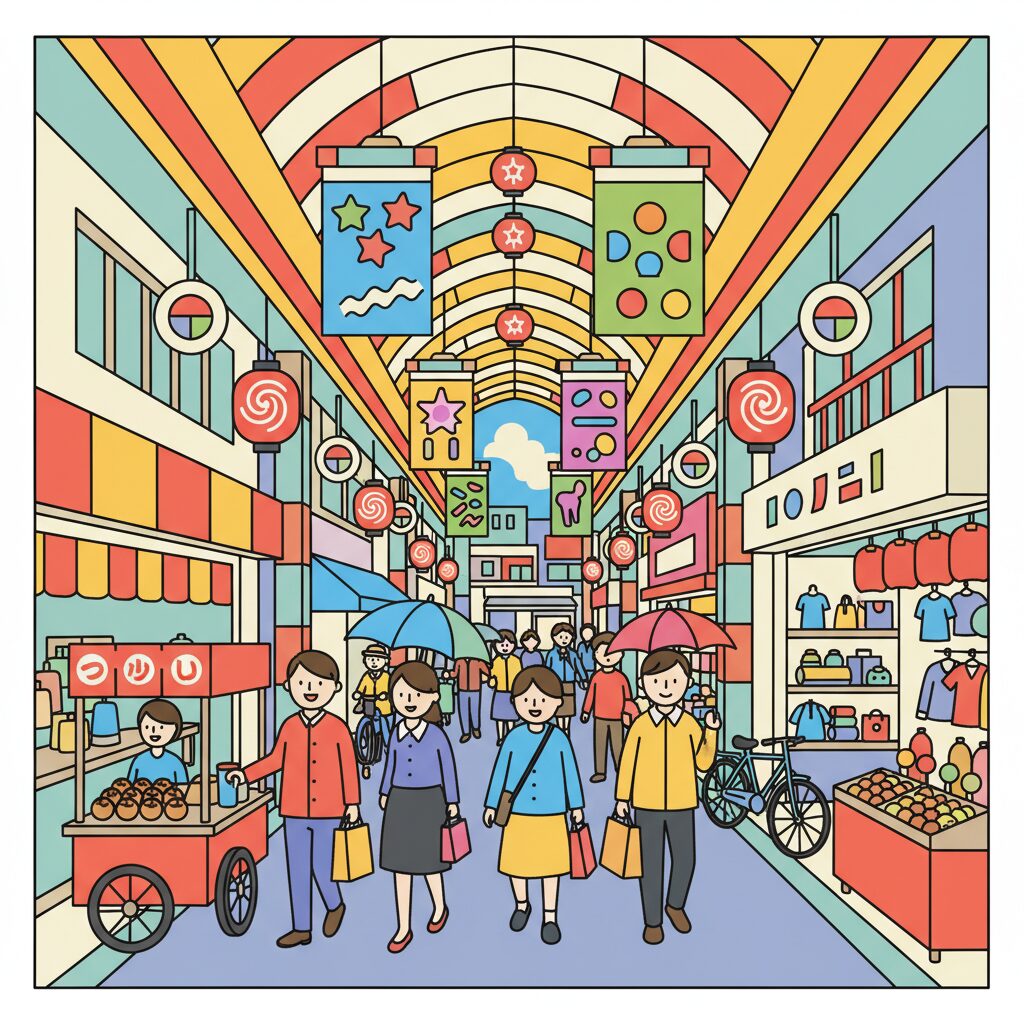
Step off the train in Osaka, and your senses are immediately flooded. The neon glow of Dotonbori, the soaring heights of the Umeda Sky Building, the polished floors of a Hankyu department store—it’s a city that wears its modernity on its sleeve. But to find the city’s true pulse, you have to look away from the gleaming facades and listen for a different kind of rhythm. It’s the clatter of a shop shutter rolling up, the sizzle of oil hitting a fryer, the boisterous call of a vegetable vendor, and the shuffling feet of a thousand daily errands. This is the sound of the shotengai, Osaka’s covered shopping arcades. For a newcomer, they can seem like chaotic, slightly dated relics. Why would anyone choose these narrow, crowded corridors over the air-conditioned perfection of a modern mall? That question is the key. In Osaka, a shotengai is not just a place to buy groceries. It is the neighborhood’s living room, its gossip column, its social safety net, and the stage where the city’s unwritten rules of engagement are played out every single day. Forget what you think you know about Japanese politeness and reserve. To truly understand Osaka, you have to understand its shotengai.
Osaka’s vibrant street life is complemented by regional initiatives like the airport accessibility award, which signals a future where tradition meets inclusivity.
The Shotengai vs. The Department Store: A Tale of Two Shopping Cultures
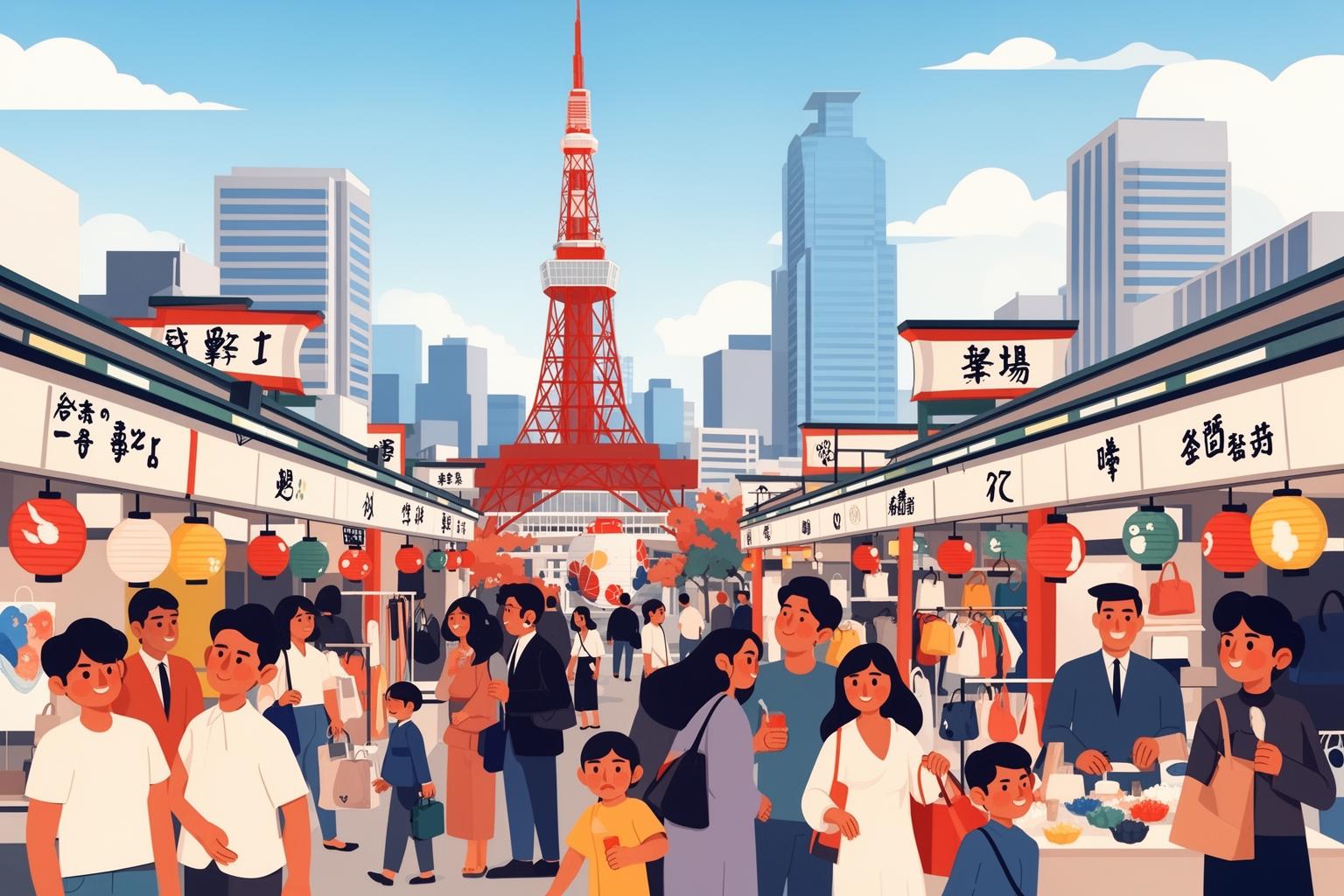
Before relocating to Osaka, my perception of Japanese shopping was largely influenced by Tokyo. It was a realm of calm efficiency. In a Ginza department store, staff bow with exactness, items are wrapped with artistic delicacy, and the transaction unfolds like a silent, elegant ballet. It’s beautiful and seamless, yet also impersonal. The service is directed at the customer as an anonymous figure. Osaka’s shotengai present a striking, exhilarating contrast. Here, the ballet gives way to a lively street performance, and you are not merely a customer; you are an active participant.
Tokyo’s Polish vs. Osaka’s Pulse
Step into a shotengai such as Senbayashi or Tenjinbashisuji, and the first thing that strikes you is the sound—a wall of it. There’s the gravelly-voiced butcher shouting about his specials, the high-pitched jingle of the local supermarket, the sizzle of freshly fried korokke (croquettes), and above all, the steady hum of conversation. People aren’t just shopping; they’re stopping, chatting, catching up. An elderly woman playfully haggles over the price of a daikon radish. A young mother discusses her child’s school with the fishmonger. This isn’t the hushed reverence of a Tokyo depato; it’s loud, vibrant, and profoundly human.
The aesthetic differs as well. While Tokyo retail spaces are marked by minimalism and curated perfection, Osaka’s shotengai burst with maximalism. Hand-drawn signs shouting about today’s discounts are taped over older, faded ones. Bright plastic banners hang beside beautiful, decades-old wooden signboards. Products spill from storefronts, creating a narrow, winding path for shoppers. From a fashion and design viewpoint, it’s a captivating collage of eras and styles—a living museum of commerce. It favors function and personality over form. This visual chaos isn’t neglect; it’s a sign of life, of a space that’s actively used and cherished, not just preserved.
The Unspoken Rules of Engagement
In a Tokyo store, the interaction follows a script: “Irasshaimase” (Welcome), “Kashikomarimashita” (Certainly), “Arigatou gozaimashita” (Thank you very much). In an Osaka shotengai, that script is discarded. The greeting might be a gruff “Maido!” (Thanks always!) or simply a nod. The transaction invites conversation, and the currency is banter.
This is where many non-Osakans stumble. The direct, teasing style of communication can be mistaken for rudeness. I once observed a woman buying tuna from a fishmonger. He eyed her choice and said, loud enough for all to hear, “Are you sure you want this one? It’s for people who actually know how to cook.” Without missing a beat, she retorted, “It’ll be fine as long as it’s better than the mackerel you sold me last week!” They both laughed, and he tossed in an extra piece of tuna as an omake, a small gift. This is the essence of shotengai communication. It’s a performance, a friendly duel. The shopkeeper isn’t insulting her; he’s recognizing her as a regular, a member of the community. Responding with stiff politeness would be the real social misstep. You’re expected to have good nori, to jump into the rhythm of the banter and play along. This is how relationships are built and sustained, one witty comeback at a time.
More Than a Market: The Arcade as a Community Hub
The reason shotengai prosper in Osaka is that their main function isn’t solely transactional. While you can purchase cheaper eggs at a big-box supermarket or have perfectly uniform carrots delivered to your door, you can’t replicate the social infrastructure these arcades offer. They serve as the glue that binds a neighborhood together.
The “Pajama Perimeter”
Consider how you dress for different occasions. To visit a stylish cafe in Shinsaibashi or a department store in Umeda, you carefully choose your outfit and present a certain version of yourself. The local shotengai, however, falls within what I call the “Pajama Perimeter.” This is the area around your home where it’s socially acceptable to be seen in your most casual attire—slipping into sandals with your house clothes, no makeup, hair hastily tied back. Seeing people shop for dinner in what is essentially loungewear sends a strong message: they feel at home. The shotengai isn’t a formal public space; it’s a semi-private extension of their homes. There is a comfort and lack of pretense here that you don’t find in more formal retail settings. It expresses a collective sense of ownership and belonging. This space is ours.
A Safety Net Woven from Gossip and Groceries
This sense of community also has a practical dimension. Shotengai shopkeepers act as the neighborhood’s unofficial watchdogs. They form a living, breathing social network. The tofu shop owner knows that Mr. Yamamoto buys a block of firm tofu every morning at 9 AM. The woman at the vegetable stand knows that Mrs. Sato’s daughter is visiting from Tokyo this week. This web of daily, casual observation creates a powerful, informal safety net. If Mr. Yamamoto doesn’t come for his tofu two days in a row, the shopkeeper might become concerned and ask a neighbor to check on him. In a country with a rapidly aging population, this function is invaluable—a form of community care that exists organically, free from bureaucracy.
As a woman living in the city, this network offers a deep sense of security. Walking home through the shotengai at night feels far safer than walking down an empty residential street. Even when shops are closed, their lights are often on. You know the shopkeepers and their families live upstairs. Their presence is tangible. These streets aren’t anonymous; they are populated corridors where you are recognized. The concept of “eyes on the street,” as urbanist Jane Jacobs described, is the lived reality of Osaka’s shotengai. It’s a security system based on familiarity and mutual recognition, far more effective than any surveillance camera.
Decoding the Osaka Dialect and Demeanor
The distinctive culture of the shotengai is deeply embedded in the everyday language people use. Osaka-ben, the local dialect, is known for being straightforward and expressive, making the arcade its natural setting. Grasping this dialect is essential to understanding the local mindset, especially regarding business and money.
“Mokkari-makka?” (Making Money?) – The Language of Business and Banter
One of the most well-known phrases in Osaka-ben is the greeting, “Mokkari-makka?” which literally means “Are you making a profit?” Outsiders might be taken aback by its bluntness. Throughout much of Japan, inquiring about someone’s financial matters is considered highly taboo. However, in Osaka, it’s a common, friendly way to say “How’s it going?” The usual response is a cheerful “Bochi-bochi denna” (So-so, bit by bit). This exchange offers insight into the spirit of Osaka. As a city built on commerce, business isn’t separated from daily life; it’s woven into everyday conversation. It represents a shared interest and a common language. Far from being an intrusive question, it serves as a gesture of camaraderie, recognizing the collective effort involved in commercial pursuits. It expresses a worldview where business is not just about profit but about energy, activity, and connection.
The Art of the “Value” Conversation
There is a persistent stereotype that people from Osaka are kechi, or stingy. This is a basic misconception. A more accurate term would be “value-conscious.” An Osakan isn’t merely after the lowest price; they seek a good deal, and the process of securing that deal matters as much as the outcome. While aggressive bargaining isn’t typical, a bit of playful negotiation is part of the culture. Asking a shopkeeper, “Chotto makete kureru?” (Can you give me a little discount?) or “Kore, omake shite!” (Throw this in for free!) is all part of the interaction. More often than not, the request will be gently refused with a laugh, but that’s not the point. The focus is on the engagement. It’s a kind of game. The real victory isn’t saving 30 yen on a tomato; it’s the successful social exchange. It’s about building a rapport where asking for a little extra is possible. This behavior may be seen as impolite by people from more reserved regions of Japan, but in the shotengai, it signifies a healthy relationship between customer and shopkeeper. It’s a practical, straightforward approach to business that values good results over strict formality.
Navigating the Shotengai: A Practical Guide for Residents
For a foreigner hoping to settle in Osaka, the shotengai can initially feel impenetrable. However, breaking into this world is one of the most fulfilling experiences you can have. It’s the way you shift from visitor to local. The approach is straightforward: show up, stay present, and engage.
Finding Your “Iki-tsuke” (Your Regular Spot)
The secret to unlocking the shotengai lies in becoming a regular. In a place full of endless options, this might seem counterintuitive. Why buy your chicken from the same butcher every week when another might be cheaper? Because you’re not just purchasing chicken; you’re building a relationship. Pick a vegetable stand, a fishmonger, or a tofu shop. Make it your iki-tsuke, your go-to spot. Visit consistently. At first, you’ll be just a face among many. Then, you’ll become “the foreigner who comes on Tuesdays.” Soon, they’ll greet you personally. They’ll remember your preferences. The butcher might set aside a prime cut of meat for you. The vegetable seller will offer tips on cooking the bamboo shoots that just came into season. You’ll become part of casual neighborhood chatter. That’s when you cross the line. You are no longer merely a consumer; you belong to the local community. This feeling of recognition and connection is something a sterile, automated supermarket checkout can never provide.
The Sensory Overload is the Point
When you first step into a bustling shotengai, your instinct might be to rush through. The crowd, the overlapping voices, and the mix of aromas from pickles, grilled fish, and sweet soy sauce can feel overwhelming. But resist that impulse. The sensory overload isn’t a flaw; it’s by design. The shotengai is meant to be savored, not just passed through. So slow down. Put your phone away. Engage your senses. Admire the striking graphic design on an old tea package. Listen to the cadence of the shopkeepers’ calls. Buy one of those mysterious deep-fried snacks and eat it right there, standing to the side. The shotengai calls for your full attention. It’s an immersive experience that pulls you out of your head and into the present moment. It’s a reminder that life is messy, vibrant, and happens right here, right now, amid the beautiful chaos of the everyday.
The Future of the Arcade in a Changing Osaka
Naturally, the shotengai are not exempt from the challenges of the modern era. They contend with fierce competition from massive supermarket chains and the convenience offered by online shopping. Many arcades are grappling with an aging group of shopkeepers whose children have pursued different career paths. Some smaller, more remote shotengai are gradually disappearing, evidenced by the sad sight of permanently closed storefronts.
However, dismissing them would be a mistake. The shotengai reflect Osaka itself: practical, resilient, and surprisingly adaptable. Throughout the city, signs of change are visible. In places like the Karahori Shotengai, historic wooden townhouses have been transformed by young entrepreneurs who have opened trendy cafes, artisan bakeries, and independent boutiques alongside a century-old seaweed store. This blend of old and new generates a vibrant energy, drawing a new generation of customers who value both tradition and innovation. Even the more conventional arcades are finding ways to evolve, hosting local festivals, creating mascot characters, and using social media to engage with the community.
The shotengai persist because they offer something that e-commerce and huge malls cannot: a tangible sense of human connection. They are physical spaces where community is enacted daily through countless small interactions. This model of commerce is built on relationships, not merely transactions. In an increasingly digital and impersonal world, that value is more crucial than ever. The shotengai embody the city’s heart, pumping life through the neighborhood arteries. To live in Osaka without embracing them is to miss the essence of the city entirely. It is in these covered streets, with their hand-drawn signs and playful shopkeepers, that you’ll discover the genuine, unfiltered, and wonderfully human spirit of this city.