
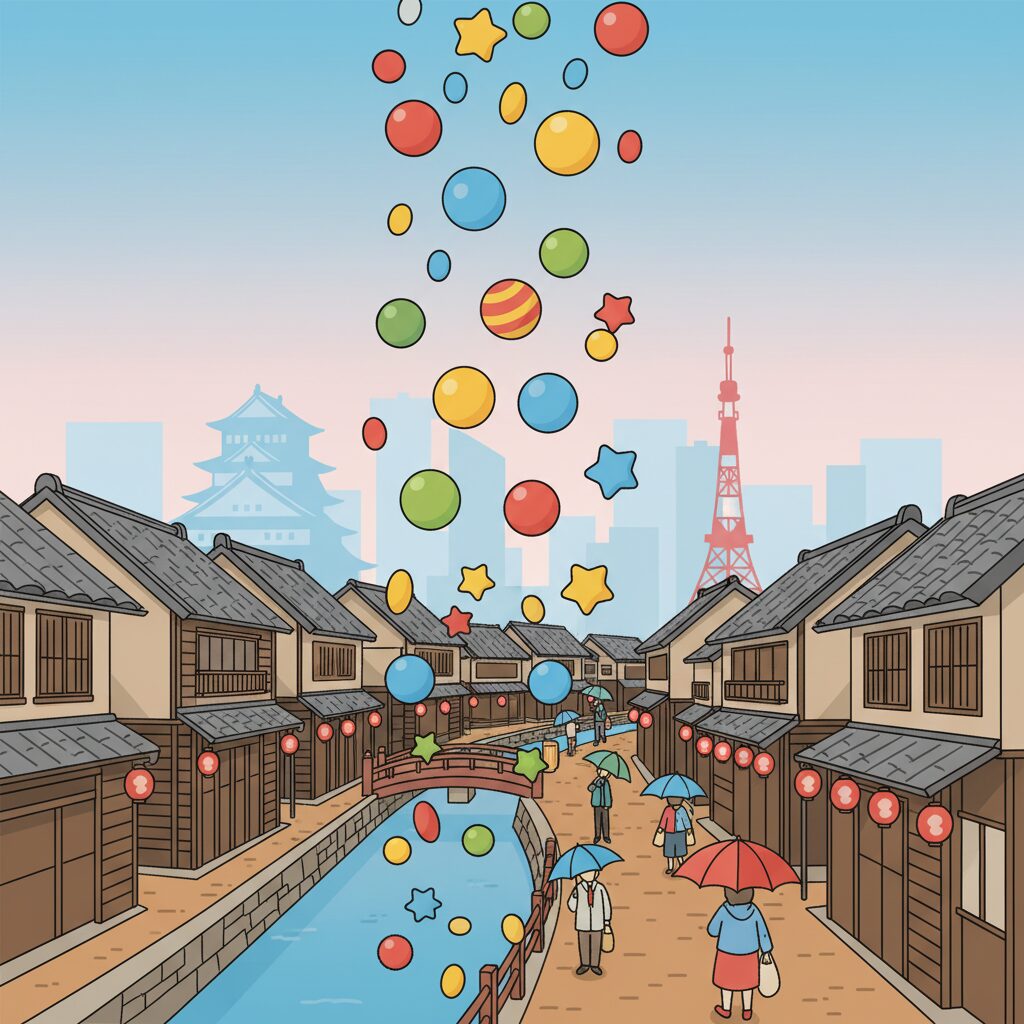
It happens when you least expect it. You’re standing on a train platform in Tennoji, minding your own business, maybe scrolling through your phone. Or you’re admiring the vegetables at a small shop in the Kuromon Market. Suddenly, you feel a gentle tap on your arm. You turn, and an older woman—an ‘obachan,’ as they’re known—is holding out a small, brightly wrapped hard candy. There’s no big speech, no elaborate explanation. Just a crinkly-eyed smile, a slight nod, and the unspoken expectation that you will take it. For a foreigner, this first encounter with Osaka’s ‘Ame-chan’ culture can be baffling. Is this a trick? A test? A random act of kindness so pure it feels suspicious? In a country known for its social reserve, this gesture feels like a glitch in the matrix. But in Osaka, it’s not a glitch; it’s the source code. This isn’t just about candy. It’s a key that unlocks the entire social operating system of the city, revealing a world of difference from the polite distance of Tokyo and offering a genuine taste of what daily life here is really like. To understand the Ame-chan, you have to understand the heart of Osaka itself.
This unassuming gesture mirrors the intricate balance of charm and commerce in Osaka, as exploring its distinctive business code reveals.
The Unspoken Language of a Single Candy
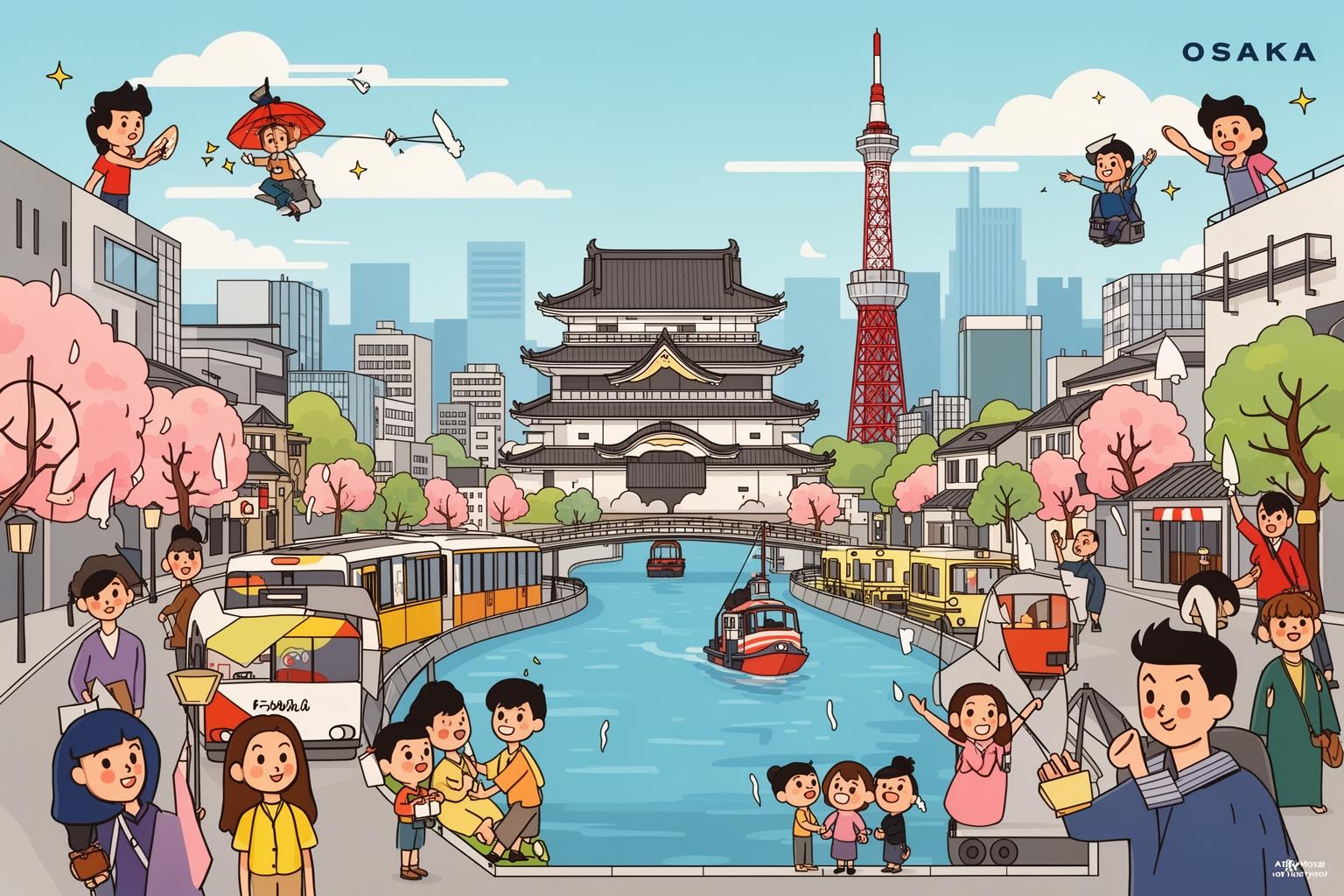
That small piece of hard candy is a cultural emblem, a communication tool as essential to Osakans as their distinctive dialect. It acts as a social lubricant, an icebreaker, and a gesture of goodwill, all wrapped in a crinkly piece of plastic. To regard it merely as a sweet treat is to completely overlook its true significance. It serves as a conversation starter, a peace offering, and a community-building device all in one.
What is “Ame-chan”? It’s More Than Just Sugar.
First, let’s examine the name itself. ‘Ame’ means candy in Japanese. However, the addition of ‘-chan’ gives it a special Osaka character. The suffix ‘-chan’ is a diminutive, an affectionate term generally used for children, pets, or very close friends. By referring to it as ‘Ame-chan,’ the speaker immediately infantilizes the candy, portraying it as a small, cute, and endearing item. This is not a formal gift; it’s a casual, caring gesture, akin to a pat on the back or a warm smile. The candy itself is almost always a simple, individually wrapped hard candy—a lemon drop, a strawberry bonbon, or a classic milk candy. The type is less important than its role. It must be portable, durable, and easy to share. It’s the kind of thing that can stay at the bottom of a purse for weeks, waiting for the perfect moment to appear. This is the signature weapon of the Osaka obachan, the city’s unofficial goodwill ambassadors.
Who Gives and Who Receives? The Social Dynamics
The main distributors of Ame-chan are undoubtedly the city’s middle-aged and elderly women. An Osaka obachan’s purse is legendary, a Mary Poppins-like bag containing everything one might need for a day out, with a small, dedicated pocket almost always reserved for a handful of Ame-chan. They are the custodians of this tradition, the ones who keep the sweet social currency circulating. And they offer it to nearly anyone: a child who fell in the park, a bus driver after a long shift, a tired young cashier at the supermarket, a fellow patient in a clinic’s waiting room, and yes, a foreigner who appears a little lost or overwhelmed. Giving is a way to forge a small, temporary connection. It’s a micro-interaction that says, “I see you. We share this space together. Let’s make it a pleasant one.” It breaks down the formal barrier between strangers, if only briefly.
Ame-chan in Action: Daily Scenarios in the Neighborhood
This isn’t an uncommon or ceremonial occasion. The exchange of Ame-chan is deeply ingrained in everyday life in Osaka. It occurs in the most ordinary places, turning them into moments of brief connection and community. For residents, these small interactions become a comforting and familiar part of the city’s daily rhythm.
The Bus Stop Conversation Starter
Imagine a quiet afternoon at a bus stop in a residential area like Sumiyoshi. An obachan arrives, and after a brief pause, she might remark on the weather or the long wait for the bus. You respond politely. Then you hear the telltale sound: the click of a purse clasp opening. She searches briefly before pulling out a candy. “Ame-chan, taberu?” she asks. “Want a candy?” By accepting, you’re not just taking a sweet; you’re accepting an invitation into a short, shared social moment. The candy closes the distance. The conversation might go on, or it might end there, but the atmosphere has shifted. What was once two strangers now feels like two people who have warmly acknowledged each other’s presence.
Soothing a Crying Child (Yours or Someone Else’s)
This scene is typical in Osaka and stands in stark contrast to other parts of Japan. A toddler starts crying on the Midosuji subway line. In Tokyo, the parent would likely feel embarrassed, trying to quiet the child while sensing the disapproving silence of others. In Osaka, the reaction is often quite different. Before the parent can apologize, an obachan a few seats away will probably make her way over, candy in hand. She won’t hand it directly to the child—that would be intrusive. Instead, she offers it to the parent with a knowing smile, a gesture of solidarity that says, “I’ve been there. Kids are challenging. Maybe this will help.” It’s not interference; it’s communal support. It’s a small act that reinforces the idea we’re all part of this public ecosystem and share a responsibility to make it work.
The Corner Shopkeeper’s “Thank You”
Step into any of Osaka’s extensive covered shopping arcades, or shotengai, such as the one in Tenjinbashi. These arcades are the heartbeat of Osaka’s neighborhoods. When you purchase daikon radish and green onions from a small, family-run shop, the interaction is rarely just a transaction. The shopkeeper will chat with you, asking what you’re cooking for dinner. And when they hand you your change, don’t be surprised if a small candy is slipped into your palm along with the coins. This is more than a simple freebie. It’s a way of building a relationship. It’s the shopkeeper’s way of saying, “Thank you for your business. You’re not just a customer; you’re a neighbor.” It’s what keeps people returning, nurturing a sense of loyalty and community that large chain supermarkets can’t match.
The Osaka vs. Tokyo Divide: Why Ame-chan Doesn’t Travel Well
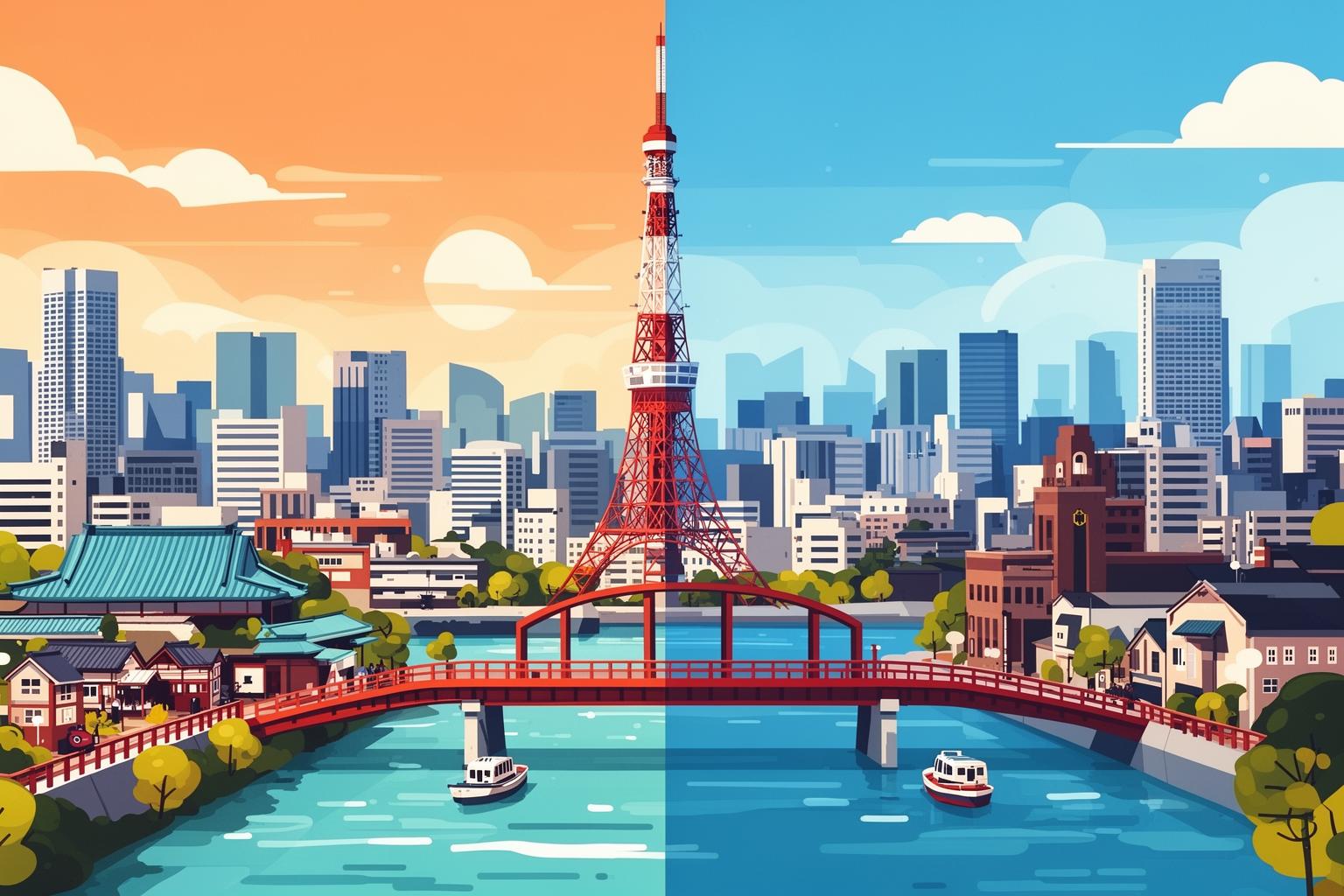
The Ame-chan culture stands as one of the clearest and most tangible examples of the deep cultural divide between Osaka and Tokyo. Trying this gesture on a crowded train in Tokyo would likely be met with confusion, suspicion, or a polite yet firm refusal. It simply doesn’t fit within a social environment governed by different norms.
Personal Space and Social Boundaries
Tokyo functions on the principle of public anonymity and the respect for personal space. The unspoken rule is to avoid imposing on others. You keep to yourself, avoid eye contact, and certainly don’t start conversations or physical contact with strangers. This system is designed to help a hyper-dense city run smoothly and without conflict. Offering a stranger candy from your purse disrupts this protocol—it’s an unsolicited gesture that breaches the personal bubble and can feel jarring and unwelcome. In contrast, Osaka operates with a much more fluid understanding of personal and public space. The boundaries are more flexible. People are more open to engaging, commenting, and interacting. An Ame-chan isn’t a breach of etiquette; it follows an entirely different protocol—one that values connection over untouched personal boundaries.
Communication Styles: Direct vs. Indirect
This contrast is rooted in the historical identities of the two cities. Tokyo was the city of samurai and bureaucrats, a place of hierarchy, formality, and indirect communication where what is left unsaid often carries more weight than what is expressed. Osaka, by contrast, was the city of merchants, where success relied on quickly building rapport, negotiating, joking, and being direct with others. Winning trust and closing the deal were crucial. This merchant spirit endures in Osaka’s communication style, which is louder, more expressive, emotional, and straightforward. An Ame-chan perfectly embodies this approach. It is a tangible, physical gesture that cuts straight to the point: “I want to establish a friendly connection with you, right now.” There’s no hidden meaning to interpret. It simply is what it is—a small offering of sweetness. This directness may be startling to those used to Tokyo’s subtleties, but for Osaka residents, it provides a refreshing and effective way to navigate social interactions.
A Foreigner’s Guide to Ame-chan Etiquette
Navigating this unique cultural tradition can feel somewhat challenging at first. You want to show respect, but the guidelines aren’t clearly written anywhere. For foreigners living in Osaka, mastering the art of the Ame-chan exchange signifies that you’re beginning to genuinely understand the city.
The Art of Accepting Gracefully
The key rule is straightforward: if you are offered an Ame-chan, you should almost always accept it. While a polite refusal is of course your prerogative, it might be seen as somewhat cold or as rejecting the friendly gesture. The person offering it isn’t trying to pressure you into eating candy; they aim to connect. The best response is a warm smile accompanied by a clear “Arigatou gozaimasu” or a more casual “Sumimasen, arigatou.” You don’t need to eat it immediately—you can simply pocket it for later. The act of accepting is the essential part of the exchange. It completes the social circle. You have received their goodwill, and the interaction is successful.
Should You Carry Your Own Ame-chan?
As a foreigner, no one expects you to adopt this custom right away. For the first few months or even years, you will likely be a net receiver of Ame-chan, and that’s perfectly fine. However, if you find yourself living in a particular neighborhood for some time and wish to strengthen your local connections, moving up to become an Ame-chan giver is a meaningful step. Carrying a few candies to offer a familiar shopkeeper or a neighbor you often see at the bus stop is a significant gesture. It signifies that you’re not just a passive observer of the culture; you are an engaged participant. It shows you’ve been paying attention and understand the local language of kindness. The first time you successfully give an Ame-chan and witness the surprised delight on an obachan’s face is a genuine Osaka rite of passage.
What Foreigners Often Misunderstand
There are several common misconceptions that can lead to confusion. First, an Ame-chan is not a bribe or a transactional item. It carries no obligations. Second, in almost all cases, it is not a creepy or suspicious act. While common sense should always apply, the cultural context of an elderly woman offering candy is one of pure, genuine goodwill. Lastly, it’s not a comment on your appearance. They aren’t giving you candy because you look sad or pitiable (although sometimes, it may be a gesture of comfort). Most often, it is a standard, default social courtesy, like saying “hello.”
Beyond the Candy: The Spirit of “Osekkai”
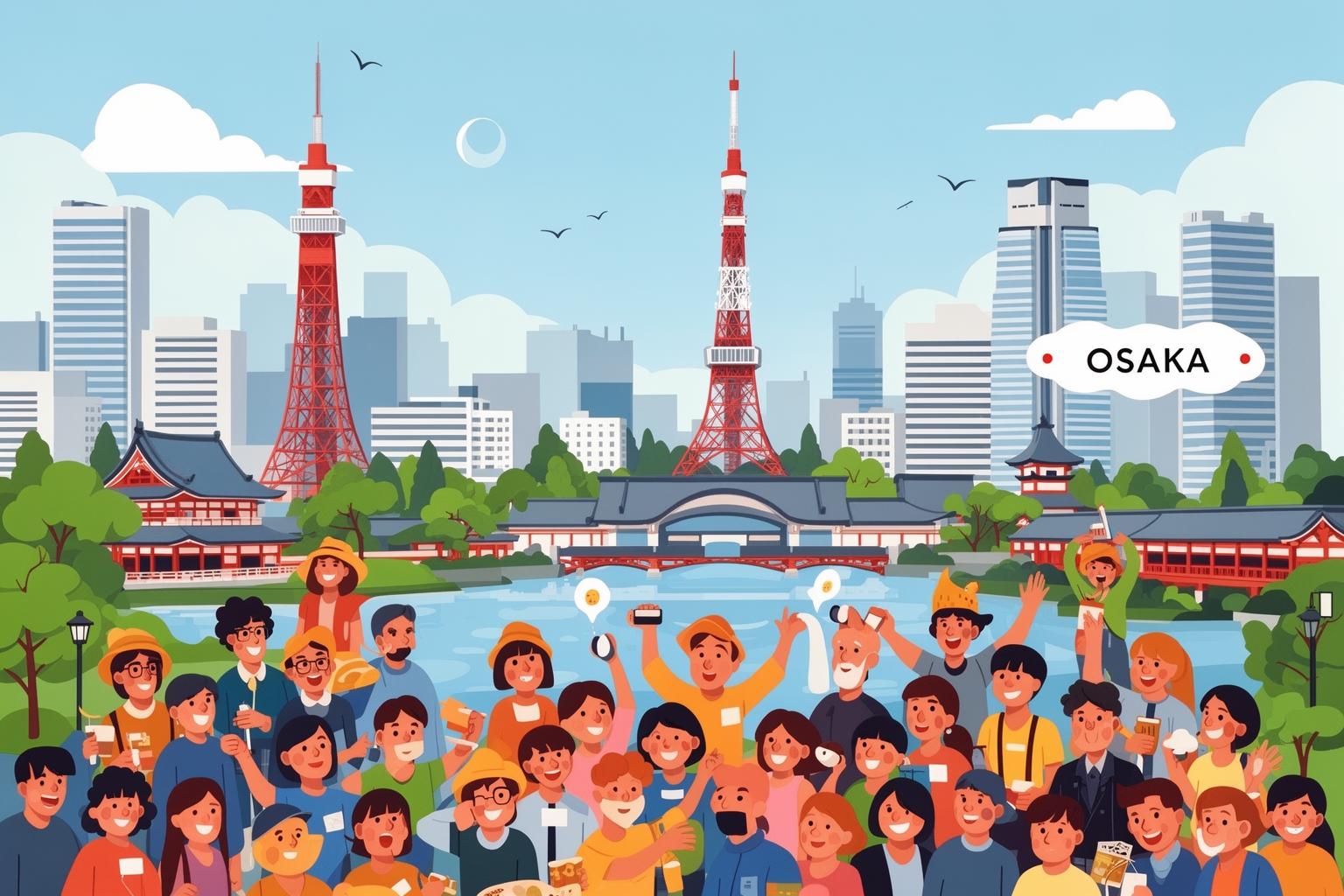
The Ame-chan culture is the most visible and charming expression of a much broader and more intricate Osaka trait: osekkai. Grasping this concept is crucial to understanding the city’s essence.
Defining “Osekkai”: Meddlesome Kindness
Osekkai is a tricky word to translate directly. It can mean “nosy,” “meddlesome,” or “interfering.” In many regions of Japan, it carries a purely negative meaning. Being osekkai means sticking your nose into other people’s affairs where it is not wanted. However, in Osaka, the word holds a unique and often valued ambiguity. Here, osekkai can also signify a proactive, caring, and neighborly kindness. It’s a way of looking out for others, even if they haven’t asked for help. It’s the woman in the supermarket who tells you there’s a loose thread on your sweater. It’s the neighbor who brings your laundry inside when it begins to rain and you’re not home. It’s the shopkeeper who good-naturedly scolds you for not dressing warmly enough. This behavior might be seen as intrusive in Tokyo, but in Osaka, it’s often viewed as a sign of genuine care. It represents a community that refuses to remain anonymous.
How Ame-chan Embodies the Osaka Mindset
Ame-chan represents osekkai in its gentlest and most widely accepted form. It’s a small, low-pressure intervention in someone’s day. It requires no lengthy conversation or serious commitment. It serves as the perfect introduction to the full Osaka mindset of interconnectedness. This culture of casual involvement is exactly what makes daily life in Osaka feel unique. You are not an isolated individual. Your affairs are, to some extent, everyone’s concern. This can sometimes feel overwhelming for those accustomed to urban anonymity, but it also creates a strong, informal social safety net. People are attentive. People look out for one another. The city feels less like a collection of strangers and more like one large, sprawling, and occasionally noisy neighborhood.
The Enduring Power of a Simple Gesture
In today’s world of smartphones, social media, and growing isolation, the tradition of Ame-chan can seem like a relic from another era. It is a distinctly analog gesture in a digital age. There is no app for it. It cannot be optimized or scaled. Its value lies precisely in its smallness, spontaneity, and simple, human-to-human physicality. The rustle of the wrapper, the warmth of the hand offering it, the shared smile—these are experiences that cannot be recreated through a screen. For anyone wondering if Osaka is the right place to live, the answer may rest in their response to this custom. If the thought of a stranger offering you candy and some unsolicited conversation feels like a charming and welcome interruption, you are likely to thrive here. If it strikes you as an invasion of personal space, the city’s social fabric may seem a bit harsh. The Ame-chan is more than a cultural quirk; it serves as a litmus test. It embodies a city that consistently chooses connection over cool detachment, community over solitude. The true spirit of Osaka isn’t found in its towering castles or dazzling neon signs. It’s found in the depths of a thousand purses, in the crinkle of a cellophane wrapper, and in the quiet, sweet exchange that briefly turns strangers into neighbors.








