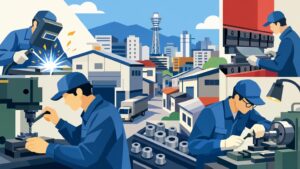
Step off the train in Higashiosaka, and the first thing you notice isn’t a landmark. It’s the sound. It’s not the roaring traffic of Umeda or the electric buzz of Namba. It’s a different kind of energy, a constant, low-frequency hum punctuated by the rhythmic clang of a press, the hiss of a welding torch, and the high-pitched whine of a lathe. This isn’t background noise; it’s the city’s pulse. Welcome to the heart of Osaka’s ‘Monozukuri’ culture, a world away from the polished glass towers of Tokyo and even the vibrant commercialism of central Osaka. This is ‘Shitamachi’, the ‘low city’, where life and labor are not separated by zoning laws and long commutes, but are woven together into a single, intricate fabric. For anyone trying to understand the real soul of Osaka, beyond the takoyaki and the boisterous humor, you have to understand this place. What does it truly mean to live in a city where your neighbor isn’t just a person, but a small factory, and where the rhythm of your day is dictated by the creation of tangible things? It’s a question that cuts to the core of what makes Osaka, Osaka.
Amid this vibrant tapestry of industrious sounds and craftsman spirit, the city’s unique machi-koba work culture continues to forge a compelling future for both tradition and innovation.
The Symphony of the Small Factory
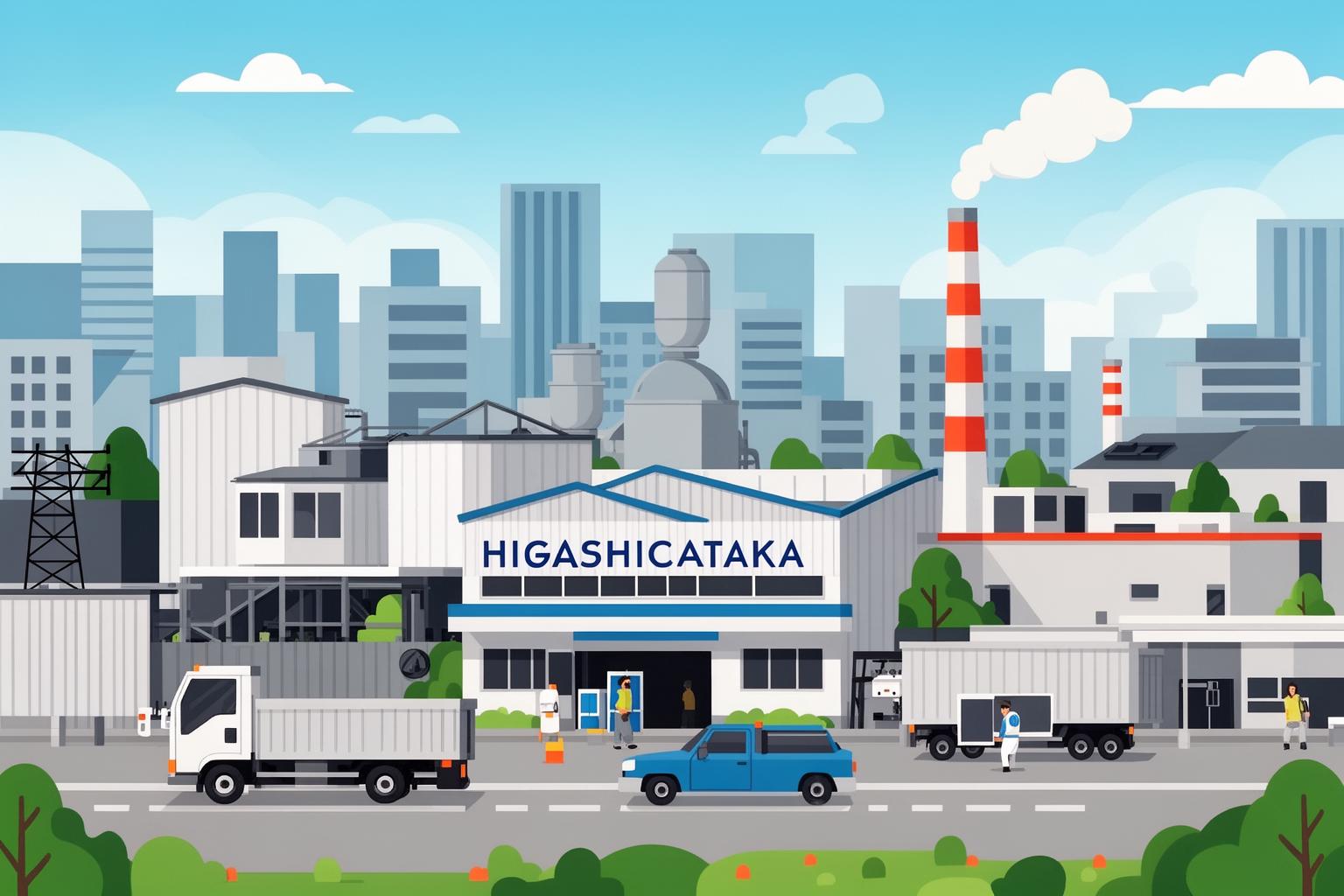
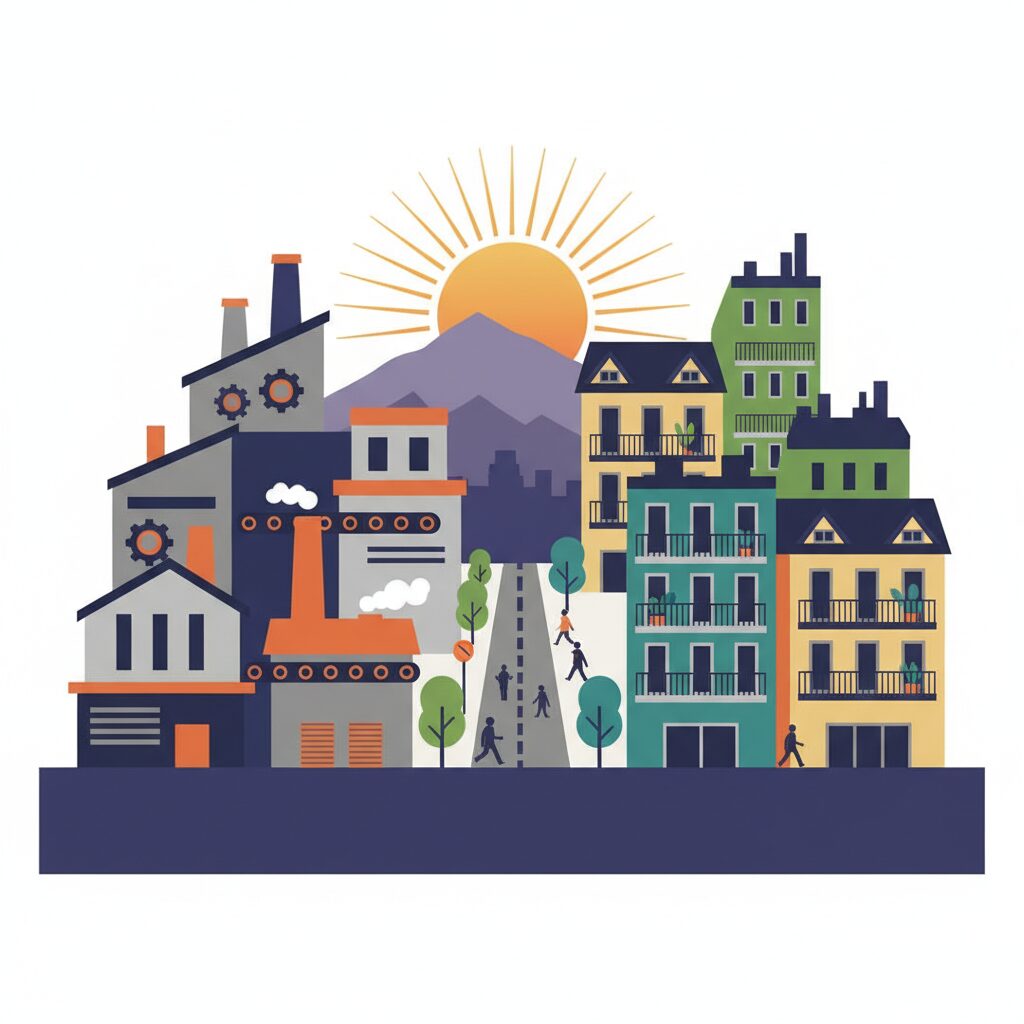
Living in Higashiosaka means forming a new relationship with sound. In a quiet Tokyo suburb, the unexpected noise of construction feels like an intrusion, disrupting the peace. Here, the hum of machinery represents life itself. It is the audible proof that the community is alive, working, and thriving. Stroll down any random narrow side street, and you’ll notice it: a two-story home with laundry fluttering from the second-floor balcony and a small patch of carefully tended flowers by the door. Beside it stands a building of the same size, but its entire ground floor is an open garage. Inside, a man in a grease-stained jumpsuit leans over a milling machine, metal shavings spiraling onto the concrete floor. The air carries the scents of cut steel, machine oil, and faintly, soy sauce from the dinner cooking next door. This is not a designated industrial area; it is simply a neighborhood. The clear distinctions found in other modern cities simply dissolve here.
These small workshops, called ‘koba,’ form the foundation of the community. They are not faceless corporations but family legacies. Many have operated for generations, with skills passed down from grandfather to father to son—and increasingly, to daughter. The owner is not a distant figure in an office tower; he is the person you see buying groceries at the local ‘shotengai’ (shopping arcade), whose children attend the same elementary school as yours. This closeness profoundly changes urban life, fostering an unspoken understanding and shared identity rooted in the act of making. The factory’s rhythm becomes the neighborhood’s rhythm. The day begins with the sound of metal shutters rolling up, a chorus echoing across the district. It peaks in the afternoon with a symphony of production and winds down in the evening as the machines fall silent one by one.
‘Monozukuri’ as Identity, Not Just a Job
‘Monozukuri’ is a term often translated as ‘manufacturing’ or ‘craftsmanship’, yet both fall short of its true meaning. It embodies a philosophy, an ethos that influences every facet of life here. It reflects a deep pride in the ability to create tangible items with precision, skill, and creativity. Unlike the abstract realms of finance or digital services that drive much of Tokyo’s economy, this is a world of concrete results. At day’s end, a worker in Higashiosaka can hold the product of their effort—a perfectly threaded bolt, a complex gear, or a specialized part destined for a bullet train, a medical device, or even a satellite.
This mindset profoundly shapes the local character. There is an innate practicality and straightforwardness among the people here. In the world of ‘Monozukuri’, a part either fits or it doesn’t; a machine either functions or it’s broken. Ambiguity and ornate language have little place. This directness can sometimes be misunderstood by outsiders, especially those used to the layered politeness and indirectness (‘tatemae’) common in Tokyo’s corporate culture. A factory owner in Higashiosaka may cut straight to the chase in negotiations, skipping lengthy formalities. This is not meant to be rude; rather, it shows respect for time and a focus on the task. It’s a communication style shaped by an environment where clarity and efficiency are vital. The question is always, “What’s the problem, and how do we solve it?”
This shared expertise and proactive spirit famously culminated in the ‘Maido-1’ satellite project. When the national space agency lagged, a collective of these small Higashiosaka factories took it upon themselves to build their own satellite. It was a bold, almost daring move, but one rooted in the quiet confidence of people who tackle complex physical challenges daily. The project became a huge source of local and national pride, perfectly capturing the spirit of Higashiosaka: a network of small, highly skilled contributors who, working together, can accomplish extraordinary feats.
The ‘Shitamachi’ Social Fabric
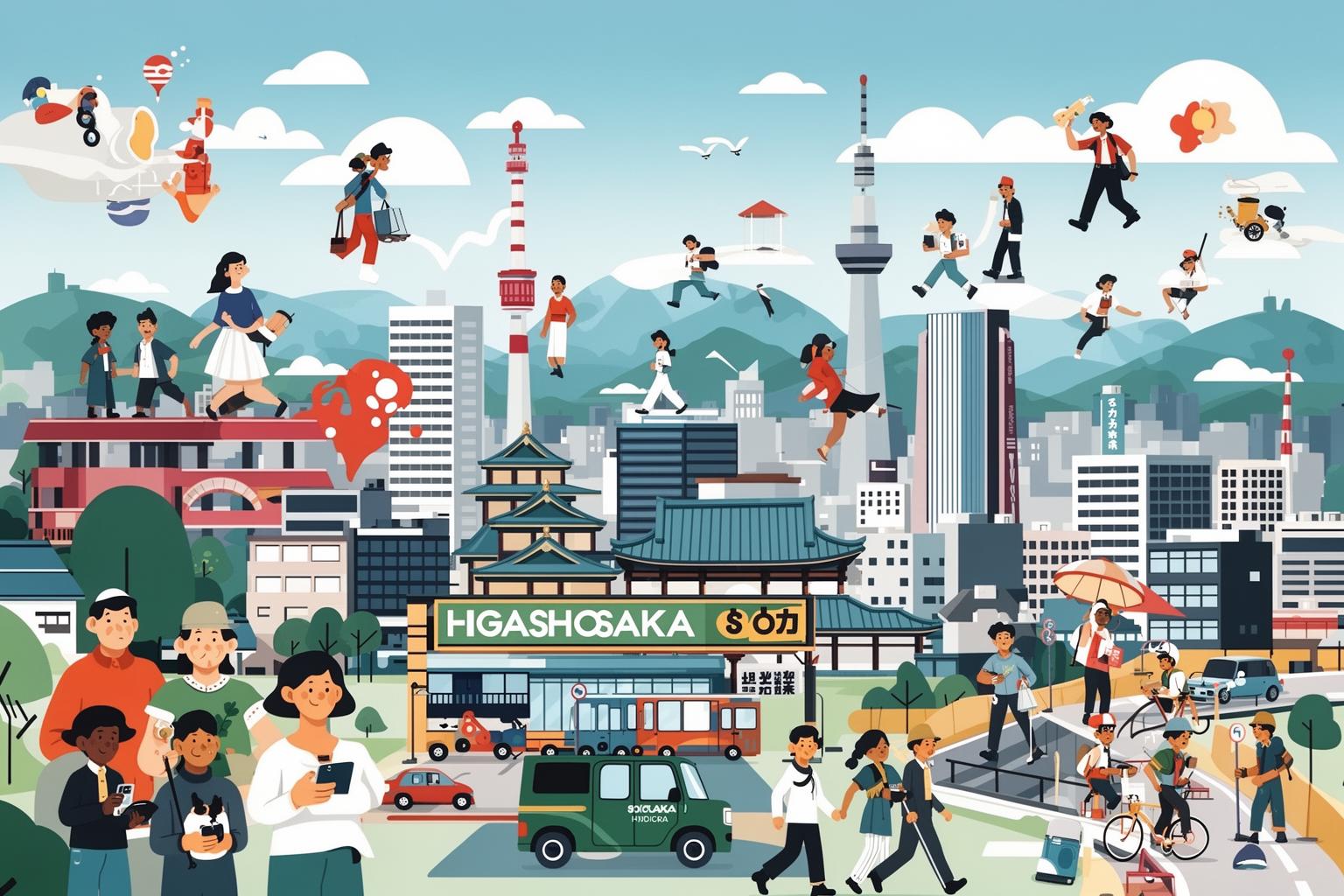
Higashiosaka epitomizes the classic ‘Shitamachi.’ This term, meaning ‘low city,’ traditionally described the flat, low-lying sections of cities inhabited by artisans, merchants, and laborers, contrasting with the ‘Yamanote’ or ‘high city’ where samurai and aristocrats lived. Today, these terms hold more of a cultural significance than a strictly geographic one. ‘Shitamachi’ embodies a lifestyle that is communal, humble, and deeply connected to neighborhood bonds.
The neighborhoods’ physical design mirrors this character. Streets tend to be narrow, intended for pedestrians and bicycles rather than cars. Public and private spaces often blend together. Shopkeepers sweep the sidewalks outside their shops, neighbors place potted plants on the street to add greenery, and it’s common to see people chatting on their doorsteps. Life here is lived more openly and collectively, fostering a strong sense of mutual support, or ‘gokinjyo-zukiai’ (neighborhood relations). People know their neighbors, who is elderly and living alone, whose child is unwell, and who is celebrating a new grandchild. This social safety net is woven from countless small daily interactions.
This is most evident in the local ‘shotengai.’ These covered shopping arcades serve as the community’s lifeblood. Unlike the cold, impersonal atmosphere of large supermarkets or convenience stores, shopping here is a social experience. The butcher doesn’t just sell meat; he inquires about your family and suggests a cut for the meal you’re preparing. The fishmonger shares what arrived fresh that morning. The tofu maker greets you by name. These are not mere transactions but relationships built over years, sometimes decades. This intricate network of connections defines ‘Shitamachi’ life, presenting a stark contrast to the anonymity often found in larger, more modern urban centers like Tokyo.
What Foreigners Often Misunderstand
Living in Higashiosaka demands a recalibration of one’s senses and expectations. Many elements of daily life here may initially confuse or even repel newcomers until they grasp the deeper context.
The ‘Noise’ is a Sign of Life
A foreigner moving into an apartment here might at first be unsettled by the sounds—the 7 a.m. start of a nearby metal press, the steady hum of ventilation fans. The natural reaction is to label it noise pollution. Yet, for locals, these sounds are reassuring. They represent employment, productivity, and economic stability. They signal that neighbors are working, the community is active, and the city is thriving. It is silence during the workday that would raise concern. The ‘noise’ is the city’s heartbeat, proof of its industrious spirit.
The ‘Mess’ is a Sign of Production
The streets may not always appear spotless. You might encounter pallets of raw materials stacked beside a wall, a delivery truck blocking a narrow lane, or detect the faint metallic scent of industry in the air. This is not neglect—it’s the visible evidence of a working city. ‘Monozukuri’ is not a neat, digital precision; it’s a physical, sometimes messy craft. The emphasis is on function over form. The neighborhood is a workshop, and these are the tools and materials laid out for daily use. It’s a setting that values substance above superficial polish, a fundamental principle deeply embedded in Osaka culture.
The Directness is a Form of Respect
The Osaka dialect is already known for its directness compared to standard Japanese, but in Higashiosaka’s ‘Monozukuri’ environment, this trait is even stronger. People may point out errors bluntly or pose straightforward questions without the typical Japanese conversational softeners. This is not rudeness, but efficiency. In a workshop, unclear communication can cause costly mistakes or accidents. Clarity is both a safety measure and a sign of respect. This pragmatic style of communication mirrors the work they do: shaping metal and machinery with precise specifications, expecting the same precision in language.
Daily Life in the Industrial Heartland
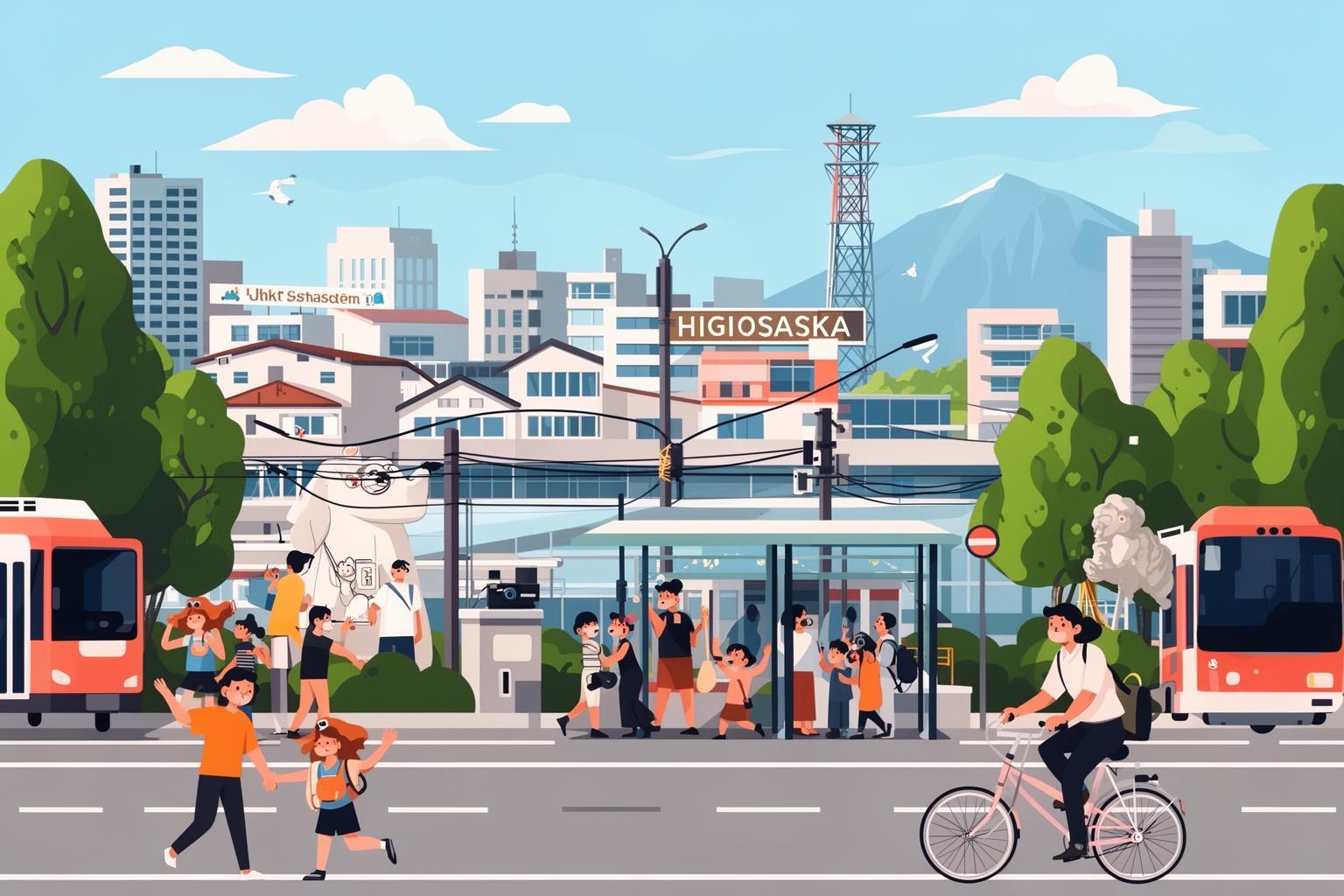
To truly understand Higashiosaka, you need to picture the rhythm of a day. The morning doesn’t begin with a quiet coffee and newspaper; it starts with a surge of activity. Metal shutters scrape open, engines ignite, and the first sounds of machinery join the chorus. The streets fill with cyclists, not just commuting, but often transporting small boxes of finished parts from one ‘koba’ to another within a complex, hyper-local supply chain. This exemplifies the ‘just-in-time’ system, applied not on a national scale, but at the neighborhood level.
At lunchtime, workers in their simple, practical uniforms (‘sagyofuku’) pour into local ‘shokudo’ (cafeterias). These spots are models of efficiency, serving hearty, affordable dishes like curry rice, ramen, and tonkatsu. Conversations focus not on corporate politics but on the practical challenges of their craft— a tricky welding job, a new type of alloy, or the reliability of a specific machine.
As the afternoon sun sets, the industrial symphony gradually quiets. Machines are cleaned and shut down. Shutters close. The day’s work concludes. Yet the community doesn’t wind down with the factories. Owners and workers might gather at a nearby standing bar or izakaya, sharing a beer and discussing their trade. Alternatively, they might head to Hanazono Rugby Stadium, a source of immense local pride. Higashiosaka is known as Japan’s ‘Rugby Town,’ and the sport offers a strong, unifying identity beyond the workshop. The same values of teamwork, resilience, and humble hard work that define ‘Monozukuri’ are honored on the rugby field. On game days, the whole community unites, the roar of the crowd replacing the hum of factories in a powerful display of shared passion.
Higashiosaka vs. Tokyo: The Soul of the Machine
The contrast with Tokyo goes beyond sound or scenery; it reflects a fundamental difference in the very essence of the city. Tokyo’s identity is often associated with the abstract: finance, information, government, and high fashion. Its strength lies in its capacity to organize and manage. In contrast, Higashiosaka’s identity is firmly grounded in the concrete. Its power comes from its ability to make. While Tokyo constructs corporate empires in the sky, Higashiosaka produces the bolts, gears, and springs that hold the physical world together.
This results in a different urban layout. Tokyo is a city of clearly defined zones: Marunouchi’s business district, Ginza’s fashionable shopping areas, and Setagaya’s quiet residential neighborhoods. In Higashiosaka, these distinctions blur. Home, factory, shop, and farm can coexist within the same block. This integration, which might appear chaotic to a city planner, is the city’s greatest asset. It forms a resilient, self-sufficient ecosystem where life and work maintain constant, close interaction.
The mindset also varies. Tokyo often prioritizes polish, presentation, and adherence to established protocols. In Higashiosaka, the highest value is placed on ingenuity and the ability to solve problems using available tools. It’s a culture rooted in practical innovation rather than theoretical strategy. They are masters of the tangible, wizards of the workshop. This is why, when a major corporation needs a custom part no one else can produce, the call frequently goes out to a small, unassuming ‘koba’ tucked away in the backstreets of Higashiosaka.
The Enduring Pulse of Production
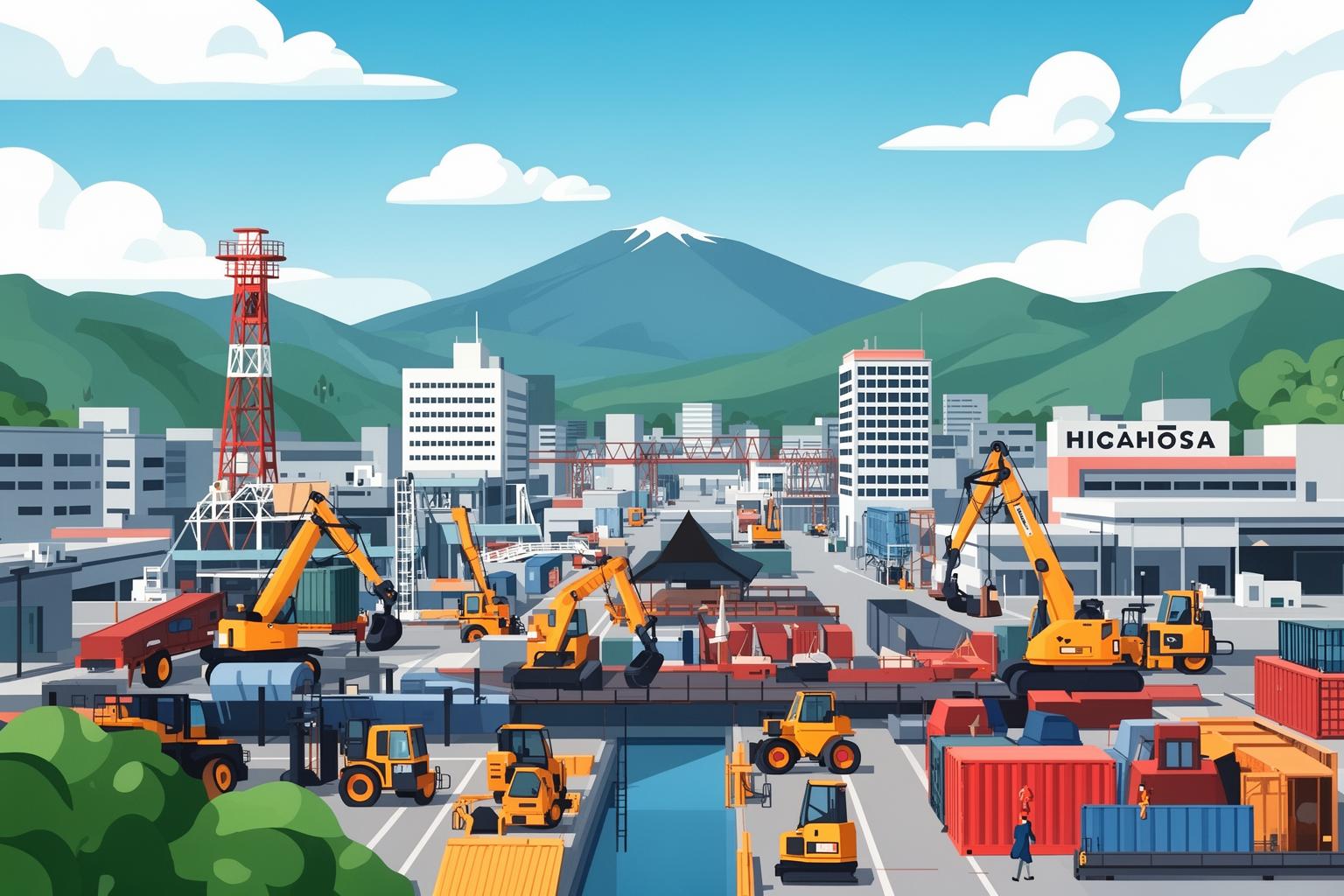
It might be easy to romanticize Higashiosaka as a remnant of a past industrial era. However, these businesses are under tremendous pressure from globalization, an aging population, and a shifting economic landscape. Yet, the spirit of ‘Monozukuri’ is not fixed; it continuously evolves. Many small factories no longer produce simple goods; instead, they manufacture highly specialized components for the aerospace sector, complex parts for medical technology, and precision elements for robotics. They thrive by being smarter, more specialized, and more agile than their larger rivals.
Living in or even visiting Higashiosaka offers a glimpse of a different side of Japan—one that is grittier, more hands-on, and deeply connected to the act of creation. It serves as a powerful reminder that before sleek smartphones and digital interfaces existed, the skill of the human hand and the ingenuity of the mind shaped the physical world. In the steady hum of machinery and the straightforward, pragmatic nature of its people, you can sense the lasting heartbeat of production. This is Osaka’s industrial soul—a place that doesn’t merely consume and trade, but proudly, skillfully, and relentlessly makes.