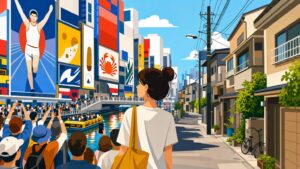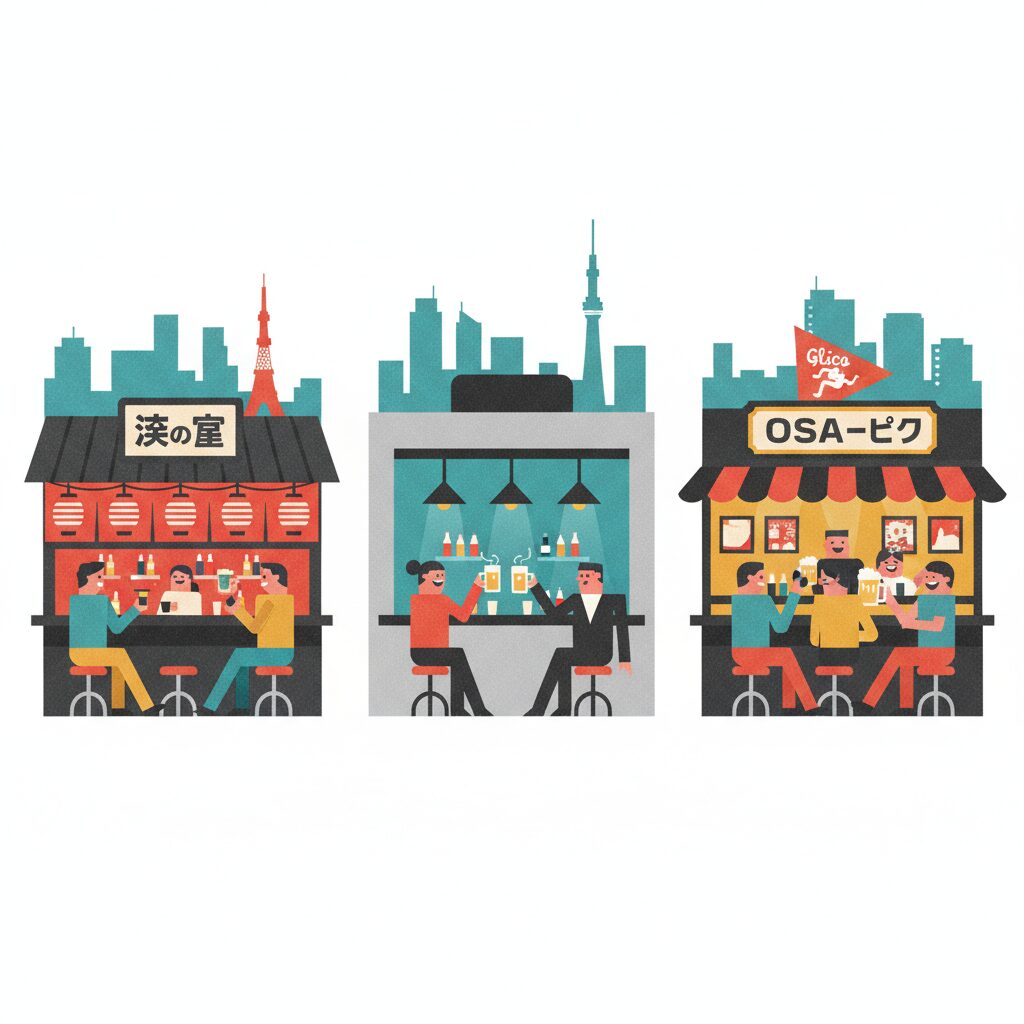
Walk away from the neon glow of the Glico Running Man, dip under the Nankai train tracks, and you’ll find yourself in a different kind of Osaka. This is Ura Namba, the city’s unofficial back alley, a labyrinth of narrow streets packed with tiny eateries and bars. After seven in the evening, these alleys transform. They become a river of sound, a chaotic symphony of clanking glasses, sizzling grills, and a specific type of booming laughter that seems to be a hallmark of the Osaka dialect. From a Tokyo perspective, where the evening often unfolds with a certain choreographed politeness, this scene is jarring. It’s a sensory overload, a beautiful, intimidating mess. The most potent distillation of this energy is found in its standing bars, the tachinomi. These are not just places to drink; they are compact, highly volatile social laboratories. They are spaces where the unspoken rules of Japanese interaction, particularly the ones I grew up with in Tokyo, are not just bent but shattered and gleefully tossed aside. The question that hangs in the cigarette-and-grilled-offal-scented air is simple yet profound: in a city of millions, in a space barely larger than a walk-in closet, how do complete strangers become friends in the span of a single drink? It’s a phenomenon that goes beyond simple friendliness. It’s a performance, a skill, and a fundamental expression of the Osaka soul. For anyone trying to understand what makes this city tick, what sets its rhythm apart from the metronomic beat of Tokyo, the answer isn’t in a castle or a museum. It’s right here, shoulder-to-shoulder with a stranger, in the glorious, unscripted chaos of a Namba standing bar.
For readers eager to delve further into the authentic rhythms of Osaka, this local Namba life guide offers an intimate glimpse into everyday experiences beyond the neon landmarks.
The Anatomy of a Tachinomi Encounter
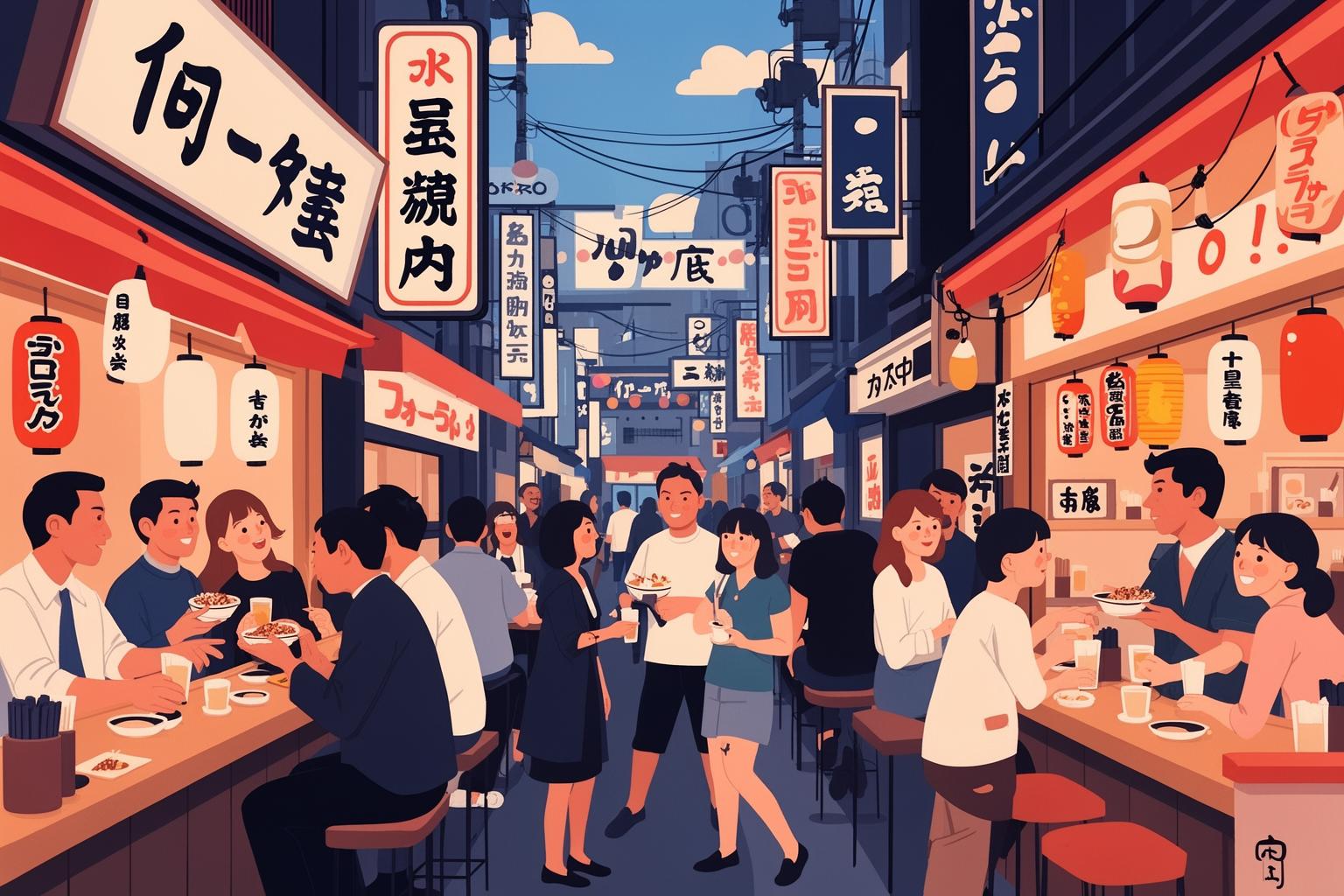
To grasp the social dynamics, you first need to understand the setting. An Ura Namba tachinomi exemplifies spatial efficiency and social engineering. There are no chairs, a deliberate choice that keeps the energy lively and the turnover quick. The centerpiece is a counter, often marked by the traces of countless glasses and conversations, overseen by a master, the taisho. This person is more than just a bartender; they are a conductor, a catalyst, and the quiet heart of the room’s vibrant energy. The space is incredibly cramped. You don’t find a spot; you create one—gently inserting an elbow here, making a slight pivot there. This act itself is the first rule of engagement. You are not staking out territory; you are entering a current.
In Tokyo, going solo to a bar often involves an unspoken pact: you and your phone against the world, protected by a bubble of polite detachment. In Ura Namba, being alone means being open. The close physical proximity isn’t a flaw; it’s the main feature. It’s a mechanism designed to break down the idea of a personal bubble. Your space is everyone’s space. The plate of doteyaki (slow-cooked beef sinew) you ordered may be just inches from a stranger’s highball. A careless gesture could trigger a domino effect of tipped drinks. This forced intimacy forms the foundation for everything else, creating a shared vulnerability and a feeling that ‘we’re all in this small, crowded boat together.’ It’s the opposite of the neat lines and defined personal boundaries that characterize much of everyday life in other Japanese cities.
The Opening Gambit: Beyond Just ‘Kanpai!’
Starting a conversation here seldom follows a script. There’s no formal ‘hajimemashite’ (nice to meet you). It’s more natural, more straightforward, often more abrupt. I once saw a man in a suit lean over two people to ask a young woman what she was drinking. Not in a predatory way, but with the genuine, hearty curiosity of someone simply wanting to know. She didn’t shield her answer; she lifted her glass, named the shochu, and the man nodded, calling the taisho for the same drink. A bond, however brief, was formed. The ice wasn’t broken; it was altogether ignored.
These conversational openings are opportunistic, seizing the moment. A remark about the food: ‘Is that good? I always get the sashimi.’ A comment on something playing on the small TV often mounted in a corner: ‘Ah, the Tigers are losing again!’ Or, most often, a gentle, teasing interruption. This is a critical difference. In Tokyo, interrupting a stranger is a serious social faux pas. Here, it’s a signal of inclusion, a way of saying, ‘You’re part of this room’s conversation, whether or not you’ve spoken yet.’ The taisho frequently plays a crucial role, acting as a social connector. They may introduce you, not by name, but by context: ‘This guy’s from Tokyo!’ immediately giving everyone within earshot a simple, engaging topic. The bar becomes a single, multi-voiced conversation rather than a cluster of private ones.
Personal Space as a Shared Concept
On a crowded morning train on Tokyo’s Yamanote Line, people master being physically packed together while remaining socially distant. Each person builds an invisible shield. Eyes avert, bodies angle away, and a profound silence prevails despite the crush. In an Ura Namba tachinomi, the same physical closeness generates the opposite effect. The lack of space serves as an invitation. The constant, minor physical contacts—a brushed elbow, a shuffle to let someone pass—wear down the formal barriers that normally separate strangers.
This shared physicality produces a shared experience. When someone orders a strongly scented dish, the whole bar catches the aroma. When someone laughs loudly, the whole bar resonates with the sound. This is a vital distinction. In Tokyo’s carefully regulated spaces, the aim is often to limit your impact on others. In Osaka’s standing bars, your presence is an impact, and that’s accepted as the norm. The social contract isn’t about keeping distance but about navigating closeness with communal grace. You learn to move as one, anticipating the needs of those around you, passing soy sauce down the line, or shifting slightly to help someone settle their bill. It’s a delicate, unspoken dance, and mastering it is key to feeling like a participant rather than a mere observer.
The Osaka Mindset: ‘Why Build a Wall?’
The behavior seen in these bars isn’t a bizarre result of alcohol; it’s a concentrated reflection of a fundamental Osaka worldview. It embodies the principle of kabe wo tsukuranai—literally meaning ‘not building a wall.’ This philosophy holds that the default social setting is ‘open’ rather than ‘closed.’ In many cultures, including mainstream Japanese culture as commonly practiced in Tokyo, interactions start with a respectful distance—a social wall. This wall is gradually lowered through formal introductions, shared experiences, and careful trust-building. The process is deliberate and often slow. Osaka, especially in these casual environments, flips that logic. The default assumption is that no wall exists from the start. You are presumed to be a potential friend, a temporary neighbor, a fellow traveler, until you actively prove otherwise.
This mindset alters the very nature of social risk. In Tokyo, striking up a conversation with a stranger is a gamble. You risk rejection, awkward silence, or the social shame of misreading the situation. But in Ura Namba, the greater social risk is to remain aloof. Standing silently in the corner, absorbed in your phone, sends a signal of disinterest that can be taken as nearly rude. It rejects the room’s unspoken agreement to be open and engaged. The expectation is that you will, at minimum, be a receptive audience to the friendly chaos unfolding around you. This fundamental difference in social posture is perhaps the biggest challenge for newcomers, especially those used to a more reserved social environment. The friendliness isn’t an exception—it’s the rule.
The Default Setting is ‘Open’
This ‘open’ default reveals itself in countless small interactions. People might ask what you do for a living within minutes of meeting you, not to judge but out of genuine curiosity. They’ll offer you a piece of their fried chicken without hesitation. They’ll share unsolicited but well-meaning advice on what to order next. From a Tokyo viewpoint, this can feel intrusive, a breach of unspoken social rules. But the intention is entirely different. It’s not about prying; it’s about connecting. The fastest way to find common ground is to get straight to the point.
I once observed a young woman struggling with a handwritten menu. An older man beside her silently took the menu, pointed to three items, and said, ‘These are the best. Get the tuna.’ Then he returned to his conversation. He wasn’t being pushy; he was offering help in the most straightforward way possible. He spotted a small problem and provided an immediate, practical solution. This is the ‘open’ setting at work. It values efficiency and connection over drawn-out formality. It assumes trust and goodwill from the beginning, a philosophy that feels both wonderfully refreshing and somewhat daunting to outsiders. It asks you to relinquish some control, to trust the chaotic process, and to engage on terms that are direct, unfiltered, and unapologetically human.
Humor as a Social Lubricant: The Art of Boke and Tsukkomi
Perhaps the most subtle and vital part of Osaka’s social toolkit is its distinctive style of conversational humor, rooted in the comedic tradition of manzai. This isn’t about rehearsed jokes; it’s a rhythmic, interactive dance of boke and tsukkomi. The boke plays the fool, saying something a bit silly, absurd, or plainly wrong. The tsukkomi is the straight man, who immediately calls out the absurdity with a quick, sharp reply, often with a light, symbolic tap. In a tachinomi, this rhythm is the city’s heartbeat.
Someone might dramatically sigh, ‘I’m so exhausted, I biked all the way from Hokkaido today.’ That’s the boke. The immediate, instinctive response from a friend or even a stranger is the tsukkomi: ‘Don’t be ridiculous, you work two blocks away!’ This exchange isn’t an argument. It’s a sign of affection, a conversational volley. It’s a game everyone implicitly knows how to play. For foreigners, mastering it isn’t essential, but recognizing it is crucial. Joining in, even awkwardly, shows you understand the culture. If someone gives you a gentle tsukkomi, the right response is to laugh, not to become defensive. It tests your ability to not take yourself too seriously, a critical trait in Osaka’s social scene. This playful teasing is a strong bonding tool. It removes pretense and builds rapport through shared laughter, making the transition from stranger to friend feel natural and immediate.
Navigating the Social Current as a Foreigner
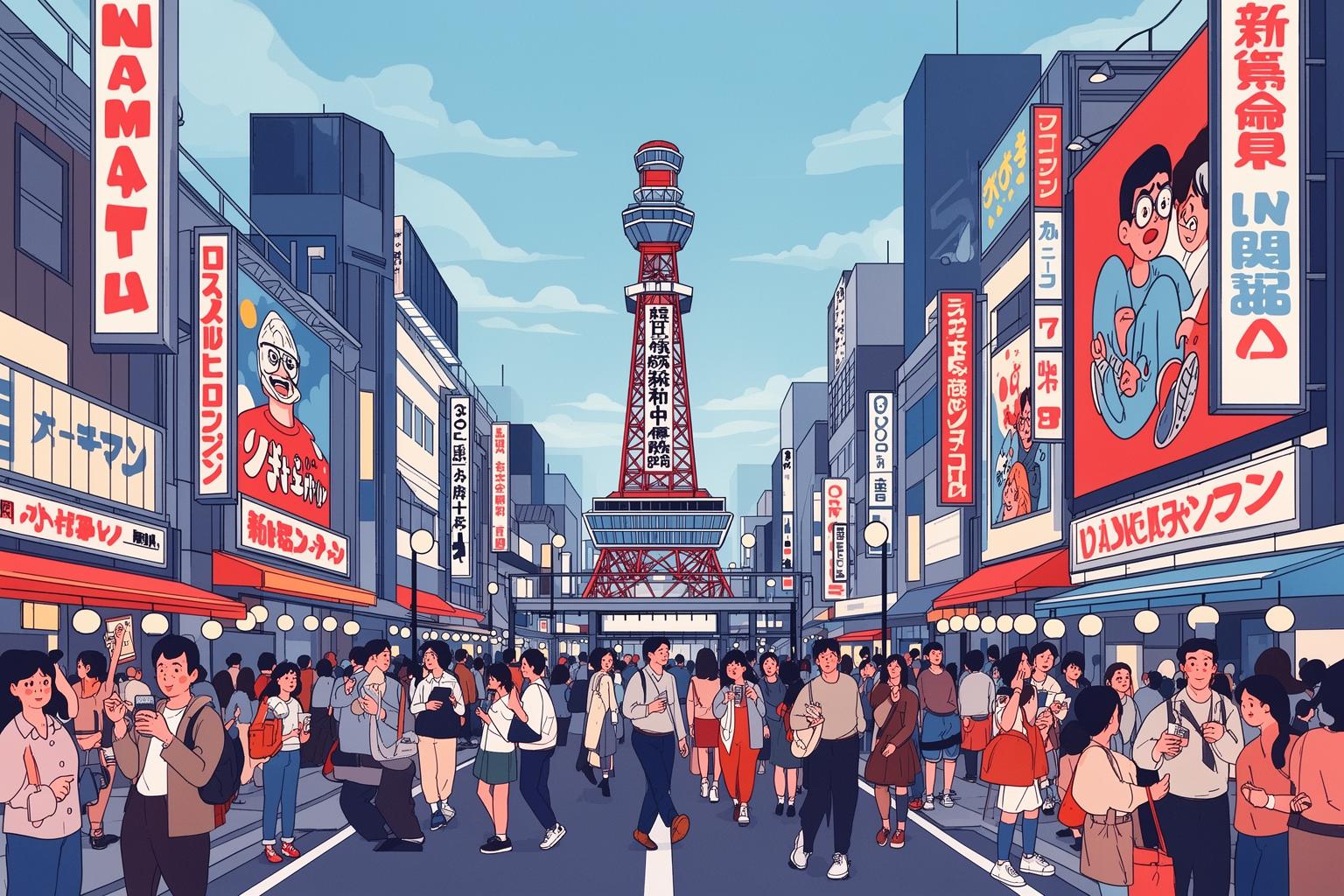
For someone who isn’t Japanese, stepping into a standing bar in Ura Namba can feel like walking onto a stage. Once you are recognized as a foreigner, a sort of spotlight often swings your way. The initial attention usually comes in the form of a predictable series of questions: “Where are you from?” “Can you use chopsticks?” “Do you like natto?” It can feel like a checklist—and in some respects, it is. However, it’s a mistake to view it as a shallow interrogation. This is the Osakan way of quickly casting a net to find common ground. These questions aren’t meant to “other” you; rather, they are awkward but sincere efforts to discover a shared experience as swiftly as possible.
The key is to grasp the purpose behind the form. The questions themselves matter less than the answers you give. Offering brief, one-word responses will likely result in uncomfortable silence. This conversation is not a test; it’s an invitation to reveal a bit about yourself. Having a brief, engaging story ready can make a big difference. When asked where you’re from, don’t just respond with “America.” Try something like, “I’m from a small town in California famous for its garlic,” or something equally distinctive. Give them something to build on, a hook for the next question. The aim is to move beyond the generic “foreigner script” as soon as possible and shift toward more universal topics: sports, music, the quality of the bar’s sake, or the shared dread of an impending Monday morning.
From Curiosity to Connection
Once the initial curiosity subsides, the nature of the interaction changes. You shift from being a novelty to simply another person at the bar. This is when genuine connections can form. Conversations become more personal and often more meaningful. People share stories about their work, families, and dreams for the future with surprising openness. The same salaryman who began with an awkward chopstick question might, twenty minutes later, be showing you photos of his children or complaining about a difficult boss.
This rapid deepening of intimacy is a hallmark of the tachinomi experience. The setting is designed to be temporary. People come and go. There’s an unspoken understanding that the moment is fleeting, which paradoxically invites a greater level of honesty. With less at stake—since there’s a chance you may never meet again—there’s room for a kind of brief, powerful authenticity. The challenge and the beauty lie in embracing this. Don’t be guarded. Be open to sharing, listening, and treating the person beside you not as a stranger, but as a temporary confidant. It is in these fleeting moments of shared humanity that you begin to truly grasp the warm spirit of the city.
Reading the Room: Fleeting Friendships vs. Real Bonds
This is perhaps the most important lesson for any foreigner navigating Osaka’s social scene: learning to distinguish between friendliness and friendship. The intense, warm, and instantly familiar conversation you enjoy over a couple of beers in Ura Namba is genuine. The laughter is real. The connection is real. However, it doesn’t always imply a promise of future contact. It perfectly exemplifies the Japanese concept of ichi-go ichi-e—“one time, one meeting.” The philosophy is to cherish the uniqueness of the present moment, knowing it will never come again.
In Osaka, this idea is practiced with vibrant, everyday energy. The bond you form with those at the bar counter belongs to that time and place. It’s a “bar friendship.” Sometimes phone numbers or social media are exchanged, and a lasting friendship can emerge. But just as often, the night ends with a hearty “Ja, mata!” (“See you again!”) that both sides understand is more a polite farewell than a plan. This isn’t insincere. It’s a recognition of the encounter’s nature. The value lies in the moment itself, not in its potential future. Mistaking this temporary, situational warmth for a deep personal commitment is a common misunderstanding. Learning to appreciate the beauty of these ephemeral communities—these brief bubbles of camaraderie that form and dissolve through the night—is essential to truly enjoying the social landscape of Ura Namba without unrealistic expectations.
The Ura Namba Ecosystem: Beyond a Single Bar
The social life of Ura Namba is not restricted to a single spot. It weaves through the alleys like a human current fueled by the culture of hashigo-zake, or bar hopping. An evening out here is rarely stationary. The aim isn’t to find one ideal place and stay, but to sample many, treating the entire neighborhood as one large, interconnected party. You might begin at a standing bar for cheap beer and skewers, move on to a tiny sake bar for a more refined taste, and finish at a slightly bigger izakaya for a final noodle dish. Each stop brings a new atmosphere, a new menu, and a fresh cast of characters.
This nomadic style of socializing profoundly shapes the group dynamics. Unlike Tokyo, where a nijikai (second party) usually involves the same people moving to a different venue, the Ura Namba hashigo is much more fluid. A group starting with three people might grow to six at the second bar by welcoming newcomers met along the way. By the third bar, the group may split, with some heading home while others join another cluster of revelers. It’s an ever-changing social mosaic. This fluidity lowers the barrier for newcomers—you don’t have to break into a tightly-knit group; you simply wait for the river of people to flow past and find the right moment to step in.
The Human River
Observing this ‘human river’ is captivating. You witness connections forming in real-time. Two separate pairs of friends at one bar may discover shared interests and decide to merge for the next stop. A solo drinker might be embraced by a larger group and carried along with them. The alleyways become extensions of the bars, with people spilling out, drinks in hand, mingling between venues. This constant movement and mixing prevent social stagnation, keeping the energy fresh and ensuring a steady influx of new faces and conversations.
This contrasts sharply with the more structured social scenes of other cities. In Tokyo, evenings are often planned with reservations, fixed participants, and a clear start and finish. In Ura Namba, the approach is usually just to ‘see what happens.’ This spontaneity fuels the area’s social life. It demands a willingness to abandon plans, follow whims, and join a group of strangers on a journey to a bar you’ve never heard of. It’s an exciting, slightly unpredictable way to spend the evening, embodying the city’s love for improvisation and its disdain for rigid formality. Here, the night isn’t a destination; it’s a journey through a series of interconnected moments.
The Great Equalizer
One of the most striking features of tachinomi and the wider Ura Namba scene is its role as a social equalizer. In a country where hierarchy can strongly influence daily life, these crowded, informal spaces tend to strip away titles and pretenses. Inside the bar, you’re not your job title. The CEO of a small company might stand squeezed next to a part-time construction worker, both grumbling about the Hanshin Tigers. A university student might share a laugh with a retired shopkeeper. Social stratifications that govern interactions in workplaces or formal settings largely disappear here.
Your value in this context isn’t determined by your business card, but by your ability to be omoshiroi—interesting, funny, and engaging. It’s a true meritocracy of personality. Can you tell a good story? Can you take a joke? Are you willing to listen? These are the currencies that count. This creates a remarkably free environment where people from vastly different backgrounds interact as peers, connected solely by their shared presence in that room, at that moment. It’s a temporary utopia where the only things that matter are the quality of conversation and the coldness of the beer. This leveling effect is central to its appeal and key to understanding Osaka’s fundamentally pragmatic and down-to-earth character.
The Aftermath: What Have You Actually Gained?
As the last trains draw near, the vibrant river of people begins to thin. The bars clear out, laughter diminishes, and the alleys fall silent, leaving behind only the lingering scent of grilled meat and stale beer. You may walk away with a new Instagram follower, a hastily scribbled phone number, or just the memory of a sharp, witty conversation with someone whose name you’ve already forgotten. So, what was the point of it all? What have you gained from this whirlwind of fleeting connections? The answer is an experience—a lesson in a different way of being. You’ve engaged with the living, breathing culture of Osaka in its most concentrated form.
The ‘friendships’ born in the heat of a crowded standing bar are a unique social phenomenon. They are intense, open, and purely in the moment. They show that connection doesn’t always require a long history or shared future. It can be a brief, brilliant spark between two strangers sharing a small space and a willingness to connect. This highlights a fundamental difference in social philosophy. Much of modern life, especially in a structured place like Tokyo, revolves around building and maintaining stable, long-term social networks—a careful process of curation. Ura Namba offers a radical alternative: faith in the power and beauty of the spontaneous, the temporary, the joyfully uncurated. It’s neither better nor worse; it’s simply a different rhythm, a different dance. To grasp the heart of Osaka, you must be willing to step onto the floor, get lost in the music, and embrace the glorious, fleeting chaos of the moment.