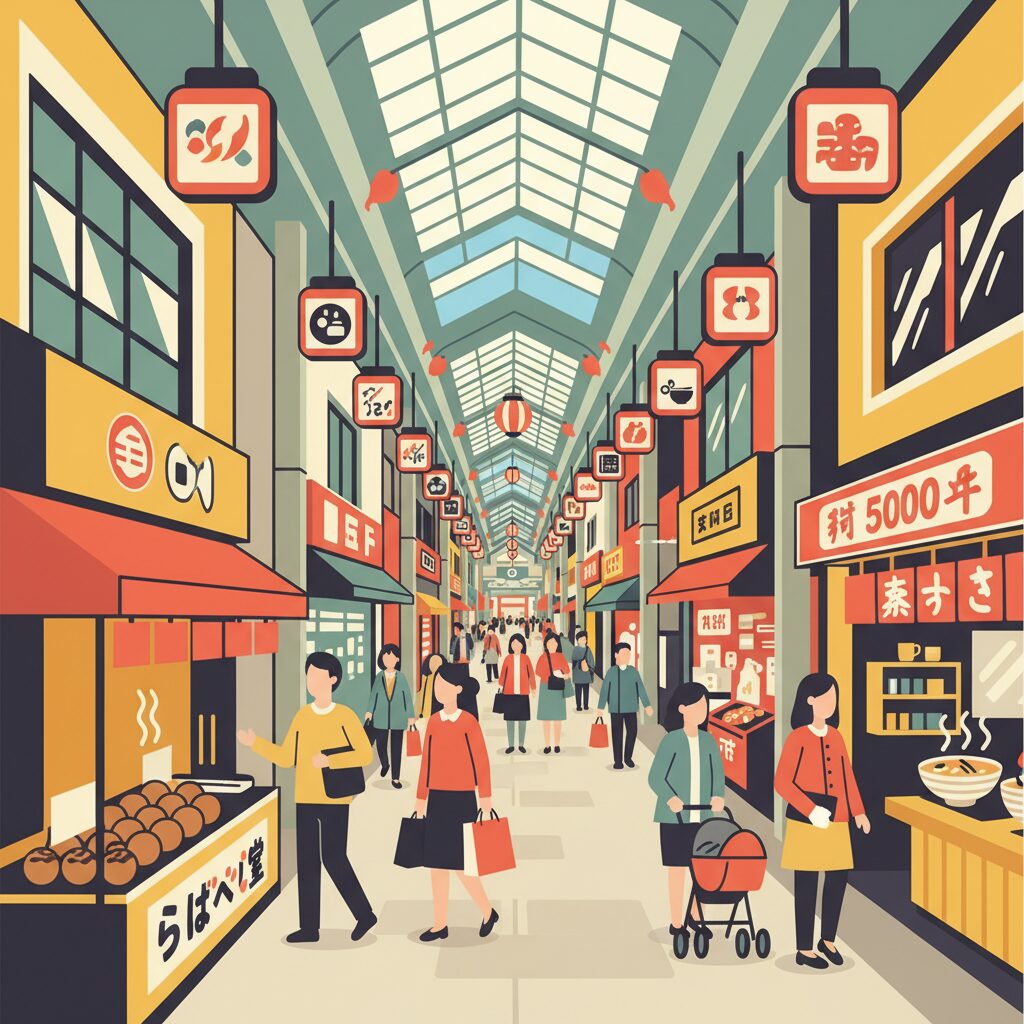
Your first few trips to a local Osaka shotengai, one of those long, covered shopping arcades that pulse like the city’s arteries, can feel like a linguistic and cultural stress test. You come from a world of polite nods and deferential “irasshaimase.” You’ve studied the textbook phrases. You’re ready for the quiet, respectful dance of Japanese commerce you’ve seen a hundred times in Tokyo department stores. But this isn’t Tokyo. This is something else entirely. A fishmonger with hands like leather and a voice like gravel might shout, “Nii-chan, you’re too skinny! This mackerel, it’ll put some meat on your bones!” The old woman, the okan, at the vegetable stand might scrutinize your basket and declare, “You can’t make nikujaga with those potatoes. These ones. Take these.” There’s a directness here, a current of unfiltered commentary that can feel jarring, even a bit abrasive at first. It’s easy to misunderstand this as rudeness, as a lack of the famed Japanese politeness. But if you stick around, if you listen past the volume and watch the interactions unfold, you start to hear the music in the noise. You realize you’ve stumbled upon one of the most honest and vibrant forms of communication in Japan. This isn’t an attack; it’s an embrace. It’s the sound of a community talking to itself, and the moment they start talking to you that way, it means you’re finally, truly, starting to belong.
In the wake of these spirited market conversations, even the evolving Osaka hotel market reflects a shift towards long-term profitability and resilience.
The Anatomy of an Osaka Greeting
Throughout most of Japan, the customer is considered god—“okyakusama wa kamisama desu.” This philosophy establishes a clear, respectful distance. You are “sama,” an honorific title that elevates you. The language used is formal, precise, and centered on creating a smooth, seamless experience for you, the esteemed guest. In an Osaka shotengai, however, the customer is not a god. The customer is family—or at least, a neighbor. This fundamental change in viewpoint alters everything about how people speak.
“Maido!” – More Than Just a Greeting
The first word you’ll often hear is a warm “Maido!” which roughly means “Every time!” or “Thanks for your continued patronage.” It’s a merchant’s greeting common in the Kansai region, but in Osaka it carries unique significance. It’s not the generic “Irasshaimase” (Welcome) that is chanted repeatedly in chain stores. “Irasshaimase” is a general call to everyone. “Maido,” however, is a personal acknowledgment. It implies a relationship. It says, “I see you. You’ve been here before, and you’ll come again. We’re connected.” The first time a shop owner switches from “Irasshaimase” to “Maido” for you marks a milestone. It’s a sign you’ve moved from being just an anonymous customer to becoming a neighborhood regular.
Meet the Otchan and the Okan
Those behind the counter are more than employees; they embody archetypes. There’s the “otchan,” a gruff, no-nonsense older man who might run the butcher or hardware store. His advice is brief, practical, and invariably right. Then there’s the “okan,” the matriarch who manages the fruit stand or tofu shop. She looks after the health and well-being of the neighborhood. She’ll tell you which daikon is sweetest, scold you for not eating enough vegetables, and slip an extra orange into your bag for your child. They never address you as “okyakusama.” You are “anata” (a very direct “you”), or more often, given a familial nickname. Young men become “nii-chan” (big brother), young women “nee-chan” (big sister). This is strikingly different from the rest of Japan, where using “anata” for a customer would be considered shockingly informal and even rude. Here, it’s a way to close the distance. They are pulling you into their circle, assigning you a role in the neighborhood family. It can feel disarming, but the intention is inclusion, not disrespect.
The Directness Doctrine: Efficiency as a Form of Care
One of the greatest challenges for foreigners is the unmistakable directness of the conversation. An Osaka merchant has no patience for ambiguity. This attitude doesn’t stem from impatience but from a deeply rooted culture of pragmatism and a wish to offer genuine, practical value. They view beating around the bush as a waste of everyone’s time and, frankly, somewhat dishonest.
Unsolicited Advice is a Gift
Imagine standing before a dazzling selection of fresh fish, uncertain about what to choose. In Tokyo, a clerk might wait quietly for you to ask for assistance. In Osaka, the otchan will lean over the ice, point a thick finger, and declare, “That iwashi is the best today. Just came in this morning. Grill it with salt. That’s it. Simple is best.” He isn’t being pushy; he’s sharing his expert, hard-earned knowledge. To him, allowing you to buy an inferior fish or one that’s not at its peak would be neglecting his duty. His straightforward advice is a form of customer service aimed at ensuring you have the best possible meal. The same dynamic applies at the vegetable stand. The okan might notice you picking up a tomato and say, “Not for salad. Too ripe. Good for sauce, though. Want a salad? Try these ones over here. See the color? That’s what you want.” They are curators of everyday life, and their insights are part of the service.
The Rapid-Fire Inquisition
Don’t be startled if your purchase is accompanied by a volley of personal questions that might feel intrusive elsewhere. “Where are you from? Do you live nearby? Oh, that apartment building? I know it. You work? What kind of work? Are you married?” This isn’t an interrogation but a way of social mapping. They are placing you within the neighborhood context, building a mental profile not out of nosiness but to serve you better and help integrate you into the community fabric. The next time you visit, they’ll remember. “Ah, Canada-jin! How was that pork belly last week? Good, right?” This is how relationships form—one seemingly random question at a time. It’s their method of turning a routine economic transaction into a genuine human connection. They are genuinely interested in the people who make up their daily world.
The Great Divide: A Shotengai Mindset vs. Tokyo’s Polish
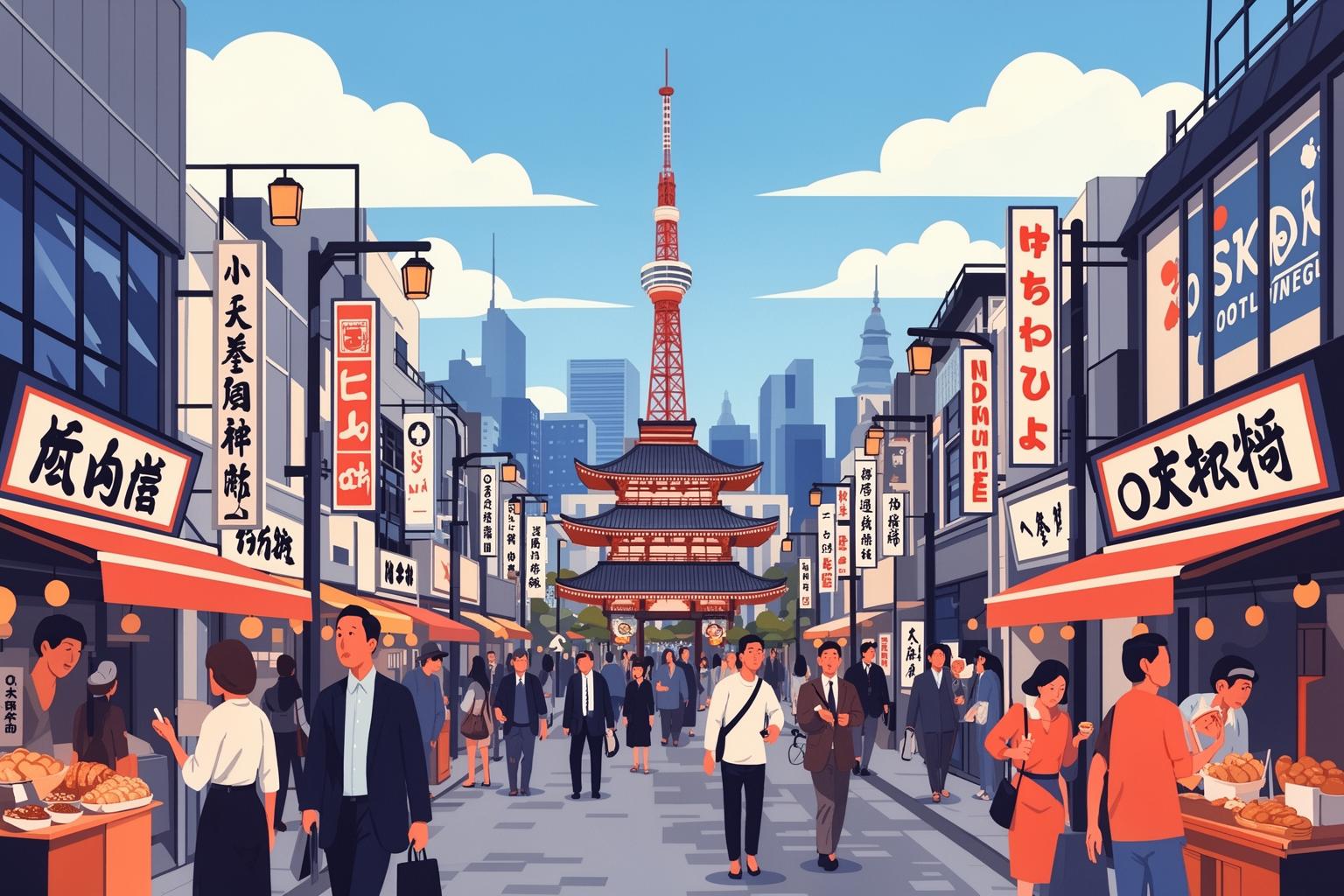
To truly understand the distinctiveness of Osaka’s communication style, comparing it with Tokyo is crucial. It’s not a matter of which is superior; rather, it’s about appreciating two fundamentally different philosophies on what defines “good service.”
Picture buying an apple in a high-end Tokyo department store. The apple is flawless, shining under a spotlight. The clerk, dressed in a crisp uniform, handles it with white gloves, places it in an elegant bag, and offers a deep, respectful bow. The entire process is graceful, quiet, and visually impeccable. You are treated with the highest respect. The experience is crafted to make you feel special and valued.
Now, picture buying an apple in an Osaka shotengai. The okan will pick one from a large heap, wipe it on her apron, and hand it to you. “Here, nee-chan. This one’s sweet. It’s got a small bruise, so I’ll give you a discount. Don’t worry, it won’t affect the flavor. Actually, bruised ones are often the juiciest.” She might then ask what you’re making, share a story about her grandson who loves apples, and chat with the person behind you about the weather. The experience isn’t refined; it’s homey. It’s not quiet; it’s lively. You aren’t treated with formality; you’re treated like family.
The Tokyo approach perfects presentation. The Osaka approach verifies substance. The Tokyo clerk guarantees a flawless process. The Osaka okan ensures the apple tastes great and that you feel you’ve made an honest, fair deal with someone you trust. One emphasizes aesthetics and formality; the other emphasizes practicality and connection. This contrast is at the core of why living in Osaka feels so fundamentally different from life in Tokyo. Life in Osaka unfolds at street level, amidst the messy, vibrant, and deeply human interactions of everyday life.
Common Misreadings: Decoding the True Meaning
For those unfamiliar with this environment, it’s easy to misread the signals. The cultural software you installed for Japan doesn’t seem to function correctly here. Grasping the intent behind the words is essential to navigating and appreciating shotengai culture.
Mistaking Volume for Anger
The shotengai is a noisy place. Voices are raised, banter echoes across the aisle, and laughter bursts out loudly. A heated exchange between a shopkeeper and a customer rarely signifies an argument. More often, it’s a form of negotiation or passionate conversation. It might concern the price of cabbage, the local baseball team’s performance, or the best way to pickle radishes. The loudness represents engagement and enthusiasm, not anger. In a culture that often prizes silence and subtlety, Osaka’s boisterousness is a statement of presence and vitality. They are fully present in the moment and with each other.
Confusing Teasing for Insult
Osaka boasts a rich and renowned comedy culture, known as “owarai.” Humor is a social glue, and teasing is a primary expression of affection. If the butcher teases you about your broken Japanese or questionable fashion, it’s a huge compliment. It means he’s comfortable with you. He sees you as an insider, someone who can take a joke and belongs to the in-group. The real cause for concern is polite silence. If an Osaka merchant remains formal, quiet, and deferential, it means a barrier is still present. The moment they start giving you friendly teasing is when you know you’ve been accepted.
Viewing “Omake” as Merely a Discount
You’ll often encounter “omake,” where a shopkeeper throws in a little something extra for free—a few extra potatoes, another chicken skewer, or some candy. This isn’t a calculated business tactic to encourage loyalty, although it certainly has that effect. It’s a spontaneous gesture of goodwill, a way of saying, “I appreciate you.” It physically embodies the relationship that’s developed. The value of the omake isn’t in the item itself but in the gesture. It sends a message: “We’re not just buyer and seller. We’re neighbors looking out for each other.” Accepting it with a cheerful “Ii desu ka? Arigatou!” (Is that okay? Thank you!) completes this small, intimate ritual.
More Than a Market: The Shotengai as a Community Hub
The communication style you experience in the shotengai isn’t merely a quirk; it serves as the operating system for a complex social network. This direct, familiar, and sometimes intrusive manner of speaking enables the arcade to function as much more than a place of commerce. It acts as the neighborhood’s living room, its news outlet, and its social safety net.
The shopkeepers know all the details. They are aware of who is ill, whose children have just been accepted into a good school, and who is struggling. They watch over the elderly residents, noting if someone hasn’t stopped by for their daily tofu or bread. They are the community’s unofficial guardians. That’s why they ask questions—they’re weaving you into this network and learning your habits so they can look out for you as well.
Living in Osaka, you quickly realize this network is invaluable. If you become a regular, the shotengai transforms into your support system. Feeling unwell? The okan at the fruit stand will suggest a ginger and lemon remedy. Unsure about a bill? The otchan at the tobacco shop will help you decipher the kanji. This is the reward for overcoming the initial shock of their bluntness. By engaging on their terms, responding to their questions, and laughing at their jokes, you gain access to a rare world of support and genuine care found in few big cities.
So, the next time you’re in an Osaka shotengai and a shopkeeper offers unsolicited advice or asks a direct question, don’t shy away. Embrace it. See it not as an intrusion but as an invitation—an invitation to step beyond the polite barrier of “customer” and become part of the noisy, chaotic, warm, and wonderfully human symphony of daily life in Osaka. The exchanges in these covered alleys are rarely just about money and goods; they are about connection. And in Osaka, connection is everything.