
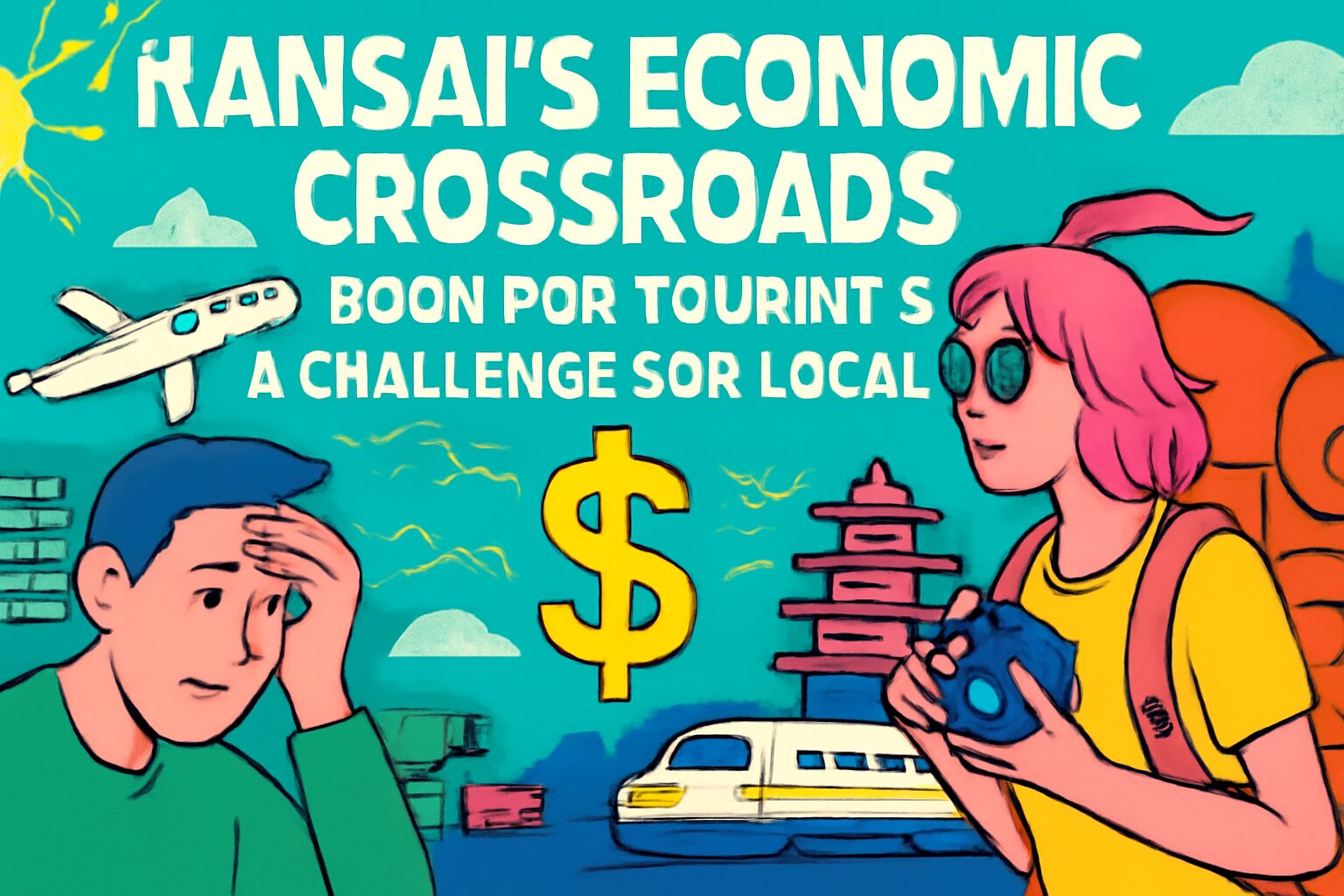
The streets of Osaka are bustling. From the neon-lit alleys of Dotonbori to the historic grounds of Osaka Castle, the energy is palpable, largely driven by a massive influx of international visitors. For travelers, the Kansai region has never been more attractive, thanks to a historically weak yen that turns foreign currency into significant spending power. However, a recent report from the Bank of Japan reveals a more complex economic picture, one where the thriving tourism sector stands in stark contrast to the challenges faced by other local industries.
The Unprecedented Tourism Boom
The numbers speak for themselves. Japan has been welcoming tourists at a record-breaking pace. In April 2024, the country saw over 3 million visitors for the second consecutive month, a historic high. Kansai International Airport (KIX), the region’s main gateway, is at the heart of this boom, with international passenger numbers recovering to over 90% of pre-pandemic levels.
What’s Driving the Surge?
The primary driver is the weak yen. For visitors from the US, Europe, and many parts of Asia, the exchange rate makes Japan an incredibly affordable luxury destination. A meal that might have cost $50 a few years ago now feels closer to $35, and hotel stays, shopping, and experiences offer unparalleled value. This financial advantage has made Kansai, with its rich blend of culture, food, and entertainment in Osaka, Kyoto, and Kobe, a top-tier global destination.
This surge is a lifeline for hotels, restaurants, retailers, and tour operators, who are enjoying a period of robust growth and profitability after the lean years of the pandemic.
The Other Side of the Coin: Headwinds for Local Industries
While tourists celebrate their increased purchasing power, the very same weak yen is creating significant headwinds for other parts of the Kansai economy, particularly the manufacturing sector, which has long been a pillar of the region.
The Bank of Japan’s latest sentiment survey highlights this divergence. While sentiment among tourism-related businesses is overwhelmingly positive, manufacturers are expressing deep concern. The reason is simple: a weak yen makes imported goods more expensive. For companies that rely on imported raw materials, components, and energy, costs have skyrocketed. This squeezes profit margins and forces businesses to either absorb the costs, which is unsustainable, or pass them on to consumers, contributing to domestic inflation.
This economic pressure can slow down wage growth and investment in non-tourism sectors, creating an unbalanced regional economy that is heavily reliant on a single, albeit booming, industry.
What This Means for Your Trip and the Future of Kansai
For now, travelers can continue to enjoy the benefits of the favorable exchange rate. Your travel budget will stretch further, allowing for more experiences, finer dining, and extra souvenirs. However, looking ahead, this economic duality presents both opportunities and potential challenges that could shape the future travel experience in Kansai.
Potential Future Impacts for Travelers
- Price Adjustments: While many prices remain low for international visitors, businesses in the hospitality sector are beginning to adjust. You may start to see gradual price increases for hotels, tours, and certain restaurant menus as businesses grapple with their own rising operational costs and high demand.
- Crowding and Overtourism: The boom is intensifying conversations around overtourism in popular spots, especially in nearby Kyoto. This could lead to new measures like increased public transport fares for tourists or reservation systems for popular attractions to manage the flow of visitors.
- Focus on Sustainable Tourism: The current situation underscores the need for a more sustainable and diversified economy. For travelers, this could mean more opportunities to engage in authentic, community-based tourism. Supporting smaller, locally-owned shops and restaurants outside the main tourist hubs is not only a great way to discover the real Osaka but also helps distribute the economic benefits of tourism more evenly.
In conclusion, while the headlines celebrate Kansai’s tourism renaissance, the underlying economic reality is a tale of two very different experiences. As a visitor, understanding this context allows for a richer appreciation of the region. By traveling thoughtfully and supporting a wide range of local businesses, you can not only enjoy an amazing and affordable vacation but also contribute positively to the long-term, balanced growth of the vibrant Kansai region.








