
I’ll never forget my first encounter with the raw, unfiltered spirit of Osaka commerce. It wasn’t in a glittering department store or a slick, modern mall. It was in a tiny, cluttered shop in Den Den Town, the city’s electronics district, surrounded by walls of tangled cables and obscure components. I was looking for a specific type of adapter, and the elderly shopkeeper, a man who looked like he’d been wired into the city’s electrical grid since the 1970s, wasn’t just selling it to me. He was interrogating me. “What for? What machine? That one? No, no, no, this one is better. Better value. Lasts longer.” He wasn’t being pushy; he was being passionate. He took genuine, fierce pride in ensuring I bought the right thing, not just a thing. It was a transaction, sure, but it felt more like a consultation, a spirited debate, and a performance all at once. That’s when I began to understand that to live in Osaka is to live in the “City of Merchants,” or Akindo no Machi. This isn’t just a historical nickname earned when Osaka was the nation’s rice warehouse in the Edo period. It’s the city’s operating system, a deeply embedded cultural code that dictates everything from how people talk to each other to how they buy their groceries, and it’s the single biggest reason Osaka feels profoundly different from the polite, reserved precision of Tokyo.
This merchant DNA is the key to unlocking the city. It explains the directness that can feel abrupt, the obsession with value that can be mistaken for cheapness, and the boisterous humor that underpins daily interactions. Forget the tourist brochures for a moment. To truly grasp what makes this city tick, you have to understand the soul of the akindo, the merchant. It’s a mindset that has been honed over centuries, and it’s alive and well on every street corner, in every shopping arcade, and in every spirited conversation about the price of octopus balls. It’s the vibrant, beating heart of a city built on the principles of a good, honest deal.
Osaka’s relentless merchant spirit continues to set its own course, while nearby Kyoto adapts to modern challenges with stricter minpaku regulations aimed at controlling overtourism.
The Soul of the Akindo: More Than Just Money
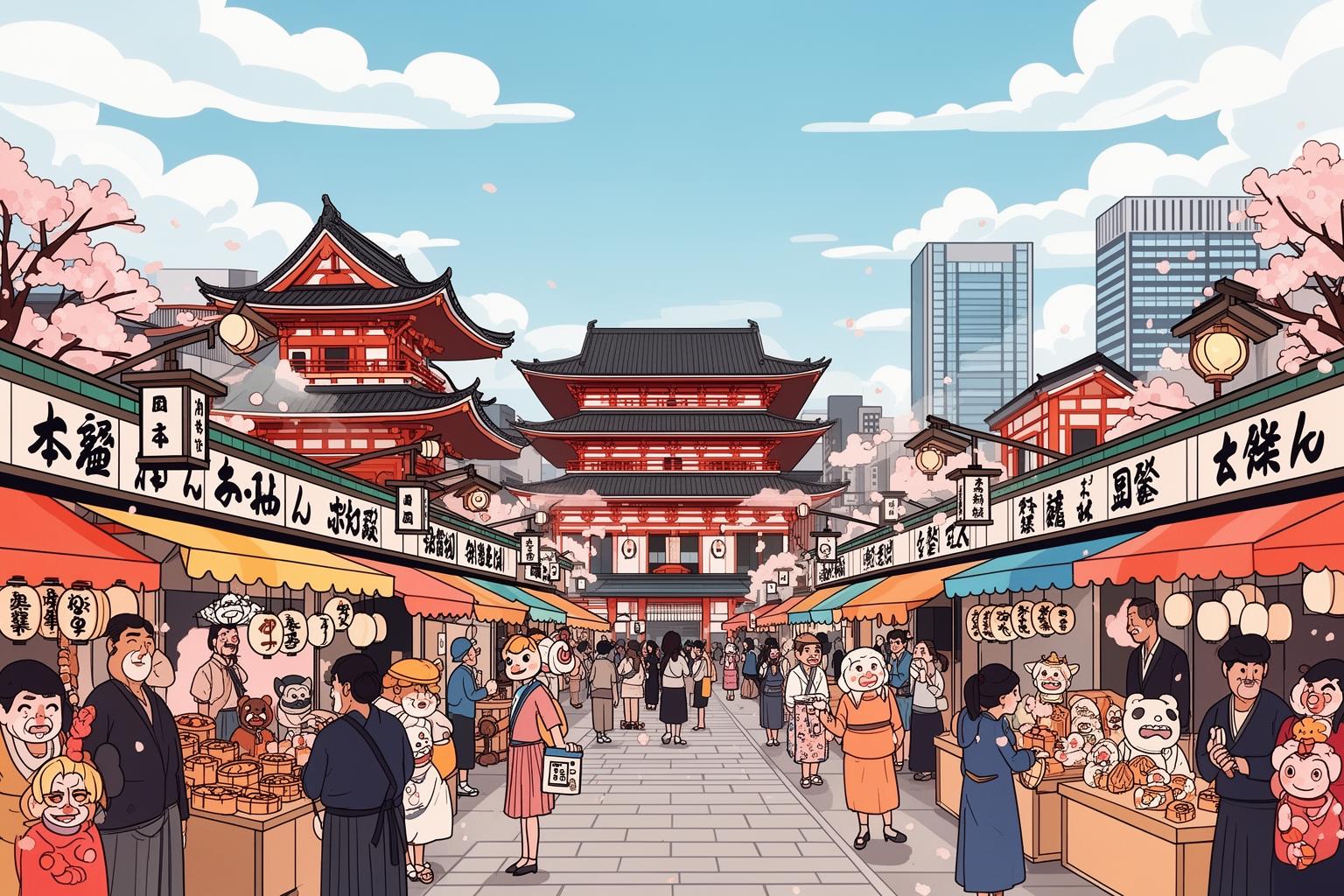
First, let’s address a common misconception. When people hear that Osaka is a city of merchants, it’s easy to assume it’s all about greed or an obsession with profit. That’s a simplistic view. In Osaka, being an akindo embodies a distinct sense of pride and professionalism. Business, or shobai, is more than just work; it’s an art. It means mastering your craft—whether that involves slicing the perfect sashimi, recommending the most durable frying pan, or crafting a joke that brings a customer joy.
This mindset sharply contrasts with Tokyo’s dominant work culture, often characterized by the “salaryman” loyal to a large corporation. There, identity is linked to the company and the collective. In Osaka, identity is connected to your individual skill, your shop, and your product. An entrepreneurial spirit runs deep here, evident in the many small, family-run businesses that have flourished for generations alongside big chains. The owner of a tiny coffee shop doesn’t just serve coffee; they are an expert of the bean, the roast, and the grind. If you show even slight interest, they’ll enthusiastically share their knowledge, as their work is their passion and their reputation hinges on every single cup.
This creates a different dynamic between customer and seller. Across much of Japan, the customer is o-kyaku-sama—a revered guest placed on a pedestal. Service is impeccably polite, formal, and often distant. In Osaka, the customer is still respected, but the relationship is more equal. The seller is a specialist, a professional whose knowledge you seek. The interaction feels like a consultation between two informed parties. That’s why the shopkeeper in Den Den Town felt comfortable challenging my choice. He wasn’t being rude; he was fulfilling his role by offering expert advice. It’s a culture that values substance over superficial politeness. They’d rather be genuinely helpful than merely pleasant but useless.
“Mokkari makka?” The Language of Commerce
Nothing captures the akindo mindset better than the local dialect, Osaka-ben. It’s famously direct, expressive, and filled with words and phrases shaped by centuries of commerce. The most iconic example is the greeting, “Mokkari makka?” which literally means “Are you making a profit?” A foreigner, or even someone from Tokyo, might find this question surprisingly bold. In most cultures, asking about someone’s finances is a major social taboo. But in Osaka, it’s a standard, friendly greeting, equivalent to “How’s it going?” or “How’s business?” The expected reply is a cheerful, self-deprecating, “Bochi bochi denna,” meaning “So-so, can’t complain.”
This exchange is a charming piece of cultural shorthand. It’s not a literal question about your bank account. Rather, it’s a ritual acknowledging your shared situation: everyone is here, working hard, trying to earn a living. It’s a way of saying, “I see you. I recognize your effort.” It’s playful, serves as an icebreaker, and instantly sets a warm, informal tone. The greeting itself is a small transaction of goodwill.
This commercial spirit permeates other everyday expressions. Shopkeepers will greet you with a hearty “Maido!” upon entering, meaning something like “Always,” a shorthand for “Thank you for your continued patronage.” The usual Japanese arigato gozaimasu is often replaced with a softer, warmer “Ookini.” These aren’t just alternate words; they carry different nuances. They feel less like scripted formalities and more like sincere acknowledgments of a relationship. Osaka’s language is one of building and maintaining connections, because in a merchant town, your reputation and relationships are your most valuable assets.
This extends to the overall communication style. Osakans tend to be more direct, expressive, and comfortable with humor than people elsewhere in Japan. The aim of conversation is often not just to share information but to build rapport, create a positive experience, and perhaps share a laugh. This is the art of the sale applied to everyday life. A good merchant knows how to connect with people, and in Osaka, everyone plays the role of a merchant to some extent.
The Unspoken Rules of the Osaka Marketplace

Living in Osaka means adopting a new set of consumer instincts. The quiet, orderly shopping experience you may be accustomed to is replaced by something far more lively and interactive. It’s a game with its own unwritten rules, and understanding these is essential to fully enjoying daily life here.
The Art of the “Value” Conversation
Let’s discuss bargaining. In much of Japan, attempting to negotiate prices in stores would be an awkward experience for everyone involved—it’s simply not done. But in Osaka, the situation is quite different. This doesn’t mean you can haggle over a can of coffee at a convenience store, but in certain places—small independent electronics shops, furniture stores, flea markets, and especially the sprawling shotengai (shopping arcades)—polite negotiation is not only possible but sometimes expected. This practice is called nedan kōshō.
It’s important to realize this is not an adversarial process. You’re not trying to shortchange the seller; it’s a form of communication, a dance. It shows you’re a serious, discerning customer. You might ask, “Chotto makete kureru?” (“Can you give me a little discount?”), or if purchasing multiple items, inquire about a special price. Often, instead of asking directly for a discount, it’s better to request an omake—a small extra given for free. This approach is softer and more relationship-oriented, helping you get a bit more value from the deal.
The seller’s reaction will reveal everything. They might laugh and decline, or they might embrace the spirit of the negotiation, tapping their calculator and playfully lamenting as they knock a few hundred yen off the price. The discount itself is often secondary to the interaction; it’s about the engagement—sharing the experience of agreeing on a price that feels fair to both sides. It’s a human connection, not just a cold barcode scan.
“Yasui” Isn’t Cheap, It’s Smart
There’s a stereotype that Osakans are stingy, but this misrepresents the local mindset. Osakans aren’t fixated on cheapness; they focus on value. The Japanese term kosupa, short for “cost performance,” is the guiding principle for Osaka consumers. Something isn’t good just because it’s cheap; it’s good because it provides an exceptional experience relative to its price.
This philosophy applies everywhere. A 500-yen bowl of udon isn’t just a meal; it’s proof of the chef’s skill in delivering delicious, satisfying food at an affordable price. People will queue for it, praise it, and share their experience. Conversely, an overpriced but mediocre meal offends one’s intelligence, and complaints about it will linger for days. While in Tokyo, high prices can sometimes be justified by location, brand, or ambiance, such excuses rarely hold in Osaka. Food and products have to perform.
This creates fiercely competitive business conditions, which benefits residents. Shops constantly strive to outdo each other—not merely on price, but also on quality, service, and creativity. Lunch specials are a city-wide battleground of value. You see it in the bright, handwritten signs outside restaurants, proudly advertising their 800-yen set meals. The spirit of kosupa pushes everyone to be their best. As a resident, you quickly develop a sharp eye for good deals—not because you’re simply saving money but because discovering great value is genuinely rewarding. It’s a win. You’ve successfully navigated the marketplace and proven yourself a savvy consumer—an honorary akindo.
Loyalty is a Two-Way Street
In the anonymous, hyper-efficient world of a megacity, it’s easy to become just another face in the crowd. Yet Osaka’s merchant culture nurtures a strong sense of local community built on loyalty. People here don’t just visit a butcher; they go to their butcher. They build relationships with the vendors selling their fish, vegetables, and tofu.
This isn’t driven by nostalgia alone; it’s a practical expression of the akindo mindset. By regularly supporting local shops, you cease to be an anonymous customer. You become a regular. The shopkeeper learns your name, asks about your family, and knows your preferences. They might reserve a prime cut of meat for you or give your children a free candy. When you buy apples, they may throw in an extra slightly bruised one as an omake. This becomes more than a financial transaction—it’s a reciprocal relationship founded on trust and respect.
This feels very different from the polite but impersonal service found in Tokyo supermarkets. Tokyo’s efficiency is impressive, but can sometimes feel cold. In Osaka, your daily errands are woven into the social fabric of your neighborhood. Your local shotengai is more than a cluster of shops; it’s a living community hub. It’s where you catch up on gossip, where business owners watch out for one another, and where you experience a real sense of belonging. This loyalty system acts as the city’s social safety net and directly descends from the old merchant guilds that relied on reputation and community for survival.
How Akindo Culture Shapes Daily Life Beyond Shopping
The merchant’s code extends beyond the marketplace. Its values of pragmatism, resourcefulness, and straightforward communication permeate every facet of life in Osaka, shaping a culture that is distinctly grounded.
Practicality Above Pretense
Osakans prioritize practicality above all else. There is a widespread aversion to pretentiousness and a strong appreciation for things that are functional, sensible, and straightforward. This is evident in how people dress. While Osaka boasts a lively fashion scene, especially in neighborhoods like Amemura, everyday attire seen on the subway leans toward practicality. Comfort and usefulness take precedence. People look fashionable, but they also appear ready to comfortably navigate a crowded train and walk several blocks without discomfort. Compared to Tokyo’s Ginza or Omotesando, there is less focus on delicate, high-end luxury brands for daily wear. The prevailing attitude is: why invest heavily in something uncomfortable or impractical for city living? That’s poor kosupa.
This practical mindset carries over into problem-solving. Osakans are known for their resourcefulness and quick thinking. When the official, by-the-book approach falls short, they find alternative solutions. There is a flexibility and readiness to bend the rules to achieve a logical result. While this can seem somewhat chaotic next to the meticulous, process-oriented culture of Kanto, it is highly effective. It reflects the mentality of a merchant who must address issues immediately to keep the business afloat rather than waiting for approval through numerous layers of management.
A Distinctive Community Spirit
The merchant culture has cultivated a unique sense of community. It goes beyond mere friendliness, a stereotype often associated with Osaka. It is more specific: a community grounded in shared interests, casual interdependence, and a generous amount of neighborhood gossip. Since many livelihoods depend on the local economy, residents have a vested interest in the neighborhood’s well-being.
This fosters an environment where people are more inclined to engage with strangers. It’s common for an elderly woman to remark on the vegetables in your basket at the supermarket or for someone to start a conversation while waiting at a traffic light. This is not viewed as intrusive but rather part of the city’s natural social rhythm. People are curious, observant, and unafraid to interact. Osaka blurs the boundaries between public and private spaces, reminiscent of a traditional marketplace where everyone knows each other’s business.
What Foreigners Often Misunderstand
Navigating Osaka’s cultural landscape can initially be confusing, as the akindo spirit often leads to behaviors that outsiders may misinterpret.
One of the biggest challenges is seeing Osakans as loud or aggressive. Their communication style is lively—they use expressive hand gestures, their voices fluctuate dramatically, and they laugh heartily. In the context of typically reserved Japanese culture, this can be surprising. However, it’s important to recognize that this rarely stems from anger. It’s enthusiasm, passion, and a desire to connect directly, without the layers of formal language and subtle non-verbal cues common elsewhere. They are simply trying to close the distance between you and them as quickly as possible.
Another frequent misconception is that the focus on prices and deals means people are fixated on money. As mentioned, it’s not about amassing wealth; it’s about honoring the principle of value. Finding a good deal is a triumph of intelligence and savvy. Complimenting an Osakan on an excellent bargain is like praising a chef on a delicious dish—you’re acknowledging their skill. It’s a mark of respect for their consumer expertise.
The final pitfall is assuming bargaining means anything goes. It doesn’t. Living in Osaka means learning to read the room. You don’t negotiate in department stores, chain restaurants, or with train station attendants. You do it where a relationship is possible, where the owner is present, and where the environment feels more like a community market than a corporate outlet. If you get it wrong, you risk causing offense; get it right, and you earn a nod of respect.
To live happily here is to see the City of Merchants not as a relic of the past but as a vibrant present-day reality. The akindo spirit is the city’s lifeblood, flowing through every transaction, conversation, and neighborhood. It values shrewdness over status, practicality over polish, and hearty laughter over quiet deference. It can be loud, chaotic, and takes some adjustment. But once you learn its language—the language of value, humor, and direct human connection—you’ll find you’re not just a resident in a large city. You become a participant in a lively, centuries-old marketplace of goods, ideas, and relationships. And in Osaka, that’s the best deal you’ll ever get.