Step off the train in Osaka, and the first thing you notice isn’t a landmark. It’s the sound. A bubbling, rhythmic cadence of conversation that spills out of doorways and echoes down covered shopping arcades. It’s faster than Tokyo’s, laced with a sing-song dialect and punctuated by hearty laughter. I once stood in a tiny fruit stall in the Kuromon Market, watching an elderly woman and the shop owner engage in a five-minute-long debate over the price of a single melon. It was a masterclass in performance art. She’d sigh, he’d chuckle, she’d point out a microscopic blemish, he’d offer to throw in a free mikan orange. In the end, she saved maybe a hundred yen, but both parties walked away beaming, as if they’d just closed a multi-million-yen deal. A tourist might see this as haggling. A Tokyoite might see it as unrefined. But here in Osaka, it’s something else entirely. It’s communication. It’s a relationship being built in real-time. It’s ‘shobai’.
This single word, ‘shobai’ (商売), which translates to business or trade, is the key to unlocking the city’s entire operating system. It’s more than just a commercial term; it’s the cultural DNA of Osaka, a philosophy that shapes everything from daily negotiations and extreme frugality to the city’s famously boisterous social interactions. Forget the serene temples and rigid formalities you might associate with Japan. Osaka plays a different game, with a different set of rules forged in centuries of commerce. To live here, to truly understand the rhythm of this city, you have to understand the mind of the ‘akindo’ (商人), the merchant. This isn’t about learning to be a businessperson. It’s about learning to see the value, the potential for a good deal, and the importance of a human connection in every single interaction, from buying vegetables to making friends. This is the real, unvarnished story of how Osaka’s commercial roots dictate the flow of everyday life, creating a city that’s as pragmatic and resilient as it is warm and uproariously human.
Osaka’s vibrant spirit also comes alive in its bustling liquor stores, where embracing the local drink culture offers a taste of the city’s unique charm.
The Merchant’s DNA: Where the ‘Akindo’ Spirit Comes From
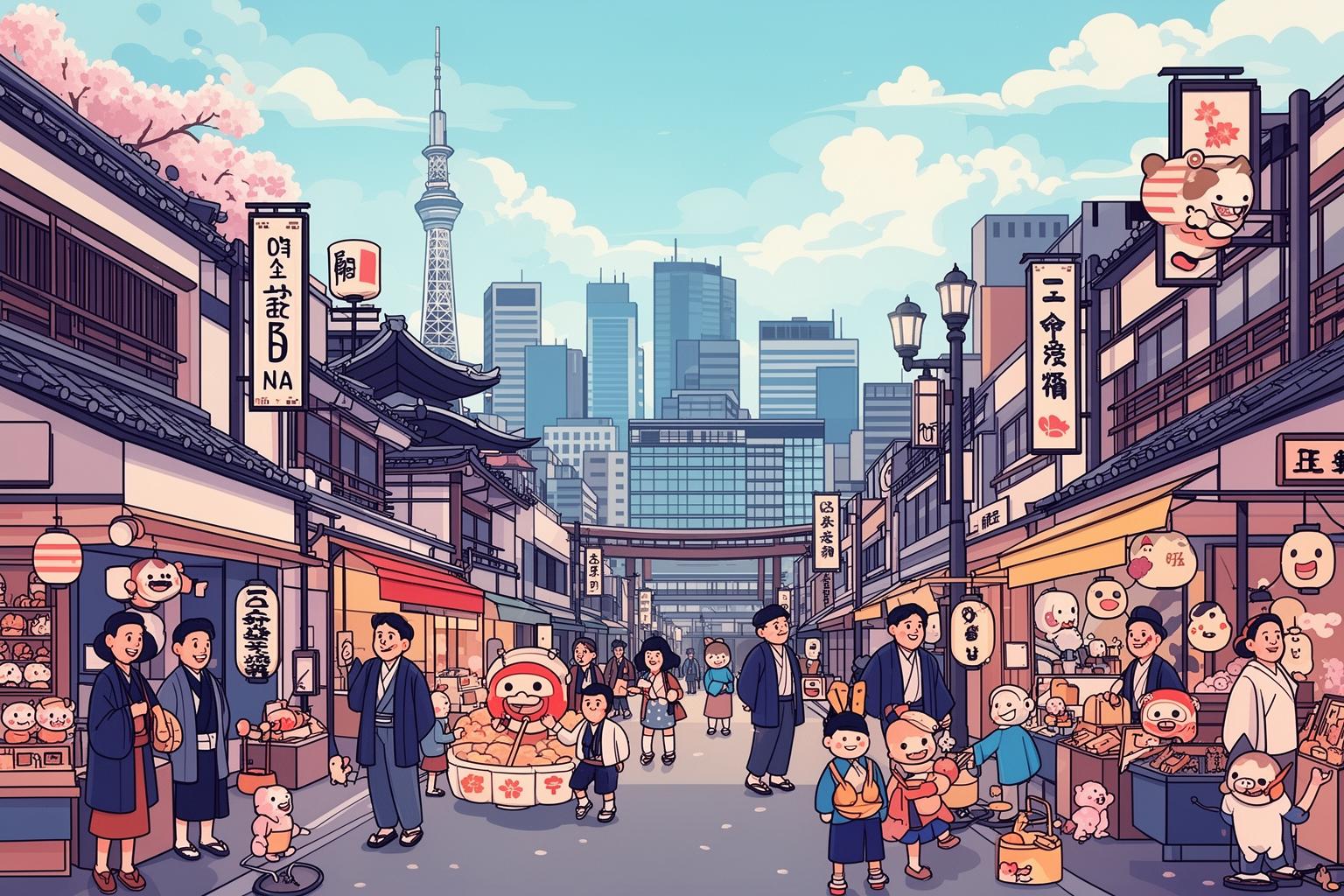
To understand why an Osakan might ask about your salary within five minutes of meeting you, or why the city is so focused on getting the best value for its money, you need to look back in history. Osaka’s character was not forged in the corridors of power but in the lively, chaotic marketplace.
Japan’s Kitchen and the Rise of the Merchant Class
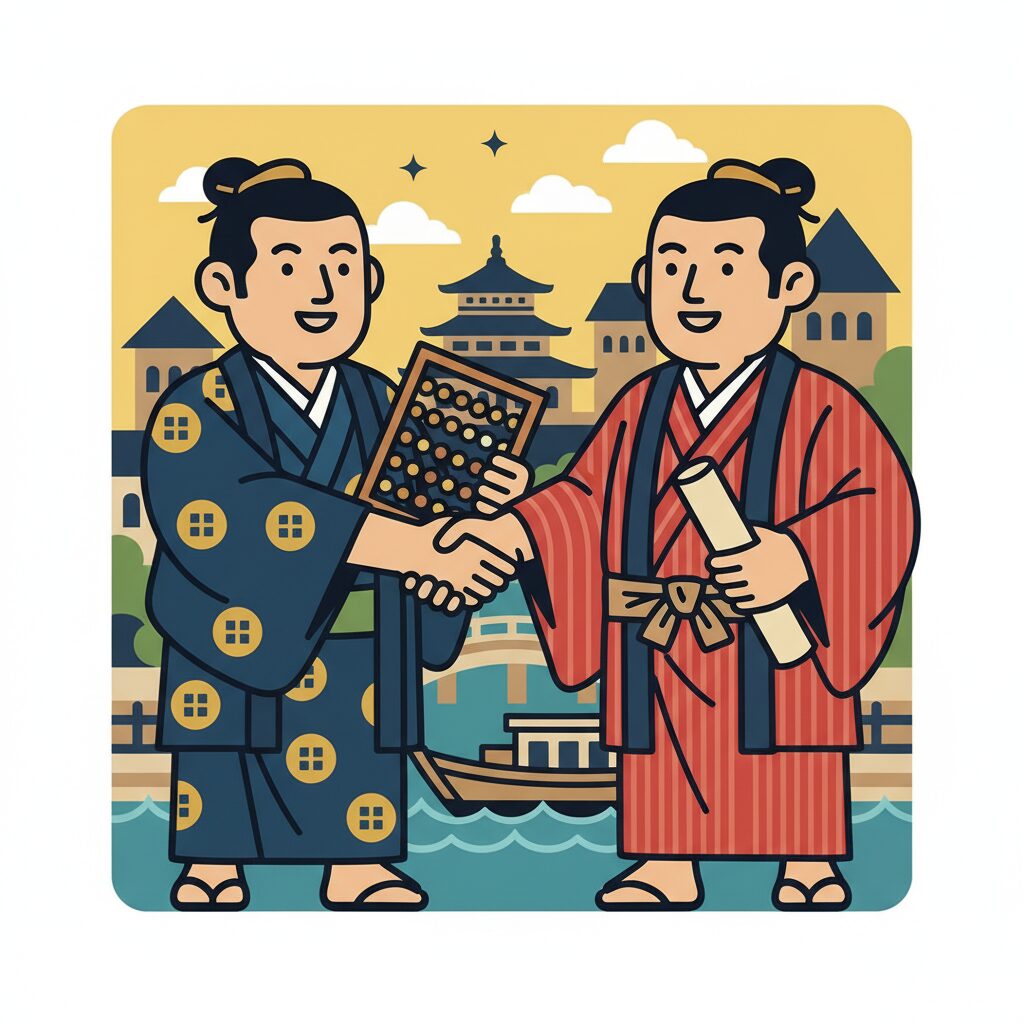
During the Edo Period (1603-1868), while Tokyo (then Edo) served as the political center filled with samurai and bureaucrats, Osaka earned a different reputation: ‘Tenka no Daidokoro,’ or ‘The Nation’s Kitchen.’ It was a vast distribution center where rice, produce, sake, and goods from all across Japan flowed into its ports and were stored in enormous warehouses before being dispatched nationwide. This created a city governed not by warriors but by merchants, financiers, and artisans. In Osaka, money, rather than birthright, was the true measure of success. Although the samurai class officially looked down on merchants, in practice, they were heavily reliant on Osaka’s wealthy traders. This gave the Osakan ‘akindo’ a distinct sense of pride, independence, and a sharp streak of anti-authoritarian confidence that continues today.
Samurai vs. Merchants: A Tale of Two Cities
The cultural divide between Osaka and Tokyo can be traced back to this contrast. Tokyo’s culture evolved around the strict hierarchies of the samurai government. Etiquette, formality, preserving face, and maintaining social rank were paramount. Communication was, and often remains, indirect and layered with subtlety—a culture of ‘tatemae’ (public face) and ‘honne’ (true feelings). By contrast, Osaka’s culture grew from pragmatism. In the marketplace, there was no time for pretense. You had to be direct, sharp, and convincing. You needed to read people quickly, establish trust, and close deals efficiently. Status was earned through wealth and business skill, not family background. This cultivated a population known for their straightforwardness, valuing honesty and outcomes over ornate language and rigid formalities. This historical split is essential to understanding why a business meeting in Tokyo might feature an hour of polite small talk before addressing the main issue, whereas in Osaka, you might dive into the numbers before finishing your first cup of tea.
‘Shobai’ is Not Just Business, It’s a Philosophy
This is the key concept to grasp. In Osaka, ‘shobai’ is a philosophy that extends well beyond the shop floor. It centers on creating and appreciating value, nurturing mutually beneficial relationships, and relentless practicality. At its core is the belief that a good deal is one where everyone feels victorious—the seller profits, and the buyer receives great value for their money. This mindset is applied universally. A friendship is a good ‘shobai’ if both parties feel supported and enriched. A meal is a good ‘shobai’ if it is tasty, satisfying, and reasonably priced. A conversation is a good ‘shobai’ if it entertains and leaves both participants uplifted. It’s a constant, subconscious assessment of input versus output, effort versus reward. It’s not cold or cynical but a profoundly human drive to make life efficient, enjoyable, and ultimately meaningful.
The Language of Value: Daily Negotiations and Frugality
The ‘akindo’ spirit is most clearly expressed in the Osakan approach to money. It’s not about amassing wealth, but about honoring it. Money is seen as a tool, and a true master knows how to wield it for maximum efficiency and impact. This commitment to value influences daily life in ways that outsiders may find both puzzling and impressive.
“Honma ni? Mou Chotto Yasashite!” (Really? A Little Cheaper!)
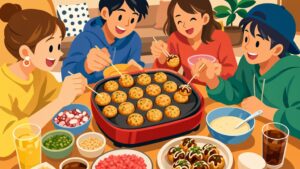
The scene at the fruit stand isn’t an exception; it’s a norm in certain settings. The friendly bargaining, or ‘neuchi’, is a treasured form of communication in Osaka. It’s definitely not about being cheap. It’s a playful exchange, a test of wit that shows you’re a savvy and engaged customer. Trying to get a slight discount at a local shop in a ‘shotengai’ (shopping arcade) is actually a compliment to the owner. It says, “I love this product, I want to buy it from you, and I respect you enough to interact directly.” Simply accepting the sticker price can feel cold or indifferent. Naturally, there are unwritten rules: you don’t haggle at a 7-Eleven or a luxury department store. But at electronics shops in Den Den Town, a small family-run ‘takoyaki’ stall, or an independent clothing boutique, a polite and playful attempt is often appreciated. The attitude matters—it should be lighthearted, friendly, and accompanied by a smile. A classic phrase is, “Meketekureru?” charmingly meaning “Won’t you give me a little discount?” This playful spirit sets Osakan negotiation apart from the tougher, more aggressive bargaining seen elsewhere.
The Gospel of “Cost Performance”
If Osaka had a creed, its core belief would be ‘kosupa’, a Japanese blend of ‘cost’ and ‘performance’. This idea is the ultimate goal for every Osakan shopper. It’s an obsession with squeezing the maximum value out of every yen. This differs fundamentally from cheapness. A cheap person buys the lowest-priced item regardless of quality, while a ‘kosupa’-focused Osakan hunts for the product that offers the best quality, quantity, and satisfaction at the lowest cost. It’s an art form. This is evident everywhere. The city abounds with ‘tabehoudai’ (all-you-can-eat) and ‘nomihoudai’ (all-you-can-drink) offers. Lunch sets undergo intense evaluation: does the 800-yen teishoku include free coffee? Is rice refillable? How many side dishes come with it? A meal that’s just ‘cheap’ is a failure. A meal with outstanding ‘kosupa’ is a triumph to be enthusiastically shared with friends and coworkers. This mindset fuels a fiercely competitive and vibrant food scene, as restaurants know they won’t survive without delivering exceptional value.
‘Mottainai’ on a Whole Other Level
The Japanese idea of ‘mottainai’—a profound regret over waste—is taken to an extreme in Osaka. Driven by the merchant’s drive to maximize every resource, nothing goes to waste. This creates a culture of remarkable ingenuity. It’s why shopkeepers will give you an ‘omake’ (a small freebie) with your purchase. That slightly bruised apple or day-old bread isn’t garbage; it’s a way to nurture customer loyalty. It’s why an ‘izakaya’ (Japanese pub) serves ‘kushiage’ (deep-fried skewers)—a clever way to use up small leftover pieces of meat and vegetables. This ‘mottainai’ spirit is practical wisdom, ensuring every resource—be it money, food, or time—is fully utilized, a direct legacy from times when a merchant’s survival hinged on making something out of nothing.
Social Currency: How ‘Shobai’ Shapes Relationships
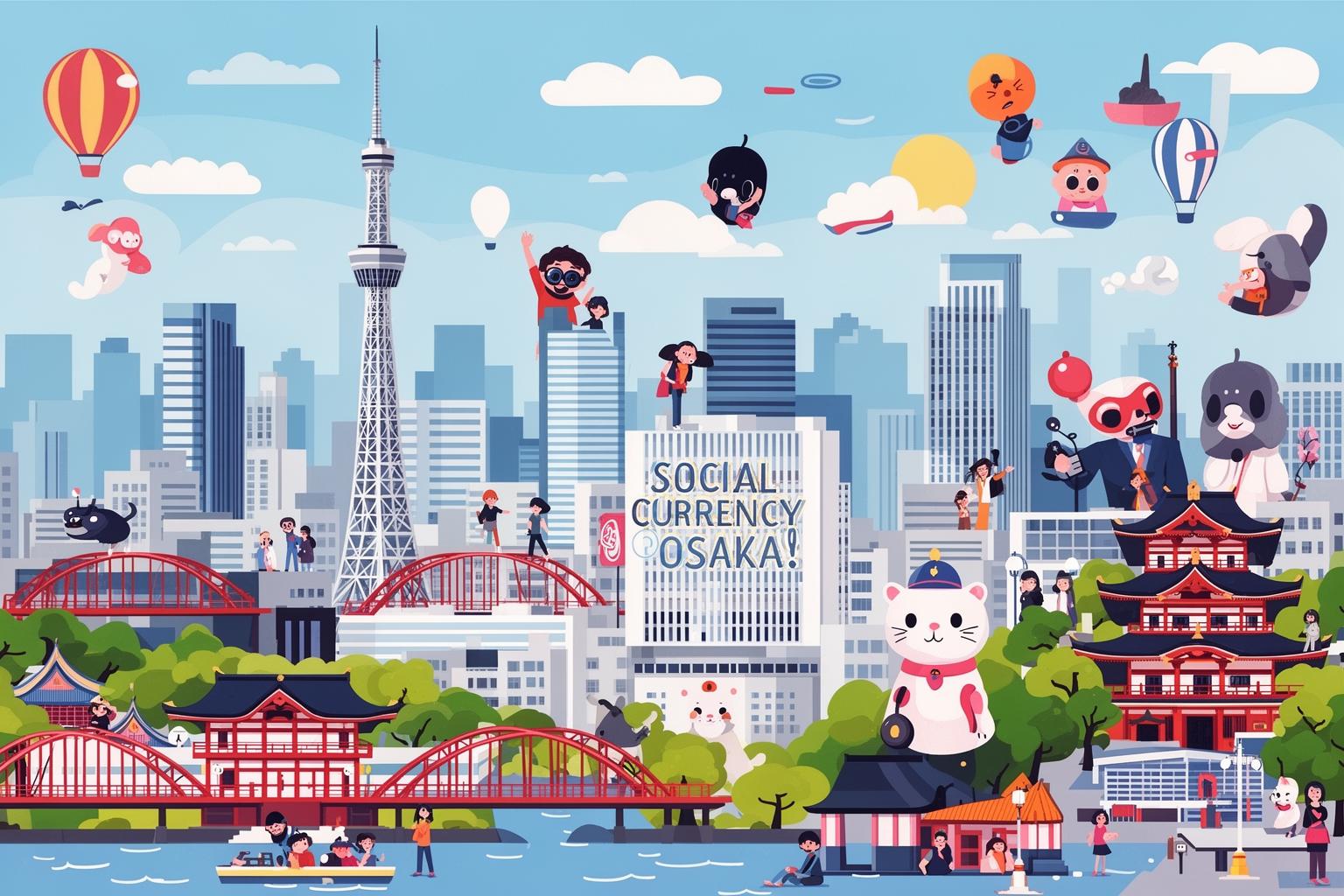
In Osaka, the principles of ‘shobai’ are applied with equal rigor to social interactions as to financial dealings. Relationships are viewed as investments, with a currency that extends beyond yen to include trust, humor, and mutual support. This results in a social fabric that is lively, straightforward, and imbued with a distinctive kind of transactional warmth.
Building Trust, One Joke at a Time
Humor stands as perhaps the most vital tool in the Osakan social toolkit. In a city founded on commerce, quickly sizing someone up is essential. Sharing a laugh is the quickest way to break down barriers and establish a baseline of trust. This underpins the ‘boke’ (funny man) and ‘tsukkomi’ (straight man) dynamic that shapes conversations. One person makes a slightly absurd remark (the ‘boke’), and another immediately counters with a witty comeback (the ‘tsukkomi’). This routine extends beyond comedians on TV; it’s part of everyday life. For instance, a supermarket cashier might joke about the large quantity of instant noodles you’re buying, and you’re expected to have a humorous response ready. This ongoing, lighthearted banter acts as social lubrication, maintaining lively energy and building friendly, informal rapport. Someone who is too serious or unable to engage in this exchange may be perceived as cold, arrogant, or untrustworthy—in short, a poor business partner.
Generosity as an Investment
Although Osakans are well-known for their thriftiness, they’re equally reputed for their remarkable generosity. This might appear contradictory, but it aligns perfectly with the concept of ‘shobai’. Frugality focuses on conserving resources, while generosity is about wisely investing those resources. Treating a friend or business associate to a meal (‘ogoru’) is not merely a kind gesture; it is a strategic investment in the relationship. It fosters a sense of ‘giri’ (social obligation) and deepens the connection between individuals. Similarly, the culture of ‘omake’ represents generosity as a business strategy. The extra potato that a greengrocer tosses into your bag costs him almost nothing but secures your return to his shop. It serves as a small upfront investment in future loyalty. This explains why an Osakan might meticulously split a bill down to the last yen with some acquaintances, yet lavishly treat a close friend or promising new contact without hesitation. Every social expenditure is thoughtfully calculated for its potential return, whether that be loyalty, trust, or simply the pleasure of strengthening a friendship.
Direct Talk and Practicality
One of the most significant cultural shocks for people relocating from other parts of Japan or from abroad is the frankness of Osakan communication. Questions that might be seen as intrusive elsewhere — like “How much do you earn?” or “Why aren’t you married yet?” — are often posed with genuine, disarming curiosity. This is never intended to be rude; rather, it is a shortcut. It reflects the merchant’s desire for efficiency applied to socializing. By quickly laying all the key information on the table, they can find common ground, understand your circumstances, and determine how you fit into their world. There is no patience for ambiguity. For some, this pragmatism is refreshing; for others, it can be startling. Yet it stems from sincerity. In ‘shobai’, building a good relationship on vague pleasantries won’t work. You need to know exactly who you’re dealing with, and the quickest way to find that out is by asking.
What Foreigners Often Get Wrong
Osaka’s distinct culture, so unlike the typical image of Japan, is prone to being misunderstood. The very qualities that Osakans consider virtues—frugality, directness, and humor—can easily be misread by outsiders. Understanding these subtleties is essential to feeling at ease in the city.
Confusing Frugality with Stinginess
This is the most frequent error. People notice the strong focus on ‘kosupa’ and the love for a good bargain, labeling Osakans as ‘kechi’ (stingy). But there is a vast difference between the two. Stinginess is a selfish behavior; it’s about hoarding money for oneself. Osakan frugality, however, is a communal practice. It involves being prudent with your own money so that you can be generous when it counts. An Osakan will proudly share the amazing deal they got on new shoes, not to brag, but to pass on valuable information to their community. The money saved might then be used to treat a junior colleague to an extravagant meal celebrating a success. Frugality fuels Osakan generosity. It’s about managing resources for the benefit of the group, not just the individual.
Misreading Directness as Aggression
The quick, straightforward, and sometimes loud manner in which Osakans speak can be intimidating. Their habit of standing close when talking and using many gestures can feel intrusive to those accustomed to more reserved cultures. Yet, this is hardly ever born from aggression. It stems from enthusiasm and a wish to connect. When an ‘obachan’ (middle-aged lady) on the train starts asking personal questions, she isn’t interrogating you; she’s seeking a shared experience, a point of connection to create a brief relationship. The directness signals interest, not hostility. They break down the barriers of formality that often separate people in Japan, welcoming you into their world with an open, if sometimes blunt, curiosity.
Assuming the Jokes are Merely Entertainment
To outsiders, the constant joking and self-deprecation might seem trivial or even unprofessional in a business setting. But in Osaka, humor is taken seriously. It’s a finely tuned skill serving an important social and commercial role. It acts as a test of social compatibility. When someone jokes at your expense, they’re gauging your ability to be flexible and good-natured. A smart retort is the right response, showing you understand the rules and are willing to engage. Someone who takes offense or clams up fails the test and may be seen as difficult to work with. Laughter is the lubricant that keeps Osaka’s social and economic workings moving smoothly. It builds trust far faster than any formal agreement.
Living the ‘Shobai’ Life: A Practical Guide
Grasping the ‘akindo’ spirit is one thing; embodying it is quite another. To integrate into Osaka means shedding certain reservations and embracing the city’s transactional yet profoundly human rhythm. It’s about actively joining the daily dance of ‘shobai’.
Embrace the Conversation
When you visit your local bakery or vegetable stand, don’t just point, pay, and leave. Make eye contact. Say more than a simple ‘arigatou’. Ask the owner what’s fresh today. Compliment the display. Chat about the weather. This small gesture transforms you from a faceless consumer into a person. It opens the door to a relationship and marks the first step to becoming a ‘joren-san’ (a regular), a highly valued status in Osaka. Once you become a regular, the real magic begins: the owner saves the best cuts for you, you get insider tips on new products, and the special ‘omake’ starts appearing in your bag.
Think in Terms of Value, Not Just Price
Shift your consumer mindset from “what’s cheapest?” to “what gives the best kosupa?” Begin evaluating your purchases through this perspective. That slightly pricier lunch might come with a better atmosphere, friendlier service, and unlimited iced tea, making it an excellent deal. This isn’t just about saving money; it’s training your mind to recognize hidden value. This appreciation for quality and substance over superficial cheapness is a core Osakan virtue. When you begin spotting great ‘kosupa’ everywhere, you’ll know you’re starting to think like a local.
Learn to Laugh at Yourself (and with Others)
Don’t shy away from the banter. If a shopkeeper teases you about your broken Japanese, laugh and joke back about their flashy shirt. Humor is a sign of acceptance, and engaging in it shows confidence and resilience. This is especially crucial for foreigners, as it immediately breaks down the ‘us vs. them’ barrier. Being willing to play both the ‘boke’ and ‘tsukkomi’ roles is your ticket into the social fabric of the city. Let go of self-consciousness and embrace the playful chaos.
Be a Good Neighbor, Be a Good Customer
In a city built on relationships, loyalty means everything. Find your local spots—a coffee shop, a butcher, an ‘izakaya’—and support them consistently. In Osaka, your loyalty will be noticed and rewarded time and again. The ‘shobai’ spirit is a two-way street. By being a good, dependable customer, you uphold your part of the bargain. In return, you receive not only goods and services but also a priceless sense of community and belonging. This web of reciprocal relationships is the true wealth of the city.
Living in Osaka is an immersive encounter with a culture that is unapologetically pragmatic, fiercely loyal, and vibrantly alive. The ‘shobai’ mindset, forged over centuries of trade, has shaped a city charged with a unique energy. It’s a place where a bargain is a conversation, a joke signifies trust, and a free orange promises future friendship. It can be loud, blunt, and it will challenge your ideas of Japanese society. But once you learn to navigate this potent merchant spirit, you’ll discover a city offering one of the best deals imaginable: a place where practicality is met with warmth, and engagement with genuine community. Here, every day is a negotiation, and if you play your cards well, everyone leaves a winner.