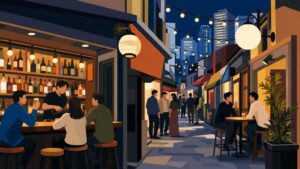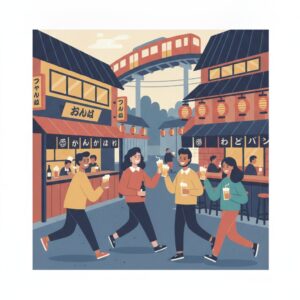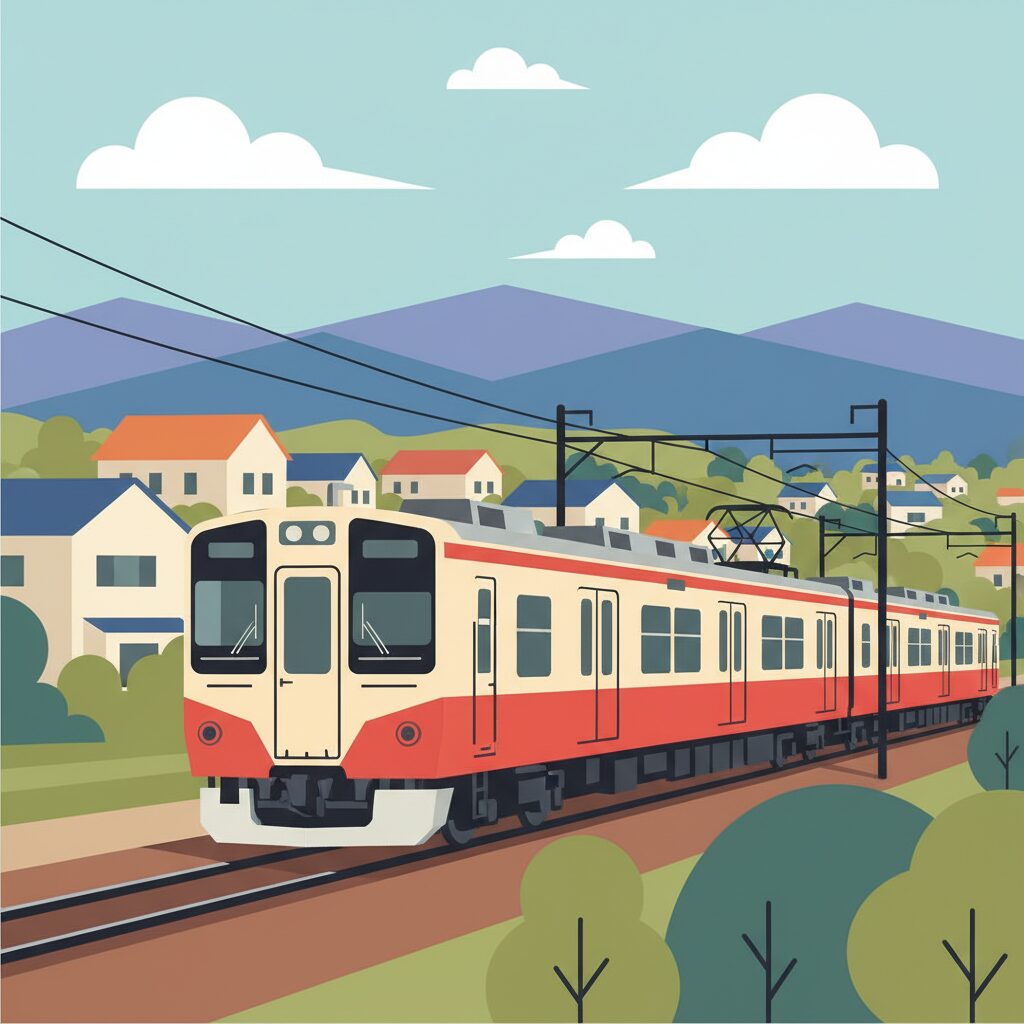
Ask anyone about Osaka, and they’ll paint you a picture. It’s a sensory explosion, a riot of kanban signs glowing in the Dotonbori canal, the sizzle of okonomiyaki on a hot griddle, the throaty roar of a Hanshin Tigers crowd. It’s a city that moves fast, talks loud, and eats with an unapologetic fervor. We’re known for being direct, for our love of a good bargain, and for a certain gritty, commercial energy that stands in stark contrast to the polished reserve of Tokyo. But what happens when you ride the subway ten minutes north of that chaotic core? What happens when the pachinko parlors and standing-room-only bars are replaced by sprawling parks, wide boulevards, and the quiet hum of family life? The story of Osaka isn’t just written in neon. A huge, vital chapter is written along a single, nine-station subway line: the Kita-Osaka Kyuko. This isn’t just a commuter route; it’s a cultural artery, pumping life into the city’s northern suburbs and revealing a side of the Osaka mindset that most visitors, and even many residents, never see. This is where the Osaka dream of stability, green space, and a world-class education for the kids plays out, far from the tourist trail. It’s a calculated retreat, a pragmatic choice to trade the 24/7 stimulation of the south for something more measured, more serene, but no less authentically Osakan. To understand this city, you need to understand why a family would choose a quiet life in Senri-Chuo over the kinetic thrill of Namba. It’s a story about a different kind of ambition, and we’re going to spend a weekend exploring it, station by station.
Delving further into Osaka’s unique blend of energy and calm, one begins to appreciate how the Kita vs. Minami divide shapes contrasting lifestyles across the city.
The Unspoken Geography: North vs. South and the Kita-Osaka Kyuko Prestige
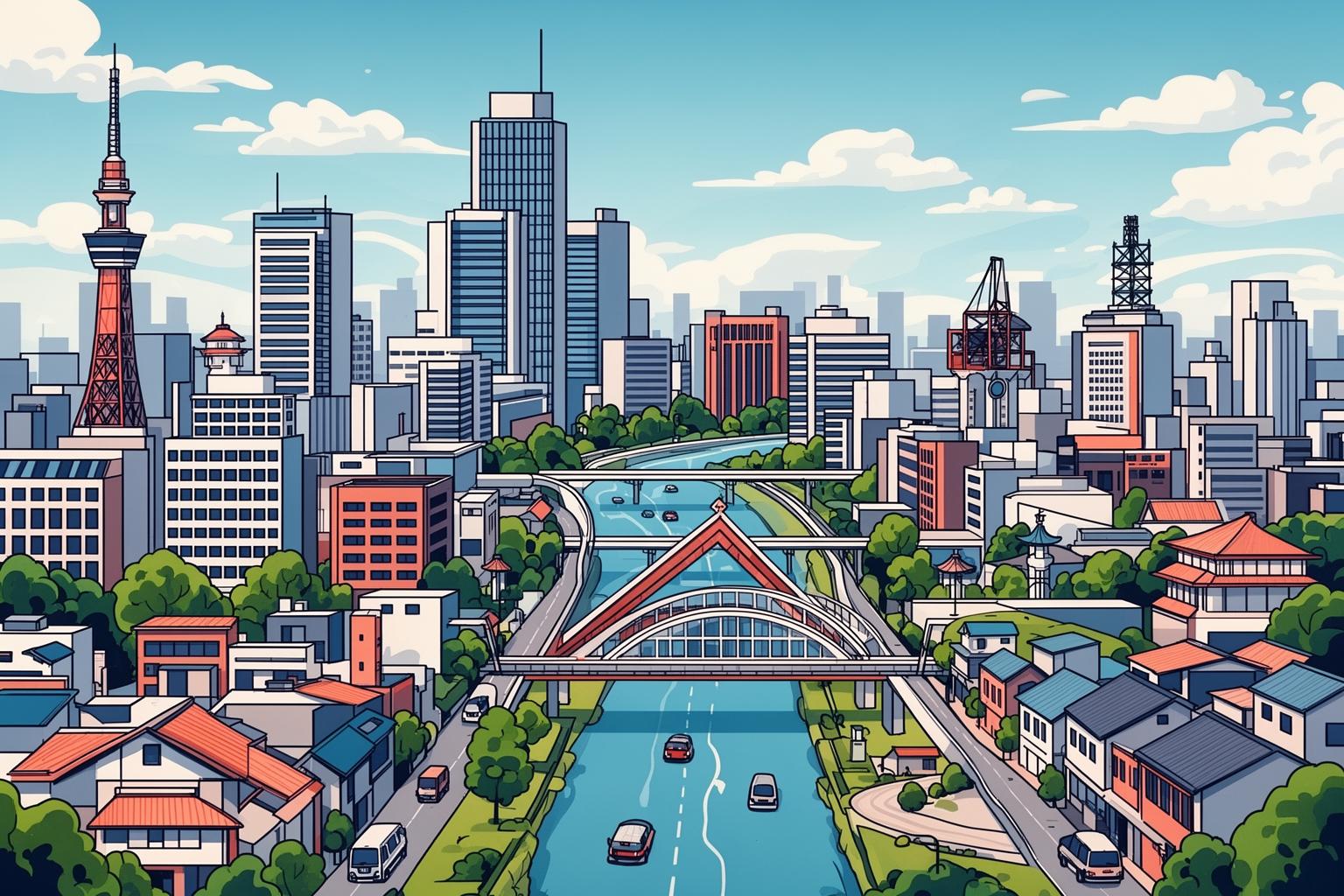
In Osaka, your address means much more than just a place; it represents your lifestyle, your values, and even your personality. An invisible line divides the city into two halves. To the south is Minami, centered around Namba and Shinsaibashi. This area is the historic merchant quarter, the entertainment hub, and the city’s vibrant, chaotic heart—raw, lively, and relentlessly commercial. To the north lies Kita, focused on Umeda. This is the modern business district, with its sleek skyscrapers, upscale department stores, and complex train station. It feels more refined, corporate, and well-connected. Yet for many Osaka families, true aspiration lies further north, beyond the city limits, in the suburbs embraced by Suita, Toyonaka, and Minoh. This territory is served by the Kita-Osaka Kyuko Line, and living here carries a distinct, quiet prestige.
Unlike the sprawling Tokyo suburbs, each with its own micro-culture and identity, Osaka’s north-south divide dominates everything. Choosing to live in the north is a conscious choice, signaling a focus on family, education, and quality of life over the convenient chaos of downtown. This status isn’t about flashy cars or designer clothes; it’s about being close to good schools and green spaces. The essence of Osaka often comes down to jitsuri (実利), or practical benefit. At heart, we are pragmatists, seeking the best value, the smartest solution. The northern suburbs perfectly embody jitsuri in everyday life. Why cram into a small downtown apartment when you could enjoy a spacious home, cleaner air, and a direct 15-minute train ride to Umeda? The Kita-Osaka Kyuko Line is the key, linking directly to the Midosuji Line, so you can travel from the leafy Senri-Chuo area to bustling Namba without changing trains.
Here, people don’t show off their address like someone in Tokyo might casually mention a trendy area like Daikanyama. The status is subtler. You hear it in conversations among parents at a local park—one noting how easy it is for their son to get to cram school near Umeda, another describing a weekend barbecue in a park larger than many central Tokyo wards. It’s a kind of code, expressing shared values: safety, convenience, and a healthy environment for their kids. This is the understated currency of the northern suburbs. Outsiders might mistakenly see this preference as a desire to escape Osaka’s core character, to live in a bland, sterile suburb. But that’s a fundamental misunderstanding. For residents here, it isn’t an escape—it’s a deliberate optimization. It’s about establishing the perfect home base for engaging with the city on their own terms, enjoying its energy when they want and retreating to a carefully crafted sanctuary when they don’t.
Ryokuchi-koen: Where Osaka Breathes and Plays by Unwritten Rules
Step off the train at Ryokuchi-koen Station, and the city’s hard concrete rhythm instantly softens into a gentle green murmur. You’ve arrived at the gateway to Hattori Ryokuchi Park, an expansive area of woods, lawns, and gardens that serves as the shared backyard for much of northern Osaka. This isn’t merely a patch of grass; it’s a living, breathing social institution, and spending a weekend here feels like a crash course in the unspoken codes of public life in Osaka.
On a sunny Saturday, the main lawn turns into a sprawling tent city. And this isn’t just simple picnic blankets. Osaka families take their leisure seriously. They come equipped with pop-up tents for shade, portable tables and chairs, huge coolers filled with tea and homemade onigiri, and sometimes even small portable barbecue grills sizzling with yakisoba. Preparation is a form of respect—for the activity, for your family, for the day itself. Arriving unprepared is akin to not taking relaxation seriously, a curious but deeply rooted local paradox. This dedication to being well-prepared reflects that same Osaka pragmatism. Why be uncomfortable when, with a bit of foresight, you can create a perfect home-away-from-home for the afternoon?
Look around, and you’ll witness the full ecosystem of suburban life. Near the woods, a group of high school students in matching tracksuits tirelessly practices an intricate dance routine, their portable speaker blasting K-pop. Further along, a brass band from a local junior high rehearses, their earnest but slightly off-key notes drifting through the trees. Dozens of family groups dot the landscape, each within its own invisible bubble of space. This is a key unspoken rule: space is negotiated, not claimed. You don’t dominate a huge area with an oversized tarp. You set up your modest camp and remain keenly aware of your neighbors. A child’s stray soccer ball is returned with a bow and a smile. If you must pass through someone’s “zone” to reach the path, you do so with a slight nod and a soft “sumimasen” (excuse me). It’s a delicate dance of mutual awareness, a kind of organized chaos that functions because everyone understands their part. This is quite different from a major Tokyo park like Yoyogi, where a more performative, transient energy prevails—people watching and being seen. Here, it feels purposeful and communal. It’s less about appearance and more about function. This park is meant for using.
Within the park lies another layer of the local mindset: the Open-Air Museum of Old Japanese Farmhouses. These historic ‘minka’ were saved from demolition throughout Japan and reconstructed here. On any day, you’ll find elderly volunteers carefully tending the thatched roofs or schoolchildren sketching the rustic wooden buildings. The presence of this museum in a park that showcases modern suburban life is no accident. It reflects a desire, even in this carefully planned environment, to hold onto a more organic, grounded past. It’s a quiet recognition that the “good life” here is built on foundations of both practicality and tradition, a sentiment that resonates deeply with the Osaka spirit. It’s a place for quiet reflection, offering a counterbalance to the lively energy of family picnics just a few hundred meters away. The ability to embrace both—the boisterous community and the serene heritage—in a single space is a big part of the appeal of life in the north.
Senri-Chuo: The Perfected Suburb and the Comfort of the Script
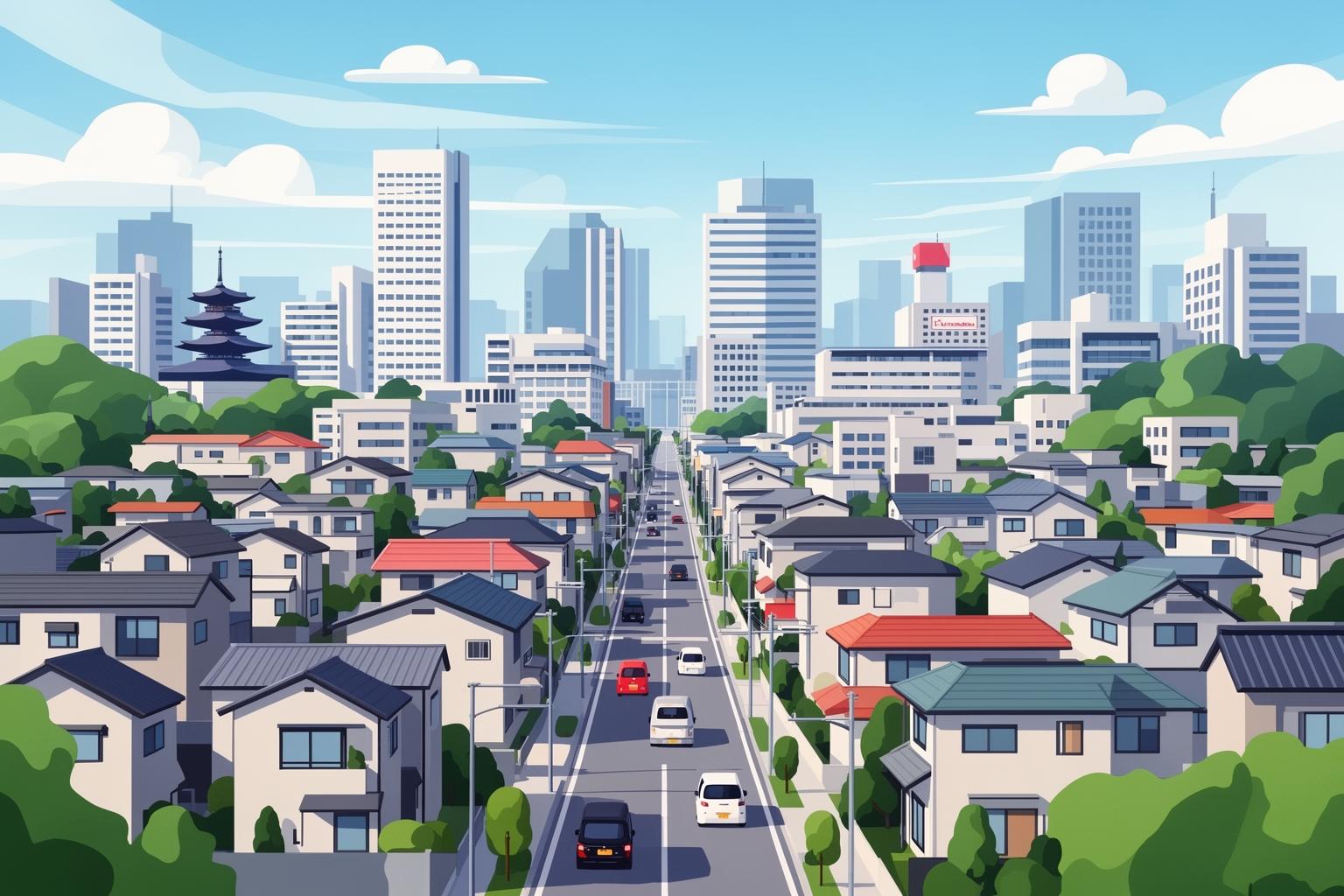
If Ryokuchi-koen serves as the communal backyard, Senri-Chuo functions as the communal living room. As the central hub of the Kita-Osaka Kyuko Line, this station and its surrounding area embody the essence of a distinctive Japanese dream: a carefully planned, all-inclusive suburban lifestyle. To truly grasp Senri-Chuo is to understand the history of modern Japan itself. This is the core of Senri New Town, one of the nation’s earliest and most ambitious planned communities, developed in the 1960s to house families moving to Osaka for Expo ’70. The entire neighborhood wasn’t a product of organic growth; it was designed from the ground up on bamboo-covered hills, optimized for both efficiency and livability. This commitment to intentional design influences every aspect of life here.
The station itself is a marvel of integrated living. It is more than just a transit point—it seamlessly connects with the Senchu Pal shopping center, a Hankyu department store, a public library, numerous clinics, restaurants, and banks. Surrounding and rising above it are expansive complexes of condominiums and ‘danchi’ (public housing apartments), all linked by a network of elevated pedestrian walkways and lush green paths called ‘ryokudo.’ Residents can live their entire lives here—attending school, shopping, visiting doctors, and commuting—without ever crossing a major street at ground level. This is a realm of managed convenience, a triumph of post-war urban planning.
A foreign visitor might stroll through the clean, orderly corridors and find them sterile, lacking the ‘character’ of older, more chaotic neighborhoods. This is a common misconception. For locals, this predictability is not a flaw; it is the central feature. It represents the ultimate embodiment of the Osaka preference for things that simply work. Life here follows a comfortable, reliable rhythm. In the morning, a river of commuters in dark suits flows into the station. Midday, plazas fill with young mothers pushing strollers and elderly residents soaking up the sun. In the afternoon, uniformed students flood the space on their way to cram schools located within the station complex. Weekends see families visiting the department store for shopping and dining.
Some might call this the ‘illusion of choice.’ You can pick from dozens of restaurants, but most are familiar chains. You can shop at several supermarkets, yet they all offer a similar selection of products. This isn’t a place for spontaneous discoveries or trendy, independent boutiques. It’s designed for seamless living. The appeal lies in minimizing daily stress. Concerns about safety, noise, or convenience are already resolved by the original master plan. Living in Senri-Chuo is a conscious trade-off: you surrender some spontaneity in exchange for tremendous peace of mind. It’s the pragmatic Osaka mindset taken to its logical conclusion—a lifestyle machine, a perfectly tuned environment for raising a family and building a stable life, all while staying connected to one of Japan’s most vibrant cities via a fast, clean subway ride.
The New Frontier: Minoh-Kayano and the Evolving Definition of North
For decades, the Kita-Osaka Kyuko Line’s journey north ended at Senri-Chuo, the final station and symbolic terminus of the well-trodden path to the ideal suburban life. However, in 2024, the line extended further north, adding two new stations in the city of Minoh, with Minoh-Kayano as the new endpoint. This extension is more than just additional track; it represents a seismic shift in Osaka’s cultural geography. It signals that the ‘brand’ of the northern suburbs—a compelling blend of nature, convenience, and family-first living—is in such high demand that its boundaries needed to expand. This marks a new frontier where the next chapter of the Osaka suburban dream is unfolding.
Minoh has long been famed for its stunning natural beauty, especially its waterfall, a popular spot for autumn leaf viewing. Traditionally, it was considered somewhat inconvenient, a destination for weekend hikes rather than daily commutes. The new station changes that perception entirely. It integrates the seamless connectivity of the Kita-Osaka Kyuko Line with a landscape of mountains and forests, creating an intriguing hybrid. Step out of the striking, newly designed Minoh-Kayano station and you find yourself in the sprawling, ultra-modern Q’s Mall. Yet, if you look just beyond the Uniqlo store, the lush green slopes of the Minoh mountains come into view. This is the new selling point: urban convenience right at the doorstep of natural splendor.
This area is drawing a new generation of pioneers—often younger families attracted to the prestige of the ‘Hokusetsu’ (Northern Osaka) region but priced out of more established neighborhoods like Senri-Chuo. They seek the same values—good schools, safe communities, green spaces—with the added benefits of newer homes and immediate access to nature. This is Osaka pragmatism 2.0: a hyper-optimized lifestyle choice. Why choose between city access and nature when you can have both? A typical weekend for a family here might start with a morning hike to the waterfall, followed by lunch and grocery shopping at the mall, with one parent still able to catch a train to Umeda in under 30 minutes for an evening out. It’s a ‘have your cake and eat it too’ mindset deeply ingrained in Osakan culture, always striving for the best possible arrangement with minimal compromise.
The development of Minoh-Kayano shows that the northern suburban identity is not fixed. It is a dynamic concept, evolving to meet the needs and desires of a new generation. While Senri-Chuo emerged from the post-war economic boom as an emblem of planned order, Minoh-Kayano reflects a 21st-century aspiration for work-life balance and a closer connection to nature. It demonstrates that the core appeal of the Kita-Osaka Kyuko lifestyle remains strong—a lasting force shaping how and where Osakans choose to build their lives.
Why It’s Not Tokyo, and Why That Matters
To truly understand the distinctive character of Osaka’s northern suburbs, you need to recognize how they contrast with their Tokyo counterparts. At first glance, they may appear similar—clean, safe, residential neighborhoods connected to a major city by an efficient train line. However, the underlying philosophy, the reason for their existence, is fundamentally different. Tokyo’s popular suburbs, such as Kichijoji on the Chuo Line or Jiyugaoka on the Tokyu Toyoko Line, are destinations in their own right. They radiate a strong, independent cultural appeal, boasting their own ‘oshare’ (stylish) atmosphere with unique boutiques, third-wave coffee shops, and destination restaurants. People from central Tokyo often make special trips to spend a day hanging out in Kichijoji, which has its own brand and scene.
This differs from Osaka’s northern suburbs. No one from Namba typically plans a weekend trip to ‘hang out’ in Momoyama-dai or Senri-Chuo. Their identity isn’t autonomous; it’s almost entirely defined by their relationship to the city center. Their main appeal is not internal ‘coolness,’ but a serene, functional counterbalance to the city’s intensity, paired with a seamless connection back to it. The defining feature is ‘kurashi-yasu-sa’—the ease of living. Choosing to live here is driven by logic and practicality, rather than trendiness or cultural prestige. It’s a decision based on commute times, school district rankings, and the amount of park space available per capita.
This practical focus fosters a different kind of community. A visitor wandering around Senri-Chuo on a weekday might find it quiet, even somewhat lonely. Although the streets are clean, they lack the lively street culture found in places like Tokyo’s Shimo-kitazawa. That’s because the community life here is largely invisible to outsiders. It doesn’t unfold in trendy cafes or on street corners but takes place in more structured, private, or semi-private settings. It exists within tightly organized Parent-Teacher Associations (PTAs), local kids’ sports teams practicing religiously every weekend, community center classes for calligraphy or flower arranging, and seasonal festivals held at small neighborhood Shinto shrines. The social fabric is closely knit, but it’s woven behind the closed doors of schools, community halls, and private homes. Foreigners often misinterpret this quietness as a lack of community, when in fact, it operates on a different, more scheduled and purpose-driven rhythm. It reflects the lives of its residents—busy, family-centered, and organized around the routines of work and school.
Living along the Kita-Osaka Kyuko Line means embracing this system. It’s a commitment to a well-ordered life, a conscious choice to find community through shared responsibilities and structured activities rather than spontaneous public gatherings. In its own way, it’s a distinctly Osakan approach: efficient, pragmatic, and centered on the concrete goal of building a good life for one’s family.
Standing on the platform at Umeda Station, waiting for a train that will head north on the Midosuji Line before seamlessly becoming the Kita-Osaka Kyuko, you find yourself at a crossroads of two Osakas. One direction leads south, deeper into the sensory overload of the city’s commercial and entertainment core. The other leads north, into the carefully maintained calm of the suburbs. For too long, Osaka’s story has been defined only by the former. But overlooking the latter means missing half of the picture. The Kita-Osaka Kyuko Line is more than a transit corridor; it’s a conveyor belt carrying people toward a particular, cherished version of the Japanese dream. The pragmatism that drives an Osaka merchant to find the best deal in the marketplace also motivates a family to choose a home in Toyonaka for its school district and park access. The lively energy of a weekend picnic in Hattori Ryokuchi Park is just as authentically Osakan as the roar of the crowd at a baseball game. To truly understand Osaka, you have to understand the family in their Senri New Town apartment, enjoying the peace and quiet they deliberately selected, fully aware that the city’s vibrant chaos is just a short, smooth train ride away. This carefully calibrated balance isn’t a rejection of Osaka’s identity; it’s the very foundation that enables the city’s famous energy to flourish. It’s the quiet heartland fueling the neon heart.