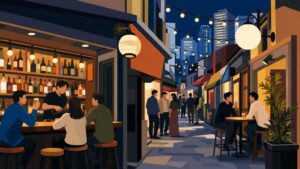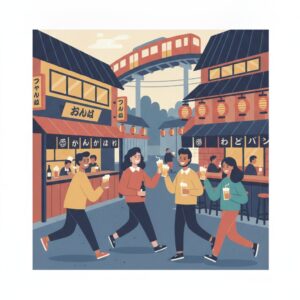
Step out of Osaka Station, and you’re immediately thrown into the kinetic energy of Umeda, a sprawling nexus of polished steel, glittering department stores, and relentless human flow. It’s a vision of modern Japan, efficient and overwhelming, a place where the future feels like it arrived yesterday. But walk just ten minutes northeast, duck under a train line, and the city’s pulse abruptly changes. The roaring traffic fades to a murmur. The skyscrapers vanish, replaced by a low-slung warren of darkened wood, tangled electrical wires, and the quiet shuffle of neighborhood life. This is Nakazakicho. It’s not just a different place; it’s a different time. How can a city so defined by its forward-looking, commercial hustle also cradle a pocket of its past so tenaciously, right on the edge of its most futuristic hub? This contrast isn’t just a geographical quirk; it’s a window into the soul of Osaka. Nakazakicho isn’t a theme park or a meticulously preserved historical district. It’s a living, breathing, working neighborhood that offers a profound lesson in the Osakan art of adaptation, independence, and the deep, abiding value placed on the human scale. For anyone trying to understand what life in this city is really like, especially the growing legion of us tapping away on laptops in search of a good Wi-Fi signal and a better cup of coffee, this labyrinth of Showa-era lanes provides some compelling answers.
Complement your exploration of Nakazakicho’s vintage charm by also delving into Kitahama’s tranquil riverside cafe culture, where the peaceful ambiance offers a refreshing counterpoint to Osaka’s urban energy.
The Persistence of the Past: Why Nakazakicho Survived
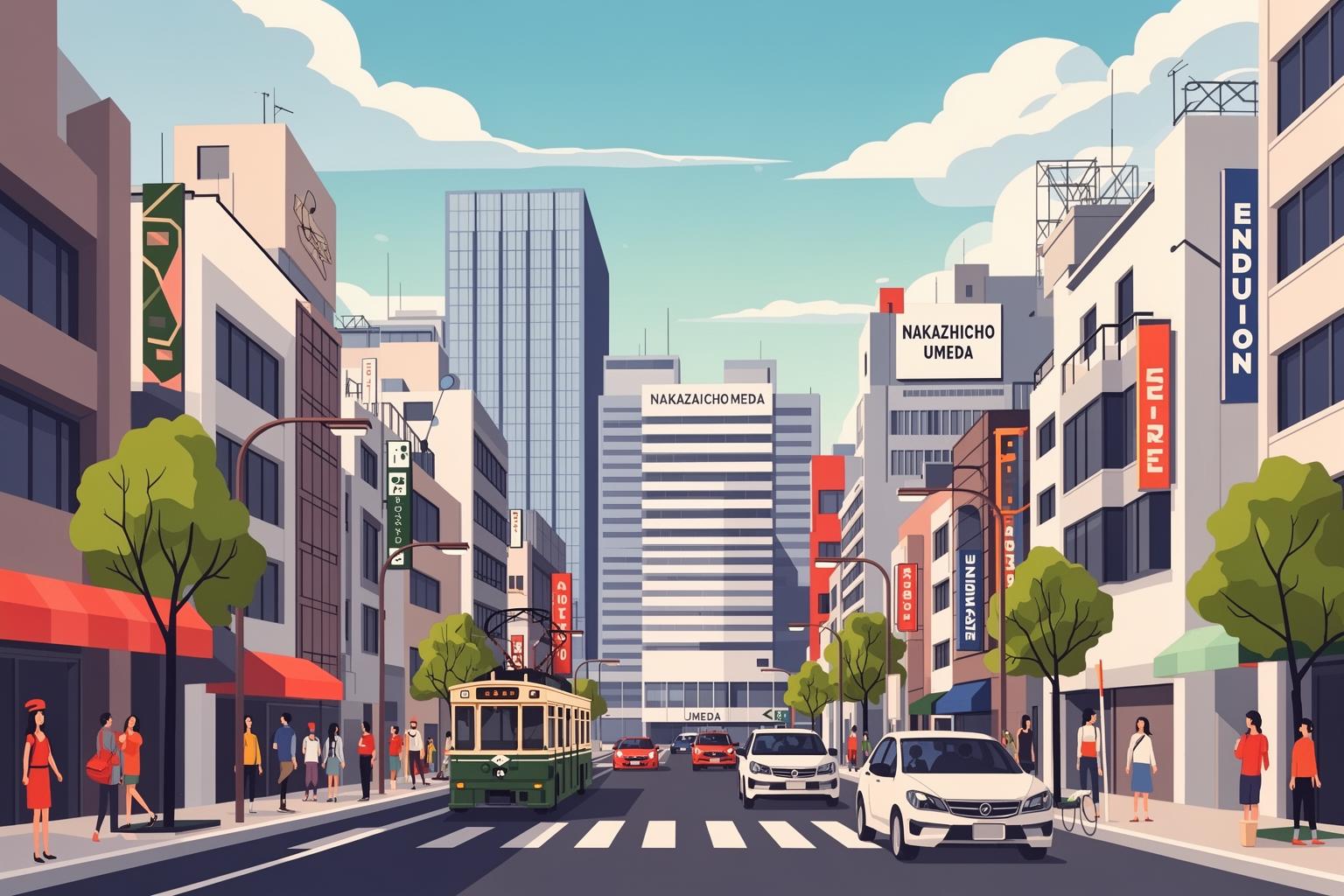
From a historian’s viewpoint, the mere survival of Nakazakicho is nothing short of a minor miracle. Much of central Osaka was destroyed by the extensive air raids of 1945. The grand commercial streets and dense residential areas were reduced to ashes, and the city that emerged afterward was inevitably a modern one. Nakazakicho, however, was one of the rare central neighborhoods to remain largely intact. This single fact forms the foundation of its identity. The buildings here aren’t replicas; they are the authentic structures—aging nagaya row houses and machiya townhouses that have stood for nearly a century. Their preservation was not due to any top-down preservation order but rather a combination of luck and pragmatic local attitudes.
This sharply contrasts with the development approach often seen in Tokyo. In the capital, there is a strong push for large-scale redevelopment. Entire blocks are demolished to make way for gleaming towers like Roppongi Hills or Tokyo Midtown, projects driven by major developers and government plans. Osaka, while familiar with mega-projects, has a stronger tradition of bottom-up, organic growth. The choice to retain and repurpose these old wooden houses was not motivated by a sentimental heritage movement but by economic reasons. For decades, it was simply more affordable and practical for small landowners and residents to repair and modify rather than demolish and rebuild. This pragmatism, this focus on what works at a small, individual level, is quintessentially Osakan. It reflects a mindset often skeptical of grand, impersonal schemes, preferring instead the tangible control of one’s own small domain. The outcome is a neighborhood that feels hand-stitched together over decades, a patchwork of personal decisions rather than the creation of a single master plan.
The “Akindo” Spirit in a Creative Guise
Step into one of the tiny shops or galleries lining Nakazakicho’s alleys, and you’re not merely entering a retail space; you’re connecting with Osaka’s rich history as a city of merchants, the akindo. Today, that spirit is expressed not through rice sellers or textile traders, but through coffee roasters, leather craftsmen, vintage clothing collectors, and independent artists. What unites them is a strong independence and a straightforward, unpretentious approach to their craft and customers.
This is where Osaka’s creative scene often sets itself apart from Tokyo’s. In Tokyo areas like Daikanyama or even the more bohemian Shimokitazawa, there’s usually a certain layer of polished branding and conceptual coolness that shapes the experience. The emphasis is on lifestyle, aesthetics, and brand identity. Nakazakicho, however, feels more direct and grounded. The person behind the counter is almost always the owner, the creator, the artist. The conversation centers not on brand philosophy, but on the origin of the coffee beans, the technique used to shape the leather, or the story behind a particular photograph. This is the akindo way: a bond formed through the quality of the products and the personality of the proprietor.
There is a tangible do-it-yourself spirit. Interiors are often charmingly imperfect, with exposed beams, creaking floorboards, and furniture that appears salvaged and repurposed. This isn’t about projecting an image of effortless cool; it’s about a practical, hands-on approach to building a business from the ground up. The focus remains on the work itself, not the packaging. Outsiders used to more curated experiences might misunderstand this. Nakazakicho’s charm isn’t a performance for customers; it’s the authentic, unfiltered outcome of people carving out their own small spaces in the city, on their own terms. It’s less about being noticed and more about doing something you love, a core principle of life for many small business owners in Osaka.
A Remote Worker’s Haven? Decoding the Cafe Culture
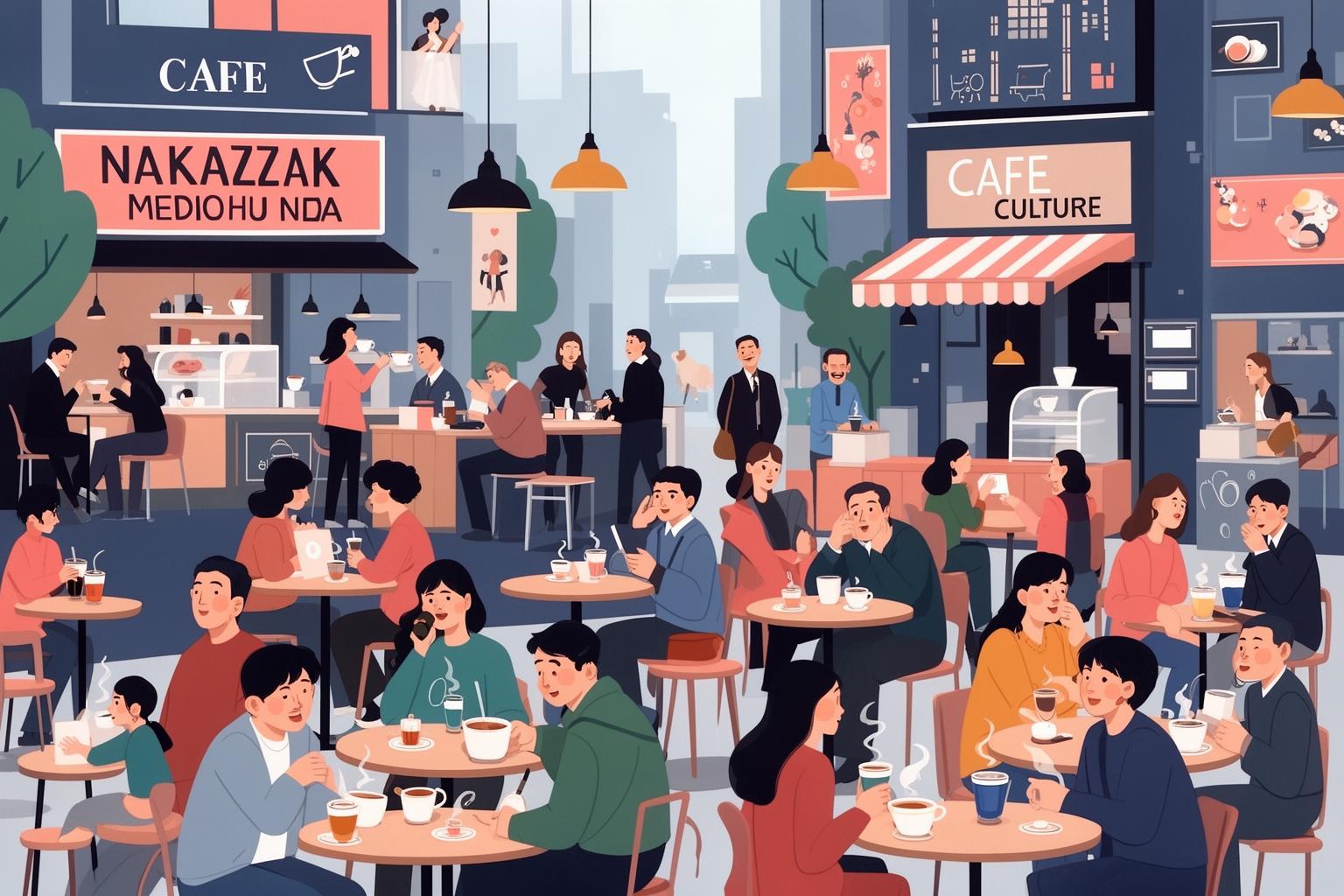
For the remote worker, Nakazakicho offers an appealing alternative: a quiet, atmospheric refuge compared to the sterile anonymity of a chain coffee shop. The neighborhood is dotted with many unique cafes, each housed in a former home and boasting its own distinct character. However, navigating this scene requires understanding a set of unwritten rules that differ greatly from those found elsewhere.
A typical Nakazakicho cafe is not just a disguised co-working space. Above all, it’s someone’s passion project and livelihood. These are small, cozy places, often with only a few tables. The owner’s aim is to craft a specific ambiance—a spot for quiet conversation, reading a book, or savoring a carefully brewed cup of coffee. The presence of a remote worker, laptop open and absorbed for hours, can upset this delicate balance. Remote work isn’t prohibited, but it demands a social awareness essential to fitting into life in Osaka.
The Unspoken Etiquette
Read the Room
Before you reach for your laptop, pause for a moment. Look around. Is anyone else working? Is the music soft and the mood contemplative, or is there lively chatter? Many cafes have subtle (or obvious) signs about their policies on long stays or laptop use. The key rule is to observe and adapt to the existing atmosphere.
The Power of a Simple Question
Never assume. A polite, straightforward “Koko de pasokon o tsukatte mo ii desu ka?” (Is it okay if I use my laptop here?) makes all the difference. It shows respect for the owner and their space. The reply might be a warm “douzo” (go ahead), or a gentle apology explaining it’s not that kind of place. Either way, you demonstrate consideration, which is always valued.
Be a Patron, Not a Parasite
This is the most important point, rooted in Osaka’s principle of reciprocity. If you occupy a coveted seat in a small venue for an extended time, you need to be a good customer. Nursing a single ¥500 coffee for three hours is poor etiquette. The unspoken agreement is that you support the business in return for using the space. Order a piece of cake with your coffee. Have a second drink after an hour or so. If it’s lunchtime, order food. This is not just about spending money; it’s about recognizing that you’re part of a small, local economy. It’s a fair exchange of value that underlies much of Osaka’s social and business culture.
Manage Your Tech Expectations
Don’t expect the conveniences of a modern office. Wi-Fi may be unreliable or unavailable. Power outlets can be scarce and highly valued. Often, this is a deliberate choice by the owner to foster a more analog, present-moment vibe. If you require a reliable, high-speed connection and constant power, Nakazakicho is likely not your ideal workspace. It’s a place for a different kind of work—writing, brainstorming, or tasks that benefit from a slower, more thoughtful pace, away from the constant buzz of digital distractions.
Finding Your Place: Is Nakazakicho Livable?
Beyond the cafes and shops, what is it really like to live in Nakazakicho? The answer highlights the fundamental trade-offs involved in choosing life in one of Osaka’s older neighborhoods. It’s a choice that values character and community over modern convenience—a decision many foreigners wrestle with when deciding where to settle.
The reality of living in a pre-war nagaya is far removed from any romantic ideal. These wooden buildings provide little insulation. Winters are cold, while summers become unbearably hot and humid. The walls are thin; you’ll hear your neighbors, and they’ll hear you. Space is limited. This is not the anonymous, climate-controlled comfort of a modern high-rise apartment. Instead, life here is lived much closer to the elements and those around you.
But what you sacrifice in modern amenities, you gain in something harder to come by: a genuine sense of community. Here, the often-misunderstood cliché of “friendly Osaka” finds its truest expression. The friendliness isn’t the loud, performative welcome you might encounter in a tourist-focused bar in Namba. It’s a quieter, more enduring fabric of daily interactions. It’s the morning greeting with the elderly woman sweeping her doorstep. It’s the shop owner who knows your coffee order. It’s the unspoken understanding of mutual reliance that stems from living in close quarters.
This kind of community demands participation. It’s not something to be passively consumed. It calls for being a good neighbor—to be considerate of noise, keep the shared alleyway tidy, and engage in the small rituals of neighborhood life. For those who prioritize privacy and anonymity above all, this environment may feel intrusive. But for those seeking a deeper connection to their surroundings, it offers a rich and rewarding experience. This choice—between the insulated privacy of the new and the engaged community of the old—is central for anyone truly looking to build a life in Osaka. Nakazakicho, in its beautifully preserved imperfection, offers more than a place to work for an afternoon; it provides profound insight into what it means to be part of the living, evolving history of this remarkable city.