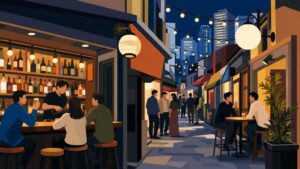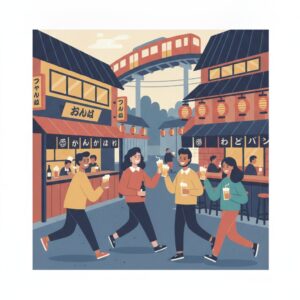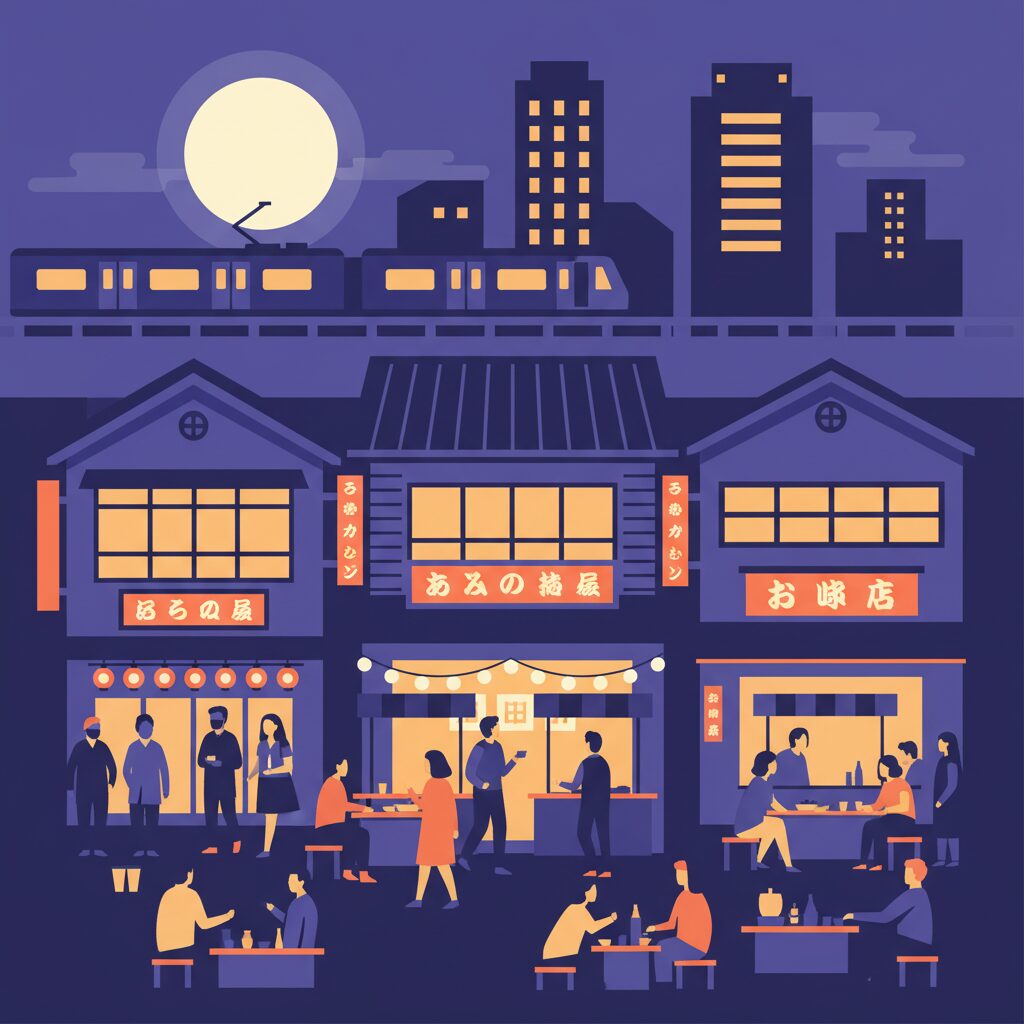
There’s a specific kind of energy that hums through Osaka after the sun goes down, a current that pulls you away from the wide, orderly boulevards and into the tight, tangled veins of the city. You feel it most acutely when you step off the train at Tenma Station. Here, the air is thick with the smell of grilled meat, dashi, and cheap beer. The neat grid of the city dissolves into a labyrinth of back alleys, each one a riot of glowing red lanterns, hand-painted signs, and the clatter of conversation spilling out from behind flimsy plastic curtains. This isn’t the curated, polished nightlife you might find in parts of Tokyo. This is Tenma, the glorious, chaotic heart of Osaka’s drinking culture. For a newcomer, it can feel like trying to board a moving train—exhilarating but intimidating. The key to unlocking this world isn’t a map or a guidebook, but an understanding of a local ritual known as hashigo-zake: the art of the ladder drink. It’s a philosophy of bar-hopping that’s less about the destination and more about the rhythm of the journey, a practice that reveals the very soul of Osaka—pragmatic, impatient, and deeply, wonderfully human. To navigate Tenma is to learn how Osaka itself breathes, one drink and one small plate at a time.
While the intoxicating chaos of Tenma unfolds by night, exploring Osaka’s Nakanoshima riverside rhythms offers a refreshing glimpse into another facet of the city’s perpetual pulse.
The Unwritten Symphony of Tenma’s Alleys
First, let’s be clear: hashigo-zake is not a pub crawl. A pub crawl suggests a plan, a set list of venues, and a mission to accomplish. Hashigo-zake, however, is flexible and improvisational, like jazz. The term literally means “ladder sake,” evoking the image of moving from one bar to the next, rung by rung. It’s a deeply rooted habit arising from the Osakan merchant spirit—a relentless quest for variety, value, and novelty. Why dedicate your entire evening and budget to one spot when dozens of others, each with its own specialty, are just a few steps away competing for your attention? This approach contrasts sharply with the Tokyo custom, where nights out often involve reservations, committing to a single venue for several hours, and a more formal, measured pace. In Osaka, commitment is a liability when enjoying a night out. The goal is to gather experiences, not to settle in.
This philosophy is reflected in the very design of Tenma’s top watering holes. Many are tachinomi, or standing bars, where space is limited and comfort is secondary to speed and social interplay. There are no plush seats inviting you to linger, nor quiet nooks for intimate conversations. You’re there for a quick drink, a signature snack, and a burst of atmosphere before moving on. The unspoken agreement is straightforward: you get a prime taste of what the place offers, and in return, you make room for the next person eager to do the same. This isn’t about being rude or hurried; it’s about communal efficiency. It embodies the city’s pulse—a continual, dynamic flow of people and energy.
The First Rule of Hashigo: There Are No Rules, Only Rhythms
The beautiful paradox of hashigo-zake is that its spontaneity is guided by a set of invisible rules. The most essential is the “one drink, one dish” principle. In a crowded tachinomi, ordering just one beer and savoring it for an hour is a cardinal sin. It disrupts the rhythm. The expectation is to order a drink and at least one food item, consume them at a reasonable pace, then decide: stay for another round, or climb the ladder to the next bar? This keeps turnover high and energy lively. It’s a dance of mutual understanding between customer and proprietor. You’re not simply buying food and drink; you’re renting a brief moment in a high-demand space.
Learning to read the room is another vital skill. Before you even slip aside the noren curtain serving as the door, you can sense the bar’s rhythm. Is the laughter loud and raucous, or a soft, contented murmur? Are patrons packed shoulder-to-shoulder, or is there some breathing room? This initial gauge reveals what kind of experience lies ahead. Once inside, watch the flow. Notice how people order—a quick, confident shout of “Nama hitotsu to doteyaki!” (One draft beer and stewed beef tendon!)—and how they pay. Often, cash is placed on the counter in a small tray, a system that reduces fuss and speeds service. Mastering hashigo-zake means syncing your internal clock with the alleyway’s frantic yet oddly graceful tempo.
Reading the ‘Noren’ Curtain
That fabric curtain hanging in the doorway is more than a divider; it’s the bar’s business card and soul. A crisp, bright white noren with bold black calligraphy might signal a newer place, perhaps specializing in delicate sake or refined dishes. It suggests precision and cleanliness. A noren faded and stained from years of kitchen steam and countless patrons’ hands tells a different tale. It speaks of history—of a place serving the same reliable menu for decades. It promises authenticity without pretense and a taste of genuine, unvarnished Osaka. Locals instinctively read these textile signs, making quick judgments about a bar’s character, price range, and likely clientele before stepping inside. For a foreigner, paying attention to the noren is your first lesson in seeing beyond the obvious and interpreting the subtle language of the city.
The Currency of Banter
If you come from a culture where striking up conversation with a stranger at a bar feels unusual, Tenma will reset your social compass. Here, casual banter is the default mode. The close quarters of a tachinomi make it almost impossible not to interact with your neighbors. A simple question about what they’re eating can easily lead to a twenty-minute chat about their work, their take on the Hanshin Tigers baseball team, and their recommendations for your next stop. This isn’t the deep, soul-revealing talk you might expect; it’s light, situational, and often sprinkled with Osaka’s distinctive humor. Foreigners sometimes mistake this openness for genuine friendship, which can cause confusion. More accurately, it’s situational camaraderie. You’re temporary allies in the shared mission of enjoying the night. The bond is real, but as fleeting as the drink in your hand. The conversation is part of the experience you’re paying for—a key ingredient in the atmosphere. It’s social lubrication at its most efficient, turning the shared, cramped space into a lively party rather than a burden.
Anatomy of a Tenma Bar Hop
So, what does a successful hashigo-zake evening really look like? It’s a multi-act performance with a revolving cast and changing scenery. It rarely begins with a fixed plan. You simply arrive in Tenma and let the flow of the crowd and the aromas from the grills lead the way. The journey itself is the destination.
The Opening Act: The ‘Toriaezu Biru’ Ritual
Nearly every drinking occasion in Japan, especially in the fast-paced environment of Osaka, starts with the phrase “toriaezu biru.” It roughly translates to “for now, beer.” It’s the great equalizer. Whether you’re a construction worker, a salaryman, or a tourist, that first cold, crisp draft beer signals the start of the evening. This ritual requires no deliberation, allowing everyone to quickly get a drink in hand while they later consider more thoughtful menu choices. In Tenma, this ritual happens with breathtaking speed. You’ll barely have your coat off before a frosted mug of beer is slammed down in front of you. This isn’t just efficient service; it’s a statement of intent. It says, “We know why you’re here. Let’s not waste any time.” This emphasis on immediate gratification perfectly embodies the Osaka mindset—get to the good part, quickly.
The Main Course: A Tapestry of Tastes
The real joy of hashigo-zake lies in the culinary journey. Your first stop might be a noisy kushikatsu joint, where you gather around a communal table, dipping freshly fried skewers of meat and vegetables into a shared vat of tangy sauce (the cardinal rule: no double-dipping!). Next, you might slip into a quieter spot specializing in sashimi so fresh it almost melts in your mouth, served by a seasoned master behind a wooden counter. Your third stop could be a tiny Spanish tapas bar, followed by a stall selling savory okonomiyaki, and finally, a chic little place for a glass of Italian wine. Each stop is a whole new world, with its own decor, its own soundtrack, and its own cast of characters. You are, in essence, traveling through multiple culinary cultures within just a few city blocks. This reflects Osaka’s famous identity as the home of “kuidaore“—a term meaning to eat oneself into ruin, or more precisely, to indulge extravagantly in food. In Tenma, you can chase that ruin one delicious, affordable stop at a time.
Space is Social, Not Personal
One of the biggest culture shocks for Westerners in a place like Tenma is the notion of personal space. To be frank, it’s virtually nonexistent. In a popular standing bar, you will find yourself pressed up against strangers on all sides. An elbow in your back isn’t aggression; it’s just a typical Tuesday night. This can be startling at first, but soon you understand it’s woven into the experience. The physical closeness creates a sense of shared community. You are literally all in it together. This contrasts sharply with the more defined personal bubbles common in many other cultures and even other Japanese cities. In Tokyo, there’s an art to maintaining respectful distance, even on a crowded train. In Osaka, especially in drinking spots like Tenma, physical barriers disappear, and the energy of the social crowd becomes a tangible presence. Learning to embrace the squeeze, to flow with it rather than fight it, is essential for enjoying the night like a local.
Osaka vs. Tokyo: A Tale of Two Drinking Cultures
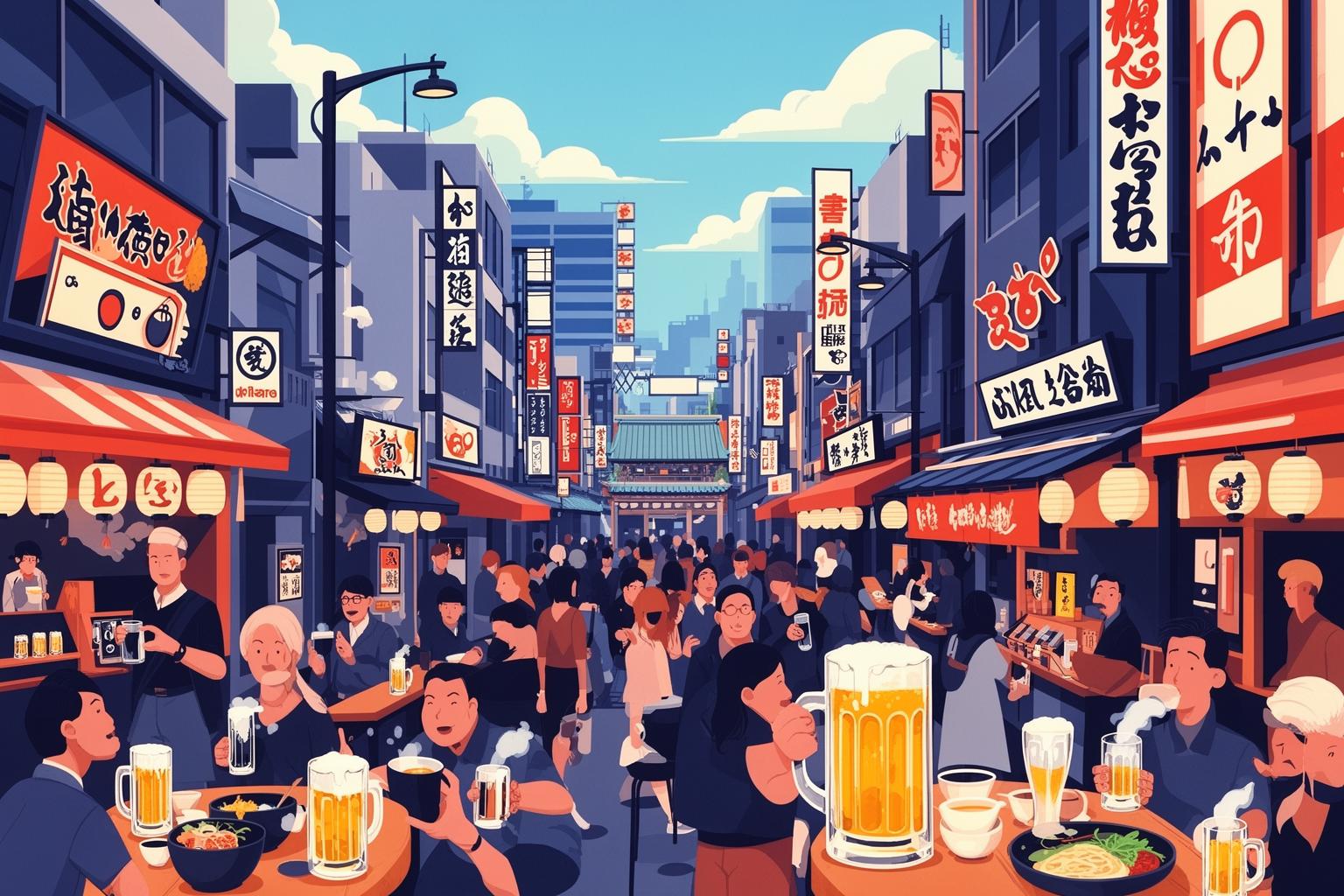
The differences between a night out in Tenma and one in, for example, Tokyo’s Ginza district, perfectly illustrate the broader cultural contrasts between Japan’s two largest cities. It’s a story of spontaneity versus planning, value versus prestige, and communal chaos versus elegant order.
Efficiency vs. Experience
A typical night out in Tokyo often revolves around precision. You make a reservation, sometimes weeks ahead, at a particular restaurant renowned for its exquisite cuisine or impeccable service. The evening focuses on that one high-quality experience, aiming for perfection. Osaka’s style, as exemplified by hashigo-zake, embraces a different kind of efficiency: the efficiency of variety. Why settle for one perfect, expensive experience when you can enjoy five very good, very affordable ones? The key concept is “cospa,” a common Japanese-English term for “cost performance.” An Osakan takes great pride in a successful hashigo-zake night, valuing not just the quality of food and drink but the overall value. They’ll gladly share stories of visiting four great spots, eating their fill, drinking plenty, and still walking away with change from a 5,000 yen bill. It’s a game to be won and a testament to their savvy as consumers in Japan’s merchant capital.
The ‘Ichariba Chode’ Mentality
There’s an Okinawan phrase, “ichariba chode,” meaning “though we meet but once, even by chance, we are friends forever.” While the sentiment in Osaka may not be quite so enduring, the spirit is similar. The easy camaraderie and rapid-fire banter at a Tenma bar can be disarming. A local might tease you, ask a dozen personal questions, and buy you a drink—all within ten minutes of meeting. For many foreigners, this instant intimacy is unusual and can be misunderstood. It’s important to recognize that this is often a form of performed friendliness, a way of adding to the bar’s lively atmosphere. The connection feels genuine in the moment but doesn’t necessarily suggest a wish for a lasting relationship. It’s a temporary social contract meant to make the next thirty minutes enjoyable for everyone involved. This contrasts sharply with the more reserved, long-term relationship-building typical in other parts of Japan, where it can take months of polite interaction before reaching a similar level of casual conversation.
Decoding the Local Lingo: Navigating a Tenma Menu and Crowd
While you can certainly get by with just pointing and smiling, knowing a few key terms will elevate your hashigo-zake experience from a tourist’s perspective to that of an insider. The language of drinking in Osaka is straightforward, practical, and focused entirely on the food.
‘Ate’ is Not a Mistake
Across Tenma’s menus, you’ll find the category “ate” (肴). This isn’t a typo. Ate refers to snacks specifically meant to be enjoyed with alcohol. It’s a concept that goes far beyond simple bar nuts or potato chips. Ate can range from a small dish of salty fermented squid guts (shiokara) to simmered daikon radish or a few skewers of grilled chicken skin. The presence of this entire culinary category reveals a lot about the culture. It reflects a world where food is often created as a supporting role to the main event: the drink. This contrasts with a Western fine-dining approach where wine is paired with food. In the realm of Japanese izakayas and tachinomi, the food is crafted to enhance the flavor of beer and sake. Asking the staff for their recommended “ate” is a foolproof way to enjoy something authentic and delicious.
The Art of the ‘Okanjo’
When it’s time to settle the bill, or “okanjō,” the process is another part of the smooth rhythm. In a group, there’s no detailed splitting of the check down to the last yen. Typically, one person collects cash from everyone, or all contribute roughly equal amounts. Many tachinomi operate on a cash-only basis, with money exchanged quickly and directly with the staff. There’s no waiting for a credit card machine or lingering over the receipt. The payment is as swift and efficient as the service. This quick and tidy departure is crucial to the flow of hashigo-zake. It frees your space for the next customer and keeps you moving on to your next adventure without missing a beat.
Why Tenma Embodies the Soul of Osaka
Tenma is more than just a collection of bars and restaurants; it is a living, breathing embodiment of Osaka’s core identity. Its chaotic, unrefined, and deeply human character directly reflects the city’s history and the priorities of its people.
A Living Labyrinth, Not a Curated Experience
Unlike some of Japan’s more preserved historical districts, which can feel like pristine museums, Tenma is unapologetically rough around the edges. The streets are narrow, wiring is exposed, and there’s a subtle, constant stickiness underfoot. But this grit signals life. This area hasn’t been sanitized for tourism; it’s where everyday Osakans come to relax, connect, and be themselves. The city values authenticity over appearances, substance over style. They’d rather enjoy a cheap, tasty meal served with raucous laughter in a cramped shack than an expensive, mediocre one in a beautifully designed but sterile restaurant. Tenma perfectly embodies this philosophy. It’s a place that puts the human element—food, drink, conversation—above all else.
The Resilience of the Merchant City
To grasp Tenma, you must understand Osaka’s history as Japan’s commercial powerhouse, the “nation’s kitchen.” For centuries, it was a city of merchants, traders, and artisans. This heritage cultivated a culture that is pragmatic, resourceful, competitive, and deeply focused on value. You can sense this merchant spirit in the bustling clamor of Tenma’s alleys. The constant flow of people, rapid transactions, and fierce competition among hundreds of tiny establishments—each vying to entice you with a better deal or more intriguing dish—creates a nightly reenactment of the free-market principles that built the city. Participating in hashigo-zake is, in a small way, engaging in this legacy. It’s about being a savvy consumer, making quick choices, and navigating a complex, energetic system to your advantage.
Ultimately, learning the unwritten rules of hashigo-zake in Tenma is less about memorizing dos and don’ts and more about attuning yourself to the city’s unique rhythm. It’s about realizing that the spaces between the bars are as vital as the bars themselves. The true experience lies in the movement, in constant discovery, in brief, bright moments of human connection within a crowded room. It’s a ritual that teaches you that in Osaka, the best things in life aren’t found by standing still, but by climbing the ladder, one rung at a time, into the warm, chaotic, and utterly intoxicating night.