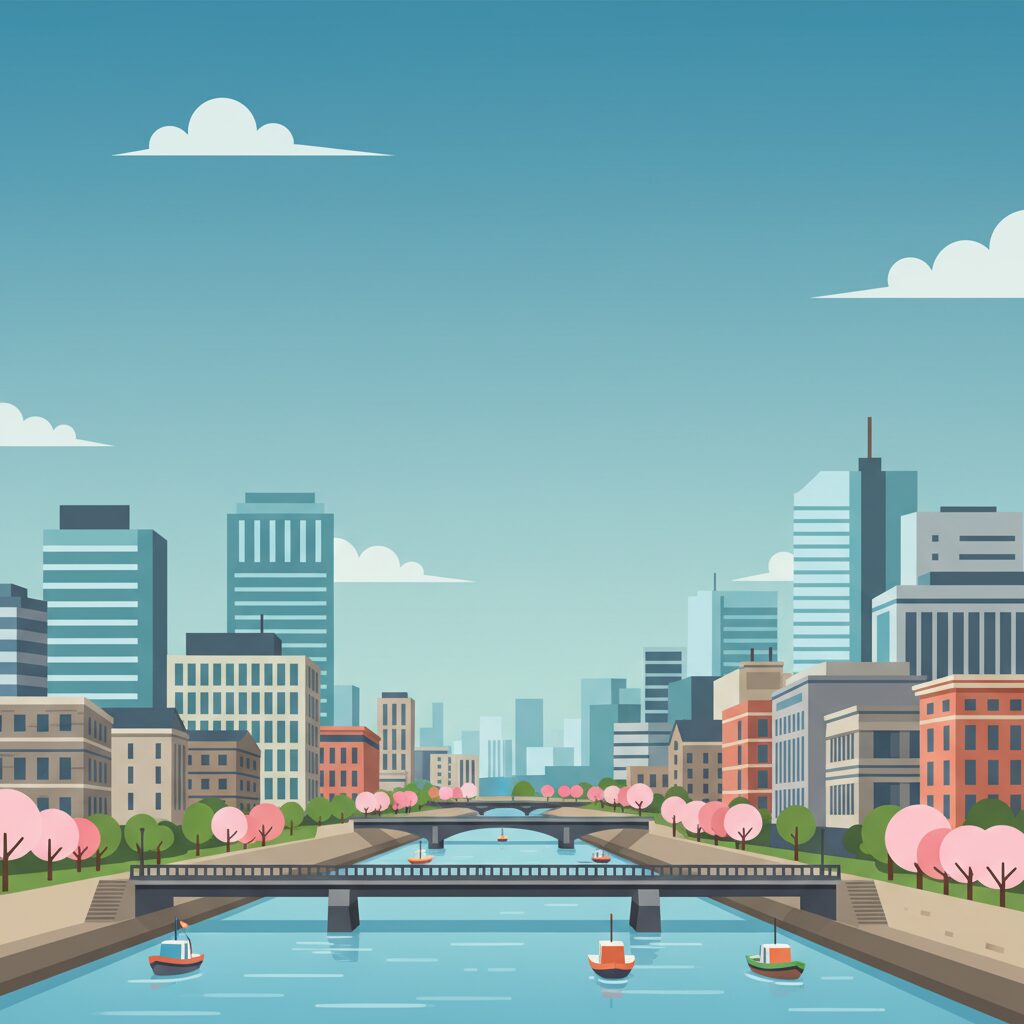
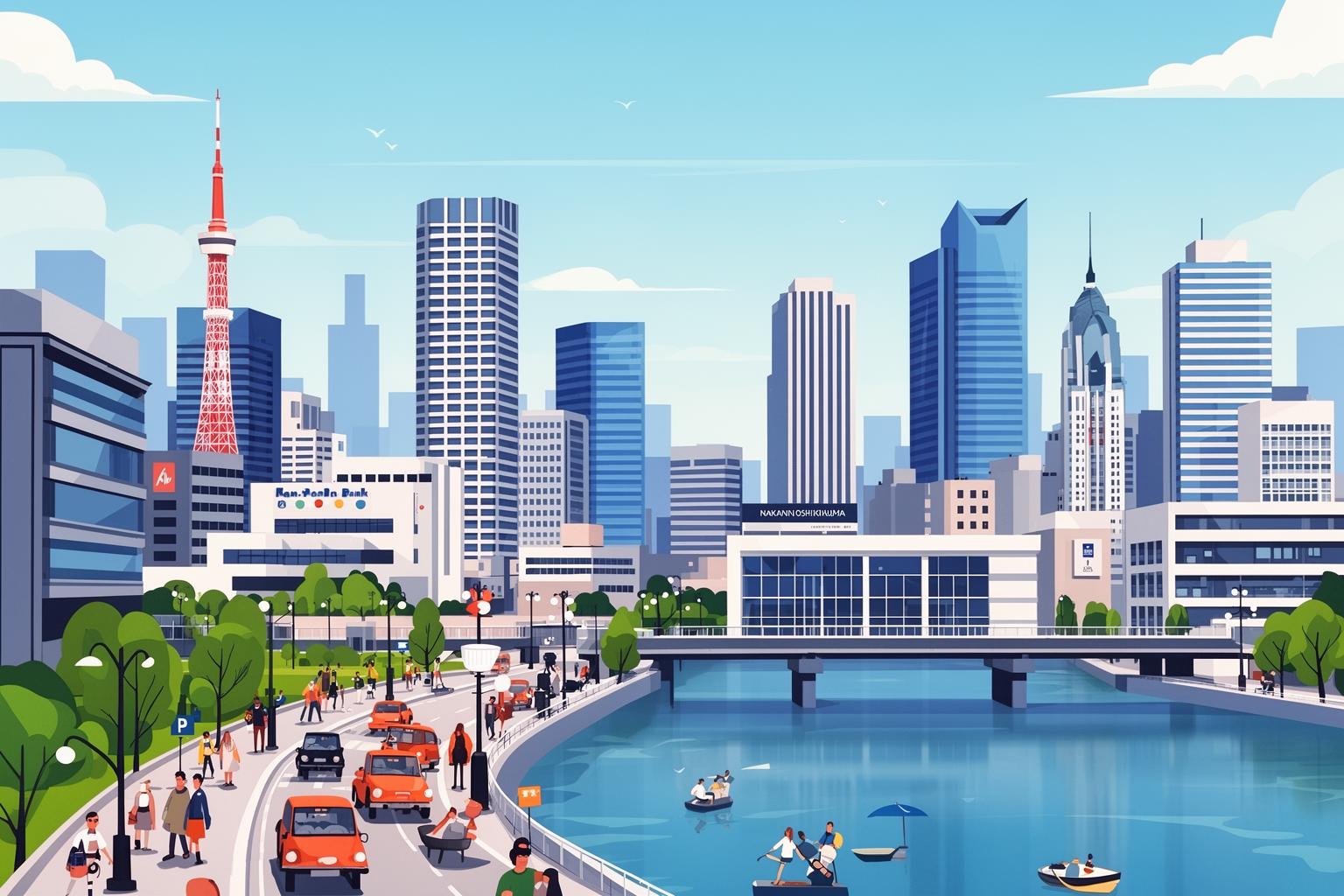
Osaka breathes with its rivers. Forget the subway maps and the train lines for a moment. To really get the city’s pulse, you need to stand by the water. It’s the original highway, the lifeblood that carved this merchant town out of a marshy plain. And nowhere is the city’s split personality more obvious, more beautifully on display, than along the Tosahori River. On one side, you have Nakanoshima, a slender island of curated green space and civic grandeur. On the other, Kitahama, a buzzing riverbank of commerce, coffee, and relentless energy. They’re separated by a few dozen meters of water and a handful of elegant bridges, but in terms of atmosphere, they might as well be in different cities. This isn’t just about architecture or what’s listed in a guidebook. This is about two different ways of living, two distinct Osaka mindsets, staring each other down across the water. It’s a daily drama that explains so much about how this city works, how its people think, and why it’s a place that can feel both meticulously planned and wonderfully chaotic all at once. For anyone trying to figure out where they fit in this sprawling, energetic metropolis, understanding the tale of these two riverbanks is your starting point.
Discover another layer of Osaka’s vibrant character by checking out the Umeda Underground City guide for insights into the bustling transit network beneath the city.
Nakanoshima: The Island of Measured Calm
An Oasis of Order in a City of Vigor
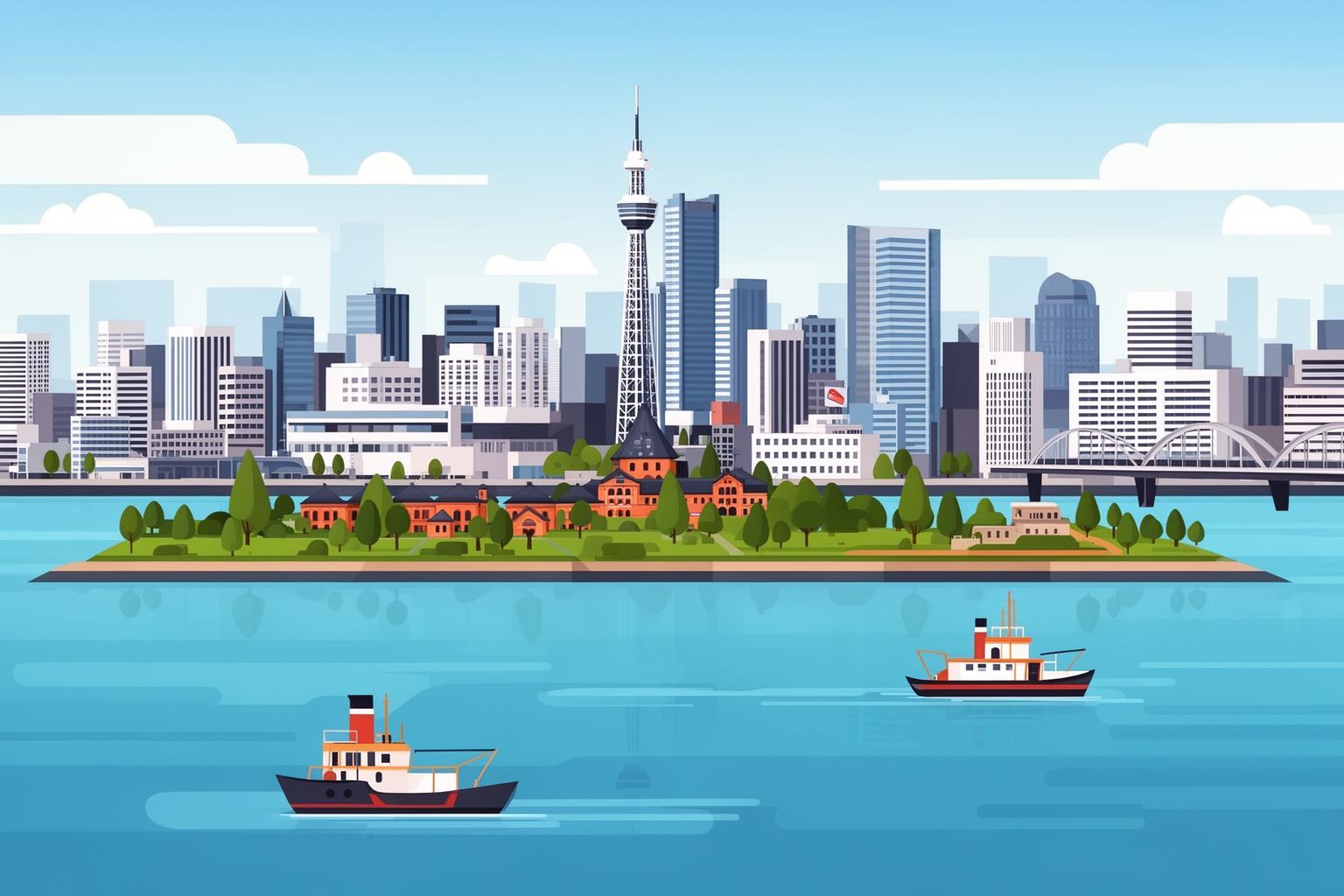
Step onto Nakanoshima, and it feels as though the city’s volume dial is turned down. The island, nestled between the Dojima and Tosabori rivers, resembles Osaka’s formal living room. It’s where the city showcases its finest china and most cherished treasures. The atmosphere here is distinct—cleaner and quieter, interrupted only by the rustling leaves of Nakanoshima Park and the faint chime of a civic clock. The grass is perfectly manicured, and the rose garden is a vibrant display of disciplined color. This is Osaka presenting its best face: one of culture, governance, and international refinement. The architecture is grand and dignified. There’s the neo-renaissance elegance of the Osaka Central Public Hall, a red-brick landmark that seems transplanted from a European capital. Just a short distance away stands the stately Osaka City Hall, a hub of serious bureaucratic function. Further west, the sleek contemporary designs of the National Museum of Art and the Nakanoshima Museum of Art reflect a dedication to modern culture. Everything here feels deliberate, carefully planned, and well maintained. It’s a sharp contrast to the organic, often chaotic growth seen in many other parts of the city. For many Osakans, this island is a destination for specific purposes: to view an exhibition, attend a concert, capture wedding photos, or simply momentarily escape the concrete jungle for some tranquility.
The People of the Park
Observe those who frequent this space, and you’ll see a different cross-section of Osaka life. Office workers from the gleaming towers bordering the island take breaks here. They sit on benches with convenience store bento boxes, gazing out at the water, lost in thought. They’re not shouting into phones or rushing off to the next appointment. Nakanoshima is their decompression zone. On weekends, the atmosphere shifts. Young couples walk hand in hand through the rose garden, seeking a romantic setting far removed from the neon glow of Namba. Families spread picnic blankets on the lawns, letting children run freely in a safe, open area—a rarity in urban Japan. Amateur photographers with long lenses try to capture the perfect shot of a kingfisher by the water, while elderly residents practice tai chi in the early morning light. The common thread here is a slower pace. The frantic energy of Osaka’s commercial core seems to fade as you cross the bridge. The unspoken rule is one of quiet enjoyment and civic respect. Loud parties or boisterous behavior are unwelcome; this is a shared space for reflection.
The Nakanoshima Mentality
What does this island reveal about the Osaka mindset? It uncovers a side that foreigners, accustomed to tales of loud, food-loving comedians, often overlook. It demonstrates that Osaka harbors a profound civic pride. This island is the city’s showcase. It declares, “We are more than takoyaki and bargains. We are a city of history, art, and global significance.” It’s reminiscent of Tokyo-like order and grandeur. While places like Marunouchi or the Imperial Palace East Garden in Tokyo share a similar atmosphere, they form part of a broader patchwork of polished districts. In Osaka, Nakanoshima stands alone as a deliberate, concentrated effort to create an island of calm. It is exceptional, and that is what makes it so meaningful. It shows that Osakans are multidimensional. They thrive in the chaotic marketplace but also have the ability and desire to cultivate and preserve spaces of pure aesthetic and cultural worth. Living with Nakanoshima as your backyard means embracing a life of accessible serenity. It’s for those who want city conveniences but need a dependable refuge, a place to breathe deeply before plunging back into the flow.
Kitahama: The Engine Room with a View
Where Commerce Breathes and Coffee Brews
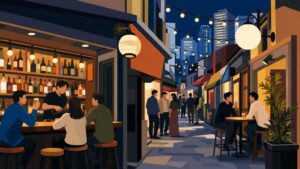
Cross Yodoyabashi Bridge from the serene dignity of Nakanoshima, and you step into an entirely different world. Welcome to Kitahama. Situated on the north bank, it pulses to a different beat. The energy is tangible—a steady hum of commerce and conversation rising from the streets. Buildings stand closer together here, a captivating blend of historic Meiji-era stone-faced trading houses alongside sleek, contemporary office towers. Dominating the scene is the impressive Osaka Exchange, the modern successor to the iconic Dojima Rice Exchange, the world’s first futures market. This legacy is embedded in the very cobblestones. Kitahama has always been about business—it is the city’s financial hub. But what gives it its distinct Osaka character and shapes its modern identity is its embrace of the river. Whereas Nakanoshima keeps the river at a respectful, picturesque distance, Kitahama integrates it into daily life. Along the waterfront, a line of trendy cafes, bakeries, and restaurants thrives, their terraces brimming with activity from dawn until late. Here, the river is more than just a view; it’s the district’s front porch, open-air meeting spot, and stage.
The People of the Terrace
The crowd in Kitahama is a vibrant mix. There are the traditional salarymen in suits, striding purposefully as they squeeze in quick espressos between meetings, their talks filled with market lingo. Among them moves a newer generation: young entrepreneurs, freelance designers, and tech professionals. Their laptops are their uniform, and the riverside cafes serve as their offices. They huddle around small tables, energized by specialty coffee, exchanging business ideas and tapping away on keyboards. Here, Osaka’s old mercantile spirit meets the new gig economy. Interwoven with this professional scene are local residents. People actually live here, in the sleek apartment towers that have risen up. You’ll see them walking dogs along the river, fetching fresh bread from a neighborhood bakery, or unwinding with a glass of wine on a terrace after work. Unlike Nakanoshima, which largely empties when office hours end, Kitahama maintains a lively, residential beat. It’s a neighborhood that works, plays, and lives—all within the same bustling, energetic space.
The Kitahama Mentality
Here lies the authentic, unfiltered spirit of the Osaka merchant—pragmatic, stylish, and ceaselessly progressive. The mindset centers on shobai, or business, but with flair. Riverside terraces perfectly embody this: they aren’t merely for enjoying the view; they are strategic business assets. They attract customers, create lively atmospheres, and act as informal networking hubs. It’s functional elegance. This is also where the stereotype of Osakans as “friendly” becomes clear. In Kitahama, friendliness is often a polished form of professionalism. The barista who remembers your name and usual order isn’t just being kind; they’re practicing good business. The person striking up a chat at the next table may be genuinely interested, but also subtly networking. This isn’t cynical; it’s efficient. Relationships are the currency of Osaka’s business world, and every interaction holds potential. Living in Kitahama means plugging into this dynamic flow. It’s for those who thrive on the buzz, who want to be where things unfold, and who view the city not just as home, but as a platform.
The River as the Great Divider (and Connector)
A Tale Told by Bridges
Why are these two areas, so close you could shout across the water, so fundamentally different? The answer lies in their history and function. Nakanoshima’s fate was decided early on. It served as a strategic site for the warehouses of powerful feudal lords, a place to store and manage resources. This legacy of centralized control naturally evolved into its present role as a hub for government and high culture. It was shaped from the top down to be a symbol. Kitahama, in contrast, grew from the ground up. It was the territory of merchants, rice brokers, and money lenders. Its development was organic, driven by commerce’s demands. The streets are narrower, the buildings more varied, shaped by countless individual business choices rather than a grand civic plan. This historical DNA governs their modern rhythms. Nakanoshima is a public space, meant to serve the citizenry with parks, museums, and government services. Kitahama is a commercial space, intended to generate wealth and innovation. This division perfectly illustrates Osaka pragmatism. Rather than awkwardly blending the two, the city has allowed each area to specialize, becoming the best version of itself. There’s a place for quiet reflection and a place for caffeinated ambition. Why mix them when a bridge easily connects one to the other?
The Lunch Hour Migration
To witness this relationship in action, stand on Yodoyabashi or Hommatsubashi bridge around noon on any weekday. You’ll observe a fascinating daily ritual: the great lunch hour migration. A steady stream of office workers flows out of the stately, somewhat sterile office buildings of Nakanoshima and crosses the river into the vibrant energy of Kitahama. Why do they cross? Because Kitahama is where the food is. It’s home to tiny, family-run curry shops, bustling Italian bistros, artisan bakeries, and quick, delicious noodle joints. Nakanoshima does have a few restaurants, but they tend to be more formal, pricier, or part of hotels. Kitahama offers choice, value, and energy—the holy trinity for an Osaka lunch. This daily exodus perfectly captures the dynamic. Nakanoshima may house your formal office and prestigious address, but Kitahama is where you actually live a little, to refuel, to connect with the city’s delicious, chaotic soul. It reveals that even those working in the calm, orderly world of the island crave the vitality bubbling just across the water. It’s a reminder that at its core, Osaka is a city that thrives on its food and social connections—elements that can’t be contained in a perfectly manicured park.
Choosing Your Bank, Choosing Your Life
What This Duality Means for You
For anyone considering living in central Osaka, the contrast between Nakanoshima and Kitahama is more than just a curious observation; it represents a fundamental lifestyle choice. Your experience of the city will be deeply influenced by which side of the river you identify with. It reflects the types of decisions you face when settling into any major city: what kind of atmosphere do you want to return to at the end of the day? If you imagine living in a modern high-rise with expansive, unobstructed views of a park and river, spending your weekends jogging along manicured trails, visiting art galleries, and enjoying quiet evenings watching city lights from a peaceful distance, then Nakanoshima is the place for you. Life here centers on curated calm, providing a buffer from the city’s more intense rhythms. You are opting for a more orderly, elegant version of Osaka living. On the other hand, if you thrive on the energy of the street, want the city’s best coffee roaster on your corner, and a dozen excellent restaurants within a two-minute walk, then Kitahama is your domain. You choose to live at the heart of the action. Your apartment might be smaller, and the streets noisier, but you gain unparalleled convenience and a constant feeling of being at the center of things. Your social life unfolds just outside your door, on lively terraces and crowded izakayas. It’s a life of immersion, deeply connected to the commercial and creative pulse of the city.
An Osaka-Tokyo Contrast in Miniature
This divide also provides a clear lens for understanding the classic Osaka vs. Tokyo comparison. Tokyo is characterized by massive, multi-functional urban hubs. Districts like Shinjuku or Shibuya seamlessly combine corporate headquarters, extensive retail spaces, endless dining options, and residential areas into one overwhelming, hyper-dense experience. The boundaries between these functions often blur. Osaka, exemplified by the Nakanoshima-Kitahama contrast, tends to favor a more distinct separation of roles—in this case, culture and commerce. There’s an efficiency in this approach that feels quintessentially Osakan. Nakanoshima represents the city’s polished public face, its omote, while Kitahama embodies its hardworking, money-making core, its ura. This is not to suggest one is superior to the other, but simply that the approach differs. Osakans excel at compartmentalizing: appreciating high art and a beautiful park in one moment, then walking five minutes to immerse themselves in the serious, no-nonsense business of earning a living. This pragmatic duality lies at the heart of the city’s character—a blend of refined taste and grounded hustle.
A River That Defines a City
Ultimately, the water flowing between Nakanoshima and Kitahama does more than simply separate two lands. It mirrors two facets of the Osaka spirit. It embodies the tension between the city’s ambitions for global cultural acclaim and its deep-rooted identity as a hub for merchants and makers. It is the balance between the desire for beautiful, tranquil public spaces and the unyielding energy of a commercial powerhouse. Living in Osaka means navigating these currents every day. It means understanding that the city can be both elegantly composed and vibrantly raw. Standing on one of those bridges at dusk is the best way to sense this. Look south, and you see the graceful silhouette of the Central Public Hall, its lights glowing with warm, steady confidence. The park is calm, settling into the evening. Look north, and the bright, welcoming lights of the Kitahama terraces shine, filled with laughter, clinking glasses, and the buzzing energy of deals and connections. It’s not a choice between one or the other. The true Osaka experience lies in knowing both coexist, just a short walk apart. The river doesn’t divide them; it holds them in a perfect, dynamic, and enduring balance.