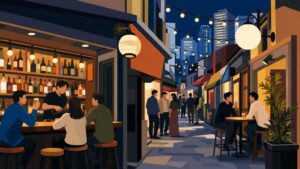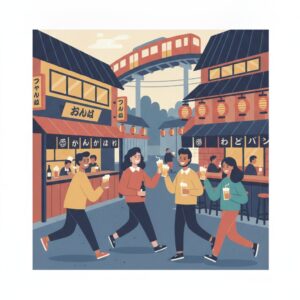
You’ve seen them. The glowing red lanterns, the akachochin, swaying like soft-spoken invitations in the narrow alleyways. You’ve walked past the open doorways, catching a blast of warm, savory air and a wave of boisterous laughter that spills out onto the pavement. It’s a scene that plays out every night across Osaka, a city that wears its heart on its sleeve and its appetite on full display. But if you’re standing on the outside looking in, you might be wondering what’s really going on. This isn’t just people grabbing a drink after work. It’s a ritual. It’s a sport. It’s an art form. It’s called hashigo-zake, or “ladder drinking,” and in the sprawling, chaotic, and utterly fantastic neighborhood of Tenma, it’s the key to understanding the very soul of Osaka.
Forget the pristine, curated experiences you might find elsewhere. Tenma is different. This guide isn’t about pointing you to the top five tourist-approved bars. It’s about decoding the rhythm, the unspoken rules, and the mindset behind this nightly migration from one tiny bar to the next. Hashigo-zake isn’t a pub crawl designed to end in a drunken stupor; it’s a high-speed, high-efficiency culinary safari. It’s a way of life built on a foundation of fierce pragmatism, a deep-seated love for a good deal, and a social fabric woven from fleeting, friendly encounters. To understand how to hop from bar to bar in Tenma is to understand how Osaka itself operates: with energy, with purpose, and with a complete and total rejection of unnecessary formality. So, let’s peel back the noren curtain and step inside. The real Osaka is waiting.
To uncover the deeper nuances of Osaka’s nightlife, consider exploring the bar hopping labyrinth that deciphers Tenma’s vibrant after-dark culture.
Tenma Isn’t Namba: Decoding Osaka’s Drinking Geography
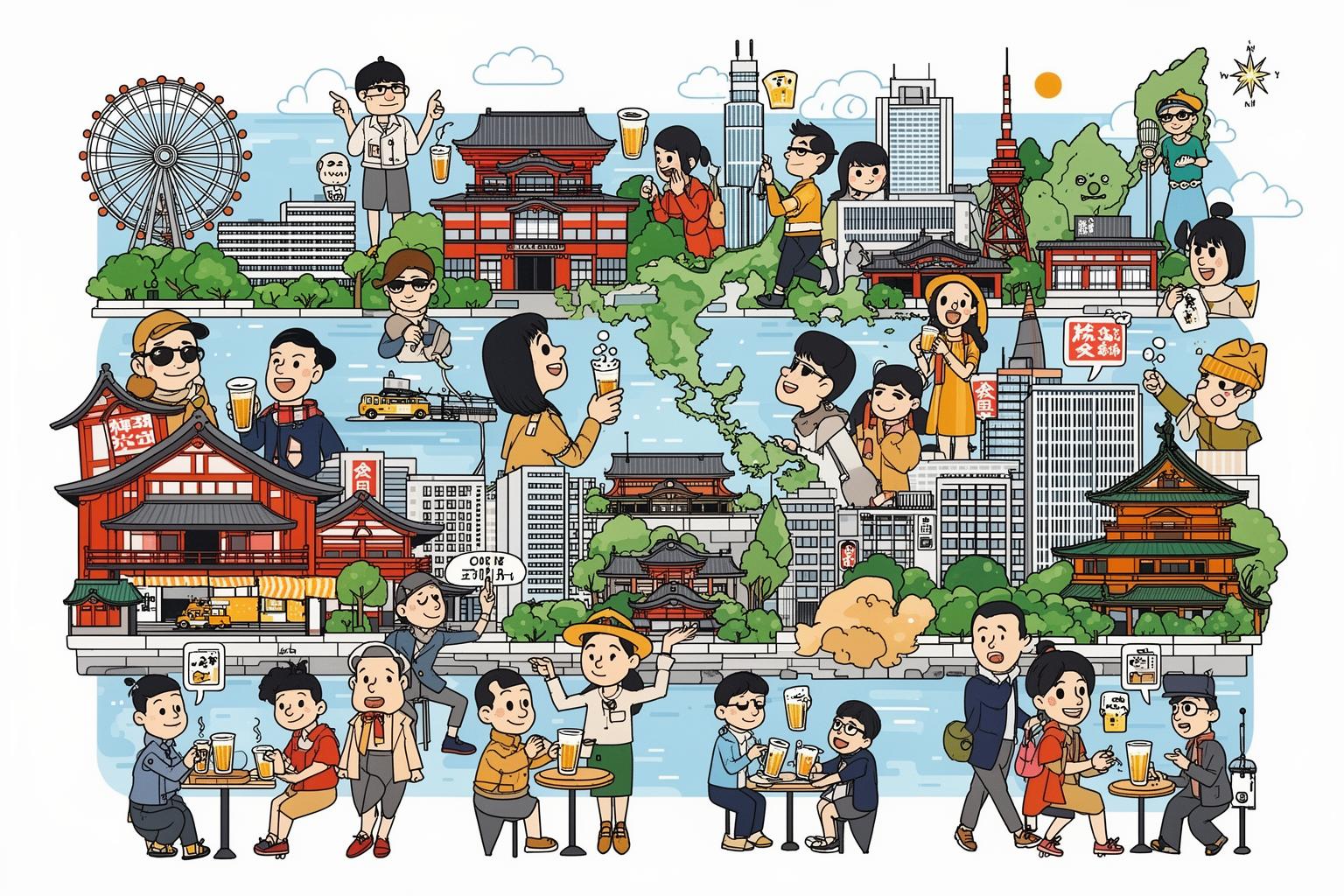
First, let’s orient ourselves. If your image of Osaka nightlife revolves around the Glico Running Man sign and canals crowded with tourist boats, you’re picturing Namba and Dotonbori. That’s Osaka’s dazzling marquee, its public facade, crafted for mass enjoyment. It’s lively, loud, and entertaining. But it’s not where the city truly lives. Tenma, centered around the JR loop line station of the same name, is one of Osaka’s lungs. It’s rougher, more chaotic, and infinitely more complex.
Visually, Tenma is a beautiful chaos. Its core is the Tenjinbashisuji Shotengai, Japan’s longest covered shopping arcade, a miles-long stream of commerce. Yet the true charm emerges when you venture into the narrow side streets and the shadowy alleyways beneath the elevated train tracks. Here, the sky disappears, replaced by a maze of pipes, wires, and the rumbling underside of trains passing overhead every few minutes. The spaces are tight, almost suffocating, filled with standing bars—tachinomi—so small they can be easily overlooked. The air is thick with the aroma of grilled fish, simmering dashi, and fried batter. There are no velvet ropes, no hosts with iPads, no carefully curated playlists. There’s only the raw, unfiltered energy of a neighborhood that works hard and lets loose with equal passion.
This scene didn’t emerge by chance. Tenma’s identity is anchored in the Osaka Central Wholesale Market, once located nearby. For centuries, this was the city’s pantry. The legacy of that market is a deeply rooted food culture. The bars and restaurants here developed naturally to serve market workers and shoppers alike. The outcome is a dense concentration of establishments proud of two things: freshness and affordability. They had to be good and cheap to survive. This history is essential. Tenma isn’t a fabricated entertainment district; it’s a working neighborhood that just happens to be one of the best places on earth to eat and drink standing up.
The Philosophy of Hashigo-zake: More Than Just a Pub Crawl
To an outsider, a night in Tenma may appear to be utter chaos. People cram into impossibly tight spots, shout their orders over the noise, quickly down a drink, nibble some food, then vanish into the night only to resurface at another tiny bar just fifty feet away. Yet, beneath this apparent madness, there is a method. Hashigo-zake operates according to a unique philosophy, a set of principles that reflect the heart of the Osakan spirit.
The Gospel of “Cospa”: Embracing Cost Performance as a Lifestyle
To truly grasp Osaka, you need to understand the idea of cospa, a Japanese blend of “cost performance.” This differs from simply being cheap. Cheapness is about spending as little as possible, while cospa focuses on getting the utmost value for the money spent. It’s a daily guiding principle in Osaka—from grocery shopping to selecting an apartment—and it shines brightest in the bars of Tenma.
Why would an Osakan office worker settle for a single 5,000-yen sit-down meal when he could savor five different, excellent, and exciting dishes for 1,000 yen each? That’s the essence of hashigo-zake. Each stop on the bar-hopping ladder is a brief, transactional delight. A draft beer costs 350 yen. Two skewers of perfectly grilled chicken skin go for 280 yen. A small plate of fresh sashimi is 400 yen. You’re in, you’re out, and your wallet barely feels lighter. This isn’t about pinching pennies; it’s about intelligent, efficient enjoyment. It challenges the notion that quality must be expensive or served in a formal setting. In Tenma, some of the city’s best food is served on plastic plates while you stand against a tiled wall—and for Osakans, that’s a triumph.
Speed is Key: Mastering the Quick In-and-Out
The second core element of the hashigo-zake philosophy is speed. The goal isn’t to settle in for hours but to keep moving. That’s why tachinomi, or standing bars, dominate Tenma’s scene. The absence of chairs is a clever, intentional feature—it discourages lingering and keeps energy high and people circulating. You’re there with one clear purpose: to drink, enjoy a house specialty, and then make way for the next customer.
Observe a local, and you’ll witness this efficiency firsthand. They don’t ponder the menu. They walk in, catch the staff’s eye, and order their first drink and a dish or two all at once. They eat, drink, pay, and disappear. The whole interaction lasts maybe fifteen to twenty minutes. To outsiders, this might seem rushed or impersonal, but it’s quite the opposite. It’s a system built on mutual respect. By moving quickly, you honor the business owner’s need for turnover and respect other patrons waiting for a spot. It’s a practical dance of shared space and limited time. This constant motion fuels Tenma’s dynamic energy. It’s like a river of people, always flowing, with you briefly dipping into the current for a tasty moment before joining the stream again.
“Chotto Ippai”: The “Just One Quick Drink” Philosophy
The whole ritual often starts with a simple phrase: “chotto ippai.” It roughly means “just one quick drink.” It acts as the spark, the excuse, and the purpose. Nobody plans on hitting five bars for hashigo-zake ahead of time—that would be too formal and too deliberate. Instead, it begins as a casual invitation after work: “Hey, want to grab chotto ippai before heading home?”
This mindset is crucial. It lowers the social commitment to nearly nothing. You’re not agreeing to a three-hour dinner, just fifteen minutes. But after that first quick beer and skewer, someone might say, “I know a great spot for fresh oysters just around the corner.” Before you know it, you’re on the second rung of the ladder, and then the third. This spontaneity is pure Osaka. Tokyo often feels more planned and orderly. In Osaka, especially in a place like Tenma, the best nights are the unplanned ones. The “just one drink” attitude gives you the freedom to follow your appetite and the street’s vibe, making every night a unique, personalized adventure.
Navigating the Maze: The Unspoken Rules of a Tenma Night
Understanding the philosophy is one thing; putting it into practice is another. For a newcomer, Tenma can feel overwhelming—a sensory overload. But if you learn the unspoken rules, you can navigate it with the confidence of a local. This is your practical guide to the Tenma experience.
Reading the Noren: How to Choose Your Spot
You’re standing in an alley with a dozen options. How do you decide? First, check the noren—the fabric curtain at the doorway. It’s the bar’s handshake. Is it old and stained? That’s a positive sign, meaning it’s been there a long time. Next, look for the menus. Often handwritten on strips of paper and posted on walls or a signboard outside, they indicate the offerings change based on what’s fresh from the market—a promising hint.
But the most important indicator is the crowd. Forget online reviews. Peek through the door or window. Who’s inside? Is it packed with salarymen in loosened ties, older couples, and groups of women laughing loudly? If yes, you’ve found a winner—the local seal of approval. Don’t hesitate. The barrier between street and bar is thin here. It’s perfectly acceptable to poke your head in, check for a free spot, and catch the staff’s eye. A slight nod or raised finger is enough to ask, “Got room for one?” Usually, they’ll find a way to squeeze you in.
The Tachinomi Tango: Mastering the Standing Bar
Once inside, the dance begins. It’s a ballet of micro-movements and social cues performed in a space the size of a walk-in closet.
The Squeeze In
Someone leaves and a spot opens at the counter. Don’t just barge in. Make eye contact with the people beside the spot. A slight bow, a quiet “sumimasen” (excuse me), and a gentle shuffle into place is all it takes. You’re entering their personal—if tiny—space. Acknowledging that is key. You’ll be surprised how people instinctively shift a bit to make room. There’s a shared understanding that everyone’s in this tight space together.
Ordering with Confidence
Don’t wait for the staff to come to you; they’re constantly moving. Your opportunity is brief. Catch their eye as they pass by. Be ready. Your first order should be decisive: your drink and at least one food item. A good starting point is the holy trinity of Osakan bar food: kushikatsu (deep-fried skewers), doteyaki (slow-cooked beef sinew in miso), or tenpura (lightly battered and fried seafood and vegetables). If you can’t read the handwritten menu, pointing is fine. Just indicate something that looks good and say “are, hitotsu” (one of those). They’ll understand. The key is to show purpose—you’re here to eat and drink, not to hesitate.
The Cash-on-Delivery System
Many traditional tachinomi run on a kyasshu on deribarī (cash on delivery) basis. When you arrive, you’ll see a small tray or bowl on the counter before you. This is your tab. Put a 1,000 yen bill or two in it. Each time you order, the staff takes the exact amount from your tray and leaves the change. It’s incredibly efficient. No waiting for a check at the end. When you’re ready to leave, just pick up your remaining change and go. This keeps the flow smooth and is a hallmark of a genuine old-school place.
The Social Contract: To Talk or Not to Talk
Here’s the biggest cliché about Osaka: “People are so friendly!” It’s true, but not quite as many foreigners expect. The friendliness at a Tenma bar isn’t about deep, meaningful chats with strangers who want to be your best friends. It’s a temporary, situational camaraderie from sharing close proximity.
You’re not obligated to talk to your neighbor. It’s perfectly fine to stand, eat, drink, and keep to yourself. Many do just that. Still, the closeness makes small interactions almost inevitable—a shared laugh at a giant fish head order, a quick question about a dish, or a simple “kanpai!” (cheers!) when glasses clink. These are brief, fleeting connections, lasting only a moment. This differs from Tokyo, where invisible walls between strangers feel higher, even in crowded bars. In Osaka, the personal space bubble is smaller. The key is to read the room. If your neighbor is talkative, feel free to chat back. If they’re focused on their food, respect their space. The “friendliness” here is an open invitation, not a demand.
What They’re Eating and Drinking: A Tenma Lexicon
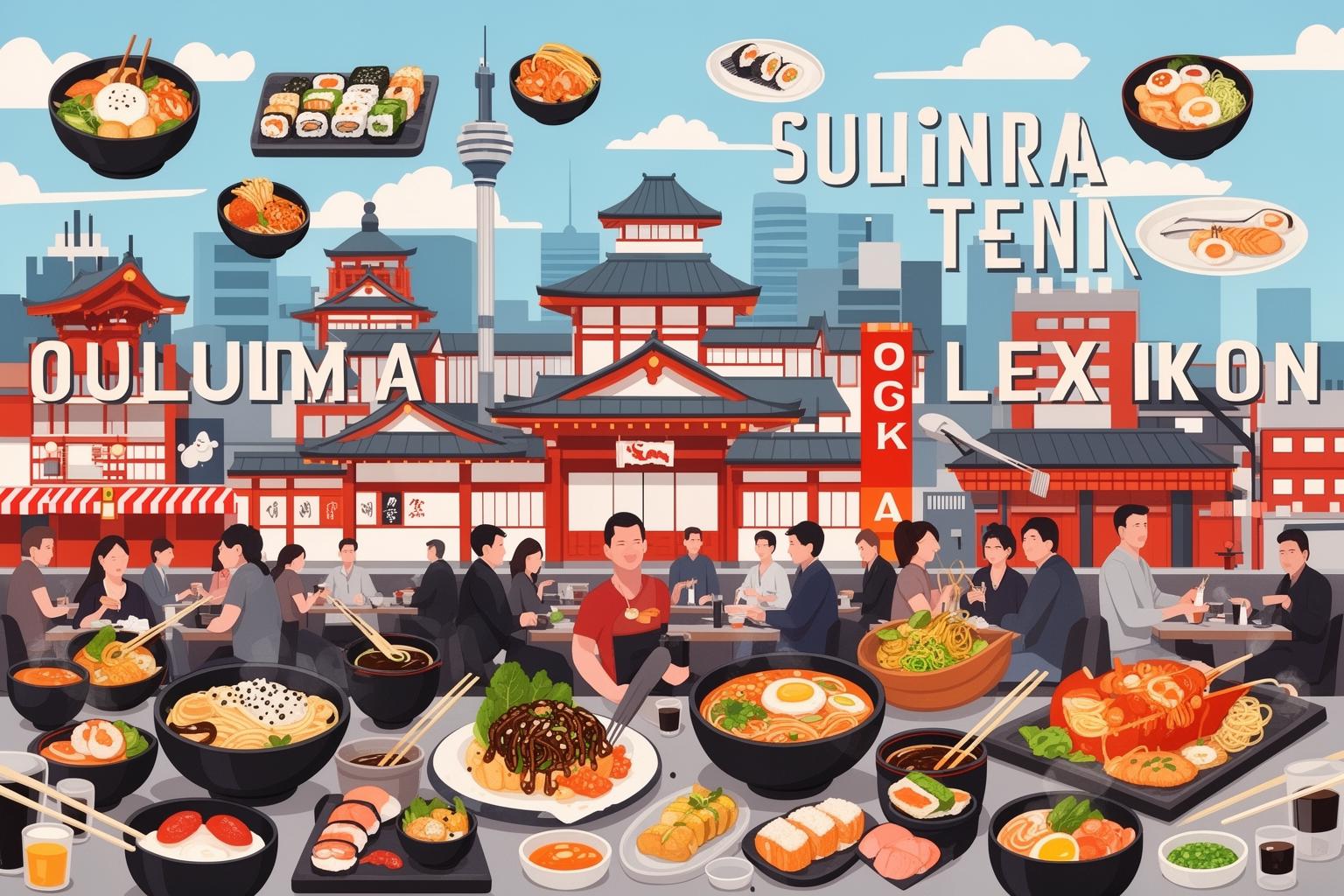
Although this isn’t a food blog, grasping the type of food served in Tenma is essential to appreciating the culture of hashigo-zake. The cuisine is crafted for speed, affordability, and ideal pairing with alcohol.
The Holy Trinity: Kushikatsu, Doteyaki, and Tenpura
These are the staples of the Tenma food scene. Kushikatsu consists of skewers of meat, vegetables, and even cheese, coated in panko and deep-fried to a golden crisp. They arrive hot and quickly. And they come with the most well-known rule in Osaka dining: nidozuke kinshi—no double-dipping in the communal sauce container. This is more than just a hygiene rule; it exemplifies an unspoken social contract. It’s a straightforward, practical guideline that everyone knows and follows. Violate it, and the owner will scold you, instantly marking you as a novice.
Doteyaki is the opposite of fast. It features beef sinew simmered for hours in sweet miso and soy sauce until it becomes meltingly tender. It is rich, savory, and the ultimate comfort food, served in a small bowl that can be finished in a few bites. Tenpura, while considered a high-end dish elsewhere, is a casual treat in Tenma. You can order individual pieces of shrimp, squid, lotus root, or sweet potato, fried to order and served immediately. All three dishes are designed to deliver maximum flavor in a small, quick, and affordable package.
Beyond the Basics: Sushi, Seafood, and Everything in Between
The charm of hashigo-zake in Tenma lies in its incredible variety. The goal is to craft your own multi-course meal by visiting several different spots. You might begin with beer and kushikatsu at a traditional tachinomi. Then, you move on to a standing sushi bar for three pieces of glistening tuna, paying piece by piece. Next, you might slip into a tiny establishment specializing in isobayaki, where fresh shellfish and vegetables are grilled right on the counter before you. Perhaps you finish at a trendy baru (the Japanese take on a Spanish tapas bar) with a glass of wine and some cheese. The neighborhood is like a vast, open-air buffet. The journey between these varied cuisines and atmospheres is the heart of the experience. You are the curator of your own dining adventure, guided only by your cravings and the glow of the next red lantern.
The Bigger Picture: What Tenma Teaches You About Osaka
A night of hashigo-zake in Tenma offers more than just an enjoyable way to eat and drink. It’s a lesson in urban living and an immersion into the cultural software that drives this city. When you stand in a packed bar, navigating unspoken rules and savoring food that costs less than your train fare, you’re witnessing the real Osaka in action.
You come to understand that community in Osaka can be fluid and temporary. It’s not always about lifelong friendships, but about the shared pleasure of a good meal and a cold drink in a public space. It’s a city that finds comfort in the lively presence of strangers. You realize that Osaka’s focus on cospa isn’t about cheapness, but a deep cultural appreciation for value and a democratic belief that quality should be accessible to everyone, not just the wealthy.
You encounter a city that dismisses pretense. In Tenma, the quality of the food is all that matters. The décor might be minimal, the service curt, but if the mackerel is fresh and the highball strong, the place will be full every night. This is Osaka’s pragmatism at its tastiest—a city built on substance rather than style.
So next time you see those red lanterns glowing, don’t just pass by. Take a breath, pull back the noren, and squeeze in. Order a beer, point at something enticing, and join the dance. You won’t just be having a drink—you’ll be partaking in the vibrant, chaotic, and wonderfully human rhythm of daily life in Osaka. You’ll be stepping off the tourist map and into the city’s beating heart.