So, you’ve heard the stories. You’ve seen the TV shows. You’ve probably been told by every Japanese person you’ve met, “Oh, you’re moving to Osaka? Everyone there is hilarious!” The stereotype is a powerful one, painted in neon colors and smelling faintly of takoyaki: Osaka, the city where every conversation is a comedy routine, every shopkeeper a seasoned stand-up, and every citizen is born with a microphone in one hand and a paper fan in the other, ready to whack their comedic partner. And in a way, it’s true. Comedy isn’t just entertainment here; it’s the city’s lifeblood, the rhythm of its streets, the very language of its people. But what the travel guides and TV specials don’t tell you is that a language has rules. It has grammar. And when you live here, you’re expected to become fluent. The reality of Osaka’s comedy-centric culture isn’t just about enjoying a good laugh. It’s about facing the subtle, constant, and sometimes crushing pressure to be part of the joke. This isn’t just a city that loves to laugh; it’s a city that demands you know how to play the game.
For those eager to master every facet of Osaka’s vibrant culture, diving into a local supermarket guide can reveal the subtle art of blending in seamlessly.
The Boke and Tsukkomi Social Contract

To truly understand daily life in Osaka, you first need to grasp manzai. This classic Japanese double-act comedy relies on two roles: the boke, who says or does something silly, and the tsukkomi, the quick-witted straight man who corrects them, often with a sharp retort or a gentle smack. While you might assume the pressure lies with the boke—the one delivering the jokes—the real social skill is being a good tsukkomi. No one expects you to be an endless source of jokes, but they do expect you to know how to respond when a joke is thrown your way. Silence is social death, and a polite, Tokyo-style nod kills the conversation.
This dynamic is evident everywhere. Visit a clothing store in Shinsaibashi, where the clerk holds up a wildly patterned shirt and deadpans, “This one will guarantee you get a date tonight.” A non-Osakan might laugh awkwardly or say, “Oh, no thank you.” The proper Osakan response? A quick, sharp comeback like “Aho ka!” (Are you an idiot!) followed by a grin, or “For that price, it better cook me dinner, too!” This isn’t rudeness; it’s engagement. It’s a verbal rally where the clerk serves the ball and you hit it back. You’ve passed the test, showing you understand the game. This back-and-forth rhythm is the city’s heartbeat. If a friend trips on the sidewalk, your natural response might be to ask, “Are you okay?” An Osakan’s response might first be, “What a beautiful dance!” before checking if they’re alright. It’s a way to turn embarrassment into shared humor—a lifeline, not an insult.
The Burden of the Punchline
This conversational style, however, carries a hidden burden. Every story needs a point; every anecdote requires a conclusion. In Osaka, this is known as the ochi—the punchline or final drop. When you tell a story here, people listen intently, waiting for that satisfying conclusion, witty observation, or funny twist that ties everything together. This contrasts sharply with the conversational style in, say, Tokyo, where sharing an experience can simply be that—sharing. In Osaka, you’re not just sharing; you’re performing. The expectation hangs in the air. You’re halfway through recounting your frustrating visit to the ward office, and you notice your friends’ eyes fixed on you, waiting. Waiting for the ochi. If your story just fizzles out—“and then I went home”—it feels like a letdown. It’s the conversational equivalent of a sneeze that never happens. This places immense pressure on the storyteller. You begin editing your life as you live it, constantly hunting for the humorous angle, the perfect punchline to save for later. It can be exhausting.
The Fear of Suberu
If failing to deliver an ochi is a misdemeanor, then telling a joke that falls flat is a felony. The word for this is suberu, which literally means “to slip.” And it feels exactly like that—a sudden, gut-wrenching loss of footing on a patch of social ice. The silence that follows a failed joke in Osaka is heavier than anywhere else in Japan. It’s a vacuum of awkwardness, a collective, unspoken “yikes.” This fear of suberu shapes behavior. It sharpens people’s awareness, making them read the room carefully, honing their timing and delivery. But for those not naturally inclined to be the center of attention—introverts and quiet observers—this can create a state of low-level anxiety in social situations. They feel the pressure to contribute, yet the fear of slipping holds them back, generating a cycle of silent panic. Foreigners often get a pass, at least at first. But the longer you live here, the more you’ll feel the expectation to move beyond being a laughing audience member to becoming an active participant in the banter.
Humor as the Ultimate Social Lubricant
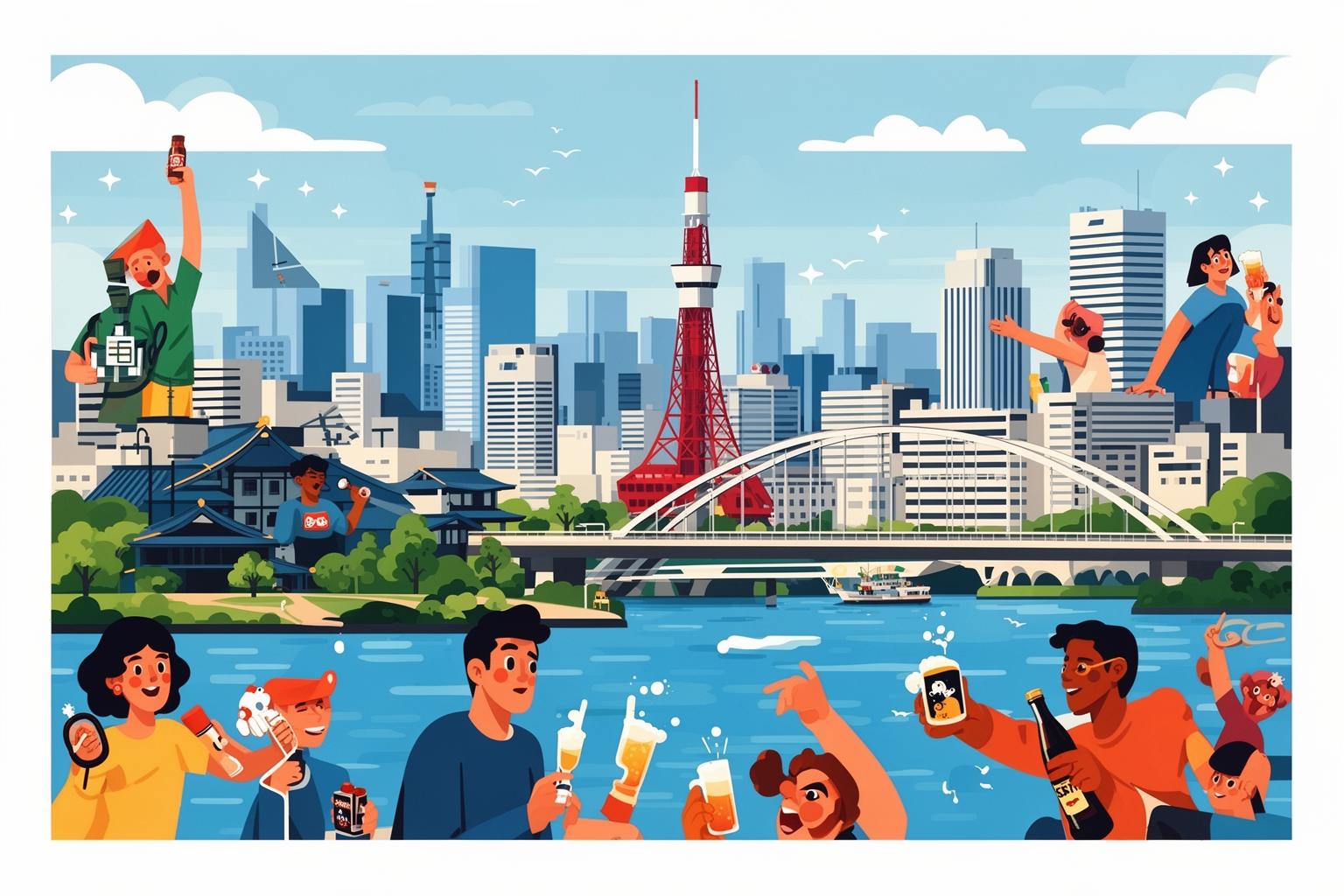
So why do Osakans behave this way? Why sustain such a high-stakes comedic environment? Because here, humor isn’t just a side element in conversations; it’s the driving force. It’s the city’s main tool for connection. In a culture often formal and reserved, Osaka has created a space where laughter serves as a shortcut to closeness. Making fun of yourself is the quickest path to seeming humble and approachable. Lightly teasing a friend is a way to express care. A witty exchange with a street vendor forms a brief but genuine human bond.
Consider the classic Osaka scene of an obachan (an older woman) offering candy to a stranger. She won’t merely hand it over; she’ll shove it into your hand and say, “Here, you look hungry! Don’t waste away!” It’s a joke wrapped in kindness. The moment isn’t just about the candy but about the laughter shared. This contrasts sharply with Tokyo’s approach, where politeness, distance, and adherence to social hierarchy (tatemae) often shape interactions. In Tokyo, connections form through mutual respect for boundaries. In Osaka, they grow by collectively breaking those boundaries with laughter. An Osakan might find Tokyo’s style cold and distant, while a Tokyoite could see Osaka’s as loud, intrusive, and lacking decorum. Neither is right or wrong; they’re simply distinct ways of navigating social life in Japan.
Navigating as a Newcomer
What does this mean for you, a foreign resident trying to settle in? First, relax. You’re not expected to enroll in a Yoshimoto Kogyo comedy school. Your foreignness gives you a bit of protection. But to genuinely connect with the city, you’ll need to learn the basics.
Your most powerful asset is the tsukkomi. You don’t need to be clever; just respond. Master the holy trinity of Osaka retorts: “Nande ya nen!” (Why?! / No way!), “Honma ka!?” (Really!?), and “Akan wa!” (Oh, that’s no good!). Using one at the right moment shows you’re not just a passive observer—you’re part of the joke and playing the game. Next, rethink teasing. If a coworker jokes about your unusual lunch or bright socks, they’re probably not bullying you—they’re inviting you in. The best reply is to laugh at yourself and offer a gentle tease back. Lastly, embrace your role as an audience member. A genuine, hearty laugh is a contribution. Appreciating the humor is a way of respecting the local language. You don’t have to be the star on stage, but showing you enjoy the show goes a long way.
More Than Just a Laugh
Living in Osaka means living within a contradiction. It’s a city that is incredibly warm and open, yet requires a particular, high-level social skill that can feel exclusive. It’s a place where people will speak to you as if you’ve been friends for years, but you’ll sense a subtle pressure to keep up the energy and deliver the punchline. The “Funny Osakan” isn’t a myth, but rather a misunderstanding. It’s not a personality type; it’s a communication style rooted in a culture that chose laughter as the most effective way to connect. The pressure is real, but it isn’t hostile. It’s the city, in its own indirect, joking manner, asking you to connect. Once you realize that the endless banter, teasing, and the search for the ochi are simply different ways of saying, “I see you. Let’s share a moment,” the pressure begins to feel less like a challenge and more like an invitation.