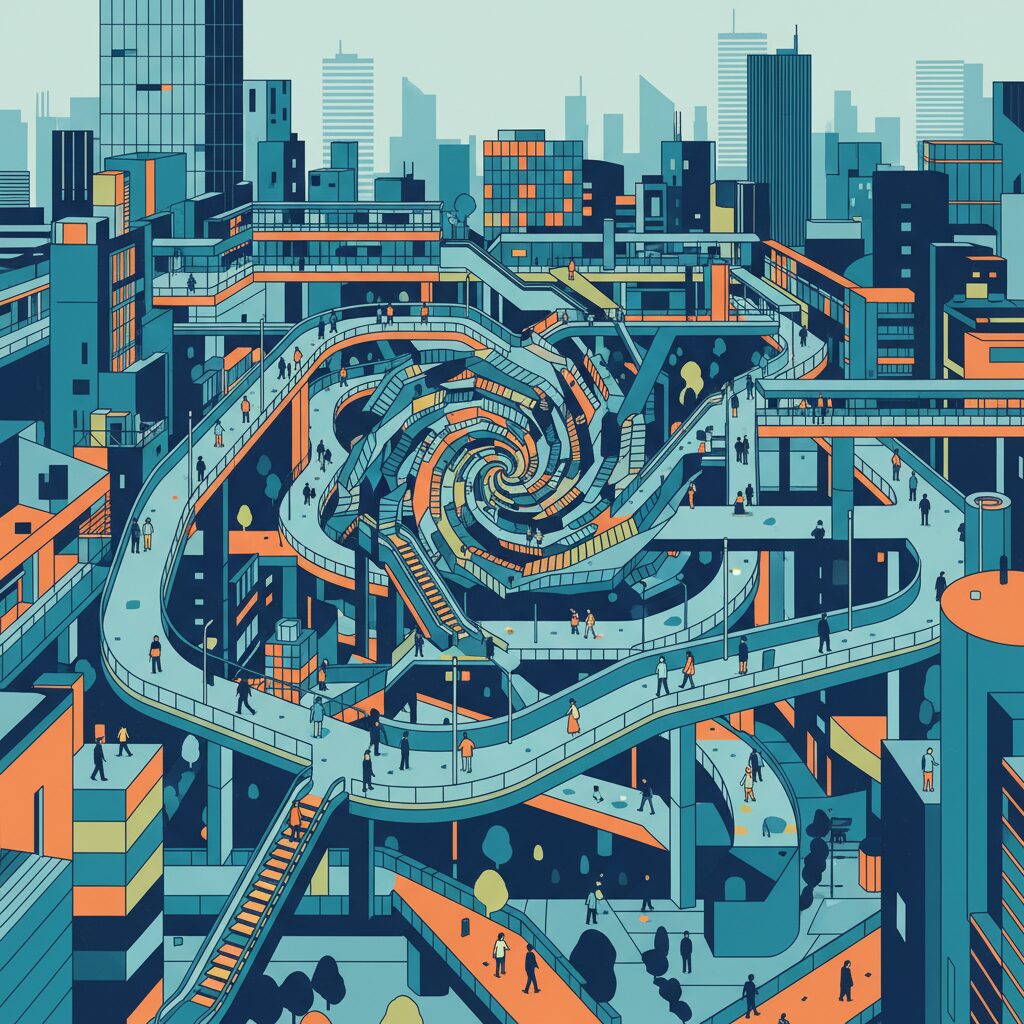
Step out of the train and into Umeda, and the first thing that hits you isn’t a sight or a sound. It’s a feeling. A sense of vertigo, of being a single data point in a massive, surging algorithm of human movement. You’re not in a station; you’re inside a machine. Seven different stations, technically, all bleeding into one another—JR Osaka, Hankyu Umeda, Hanshin Umeda, and a trio of subway lines—all stitched together by a sprawling, subterranean network of shopping malls, corridors, and plazas that locals navigate with the instinct of migrating birds. For a newcomer, it’s chaos. A beautiful, bewildering, glass-and-steel-and-concrete mess. You see signs pointing in twelve directions at once, you feel the rumble of trains from three different levels, and you wonder if you’ll ever see the sun again. This is the Umeda Labyrinth, Osaka’s gleaming, corporate heart. It’s easy to dismiss it as a soulless transit hub, a pale imitation of Tokyo’s Shibuya or Shinjuku. A place to pass through, not to understand. But that’s the first mistake foreigners make. They see the surface and miss the soul. Umeda isn’t just one place. It’s a collection of fiercely independent neighborhoods, each with its own pulse, its own rules, and its own answer to the question of what it means to be Osakan. To decode the labyrinth, you don’t need a map of the station. You need a map of its moods. You have to escape the main arteries and explore the capillaries, the hidden districts that cling to the edges of this concrete giant. That’s where you find the real Osaka, tucked away in plain sight.
Curious to venture deeper into Osaka’s eclectic neighborhoods, you might find a unique perspective on the city’s vibrant nightlife in this bar-hopping guide in Tenma.
The Corporate Facade: Umeda as Osaka’s Tokyo
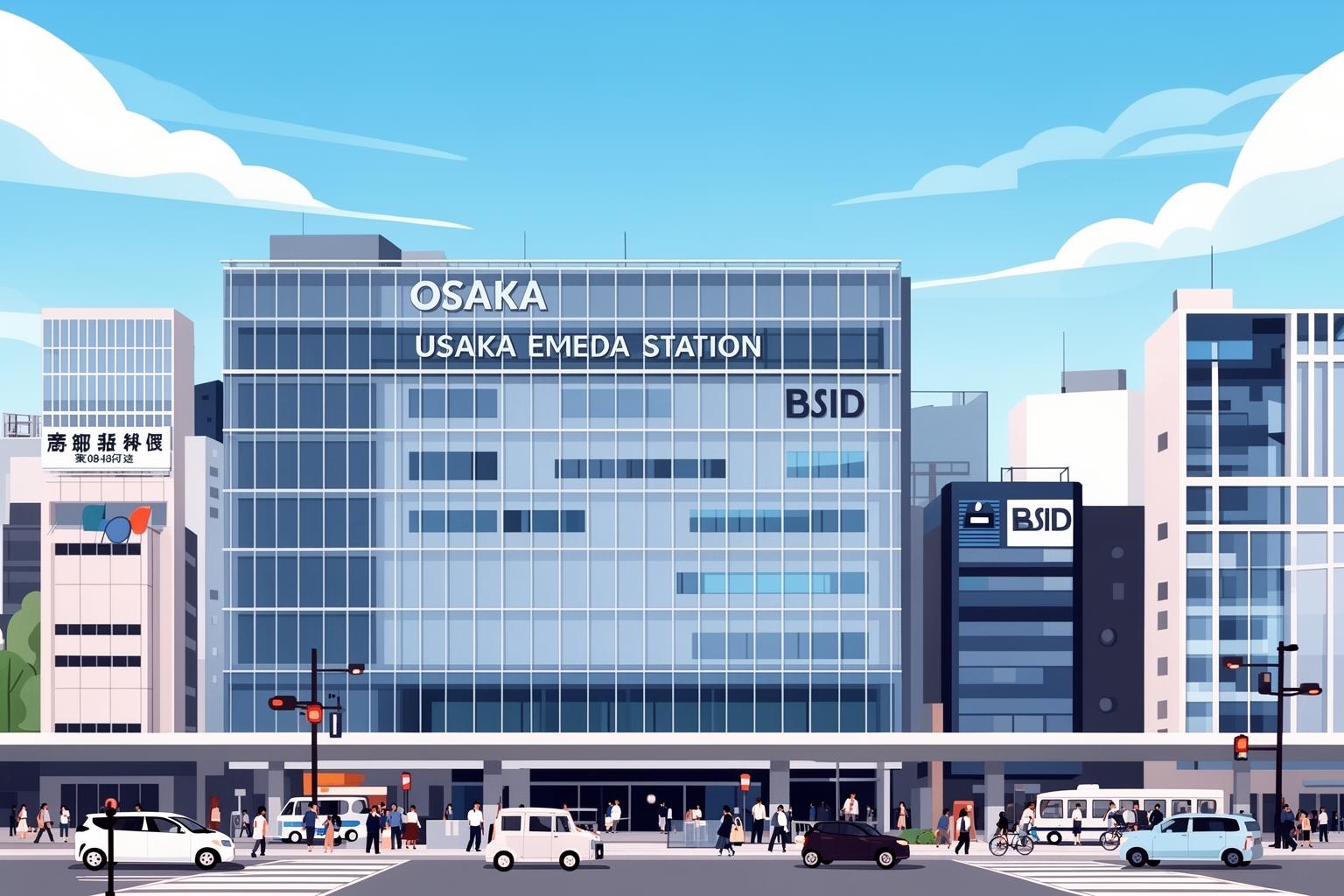
First, you must face the beast itself. The glittering towers of Grand Front Osaka, the polished floors of the Lucua 1100 complex, the stately presence of the Hankyu and Hanshin department stores. This is North Umeda, or Kita, the city’s official business card. Standing here, watching the rivers of people in dark suits flow purposefully toward office buildings, you might almost believe you were in Marunouchi, Tokyo. The pace is brisk, the atmosphere serious, and the commerce upscale. This is Osaka at its finest, presenting an image of global competence and economic power. It’s a necessary performance for Japan’s second city. Osakans know they need this gleaming facade to compete, attract investment, and prove they’re not just the loud, funny cousins from the west. But listen closely. The rhythm feels slightly off. The impeccable service in the department stores carries a bit more warmth, a touch more personality. The businesspeople in the cafes don’t just sip their coffee in stony silence; you’ll hear bursts of that distinctive, musical Kansai dialect cutting through the corporate hum. This isn’t a lack of professionalism; it’s a refusal to completely erase the human element for the sake of appearances. In Tokyo, the system often feels paramount. Here, even in the most corporate settings, the individual spirit shines through. This part of Umeda is a testament to Osaka’s pragmatism. It’s a city built by merchants, who understand the art of the deal and the importance of a good storefront. But it’s just that—a storefront. The real business of life, the messy, vibrant, deeply human part of Osaka, happens elsewhere. Don’t let the shine blind you; this is the stage, not the play.
Diving Underground: The Labyrinth as a Social Artery
To start understanding Umeda, you need to go underground. Into the vast subterranean city, a world unto itself that pulses with a unique energy. This isn’t merely a series of sterile transit hallways meant to shuttle people from point A to point B. It’s a living, breathing ecosystem. Whity Umeda, Diamor Osaka, Hankyu Sanbangai—these aren’t just names on a map; they form the city’s circulatory system. The logic is pure Osaka: practicality. Why endure the oppressive summer humidity or the biting winter winds when you can step into a fully climate-controlled world beneath your feet? This underground network exemplifies the city’s obsession with efficiency and convenience. You can commute, buy groceries, purchase a suit, get a haircut, enjoy a five-course meal, and have a drink without feeling a single raindrop. But it’s the character of the place that distinguishes it from Tokyo’s similar but far more soulless underground passages. Here, life spills out. The air is rich with the scent of freshly baked bread from countless competing bakeries. The crisp, electronic jingle of a pachinko parlor drifts up from a staircase leading to street level. A high-end jewelry store sits beside a dingy standing bar where salarymen knock back beers at 3 PM. It’s a chaotic, democratic blend of high and low, new and old. The famous Izumi no Hiroba (Fountain Plaza) in Whity Umeda, recently renovated, has been a legendary gathering spot for generations. It serves as the city’s de facto living room, a place where appointments are made and friendships are formed. This underground world reveals a defining Osaka trait: an extraordinary knack for maximizing space and a belief that commerce and community don’t have to be separate. They can, and should, coexist in a noisy, vibrant, and thoroughly functional embrace.
The East Side Story: Nakazakicho and the Art of Slowing Down
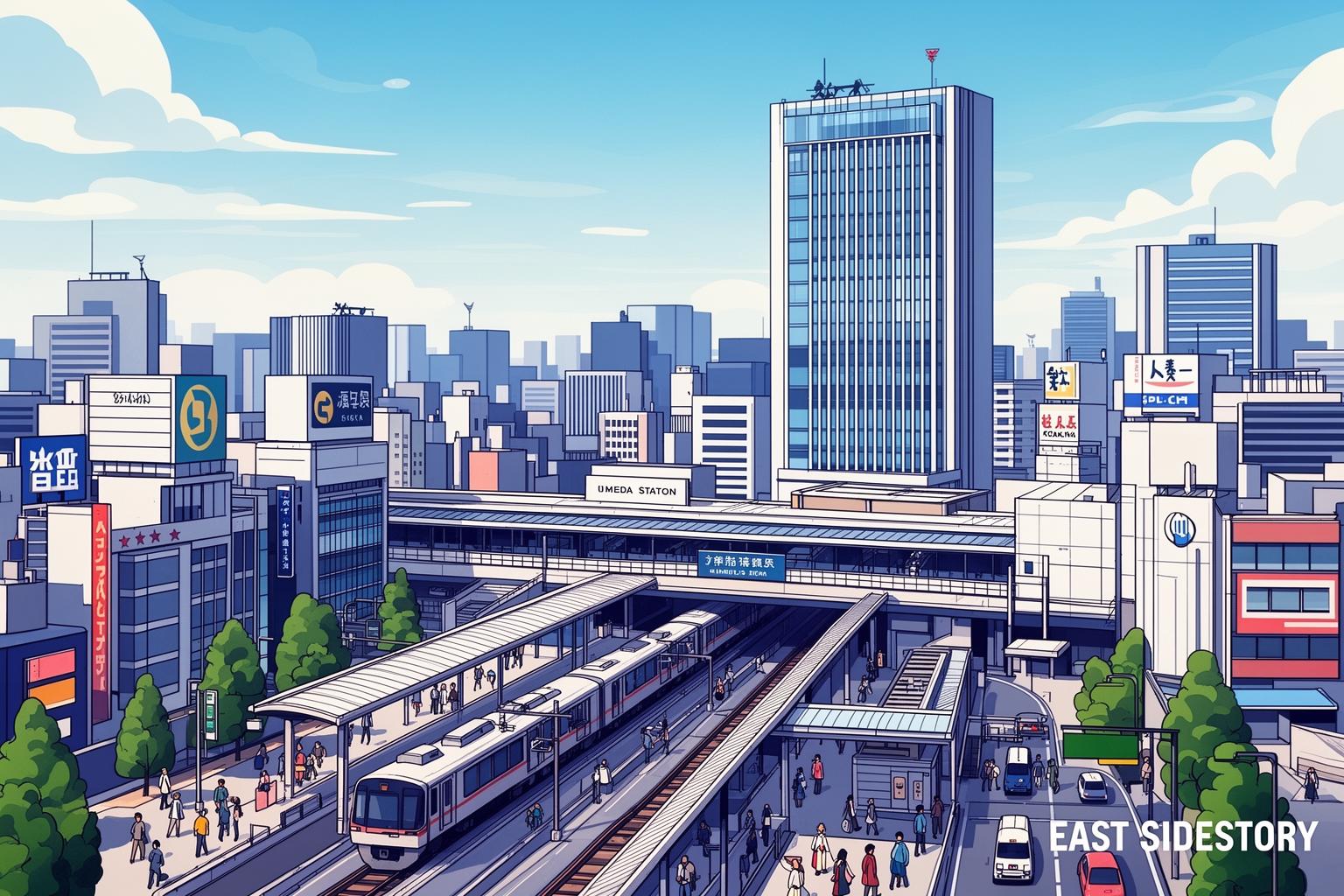
Emerge from the labyrinth on the east side, cross the main road beneath the elevated train tracks, and you step into another world. Welcome to Nakazakicho. The shift is striking. The city’s roar softens to a gentle murmur. Towering glass skyscrapers give way to a maze of narrow, winding alleys lined with two-story wooden houses from the Showa era, their weathered facades charmingly imperfect. This neighborhood remarkably survived wartime bombings, preserving a slice of pre-modern Osaka nestled against its ultra-modern core. Nakazakicho stands as Umeda’s quiet rebellion. It consciously opposes the tear-it-down-and-build-it-bigger mindset. Here, young entrepreneurs and artists didn’t wait for big developers; they revived these old, neglected buildings, transforming them into a whimsical mix of independent cafes, vintage clothing shops, tiny art galleries, and craft stores. Each storefront is distinctive, a direct reflection of its owner’s personality. This is the spirit of Osakan merchants reimagined for the 21st century. It’s less about pure profit and more about creating a sustainable, creative life on one’s own terms. People move differently here. The frantic Umeda power-walk slows to a leisurely pace. Locals tend to potted plants outside their homes, artists sketch quietly in cafes, and couples browse handmade jewelry. It’s a powerful reminder that Osaka is not a monolith. Despite its passion for progress and commerce, it deeply values individuality and respects those who choose to forge their own path. Nakazakicho is where the city’s soul exhales. It proves that even amid relentless development, there is always space for something small, authentic, and human to thrive.
The West Side Hustle: Fukushima’s Culinary Playground
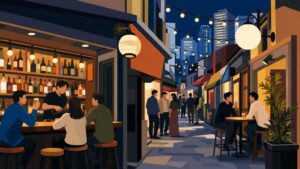
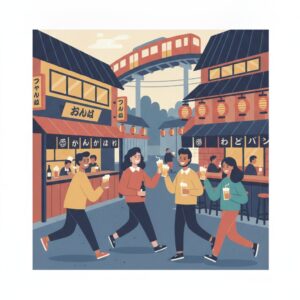
If Nakazakicho represents Umeda’s soul, then Fukushima is its stomach. Just a short walk west from JR Osaka Station, across the tracks, lies a district that perfectly captures Osaka’s famous passion for food, known as `kuidaore`—to eat until you drop. Fukushima isn’t aimed at tourists seeking iconic dishes; it’s for locals. This is the after-work release valve for the thousands of office workers who fill Umeda’s towers during the day. The moment you step into its main street and slip into the side alleys, the atmosphere changes. The energy becomes dense, convivial, and intoxicatingly fragrant. The streets form a tightly packed maze of `izakaya` (Japanese pubs), `tachinomi` (standing bars), and tiny, specialized eateries serving everything from Michelin-recognized ramen to exquisitely grilled yakitori. The charm isn’t in grand decor or flashy branding; it lies in the honest, unpretentious pursuit of deliciousness at a fair price. This is the essence of Osaka’s `kosupa` (cost-performance) mindset. It’s not about being cheap; it’s about expecting exceptional value. An Osakan will gladly pay a premium for something truly outstanding but has no patience for expensive mediocrity. In Fukushima’s bars, the classic Osaka friendliness, often mistaken for a simple trait, is fully on display. But it’s a particular kind of friendliness—a communal spirit born from shared enjoyment. Strangers packed shoulder-to-shoulder in a tiny bar will start a conversation, recommend a dish, or offer to pour you a drink. This isn’t the polite, reserved interaction you might find in Tokyo; it’s loud, straightforward, and fueled by great food and drink. Fukushima reveals the genuine social fabric of Osaka—a city that works hard but knows the best part of the day begins after you clock out.
The North Side Frontier: Chayamachi and the Youthful Vibe
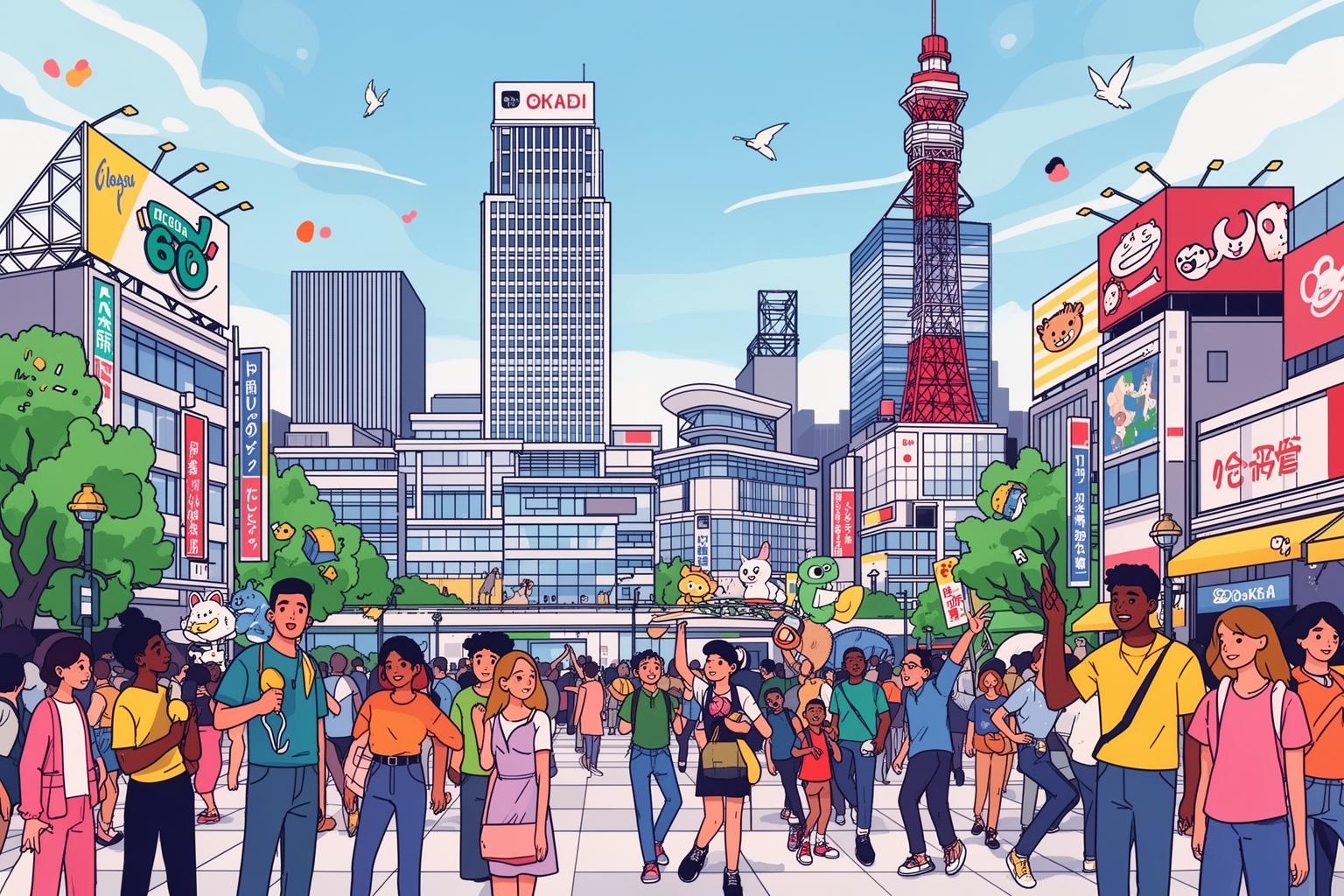
Head north of the Hankyu Umeda mothership, and you’ll enter Chayamachi. This is Umeda’s creative and youthful frontier, a district buzzing with the energy of trends being born, tested, and embraced. It’s an intriguing mix of the corporate and the counter-cultural. On one side, there are large retailers like Uniqlo, Loft, and the Muji flagship store. On the other, you’ll find the striking architecture of the NU Chayamachi shopping complex, small independent boutiques, live music venues hidden in basements, and campuses of art and design schools. This combination creates a unique vibe. It’s undeniably commercial, yet it avoids the overwhelming, almost stifling trend-consciousness found in Tokyo’s Shibuya or Harajuku. The style here feels more personal and accessible. You see young people experimenting with fashion, but more for their own enjoyment than for street-style photographers. Chayamachi is where Osaka’s youth culture is formed. It’s a place for doing, not just being seen. You can spend an afternoon searching for rare books at Maruzen & Junkudo, catch an indie band at a small club, browse contemporary art, and then enjoy coffee at a stylish café. It reflects Osaka’s ability to absorb mainstream culture while still preserving its own unique flavor. The district feels lively and ever-changing, a workshop where the city’s next generation is discovering what it means to be young, creative, and Osakan in a globalized world. It’s less about posing and more about participating, a hands-on approach to culture that truly captures the city’s character.
Kitashinchi: The Polished Underbelly
Just a short walk south from the main Umeda cluster, across a major road, is Kitashinchi. At first glance during the day, it appears unassuming. But as dusk settles, the district transforms. Paper lanterns begin to glow, discreet wooden signs illuminate, and elegantly dressed women and men start navigating the narrow streets. This is Osaka’s premier high-end entertainment district, the city’s answer to Tokyo’s Ginza, yet with a fundamentally different operating system. While Ginza can feel vast, anonymous, and focused on brand-name luxury, Kitashinchi is intimate, exclusive, and centered on relationships. This is the world of high-end ryotei, exclusive hostess clubs, and hushed cigar bars where serious business deals are sealed with a handshake and a glass of expensive whiskey. It’s a side of Osaka that breaks the stereotype of the loud, frugal, takoyaki-eating commoner. This district reveals the city’s sophisticated, powerful, and discreet underbelly. What’s uniquely Osakan about it is the currency. Although money is obviously important, the true measure of status in Kitashinchi is your network. Knowing the right `mama-san` at the right club, being a trusted regular (`jouren-san`), and mastering the subtle art of conversation are more valuable than a platinum credit card. This system directly descends from the old merchant culture of Kansai, where personal trust and long-term relationships were the foundation of business. Kitashinchi demonstrates that Osaka is a city of layers. Beneath the boisterous, down-to-earth exterior lies a complex social hierarchy and a world of refined, traditional elegance governed by its own unspoken rules.
Umeda is Not a Place, It’s an Ecosystem
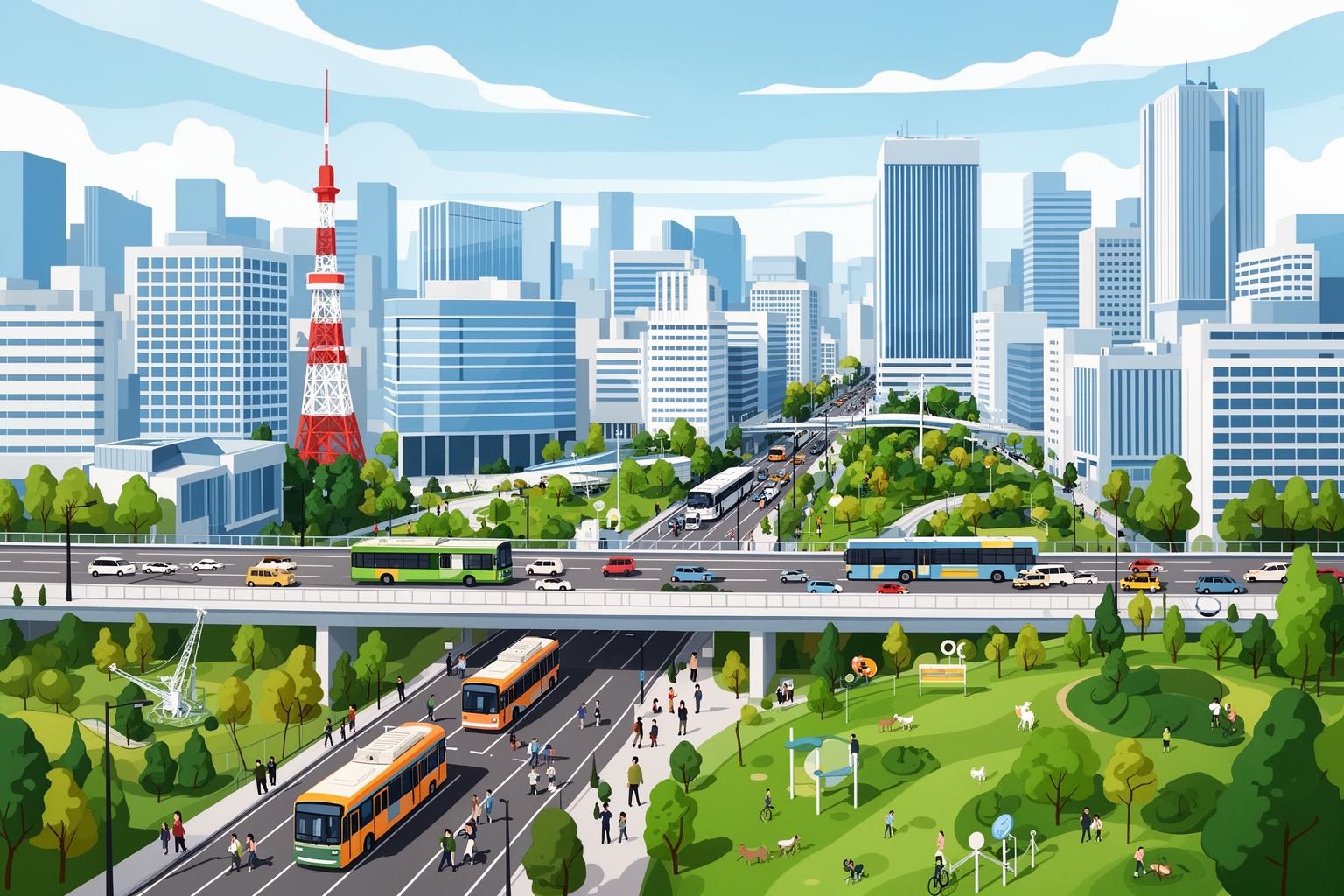
After exploring the sub-districts, you return to the roaring heart of the Umeda Labyrinth, but now you see it differently. It is no longer an inscrutable machine. Instead, it is the sun around which these distinct planetary neighborhoods revolve. The sterile shine of the corporate towers, the chaotic functionality of the underground city, the quiet resistance of Nakazakicho’s preserved alleys, the vibrant culinary scene of Fukushima, the creative energy of Chayamachi, and the subtle influence of Kitashinchi—they are not separate entities. They are all Umeda. They are all vital parts of the Osaka ecosystem. The labyrinth is not a flaw in urban design; it is a physical expression of the city’s complex character. It is a place that serves as both a global business hub and a collection of close-knit communities. It is both fiercely pragmatic and deeply romantic. It embraces the new while steadfastly holding on to the old. This is the essential truth about Osaka that Umeda unveils. Unlike Tokyo, which can sometimes feel like a top-down creation of seamless, orderly systems, Osaka feels as if it grew from the ground up, organically and somewhat messily. It is a city fueled by the relentless energy of its people, each chasing their own vision of success and happiness. The key to deciphering the labyrinth is not to find a single path through it, but to embrace the confusion, to get lost in its side streets, and to realize that its soul is not located in one central point, but in the constant, dynamic, and beautiful tension among all its competing parts.