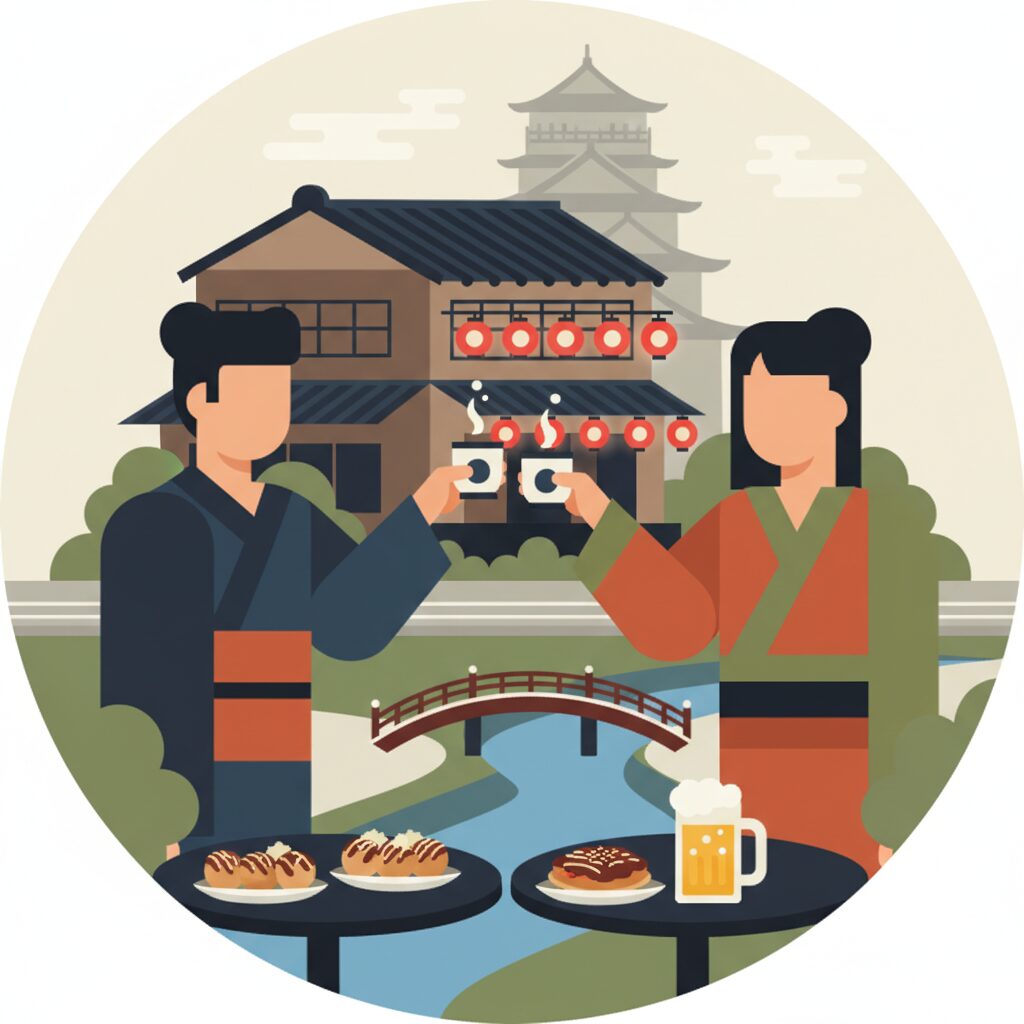
The invitation arrives without fanfare, a plain text email dropped into your inbox at 4:55 PM on a Friday. The subject line is deceptively simple: 「お疲れ様です。今夜、飲み会はいかがですか?」— “Good work today. How about drinks tonight?” It’s from Tanaka-san, your section chief, a man whose office personality is a carefully curated blend of quiet authority and impenetrable politeness. Your heart does a little tap dance of anxiety. This isn’t just a casual question; it feels like a summons. You’ve heard the whispers about these after-work gatherings, these legendary `nomikai`. They’re where careers are made, secrets are spilled, and the real face of your company reveals itself. But the mechanics are a mystery. Is it mandatory? How much will it cost? What are the rules? In the rigid, hierarchical world of a Japanese office, the `nomikai` is the official pressure release valve, the communal space where the masks of professionalism are loosened, if not entirely removed. It’s where your silent, stoic boss might burst into a passionate, off-key rendition of a classic enka ballad, and where the quiet woman from accounting might reveal a devastatingly sharp sense of humor. This is doubly true in Osaka, a city that runs on a different social engine than Tokyo. Here, the `nomikai` isn’t just a corporate ritual; it’s a performance, a marketplace of ideas, and the primary stage for building the relationships that truly matter. It’s less about solemn obligation and more about boisterous connection, a direct reflection of a merchant city that has always valued practical relationships over empty formality. To understand Osaka, you have to understand what happens after everyone clocks out.
The city’s vibrant nomikai culture mirrors broader shifts in urban life, notably the rise seen in Kansai luxury hotels that underscores Osaka’s blend of deep-rooted tradition and emerging modernity.
The Unspoken Invitation: Is “No” an Option?
Reading Between the Lines
That email from Tanaka-san isn’t exactly a question. It’s a test of your social awareness. In many Japanese corporate cultures, especially the more traditional ones, after-work drinking parties extend the workday. Declining is possible, but it’s a delicate process, much like defusing a bomb with chopsticks. This is the realm of `nomi-nication`, a clever blend of `nomu` (to drink) and communication. The common belief is that alcohol removes the layers of `tatemae`—the public facade—and reveals `honne`, one’s true feelings and intentions. It’s where real team bonding occurs, where your boss might casually propose a new project, or where a colleague might voice a complaint that would be unthinkable in the formal office environment. Saying no to the invitation, especially as a newcomer, can be misunderstood. It might suggest you’re not a team player, that you’re indifferent to your colleagues, or that you view your job as purely transactional. You risk being seen as aloof or `tsumetai` (cold). Group harmony (`wa`) is crucial, and the `nomikai` is one of the main rituals supporting it. Skipping out is like refusing to sing the company song; you can do it, but people will notice.
The Osaka Exception: Pragmatism Over Protocol
This is where living in Osaka feels fundamentally different. Although there is still pressure to attend, the city’s merchant spirit brings a practical attitude to the mix. Tokyo’s corporate culture can often feel rigid, with a strict top-down hierarchy where protocol reigns supreme. An invitation from a superior there carries the weight of a royal command. In Osaka, the culture is more entrepreneurial and grounded. Results and relationships often take priority over strict formality. This means your reasons for declining are judged by their practicality. A vague or weak excuse might not be accepted. But a clear, reasonable explanation? That’s another matter. Osakans, rooted in a culture of business and negotiation, respect a solid reason. Saying, “I’m sorry, Tanaka-san, but I have a prior commitment I can’t break,” is perfectly fine. Even more surprisingly, in many contemporary Osaka workplaces, being upfront about financial concerns can be effective. “I’d love to join, but I need to keep an eye on my budget this month,” might be met with understanding rather than disapproval. They get it—money matters. This directness is a hallmark of Osaka. The city values substance, and if you’re a valued and productive team member during work hours, your occasional absence after hours is more likely to be accepted. Social capital is earned from 9 to 5, and the `nomikai` is where you either spend it or invest it further. The key is balance. Never going is a mistake. But feeling obligated to attend every single time is a Tokyo mindset you can, and should, leave behind in Osaka.
The Bill Breakdown: Who Pays for What and Why?
The `Warikan` System: A Study in Calculated Fairness
So you decided to go. The food was fantastic, the conversations flowed, and you discovered a new side of your colleagues. Then comes the moment of truth: the bill arrives. The youngest person at the table, the `kohai`, dutifully takes it to the cashier. Moments later, someone announces, “Okay, it’s 4,500 yen each!” You do a quick mental calculation. You had two beers and some edamame. Tanaka-san, on the other hand, ordered premium sake and had three plates of sashimi all to himself. How can the cost be the same? Welcome to the world of `warikan`, the standard Japanese practice of splitting the bill evenly among all participants. For many Westerners, this feels inherently unfair. You’re paying for your boss’s expensive tastes. But thinking this way misses the point entirely. You are not paying solely for what you individually consumed. You are contributing to your share of the shared experience. You are chipping in for the two hours of camaraderie, the venue, the laughter, the team-building. It is a flat fee for participation in the ritual. Complaining about the unfairness of `warikan` is a major social faux pas. It marks you as petty, someone who doesn’t grasp the communal nature of the event. You accept it, pay your share with a smile, and understand that the cost is an investment in your workplace relationships.
The Hierarchy of Generosity
While `warikan` is the default, exceptions exist, governed by unspoken hierarchical rules. Occasionally, a senior manager—the `bucho` (department head) or `kacho` (section chief)—will cover a significantly larger portion of the bill, or even the entire amount. This is not a random act of kindness. It is a calculated expression of status, generosity, and responsibility. It’s a way for a superior to reward their team for hard work and foster loyalty. When this happens, a chorus of “Ee, hontou desu ka?!” (“Oh, really?!”) and playful protests will erupt, but everyone knows the script. The offer will be accepted. Proper etiquette here is essential. A simple “Thank you” is insufficient. You must express your gratitude enthusiastically. “Gochisousama deshita! Hontou ni arigatou gozaimasu!” (“That was a wonderful meal! Thank you so very much!”) is the bare minimum. The real test comes the next morning. It is absolutely essential to approach the person who paid and thank them again. “Tanaka-bucho, kinou wa gochisousama deshita. Totemo tanoshikatta desu.” (“Director Tanaka, thank you for treating us yesterday. It was very enjoyable.”) This follow-up closes the loop. It shows you remember their generosity and genuinely appreciate the gesture. Forgetting this step is seen as extremely rude and ungrateful.
The Osaka Twist: Value for Money
Osaka’s obsession with cost-performance, or `kosupa` (cost-performance), shines in its `nomikai` culture. While spontaneous gatherings at pricey izakayas can occur, many company outings are pre-planned and reserved at venues offering `nomihodai` (all-you-can-drink) and `tabehodai` (all-you-can-eat) courses. For a fixed price, often between 4,000 and 6,000 yen, you get two or three hours of unlimited drinks from a set menu plus a multi-course meal. This is an Osakan’s dream. It removes all financial uncertainty. Everyone knows exactly what they will pay from the start, allowing them to relax and focus on the `nomi-nication`. It transforms the evening from a potentially costly gamble into a predictable, high-value social investment. This practicality is pure Osaka. Why leave things to chance when you can secure a great deal? It’s the merchant’s logic applied to socializing, making the entire `nomikai` culture far more accessible and less financially intimidating than it might be in the more status-conscious areas of Tokyo.
The Rules of Engagement: Pouring, Praising, and Positioning
The Art of Pouring Drinks (`O-shaku`)
Attending a `nomikai` is like engaging in a delicate dance of social etiquette, with the most crucial step being `o-shaku`, the act of pouring drinks for others. The primary rule is simple: never pour your own drink, especially from a shared beer bottle or sake carafe. Pouring your own drink visually signals loneliness and social failure, indicating that no one at the table is paying attention to you. Instead, you should focus on the glasses around you, particularly those of your superiors. When you notice a senior colleague’s glass becoming empty, pick up the beer bottle with both hands, label facing up, and ask, “Shall I pour for you?” As you pour, they will lift their glass with both hands to receive it. Conversely, when someone—especially a senior—offers to pour for you, pause your activity, pick up your glass with both hands, and raise it slightly toward them. This two-handed gesture embodies mutual respect. This ongoing ritual throughout the evening serves to care for the group’s needs. In Osaka, among peers of the same rank, these customs may be more relaxed and casual. However, when superiors are present, the protocol is rigorously observed. It is a small act with profound significance.
Seating is Power: The `Kamiza` and `Shimoza`
Even before sitting down, a silent hierarchy is already in place. In a traditional Japanese room or at a long table, an unspoken seating arrangement reflects status. The seat of honor, known as the `kamiza`, is the spot farthest from the door, reserved for the highest-ranking individual—such as the top boss or a distinguished guest. The `shimoza`, the seat closest to the door, is for the most junior person. Why near the door? Because the person in the `shimoza` is implicitly responsible for logistical tasks during the gathering. They are expected to be the first to catch the waiter’s attention, place orders, distribute small plates, and generally attend to the group’s needs. As a foreigner, you’ll often be exempt from this role and may even be seated in a place of honor as a guest. Still, understanding the concepts of `kamiza` and `shimoza` demonstrates deep cultural awareness. If you hold a junior position, choosing the `shimoza` seat will be noticed and appreciated. It’s a silent way of saying, “I know my role and am ready to contribute.”
From Office Drone to Court Jester: The Osaka Performance
This marks perhaps the most striking difference in an Osaka `nomikai`. Tokyo drinking parties often tend to be solemn, centered on quiet complaints (`guchi`) about work or polite, surface-level conversation. In contrast, an Osaka `nomikai` is a performance. There is an unspoken expectation to be `omoroi`—interesting, funny, and entertaining. The city’s cultural DNA is deeply intertwined with `manzai` (a form of stand-up comedy), where wit is a prized social currency. This doesn’t mean you must prepare a comedy act; rather, it means contributing to the table’s energy. Sharing a good story, showing self-deprecating humor, or even laughing heartily at your boss’s bad jokes are all part of the show. The atmosphere is lively, loud, and filled with the distinct, melodic rhythm of the Osaka dialect. People gently tease each other (`tsukkomi`), tell exaggerated tales, and aim to create a fun, memorable experience. For foreigners, this can be freeing. You’re not expected to be a `manzai` expert, but if you share a humorous story about your homeland or a funny mistake while learning Japanese, you’ll be warmly embraced. In Osaka, silence feels awkward; laughter is the key to connection.
The Aftermath: `Nijikai`, `Sanjikai`, and the Next-Day Debrief
The Second and Third Parties (`Nijikai`, `Sanjikai`)
The night rarely ends when the main party finishes. After the two- or three-hour session at the izakaya wraps up, someone usually asks, “So, where to for the `nijikai`?” The `nijikai`, or second party, is the next phase of the evening. At this stage, the group often breaks up. Those with families or early commitments will bow out, while a core group of more enthusiastic members continue. The venue changes—perhaps to a cozy backstreet bar, a karaoke box, or a pub. The `nijikai` tends to be more relaxed, with conversation becoming more intimate. This is often where deeper bonds are formed. Participation is generally optional, but if you’re enjoying the company and want to strengthen connections with a few key colleagues, joining the `nijikai` is an excellent choice. For the truly devoted, there is the `sanjikai` (third party), and sometimes even a `yonjikai` (fourth party). These late-night outings often conclude with a final, restorative bowl of ramen just before the first trains start running around 5 AM. These later rounds test your stamina, but they also offer a chance to build a reputation as someone truly dedicated to the team, both inside and outside the office.
The Morning-After Protocol
The `nomikai` doesn’t officially end until the next morning at the office. There are two essential rules to follow. The first, as mentioned earlier, is to thank the appropriate people. Seek out your boss or the senior colleague who organized the event and express your gratitude. This helps reinforce the positive social connections made the night before. The second rule is the `nomikai` code of silence. What happens at the `nomikai` generally stays there. The drunken karaoke performance, candid complaints about a challenging client, or slightly too personal revelations are understood to have occurred within a protected space. Bringing these up in the sober light of day at the office would be a serious breach of trust. The `nomikai` is a safe space for venting and being human. However, there is a crucial exception: any positive work-related discussions or brilliant ideas that arose over drinks are fair game. In fact, that’s the whole point of `nomi-nication`. An informal agreement made at 10 PM in an izakaya can, and often does, become the foundation for a formal proposal at 10 AM the next day. The `nomikai` isn’t just a party; it’s an informal, alcohol-fueled incubator for the work ahead.
A Foreigner’s Survival Guide
Pacing Yourself in a `Nomihodai` World
The `nomihodai` menu can be incredibly tempting. With unlimited beer, sake, and highballs available, it’s easy to overdo it, especially when trying to keep up with experienced drinkers. The key to managing the night is pacing yourself. No one is keeping track of how many drinks you have. The aim is to stay a pleasant, coherent participant throughout the evening. A smart tactic is to alternate alcoholic beverages with non-alcoholic ones. Ordering a glass of oolong tea (`uron-cha`) is entirely normal and usually goes unnoticed. It lets you keep a drink in hand, join in toasts (`kanpai!`), and stay hydrated and clear-headed. Your colleagues would much prefer to have you engaged and present than passed out in a corner. The goal is communication, not intoxication.
Budgeting for Social Success
Although Osakans appreciate a good bargain, socializing expenses can add up fast. A single `nomikai` might cost anywhere from 4,000 to 8,000 yen, depending on the place and occasion. If your team meets once or twice a month, this can quickly become a notable expense in your budget. The best strategy is to plan ahead. Set aside a “socializing budget” of 10,000 to 20,000 yen per month. Reserving these funds eases financial pressure with each invitation, letting you say “yes” without worrying about rent, turning the `nomikai` from a financial strain into a worthwhile social investment. And keep in mind, it’s perfectly okay to decline politely on occasion. Attending about two out of three events often strikes a good balance.
Finding Your Place: Be the “Interesting Foreigner”
Don’t fret if you can’t keep up with the fast-paced jokes in the Osaka dialect or haven’t learned the latest karaoke hits. Your greatest strength at a `nomikai` is your unique perspective. Your colleagues are genuinely curious about you. They want to hear about your hometown, family, your country’s food and traditions, and your thoughts on Japan. Have a few engaging, light-hearted stories ready to share. This is your chance to be `omoroi` in your own way. Being a good listener matters just as much. Ask your colleagues about their hobbies, children, or favorite Hanshin Tigers player. In Osaka, people love to chat and connect. Showing sincere interest in them builds bonds far deeper than simply following the rules. While the `nomikai` might seem like a maze of confusing customs, at its core, it’s a fundamentally human ritual. It’s about sharing food, drink, and time — turning a group of coworkers into something more like a family.