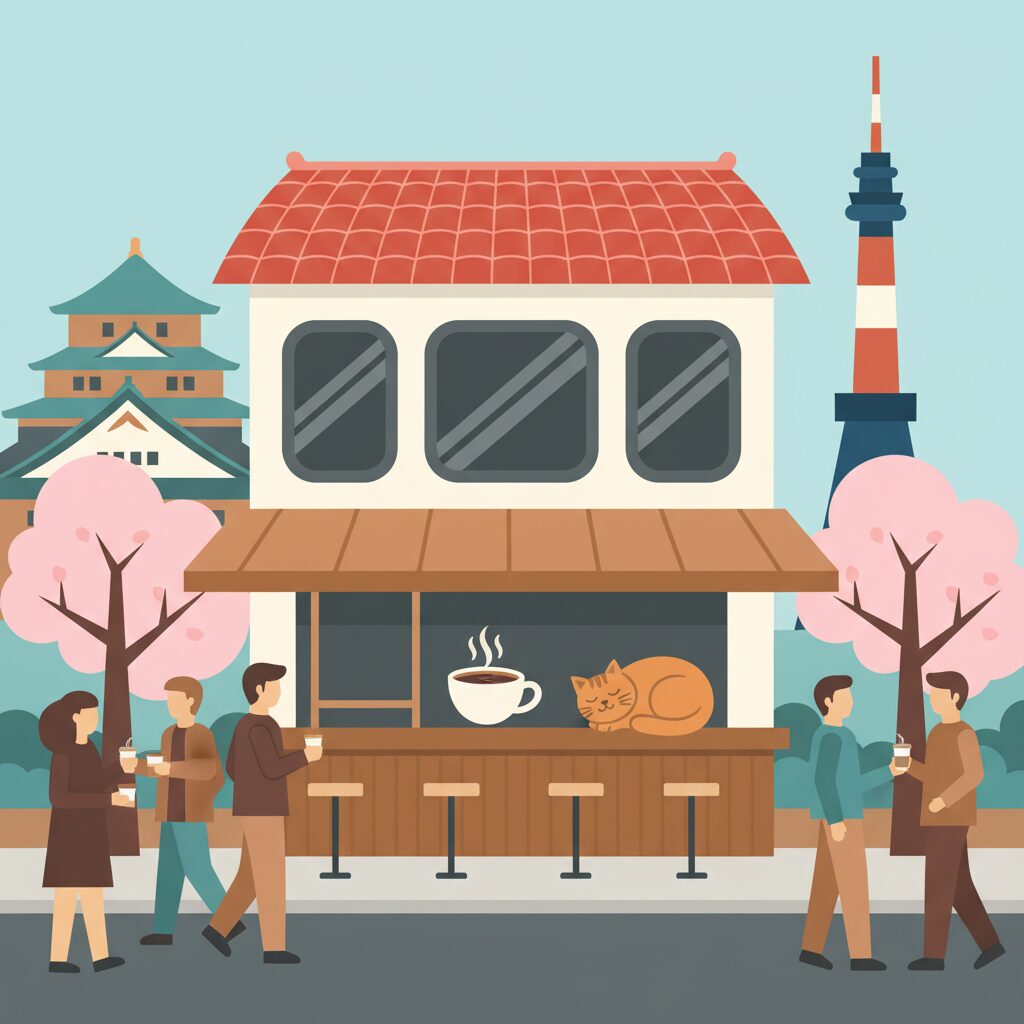
So, you’ve landed in Osaka. You’ve got the apartment, you’ve figured out the trains, and you’ve got that remote gig that lets you work from anywhere. The dream, right? But now comes the real challenge, the daily grind of finding a place to actually do the work. You could hit the local Starbucks, sure. You’ll get your reliable Wi-Fi, your Grande Latte, and the same transient, placeless feeling you could get in Seattle or Singapore. It’s an option. It’s fine. But it’s not Osaka. If you want to tap into the city’s actual rhythm, its deep, stubborn, and surprisingly warm heart, you need to look past the green mermaid. You need to find a kissaten.
A kissaten, or 喫茶店, isn’t just a coffee shop. It’s a time machine. Step inside and you’re walking into a living room that’s been serving the same neighborhood since the 1970s. The air is thick with the ghosts of a million conversations, the scent of dark-roast coffee, and, very often, the faint, sweet smell of cigarette smoke. The seats are worn-in velvet, the lighting is a moody amber, and the music is quiet jazz drifting from a dusty speaker. This isn’t a place for a quick caffeine hit. It’s a destination. For the remote worker, it presents both a perfect sanctuary and a complex social puzzle. Cracking the code of the kissaten isn’t just about finding a desk for the day; it’s about understanding the unwritten rules of Osaka society. It’s about learning to read the air, appreciate true value, and find your own quiet corner in this loud, brilliant city.
As you settle into the timeless allure of Osaka’s kissaten, you may also enjoy exploring the city’s local shopping culture that reflects another vibrant facet of its identity.
The Kissaten Code: More Than Just Coffee and Wi-Fi
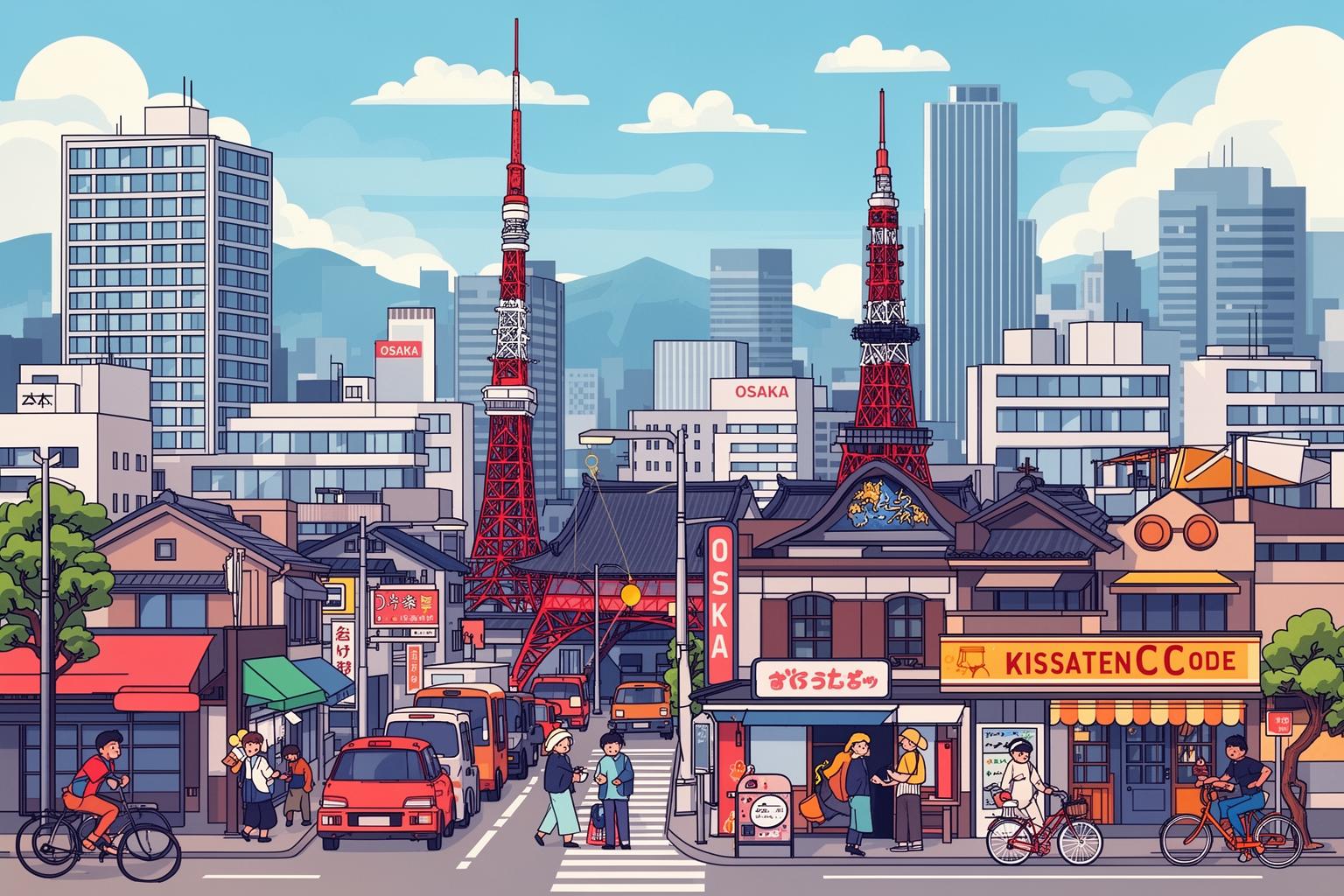
Your initial error is assuming a kissaten is merely a co-working space that also serves coffee. It’s not. It’s a delicate ecosystem, a semi-public, semi-private environment shaped by decades of unspoken understanding. The owner, often a reserved man or woman in their 60s or 70s known simply as “Master,” is not just a barista. They are the proprietor and guardian of the shop’s ambiance. Their movements are precise, economical, and quiet. They observe everything, not out of suspicion, but from a duty to preserve the shop’s unique harmony, its wa. As a patron, especially with a laptop, your main role is to avoid disturbing that harmony. This demands a vital skill for navigating Japan: reading the air.
Reading the Air (空気を読む – Kuuki wo Yomu)
In Tokyo, social rules can feel stricter, more explicit. There’s a tangible pressure to adhere to a particular standard of public conduct. In Osaka, the rules are equally real, but they’re conveyed through a nod, a glance, a subtle shift in mood. This is kuuki wo yomu. It’s the craft of situational awareness. When you step into a kissaten, pause for a moment. Don’t just hunt for power outlets. Observe the other customers. Are they salarymen engaged in a quiet, smoky meeting? Elderly women chatting softly from the neighborhood? A university student absorbed in a textbook, highlighting with monastic focus? These are your signals. The collective atmosphere of the room sets the rules.
Your laptop, your typing, your very presence as a foreigner tapping away at a MacBook can cause disruption. The click-clack of your keyboard can sound like a drum solo in a library. The glow from your screen can intrude on the dim, amber lighting. The unspoken contract is clear: you are a guest here. Your aim is to blend into the background, becoming another quiet fixture in the room. If the Master shoots you a long, hard look when you open your laptop, it’s not hostility. It’s a question: “Are you going to be one of those customers?” Your calm, focused demeanor is the answer: “No, sir. I’m just here to work quietly like everyone else.” This mutual, wordless understanding is deeply Osakan—a direct, non-verbal exchange that cuts straight to the point without fuss.
The “Morning Service” Mindset: Osaka’s Logic of Value
To truly appreciate the kissaten, you need to grasp Osaka’s fixation on value. It’s not about cheapness; it’s about being savvy. It’s the principle of otoku (お得)—getting a great deal, a little extra that makes the transaction feel worthwhile. Nowhere is this clearer than in the tradition of “Morning Service,” or simply mōningu. Between, say, 7 AM and 11 AM, ordering a single cup of coffee, which might cost around 400 or 500 yen, comes with a full breakfast set for free or for a small additional charge. This includes a thick slice of toasted shokupan with butter, a hard-boiled egg, and sometimes a small pot of yogurt or a modest salad.
This isn’t a marketing ploy; it’s embedded in the city’s economic and social fabric. It’s a gesture of goodwill, a way of saying, “Thanks for starting your day here. Here’s some nourishment.” This pragmatism is pure Osaka. In Tokyo, you might find cafes selling a single piece of artisanal toast for 1,000 yen, emphasizing the aesthetics, the brand, the story. In Osaka, the story is the deal itself. A good deal signals a smart business, and Osakans respect smart business. For a remote worker, the mōningu is a golden opportunity. It lets you claim a table in the morning, satisfy your hunger, and enjoy coffee—all for the price of one drink. It’s a fair exchange. You give them your business early, when they have room, and they provide breakfast. It’s a handshake deal, a practical arrangement benefiting everyone. Embracing the Morning Service is your first step toward thinking like a local.
Navigating the Kissaten Landscape: A Neighborhood Guide for the Remote Worker
Osaka isn’t a monolith, and neither are its kissaten. The character of a coffee shop is deeply connected to the neighborhood it serves. Your perfect remote work spot in the busy business center of Umeda will feel completely different from a quiet retreat in a sleepy residential shotengai. Choosing your location is about more than just convenience; it’s about selecting the kind of workday you want and the slice of Osaka life you wish to experience.
Umeda & The Salaryman Sanctuaries
The area around Osaka Station and Umeda is the city’s commercial powerhouse. Life here moves at a relentless pace. The kissaten mirror this energy. Many sit underground, within the maze-like corridors of Whity Umeda or Diamor Osaka, or are tucked into the first few floors of aging office buildings. These are not spots for leisurely reflection. They are functional, efficient, and almost always filled with cigarette smoke. They serve as the unofficial breakrooms and meeting places for the city’s countless salarymen.
The atmosphere here is transactional. The coffee is dark, strong, and served quickly. Seating is often tight, meant for brief stops. You’ll see men in suits absorbed in documents, quietly making calls on their flip phones, or simply staring off, mentally recharging before the next meeting. As a remote worker, you can use these spots, but you must match their tempo. Arrive, order, work intensely for an hour, then leave. Spreading out your gear, occupying a four-person booth alone, or lingering for hours over a single American coffee is a major breach of etiquette. These spaces are about business; in Osaka, that means not wasting time — yours or anyone else’s.
Shinsaibashi & Namba: The Performative and the Hidden
Namba is Osaka’s chaotic, dazzling entertainment district. It’s a sensory overload of neon, noise, and crowds. The kissaten here serve a different role: they offer refuge. Some along the main roads embrace the spectacle. Picture grand, multi-story venues with gaudy chandeliers, red velvet décor, and menus boasting towering parfaits. These places are performances themselves, remnants of the bubble-era extravagance, often packed with tourists and shoppers resting their feet. They can be suitable for work due to their size lending anonymity, but they often lack the soul of a true neighborhood spot.
The real treasures of Namba are hidden away. Down narrow side alleys, on the second floor of unassuming buildings, you’ll find them. A simple sign and a steep staircase lead to a quiet room worlds apart from the chaos of Dotonbori below. Here, the Master rules, and regulars fiercely guard the peace. These are places where you can genuinely disappear and focus. Finding one feels like a secret revealed. It’s a reminder that beneath Osaka’s loud, sociable exterior lies a deep respect for quiet and personal space. The city performs for the crowd, but its people recharge in solitude.
Nakazakicho & Tenma: The Hip and The Historic
If the Umeda kissaten is your stern father and the Namba one your flamboyant uncle, then the coffee shops of Nakazakicho and Tenma are your cool older cousin. These neighborhoods, with their preserved pre-war wooden houses and winding narrow streets, have become sanctuaries for artists, creatives, and young entrepreneurs. The kissaten here represent a new breed, a perfect blend for the modern remote worker. They often inhabit beautifully renovated old buildings, preserving their Showa-era charm—dark wood, tiled floors, vintage furniture—while updating the interiors.
In these spots, you’re more likely to find specialty coffee beans, house-made cakes, and importantly, Wi-Fi and power outlets. The owners tend to be younger, passionate about coffee culture, and accustomed to seeing laptops. The atmosphere is relaxed, creative, and communal. You might spot a graphic designer working on a tablet at one table and a musician composing on a laptop at another. This is where Osaka’s reverence for tradition meets its innovative, entrepreneurial energy. It’s not about tearing down the old to build new; it’s about making the old relevant and useful again. For foreigners seeking a comfortable, welcoming workspace that still feels authentically Japanese, these neighborhoods hit the sweet spot. They prove you don’t have to sacrifice comfort for character.
The Unspoken Etiquette of the Remote Kissaten Warrior
So you’ve discovered a promising spot. You’ve sensed the atmosphere, gauged the vibe, and you’re ready to settle in. Now comes the challenging part: being a good customer. This is where many foreigners, used to the anything-goes service culture in their home countries, often make mistakes. In a kissaten, you are entering into a relationship—however temporary—with the Master and the space. Your behavior will determine whether you’re welcomed back or silently judged as a nuisance. Follow these unspoken rules, and you’ll earn your place.
Ordering Strategy: The One-Drink Dilemma
Let’s be clear: a kissaten is not a public library. The price of your coffee is like rent. Sitting for four hours on a single 450-yen “blend coffee” is, frankly, rude. It’s taking advantage of the Master’s hospitality. The unspoken rule is that your right to the seat diminishes over time. After about 90 minutes to two hours, you should consider your next step. This doesn’t mean you must leave, but you should order something else.
This is a simple gesture of respect. Order another coffee. Try the “cream soda”—a bright green melon soda topped with a scoop of vanilla ice cream, a nostalgic classic. Or go for a slice of the often-excellent homemade cheesecake or a toast set. This signals your understanding of the arrangement. You acknowledge that you are using their resources—their electricity, water, and space—and you are willing to compensate them fairly. This is deeply connected to the Osakan sense of fairness. As a city of merchants, they respect fair exchange. Be a good business partner, and they will treat you like a valued customer, not a freeloader.
The Great Power Outlet Quest
Many classic kissaten were built long before portable computers existed. Power outlets are often scarce, hidden behind planters, or reserved for the staff’s vacuum cleaner. The modern café habit of immediately searching for an outlet and claiming it as your own doesn’t apply here. Assuming you can use one is a mistake. Unplugging a lamp to charge your phone is a cardinal sin.
Your strategy should be twofold. First, arrive fully charged. Plan your workday around your battery life. This will also make you more efficient. Second, if you absolutely need power, you must ask. Find a quiet moment when the Master isn’t busy. Politely approach and ask, “Sumimasen, konsento o tsukatte mo ii desu ka?” (“Excuse me, may I use an outlet?”). Point to the one you have noticed. More often than not, if you’ve been polite and respectful, they will grant permission with a simple nod. But you must ask. Asking shows deference and respect for their ownership of the space. It transforms what might be a theft of electricity into a courteous request—and that makes all the difference.
To Talk or Not to Talk: The Volume Control
Kissaten are sanctuaries of quiet. The ambient sounds—ceramics clinking on saucers, newspapers rustling, low conversation murmurs, soft jazz from the speakers—are part of the carefully crafted atmosphere. This isn’t the place for your quarterly sales call. Taking a Zoom meeting in a kissaten is like setting off a fire alarm in a monastery. It disrupts the peace for everyone.
If you must take a call, step outside. No exceptions. Even loud typing can be disruptive. If you’re a noisy, forceful typist, try to soften your keystrokes. Be mindful of your phone; turn off notification sounds. Your personal soundscape should not intrude on the public space. This is perhaps the biggest cultural difference from Western coffee shops, which often double as noisy, chaotic offices. In Japan, the boundary between personal and public space is crucial. The kissaten exists as a shared bubble of calm. Your role is to protect that bubble, not burst it. Your reward is the chance to share in that precious, productive silence.
Why the Kissaten is the True Heart of Osaka
After weeks of searching, you’ll find it. It may be a tiny spot with just five tables, run by an elderly woman who quietly refills your water glass without saying a word. Or it could be a slightly larger place where local shop owners gather for their mid-afternoon coffee and gossip. You’ll know it’s the right one because when you step inside, it will feel less like a commercial business and more like coming home. The Master will offer you a small, nearly imperceptible nod of recognition. You’ve become a regular. You’ve earned your seat.
This journey is about more than simply finding Wi-Fi. It’s a crash course in the Osakan character. In these velvet booths, you witness the city’s pragmatism during the Morning Service, its respect for quiet diligence in the silently studying students, and its deep-rooted loyalty in the regulars who have visited for thirty years. Osakans are often stereotyped as loud, boisterous, and flashy. And they can be. But the kissaten shows the city’s other side: its appreciation for things built to last, its belief in fair dealing, and its need for quiet spaces to retreat from the world.
Unlike the fleeting trends of Tokyo, where cafes appear and vanish in the blink of an eye, the kissaten endures. It stands as a testament to a city that values substance over style, loyalty over novelty, and a good cup of coffee in a comfortable chair over any amount of hype. Finding your kissaten is about more than productivity. It’s about connection. It’s the moment you stop being a temporary visitor just working in Osaka, and start becoming a quiet, contributing part of its daily, rhythmic, coffee-scented life.