Japan in the summer is a full-body experience. It’s the oppressive, wet-blanket humidity that settles over the city from morning till night. It’s the incessant, high-pitched hum of the cicadas, a sound so constant it becomes a form of silence. And for most foreigners, it’s the season of festivals—the grand, immaculately choreographed spectacles you see on postcards. You picture Kyoto’s Gion Matsuri, with its colossal, slow-moving floats, or the massive firework displays over Tokyo Bay. These are magnificent, no doubt. They are powerful symbols of Japanese culture, polished to a perfect shine for a global audience. But they are not the whole story. Living in Osaka, you start to realize the city moves to a different rhythm, a beat that doesn’t always make it into the guidebooks. One night, deep in August, with the windows of my tiny apartment open to catch a non-existent breeze, I heard it. A distant, hypnotic drumbeat, punctuated by a strange, wailing voice and the unmistakable riff of an electric guitar. It wasn’t coming from a concert hall or a famous shrine. It was coming from the local elementary school playground. This wasn’t a performance for tourists. This was something else entirely. This was my introduction to Kawachi Ondo, and my first real glimpse into the unvarnished, unapologetic soul of eastern Osaka.
This isn’t a guide on where to go or what to see. It’s an attempt to decode the city’s heartbeat by exploring one of its most potent, local traditions. It’s about understanding why Osaka feels so different, why its people seem to operate on a unique frequency. To understand Kawachi Ondo is to understand the bedrock of this city—a foundation of community, pragmatism, and a joyful disregard for unnecessary formality. It’s an experience that tells you more about daily life in Osaka than a dozen trips up the Umeda Sky Building. This is a journey into the city’s eastern wards, the historical Kawachi region, the cradle of this powerful folk music.
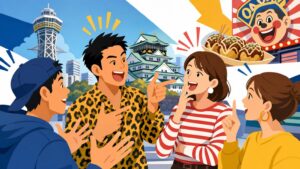
Amid the city’s pulsating festival culture, the allure of Osaka deepens with its everyday boke and tsukkomi banter, revealing a playful spirit that mirrors the raw energy of Kawachi Ondo.
What Even is Kawachi Ondo? More Than Just Music
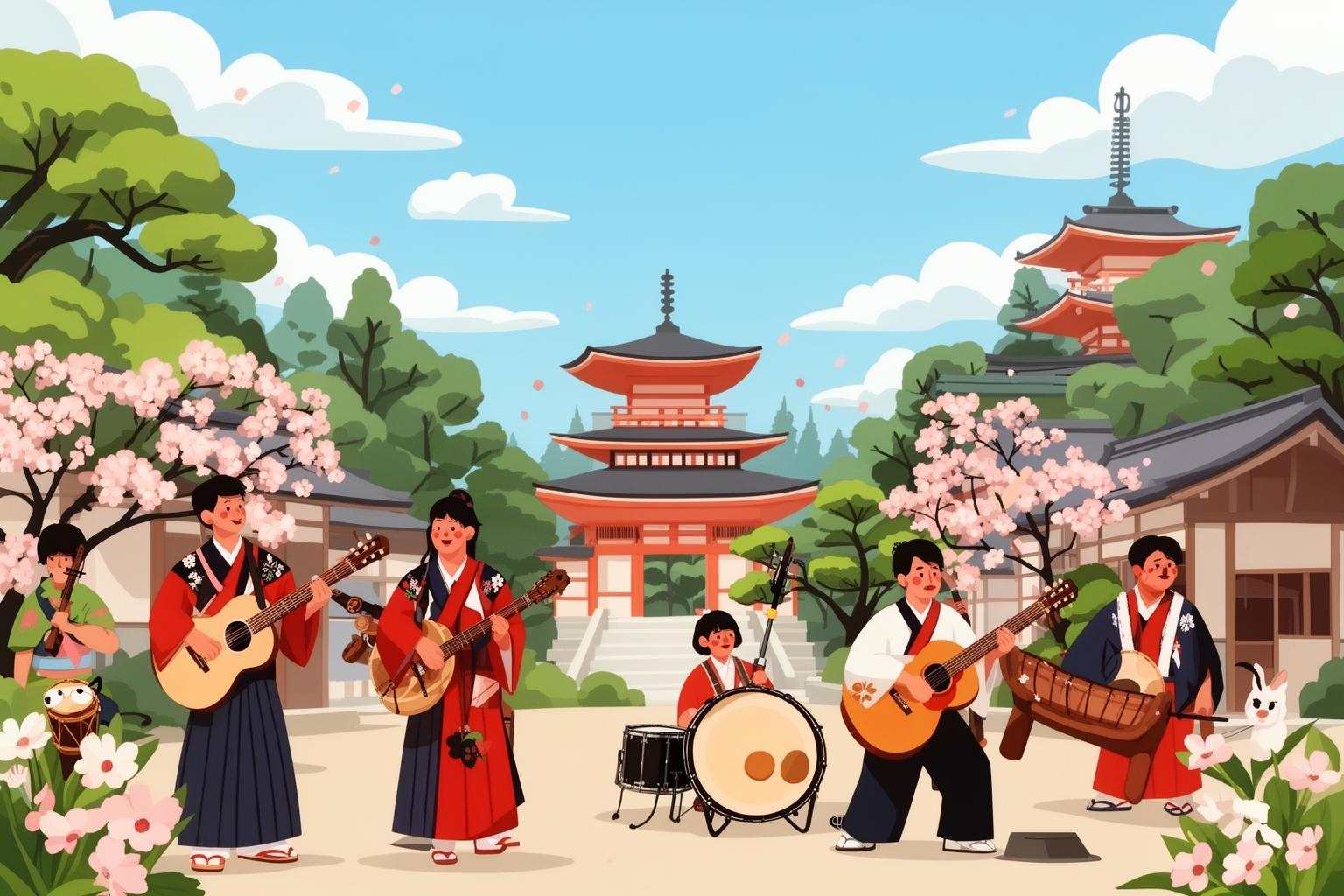
So, what is this sound that draws people out from their air-conditioned apartments into the sweltering summer night? The first time you hear Kawachi Ondo, it can be startling. It resists easy categorization. It’s folk music, certainly, but it’s worlds away from the delicate flute-and-shamisen melodies typically linked with traditional Japan. At its core, Kawachi Ondo is storytelling. The singer, or Ondotori, stands atop a tall wooden tower called a yagura, surrounded by drummers and musicians. From this vantage point, they don’t just sing; they narrate. They weave epic tales, often inspired by local history, Buddhist scriptures, or even yakuza stories, using a raw, guttural, and incredibly expressive voice. The lyrics are often improvised, incorporating jokes about local politicians or shout-outs to familiar faces in the crowd.
Then there’s the music. The foundation is the relentless, driving beat of the taiko drums, a simple yet powerful rhythm that seeps into your bones. But what truly confounds a first-time listener is the sound piercing through the drumming: a screaming, psychedelic electric guitar. Yes, an electric guitar. Sometime during the post-war era, this emblem of Western rock and roll was integrated into the tradition without raising any eyebrows. The combination is wild, anachronistic, and uniquely Osaka. It’s a perfect sonic metaphor for the city itself—deeply rooted in tradition yet unyieldingly modern, pragmatic, and eager to borrow whatever enhances the party. The music is repetitive, revolving around a few core melodies, intended to be hypnotic. It’s not concert music for quiet reflection. It’s functional music, created for one purpose: to make you dance.
This all originated in the Kawachi region, the flat, industrial plains of eastern Osaka prefecture—cities like Yao, Higashiosaka, and Kashiwara. This area has always been working-class, home to farmers, factory workers, and small business owners. The music reflects this background. It’s not refined or courtly. It’s earthy, emotional, and loud. It’s the sound of a community unwinding after a long week of hard labor—a tradition passed down not in pristine concert halls, but in dusty temple grounds and community parks.
The Festival Scene: A World Away from Tokyo’s Polish
To grasp the cultural divide between Osaka and Tokyo, one must compare their festivals. A major festival in Tokyo often resembles a grand, meticulously orchestrated spectacle. There are designated viewing areas, velvet ropes, security personnel managing the flow of people, and a clear, almost theatrical boundary between performers and spectators. It’s impressive, beautiful, and sometimes a bit sterile. You are there to observe something extraordinary.
In contrast, a Kawachi Ondo festival is entirely different. You are not merely an observer; you are immersed in the chaos. The venue is seldom a grand temple. More commonly, it’s a school playground, a city hall parking lot, or a small neighborhood park. The perimeter is loosely defined, marked by food stalls run by local business groups and strings of mismatched paper lanterns casting a warm, hazy glow. The air is thick with the scent of grilled squid, sweet soy sauce, and inexpensive beer.
The mood is one of joyous, unpretentious disorder. Toddlers with sparklers weave between the legs of dancing adults. Groups of middle-aged men in casual clothes sit on plastic crates, pouring sake for each other from one-liter cartons. Teenagers linger around the edges, pretending indifference but gradually tapping their feet to the rhythm. There are no velvet ropes here. The only unwritten rule is to find a place and join in. This fundamental difference is central to the Osaka mindset. Life here isn’t a show to be passively watched from a safe distance. It’s a messy, participatory experience, with real value found in involvement rather than mere observation.
The People of the Yagura: Community in Action
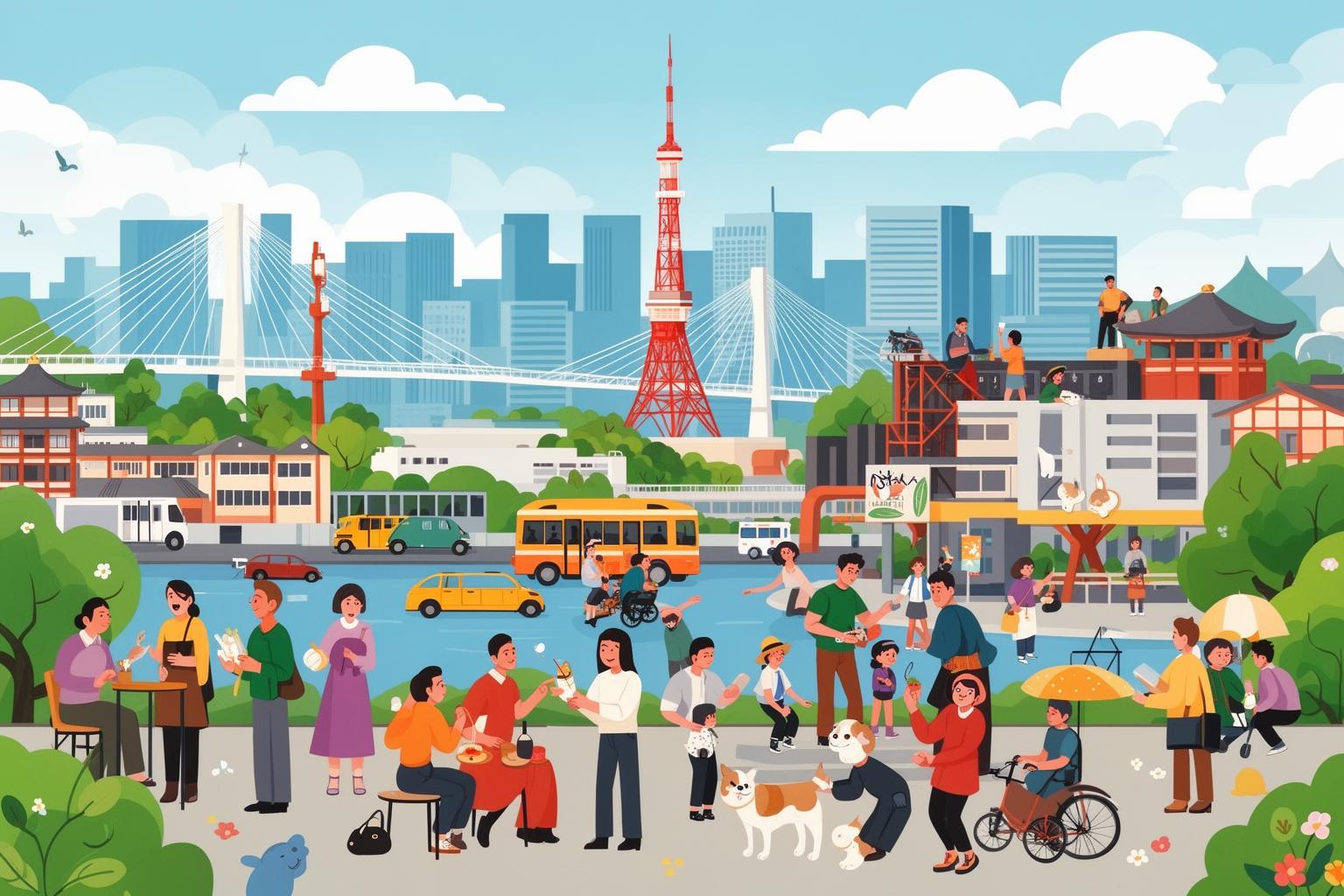
The physical and spiritual heart of the entire event is the yagura. This tall, wooden tower, often hastily built just for the festival, serves as the stage. At the top, the Ondotori commands the scene, microphone in hand, supported by a small group of drummers and musicians. These singers are local legends. They aren’t polished J-Pop idols; rather, they’re frequently the owner of the neighborhood futon shop or a respected community elder with a strong voice and a talent for storytelling. Their fame is intensely local, reflecting an Osaka culture that continues to celebrate its own without needing approval from the media hubs in Tokyo.
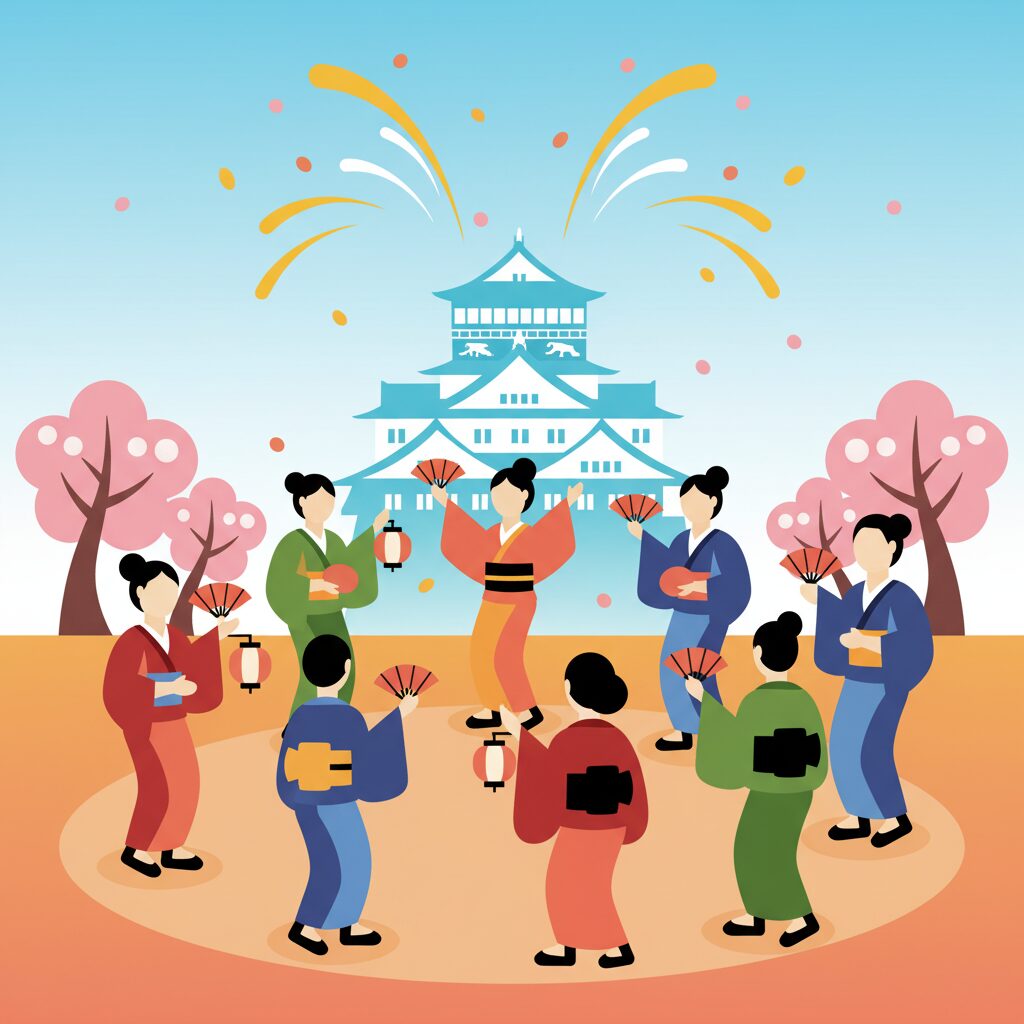
Flowing around the base of the yagura is a stream of people: the dancers. The dance itself, known as Kawachi Ondo Odori, is wonderfully simple. It involves a series of repetitive, easy-to-follow hand gestures and steps, performed while moving in a large circle around the tower. There’s no pressure to be perfect. In fact, striving for perfection would defeat the purpose altogether. The charm lies in the collective experience. You see elderly women, their movements smooth and economical from decades of practice, dancing alongside young salarymen, whose motions are adorably stiff and awkward after a day spent at a desk. Everyone dances together—young and old, seasoned and novice.
As a foreigner, your initial instinct is to stand back and observe. You feel like an outsider at a private family gathering. But this hesitation rarely lasts long. Inevitably, a smiling grandmother or a beer-holding uncle will catch your eye, give you a little nod toward the circle, and mouth the words “Issho ni odorou!” (“Let’s dance together!”). This isn’t a polite, formal invitation. It’s a sincere, heartfelt command. This simple gesture is the real-life embodiment of the cliché that “Osaka people are friendly.” Their friendliness isn’t about polite greetings; it’s about active inclusion. They see you standing at the edge, and their immediate reaction is to pull you into the circle. In Osaka, community is an action.
The ‘Akan Kedo, Maa Ee Ka’ Attitude on Full Display
To fully understand Osaka’s operating philosophy, you need to know the phrase: 「あかんけど、まあええか」(Akan kedo, maa ee ka). It roughly means, “Technically, this isn’t right/allowed, but oh well, it’s fine.” It’s a philosophy of practical pragmatism, and the Kawachi Ondo festival is its natural setting.
You see it everywhere. The tangled mess of extension cords powering the lanterns and speakers would give a Tokyo safety inspector a heart attack. The food stalls might be run by the local PTA, with handwritten signs and questionable hygiene practices that are overlooked in the spirit of community. Maybe the music is a bit too loud for the residential streets, but everyone’s enjoying themselves, so maa ee ka.
This is a concept that foreigners, and even many Japanese from other regions, often misinterpret. It can appear as carelessness or a disregard for rules. But it isn’t. It’s about prioritizing the ultimate goal—in this case, a successful and joyful community festival—over strict adherence to regulations. It’s the belief that as long as no one is harmed and the main purpose is achieved, the minor details can be flexible. This mentality is ingrained in the city’s commercial and working-class roots. It’s about getting the job done efficiently and without unnecessary fuss. In Tokyo, the process is often as important as the outcome. In Osaka, the result reigns supreme. This flexible, adaptable, and slightly chaotic approach to life is one of the city and its people’s most defining traits.
Fueling the Dance: The Unspoken Rules of Festival Food and Drink
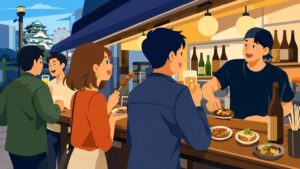
No Japanese festival is complete without the yatai, or food stalls, and a Kawachi Ondo event is no different. Yet, the atmosphere here stands apart. This isn’t a curated selection of artisanal food trucks. Rather, it’s the foundation of Japanese festival cuisine: greasy, salty, and utterly delicious. Mountains of yakisoba noodles sizzle on enormous iron griddles. The scent of takoyaki batter hitting hot, oiled cast iron drifts through the air. Children eagerly reach for chocolate-covered bananas and cartoon-character masks.
The social dynamics of eating and drinking here are a vital part of the experience. You don’t retreat to a quiet corner with your food. Instead, you eat while standing, walking, or dancing, creating a kind of mobile, communal feast. It’s a dance of social navigation, trying to carry your paper plate of noodles through a crowd without mishap. It’s entirely normal to see strangers sharing a patch of pavement, offering each other bites or topping up each other’s plastic cups of beer.
I recall my first time, standing awkwardly with a can of beer, feeling very much like an outsider. A man, likely in his sixties and dressed in a simple yukata, clinked his one-cup sake container against my can and began to ask me in broken English where I was from. Within minutes, his wife had handed me a piece of karaage (fried chicken) from their plate. There was no agenda, no formal introduction—just a spontaneous moment of shared space and shared food. This is the social currency of Osaka. It’s direct, unpretentious, and often centers around the simple, universal joy of sharing a drink and a snack. It’s a social intimacy that can feel startlingly open compared to the more reserved and formal social norms that govern public life in other parts of Japan.
What This Teaches You About Living in Osaka
Spending a night immersed in the hypnotic, swirling atmosphere of a Kawachi Ondo festival reveals more about this city than any textbook ever could. It strips away the common stereotypes of Osaka as merely a foodie haven or a city of loud comedians. Instead, it uncovers the deep, communal, and fiercely local spirit that still thrives, especially in neighborhoods seldom seen by tourists.
It shows that Osaka’s identity is far from monolithic. The city is made up of distinct neighborhoods, each with its own history and pride. The essence of Osaka isn’t found in the shiny shopping malls of Umeda, but rather in schoolyards and temple grounds where generations connect through a shared rhythm. It reveals an Osaka that values participation over perfection and community spirit over strict rules. The blending of electric guitar with traditional folk music perfectly symbolizes the city’s adaptable, innovative, and somewhat rebellious character.
For anyone wondering, “Is Osaka a good place to live?” experiences like this offer the clearest answer. If you seek a life of polished perfection, predictability, and polite, orderly distance, Tokyo may be a better fit. But if you long for connection, appreciate a culture that is a bit rough around the edges but fiercely loyal, and believe the best moments come from spontaneous, unscripted experiences, then Osaka will welcome you wholeheartedly. It will challenge you to let go of your reservations, not fear looking foolish, and join the dance. Because ultimately, living in Osaka means more than standing on the sidelines. The true joy lies in being drawn into the circle, finding your place within the messy, beautiful, and unending rhythm of the city’s authentic heartbeat.