You feel it the moment you step into a business meeting. The air in Tokyo is crisp, measured, a symphony of polite bows and carefully chosen words. Here in Osaka, the atmosphere is different. It’s thick with energy, a little louder, a lot more direct. Someone cracks a joke that lands just on the edge of appropriate. The agenda feels more like a suggestion than a rulebook. You might leave a Tokyo meeting with a stack of perfectly collated documents; you leave an Osaka meeting with a firm handshake and a feeling you’ve just made a real connection, or maybe a real rival. It’s confusing, it’s exhilarating, and it’s the modern echo of a centuries-old mindset: the spirit of the akindo, the merchant.
This isn’t something you’ll find in a tourist guide. It’s the invisible software running the city’s hardware. Understanding this akindo spirit is the key to truly grasping professional life here. It explains why your boss might seem obsessed with getting a tiny discount, why a business lunch feels more like a friendly interrogation, and why a deal isn’t really a deal until you’ve shared a few drinks after hours. It’s the rhythm of commerce that has pulsed through these streets for generations, shaping everything from massive corporate negotiations to the way you haggle for a better price at a local shotengai. To work, to thrive, to simply get Osaka, you have to learn the steps to this unique dance. Let’s break down the hustle.
Navigating this dynamic business scene isn’t just about making deals—it’s about cultivating a resilient cost performance mindset that empowers you to thrive in every interaction.
What Exactly is the ‘Akindo’ Spirit?
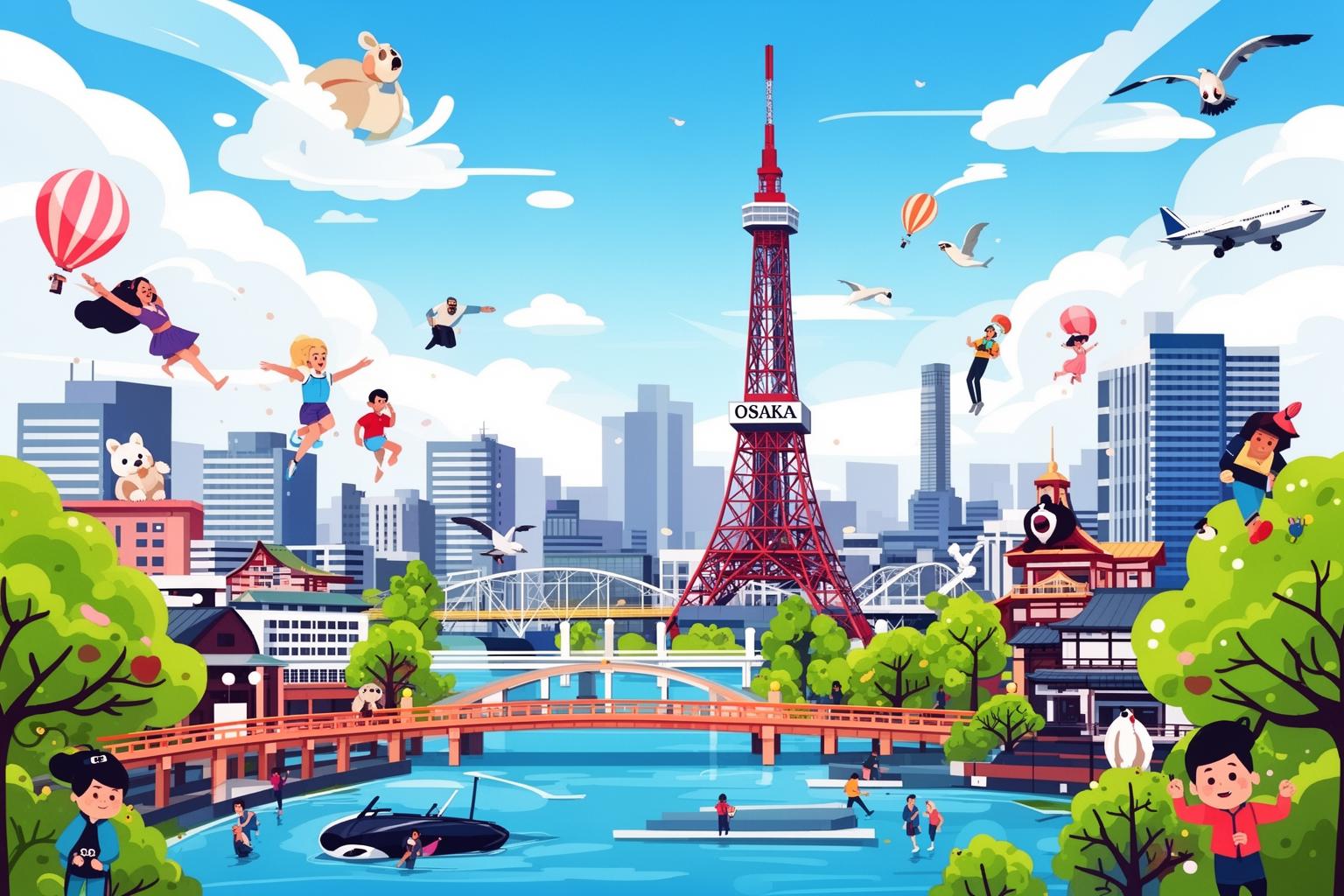
Stroll through the business districts of Umeda or Yodoyabashi, and you’ll find a city that rivals Tokyo in modernity. Shining towers, sharp suits, and the relentless tempo of Japanese corporate life abound. Yet beneath this surface, the foundational ethos is distinct. Tokyo’s business culture was deeply shaped by the samurai class—a realm defined by hierarchy, formality, and unwavering loyalty to the institution. Osaka, however, was forged by merchants. The akindo spirit isn’t about serving a lord; it’s about striking deals, turning a profit, and building a reputation that enables you to do it all again tomorrow.
More Than Just a Merchant
The word akindo (商人) literally means “merchant” or “trader.” But in Osaka, it represents so much more than a job title. It embodies an identity and a worldview rooted in pragmatism, resourcefulness, and a profound understanding of human nature. While the samurai prized honor and formality, the akindo prized results and relationships. Status was earned through business savvy rather than birthright. This historical difference is key. It fostered a culture where practicality is valued over formality, where getting straight to the point outweighs adhering to strict protocol, and where personal reliability matters more than the company name on your business card.
The Three Pillars: Shobai, Soroban, and Shin’yo
To fully grasp the akindo mindset, you must understand its three core elements. These are not abstract ideas; they are guiding principles you’ll witness daily in the Osaka workplace.
Shobai (商売): The Art of the Deal
Shobai is the craft of business pursued with a passion that almost feels like sport. Osakans savor the buying and selling process—the negotiation, the back-and-forth, the strategic maneuvering—it’s all part of the game. A good deal isn’t solely about the financial gain; it’s about the satisfaction of a skillfully played interaction. This is why haggling is deeply ingrained in the culture. It’s not just about saving money; it’s a form of communication and a sign of engagement. When a shop owner throws in a little omake (a small extra), they’re not merely clearing stock—they’re investing in a relationship, turning a one-off sale into an ongoing connection. In corporate settings, this manifests as a love for negotiation. Osaka business partners want to feel they’ve earned the deal, that both sides have pushed and pulled to reach a fair, mutually beneficial agreement.
Soroban (算盤): The Abacus Mind
The soroban, or abacus, symbolizes the Osakan approach to finance. It exemplifies a sharp, unsentimental focus on the bottom line. People here are famously cost-conscious—a trait often misunderstood as kechi (stingy). But it’s not about being cheap; rather, it’s an aversion to waste and an obsession with value. An akindo has no qualms paying a premium price if the value is clear. They want to know precisely where every yen goes and what it achieves. In business, this means being ready to justify your costs. Fluff and flashy presentations won’t cut it. The implicit question in every negotiation is: “Cut the nonsense. What’s the real price, and what do I actually get for it?” This pragmatism can be refreshing once you’re accustomed to it. It’s a culture that honors efficiency and intelligent economics.
Shin’yo (信用): The Currency of Trust
This pillar is the most vital. Shin’yo combines trust, credit, and reputation into one. In a city built by merchants sealing deals with a handshake, your word was your bond, and this legacy remains. A contract is merely a formality; the true agreement depends on personal trust between individuals. An akindo would rather conduct business with a slightly less-qualified person they trust than a complete stranger with an impeccable resume. This is why so much of Osaka’s business life revolves around cultivating personal relationships. Your shin’yo is your most valuable asset. It takes years to build and can be shattered in a moment. It’s the unseen ledger that determines who answers your calls, who offers you a good price, and who stands by you when challenges arise.
The Akindo Mindset in the Modern Workplace
How does this historical spirit express itself in a 21st-century office? It appears in the communication style, the meeting culture, and the overall pace of daily work. For newcomers, especially those coming from more structured corporate settings, it can be quite a shock to the system.
Meetings are Conversations, Not Presentations
In a typical Tokyo corporation, meetings are performances. Agendas are distributed beforehand, presentations are meticulously prepared, and speaking out of turn is a serious faux pas. Decisions are often made behind closed doors, with the meeting serving mainly as formal approval.
An Osaka meeting is a completely different experience. It’s lively, sometimes chaotic, and conversational. People interrupt, ask blunt questions, and crack jokes. The goal isn’t to passively receive information but to actively challenge an idea until its strengths and weaknesses emerge. A presenter from Tokyo might be appalled when their carefully crafted 50-slide deck gets interrupted after slide three by a senior manager asking, “This is all very nice, but how does it actually make us money? And can your team handle this? I heard Tanaka-san is already overloaded.” This isn’t intended to be disrespectful. It’s the soroban mind at work, cutting straight to the core issues. They’re testing the idea, but also testing you. Can you think on your feet? Can you defend your proposal with confidence and good humor? Meetings are about building consensus through debate, not delivering a polished product.
The Power of ‘Chotto Ee?’ (Got a Minute?)
One of the most common phrases you’ll hear in an Osaka office is “chotto ee?” It’s the equivalent of tapping someone on the shoulder. Rather than drafting a formal email and booking a 30-minute meeting next Tuesday, an Osaka colleague will simply walk over to your desk to start a conversation. This preference for direct, informal, and immediate communication is a defining feature of the akindo spirit. It’s efficient, solves problems swiftly, strengthens personal bonds, and creates an environment where information flows freely rather than getting stuck in formal channels. Those accustomed to the sanctity of their personal workspace and the formality of scheduled interactions may find it intrusive at first, but they quickly learn it’s the fastest way to get things done.
Why Emails Go Unanswered
This preference for face-to-face contact often causes frustration for foreigners: the seeming black hole of the Japanese inbox. You send a well-written, detailed email, and… nothing. It doesn’t always mean you’re being ignored. Often, it signals that the topic warrants a real discussion. The akindo mindset is wary of communication lacking a human element. They want to hear your tone of voice, see the look in your eyes. An email misses that vital information. If something truly matters, you don’t send an email—you pick up the phone or, better yet, walk over and say, “Chotto ee?”
Networking, Osaka-Style: It’s All About Relationships

If business in Osaka is founded on trust (shin’yo), then networking serves as the process of establishing that foundation. Yet here, the approach differs. It focuses less on merely gathering contacts and more on nurturing a community.
Beyond the ‘Meishi Kokan’ (Business Card Exchange)
Throughout Japan, exchanging business cards (meishi kokan) is a key business custom. In Tokyo, this can be an elaborate ritual involving bows and careful placement. In Osaka, while the ritual is observed, the emphasis quickly shifts to what follows. The card acts merely as an entry point to the conversation. An Osaka businessperson will notice your company and title but is much more interested in you as an individual. Their questions come quickly and personally: “Where are you originally from? Oh, Kobe? My cousin lives there! Are you a fan of the Hanshin Tigers? What’s your favorite ramen shop?” They seek common ground, a way to create a genuine human connection. Their aim is to move you swiftly from being a “business contact” to someone they truly know.
The ‘Nomikai’ as a Business Tool
Drinking parties, or nomikai, are a fundamental part of corporate culture throughout Japan. In Osaka, however, they act as an essential extension of the boardroom. This is often where the real work happens. Hierarchical office structures relax, and the rigid divide between tatemae (one’s public facade) and hon-ne (one’s true feelings) begins to fade. Over plates of kushikatsu and glasses of beer, you’ll hear what your boss really thinks about the new project. It’s where a negotiation deadlock can be broken with laughter and mutual understanding. Trust is built in these informal settings. Demonstrating that you can be both a dependable and enjoyable drinking companion is, in a way, part of proving you’ll be a reliable business partner. Constantly declining nomikai invitations is viewed as a lack of team spirit—a sign you’re unwilling to invest in the relationships crucial for doing business well.
The “Who You Know” Factor
The ultimate aim of this networking is to become embedded in the web of trust that supports the city’s commerce. Introductions are everything. An Osaka company will almost always opt to work with someone introduced by a trusted contact. A cold call or unsolicited proposal rarely succeeds, no matter how impressive. The first question asked is always, “Who introduced you?” This isn’t about exclusion but about managing risk. In a culture that prizes shin’yo above all else, a personal recommendation is the strongest possible guarantee. Your network serves as both your safety net and your ladder.
Common Misunderstandings for Foreigners
The akindo way of life can be fraught with cultural misunderstandings for those new to it. What appears as a flaw from one viewpoint is actually a feature from another. Decoding it requires rethinking your own assumptions.
Is it ‘Kechi’ (Stingy) or Just Smart?
The most enduring stereotype about Osaka people is that they are kechi, or stingy. You might notice colleagues splitting a lunch bill down to the exact yen or spending considerable time discussing the cost-effectiveness of a new office coffee machine. But calling this stinginess misses the point. It reflects the soroban mindset in action — a deep respect for money and disdain for waste. An Osakan will proudly share the great bargain they found. It’s a mark of cleverness, not cheapness. In a business setting, when your Osaka client scrutinizes every item on your invoice, they aren’t being difficult. They are participating in the process and demonstrating that they take your proposal seriously by evaluating its value. If you can confidently justify your costs and prove the worth, you will gain their respect.
Are They Joking or Are They Serious?
Humor serves as a social and business lubricant in Osaka. Jokes help to break the ice, soften criticism, and build rapport. This can be quite confusing. Your boss might listen to your presentation, laugh, and say, “Well, that’s a completely crazy idea!” Your spirits might fall, but then you catch a sparkle in their eye. This often acts as a form of stress-testing. They offer direct feedback wrapped in humor to gauge your reaction. Do you become defensive? Or do you laugh along and confidently defend your “crazy” idea? Learning to interpret this humor is a vital skill — it’s part of the test. The key is to observe the context and non-verbal cues. More often than not, the humor signals they feel comfortable enough to let their guard down.
The Directness Dilemma
Japanese communication is famously indirect and high-context. But Osaka stands out as the exception to this rule. People there are often strikingly direct. They say exactly what they think, often without the usual verbal softeners common elsewhere in Japan. A client might bluntly say, “Your price is too high,” or “I don’t like this design.” For foreigners accustomed to the subtlety of polite, indirect Japanese, this can seem rude or aggressive. However, it is vital to understand that this directness arises from the akindo’s emphasis on efficiency. It is a form of respect. It shows they regard you as a serious partner and do not want to waste anyone’s time by being indirect. They are, in fact, paying you the compliment of getting straight to the point.
The Enduring Spirit of the Merchant City
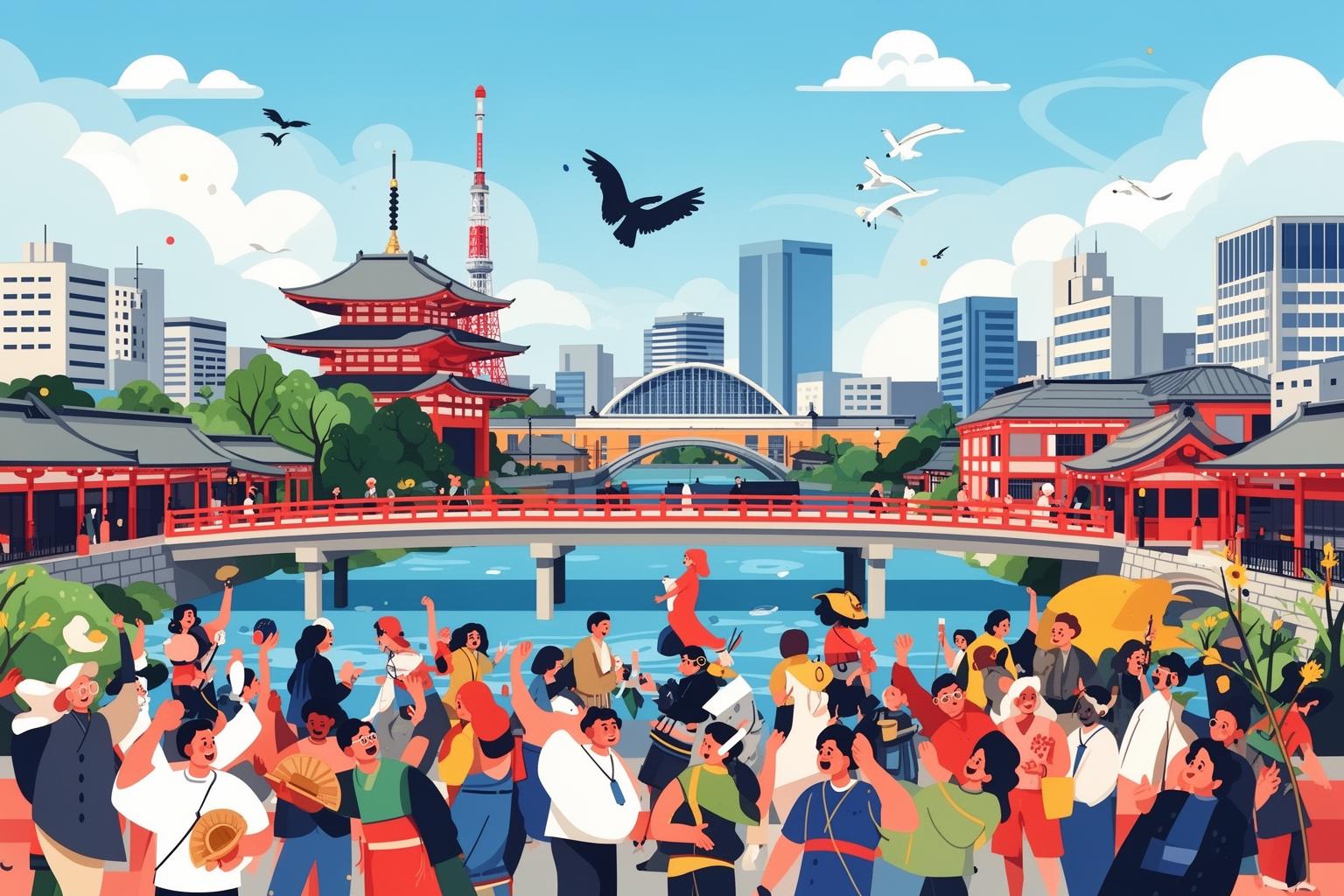
Living and working in Osaka means immersing yourself in a culture that is proudly and defiantly distinct. The spirit of the akindo is not a relic of the past; it remains a vibrant, living force that influences every aspect of the modern professional environment. It can be felt in the lively energy of a business lunch, the sharp questioning during meetings, and the warm camaraderie shared over after-work drinks.
This culture is founded on a unique trinity: the pragmatic, value-focused mindset of the soroban; the playful, strategic skill of the deal, or shobai; and the strong personal trust known as shin’yo. It can be demanding. It requires you to be quick-witted, socially adept, and always prepared to prove your worth. But once you grasp the underlying logic—the deep respect for honesty, the emphasis on efficiency, and the crucial importance of human connection—you’ll find a way of conducting business that is not only effective but also refreshingly genuine. In the merchant city of Osaka, your reputation serves as your resume, your relationships are your wealth, and a good, honest hustle is considered the highest form of art.