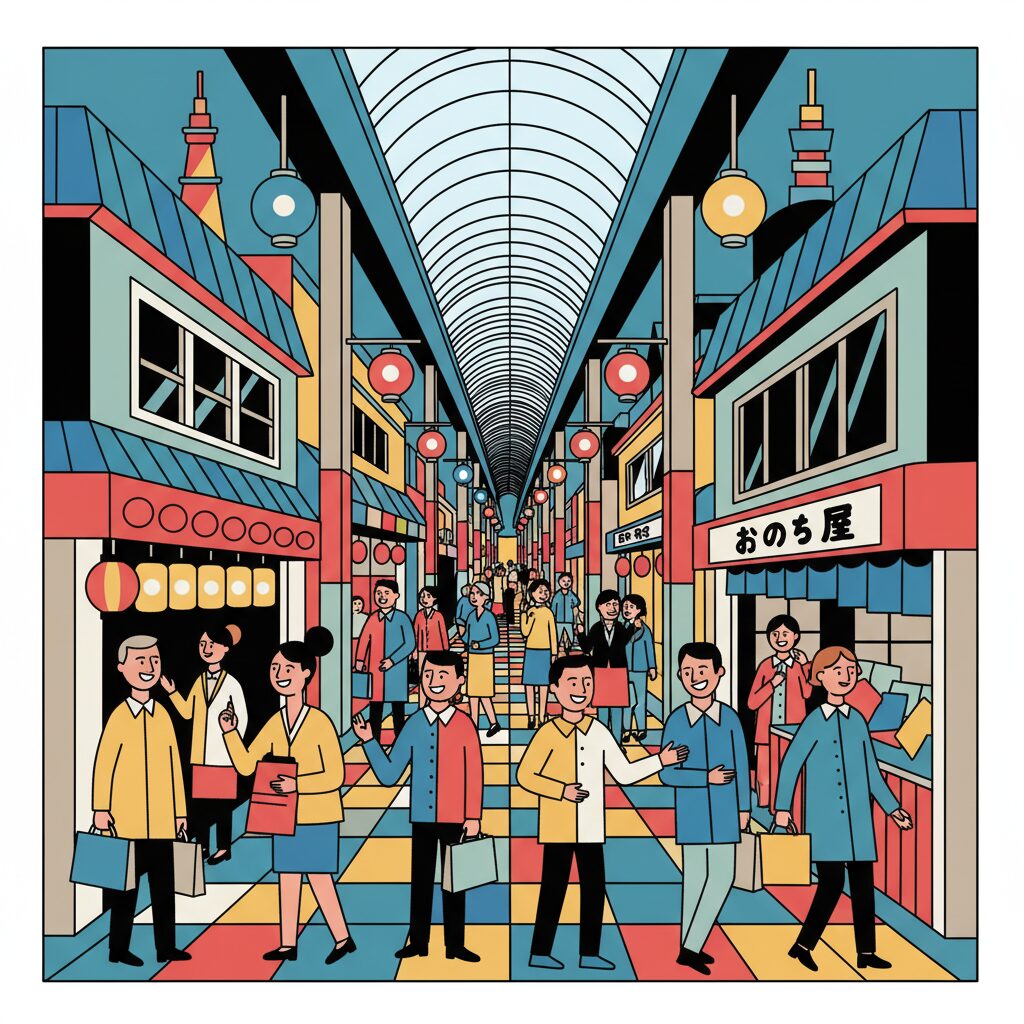
You’re just trying to buy some apples. You walk into the covered arcade, a river of sound and scent, and spot a fruit stand piled high with gleaming produce. In Tokyo, this would be a swift, silent mission. You point, you pay, you leave. A thirty-second operation of polite precision. But this is Osaka. You point to the apples, and the woman behind the counter, her face a roadmap of good humor, launches not into a transaction, but a conversation. “Oh, these are the best today, honey! Sweet as a first love! Where are you from? Your Japanese is pretty good! You making a pie? No, no, don’t use these for a pie, they’re too crisp. You eat them fresh. For a pie, you need those over there.” Ten minutes later, you walk away with your apples, a bag of different, softer apples for a pie you hadn’t planned to bake, a new recipe for apple crumble, and the shopkeeper’s firm opinion on yesterday’s baseball game. You came for fruit; you left with a full-blown cultural exchange.
This isn’t an anomaly. This is the engine of daily life in Osaka. The city’s `shotengai`, or shopping arcades, are more than just commercial thoroughfares; they are vibrant, chaotic stages where the unique conversational commerce of Osaka is performed daily. For a foreigner accustomed to the efficient, arm’s-length service of other global cities, or even the polished reserve of Tokyo, this can be bewildering. Is it friendly? Is it intrusive? Am I doing it right? Understanding this dynamic is crucial to understanding Osaka itself. It’s not about haggling or getting a deal; it’s about participating in a social ritual where the human connection is the real currency. These arcades are the living, breathing heart of the city’s merchant soul, and learning their language is your entry ticket into the real Osaka.
Embracing this dynamic interplay of commerce and community, Osaka also delights with everyday traditions like the 500-yen kissaten morning, where even a modest cup of coffee stirs up the city’s vibrant soul.
The Unspoken Contract: Commerce as Conversation
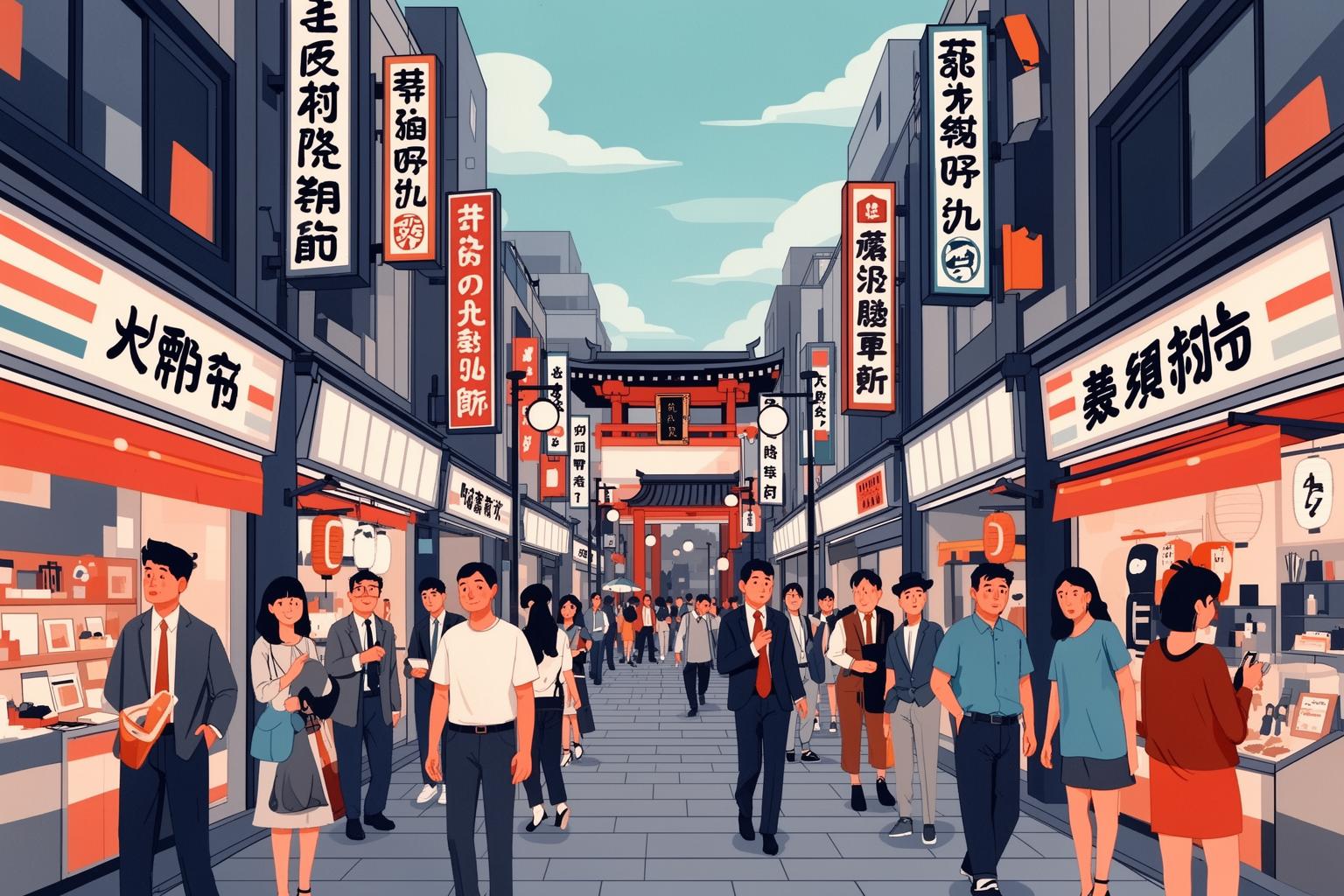
To truly understand Osaka, you need to understand its history. This city wasn’t shaped by samurai and bureaucrats, but by `akindo`—merchants. For centuries, Osaka served as the `tenka no daidokoro`, the “nation’s kitchen,” the economic hub where rice and goods from across Japan were exchanged. In this setting, success didn’t depend on noble lineage or strict adherence to protocol. It relied on your wit, your hustle, your reputation, and above all, your ability to build relationships. A transaction was never merely about the goods; it was about setting the stage for the next deal. Trust was built not through silent, formal exchanges, but through banter, shared jokes, and genuine interest in the person across the counter.
This merchant spirit is deeply ingrained in the city’s culture. The unspoken rule in an Osaka `shotengai` is this: the shopkeeper is more than just a vendor. They are an entertainer, an advisor, and a local figure. In return, customers are expected to be more than just wallets. They are audience members, conversation partners, and neighbors, encouraged to engage. This stands in sharp contrast to Tokyo’s samurai-influenced culture, where formality and clear roles between provider and consumer signify respect. In Osaka, closing that gap and treating a customer like a cousin you haven’t seen in a week is the highest form of good service. They’re not simply selling fish; they’re welcoming you into the community, one conversation at a time.
Deconstructing the `Shotengai` Script
Though it may seem spontaneous, the typical `shotengai` interaction follows a distinct rhythm—a kind of conversational dance. Once you learn the steps, the seeming chaos reveals itself as choreography.
The Opener: Breaking the Barrier
The exchange rarely starts with a sterile, “May I help you?” (`Irasshaimase` is said, but it’s just a formality). The real opening is direct, personal, and meant to immediately break down the customer-seller barrier. It might be a playful command: “Hey, brother, you look like you need some good beef today!” Or an observation: “You’re not dressed warmly enough for this wind!” Or perhaps a frank, unsolicited compliment: “That’s a fancy bag you’ve got there!” The purpose isn’t to ask about your needs; it’s to snap you into a human-to-human interaction—an invitation to drop the formality and join the conversation.
The Inquiry: Finding Common Ground
Once engaged, expect questions. “Where are you from?” “How long are you in Japan?” “Can you handle spicy food?” Westerners might find this nosy, but it’s not an interrogation. It’s rapid-fire rapport building. The shopkeeper seeks a hook, a shared reference point. If you say Italy, they’ll talk pasta. If you say you’re a student, they’ll offer tips for eating cheap and healthy. This isn’t data gathering; it’s social lubrication, turning you from an anonymous face into a person with a story. They’re finding your role in the little play they’re performing.
The Pitch: A Performance of Pride
When describing their products, they bring the passion of an artist and the showmanship of a performer. The fishmonger won’t just point to the tuna; he’ll slap its side and proclaim it the king of the sea, caught just that morning by his brother-in-law’s cousin. The woman selling `tsukemono` (pickles) will urge you to sample, watching your reaction closely, as if her family’s honor depends on that sliver of pickled daikon. They don’t just recite features; they tell stories. They sell their passion, expertise, and the promise that this product will elevate your dinner—and by extension, your life. It’s enthusiastic, dramatic, and utterly compelling.
The Closer and the `Omake`: Sealing the Relationship
The payment often feels like an afterthought. The true climax is often the `omake`—a little something extra. After paying, the butcher might toss an additional piece of fried chicken into your bag with a smile: “Here, a little snack for the road.” The vegetable lady might slip in a handful of green onions, winking: “This is a service.” This isn’t a discount or pity. The `omake` is one of the strongest social gestures in Osaka commerce. It’s a tangible sign of the bond formed. It’s the shopkeeper’s way of saying, “Thanks for playing along. We’re good now. Come back soon.” Refusing an `omake` is like declining a handshake. Accept it with a smile and a hearty thank you.
Why Tokyo Finds Osaka “Loud” and Osaka Finds Tokyo “Cold”
The cultural divide between Japan’s two largest cities is vividly illustrated in their differing ideas of “good service.” It comes down to a contrast between prioritizing process and prioritizing personality.
In Tokyo, especially in upscale department stores, service is a refined art of flawless, quiet execution. Staff speak in soft, polite tones and handle your items with great care. The transaction is smooth, efficient, and completely impersonal. The customer is `o-kyaku-sama`, the honored guest, elevated on a pedestal of polite distance. The system aims to remove friction, which in turn eliminates personal connection. To someone from Osaka, this can seem cold, sterile, and robotic. “They’re polite,” they might say, “but do they have a pulse?”
In Osaka, service centers around `ningenmi`—human-ness. It emphasizes warmth, humor, and a readiness to be a little unpolished. An Osaka shopkeeper will gladly drop the polite verb forms (`keigo`) in favor of the familiar local dialect. They’ll tease you, offer unsolicited opinions on your life choices, and treat you not as a dignified guest on a pedestal, but as a real person sharing the same messy ground. To someone accustomed to Tokyo’s refined formality, this might feel loud, intrusive, or even somewhat rude. It’s the difference between a meticulously choreographed ballet and a lively, improvisational jazz session. Tokyo perfects the transaction; Osaka celebrates the interaction.
Navigating the Nuances: Tips for Foreign Residents
Thriving here doesn’t mean turning into a stand-up comedian. It just takes a small mindset shift and a willingness to engage.
Don’t Be Afraid to Engage
The most important rule is to respond. When the shopkeeper asks you something, answer it. Even better, ask a question of your own. “What’s in season?” “How should I cook this?” “Which one do you recommend?” This shows you value their expertise and signals that you’re ready for a conversation. A simple smile and willingness to chat are all it takes to unlock the full `shotengai` experience. They’re waiting—and hoping—for you to meet them halfway.
Learn to Appreciate the Tease
In Osaka, humor, especially light teasing, is a form of affection. If you’re carefully picking out vegetables and the owner jokes, “You’re taking your time! Are you sure you know how to cook?” they’re not being rude. They’re inviting you into a playful exchange. The right response is not to take offense but to laugh and maybe reply with a lighthearted comment like, “I’m learning from the best!” This back-and-forth, known as the spirit of `nori-tsukkomi`, is a key part of Osaka communication.
Become a Regular (`Jouren-san`)
The real reward comes with repeat visits. The first time, you’re a stranger. The second time, they remember your face. “It’s the tall guy again!” By the third visit, they remember your story. “Did you make that apple pie?” This is how you go from customer to `jouren-san`, a regular. Then the `omake` gets a bit bigger, the advice grows more tailored, and the conversations become more personal. This is how you build community in a city of millions. Your local `shotengai` can become an anchor—a place where you’re not just an anonymous foreigner, but a recognized part of the neighborhood fabric.
Beyond the Arcade: How `Shotengai` Logic Shapes Osaka Life
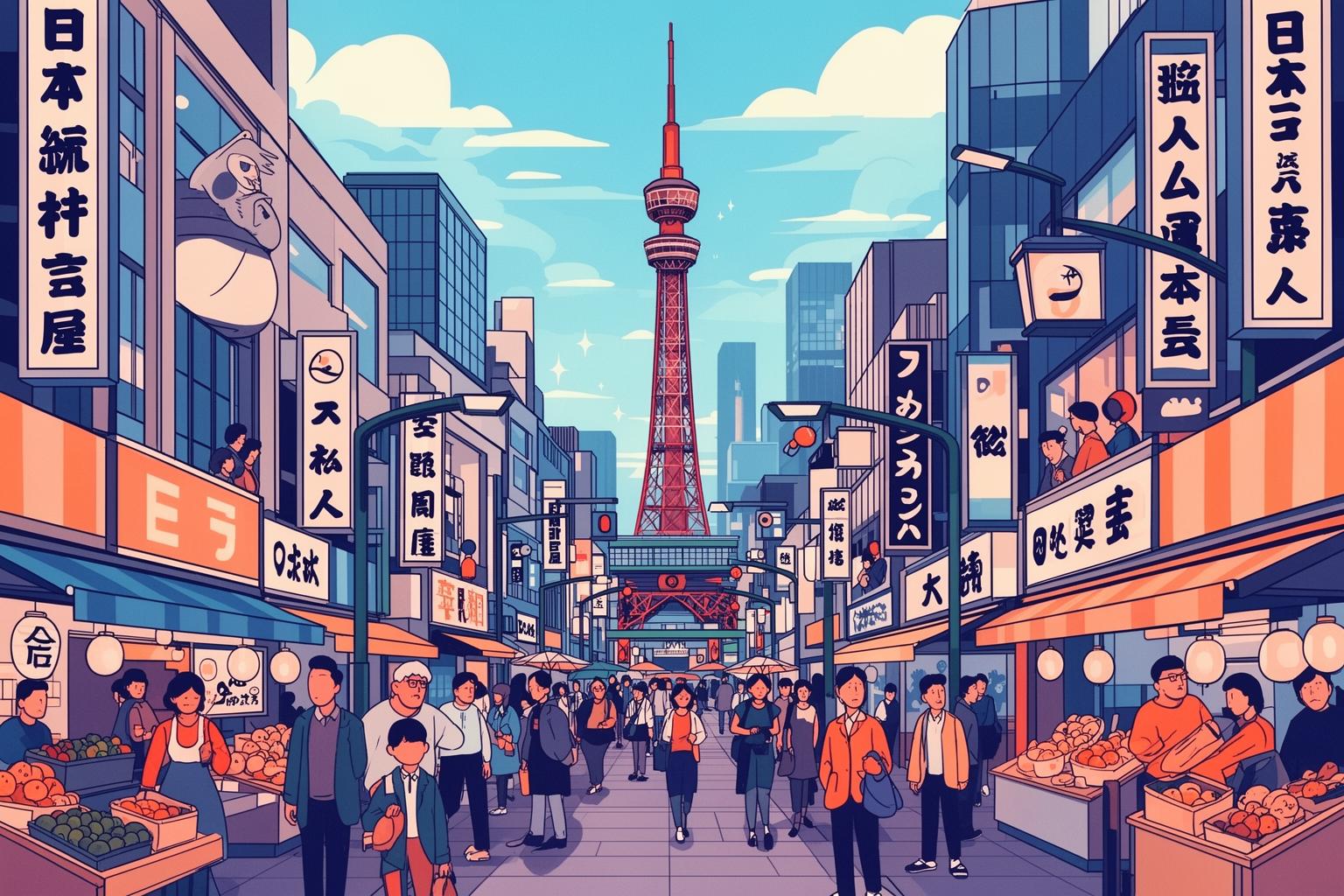
This conversational, relationship-first approach extends beyond the shopping arcades. The spirit of the `shotengai` influences every part of daily life in Osaka, giving the city a distinctly different feel compared to other Japanese cities.
This explains why strangers are more likely to initiate a conversation with you on the train. It’s why the owner of a small, ten-seat `izakaya` knows the job, family situation, and favorite baseball team of every person at the counter. It’s why asking for directions on the street might lead to your new acquaintance walking you three blocks just to ensure you find your way. Osaka thrives on a principle of proactive social engagement. People don’t wait for formal introductions; they create connections spontaneously.
This is often what people mean when they say “Osaka people are friendly.” It’s not just a general warmth but a distinct, observable communication style rooted in their merchant heritage. They build both their city and their social lives through a steady flow of words, jokes, and small, everyday interactions. Life takes place openly, in the shared space between people, rather than in quiet, private bubbles typical of much of modern urban life. The `shotengai` is simply the most concentrated and visible expression of this city-wide philosophy.
So, the next time you enter the lively chaos of a `shotengai`, listen carefully. You’re not just hearing the sounds of commerce; you’re hearing the city’s heartbeat. You’re stepping into a cultural classroom where the lesson is that a simple purchase can be an opportunity for connection, a stranger is just a neighbor you haven’t met yet, and life’s best moments often unfold in the loud, messy, and wonderfully human spaces in between. The transaction is merely the excuse. The conversation is the point.