When you tell people you live in Osaka, a certain picture flashes in their minds. It’s a kaleidoscope of electric eels swimming down neon canals in Dotonbori, the roar of the Hanshin Tigers fans shaking Kyocera Dome, steam billowing from takoyaki stands in a crowded shotengai. It’s a city that moves at a frantic, percussive rhythm, a place of commerce, comedy, and concrete. And for the most part, they’re not wrong. That is the undeniable, thumping heart of Osaka. But it’s not the whole story. It’s not even close. The question that hangs in the air after your third month of sensory overload is, where do you go when the beat gets too loud? What’s the Osakan answer to unplugging? For many in Tokyo, the answer is a full-scale expedition, a bullet train ticket to a far-flung prefecture, a meticulously planned escape. In Osaka, the answer is often much simpler, much closer, and says a lot more about how this city really breathes. The answer is a place like Nose.
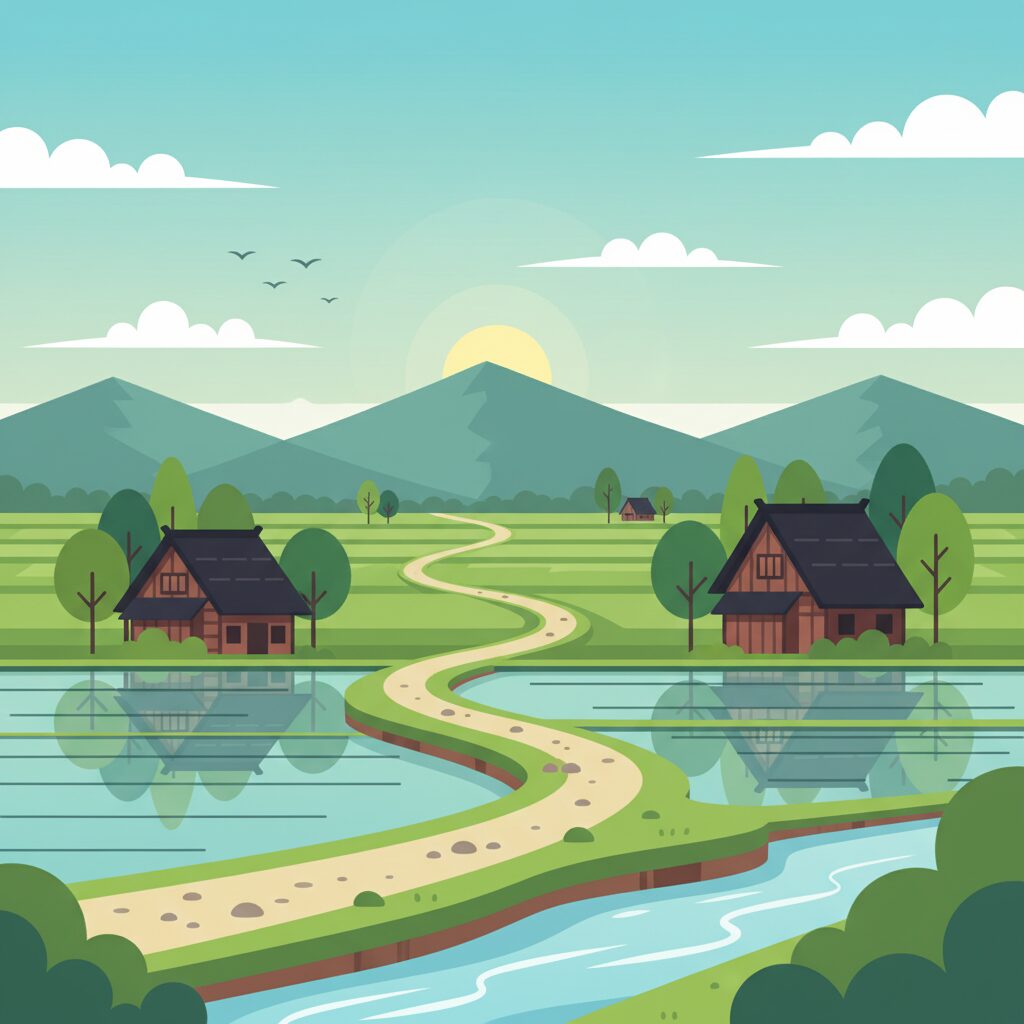
Nestled in the northernmost tip of Osaka Prefecture, Nose is the city’s rustic alter ego. It’s a world of rolling hills, terraced rice paddies, and quiet farmhouses, technically within the same administrative borders as the Umeda Sky Building but spiritually a million miles away. Understanding why an Osakan would spend a weekend in Nose—not a fancy resort in Kyoto or a famous onsen town—is to understand the deeply practical, grounded, and unpretentious soul of this place. It’s about realizing Osaka isn’t just a city; it’s a landscape. And its people have a relationship with that landscape that is fundamentally different from anywhere else in Japan.
For an even richer perspective on Osaka’s vibrant urban fabric, exploring the lively shotengai community reveals everyday social dynamics that stand in stark contrast to the serene allure of Nose.
Beyond the Loop Line: The Two Faces of Osaka

For most foreigners, and even many Japanese, Osaka’s mental map is defined by the JR Osaka Loop Line. Inside the circle lies “Osaka”—Umeda, Namba, Tennoji. Outside is… something else, a vague suburban sprawl that eventually blends into Kyoto or Kobe. This represents the first major misconception about what living here truly means. Osaka Prefecture is a land of striking contrasts, and the city’s identity is shaped by its closeness to its own opposite. A forty-five-minute drive from the traffic-packed Shin-Midosuji takes you deep into what the Japanese call satoyama.
This is not the wild, imposing nature of a national park. Satoyama is an entirely different concept. It’s the borderland landscape where human habitation—villages, farms, rice paddies—merges seamlessly with mountain foothills. It’s a managed, productive, and inhabited nature. For centuries, this was the engine that sustained the city, and that connection remains unbroken. In Tokyo, the overwhelming scale of urban life creates a sharp divide from nature. A trip to the countryside feels like traveling to another country, a distinct and separate event from daily life. It’s an occasion. For an Osakan, a day trip up to Nose feels more like visiting another neighborhood. The accessibility changes everything. Nature isn’t a luxury or a special event; it’s part of the everyday toolkit for living, as readily available as a good meal or a visit to the local sento. This proximity fosters a sense of ownership. City dwellers don’t feel like tourists in Nose; they feel like they are in their own backyard. This blending of urban and rural is a core, often invisible, aspect of the Osaka experience. It makes the vast city feel smaller, more manageable, and deeply connected to the land on which it stands.
The Pragmatic Escape: Why Nose, Not Nagano?
To grasp the charm of Nose, you need to understand the Osakan fixation on practicality and value. It boils down to one key question: “Honma ni sono neuchi aru ka?”—Does it truly have that worth? This isn’t about being cheap; it’s about being smart. It’s about making efficient use of time, money, and effort to get the desired result. So, when the aim is to relax, the Osakan applies the same reasoning. Why spend eight hours on trains and twenty thousand yen to see some mountains in Nagano when you have perfectly good ones right here for the cost of gas and a bento?
This mindset shapes the whole experience. A weekend escape to Nose is refreshingly straightforward. You won’t find many trendy glamping sites or exclusive resorts with private hot springs. Instead, you’ll encounter simple cabins by the river, small family-run inns, and campsites. The activities are just as down-to-earth. It’s about buying charcoal at the local hardware store for a barbecue, not reserving a curated farm-to-table meal. It’s about hiking a trail to a modest, unpretentious waterfall, not scaling a famous peak for an Instagram post. It’s the pure, simple joy of a change of scenery without any show. I recall chatting with a family from Sakai grilling by a creek in Nose. The father, fanning the coals with a piece of cardboard, laughed when I asked why they chose this spot. “It’s close. The air is clean. The kids can run around. Simple, right?” he said. That was all. No grand philosophy of escaping the rat race. Just a simple, logical solution to a common need. This sharply contrasts with the often aspirational, brand-conscious leisure culture you find in Tokyo. The Osakan weekend break isn’t about status. It’s about function. A pragmatic recharge, a maintenance check for the soul, done with maximum efficiency and minimal fuss.
The Kitchen’s Backyard
Osaka’s most famous nickname is Tenka no Daidokoro, The Nation’s Kitchen. We hear it all the time, a historical title referring to the city’s role as Japan’s rice and trade hub during the Edo period. But it’s easy to dismiss this as just history when you’re surrounded by modern skyscrapers. A trip to Nose reveals it as a living, breathing reality. Where do you think all the incredibly fresh vegetables served in the city’s kappo restaurants and izakayas come from? While some are sourced nationwide, a significant portion comes from the soil right here in Osaka’s countryside.
Driving through Nose, you’re surrounded by fields of edamame, tomatoes, and rice. The liveliest spots are the michi no eki, or roadside stations, which are part farmers’ market, part community center. Here, you see the direct link between producer and consumer in a way that feels truly Osakan. The farmers at the stalls are not quiet, reserved artisans. They’re businesspeople. They’ll enthusiastically tell you why their cucumbers have a better crunch or why their shiitake mushrooms are meatier. The sales pitch is direct, confident, and wrapped in the familiar, earthy Kansai dialect. There’s no flowery talk about communing with the earth; there’s straightforward pride in a quality product. You can buy a bag of muddy potatoes from the very person who dug them up that morning, and that tangible connection deeply changes your relationship with food. It demystifies the supply chain. For Osakans, who treat food with a seriousness bordering on religious, this access isn’t a novelty; it’s a vital part of their identity. It reaffirms their status as discerning eaters connected to the source. It’s the quiet, agricultural backbone supporting the city’s boisterous culinary fame.
‘Satoyama’ Life and the Osaka Rhythm
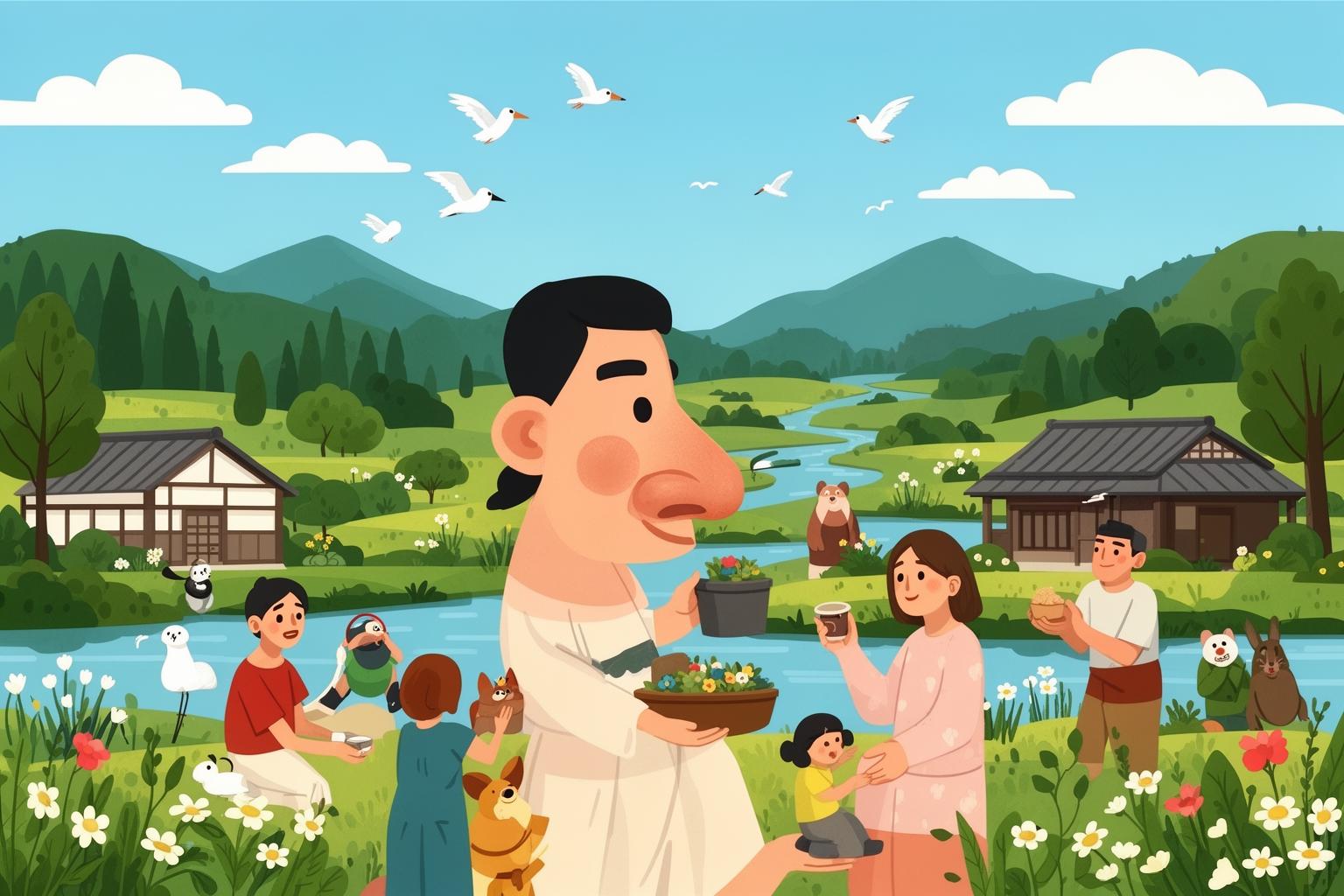
The pace of life in Nose is unhurried, yet it’s far from sleepy. There’s a quiet industriousness to it. You can hear the hum of small tractors, the chatter of neighbors tending their gardens, and the distant toll of a temple bell. It’s a productive rhythm, a gentle buzz of activity that feels worlds away from the frantic energy of the city. Still, the essential character of the people remains familiar. It’s unmistakably Osaka. Social interactions are less formal and more straightforward than what you might find in the more remote countryside of other regions. The rigid barrier of uchi-soto (inside/outside), which can make rural communities feel impenetrable to outsiders, is not as pronounced here.
People meet your gaze directly. They’ll ask where you’re from with sincere curiosity rather than mere politeness. I once stopped at a small, family-run udon shop where the elderly woman running it inquired why I had come so far north. When I explained I was just exploring from the city, she nodded and said, “Good. Not enough young people get to see this side of Osaka. They think it’s all concrete and pachinko.” We spoke for twenty minutes about her grandchildren, the rising cost of vegetables, and how the deer were growing bolder each year. The conversation flowed easily and naturally, carrying the familiar warmth and slight nosiness you’d expect from a shopkeeper in the Tenjinbashisuji Shopping Arcade. It’s the same social dynamic, just operating in a different setting. This is a crucial point. The urban and rural populations of Osaka don’t feel like two separate cultures. They are more like two branches of the same family, sharing a common language of directness, practicality, and a deep affection for their home in all its forms.
Not an Escape, But an Extension
This brings us to the most important distinction in understanding the Osakan mindset. In many of the world’s great cities, the countryside serves as an escape from urban life—a place to leave behind stress, noise, and pressure. It’s a form of separation. But for people here, areas like Nose and the surrounding satoyama are not an escape. They are an extension of their city life. It’s all part of Osaka. This integrated identity is fundamental. It means living in the city doesn’t have to feel like confinement. The knowledge that green, open spaces are only a short trip away acts as a psychological relief valve.
This dynamic makes the urban experience more sustainable. You can fully immerse yourself in the vibrant chaos of Namba on a Friday night, confident that a peaceful forest trail awaits within reach on Saturday morning. There’s no need to choose between a dynamic city life and access to nature. This duality is one of Osaka’s most underrated advantages. It offers a sense of balance that’s hard to find in the sprawling urbanity of the Kanto Plain. This isn’t about epic wilderness adventures; it’s about the simple, ongoing ability to shift your surroundings. It’s about the smooth transition between the artificial and the natural. When someone from Osaka says they’re from Osaka, they’re not just referring to the city’s 24 wards. They mean the whole spectrum: the neon lights of Minami, the business towers of Umeda, the ancient burial mounds in the south, and the lush rice paddies of Nose up north. It’s a more holistic and grounded sense of place.
What This Means for Living in Osaka
So, why does a quiet mountain town matter to someone considering life in Osaka? Because it reveals the true character of the area. It shows that Osaka is not a single, uniform entity. It’s a region of unexpected diversity, united by a practical, humble, and proud local culture. The existence of Nose proves that the city is alive and breathing. It possesses lungs. The constant exchange of people, produce, and ideas between the urban center and its rural outskirts creates a dynamic balance. This is why, despite its intensity, Osaka can feel surprisingly livable, even comfortable.
For any foreigner deciding where to settle in Japan, this is a crucial consideration. If your image of Japan is a stark choice between a hyper-modern city and a remote, traditional village, Osaka disrupts that binary. It provides a third option: a world-class city that has never lost its connection to the land that sustains it. Understanding this relationship is essential to grasping the Osakan character. They are worldly yet local, ambitious yet grounded, loud yet able to appreciate quiet. They are people who value a Michelin-starred meal in Kitashinchi, but also cherish the simple, profound pleasure of a fresh tomato, still warm from the sun, purchased from a farmer in their own backyard.