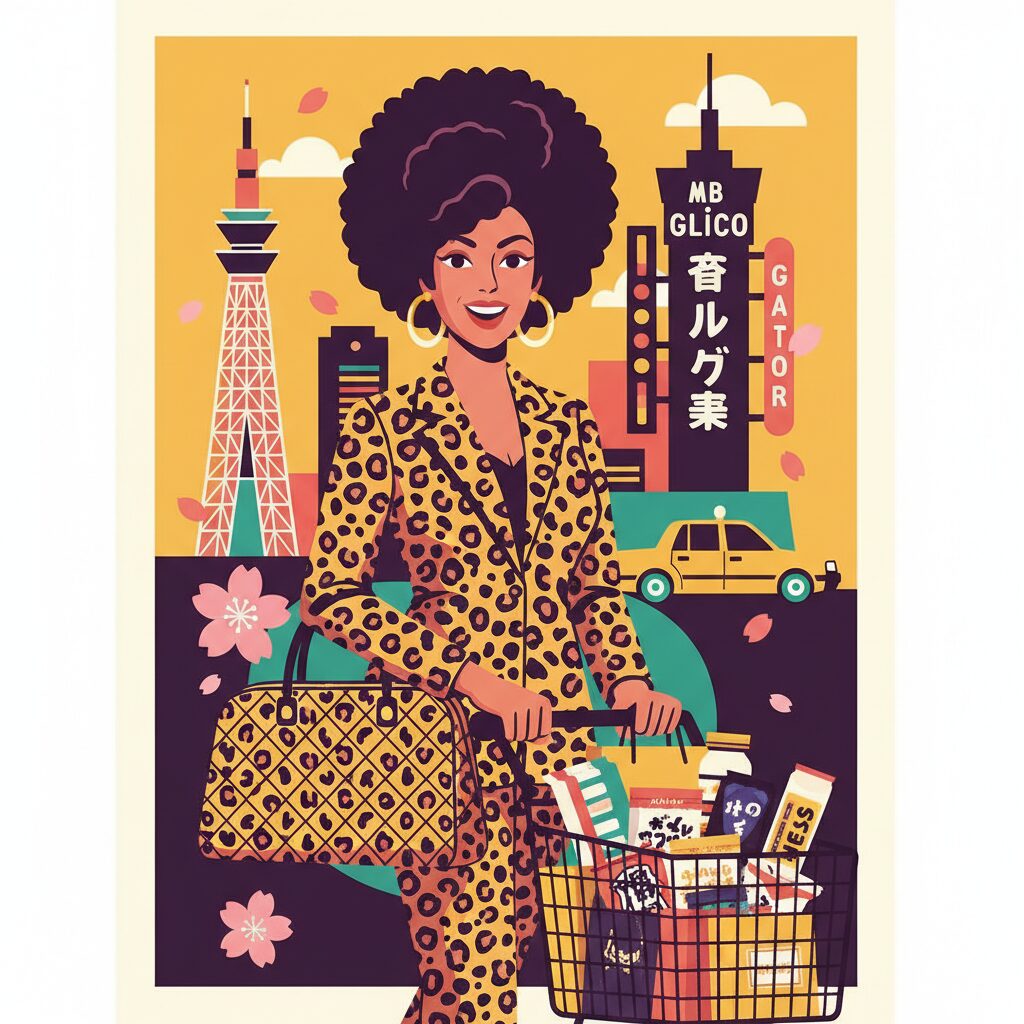
Walk through any Osaka shotengai—one of those vibrant, covered shopping arcades buzzing with life—and you’ll feel it. It’s a certain energy, a rhythm that’s different from the rest of Japan. It’s louder, a little faster, a lot more colorful. And at the heart of this pulsating energy, you might just spot her: the legendary Osaka Obachan. You’ve probably heard the descriptions, seen the caricatures on TV. She’s a formidable figure, often with a tight perm of a vaguely purple hue, draped in brilliant, unapologetic leopard print. Her bicycle basket is overflowing with groceries, and her handbag contains a secret weapon, an endless supply of ame-chan, or little hard candies, ready to be deployed at a moment’s notice. This image is one of the most enduring, and frankly, most baffling stereotypes for foreigners trying to get a read on this city. Is she real? Is it all a joke? When I first moved here from Spain, I saw these women as walking, talking exclamation points, a stark contrast to the quiet, subtle elegance I’d been told was the Japanese ideal. But living here, I’ve learned that the Osaka Obachan isn’t a caricature to be laughed at. She is, in fact, the key. She is the living, breathing instruction manual for understanding the soul of Osaka, a city that dances to its own brilliant, brassy beat. To decipher the code of the Obachan is to understand the unspoken rules of community, communication, and a particular kind of love that defines life here.
Beyond the vivid imagery of the Osaka Obachan, a journey into the local osekkai culture uncovers the subtle, enduring community ties that define the soul of this dynamic city.
Unpacking the Wardrobe: More Than Just Leopard Print
Let’s begin with the most prominent element: the fashion. That iconic leopard print isn’t a random choice; it’s a declaration of identity, deeply ingrained in the city’s history and spirit. Osaka has always been Japan’s merchant capital—a place where commerce, textiles, and a gritty kind of glamour intersected. During Japan’s post-war economic boom, as the nation rebuilt and forged its new identity, vibrant, bold patterns like animal prints became a symbol of prosperity. They were affordable flash. They were fun. And in Osaka, they endured.
The Roar of Confidence
Where Tokyo fashion often values understated elegance, brand prestige, and blending seamlessly with the crowd, Osaka style has consistently embraced a more individualistic and expressive identity. The leopard print, or hyo-gara, is the ultimate emblem of this. It’s not about following a trend set by a Ginza magazine; it’s about wearing something that makes you feel bold, confident, and maybe a little fierce. It radiates an attitude of “I know who I am, and I’m not afraid to stand out.” It’s a visual embodiment of the Osaka mindset: straightforward, energetic, and completely indifferent to quiet judgment. An Obachan donned in full leopard-print regalia isn’t trying to mimic a Milan supermodel. She’s embodying a very specific kind of power—the power of a woman who has run a household, managed budgets, raised children, and haggled over daikon prices for fifty years. The print is both her armor and her banner.
Function Over Form: The Pragmatic Obachan Uniform
Look past the animal print, and you’ll find the rest of the outfit is pure practicality. Sensible yet stylish walking shoes for navigating crowded train stations. A large, sturdy tote bag, because you never know when a good sale on cabbage will appear. And, of course, the ubiquitous bicycle—often a robust “mamachari” with front and rear baskets—the preferred way to commute efficiently across the city’s flat terrain. This isn’t a carefully styled look for an Instagram shot. It’s the uniform of a life on the move, a life dedicated to getting things done. The Obachan is the CEO of her realm, and her everyday attire is designed for performance. It perfectly symbolizes Osaka itself—a city that prizes practicality, efficiency, and substance over superficiality. There’s no affectation, just a powerful blend of flair and function.
The Secret Language of ‘Ame-chan’
If leopard print is the Obachan’s signature look, then the ame-chan is her calling card. For those unfamiliar with the custom, it can be a surprising experience. You’re standing on a train platform when a woman you’ve never met before turns, smiles, and places a small, wrapped candy into your hand, asking, “Ame-chan, taberu?” (Wanna eat a candy?). In a society known for its social reserve, this gesture can feel remarkably forward, almost suspicious. Yet in Osaka, it serves as an essential form of social currency.
A Pocketful of Communication
The key lies in the word itself. They don’t simply offer ame (candy); they offer ame-chan. The suffix “-chan” is a diminutive, a term of endearment typically used for children, close friends, or pets. By adding it to “candy,” the Obachan immediately turns a simple item into a symbol of familiarity and warmth. It acts as a conversational lubricant. Giving an ame-chan is a way of saying, “Hello,” “You look like you’re having a tough day,” “Your baby is adorable,” or simply, “We’re sharing this space together, so let’s be friendly.” It’s a tool for breaking down the unseen barriers between strangers. This is entirely opposite to the Tokyo style, where the highest form of politeness on public transport is to ignore everyone else. In Osaka, acknowledging each other’s presence with a small gesture of sweetness is an essential part of the social fabric.
The Unspoken Rules of the Candy Exchange
This small exchange fuels the city’s famously warm atmosphere. When someone offers you an ame-chan, the proper response is to accept it with a smile and a thank you. Declining can come off as a bit cold, like refusing a handshake. This simple act of giving and receiving weaves an invisible web of positive connections throughout the day. It reminds you that you’re not just an anonymous part of a vast machine but a member of a living, breathing community. I’ve witnessed an Obachan soothe a fussy toddler on the Midosuji line with a grape-flavored candy, instantly receiving a grateful bow from the relieved mother. I’ve also been offered one while waiting in a long queue at the ward office, a small sign of shared hardship. This is what people mean when they say Osaka is “friendly.” It’s not merely a vague impression; it’s a series of concrete, repeated acts of casual, low-stakes generosity, with the Obachan as its foremost practitioner.
The Sound of Osaka: Demystifying the Directness

Perhaps the most striking culture shock for foreigners—and even for Japanese from other regions—is the way Osakans communicate. It can come across as loud, abrupt, and remarkably direct. The Obachan is the ultimate master of this style. She’ll ask personal questions, offer unsolicited advice, and negotiate with a shopkeeper with the skill of a seasoned diplomat.
Beyond “Loud”: The Merchant’s Legacy
This directness isn’t rudeness; it’s a cultural inheritance from Osaka’s history as a shōnin no machi, a city of merchants. For centuries, business in Osaka’s lively markets relied on speed, clarity, and quick rapport. There was no time for the ornate, indirect language and layers of politeness developed in Tokyo’s imperial court and samurai culture. You had to get straight to the point, close the deal, and enjoy a laugh along the way. This legacy endures today. When an Obachan asks you directly, “Are you married yet?” or remarks, “You’ve gained a little weight, haven’t you?”, she isn’t trying to pry or offend. She is speaking a language of intimacy and engagement. She treats you like family, not a stranger who requires formal distance.
Nosy or Neighborly? The Art of Meddling with Heart
This is grounded in a concept central to Osaka’s identity: ninjō (人情), or human feeling. It embodies deep empathy and a sense of responsibility for those around you. What may seem like “nosiness” is often an expression of ninjō. It’s a way of saying, “I see you. I’m paying attention. I’m part of your community.” This contrasts sharply with the anonymity of a Tokyo high-rise, where you might never know your neighbor’s name. In Osaka, your neighbor, the Obachan at the corner store, and the woman at the bus stop feel genuinely invested in your life. Though it can be startling at first, once you grasp the warm intention behind it, it becomes one of the most comforting aspects of living here. The Obachan who points out your shirt is on backward isn’t trying to embarrass you; she’s saving you from wandering around like that all day. It’s a form of tough, practical love.
The Modern Obachan: Is the Leopard Changing Its Spots?
It’s true that the classic Obachan—the one sporting a purple perm and head-to-toe animal print—is an archetype of a particular generation. As these women grow older, the visual stereotype is becoming less prevalent. Nowadays, you see fewer women in their fifties and sixties adopting the full, traditional look. However, to think the Obachan is a dying breed is to completely misunderstand her. The Obachan isn’t just a costume; she embodies a spirit. And that spirit remains very much alive.
The Spirit Endures
The contemporary Obachan might wear a fashionable jacket from Uniqlo instead of leopard print. She might have a sleek bob in place of a perm. Yet, the core essence stays the same. She’s the supermarket cashier who makes you laugh as she scans your groceries. She’s the young mother at the park who offers your child a rice cracker without hesitation. She’s the office manager who enthusiastically organizes gatherings, ensuring everyone feels included. The spirit of directness, warmth, practical generosity, and playful, good-natured teasing is passed down. The appearance may have changed, but the essence remains: a powerful, community-building force that gives Osaka its unique character.
What This Means for You, the Foreign Resident
For anyone living in Osaka, learning to recognize and embrace the Obachan spirit is the quickest way to genuinely feel at home. Don’t shy away from the straightforward questions. Engage wholeheartedly in the conversation. Accept the candy with a sincere smile. Try a bit of bargaining at the market, even if your Japanese isn’t perfect—the attempt will be warmly received. If you hold back, expecting the reserved, non-intrusive politeness common elsewhere in Japan, you might mistake the city’s directness for aggression and feel isolated. But if you respond with openness, you’ll find yourself welcomed with a rare and heartfelt warmth. You’ll discover a side of Japan that many visitors never experience.
A Force of Nature, Not a Caricature

Ultimately, the Osaka Obachan is far more than a humorous stereotype. She is the strong, witty, and deeply compassionate matriarch of the city. She represents the core Osakan values of pragmatism (shimatsu), human warmth (ninjō), and a joyful refusal to take oneself too seriously. She reminds us that community is not formed through quiet, polite distance, but through active, sometimes messy, and always heartfelt interaction. Her leopard print symbolizes inner confidence, her candy serves as a means of connection, and her loud, direct chatter is the true heartbeat of the city. When I first arrived, I saw a caricature. Now, after years here, when I spot an Obachan confidently cycling down the street, a bag of ame-chan at her side, I see the absolute, undeniable soul of Osaka. And I know I am truly home.