Step into a meeting room in Tokyo. The air is still, measured. Presentations glide across a screen, meticulously crafted, with every potential question anticipated and answered in a supplemental appendix. The hierarchy is clear, the language is formal, and the goal is consensus, achieved through a delicate, unspoken process of groundwork laid days or weeks in advance. Now, hop on the Shinkansen and slide into a business discussion in Osaka. The energy is different. The air crackles. Someone might laugh loudly, slap the table for emphasis, and ask a question that cuts right to the heart of the matter: “So, how do we actually make money with this?” The suits might be the same, but the software running inside them is completely different.
This isn’t just a caricature; it’s a reflection of a fundamental divergence in Japanese business culture, a split that has its roots in centuries of history. While Tokyo was the seat of the samurai government, a place of order, form, and top-down authority, Osaka was the nation’s kitchen, its freewheeling commercial engine. It was a city built not by warriors, but by merchants—the Akindo (商人). This merchant spirit, a powerful blend of pragmatism, frugality, humor, and a relentless focus on the bottom line, still animates the city today. It’s a culture that can feel like a breath of fresh air for an entrepreneur, a founder, or anyone who values speed and substance over style. But for those accustomed to the rigid, formal structures of traditional corporate life, especially the Tokyo model, navigating Osaka can feel like trying to read a map in a language you were never taught.
Understanding the Akindo spirit is the key to unlocking the city. It explains why people talk the way they do, why relationships are built on handshakes and shared meals rather than business cards, and why a good-natured argument over a price is seen as the start of a beautiful friendship. It’s the invisible force that shapes daily life, from the corner takoyaki stand to the gleaming office towers of Umeda. This isn’t just business; it’s a philosophy of life, and it’s what makes Osaka one of the most dynamic, human, and rewarding places to build something new.
Osaka’s vibrant business scene is also marked by a unique nomikai culture that naturally strengthens work relationships.
The Ghost in the Machine: What is the ‘Akindo Spirit’?
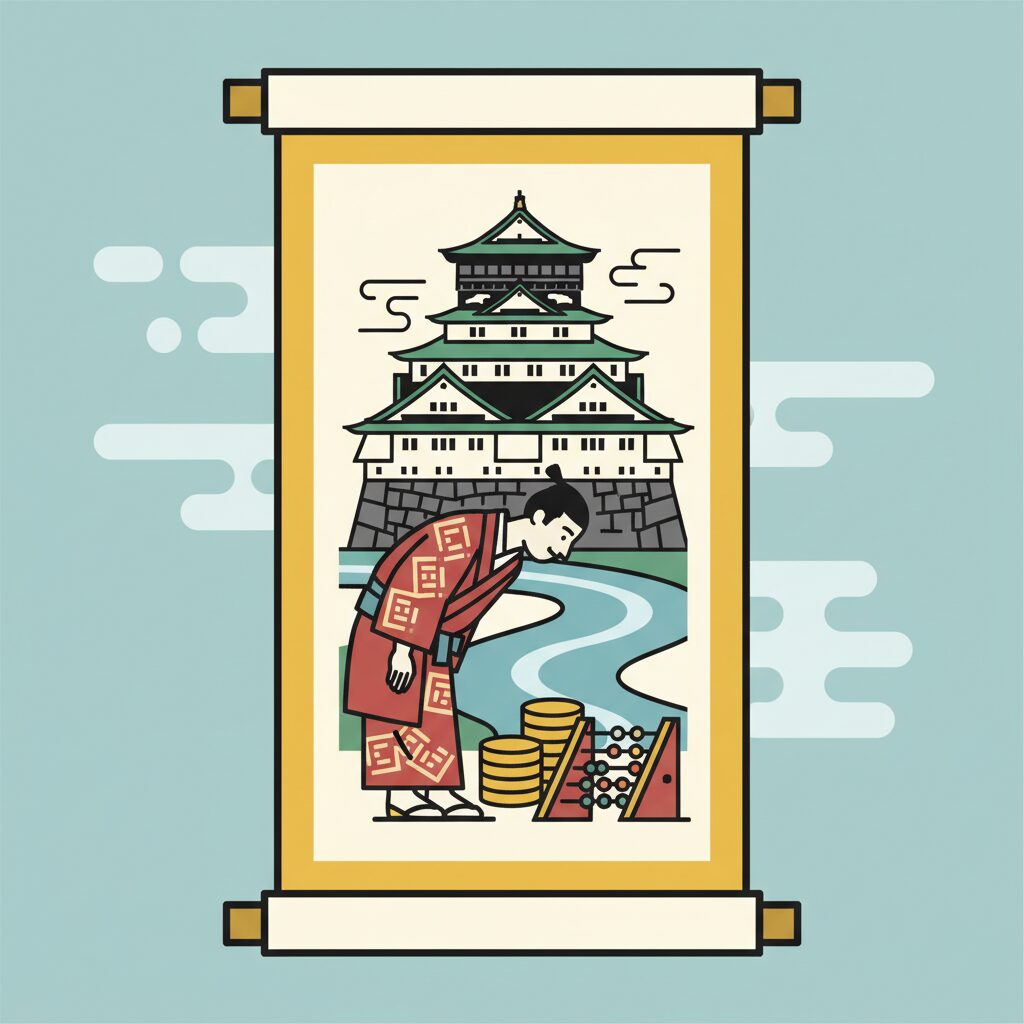
To truly understand Osaka, you need to recognize that its heroes were never stoic samurai with perfectly folded kimonos. The legends of this city are the clever rice brokers of the Dojima Rice Exchange, the world’s first futures market, who could gain or lose fortunes with even the slightest shift in weather. They were the medicine merchants of Doshomachi, establishing nationwide distribution networks built on trust and quality. In Osaka, your family name or social class mattered far less than your ability to conduct good business—shobai (商売). This history shaped a value system fundamentally different from that of the rest of Japan.
Born from the Kitchen of the Nation
During the Edo period, Osaka was known as the tenka no daidokoro, or “the kitchen of the nation.” Rice, produce, and goods from all over Japan passed through its ports and warehouses. This was not a city of bureaucrats and warriors living on stipends; it was a city of dealmakers, artisans, and logistics experts. While the samurai class in Edo (modern Tokyo) looked down on merchants as the lowest social rank, they were entirely dependent on Osaka’s commercial strength to fund their government and lifestyles. This fostered a unique pride and self-reliance among Osakans. They understood who truly held power: those controlling the flows of goods and money.
This history cultivated a deep respect for practicality. Beautiful theories or noble ideas were worthless if they didn’t put food on the table. This pragmatic mindset runs deep in the city’s DNA. It explains the obsession with yasui-umai (cheap and delicious). It’s not just about saving money; it’s a celebration of value. Enjoying a fantastic bowl of ramen for 700 yen isn’t merely a meal; it’s a small triumph—a testament to the merchant’s skill in offering quality at a fair price, and your skill in finding it. This historical foundation, this belief that commerce and ingenuity are noble endeavors, forms the core of the Akindo spirit.
‘Moukarimakka?’ – The Greeting That Says It All
This spirit is most evident in Osaka’s classic greeting: Moukarimakka? (儲かりまっか?), meaning “Are you making a profit?” The typical reply is Bochi bochi denna (ぼちぼちでんな), or “So-so, bit by bit.” To outsiders, especially those from Tokyo, this exchange might sound rude or invasive—like asking someone their salary upon first meeting. But in Osaka, it’s a common, friendly greeting akin to saying “How’s it going?”
What it really asks is, “How’s business? Are things going well? Are you succeeding?” It expresses camaraderie, acknowledging that everyone is engaged in the game of shobai, making a living, and showing genuine interest in the other person’s well-being. It cuts through formalities, building a connection grounded in shared experience. It’s a verbal handshake saying, “We’re both in this together, trying to make things work.” This simple phrase embodies the Osaka mindset: business is not a dirty word, but life itself, and openly discussing it is a way to bond.
The Art of the Deal: Negotiation as Conversation
The Akindo spirit also shines in a fondness for negotiation. In a typical Tokyo department store, prices are fixed and unquestionable. In Osaka, especially in extensive shotengai (shopping arcades) like Shinsaibashi or Tenjinbashisuji, some haggling is often part of the experience. It’s not an aggressive, winner-takes-all fight; it’s a conversation, a dance.
It’s about building rapport with the seller. You admire the product, chat a little, and might ask, Chotto makete? (“Can you give me a little discount?”). This isn’t rude. More often than not, the shop owner smiles and plays along. The goal isn’t just saving a few hundred yen; it’s the interaction itself. It’s a game of wit and charm that, when successful, leaves both parties satisfied. The buyer gets a good deal, and the seller makes a sale while forming a connection with a customer likely to return. This reflects Osaka business at its core: direct, personal, and focused on creating win-win outcomes where relationships are as valued as transactions.
The Entrepreneur’s Playground: Why Startups Thrive in Osaka
If you’re starting a company from the ground up, with limited resources and the need to move quickly, Osaka’s business culture can feel tailor-made for you. The Akindo spirit fosters a startup ecosystem that prioritizes speed, ingenuity, and tangible results over polished presentations and prestigious backgrounds.
Speed Over Perfection
A well-known phrase attributed to Suntory founder Shinjiro Torii, a classic Osaka merchant, is Yatteminahare (やってみなはれ), meaning “Go on and try it!” This saying serves as the unofficial motto of Osaka entrepreneurship, promoting action over prolonged hesitation. The culture supports launching products or services at about 80% readiness and then refining them based on authentic customer feedback, rather than spending extensive time in labs or conference rooms chasing an ideal 100%.
This sharply contrasts with the risk-averse mindset common in many large Tokyo corporations, where fear of failure can hinder decision-making. In Osaka, failure is regarded as valuable data, a learning step toward success. This attitude makes the city a vibrant environment for experimentation. Ideas can be tested swiftly, with immediate, candid feedback from a straightforward and honest population, allowing pivots without bureaucratic delays. The pace is quicker, the feedback loop shorter, and the emphasis is on execution.
A Network Built on Handshakes, Not Titles
In Tokyo, your meishi (business card) acts as both shield and sword, signaling the corporate group you belong to, your rank, and how others should engage with you. In Osaka, while exchanging meishi remains a tradition, the focus is on the individual holding the card. The network is flatter and much more personal.
People are more inclined to introduce you to someone useful based on a good chat at a standing bar in Kyobashi than on the prestige attached to your company logo. The culture values personal drive and a likable character. Can you hold a conversation? Are you passionate about your work? Do you have a sense of humor? These traits often open more doors than an impressive job title. For startup founders with passion and strong ideas but lacking a major corporate affiliation, this presents a significant advantage. Osaka’s network is grounded on mutual respect and opportunities for shared gain, making it both accessible and meritocratic.
Frugality is a Virtue: The ‘Shimatsu’ Mentality
A fundamental aspect of the Akindo spirit is shimatsu (始末). Often translated as ‘frugality’ or ‘stinginess’, these terms don’t fully capture its essence. Shimatsu embodies resourcefulness and careful management, making the most of available assets and avoiding waste at all costs. It’s about extracting maximum value from every single yen.
For a bootstrapped entrepreneur, this approach is a major strength. It means choosing a modest but practical office in a place like Honmachi instead of a flashy one in Marunouchi. It means having business lunches at a lively eatery offering an 800-yen set meal, focusing conversations on deals rather than decor. It means creatively solving problems without simply spending money. This isn’t cheapness for its own sake; it’s a strategic use of resources. Every yen saved on overhead can be reinvested into product development or customer acquisition. The entire city embraces this value-driven mindset, making it an exceptionally cost-effective place to grow a business.
The Corporate Maze: Where Traditionalists Might Stumble
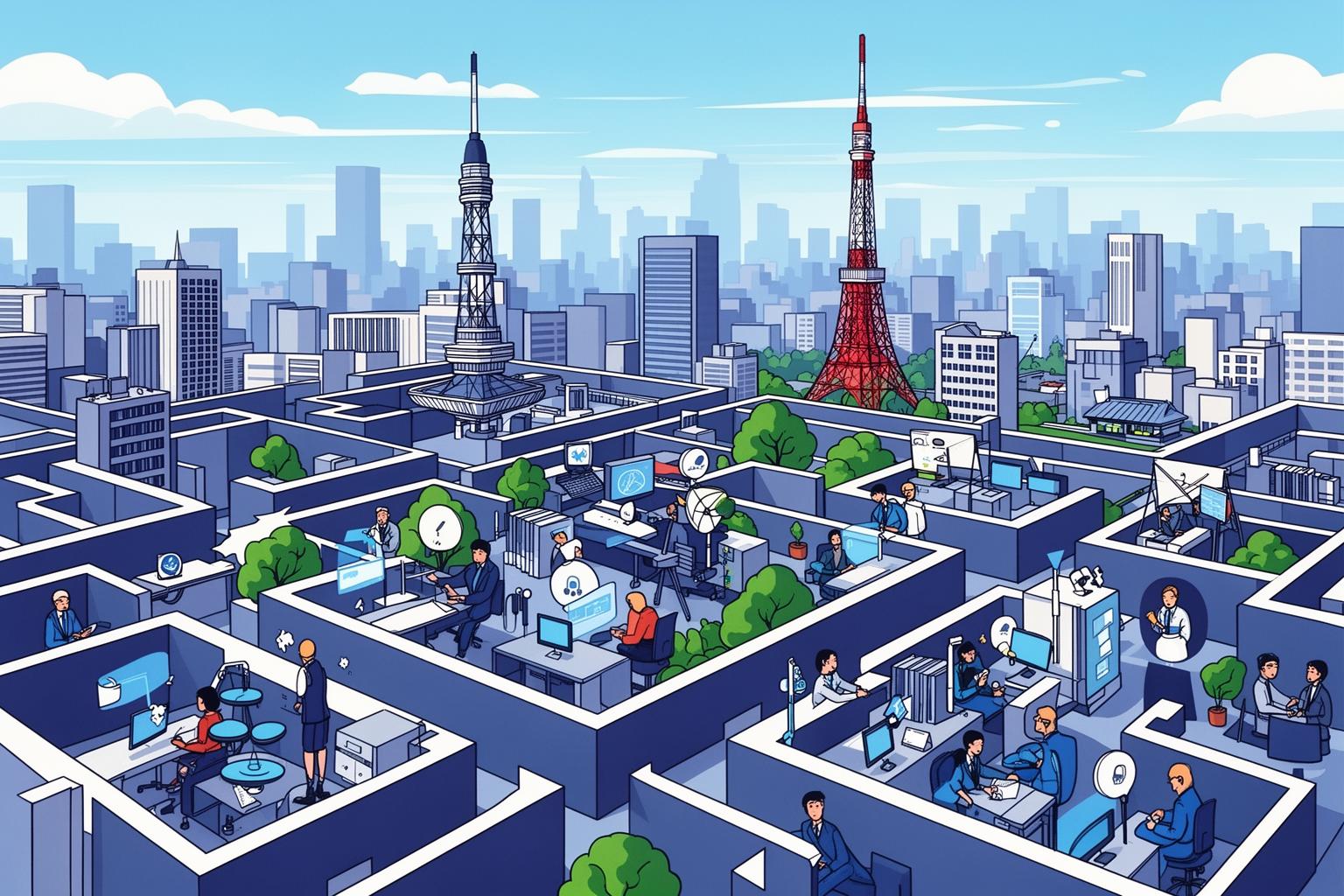
While Osaka is a haven for those with an entrepreneurial spirit, it can feel confusing and sometimes frustrating for individuals accustomed to a more traditional, hierarchical corporate culture. The very qualities that make the city vibrant and fast-paced may come across as abrasive and unprofessional if you aren’t ready for them.
The Shock of Directness
The Japanese concept of tatemae (public face) and honne (true feelings) is widely recognized. Throughout much of Japan, business communication relies heavily on tatemae, using indirect language and carefully selected phrases to preserve harmony. In Osaka, however, the gap between tatemae and honne is much shorter. People tend to speak their minds directly, with little softening.
If you present an idea at a meeting in Tokyo, you might get a response like, “We will take your valuable suggestion under internal consideration for our future strategy.” This polite phrase can mean anything from “Great idea!” to “This is terrible and will never happen.” In an Osaka meeting, you’re more likely to hear, “I don’t see how this makes money. The cost is too high and the market is too small. What’s your plan for that?” For those unprepared, this can feel like a personal attack. It’s not—it’s an expression of the pragmatic Akindo spirit. It’s an invitation to a genuine debate, a rigorous test of your idea. They’re not trying to be rude; they want to reach a workable solution as quickly as possible.
‘Why?’ – The Question That Breaks the Mold
Osaka businesspeople are relentlessly focused on the ‘why’ and the ‘how’. They place less importance on brand prestige, polished slide decks, or the seniority of the presenter. Their main criterion is practicality and profitability. You must be ready to defend your proposal not for its theoretical grace, but for its real-world feasibility.
This can be challenging for those coming from corporate cultures where process and hierarchy often dominate. In many companies, a project moves forward because a senior executive has greenlit it. In Osaka, even a project approved by the CEO faces scrutiny from those on the ground if it doesn’t make logical or financial sense. They will ask “Why?” repeatedly until satisfied. This isn’t insubordination; it’s a deeply rooted cultural instinct to ensure every action is based on solid business logic. You need to have your numbers and reasoning clear because they will be closely examined.
The Unspoken Rules Are Different
There’s a common misconception that Osaka lacks unspoken rules. It definitely has them; they’re just very different from Tokyo’s. The rule in Osaka is to be genuine, to reveal your personality, and to build authentic human connections. Formality without substance breeds suspicion. A stiff, overly rehearsed presentation may come across as insincere.
Trust-building often happens outside the boardroom, over okonomiyaki or drinks at an izakaya. This is where the real conversations occur. Sharing a laugh, chatting about your family, or venting about a difficult client all form part of the process. The goal is to see the real person you’re working with. The unspoken rule is to drop the corporate façade and connect on a human level. For those who are used to strictly separating their professional and personal lives, this may be an uncomfortable shift. But in Osaka, business is personal—and that’s not a weakness; it’s the whole point.
Living the Akindo Life: What This Means for You as a Resident
The merchant spirit extends far beyond boardrooms and startups. It’s the unseen force that drives the entire city, shaping your everyday life as a resident in delightful and unexpected ways. Grasping this spirit can enrich your experience and make living here more fulfilling.
Your Daily Interactions are Negotiations
Once you become aware of it, you’ll recognize that the spirit of the deal is everywhere. It’s not always about money. When you become a regular at your local coffee shop and the owner begins making your usual order as soon as you walk in, that’s a transaction of loyalty. When you buy vegetables at a local market and the elderly woman running the stall adds an extra onion along with a smile, that’s a relationship-based bonus. When you have a good rapport with your landlord, you might find them more understanding and flexible if your rent is a little late. Life in Osaka is a series of small, human-to-human negotiations. The currency isn’t just yen but also friendliness, loyalty, and mutual respect.
Spotting the Akindo Spirit in the Wild
The Akindo spirit is visible all over the city. It’s evident in the remarkable concentration of small, independent businesses. Unlike many global cities dominated by chains, Osaka is a haven for mom-and-pop shops, tiny restaurants, and quirky bars, each run by a passionate owner—an akindo in their own right. Talk to them. Ask about their business. You’ll find they’re almost always eager to share their story. It’s seen in the way a shopkeeper on Doguyasuji kitchenware street spends twenty minutes explaining the difference between two knives, not merely to make a sale but because they take great pride in their expertise. This embodies the living, breathing culture of shobai. It’s a city of specialists and hustlers, and their energy is infectious.
A Word of Advice: Be Human, Be Real, Be Ready to Talk
To thrive in Osaka—in business or daily life—the best advice is to embrace the culture. Set aside formality. Don’t hesitate to be direct, but always with warmth and humor. When shopping, engage with the seller. Ask questions. Show sincere interest. If it feels appropriate, request a small favor or a minor discount—the worst response you’ll get is a friendly ‘no.’
In your professional life, prioritize building genuine relationships. Join for that after-work drink. Be ready to answer straightforward questions and don’t be afraid to ask them yourself. Reveal who you are, not just your job title. Here, your humanity is your greatest asset. Osaka doesn’t require you to be perfect or polished. It asks you to be real, pragmatic, and ready to participate in the beautiful, chaotic, and ultimately rewarding business of life.