You hear it the moment you start thinking about living in Osaka. Before you even learn the train lines or figure out garbage disposal days, you’ll be asked the question, sometimes implicitly, sometimes straight up: Are you a Kita person, or a Minami person? It’s the city’s fundamental sorting mechanism, a cultural binary that runs deeper than a simple postal code. For anyone coming from Tokyo, the immediate comparison is the Yamanote Line. You’ve got the sophisticated, high-end West Side—Shinjuku, Shibuya, Ebisu—and the historic, down-to-earth East Side—Ueno, Akihabara, Asakusa. It seems like a neat parallel. A city split in two. But to assume Osaka’s North-South divide is just a Kansai-ben version of Tokyo’s East-West culture is the first, and biggest, mistake you can make. Tokyo’s identity is a constellation of distinct, powerful neighborhoods orbiting a central core. Osaka’s is a high-tension wire, a magnetic current flowing along a single axis, with two powerful poles that define everything in their orbit. This isn’t just about choosing a neighborhood; it’s about understanding the city’s dual personality, its public face versus its private soul, and learning how to navigate the space between them. It’s the difference between a collection of worlds and a city with two hearts, beating to very different rhythms.
The tension between Osaka’s twin identities is mirrored in the neighborhood’s spirit, where local kissaten play an essential role in weaving the fabric of everyday community life.
The Yamanote Loop vs. The Midosuji Spine: A Tale of Two Urban Structures
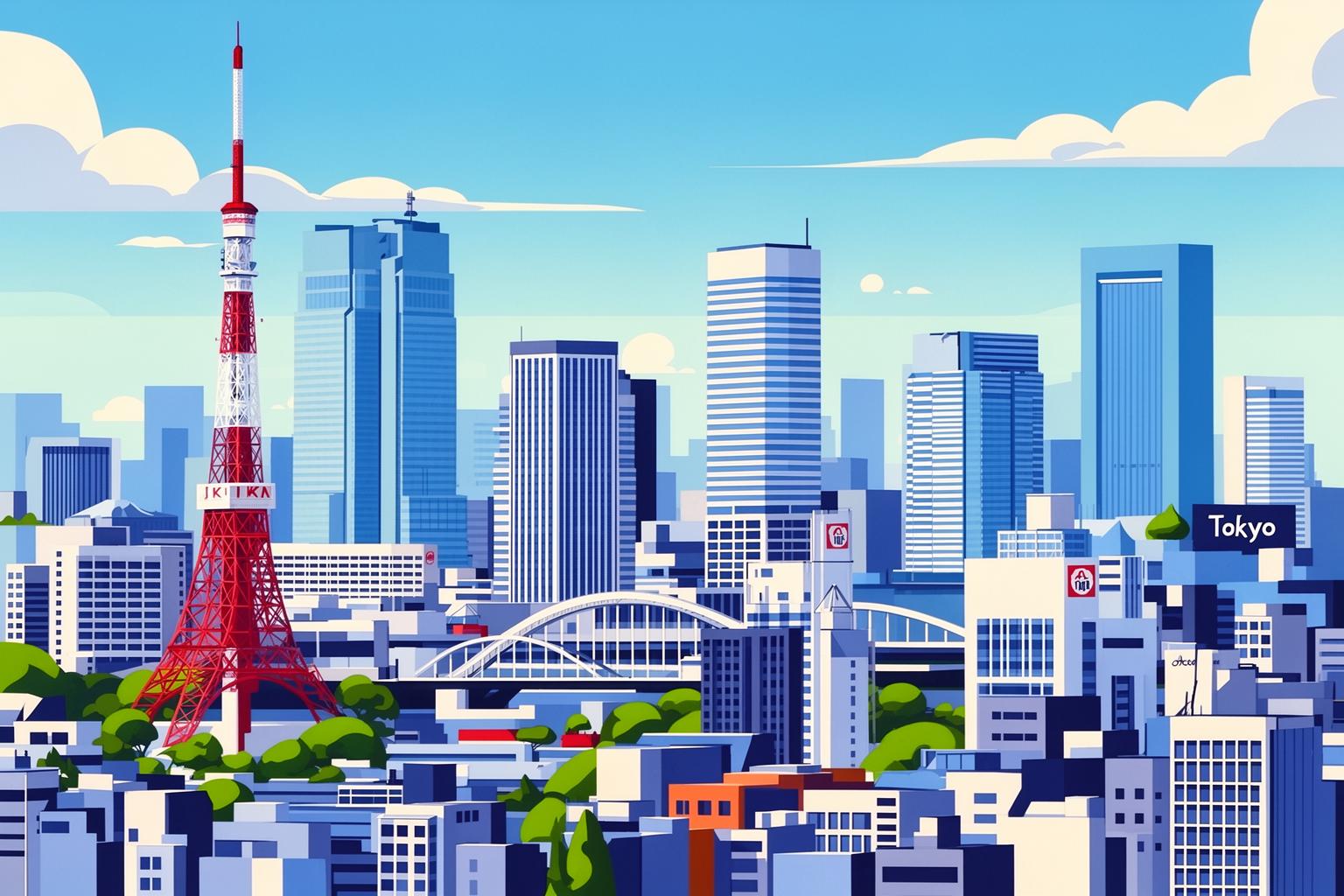
To understand the essence of Osaka’s divide, you must first unlearn Tokyo’s geography. The capital’s hallmark is the Yamanote Line, a vast green loop connecting a series of highly specialized urban centers. It operates like a planetary system, with major hubs such as Shinjuku and Shibuya serving as gravitational cores, each surrounded by smaller, distinct neighborhoods. This line creates a horizontal cultural landscape. Living in Osaka demands a shift in your mental map. You need to think vertically. The city isn’t designed around a loop but along a spine: the Midosuji subway line, a straight, unwavering route linking the city’s two main poles.
Tokyo’s Horizontal Orbit: A Collection of Worlds
In Tokyo, life often revolves around allegiance to a particular station or area on the Yamanote loop. You might be a “Shimo-Kita person,” known for vintage fashion and indie music, or a “Ginza person,” characterized by luxury and tradition. The East-West divide is tangible, reflecting the polished, trend-setting vibe of the West against the shitamachi (low city) spirit of the East. This contrast is as much about history as it is about aesthetics. Shinjuku’s skyscrapers feel worlds apart from Asakusa’s low-rise temples. Importantly, these worlds coexist with relative independence. You can live fully within Shinjuku’s orbit without engaging with Ueno’s culture. Each stop is a distinct, self-contained ecosystem of work, life, and leisure. The Yamanote Line ties these separate pearls together, but each pearl shines with its own unique light.
Osaka’s Vertical Axis: A City of Two Poles
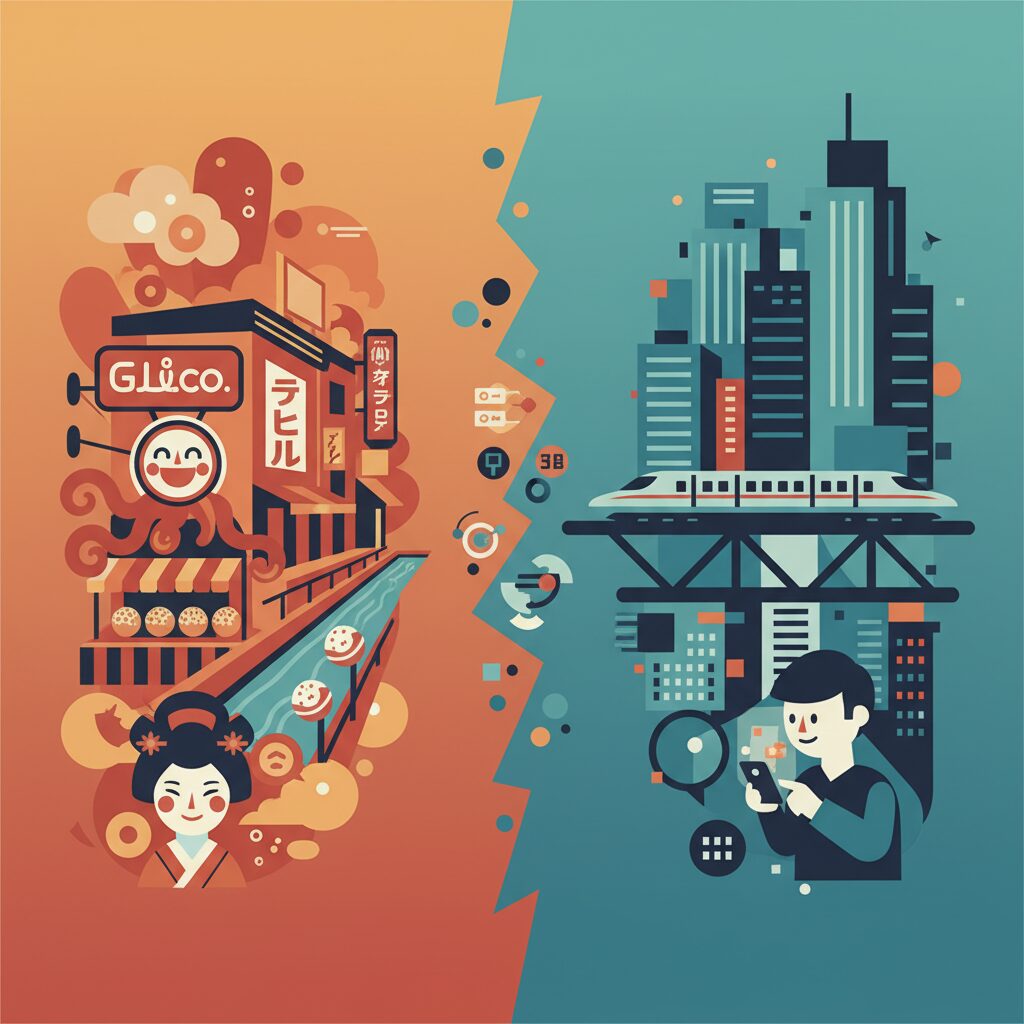
Osaka rejects that model. Instead of a circle, it built a spear. The Midosuji Line functions as the city’s central nervous system, with everything radiating from it. At the top lies Kita, the north, anchored by the extensive, sophisticated Umeda station complex. At the bottom is Minami, the south, a lively, chaotic cluster around Namba, Shinsaibashi, and Dotonbori. While other neighborhoods and lines exist, they are all defined by their connection to this main axis. Life in Osaka isn’t about choosing among many self-sufficient hubs; it’s about positioning yourself between these two dominant forces. The tension between them, and the constant flow of people and capital along the Midosuji spine, generates the city’s distinctive energy. In Osaka, you don’t just belong to a neighborhood—you belong to the North or the South. This binary is fundamental, shaping your decisions, style, and the way the city perceives you.
Decoding Kita: The Face You Show the World
Kita, which simply means “north,” is more than just a direction; it represents a concept. Centered around the Umeda area, it serves as Osaka’s grand, formal entrance hall. It’s the face the city shows to international business partners, to the rest of Japan, and to itself when it wants to feel important. If you’ve ever felt disoriented in the Umeda underground labyrinth—a sterile and impressively efficient maze of tunnels linking a dozen train lines and department stores—you have encountered the essence of Kita. It is vast, impressive, well-organized, and slightly impersonal. It’s the city dressed in a well-tailored suit, ready for business.
Umeda’s Corporate Gleam and Polished Professionalism
The physical landscape of Kita tells the tale. Towering glass skyscrapers like the Umeda Sky Building and Grand Front Osaka dominate the horizon. The ground floor—and several levels below—houses prestigious department stores: Hankyu, Hanshin, Daimaru. These are not just shopping venues; they are institutions setting the standards for taste and luxury. The atmosphere is one of controlled elegance. The crowds here move with purpose. They are commuters, determined shoppers, office workers grabbing curated bentos for lunch. The aesthetic is clean, modern, and upscale. This is the place to go for a job interview, to finalize a deal, or to buy a wedding gift. It embodies Osaka’s economic strength, a shining symbol of its status as a major commercial center.
The Mindset: Aspiration, Image, and “Sotozura”
To grasp the Kita mindset, it’s essential to understand the Japanese notion of sotozura—the “outside face,” or the persona one adopts in public or professional contexts. Kita represents Osaka’s ultimate sotozura. It’s where the city demonstrates it can be as refined and orderly as Tokyo. The people here reflect that. Fashion is more restrained, brand-conscious, and aligned with national trends. It’s about projecting success and competence. This directly counters the lazy stereotype that portrays Osaka as loud, boisterous, and somewhat rough around the edges. Kita proves that Osaka is multifaceted. It’s also home to hidden gems that contrast this formal identity. Just a short walk from the corporate towers lies Nakazakicho, a maze of old houses transformed into quirky cafes and vintage shops—a carefully curated, Instagram-worthy escape. Then there’s Kitashinchi, the city’s premier high-end entertainment district, where executives entertain clients in exclusive clubs. It’s nightlife, but with the polish and price tag of Kita.
Unpacking Minami: The City’s Unfiltered Heartbeat
If Kita represents the city’s pristine public image, Minami is its wild, vibrant core, proudly displayed for all to see. A brief, four-stop subway trip south on the Midosuji line from Umeda carries you to an entirely different world. Stepping off at Namba or Shinsaibashi is a full sensory immersion. The air is heavy with the scent of grilled takoyaki, the clamor of pachinko parlors, the overlapping sounds from countless storefronts, and the relentless, bubbling energy of a crowd here not to work, but to live. Minami, meaning “south,” is Osaka’s sprawling, chaotic, and unapologetically lively living room. It’s where the city relaxes, lets loose, and reveals its true character.
Namba’s Organized Chaos and Street-Level Energy
Minami’s layout is human-scale and delightfully untidy. It’s a vibrant patchwork of distinct, energetic districts woven together. There’s Dotonbori, the neon-lit canal-side stage where the Glico Running Man and the enormous mechanical crab have become iconic symbols. There’s the Shinsaibashi-suji shopping arcade, an endless covered street filled with everything from high-street fashion to traditional sweets. And there’s Amerikamura, or “Amemura,” the longtime hub of youth culture, with its vintage shops, skate stores, and bold street fashion. Unlike Kita’s vast, interconnected indoor malls, Minami’s energy pulses on the streets. It’s a culture of walking, serendipitous meetings, and discovering tiny bars tucked away in hidden alleys. It’s designed for people, not corporations.
The Mindset: Honesty, Entertainment, and “Honne”
While Kita is about sotozura, Minami is the realm of honne—one’s genuine feelings and desires. This forms the foundation of the stereotypical Osakan character: direct, unpretentious, humorous, and passionately devoted to entertainment. The city’s renowned owarai (comedy) culture thrives here, anchored by legendary venues like the Namba Grand Kagetsu. The entire area feels like a stage. Shopkeepers shout out their invitations, restaurant signs are bold and three-dimensional, and individual expression through fashion is celebrated. Style in Amemura isn’t about pricey brands; it’s about creativity, attitude, and uniqueness. Minami’s currency isn’t professional achievement; it’s personality. This is where the city’s spirit shines brightest, through its love of good food (kuidaore—eating oneself into ruin), hearty laughter, and having a great time. It’s loud, unapologetic, and vibrantly alive.
How the Divide Shapes Real Life for Residents
For a visitor, the Kita-Minami divide offers a convenient framework for planning a weekend itinerary. For a resident, it represents the unseen framework of everyday life. It shapes social activities, influences professional opportunities, and even subtly affects one’s sense of identity. Rather than a wall, it’s a gradient that every Osakan learns to interpret and navigate. Decisions about where to meet a friend, where to go on a first date, or where to shop for a particular item are all viewed through this North-South perspective. This is where the comparison to Tokyo’s Yamanote line falls apart. In Tokyo, you might live primarily in the West and seldom venture East. In Osaka, your life will inevitably involve both Kita and Minami, often within the span of a single day.
The Daily Commute: A Journey Between Worlds
Imagine a typical day for a young professional. They might reside in a quiet residential area along the northern stretch of the Midosuji Line, like Esaka or Senri-Chuo. Their morning commute takes them south into the corporate canyon of Umeda (Kita), where they spend the day in a formal office setting. But when five o’clock arrives, the workday isn’t finished. The plan is to meet friends. The destination? Namba (Minami). They board the Midosuji line again, and in those eight minutes underground, a mental transition happens. The tie may be loosened, the professional mask softened. The evening will unfold in a lively izakaya, enjoying Kushikatsu and laughing over highballs. Osakans excel at this code-switching. They understand Kita is for business while Minami is for pleasure. They dress accordingly, knowing that the polished style that suits Grand Front Osaka might feel out of place in the vintage shops of Amemura.
Social Identity and First Impressions
When you tell another Osakan where you live, you’re sharing more than just your address. Saying “I live near Tenjinbashisuji Rokuchome” (a long, local-feeling shopping street) conveys a different lifestyle than saying “I live in a tower mansion in Fukushima” (a trendy area near Umeda). While not as rigid as a class system, a kind of shorthand operates here. Living close to Kita can suggest a lifestyle that values convenience, modernity, and professional ambition. A Minami-adjacent location might imply a taste for the arts, nightlife, and a more bohemian, street-level lifestyle. It’s about personal priorities. Do you prefer polished department stores and easy access to the Shinkansen, or 24-hour ramen shops and independent live music venues just steps away? Your choice places you on the city’s invisible map.
A Foreigner’s Misunderstanding: It’s Not “Good vs. Bad”
The most common mistake for newcomers is to apply a value judgment to the divide. It’s easy to see Kita as “clean, safe, and dull” and Minami as “fun, authentic, and gritty.” But this is a fundamental misunderstanding of how the city operates. Osakans don’t view it as a competition; they see it as a necessary duality. Kita provides the economic engine, world-class infrastructure, and formal spaces that make a major city possible. Minami brings cultural chaos, entertainment districts, and human-scale energy that give the city its soul. One is the brain of the city, the other its gut. A thriving city—and a fulfilling life within it—requires both to be healthy and balanced. The real skill of living in Osaka lies in appreciating both sides for what they offer and knowing which one you need at any given moment.
Beyond the Poles: Where the Lines Blur
Certainly, a city of millions can’t be fully captured by just two neighborhoods. The Kita-Minami axis serves as the primary narrative, the central storyline of Osaka’s tale, yet intriguing subplots are unfolding in the spaces between and around it. The more time you spend here, the more you notice the subtleties and uncover areas that resist simple categorization, each developing its own unique pull. These “in-between” zones often host the most captivating aspects of modern Osaka life, merging elements from both North and South to create something entirely new.
The most notable example is the Tennoji area. For years, it had a somewhat rough reputation, but the completion of Abeno Harukas, Japan’s tallest skyscraper, transformed the scene. Suddenly, Tennoji acquired some of Kita’s upscale retail and corporate sophistication. Yet it directly borders the Shinsekai district, home to the Tsutenkaku Tower, a symbol of old-school, gritty, Minami-style entertainment. The outcome is a compelling hybrid: a place where you can shop in luxury boutiques beneath the skyscraper’s shadow, then stroll five minutes to enjoy 100-yen kushikatsu in a modest eatery unchanged for fifty years. It’s a third force emerging, drawing strength from both North and South.
Other areas establish their own unique identities. The Kyobashi district, to the east, embraces the salaryman drinking culture reminiscent of Kita but with a more local, less refined vibe. The vicinity around Osaka Castle hosts Osaka Business Park, another corporate center, but one that feels distinct and separate from the vast Umeda complex. Shin-Osaka, the Shinkansen station, lies technically north of Umeda but exists in its own sphere of transient energy, serving as a gateway to the rest of Japan rather than a core part of the city’s internal identity. These areas demonstrate that while the Kita-Minami dynamic is strong, it is not the only force shaping the city. Life in Osaka also thrives in the eddies and side streams away from the main current.
The Final Verdict: Two Halves of a Single Soul
The fundamental distinction between Osaka’s urban identity and Tokyo’s lies in their structure. The Yamanote Line functions as a democratic loop, allowing each of its key hubs to claim the status of a central universe. In contrast, the Midosuji Line operates like a monarchy with two rulers—north and south—commanding loyalty from everything along their path. Living in Tokyo means selecting your tribe from a diverse array of choices, while living in Osaka involves mastering two different dialects of the same language, navigating between two worlds that are magnetically, inseparably, and beautifully intertwined.
To truly grasp Osaka, one must embrace its dual nature. The city is neither just the loud, food-loving comedian of Minami nor solely the polished, ambitious businessperson of Kita. It is both at once. Osaka’s brilliance lies in how these two identities don’t merely coexist; they complement one another. The raw, creative energy of the south fuels the city’s spirit, while the economic strength and ambition of the north propel its progress. A genuine Osakan understands this balance. They know when to be professional and when to unwind. They value the refined service at a Hankyu department store as much as they relish the lively hospitality of a small Namba tachinomi bar. They realize that having one without the other would mean losing the very essence that makes this city pulse. It’s a city of two faces, two hearts, and two rhythms, all connected by a single, straight line—the lifeblood of Osaka itself.