
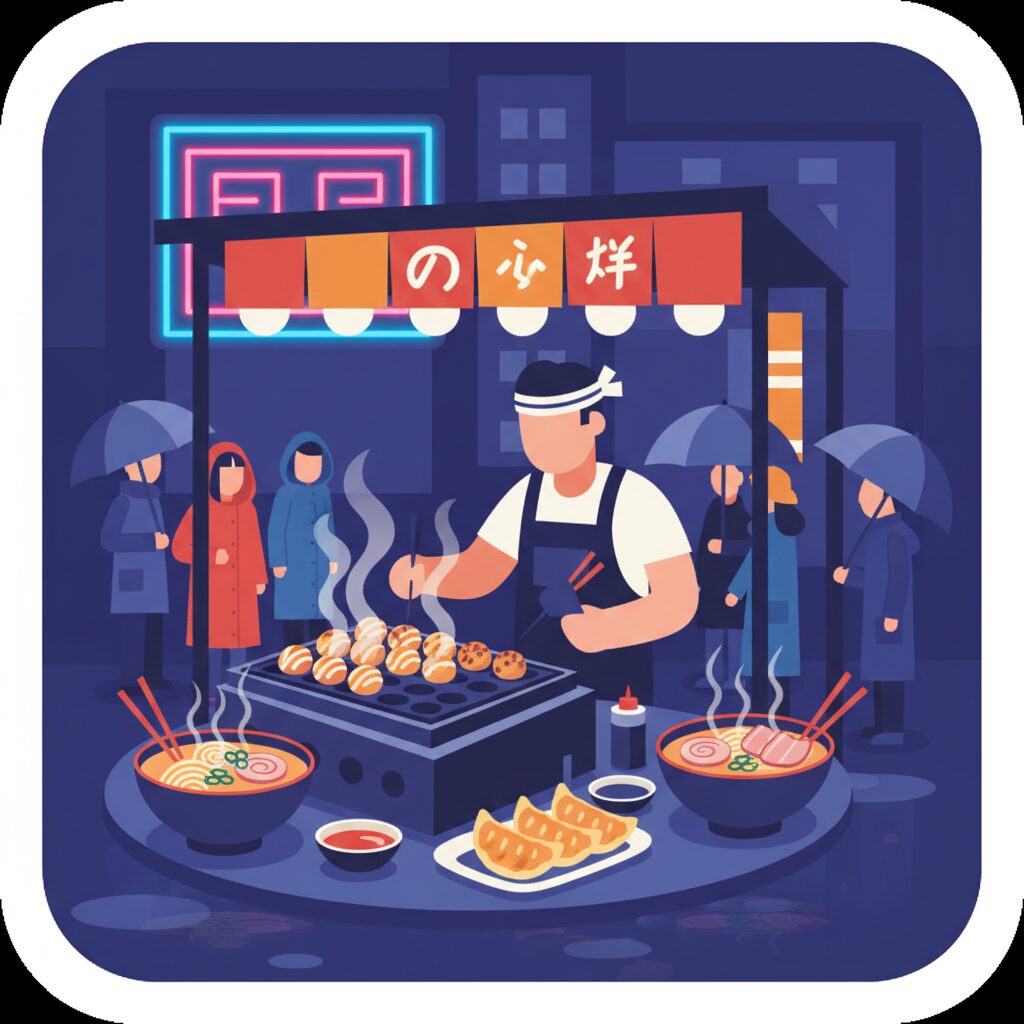
Osaka. The name itself conjures images of neon-drenched streets, steaming takoyaki balls, and the joyous, chaotic symphony of a city obsessed with food. They call it ‘Tenka no Daidokoro’—the Nation’s Kitchen. They have a word, ‘kuidaore’, which famously translates to eating until you drop, or bankrupt yourself. You see it everywhere, from the Michelin-starred temples of gastronomy to the humble, one-person stalls tucked under railway tracks. It’s a city that runs on its stomach, a place where the question isn’t if you’ll eat well, but what delicious thing you’ll eat next. But have you ever stopped, mid-bite into a perfect slice of fatty tuna, and wondered where it all comes from? Not just the port, but how it got to this plate, tasting this good, for a price that feels almost too reasonable? The answer doesn’t lie in a glossy corporate brochure or a streamlined logistics app. It’s found in the damp, chilly air of 4 AM, in a sprawling concrete complex most residents will never see. This is the world of the ‘Asa-ichi’, the morning market, the unseen, roaring engine that powers Osaka’s entire restaurant scene. Understanding this pre-dawn ecosystem isn’t just about food supply; it’s about decoding the city’s very DNA—its pragmatism, its obsession with quality, and the deeply human connections that form its commercial backbone. This world feels a universe away from the buttoned-up, systematic supply chains that dominate in Tokyo. In Osaka, the best business is still done face-to-face, with a discerning eye and a trusted handshake, long before the first train rumbles to life.
Osaka’s early morning hustle isn’t just about food—it’s also where ingenious ketai deals reflect a deeply rooted, face-to-face approach to business that defines the city’s spirit.
The Roar of the Market Before the Sun Rises
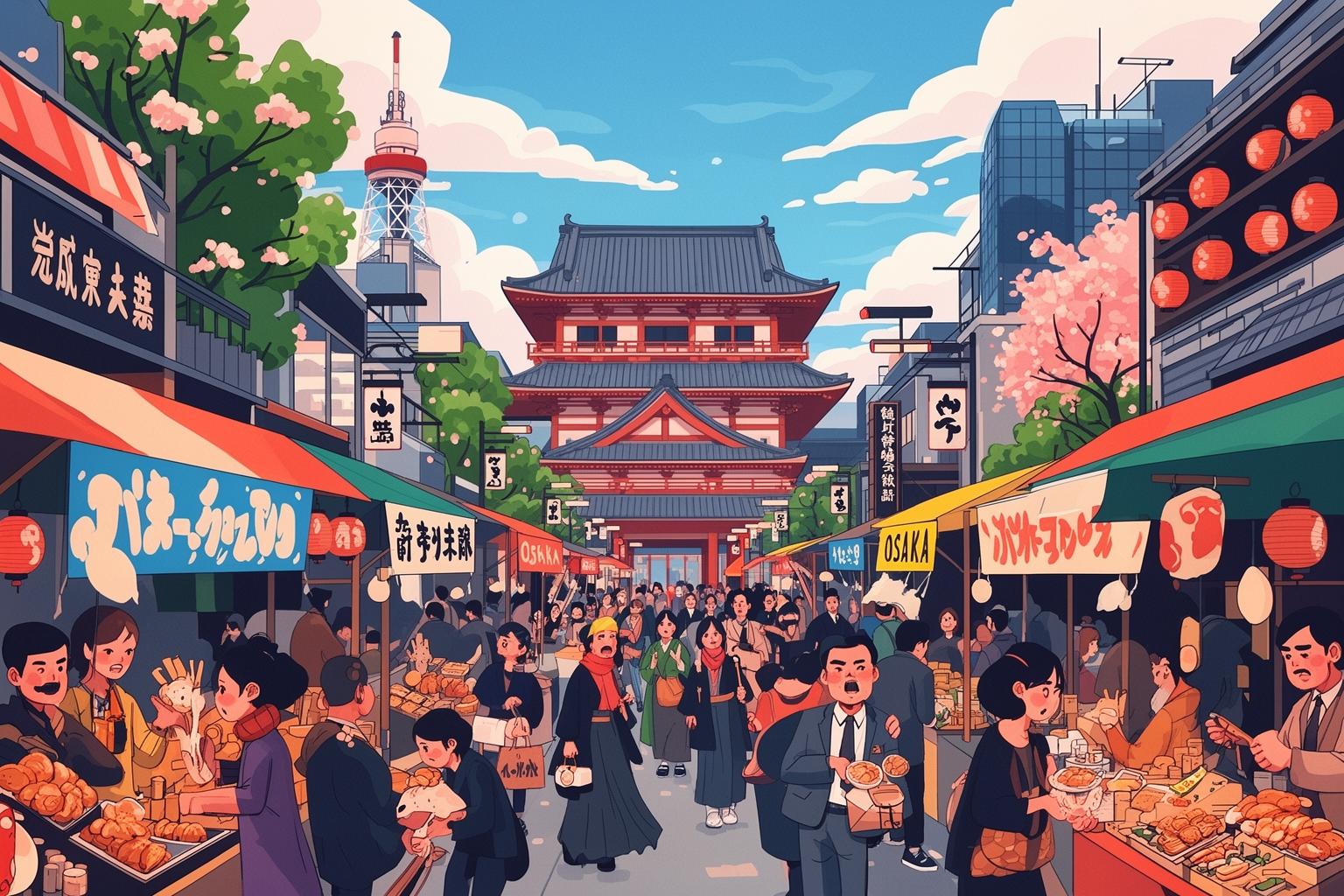
The alarm doesn’t simply wake you; it tears you from sleep. It’s 3:30 AM. Outside, the city is a ghostly shadow of itself—silent and dark. But a short drive away, in the Noda district, the Osaka Central Wholesale Market is already buzzing with intense activity. This isn’t a gentle awakening; it’s a surge of raw, industrial energy. The air is heavy with the briny scent of the ocean, the earthy aroma of soil clinging to freshly harvested daikon radishes, and the faint, sharp sting of diesel fumes from a fleet of trucks. The soundscape is a chaotic symphony: the high-pitched whine of turret trucks—small, cylindrical vehicles called ‘tare’—zipping through vast halls with incredible agility; the steady thud of massive tuna being placed on wooden pallets; and above it all, the clamorous chorus of human voices. These are not quiet conversations. They are loud, guttural shouts, a rapid-fire blend of prices, orders, and insults exchanged with the familiarity of family. Bare lightbulbs cast long, flickering shadows over floors slick with melted ice and fish scales. Men in thick rubber boots and aprons, stained by years of hard work, move with a sense of frantic purpose. They are vendors, middlemen, the titans of this realm. Moving among them are their customers: the city’s chefs. You’ll see stoic, elderly sushi masters, their faces marked by decades of early mornings, alongside young, ambitious chefs with trendy hairstyles, their eyes sharp with focus. They are not here to browse—they are here to hunt. Each one has a mission, racing against time and competition to secure the best ingredients that will define their day’s menu. This place is the city’s beating heart, its vast, churning stomach, starting its day while everyone else is still dreaming.
More Than Just Ingredients: The Currency of Trust
To a newcomer, the market might seem sheer chaos. But beneath the surface lies a complex system built not on contracts or digital platforms, but on something far more primal and, in Osaka, far more precious: trust. Here, the cultural gap with Tokyo becomes a chasm. In Tokyo, business relationships often depend on formal introductions, established corporate accounts, and adherence to procedure. In the Osaka market, your reputation is your credit. A chef doesn’t simply walk up to a stall and point at a fish—they approach their guy, a vendor they’ve likely known for years, maybe decades. The exchange begins not with an order, but with a greeting, some banter about the Hanshin Tigers baseball team, a question about family. This is the essential lubrication of Osaka commerce. Then, the real talk begins. “What’s the story today, Yamamoto-san?” the chef might ask. The vendor responds with brutal honesty, born of a long-term symbiotic relationship. He might point to a glistening row of sea bream. “This came in from Akashi an hour ago. Perfect. The mackerel over there? Skip it. The water was too warm yesterday, it won’t have the right fat content for you.” This is the unspoken covenant. The vendor knows the chef’s restaurant, its price range, its clientele, and its standards. He is not just a seller; he is a trusted curator, a partner in the chef’s success. Recommending a subpar product would be a betrayal of that trust—a short-term gain that would poison a long-term relationship. This is the essence of Osaka’s merchant spirit. It’s a culture of handshake deals, where your word counts more than a lengthy legal contract. It’s a fiercely pragmatic ecosystem where loyalty is earned daily, in the cold, wet halls of the market, long before the first customer sets foot in the restaurant.
The “Mekiki” Mindset: Seeing What Others Don’t
In this world built on trust, there is a skill revered above all others: ‘mekiki’ (目利き). It roughly translates to ‘discerning eye,’ but that hardly captures its full meaning. Mekiki is a cultivated, almost instinctive talent for instantly judging quality. It’s a form of connoisseurship that applies to everything—from antique pottery to, as in this case, a humble sardine. For an Osaka chef, mekiki is as essential as their sharpest knife. Their reputation depends not only on how they prepare an ingredient but also on their skill in selecting it initially. Watching a chef with true mekiki is like witnessing a master at work. They don’t merely glance. They engage in a silent, intense ritual. They’ll lift a flounder, not just to feel its weight but to assess the tension in its flesh. They gently lift the gills to verify a vibrant, blood-red color, a sign of absolute freshness. Their gaze fixes on the fish’s eyes, searching for clarity and convexity rather than the sunken, cloudy appearance of an older catch. They might even press a finger lightly against its side, gauging the firmness and resilience that indicate a healthy, well-handled fish. The same intense scrutiny applies to vegetables: the exact shade of green on a cucumber, the density and heft of a cabbage head, the distinctive fragrance of a yuzu citrus. This hands-on, deeply personal selection process is a source of pride. It stands in stark contrast to a modern, efficient yet impersonal system of simply ordering from a catalog or a supplier’s website. In Osaka, taking the easy route is often met with suspicion. The willingness to rise at 3 AM, to get your hands dirty, to personally inspect every item destined for your menu—that marks a true ‘shokunin’, a master craftsperson. It signals an uncompromising dedication to quality that forms the foundation of the city’s food culture.
The Ripple Effect: How 4 AM Shapes Your 8 PM Dinner
It’s easy to write off this pre-dawn ritual as a quaint, old-fashioned tradition. Yet it has a direct, tangible effect on the meal you enjoy at 8 PM in a cozy izakaya in Shinsaibashi. The remarkable quality-to-price ratio that often surprises visitors to Osaka is no accident; it’s a direct product of the Asa-ichi ecosystem. Consider the journey of that grilled Spanish mackerel on your plate. The izakaya’s owner, who also serves as head chef, likely handpicked it himself at the Noda market 16 hours earlier. He bypassed multiple layers of distributors and middlemen. He didn’t pay for flashy branding or corporate overhead. Instead, he negotiated a price directly with a trusted vendor. He used his mekiki to select a fish that was not only fresh but ideal for his specific grilling technique. This relentless pursuit of value embodies the true meaning of kuidaore. It’s not merely about indulgence; it reflects a deeply rooted civic obsession with securing the absolute best product at the most reasonable price. This culture supports a landscape of small, independent restaurants where the owner’s personal touch is clear in every dish. While large, centrally managed chain restaurants are common elsewhere, Osaka’s culinary heart beats strongest in these smaller establishments. Dining at one of these places means tasting the result of a day that began with a personal journey, a trusted relationship, and a discerning eye. You are savoring the very essence of the Osaka market system.
A Culture Under Pressure: The Changing Face of the Market
Despite its vibrancy, this traditional world is not exempt from the pressures of the 21st century. The Asa-ichi culture, passed down through generations, is confronting numerous challenges that jeopardize its future. The most urgent concern is demographics. The vendors and seasoned chefs who safeguard this tradition are aging. Their bodies, worn down by decades of heavy lifting and long hours, are beginning to fail them. Meanwhile, fewer young people are willing to take their place. The demanding 3 AM wake-up call, the physically strenuous work, and the years needed to cultivate the necessary relationships and develop true mekiki are difficult to attract in an era that values work-life balance and digital convenience. The rise of large-scale national food suppliers and the emergence of online ordering platforms present an enticing alternative. Why spend hours in a cold, damp market when you can choose your ingredients from a tablet in a warm kitchen and have them delivered to your door? This question highlights a fundamental tension in modern Japan, but it feels especially sharp in Osaka. The city’s pragmatic, business-oriented nature means that if a more efficient system arises, it will be embraced. Yet, there remains a strong, stubborn pride in the old ways. There’s a conviction that something vital is lost when a human relationship is replaced by a digital transaction, when a discerning eye is substituted with a checkbox on a web form. The market stands as a living embodiment of this conflict—a place where the deep-rooted values of Osaka’s merchant culture are clashing with the relentless advance of modern efficiency. The future of the city’s food scene may well be determined by which side emerges victorious.
What This Says About Living in Osaka
Ultimately, the morning market serves as a microcosm of Osaka itself. Understanding how it operates is to grasp what drives this city, distinguishing it from the polished formality of Tokyo or the historical depth of Kyoto. The Asa-ichi unveils a city with a distinct and vibrant character. First, it is fundamentally grounded and straightforward. In the market, quality is absolute—a fish is either fresh or not, and a vegetable is either perfectly ripe or not. There’s no space for slick marketing, fancy branding, or inflated reputations. This ‘show-me-what-you’ve-got’ mindset permeates all aspects of life in Osaka. People here tend to be direct, valuing substance over appearance. Second, it emphasizes that relationships are the city’s true currency. Whether in business or personal life, Osakans focus on building long-term, trust-based connections. A casual acquaintance at a local bar can turn into a lifelong friend; a trusted supplier becomes a partner. This is a city built on networks of mutual reliance. Third, Osaka is a city of specialists who take deep, almost obsessive pride in their craft. The tuna vendor who can pinpoint the exact ocean patch a fish came from by its fat content is a local hero in his own right. This respect for deep expertise is everywhere. Finally, the market epitomizes the Osakan obsession with value. It’s not about being cheap; it’s about being smart—knowing you obtained the highest possible quality for the yen spent. This approach shapes everything from negotiating rent to grocery shopping. For a foreigner living here, embracing these values—being direct, nurturing genuine relationships, appreciating deep skill, and always seeking a good deal—is essential to truly feeling at home in Osaka.
Conclusion
The next time you find yourself out late in Osaka, indulging in the city’s famed culinary delights, pause for a moment. As you enjoy that perfectly grilled skewer or that incredibly fresh piece of sashimi, keep in mind that the story of your meal didn’t start when you entered the restaurant. It began many hours earlier, in the chilly, bustling, and vibrantly alive halls of the morning market. It started with a 4 AM alarm, a trusted handshake between chef and vendor, and the keen eye that spots perfection amidst the crowd. This pre-dawn ritual is more than mere logistics; it’s the daily reaffirmation of Osaka’s very essence. It serves as the unseen, relentless engine of kuidaore, a tribute to a city founded on honest ingredients, genuine human connections, and an unwavering belief that a good meal at a fair price is one of life’s greatest pleasures. While the rest of the city sleeps, the market thrives, ensuring that when Osaka wakes, it is always, always ready to eat.








