When I first moved to Osaka, I thought I understood the basic geography of Japanese commerce. The ground floor of a department store was for cosmetics and accessories, a world of polite greetings and fragrant mists. The floors above were for fashion, a rising scale of price and prestige. The basement? I figured it would be a simple food court or maybe an extension of the local supermarket, a place to grab milk and eggs. I was wrong. Terribly, wonderfully wrong.
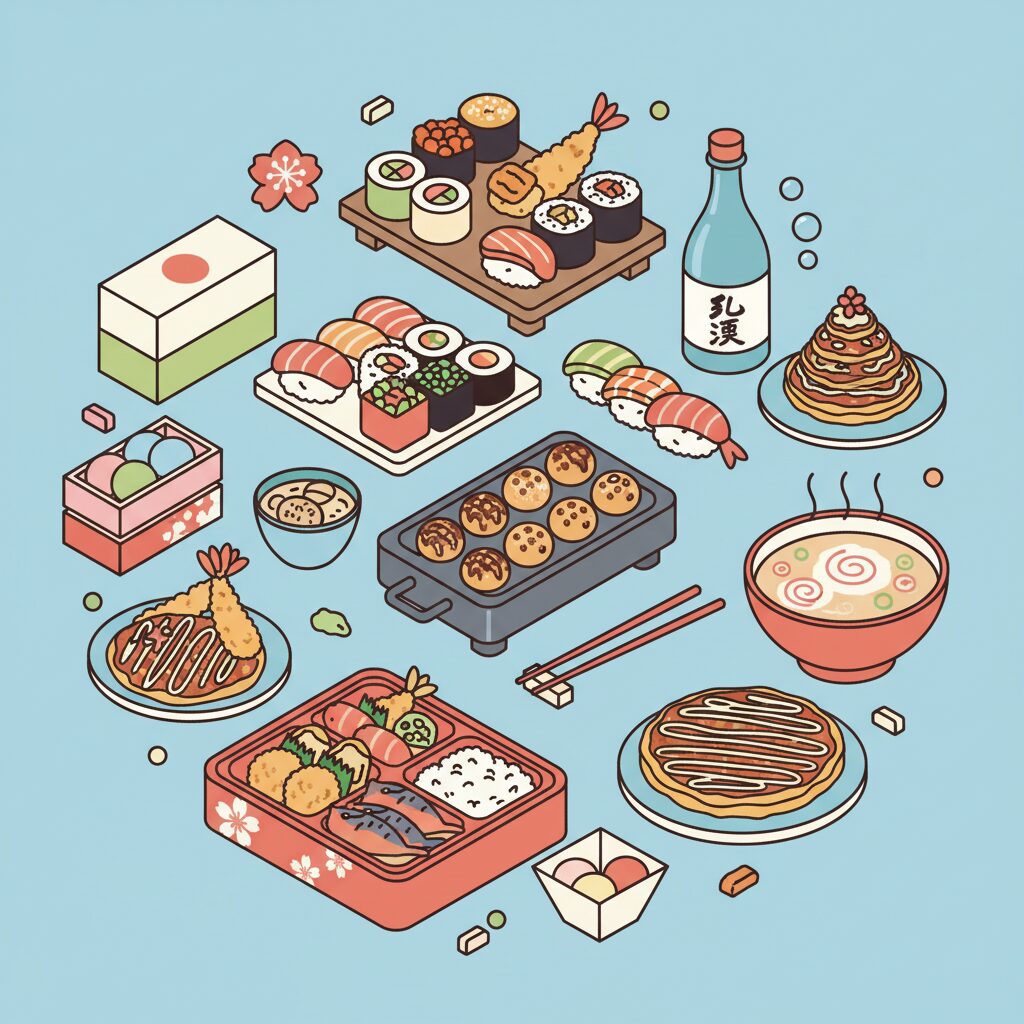
My first descent into the basement of the Hankyu Department Store in Umeda wasn’t a shopping trip; it was a full-body immersion. The air itself was different, thick with a dozen competing, delicious aromas: the sweet, caramelly scent of roasting chestnuts, the savory perfume of grilled eel being glazed, the clean, yeasty smell of freshly baked bread. It wasn’t the quiet, sterile environment I expected. It was a symphony of noise—vendors with melodic, rhythmic calls advertising their wares, the sizzle of tempura hitting hot oil, the polite murmur of a hundred conversations about what to eat for dinner. It was a labyrinth of gleaming glass counters, each one a miniature art installation. Salads were arranged not in bowls, but in intricate mosaics of color and texture. Fish, impossibly fresh, lay on beds of ice like jewels. Bento boxes were packed with such precision they looked like edible landscapes.
My initial thought was pure intimidation. “This is for special occasions,” I told myself. “This is where you buy a thousand-yen melon as a gift for your boss.” I saw perfectly coiffed women in elegant coats buying tiny, exquisite cakes and businessmen in sharp suits purchasing ornately wrapped boxes of sweets. It confirmed my theory: this was a place for ceremony, for gift-giving, for anything but the mundane reality of a Tuesday night dinner. Then I saw her. A woman who looked like she could be anyone’s grandmother, wearing a practical apron over her clothes. She moved with an efficiency that bespoke years of practice, pointing at a piece of salt-grilled mackerel at one counter, ordering a hundred grams of a hijiki seaweed salad at another, and finishing with a small container of pickled daikon radish. She wasn’t buying gifts. She was assembling her dinner. In that moment, the entire purpose of this dazzling, chaotic wonderland clicked into place. This wasn’t a museum. It was a pantry. It was the secret engine of Osaka’s legendary food culture, a place where the city’s obsession with quality, flavor, and practicality all converge. This is the depachika, and for so many people in Osaka, it is an essential part of daily life.
Osaka’s vibrant character extends beyond its depachika, as the city’s hospitality scene also shines with strategic summer hotel promotions that capture the innovative spirit of local enterprises.
The Labyrinth of Delights: More Than a Market, It’s an Experience
To grasp the role of the depachika, you first need to understand what it is not. It is not a supermarket. A supermarket is a utilitarian space, filled with sterile aisles and bright fluorescent lights. It’s about stocking up and ticking items off a list. The depachika, however, is a place of discovery. It offers a curated, theatrical presentation of food designed to engage all your senses. It’s less about a transaction and more about an interaction with food culture itself.
A Symphony for the Senses
The soundscape of a depachika is far removed from the constant beeping of a supermarket checkout. Here, the dominant sounds are human. Vendors at the pickle stand call out in a sing-song voice, offering samples of seasonal vegetables. At the croquette counter, you hear the sharp, satisfying crackle as fresh batches are lowered into the fryer. The staff don’t just stand behind the counter; they perform. They explain the origin of a particular cheese, suggest the best way to warm up a piece of tempura, and wrap your purchase with speed and precision that is a small art form. As an observer from China, where wet markets bustle with vibrant energy, the depachika feels like a fascinating hybrid. It combines the energy and human touch of a traditional market with a distinctly Japanese sense of politeness, cleanliness, and aesthetic perfection.
The visual appeal is striking. Food is never simply piled up; it is carefully arranged. Rows of yakitori skewers form perfect lines of alternating colors and textures. Mountains of colorful salads are garnished with herbs and edible flowers. Even something as simple as tofu is available in dozens of varieties, each resting in pristine water inside a clean wooden tub. This level of presentation isn’t just for show; it communicates freshness, quality, and the care put into making the product. It silently promises that what you’re buying is not just nourishment but something crafted with intention.
Curation, Not Collection
Step into a typical Japanese supermarket, and you might face a dozen brands of miso paste or a wall of soy sauces. The sheer choice can be overwhelming. The depachika follows a different philosophy: curation. Rather than offering every possible option, it presents a carefully chosen selection of the best products according to expert buyers. You might find only three types of olive oil, but one will be a trusted domestic favorite, another a renowned import from Italy, and a third an organic, unfiltered variety for connoisseurs. This philosophy reflects a deep trust between the customer and the establishment. The Osakan shopper isn’t just buying a product; they’re buying the department store’s taste and expertise. This spares them the mental effort of sorting through mediocre options. It’s an unspoken agreement: “You find the best, and we will come.” This emphasis on proven quality over quantity is a hallmark of the city’s practical approach to consumption.
The Evening Ritual: Unlocking the Depachika’s Final Form
For a first-time visitor, the depachika is a dazzling spectacle at any hour. But to truly grasp its rhythm and its significance to the people of Osaka, you must come after 7 PM. This is when the magic unfolds. The depachika sheds its daytime role as a gourmet food hall and transforms into a strategic battlefield for bargains. The evening discount rush, or nebiki, is a sacred ritual, and watching it offers a deep insight into Osakan psychology.
The Art of the Hover
As dusk approaches, the atmosphere subtly changes. Casual shoppers start to thin out, replaced by a more purposeful crowd. You’ll see people—commuters heading home, mothers with children, elderly couples—who aren’t buying just yet. They are circling. Moving from the fishmonger to the salad bar, to the bento counter, their actions appear casual but their eyes are keen. They are engaging in the art of the hover. They know that the fresh food made that day must be sold. They are waiting for the discount stickers. The question is not if, but when.
The “Service Time” Showdown
Then, a vendor claps their hands sharply, a sound that cuts through the noise. “Saa, okyakusama! Taimu sabisu desu!” (“Alright, everyone! It’s time for a special service!”). This is the starting signal. An employee appears with a small sheet of red stickers: 20% OFF, 30% OFF. As closing time nears, the coveted 50% OFF sticker sometimes makes its entrance. What follows isn’t the chaotic, frantic scramble you might expect. Instead, it’s a swift, practiced, and surprisingly orderly surge. The hovers now move with purpose. They knew exactly what they wanted all along. The woman eyeing the sea bream bento at full price quickly picks it up with its bright red sticker. The man lingering near the tonkatsu counter buys three pieces for the price of two.
This ritual embodies pure Osaka spirit. The city is famed for its kuidaore ethos—to eat until you drop, or more accurately, to indulge yourself into ruin. But alongside this passion for indulgence is a strong love for a good deal. It’s the spirit of a merchant city. Why pay full price for something you can get cheaper with a bit of patience and strategy? Scoring a discounted, high-quality depachika dinner isn’t seen as cheap—it’s seen as clever. It’s a small daily triumph over the high cost of living, a way to savor the finer things without guilt. It perfectly blends gourmet tastes with street-smart savvy.
The “Puchi Zeitaku” Philosophy: Why Osakans Pay a Premium
This brings us to the central paradox of the depachika. In a city known for its practical, no-nonsense mindset and thrifty residents, why would so many people choose to purchase their daily groceries from what appears to be the most expensive food retailer in town? The answer lies in a concept essential to understanding modern Japanese consumer culture: puchi zeitaku, or “a little luxury.”
It’s Not About Luxury, It’s About Value
Puchi zeitaku is the art of deliberately incorporating small, affordable moments of high quality into an otherwise ordinary routine. It’s not about buying a luxury car or designer handbag; it’s about choosing the truly excellent jam for your morning toast or a craft beer for Friday night instead of the usual cheap lager. The depachika is the ultimate sanctuary of puchi zeitaku. Perhaps you live alone in a small apartment and feel worn out after a long day at work. Cooking a full meal feels overwhelming. Your choices might be a nutrient-poor instant ramen or a bland, mass-produced convenience store meal. Or, for a few hundred yen more, you can visit the depachika and pick up a perfect grilled chicken, a side of simmered pumpkin, and a small portion of gourmet potato salad. You pair it with rice made in your rice cooker. Instantly, you have a meal that is not only convenient but delicious, balanced, and feels like a genuine indulgence. You haven’t overspent, yet you’ve elevated your entire evening. This is not extravagance; it’s a high-value investment in your well-being and satisfaction.
The Time-Value Proposition
For families and working professionals, the depachika offers another essential resource: time. Preparing a multi-course Japanese meal from scratch is a considerable effort. It can involve multiple cooking techniques and extensive chopping. The depachika essentially operates as a city-wide communal kitchen staffed by professional chefs. You can outsource the most time-consuming parts of your meal without compromising quality. You might prepare the soup and rice at home but buy the main dish and two complex side dishes from different counters. This lets you serve a beautiful, varied, and healthy meal in a fraction of the time. In a culture where long work hours are the norm, the depachika isn’t a luxury; it’s a vital piece of domestic infrastructure. It sells you back your evening, and in a bustling city like Osaka, there is no more precious commodity.
A Tale of Two Cities: The Depachika in Osaka vs. Tokyo
One common question I’m frequently asked is how Osaka feels different from Tokyo. The depachika perfectly encapsulates that contrast. Both cities have them, and both are impressive, yet they operate with subtly different cultural nuances.
The Market vs. The Museum
Spending time in a Tokyo depachika, especially in an upscale area like Ginza, can feel like wandering through a food museum. The lighting is dramatic, the counters are staffed by attendants in crisp, starched uniforms, and the atmosphere carries a quiet reverence. The focus often lies on internationally renowned brands and celebrity patissiers. The name on the bag holds as much importance as what’s inside. It can feel somewhat intimidating, as if you’re there to admire the food rather than purchase it for dinner. It’s a showcase of prestige.
In contrast, an Osaka depachika feels more like the world’s greatest public market. It’s livelier, more energetic, and highly interactive. Vendors are more likely to engage you in conversation, offer samples, and enthusiastically promote the freshness of their products. The focus is less on international celebrity chefs and more on esteemed local establishments—the Kyoto pickle maker with two centuries of history, the fishcake seller from a nearby port town, the best takoyaki in the city. There’s a strong sense that this food is deeply rooted in the Kansai region. It feels less like a global showroom and more like a proud celebration of local culinary identity.
Practicality Over Prestige
This difference also applies to the customers themselves. In Tokyo, there’s a significant emphasis on temiyage—exquisitely wrapped gifts brought when visiting someone’s home. The confectionery sections are vast and elaborate. While this is also an important part of Osaka’s depachika culture, there is a much stronger focus on sozai, the prepared dishes for everyday meals. The 惣菜 (sozai) sections in Umeda or Namba are expansive and incredibly diverse, catering to every possible dinner-time need. Many shoppers carry baskets filled with items clearly intended for that night’s meal. This gets to the core of Osaka’s reputation as Tenka no Daidokoro, or “The Nation’s Kitchen.” In Tokyo, food often functions as a symbol of fashion and status. In Osaka, food is primarily food. It’s meant to be eaten, savored, and shared, ideally at an affordable price. The depachika here reflects that pragmatic, food-first philosophy.
Integrating the Depachika into Your Osaka Life
For any foreigner settling into life in Osaka, mastering the depachika is a rite of passage. It may seem intimidating at first, but incorporating it into your routine can greatly enhance your quality of life. Here’s how the locals approach it.
Your Go-To for “One More Dish”
The easiest way to start is with the “ato ippin” (one more dish) method. You’ve prepared your main course, but the meal still feels lacking. Instead of reaching for a simple bag of lettuce, you stop by the depachika on your way home from the train station. You can pick up a small serving of a intricate vegetable dish like chikuzenni (braised chicken and vegetables) or a refreshing sunomono (vinegared salad). It takes just two minutes, costs a few hundred yen, and instantly adds another dimension of flavor and nutrition to your dinner. It’s the simplest domestic hack to learn.
The Ultimate Bento Upgrade
Lunch presents another opportunity where the depachika shines. Convenience store bento boxes are a common part of life in Japan, but they tend to be repetitive and heavy on fried foods and carbs. For a slightly higher price, a depachika bento offers a vastly different experience. You can find bentos centered on seasonal grilled fish, bentos showcasing the art of vegetarian Buddhist cuisine (shojin ryori), or bentos from renowned local restaurants. It transforms your midday meal from a simple energy boost into a genuine culinary delight. It’s an affordable form of self-care, a way to brighten your workday with something truly tasty.
Finding the Perfect, Uniquely Osaka Gift
Lastly, the depachika is your secret weapon when it comes to gift-giving. While it’s easy to bring a bottle of wine when invited to a friend’s house, arriving with something from a depachika shows more thought and local appreciation. You can find limited-edition sake from a small Kansai brewery, a box of cookies from a beloved Kobe patisserie, or a selection of premium rice crackers from a centuries-old Kyoto shop. You’re not just offering a gift; you’re sharing a piece of the region’s rich culinary heritage. It’s a gesture that says, “I’m not just living here; I’m truly paying attention.”
Living in Osaka means being surrounded by an almost overwhelming abundance of food. It’s a city that thinks with its stomach, measuring its days by the quality of its meals. And in this food-loving metropolis, the depachika is not some distant, elite temple of gastronomy. It’s the command center, the everyday resource, the vibrant, chaotic, and utterly delicious heart of it all.