You’ve done it. You navigated the labyrinth of Japanese real estate, signed a mountain of paperwork, and finally got the keys to your new apartment in Osaka. You’re mentally tallying the costs: the security deposit, the “key money,” the first month’s rent, the guarantor fee. You think you’ve got it all figured out. Then, another line item appears on your monthly bill, a small but persistent charge for something called a “Chonaikai-hi” (町内会費). It’s not much, maybe the price of a fancy coffee, but what on earth is it? Your landlord mumbles something about the neighborhood, your real estate agent gives you a vague but firm nod. Welcome to one of the most fundamental, and often confusing, aspects of daily life in Japan. This isn’t just another utility bill. It’s your ticket into the invisible operating system of your local community, a system that runs especially deep in the close-knit neighborhoods of Osaka. Before we dive into the nuts and bolts of this hyper-local social contract, let’s get our bearings. This is the city we’re talking about, a place built on commerce, community, and a whole lot of unspoken rules.
Navigating these intricate community fees can be confusing, so exploring how the Osaka akinai spirit redefines local business practices may offer valuable insight into the underlying social fabric of the city.
What Exactly is a ‘Chonaikai’ and Why Am I Paying For It?
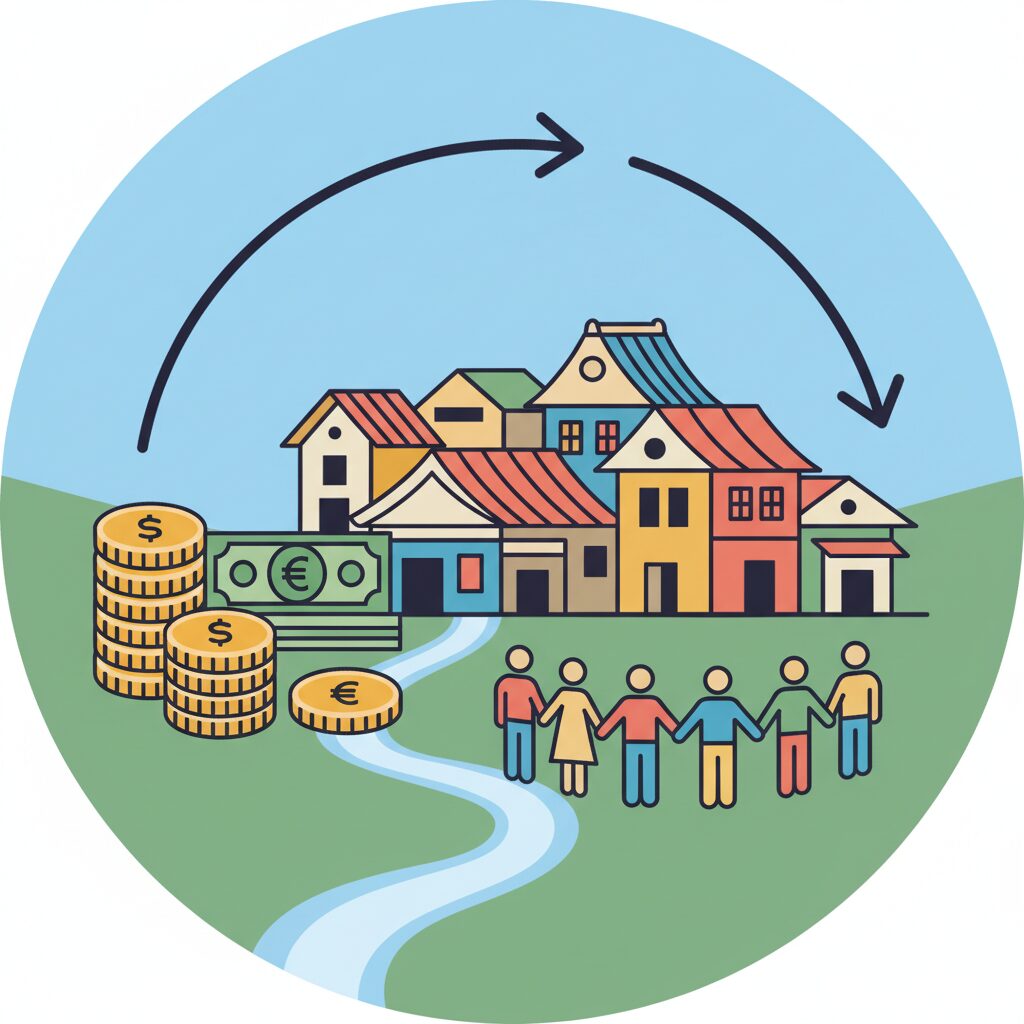
Let’s clarify this term first. A `Chonaikai` (町内会), sometimes referred to as a `Jichikai` (自治会), is a neighborhood association. Think of it as a local government for your block or a few neighboring blocks. It’s a grassroots organization run by residents, for residents. This system isn’t new; it has centuries-old roots as a way for communities to self-manage and look out for one another. The monthly fee you pay is your contribution, your membership dues for belonging to this hyper-local community.
So, where does this money go? It’s not filling the pockets of some local leader. Instead, it covers the maintenance of shared spaces and services that keep Japanese neighborhoods famously clean, safe, and livable. The fee supports many aspects of your daily surroundings.
The Unseen Infrastructure of Daily Life
First, there’s safety and upkeep. Those bright streetlights illuminating your path home from the station? The Chonaikai usually pays the electricity bills and manages bulb replacements. They organize and fund local fire watches and disaster preparedness drills. That storage shed at the corner of the neighborhood park? It likely holds emergency supplies—water, hard biscuits, portable toilets—all managed and funded by the Chonaikai.
Next is the vital issue of garbage. In Japan, trash management is treated seriously. Your fee helps maintain communal garbage collection points. It pays for the distinctive yellow or blue nets that keep crows away, and it funds cleaning supplies used when residents take their turn on the cleaning rota, or `toban`. In some areas, the Chonaikai even manages the collection of recyclables like paper and cardboard, selling them and reinvesting the profits back into the community fund.
The Social Fabric
Beyond practical needs, your fee supports the social life of the neighborhood. It serves as the budget for local `matsuri`, or festivals. The paper lanterns, food stalls, children’s games, and the mikoshi (portable shrine) paraded through the streets—all are funded by Chonaikai resources and volunteer efforts. It pays for New Year’s mochi-pounding events, summer festivals, and respect-for-the-aged day celebrations. It also covers the printing and distribution of the `kairanban`, a clipboard with local announcements passed from house to house, informing everyone about everything from upcoming construction to recent bicycle theft alerts. In short, your fee helps maintain both the tangible and intangible elements of your community.
The Osaka Angle: Community, Connection, and a Dash of Obligation
While Chonaikai exist throughout Japan, their character and intensity can differ greatly. In Osaka, they tap directly into the city’s core identity. Tokyo often feels like a vast collection of strangers; you can live in a huge apartment building for years without knowing your neighbors’ names. It’s a city that offers remarkable freedom through its anonymity. Osaka, especially once you leave the high-rise areas of Umeda and Namba and enter the residential `shotengai` (shopping arcade) neighborhoods, presents a completely different dynamic.
Osaka’s culture is rooted in a close-knit, merchant-class community. It’s a city defined by relationships, by “who do you know” and “who’s your neighbor.” The Chonaikai represents the modern-day form of this. It’s the formal system that supports the city’s renowned friendliness. That “friendliness” isn’t just strangers saying hello; it’s the result of a framework that encourages, and sometimes enforces, social interaction.
This is where you encounter the quintessential Osaka `oba-chan` (auntie/middle-aged woman). She’s often the driving force behind the local Chonaikai. She knows everyone, has lived on the block for fifty years, and isn’t shy about telling you that you mistakenly set out burnable trash on plastics day. She may come across as bossy, but she’s also the one who notices when you’ve been ill and shows up at your door with a bag of oranges. This reflects the `sewa-yaki` spirit—an ingrained willingness to get involved, help out, and manage community matters. The Chonaikai is their territory. In Tokyo, you might receive a polite, printed notice. In Osaka, you’re more likely to get a personal visit from the Chonaikai president asking if you’ll help carry tables for the summer festival. It’s more personal, more direct, and carries a stronger sense of social obligation. This system isn’t just about paying dues; it’s about being an active, visible participant in the local community.
“Is it Mandatory?” The Gray Area Foreigners Stumble Into
This is the million-yen question. Coming from a culture where a “neighborhood association” sounds like a voluntary club for retirees who love gardening, being told that the fee is part of your move-in costs can feel odd, even unfair. So, do you have to pay? The answer is a typical Japanese “yes and no,” which usually means “yes.”
Legally, joining a Chonaikai is voluntary. No law requires you to become a member or pay fees. However, social reality often outweighs legal details. When you rent an apartment, participation is frequently included in the lease agreement as a condition of tenancy. The landlord, who is usually a member of the Chonaikai, makes this a requirement. For them, having a tenant who refuses to join is a headache they want to avoid. It reflects poorly on them and disrupts the harmony of the building and neighborhood.
What happens if you refuse? The consequences aren’t legal but are very practical. The biggest issue almost always involves garbage. The Chonaikai manages the local collection point. If you’re not a member, they can—and sometimes do—prohibit you from using it. This presents an immediate and serious problem: where will you put your trash? Some people have found their trash bags left on their doorstep with a note. It’s a passive-aggressive but very effective way to enforce compliance.
Beyond trash, opting out sends a clear social signal: “I am not one of you.” You might not receive the `kairanban` newsletter, leaving you uninformed about planned water outages or local events. In an emergency like an earthquake, you might not be on the list of residents to be checked on. You become an outsider, a ghost in the community. While some may prefer this isolation, in Osaka’s community-oriented culture, it can cause quiet but ongoing tension that makes daily life less comfortable. It’s viewed less as a stand for individual rights and more as selfishly refusing to contribute to the collective good you benefit from every day.
A Peek Behind the Curtain: What Your Yen Actually Buys
Let’s reframe this. Rather than viewing the Chonaikai fee as a tax, think of it as a subscription to an exclusive local living service. What are the benefits? They are significant, especially for a foreign resident adjusting to life in a new country.
Enhanced Safety and Peace of Mind
From my perspective as a woman who highly values safety, the Chonaikai is a tremendous asset. The well-lit streets I mentioned aren’t a trivial detail. But it extends beyond that. Many Chonaikai organize volunteer night patrols, with residents taking turns walking the neighborhood wearing official vests. This visible presence serves as a strong crime deterrent. They also function as a neighborhood watch, keeping an eye out for anything suspicious. This plays a major role in why Japan, and Osaka in particular, feels so incredibly safe even late at night.
Most importantly, there is disaster preparedness. Japan is vulnerable to earthquakes and typhoons. When a major disaster occurs, the first responders aren’t the fire department or military; they are your neighbors. The Chonaikai acts as the designated command structure in the immediate aftermath. They open the local school as an evacuation shelter, distribute emergency supplies, and perform roll calls to ensure everyone is accounted for. They know which elderly or disabled residents might need assistance. Your monthly fee supports this life-saving system. It’s a small cost for priceless insurance.
A Clean and Orderly Environment
The immaculate condition of Japanese streets is well-known. This isn’t because people refrain from littering; it’s because communities are organized to maintain cleanliness. Chonaikai often arrange monthly or seasonal neighborhood clean-up days when everyone comes out to sweep streets, pull weeds, and tidy local parks. Your participation may not always be mandatory, but your fee helps fund these efforts. The strict management of garbage collection—including precise sorting rules, designated collection days, and well-kept disposal stations—is all coordinated by the Chonaikai to preserve a hygienic and pleasant environment for all. You’re paying to live in a community that honors shared spaces.
An Authentic Cultural Passport
For anyone eager to experience “real” Japan beyond the usual tourist spots, the Chonaikai serves as your front-row ticket. While the big, well-known festivals are enjoyable, the smaller, local matsuri in your neighborhood reveal the true heartbeat of the community. You’ll see children running around in `yukata`, grandparents sharing grilled squid and beer, and neighbors socializing. By paying your dues, you’re not just a spectator; you’re a supporter. You’ve helped fund the lanterns. You have a rightful place there. Attending these events is one of the quickest ways to break the ice and be accepted as part of the community, not just another transient foreigner.
Navigating the System: Tips for the Savvy Foreign Resident
So, how do you manage this? The key is to approach it with understanding and a proactive attitude. It’s not a system to resist, but one to navigate.
Inquire Before You Ink
When apartment hunting, include the Chonaikai in your checklist. Ask your real estate agent directly: “Is there a Chonaikai fee for this building?” “How much is it per month or year?” “Is participation required as a lease condition?” Knowing this in advance helps avoid surprises and allows you to budget accordingly. The cost can range from a modest 300 yen per month to a more considerable 2,000 yen, so it’s useful information to have.
Understand Your Contribution
Once you move in, try to find out how your money is being used. You might receive a newsletter or see notices on the community bulletin board. Understanding the tangible benefits—the festival, the clean park, the disaster supplies—can make the payment feel less like a burden and more like a valuable investment.
Choose Your Level of Engagement
Paying the fee is the baseline, and often enough to be considered a member in good standing. Beyond that, your level of active involvement is your choice. You’re not expected to attend every meeting or volunteer for every cleanup day, especially if your Japanese isn’t fluent. However, a small effort goes a long way. If there’s a neighborhood festival, drop by for an hour. If there’s a cleanup day and you have a free morning, grab some gloves and join in. These small acts demonstrate your willingness to be part of the community and are deeply appreciated. It’s the fastest way to turn anonymous neighbors into friendly faces.
Use It as a Resource
Remember, the Chonaikai can also serve as a support network. If you have ongoing noise issues with a neighbor or problems with a communal space, the Chonaikai leaders can act as mediators. They are the go-to people for resolving local matters before they escalate. Building a good relationship with them can be extremely helpful.
This small monthly fee is much more than a simple transaction. It represents your buy-in to a society that values the collective over the individual. It’s the financial lubricant that keeps the wheels of community—safety, cleanliness, and social cohesion—turning smoothly. While this obligation might initially feel challenging from a more individualistic Western perspective, understanding its purpose reveals a fundamental truth about life in Osaka. The city’s vibrant energy and warmth aren’t just in the air; they are built, managed, and maintained block by block, neighbor by neighbor. By paying your Chonaikai fee, you’re doing more than settling a bill—you’re taking your official place in the neighborhood, becoming part of the city’s intricate, living fabric.