
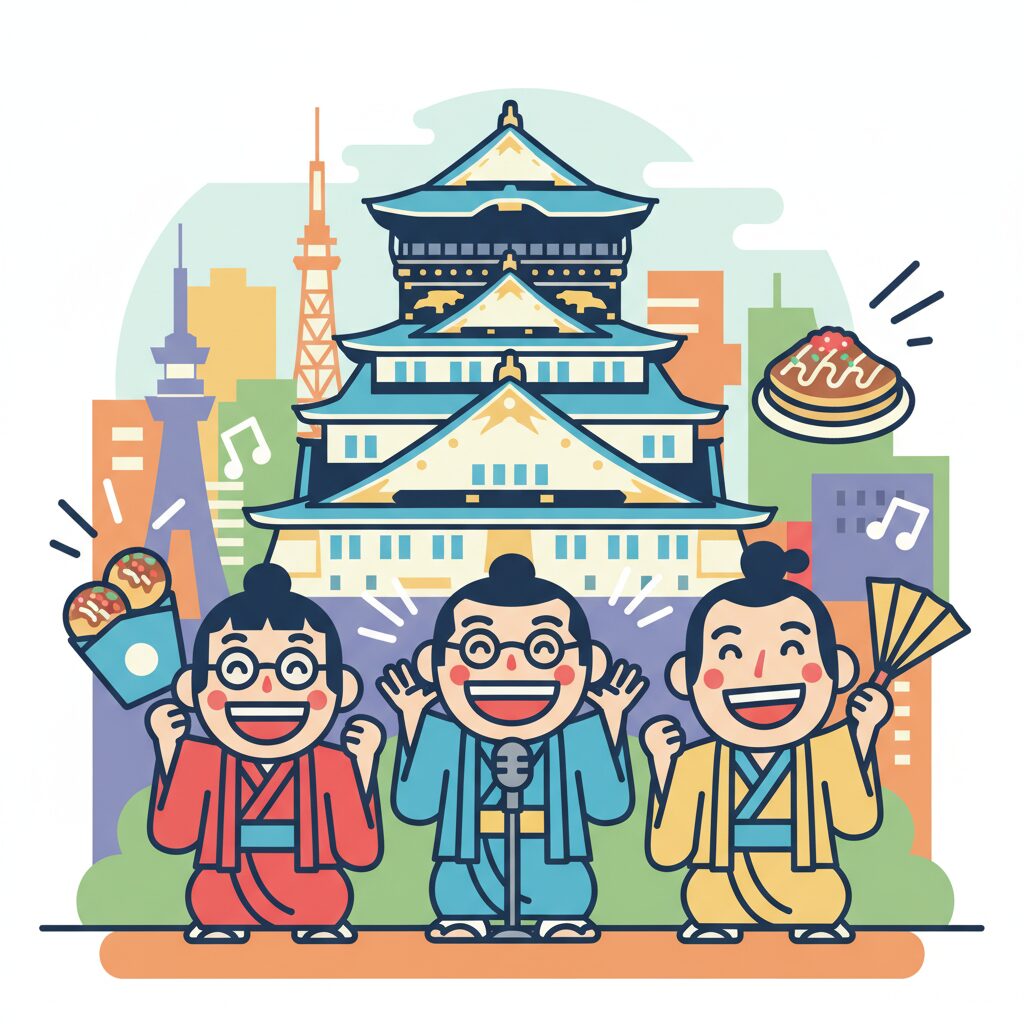
The first time it happened, I was completely blindsided. I was in a cozy, standing-only bar tucked away in a Namba back-alley, chatting with a group of newfound friends. I was recounting a slightly chaotic story about my recent trip to a fabric market, detailing the overwhelming colors, the aggressive shopkeepers, the bewildering search for a specific type of silk. I was painting a picture, setting a mood. As I paused for a breath, ready to launch into the next part of my narrative, a man with a Tigers baseball cap tilted his head and asked, with zero malice and all the casualness of someone asking for the time, “De, ochi wa?” — “So, what’s the punchline?”
I froze. The punchline? There was no punchline. It was just a story, a slice of life, an anecdote. The other people in the group nodded, their eyes fixed on me, waiting expectantly. The silence stretched. In that moment, I felt like a comedian who had forgotten the final joke of their set. I had committed a cardinal sin of Osaka conversation without even knowing the rulebook existed. This city, I quickly learned, runs on a different conversational currency. It’s not just about what you say, but how you package it. Here, communication is a performance, a service, and every story, no matter how small, is expected to come with a bow on top: the ‘ochi,’ or the punchline. This isn’t just a preference for humor; it’s a deeply ingrained social contract that defines the rhythm and soul of daily life in Osaka, setting it worlds apart from the quiet subtleties of Tokyo and the rest of Japan. It’s the key to understanding why talking to a stranger here can feel so instantly, and sometimes intimidatingly, familiar.
The way Osaka infuses everyday interactions with unexpected twists is mirrored in its vibrant grocery scene, where even a visit to local supermarkets in Osaka can become a memorable adventure.
The Sacred Rule of ‘Ochi’: What Exactly Is a Punchline?
Before you start worrying that you need to join a stand-up comedy class to navigate a conversation in Osaka, let’s first clarify what ‘ochi’ truly means. It’s a wonderfully versatile concept that extends well beyond a mere joke. An ‘ochi’ is the resolution, the key point, the satisfying final note that makes the listener feel their time was well spent. It’s the reason the story was told in the first place. Without an ‘ochi,’ a story feels like a shaggy-dog tale that simply drags on, leaving everyone a bit empty and confused. It’s a conversational dead end.
An ‘ochi’ can take many shapes. It could be a genuinely funny punchline that gets everyone laughing. It might be a surprising twist, an unexpected outcome that overturns the listener’s expectations. Often, it’s a bit of self-deprecating humor where you end up as the joke’s target—a highly valued art form in this city. It could also be a simple, ironic comment or a clever summary that neatly ties everything together. For instance, after a long story about a frustrating day dealing with bureaucracy, the ‘ochi’ might be, “And after all that, I realized I had left the most important document at home. Of course.” It’s not a joke in the traditional sense, but it delivers a perfect, relatable, and slightly humorous ending. The key is closure.
This expectation is rooted in a deep respect for the listener. In Osaka, you’re not just speaking at someone; you’re entering into an agreement. The speaker offers the entertainment, and the listener contributes their attention. Demanding an ‘ochi’ is the listener’s way of saying, “I’m invested in this. I’m following you. Now, give me the payoff.” It’s an active, engaged form of listening. To tell a rambling, pointless story is to break that pact. It’s like inviting someone to dinner but forgetting to serve the main course. You’ve wasted their time and emotional energy, a serious faux pas in a culture that prizes efficiency and mutual satisfaction.
“So, What’s the Point?” – The Sound of Osaka Conversation
Stroll through any shotengai (shopping arcade) in Osaka, and you’ll hear it. The sound goes beyond the clatter of bicycles and vendors’ calls. It’s the distinctive rhythm of conversation: a rapid-fire, energetic exchange that feels more like a verbal tennis match than a polite chat. This is where the straightforwardness of the Osaka dialect truly stands out. While Tokyo conversations offer a masterclass in subtlety, layered with indirect hints and unspoken meanings, Osaka’s communication is refreshingly—and sometimes shockingly—direct. The phrase “De, ochi wa?” serves as its unofficial motto.
This isn’t seen as rude. It’s participation. It’s the listener’s role in the performance. They’re not merely a passive audience; they are co-creators of the conversational flow. This dynamic draws from the manzai comedy duo format that permeates all levels of society. The boke is the comic, who says something absurd or makes a mistake. The tsukkomi is the straight man, who promptly corrects with a sharp, witty comeback. In everyday life, people seamlessly switch between these roles. If you’re telling a story, you’re the boke. The listener, wielding their potential tsukkomi or their call for an ochi, is the straight man, keeping the pace alive.
This creates a completely different social atmosphere. A Tokyo taxi ride might be quiet or filled with polite formalities. An Osaka taxi ride is a potential comedy routine. The driver might make a dry joke about your destination or share a short, punchy story from their last fare, always with a clear start, middle, and end. The woman selling you takoyaki won’t just hand over your food; she might tease you about your order size, finishing with a laugh. These aren’t scripted interactions—they’re the default communication mode, turning even mundane exchanges into moments of human connection and shared amusement.
The Merchant’s Legacy: Why Time is Funny
To grasp why this conversational style is so deeply ingrained in Osaka’s culture, you need to look at its history. Osaka was never the political capital like Kyoto or Tokyo. It was the nation’s kitchen, a city of merchants (shonin). For centuries, commerce was its lifeblood. In a merchant’s world, time is money, and relationships are everything. You had to build rapport quickly, pitch effectively, and close deals without wasting time.
This commercial pragmatism shaped the city’s character. Meandering, pointless talks were bad for business. You had to be sharp, engaging, and memorable. The art of the elevator pitch was mastered long before elevators existed. Humor became a valuable tool. A shared laugh could break the ice, build trust, and make a transaction feel less like a cold exchange and more like a friendly agreement. Service extended beyond selling goods; it included offering a pleasant, entertaining interaction.
This legacy endures. An Osakan telling a story is, in essence, making a sales pitch. They’re selling you their experience, and the ‘ochi’ is the satisfying product delivered at the end. They want you to leave the conversation feeling good, like you got something—a laugh, a surprise, a sense of connection. This merchant mindset fosters a deep desire to ensure the other person enjoys themselves. It’s a form of hospitality, served through words instead of tea.
Manzai in the Streets: Everyone’s a Comedian (Sort Of)
The other foundation of Osaka’s conversational culture is manzai. It’s everywhere. Comedy is one of the city’s biggest cultural exports, with the entertainment giant Yoshimoto Kogyo headquartered here. Comedians are local celebrities, and their style—the fast-paced boke and tsukkomi dynamic—is the model for everyday interactions.
Foreigners are often surprised at how quickly people offer a playful jab or witty correction. If you mispronounce a word, a Tokyo friend might politely ignore it or gently correct you later. An Osaka friend is likelier to exclaim dramatically, “What did you just say?!” then laugh with you. This isn’t mockery; it’s a tsukkomi. It signals intimacy and affection. It shows they feel comfortable enough to play the game. They treat you like a local.
This can come as a bit of a culture shock. But once you understand the roles, you start noticing it everywhere. The elderly chatting on the bus, salarymen at a ramen counter, students hanging out in Amerikamura—they all unconsciously perform micro-manzai routines. It’s a shared effort to make life more interesting, less dull. The aim isn’t to be mean but to spark humor in everyday life. A conversation succeeds when everyone plays their part and shares a laugh.
How to Survive a Punchline-Driven World
So, how can you navigate this as a foreigner who wasn’t brought up in a culture of constant comedic performance? The good news is, you don’t have to be a natural-born entertainer. The expectation isn’t that you deliver a perfect, hilarious monologue. It’s about being thoughtful and considerate of your listener. It’s about putting in a bit of effort to organize your thoughts.
First, pause for a moment before you speak. When you’re about to tell a story, ask yourself: what’s the purpose of this? What’s the most interesting, surprising, or funny part? Focus on that. You don’t need to script it, but having a clear goal will stop you from rambling without direction.
Second, get good at the simple ‘ochi.’ It doesn’t require a booming punchline. A straightforward concluding thought works just fine. After a story about getting lost, you might finish with, “So in the end, I was only two blocks from where I started. A complete idiot.” That self-deprecating twist is a classic, top-quality ‘ochi.’ Or, if the story is just a straightforward account of your day, end with a clear wrap-up like, “And that was pretty much my day.” It’s not funny, but it signals an ending, giving your listener the closure they want.
Third, learn to appreciate the tsukkomi. When someone makes a witty comeback to something you said, the best response is to laugh. Don’t get defensive or embarrassed. See it for what it is: a sign of engagement, a verbal high-five. They’re playing with you. By laughing along, you show that you understand the game and are happy to join in. This is how friendships are formed here.
Finally, embrace self-deprecation. It’s the conversational superpower in Osaka. Making yourself the gentle butt of your own joke demonstrates humility and that you don’t take yourself too seriously. It immediately breaks down social barriers and makes people warm to you. It’s the quickest way to fit in and share a sincere moment of connection.
The Misunderstanding: Is It Rude or Just… Osaka?
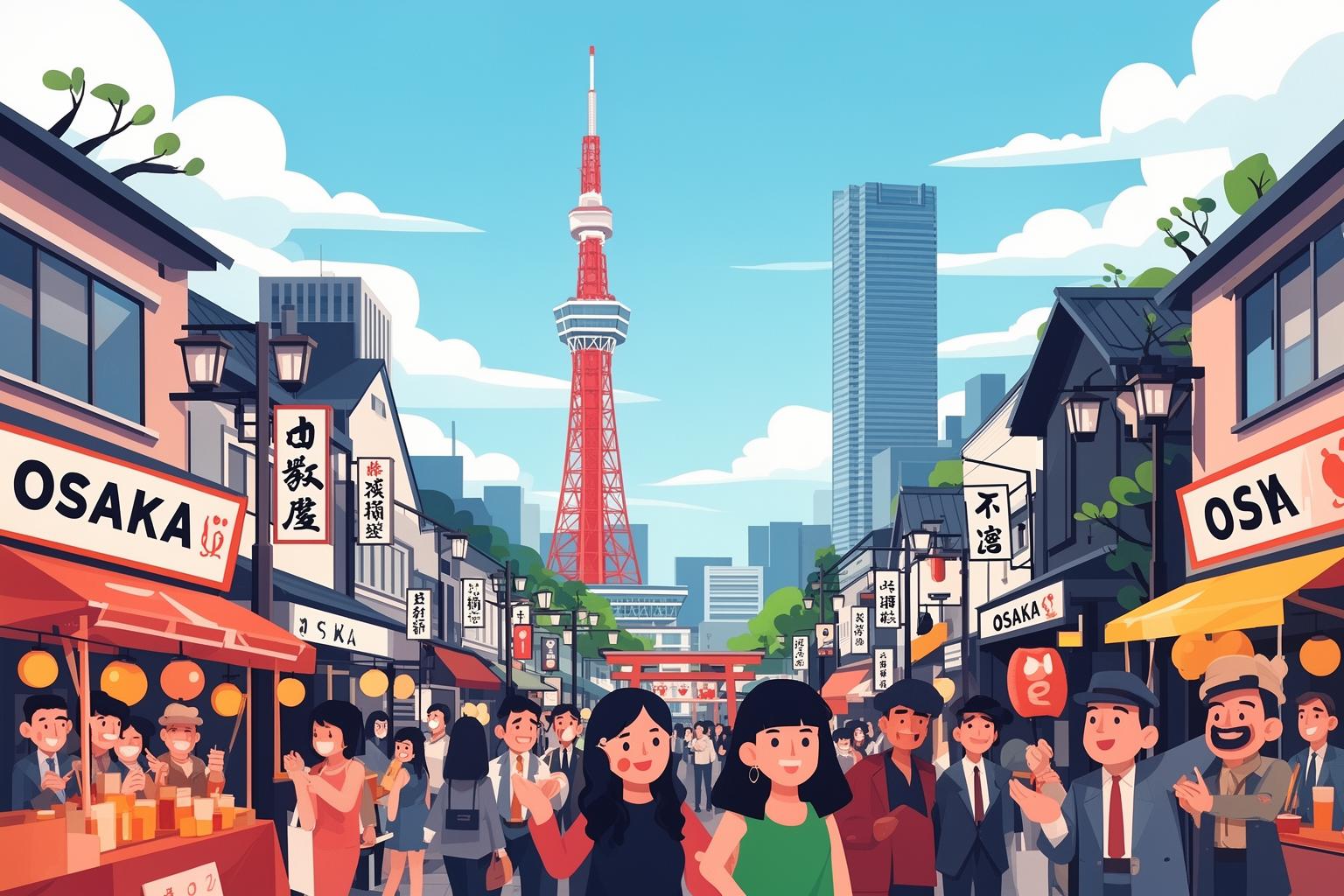
For many newcomers, especially those used to more indirect or polite communication styles, the Osaka style can be quite startling. The straightforward request for a punchline may come across as an abrupt interruption. The frequent tsukkomi might feel like criticism. It’s easy to misread this conversational style as rude, impatient, or even hostile.
However, that interpretation completely misses the point. It’s not about aggression; it’s about closeness. In Osaka, beating around the bush is seen as cold and distant. Being direct, playful, and insistent on a good story signals warmth. It’s a way of saying, “Let’s bypass formalities and truly connect.” The person asking for your ‘ochi‘ isn’t trying to hurry you; they’re aiming to share a moment with you. They want to reach the part where you can both laugh, be surprised, or shake your heads in mutual understanding. They want to create a connection.
Think of it this way: in many cultures, politeness maintains a comfortable distance. In Osaka, politeness is about closing that distance as quickly as possible, and humor is the fastest way to achieve that. It acts as a social lubricant that smooths over potential awkwardness and builds immediate rapport. A shared laugh holds more value than a thousand polite nods.
The True Meaning of an ‘Ochi’
Ultimately, the fixation on the ‘ochi’ reveals something deeply meaningful about the character of Osaka. It reflects a city that prioritizes human connection above all else. A story is more than just a series of events; it’s a gift. The ‘ochi’ serves as the core of that gift. It proves that you’ve considered your audience, that you respect their time, and that your main intention is to share an experience, not merely to convey information.
Living in Osaka means learning a new language—not just the dialect, but the language of the ‘ochi’. It’s a language where the aim of every conversation is to discover a shared emotion—often laughter. This turns every interaction, whether buying groceries or asking for directions, into a chance for a small, fleeting performance.
At first, it can feel daunting, but once you understand the rhythm, it becomes clear that it’s a wonderfully efficient way to live. There’s less confusion, less second-guessing. You know where you stand. And more often than not, you find yourself in the midst of a shared laugh. The ‘ochi’ is more than just a punchline; it’s the philosophy that every moment of life, no matter how ordinary, is worth shaping into something that can be offered to another person—a small, carefully crafted gift of a story.








