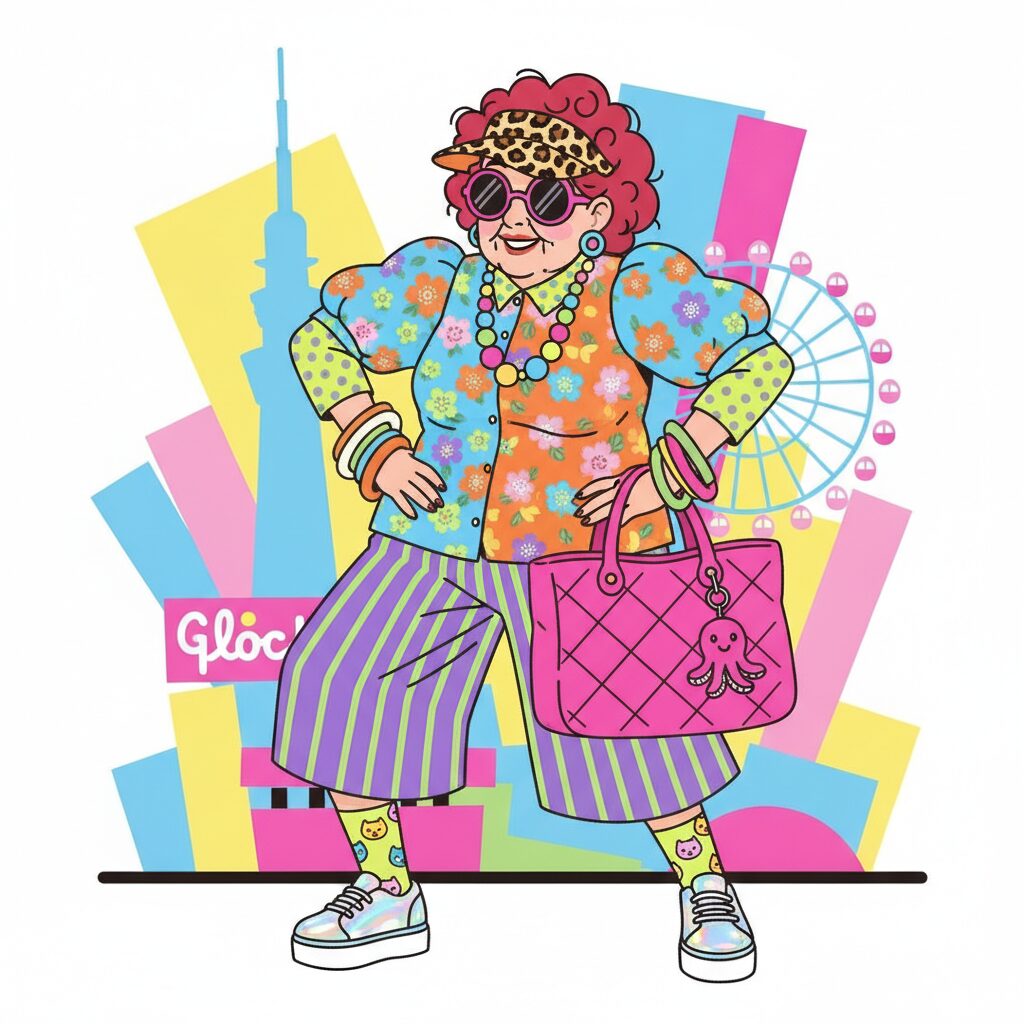
Walk through any bustling Osaka shotengai, one of those covered shopping arcades that feel like the city’s arteries, and you’ll see her. Maybe it’s a flash of brilliant purple, or the unmistakable pattern of leopard print on a blouse. You’ll hear her before you see her, a voice rich with the energetic, rolling cadence of Osaka-ben, cutting through the noise of the crowd, laughing with a shopkeeper. She might be expertly inspecting a mackerel, her eyes sharp and discerning, or pulling a small, hard candy from a cavernous purse to hand to a fussing child. This is the Osaka Obachan, the middle-aged woman of Osaka, a figure as iconic to this city as the Glico Running Man or the formidable Osaka Castle. She is a legend, a stereotype, a national caricature. In television shows and comedy sketches across Japan, she is portrayed as loud, flashy, a bit pushy, and armed with a seemingly endless supply of “amechan,” or little candies. For foreigners living in Osaka, the first encounter can be a culture shock, a whirlwind of direct questions and unsolicited advice that feels worlds away from the reserved politeness often associated with Japan. It’s tempting to see this vibrant, formidable figure and simply accept the stereotype. It’s easy to laugh at the caricature and move on. But to do so is to miss the point entirely. The Osaka Obachan isn’t a joke; she is the bedrock of her community. She is the living, breathing embodiment of Osaka’s unique soul: pragmatic, community-focused, fiercely loyal, and unapologetically human. To truly understand what it’s like to live in Osaka, to get a feel for its rhythm and its rules, you have to look beyond the leopard print and understand the vital role she plays in the daily life of this metropolis. She is not just a resident of the city; in many ways, she is the city.
The richness of Osaka’s character is further revealed when you consider how everyday life adapts, as seen in living in Osaka’s public housing, which offers a window into the city’s practical yet deeply communal way of life.
Decoding the Stereotype: The Armor of an Obachan

Before we can grasp the reality, we need to analyze the famous image. The stereotype doesn’t emerge from nowhere; it’s an exaggeration of very real, visible traits. These traits, however, aren’t random quirks—they serve as a form of self-expression and a practical toolkit for navigating life in this merchant city.
The Uniform of Visibility
Let’s begin with the appearance. The leopard print, the bright colors, the animal patterns, and the sometimes-daring mix of textures. In Tokyo, the aesthetic for women of a certain age often leans toward understated elegance—beiges, navys, and tasteful pearls. It’s about blending in and projecting quiet sophistication. The Osaka Obachan’s fashion philosophy is completely different. It’s about being seen. It’s a bold statement of presence. This isn’t about lacking taste; it’s a rejection of the notion that one should fade into the background. Osaka is a city built on commerce, thriving by standing out in a crowded market to make a sale. That spirit pervades the culture. Her clothing is a way of saying, “I am here, I have an opinion, and I matter.” It’s a visual expression of the confidence and straightforwardness that define Osaka’s character. It’s practical, too. In a packed train station or busy market, that bright yellow jacket acts as a beacon, making it easy for friends to find her.
The Currency of Connection: “Amechan”
Then there’s the legendary “amechan.” Yes, it’s true—many Osaka Obachan do carry candy in their purses. But it’s not a meaningless habit. The amechan is a social tool of remarkable power. Offering candy is a gesture that says, “Let’s break down the barriers between us.” It’s used to soothe a crying child on the train (giving the overwhelmed mother a moment of relief), to thank a helpful clerk, or to strike up a conversation with a stranger sitting nearby. In a society that can often feel formal and distant, the amechan is a small, sweet weapon against anonymity. It’s an icebreaker, a gesture of goodwill, a tiny act of community-building that fits in the palm of your hand. When an Obachan offers you a candy, she’s not just handing over a piece of sugar; she’s inviting you, if only briefly, into her world. It’s a small, edible handshake.
The Language of Honesty
Her way of speaking—direct, straightforward, and often loud—can be the most surprising aspect for newcomers. The nuanced, indirect speech typical of other parts of Japan is often missing. An Osaka Obachan won’t say, “It might be a little chilly today, perhaps a jacket would be a good idea.” She’ll say, “You’re gonna be cold in that! Go put a sweater on!” This isn’t rudeness; it’s efficiency. It’s honesty. In a city of merchants, time is money and clear communication prevents costly misunderstandings. This bluntness is a form of care. When an Obachan tells you your shirt is on backwards or that you have a bit of rice on your cheek, she’s not trying to embarrass you. She’s looking out for you, just as she would for her own family. She treats you like an insider. The real insult, in her view, would be to notice the problem and say nothing out of a misplaced politeness, letting you go around looking silly.
The Reality: Guardians of the Community
The flashy clothes and straightforward speech are just the surface. The true role of the Osaka Obachan runs much deeper. She is the unofficial, unpaid, and often unacknowledged manager of her local community. She serves as the social glue that holds neighborhoods together through a complex web of observation, communication, and mutual responsibility.
The Unofficial Neighborhood Watch
In the dense residential areas and winding shotengai of Osaka, the Obachan act as the eyes and ears of the street. They possess a keen, almost intuitive awareness of the daily patterns in their environment. They know which cat belongs to which house. They know exactly when the tofu seller makes his rounds. They recognize who is new to the apartment building, and notice when an elderly neighbor, who always puts their garbage out at precisely 7 a.m., hasn’t done so. This isn’t idle nosiness or gossip; it is a deeply ingrained system of communal care. In Tokyo, you could live in a large apartment building for years without interacting with your neighbors. Anonymity is the norm. In Osaka, largely thanks to the Obachan network, that kind of isolation is much more difficult to maintain. They are the first line of defense. If a child looks lost, an Obachan will be the first to approach them. If a stranger lingers suspiciously, they will be noticed. This constant, low-level vigilance creates a tangible sense of safety and belonging that is rare in a city with millions of residents.
The Keepers of Social Rules
Every community has rules, both written and unwritten. In Osaka, the Obachan are often the main enforcers. They are the ones who will gently but firmly remind you that today is for burnable trash only, not plastics. They will tell you, without hesitation, if your bicycle is blocking tactile paving intended for the visually impaired. This isn’t the meddling of a busybody; it’s essential, practical social maintenance. They ensure the smooth functioning of shared public spaces. Their authority doesn’t come from any official position, but from a lifetime of accumulated local knowledge and a shared understanding that someone needs to keep things in order. They uphold the rules necessary for community harmony. At the same time, they have a pragmatic disregard for rules they find inefficient or simply pointless. An Osaka Obachan will wait patiently at a crosswalk when traffic is heavy, but if the street is empty, she will often ignore the red pedestrian signal, look both ways, and cross with purposeful determination. It’s the ultimate expression of practicality over needless formality.
The Human Social Network
Long before social media, the Obachan network was the most efficient information-sharing system in the city. Its primary nodes are places of daily life: the local supermarket, the public bathhouse (sento), the park bench, the line at the post office. This is where information is exchanged. It’s not just idle gossip; it’s a vital flow of hyper-local, practical knowledge. “The greengrocer near the station has sweet watermelons today.” “The clinic on the corner is accepting new patients.” “They’re repairing the road on the main street, so the bus will be delayed.” This constant chatter binds neighborhood residents together. It fosters a sense of shared experience and mutual support. For a foreigner trying to navigate a new life, tapping into this network can be invaluable. A casual conversation with an Obachan at the supermarket can provide better advice on where to find a good electrician than any online search.
How to Interact with an Osaka Obachan: A Practical Guide
For non-Japanese residents, interacting with the Osaka Obachan can initially feel daunting. Their straightforwardness may be mistaken for aggression, and their familiarity might seem intrusive. However, with the right attitude, these interactions can become one of the most rewarding parts of living in Osaka.
Embrace the Directness
When an Obachan asks a very personal question (“Are you married? Why not?”) or gives an unsolicited opinion (“That color doesn’t suit you”), your first reaction might be to feel offended or defensive. The key is to change your perspective. This isn’t an attack; it’s an invitation. She is trying to connect with you on a genuine level, bypassing superficial small talk. A good approach is not to pull away, but to match her energy. A bit of humor goes a long way. If she comments that your Japanese sounds strange, you can laugh and say, “I’m still learning! It’s tough!” She will almost always appreciate your honesty and effort. See her directness not as criticism, but as a doorway to real conversation.
Always Accept the Candy
This is a simple yet vital rule. If an Obachan offers you an amechan, you accept it. Smile, say “Ookini” (Osaka dialect for “thank you”), and take the gesture as it is: a sign of kindness. Refusing can be seen as rejecting her goodwill, like turning down a handshake. It creates a distance opposite to what she wants. Even if you don’t like candy, just save it for later. This small exchange is a basic ritual of Osaka street-level diplomacy. It costs nothing but signals that you respect the local culture and are willing to join in.
Don’t Fear the Conversation
In Tokyo, starting a conversation with a stranger on the train is uncommon. In Osaka, it happens frequently, often initiated by the Obachan. If one begins talking to you, don’t worry. She’s probably just curious. She wants to know where you’re from, why you’re in Japan, and if you enjoy the food. Be open, friendly, and answer as best as you can. They are often surprisingly patient with learners of Japanese and genuinely happy to chat. These spontaneous conversations are your entry into the real Osaka. They might lead you to the best takoyaki stand not found in guidebooks or give you a brief lesson on the history of a local temple. Responding with warmth and openness will unlock doors you never expected.
The Obachan is the Soul of Osaka
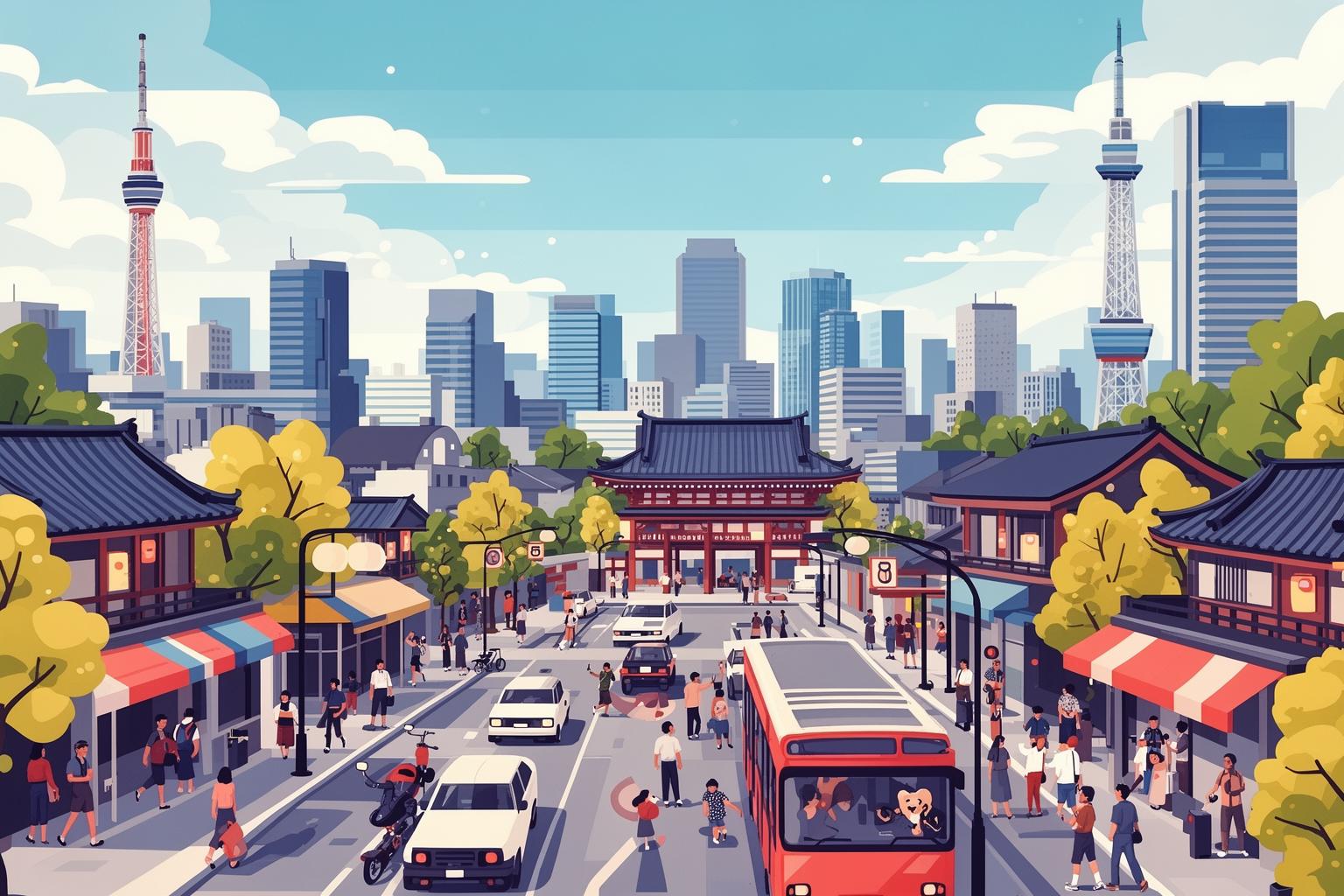
Ultimately, the Osaka Obachan is much more than just a humorous regional figure. She represents the fierce, warm, and practical heart of her city. She embodies the traits that set Osaka apart from the rest of Japan. While Tokyo values harmony, often achieved through restraint and subtlety, Osaka cherishes humanity in all its loud, messy, and straightforward glory. The Obachan stands as the emblem of this philosophy.
Her presence is a reflection of a city shaped by merchants, where clear communication was essential, relationships were a form of currency, and community was crucial for survival and success. She keeps this spirit vibrant. She reminds everyone that a city is more than a collection of buildings and train lines; it is a network of people with a responsibility to care for one another. She demonstrates that efficiency and warmth can coexist, and that a bit of directness, a splash of humor, and a pocketful of candy can make life in a vast city feel like living in a small town. To live in Osaka is to live within her influence, and to understand her is to truly grasp the brilliant, beating heart of this unique city.