
You step onto the subway platform at Umeda Station. The rush hour crowds swirl around you in a chaotic dance of commuters heading home. The air feels heavy with the summer humidity. You wipe a bead of sweat from your forehead. You check your phone for the train schedule. Suddenly, you feel a gentle tap on your shoulder. You turn around. You expect to see a station attendant. You expect someone asking for directions. Instead, you face an older Japanese woman. She wears a brightly colored shirt adorned with a fierce leopard print face. She smiles warmly. She extends her hand toward you. In her palm rests a single, brightly wrapped hard candy. She nods at you. You hesitate for a second. You wonder if there is a catch. You wonder if she wants money. You are experiencing your first authentic Osaka initiation. You have just been offered an ame-chan.
For foreign residents settling into life in Japan, or travelers spending a few weeks exploring the Kansai region, this interaction can be highly confusing. In many major cities around the world, a stranger approaching you on public transit is an immediate red flag. Your urban survival instincts tell you to look away. You assume it is a distraction technique for a pickpocket. You assume it is an aggressive sales pitch. But Osaka is different. Osaka operates on a completely different social frequency than Tokyo, London, or New York. The gesture of handing out a piece of candy is not a scam. It is pure, unadulterated local hospitality. It is a micro-interaction that perfectly encapsulates the soul of this merchant city. Understanding this simple exchange is the key to understanding the mindset of the people who call Osaka home. This guide will walk you through the unspoken rules of this phenomenon, ensuring that you can navigate the streets of Kansai with confidence and a smile.
What is Ame-chan? Osaka’s Sweetest Cultural Quirk
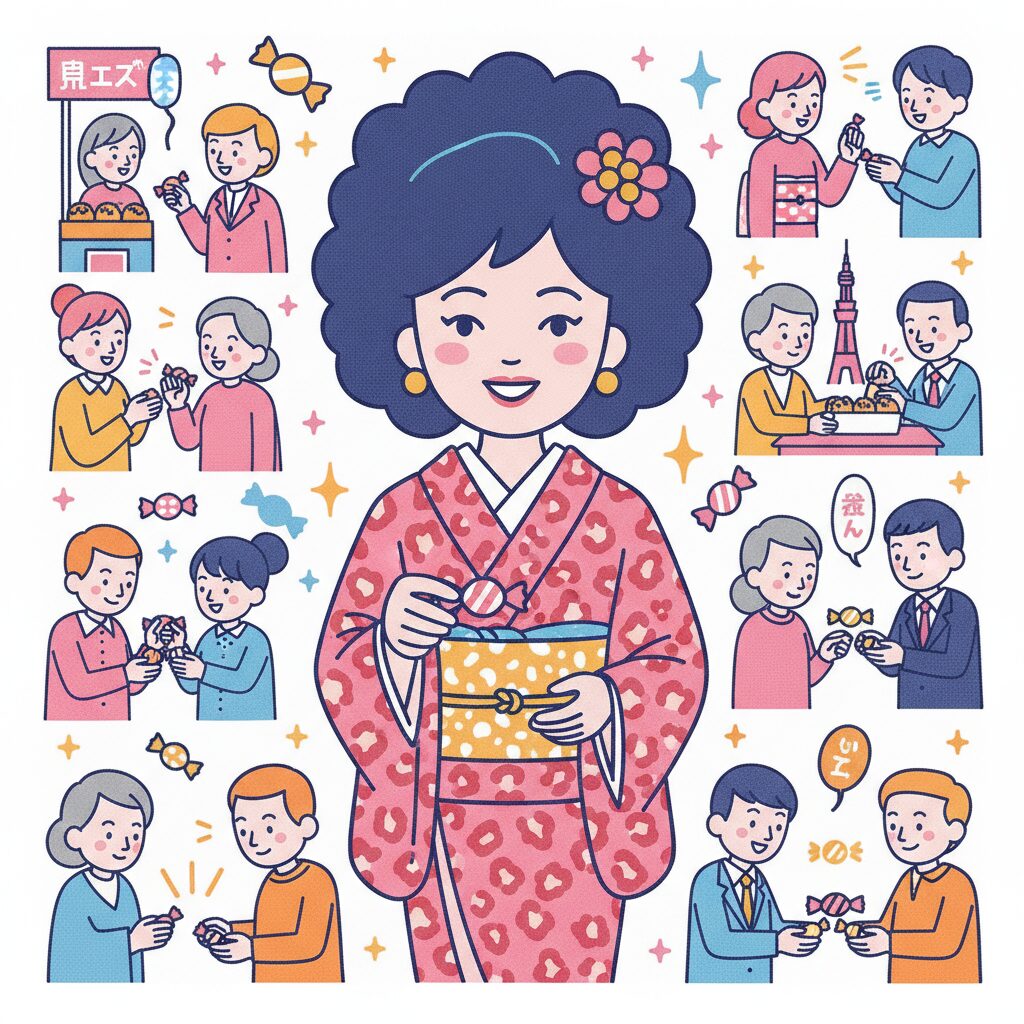
To truly understand why this occurs, you first need to familiarize yourself with the terminology. Looking up the word for candy in a standard Japanese dictionary reveals the term ame. In Tokyo, when someone wants candy, they ask for ame. However, if you cross the invisible cultural boundary into the Kansai region, the term subtly changes. Locals there rarely use just ame; instead, they say ame-chan. This slight linguistic modification carries significant cultural meaning. It reflects how the people of Osaka perceive the world around them and the everyday objects they engage with.
The Meaning Behind the Name: Why Add chan?
So, what does the name ame-chan actually signify? The word ame means candy. The suffix chan is an affectionate or honorific term used in Japanese. It’s commonly attached to the names of children, close friends, or beloved pets. For example, a little girl named Sakura might be called Sakura-chan. It expresses closeness, warmth, and reduces formality. By adding this suffix to a piece of hard candy, the people of Osaka essentially personify the object, giving a small soul to a sweet treat.
This tendency to personify extends beyond candy in the Kansai dialect. Traditionally, locals add affectionate suffixes to various everyday items. For instance, older generations might call beans o-mame-han or sweet potatoes o-imo-san. This practice stems from a deep appreciation for food and the essentials of daily life. Yet, ame-chan has endured longer than other personified terms. When an Osaka local offers you an ame-chan, they’re not merely giving you a product. They are presenting a tiny, affectionate ambassador of goodwill, sharing something that feels personal even if it only cost a few yen at the local supermarket.
Meet the Osaka Obachan: The Unofficial Candy Ambassadors
To truly grasp the candy’s significance, you must understand the people who distribute it. The primary purveyors of ame-chan are a group affectionately called the Osaka Obachan. While obachan means middle-aged or elderly woman, in Osaka, it embodies an entire subculture. These women are the matriarchs of Kansai society—fierce, loud, and highly practical. They serve as the social glue keeping the city connected.
If you spend more than a few days in Osaka, you will quickly recognize them. They often ride bicycles with large baskets and sun-blocking umbrellas. They are well known for their fondness for animal print clothing, especially leopard print, which is their unofficial uniform. While Tokyo women may favor muted tones and conservative styles to blend in, Osaka Obachan dress boldly to stand out. They exude a fearless spirit of life. They’ll jaywalk if no cars are coming, loudly haggle for a better price at the market, and strike up conversations with strangers about the weather.
Within the depths of their handbags, nearly every Osaka Obachan carries a pouch dedicated exclusively to ame-chan. This pouch is always well stocked with an array of flavors: fruit drops, throat lozenges for dry winters, matcha-flavored candies, and salty plum sweets. They don’t carry this stash solely for themselves but for strategic social use. The candy is their calling card, a way to break the ice and assert their maternal presence toward the entire city.
The Unspoken Rules of the Ame-chan Exchange
Living in Osaka means learning a new set of social reflexes. When the moment comes and an Obachan reaches into her leopard-print bag to offer you a piece of candy, you need to know how to respond. For foreigners, especially those from Western countries, this interaction often triggers a defense mechanism. We are taught from childhood never to accept candy from strangers, conditioned to suspect hidden motives. To thrive in Osaka, you must temporarily override that conditioning and embrace the unwritten rules of the exchange.
Rule A: Always Accept It with a Smile
The most crucial rule of the ame-chan exchange is straightforward: you must accept the candy. Do not wave your hands to refuse it. Do not shake your head. Do not stare at the candy as if it’s poisoned. Refusing the candy is seen as rejecting their hospitality, spoiling the lighthearted atmosphere they aim to create and building a wall where they want to open a door.
Many foreign residents hesitate because they assume the interaction comes with strings attached. They fear being asked for donations, pressured with religious tracts, or invited to cult meetings. You must let go of these concerns. Osaka’s candy economy is purely philanthropic, with no catch. The woman offering you a lemon drop on the Tanimachi subway line might simply have noticed you coughing, saw you looked tired, or thought your jacket looked nice. She wants to give you a brief moment of happiness. By accepting the candy with a warm smile, you validate her kindness and complete the circle of community connection.
Rule B: Keep the Interaction Brief and Casual
While the gesture is very friendly, it’s important not to overthink its significance. Offering an ame-chan is a social icebreaker, not an invitation to share your life story. The charm of the exchange lies in its casual, fleeting nature—a brief moment of grace between two strangers navigating a busy city.
When receiving the candy, you don’t need to introduce yourself or explain where you’re from or why you’re visiting Japan, unless the Obachan specifically asks. Often, the exchange occurs without extended conversation. She taps your arm, hands you the candy, you nod and smile, and she returns to her newspaper. Treat the gesture lightly. Make eye contact. Give a polite nod. Acknowledge the humanity in the moment without making it heavy or overly formal. While Tokyo etiquette demands stiff bows and rigid politeness, Osaka etiquette simply asks that you be a good sport.
Rule C: Use the Local Dialect to Say Thank You
Language is the final key to mastering this interaction. When given a gift in Japan, your instinct is likely to say the standard thank you: arigatou gozaimasu. There’s absolutely nothing wrong with this phrase—it’s polite, correct, and understood throughout the country. However, to instantly endear yourself to an Osaka Obachan and show respect for the local culture, you should use the Kansai dialect.
The magic word you need is ookini, the traditional Osaka expression for thank you. It stems from the city’s merchant culture, historically used by shopkeepers to thank customers for their patronage. Today, it remains a warm, folksy way to express gratitude casually. When an older woman hands you an ame-chan, looking her in the eye and saying ookini with a bright smile is the ultimate cultural win. It shows you’re not just a disconnected tourist passing through but that you’re attuned to the rhythm of their city. It will almost certainly earn you a hearty laugh and an approving nod in return.
Where Are You Most Likely to Get Candies in Osaka?
This phenomenon doesn’t occur everywhere. You’re unlikely to be offered candy in the middle of a high-end corporate boardroom in Yodoyabashi’s business district. The ame-chan exchange flourishes in specific settings. It takes place in the city’s transitional spaces, where Osaka’s working class gathers, waits, and mingles. Knowing where to expect it can help you be ready for the moment.
Waiting on Subway Platforms or Riding Trains
The public transportation system is the main territory of the candy-wielding Obachan. The Midosuji Line, the central subway route connecting Umeda in the north with Namba’s southern entertainment district, is a prime spot. Japanese commutes can be long and exhausting, with trains often packed tightly. In Tokyo, commuters deal with this stress by retreating into total silence, staring at their phones, closing their eyes, and pretending others don’t exist.
In Osaka, the train carriage is a communal space. If the train is delayed, you might hear strangers grumbling together about the inconvenience. When a child cries, an Obachan almost always steps in to try to make the baby laugh. These are the moments when the candy pouch comes out. If you clear your throat with a slight cough, don’t be surprised if a hand reaches across the aisle with a throat lozenge. If you appear visibly tired after lugging heavy baggage onto the train, you might be rewarded with a sweet pick-me-up. The subway platform is Osaka hospitality’s grand stage.
Standing in Line for Okonomiyaki or Takoyaki
Osaka is famously known as Japan’s kitchen. The local motto, kuidaore, roughly means eating oneself into ruin. The city is passionate about street food, especially savory dishes like okonomiyaki and takoyaki. Because these foods are so beloved, long lines often form outside popular stalls in areas like Dotonbori and Shinsekai.
Waiting in line is another situation where invisible barriers between strangers break down. As you stand shoulder to shoulder with locals waiting for their hot iron plates to deliver perfectly round octopus dumplings, conversations naturally spark. An older local might ask how you’re enjoying the city or offer unsolicited but accurate recommendations on the best menu items. When the conversation inevitably lulls, the ame-chan appears. It serves to fill the silence and turns a thirty-minute wait into something more like hanging out with friends, less like a chore.
Browsing Local Shopping Arcades
The shotengai, or covered shopping arcades, are the vibrant heart of local Osaka neighborhoods. Streets like Tenjinbashisuji Shopping Street stretch over two kilometers, filled with hundreds of small independent shops. These arcades smell of roasted green tea, fried croquettes, and fresh produce. They stand in stark contrast to the sterile, air-conditioned atmosphere of modern shopping malls.
The shotengai is the Osaka Obachan’s natural habitat. This is where they shop, gossip, and patrol their territory. If you’re browsing a rack of inexpensive clothes outside a boutique or deciding which pickled radish to buy at a vegetable stand, you’re highly visible. A local might notice your hesitation and offer help. Even without English, they will communicate through animated gestures and loud, friendly Japanese. When the interaction concludes, candy acts as the final touch. It is the period at the end of the sentence, signaling that the goodwill exchange is complete and you’re free to continue on your way.
Should Foreign Tourists or Residents Carry Their Own Ame-chan?
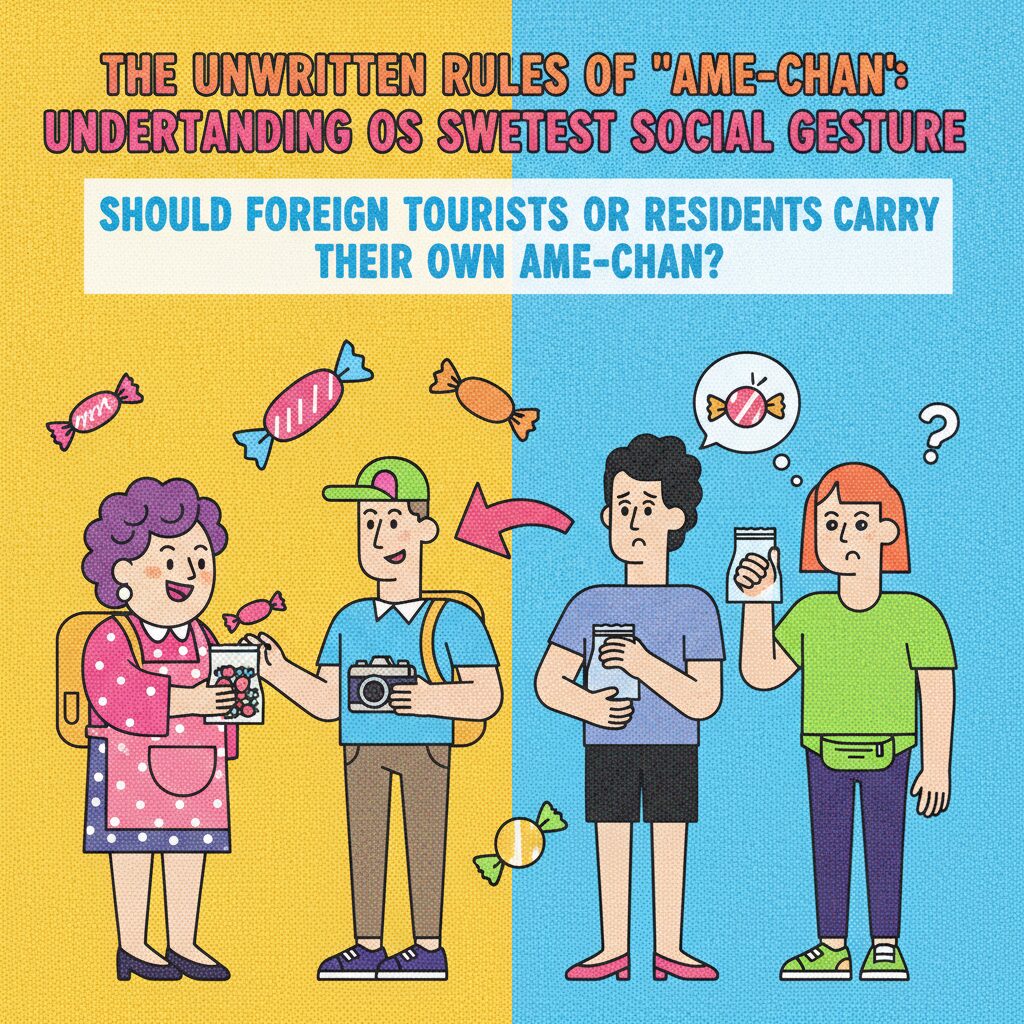
Once you grasp the mechanics of the candy exchange, a logical question emerges: Should you take part in this economy? If you live in Osaka or plan to stay here for an extended time, should you carry your own pouch of hard candies?
The answer is a definite yes. Carrying your own ame-chan and offering one in return is the perfect way to turn the tables. It transforms you from a passive observer of Osaka culture into an active participant. When an Obachan hands you a strawberry drop and you promptly reach into your pocket to give her a melon drop back, the reaction is priceless. You’ll witness a moment of genuine surprise followed by sheer delight. It’s the cultural equivalent of executing a flawless secret handshake.
If you choose to assemble your own candy arsenal, visit a local convenience store or supermarket. Steer clear of chocolates, as they melt in your pocket during Osaka’s humid summers. Avoid gummies, as they lack the traditional feel of an ame-chan. Stick to individually wrapped hard candies. Fruit flavors are universally loved. In winter, carrying a pack of honey or ginger throat drops shows a thoughtful level of practical empathy. By sharing these small tokens of kindness, you embrace the local mindset. You signal that you understand a fundamental truth of Osaka life: we’re all stuck in this busy city together, so we might as well make it sweet.
Essential Japanese Phrases for the Ame-chan Encounter
Navigating this interaction becomes much easier when you have a few linguistic tools at hand. While a smile and a nod are universally understood, using the right words can turn the moment into a memorable highlight of your day. Here is a breakdown of the essential phrases you should know when approached by a candy-offering local.
Expressing Gratitude Like a True Local
As mentioned earlier, the phrase ookini is your most valuable asset. It is pronounced oh-kee-nee, with a slight emphasis on the first syllable. The word feels round and warm, much like the culture it comes from. If you want to use the standard Japanese phrase for thank you, arigatou gozaimasu is perfectly acceptable. It is pronounced ah-ree-gah-toe go-zai-mass and is polite and respectful. But comparing standard Japanese to Kansai dialect is like comparing a formal business suit to a comfortable pair of jeans. In Osaka, you want to wear the jeans. Saying ookini instantly builds a connection between you and the local resident.
Before you unwrap the candy and put it in your mouth, you can say itadakimasu. This phrase is pronounced ee-tah-dah-kee-mass. It roughly translates to I humbly receive this. It is most commonly used before eating a meal but applies perfectly to receiving a small piece of food from a stranger. It shows deep respect for Japanese food culture and gratitude for the offering.
If you eat the candy right in front of them, it is always polite to compliment the taste. The standard word for delicious is oishii, pronounced oh-ee-shee. In the local dialect, you might hear people say umai, which also means delicious but has a slightly more casual, earthy tone. Giving a quick thumbs up and saying oishii affirms their choice of candy and ensures they walk away feeling good about the interaction.
How to Politely Decline if Absolutely Necessary
There are very rare occasions where you might actually need to refuse the candy. Perhaps you have a severe dietary restriction or maybe you are rushing to catch a train and cannot stop to engage. While accepting is always the preferred route, you should know how to decline gently without causing offense.
If you must refuse, do not just wave your hands and walk away, as that is considered very rude. Instead, apologize first. The word sumimasen means excuse me or I am sorry and is pronounced soo-mee-mah-sen. Pair this with a gentle bow of your head. To explain that you do not need it, you can say daijoubu desu, which translates to I am fine or it is okay. It is pronounced die-joe-boo dess. By saying sumimasen, daijoubu desu with a polite smile, you acknowledge their kindness while kindly declining the offer. They will understand and simply return the candy to their pouch for the next lucky recipient.
Living in Osaka is an exercise in human connection. It is a city that refuses to be ignored and demands your participation. The ame-chan culture is a beautiful reminder that beneath the concrete, neon lights, and endless rush of commuter trains, there is a community of people looking out for one another. It rejects urban isolation and stands as a testament to the power of a simple, friendly gesture. The next time you find yourself wandering the streets of Kansai, keep your eyes open, your heart receptive, and always be ready to accept the sweetest social gesture in Japan.