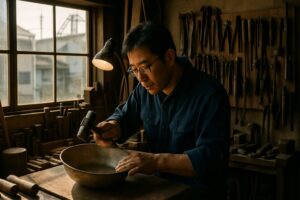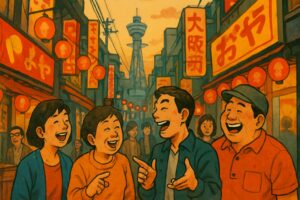
Step off the train in Higashi-Osaka, and the air changes. It’s not the electric hum of Namba or the polished quiet of a Kyoto temple garden. It’s different. There’s a faint, metallic tang on the breeze, a smell of machine oil and hot steel that sinks into the pavement. You hear it before you see it—a rhythmic, percussive heartbeat. The steady ka-thump of a metal press, the high-pitched whine of a lathe slicing through metal, the staccato hiss of a welding torch. This isn’t the Osaka you see on postcards. This is the Osaka that builds Japan. This is the world of the machi-kōba, the small, often family-run factories that are the city’s industrial soul. Forget what you think you know about Japanese work culture—the silent offices, the rigid hierarchy, the endless, polite bowing. Here, in the sprawling, low-slung neighborhoods east of the castle, a different code applies. It’s a culture forged in fire and metal, built on grit, skill, and a type of communication so direct it would make a Tokyo salaryman blush. To understand why Osaka feels so fundamentally different from the rest of Japan, you don’t look up at the skyscrapers; you look into these open-doored workshops where the real work gets done. This is where the city’s character—its pragmatism, its loudness, its fierce pride—is hammered into shape every single day.
To truly grasp the spirit of this environment, one must understand the deep-seated work ethic of Higashi-Osaka’s small factories.
The Rhythm of the Workshop: More Than Just a 9-to-5
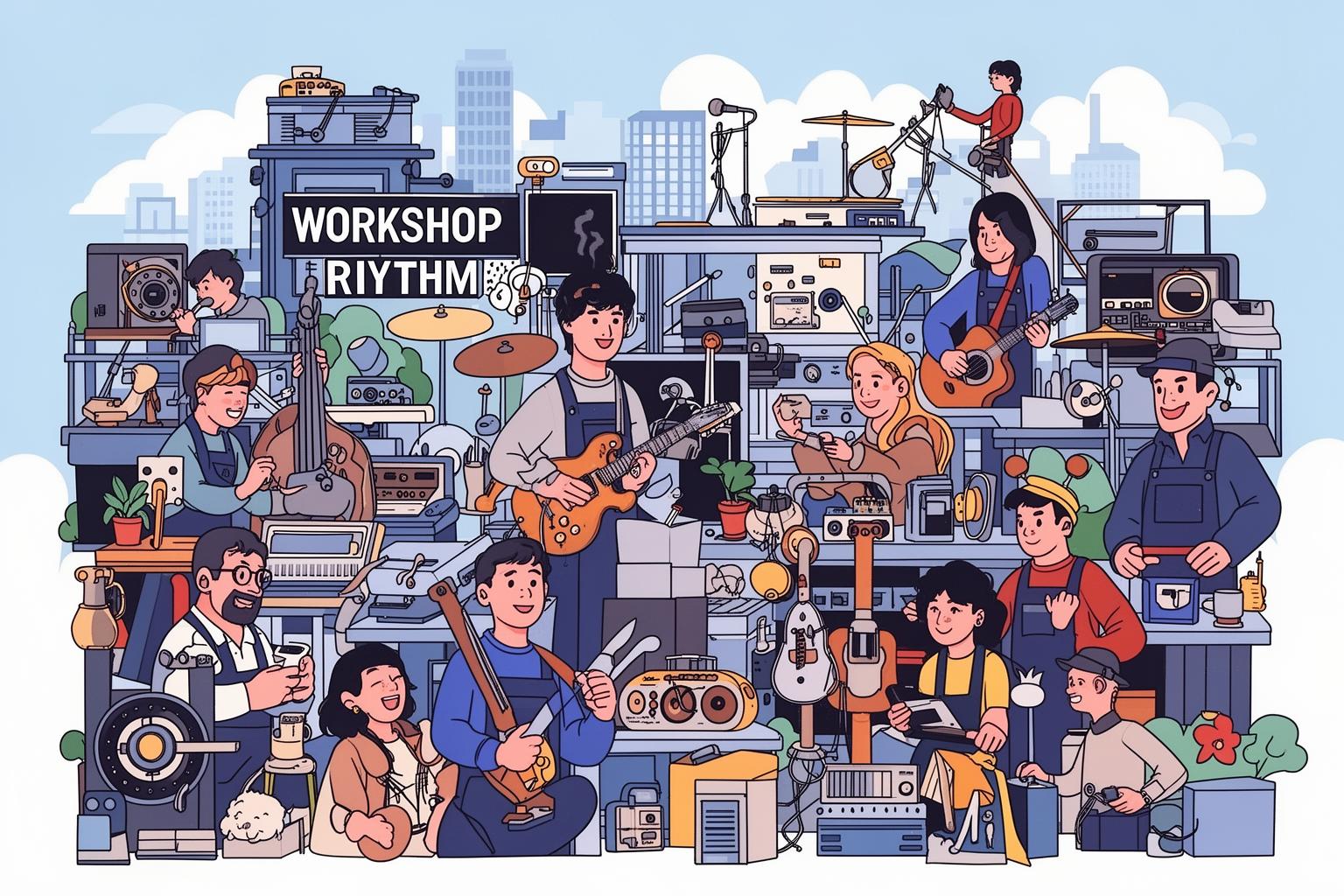
The machi-kōba doesn’t simply wake up; it roars to life. The workday isn’t marked by the sterile ring of an office bell but by the groan of aged machinery roused into action. It’s a sensory overload, a world apart from the quiet productivity typical of a Japanese company. The day unfolds as a performance, a symphony of industrial sounds, and grasping its rhythm is the first step to understanding the mindset of those who labor here. Time is measured not in minutes or hours, but in production quotas, the number of parts completed, and the shared moments of sweat and satisfaction that break through the noise.
The Morning Ritual: Steel, Tea, and Talk
The day starts not with a formal chōrei, or morning meeting, in a spotless conference room, but with an informal gathering around a battered kettle and a mix of mismatched mugs. The oyaji—the old man, the boss, the master craftsman—is usually the first to arrive. He’s the one who knows the distinct groans and coughs of each machine, treating them less like tools and more like aging, temperamental colleagues. He flips the switches, and the building seems to draw a deep breath as compressors and motors hum to life. As the other workers arrive, clad in oil-stained uniforms, the air fills with gruff greetings in Osaka-ben. There’s no quiet reverence for the boss here. Instead, there are jokes, complaints about the Hanshin Tigers’ latest game, and rapid-fire, loud discussions about the day’s tasks. Communication is brutally efficient. An order isn’t politely phrased; it’s barked across the noisy floor. “Tanaka! That lot for Sato Industries—get it polished by noon!” This directness doesn’t mean disrespect. In an environment where hesitation or a misunderstood instruction could ruin a product or cause serious injury, clarity rules. Politeness is a luxury the factory floor cannot afford. This candidness spills over into local culture. People from Osaka are known for speaking plainly, for saying what they mean without the verbal cushioning common elsewhere in Japan. This mindset is born in the machi-kōba: get to the point, solve the problem, and move on.
The Soundscape of Creation: A Symphony of Industry
To outsiders, the noise of a machi-kōba is just a cacophony. But for those who work there, it is a language. Each sound tells a story. The steady, reassuring thump-thump-thump of a stamping press signals that everything is running smoothly. A sudden change in the pitch of a CNC machine’s whine can warn of a problem with the cutting tool, a signal only a trained ear can detect. The sharp crackle and blinding flash of a welder’s arc mark the union of two pieces of metal. This ever-present, overwhelming soundscape shapes everything. Conversations are shouted. Hand signals carry as much weight as words. There is an unspoken rule that you must always be aware of your surroundings, a heightened spatial awareness not found in an office. This setting fosters a unique teamwork. It isn’t about brainstorming sessions on whiteboards; it’s about individual actions blending into a noisy, coordinated dance. One person finishes cutting steel rods, and silently, another moves them to the drilling station. This intuitive, non-verbal cooperation is the secret of the machi-kōba’s efficiency. It’s worlds apart from the email chains and endless meetings of corporate Tokyo. Here, results are immediate and tangible. You can see, hear, and feel the work being done—a stark and satisfying contrast to the abstract nature of much modern labor.
The ‘Oyaji’ and the Apprentice: A Different Kind of Corporate Ladder
Forget organizational charts and predetermined career paths. Progress in a machi-kōba is much more organic—and often far more demanding. It centers around the vital relationship between the master and the apprentice, the oyaji and the eager newcomer. This is not a formal mentorship program with scheduled meetings and performance evaluations. Rather, it is a trial by fire, a learning system handed down through generations, grounded in observation, repetition, and a profound, unspoken respect for skill. Here, the corporate ladder is not climbed; it is forged, one mistake and one lesson at a time.
The Master’s Pride: Perfection in Imperfection
The oyaji embodies the soul of the workshop. Usually the founder or the founder’s son, he is a man whose identity is intertwined with the business he leads. His hands are his résumé—calloused and marked by decades of metalwork. His pride is not displayed through a sharp suit or a corner office but through a perfectly milled gear, an impeccably welded seam, or a component polished to a mirror finish. This captures the essence of Osaka craftsmanship: deeply practical. It’s not about creating a beautiful object merely for beauty’s sake; it’s about crafting an elegant, durable, and precise solution to a problem. They might be making a tiny, unnamed bracket buried within complex medical equipment, yet they approach its creation with the same intensity and focus as an artist painting a masterpiece. This commitment to functional perfection is a profound source of pride. These craftsmen are the unsung heroes of Japanese manufacturing—the makers of essential parts that enable major corporations to produce their world-renowned products. This is the origin of the famous Osaka do-konjō, or sheer grit—the stubborn refusal to ship anything less than perfect, even if the client would never notice a microscopic flaw.
Learning by Doing, Not by Manuals
When a new apprentice arrives at a machi-kōba, they aren’t given stacks of training manuals—they are handed a broom. The first lesson is humility and keen observation. They sweep up metal shavings, clean machines, and watch closely. They listen to the rhythms of the workshop, learn the names of tools, and absorb the flow of work. The guiding motto is mite oboero—watch and learn. Formal instruction is minimal. The oyaji may demonstrate how to operate a machine once, then step back and let the apprentice try. Mistakes are expected and corrected with loud, frustrated shouts rather than gentle suggestions. “Chigau ya ro!” (“That’s wrong!”) is a common teaching phrase. It sounds harsh, but it is ruthlessly effective. The lesson imprints itself on the apprentice’s memory. This hands-on, often rigorous method nurtures remarkable resilience and problem-solving abilities. Apprentices learn not just to follow directions but to truly understand the materials—to sense when a drill bit dulls, to hear when cutting speeds are too high, to notice subtle shifts in the color of heated metal. It is an intuitive, sensory education that no textbook can replicate. This philosophy defines the Osaka mindset: less emphasis on abstract planning, more on rolling up your sleeves and figuring things out as you go. “Yattemiru shika nai”—“You just have to try”—could well be the motto of Higashi-Osaka.
The Business of Being Small: Networks, Negotiations, and ‘Naniwa no Akindo’ Spirit
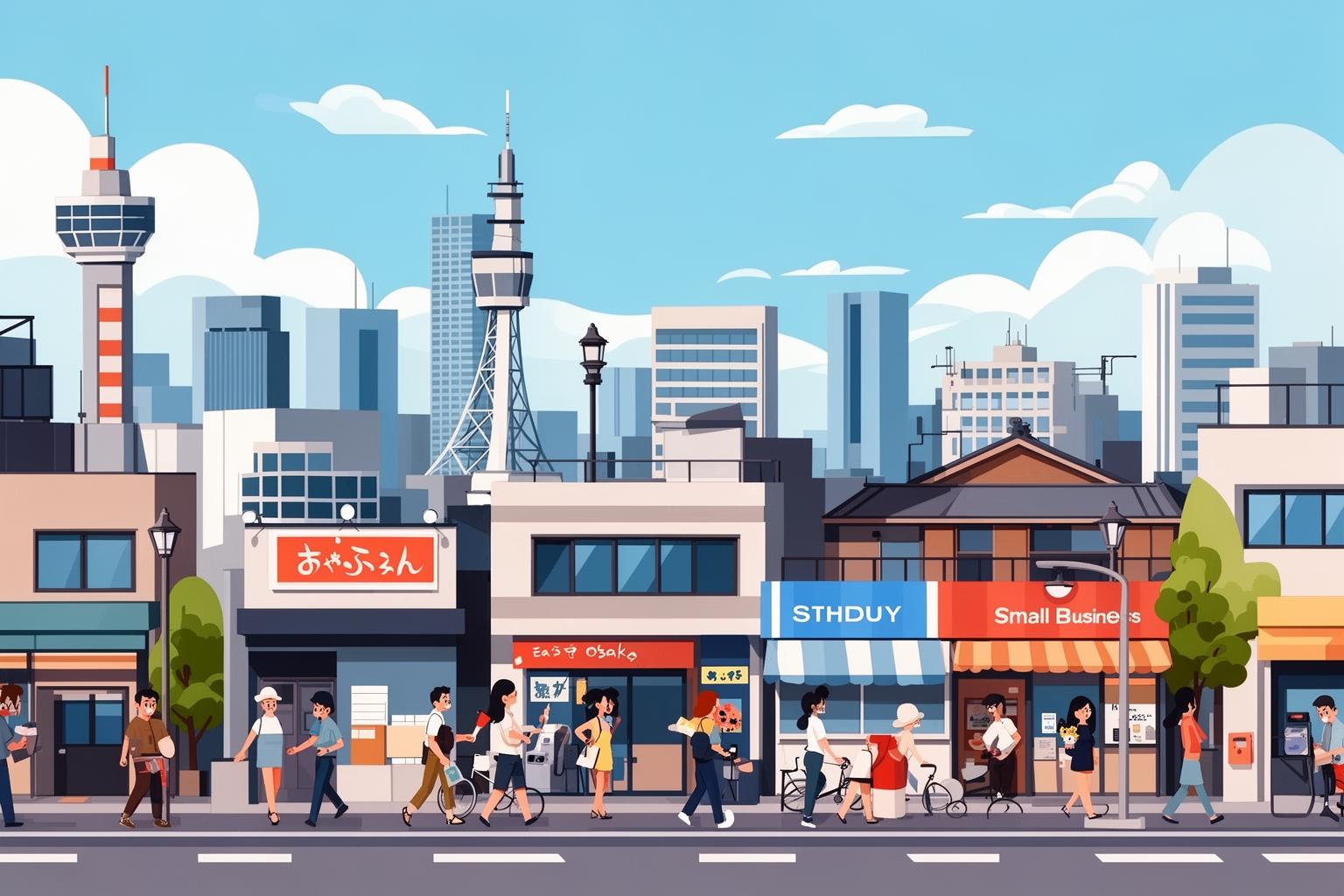
The machi-kōba may be small, but they are not isolated entities. They exist within a complex and dynamic ecosystem—a web of relationships founded on trust, rivalry, and a shared mercantile spirit that is distinctly Osaka. This is the realm of the Naniwa no Akindo, the merchants of old Osaka, reborn as contemporary industrialists. They know that survival and success depend not only on what you produce but also on the strength of your network and your skill in negotiating good deals. Business here is personal, fast-paced, and deeply pragmatic.
A Web of Workshops: The Horizontal Keiretsu
Higashi-Osaka functions as one massive, decentralized factory. A single complex product is not made under a single roof. Instead, it is a cooperative effort. One small workshop specializes in precision cutting, another in bending and shaping, a third in anodizing and finishing, and a fourth in assembly. A client places an order with one factory, which acts as a hub, delegating various parts of the process to trusted neighbors. These relationships create an informal, horizontal keiretsu (industrial group). They are fiercely independent businesses, often competing for the same orders, yet they depend on each other to survive. If one factory’s stamping press breaks down, they can call a rival down the street and borrow theirs for a few hours to complete a rush job. If a project requires a particular skill one oyaji lacks, he readily recommends another workshop that excels in that area. This network is built on reputation. Your word is everything. If you promise delivery by Tuesday, you move heaven and earth to make it happen, because failing to do so damages not only your business but the entire local supply chain. It’s a system of co-opetition that is flexible, resilient, and enables these small players to take on major projects.
The Art of the Deal: More Than Just Money
Negotiations in Higashi-Osaka are worlds apart from the formal, ritualized processes seen in Tokyo boardrooms. Deals might be struck standing over a blueprint spread on a greasy workbench, with both parties wearing their work clothes. The conversation begins with the classic Osaka business greetings: “Maido!” (“Always, thanks for your business!”) and the ever-optimistic “Mokkari makka?” (“Are you making a profit?”). The talk is direct and straightforward. Price is always central, and the haggling can be intense, but it’s rarely adversarial. It’s more like a dance—a testing of boundaries to find a price fair to both sides. An Osakan craftsperson respects a client who drives a hard bargain; it shows seriousness about business. Yet the deal is about more than just price. It’s about capability, trust, and long-term relationships. A factory owner might accept a lower profit margin on one job for a loyal client, knowing they will return with more work in the future. There is also a strong emphasis on practical cash flow. Terms like sankin-zumi (payment on delivery) are common. This isn’t born of distrust but from the reality of running a small business that needs cash on hand to buy materials for the next job. This focus on the immediate, tangible value of a transaction is often misunderstood by outsiders as crass or money-obsessed. But in the world of the machi-kōba, it is the foundation of a healthy, honest business relationship: you did the work, you delivered quality, you get paid. Plain and simple.
Life Beyond the Factory Floor: How Machi-kōba Shapes the Neighborhood
The impact of the machi-kōba extends well beyond the workshop doors. It spills out into the streets, influencing the architecture, social dynamics, and identity of the neighboring communities. In Higashi-Osaka, industrial and residential areas are not neatly divided. Work and life intertwine seamlessly into a complex, unified fabric. This blending fosters a distinctive community atmosphere, characterized by a common purpose, a high tolerance for noise, and a level of neighborly familiarity increasingly uncommon in modern Japan.
The Smell of Success (and Cutting Oil)
Strolling through the backstreets of neighborhoods like Takaida or Hanaten offers a unique architectural experience. A contemporary single-family home might stand adjacent to a corrugated metal workshop with its roll-up doors open to the street, revealing the spacious, machinery-filled interior. A small apartment building might host a tiny screw factory on its ground floor. Residents live amid the sounds and scents of industry. The morning air carries the smell of cutting fluid; evenings are marked by the clang of metal being loaded onto trucks. For locals, this isn’t pollution but the sound of the local economy—the rhythm of neighbors earning their livelihood. The close physical proximity of home and workplace cultivates a different sense of community. The factory isn’t an anonymous place you commute to for eight hours; it is a visible, tangible part of daily life. The local izakaya (pub) after 6 PM stands as proof of this, filled with men and women in work uniforms grabbing a beer and grilled skewers before heading home. Conversations are loud, lively, and often focus on shop talk—navigating a tricky new order, a supplier issue, or a machine needing repair. The boundaries between colleague and neighbor, boss and subordinate, dissolve into a camaraderie based on shared work and community.
Community and ‘Gaman’: The Unspoken Social Contract
Living in such close proximity to active industry demands a strong sense of gaman—a uniquely Japanese notion of patience, endurance, and perseverance. Residents accept the noise, truck traffic, and industrial odors as part of the arrangement. There is an unspoken social contract: factories provide jobs and sustain the local economy, and in return, the community endures the associated inconveniences. This mutual understanding fosters a profound sense of solidarity. People know their neighbors intimately. They are aware of who runs the factory down the street, know their children, and recognize when business is thriving or slow. This sharply contrasts with the polite yet often detached anonymity found in large Tokyo apartment complexes, where you might not even know the name of the person living next door. This close-knit community life is reflected in local events. Annual neighborhood matsuri (festivals) might be sponsored by a group of local factories. Factory owners often serve as respected community leaders active in local organizations and events. There is a shared sense that everyone is united, a collective identity founded on the act of making things. This mutual dependence and shared experience form the foundation of life in Higashi-Osaka, weaving a social fabric that is both resilient and deeply human.
The Misunderstood Heart of Osaka: Grit, Not Glamour

For many foreigners, Osaka’s image is shaped by the neon-lit frenzy of Dotonbori, the endless arcades of Shinsaibashi, and the city’s famous kuidaore culture—eating oneself into financial ruin. It’s a city of bright lights, loud voices, and incredible street food. While this is all true, it only scratches the surface. To truly understand the heart of Osaka, you must look beyond the takoyaki stalls and into the grit and sweat of its industrial core. The city’s character—its renowned pragmatism and resilience—was not born in a kitchen; it was forged in the machi-kōba.
Beyond the ‘Kuidaore’ Stereotype
Osaka’s lively, fun-loving, food-centric culture is inseparable from its industrial roots; it is a direct outcome of that background. The philosophy is straightforward: work extremely hard, and play hard. The tough, physically demanding labor in the machi-kōba fosters a deep appreciation for life’s simple pleasures. A cold beer after a long, hot shift tastes sweeter. A perfectly grilled chicken skewer becomes a well-earned treat. The kuidaore culture is a celebratory release following a day of concentrated, strenuous effort. Money earned from crafting flawless metal goods is spent enjoying delicious meals with friends and family. These two aspects go hand in hand. The stereotype of the carefree, spendthrift Osakan misses the mark entirely. That carefree attitude is earned through discipline and hard work. It’s a culture that values the yen because it understands the sweat and skill behind earning it. The roughness of the workshop underlies the sparkle of the entertainment districts. One cannot exist without the other. This is what foreigners often overlook—they see the party, but not the factory that funded it.
Why Osaka Isn’t Tokyo (And Is Proud of It)
Ultimately, the machi-kōba culture best illustrates why Osaka and Tokyo are fundamentally different cities with contrasting value systems. Tokyo represents the abstract: finance, government, corporate headquarters, and media. Power comes from status, titles, and connections within vast hierarchies. It is polished, formal, and obsessed with appearances and procedures. Osaka, especially Higashi-Osaka, is the capital of the tangible. It is a city of makers, merchants, and engineers. Here, value is not judged by your business card, but by your skills. Can you operate a five-axis lathe with a tolerance of one micron? Can you produce a flawless weld? Can you negotiate deals that keep your machines running and your workforce employed? Pride comes from the concrete—that which you can hold in your hands and say, “I made this.” This is why Osakans often feel a sense of rivalry with Tokyo. They view the capital as a city of talkers, while they see themselves as the doers. They are the builders of Japan’s physical economy while Tokyo handles the paperwork. The machi-kōba culture—with its straightforwardness, pragmatism, focus on tangible outcomes, and strong community ties—is the purest expression of Osaka’s identity. It is a culture that needs no external validation because it is confident in its own worth. It is grittier, louder, and perhaps more honest. And for the people here, there is no doubt—it is simply better.