When you first arrive in Osaka, someone will inevitably give you directions that involve the underground. They’ll say it with a casual wave of the hand, as if it’s the most natural thing in the world. “Just get to Umeda station,” they’ll advise, “and then head down. You can walk all the way to Kitashinchi, or even Nishi-Umeda, without ever seeing the sky. Don’t worry about the rain.” And you’ll nod, thinking you understand. You’ve been to Tokyo. You’ve navigated the subterranean passages of Shinjuku, the clean, corporate tunnels of Tokyo Station. You know what an underground passage is. You are, however, completely and utterly wrong. To compare the underground worlds of Tokyo and Osaka is to compare a series of well-organized, functional hallways to a living, breathing, sprawling subterranean kingdom. One is a utility. The other is the city’s heart.
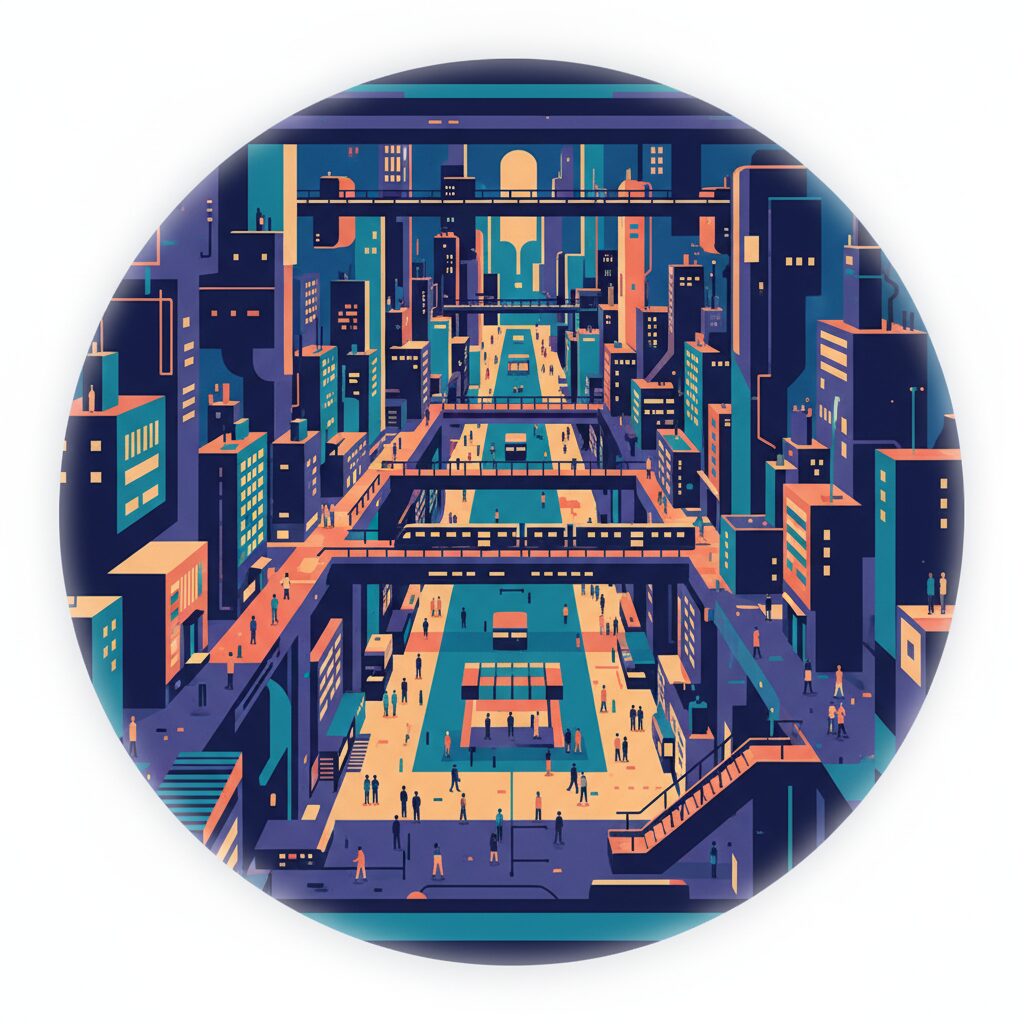
Living in Osaka means recalibrating your mental map of a city. Above ground, the grid can feel chaotic, a jumble of expressways, train lines, and buildings fighting for sunlight. But below, a second city exists, a vast, interconnected network of shopping streets, plazas, restaurants, and rivers of people that locals call the ‘chikagai.’ It’s not just a way to get from Train A to Exit B. It’s a destination. It’s a refuge from the typhoons of September and the soul-crushing humidity of August. It’s where real life happens, a constant, buzzing current of commerce and community that tells you more about Osaka’s soul than any castle or glistening skyscraper ever could. Tokyo has underground areas, yes, but they feel like islands in a vast ocean, connected by the cold, dark tunnels of the subway system. Osaka’s chikagai is the ocean itself. It’s a single, massive, sprawling entity, especially in the northern hub of Umeda, a place lovingly and accurately nicknamed ‘The Dungeon’ by locals and expats alike. It’s a place you learn to navigate not with a map, but by instinct, by landmarks like the sound of a gurgling fountain or the smell of a takoyaki stand. Understanding this difference, this chasm in urban philosophy buried twenty feet below the asphalt, is the key to understanding the fundamental gap between how Osaka and Tokyo think, act, and live.
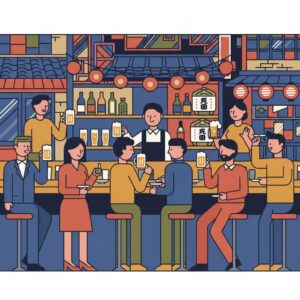
To truly experience the city’s soul, you can also immerse yourself in the unique social scene of Osaka’s standing bars.
The Osaka Labyrinth: A Unified Kingdom Under One Roofless Sky
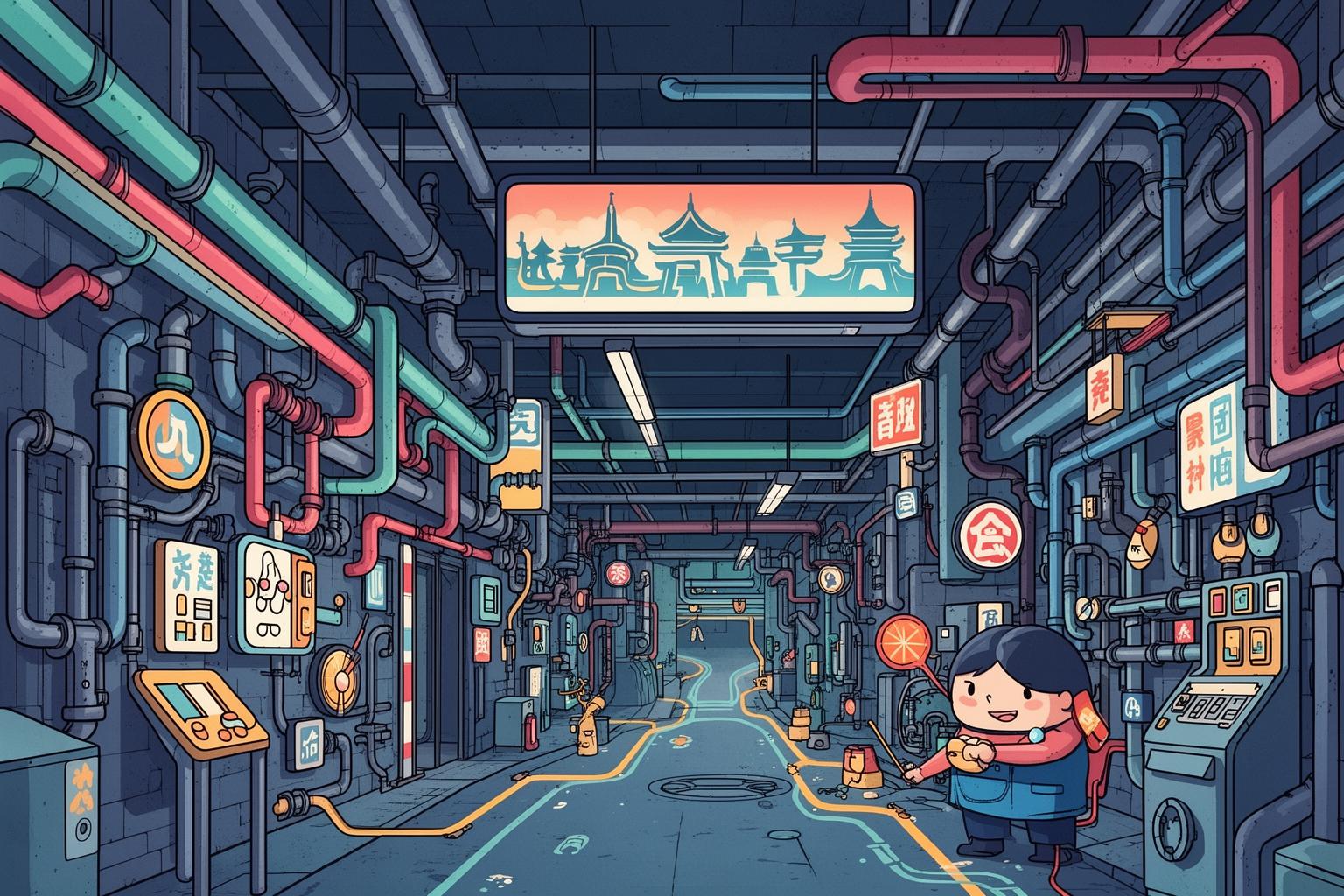
To truly comprehend the vastness of Osaka’s underground, start at Umeda. It’s not merely a shopping mall; it’s an ecosystem. Standing in the central concourse of JR Osaka Station, you face a dizzying network of escalators descending below. Each one acts as a gateway—not just to a subway line, but to a distinct, branded, and uniquely characterized chikagai. These spaces blend seamlessly into one another, their boundaries marked only by subtle changes in floor tile colors or overhead lighting styles. There’s no clear beginning or definite end. It simply exists.
Umeda: The Heart of the Beast
Descending into Umeda’s chikagai for the first time is a rite of passage. You may think you’re just heading to the Midosuji subway line, but if you take a wrong turn, you find yourself in Whity Umeda. ‘Whity,’ a blend of ‘white city,’ was among the earliest constructions, a sprawling east-west passage built for the 1970 World Expo. It retains a sense of that era, with low ceilings and a cozy, almost cluttered atmosphere. It’s the functional, everyday core of the underground. Here, you’ll find affordable, cheerful noodle shops, cramped bookstores, florists, and counters selling lottery tickets—a domain frequented by office workers on lunch breaks and grandmothers running errands.
Heading south from Whity, the floor shifts to polished stone, the ceiling opens wider, and you enter Diamor Osaka. The name, combining ‘diamond’ and ‘motor,’ hints at its upscale, modern vibe. The storefronts are brighter, featuring trendy clothing boutiques and cosmetic shops. It’s more spacious and serves as the main artery connecting JR Osaka Station with the office towers in the west and the nightlife district of Kitashinchi in the south. You can walk its full length, grab a coffee, enjoy window shopping, and emerge a fifteen-minute walk from your starting point—all while comfortably air-conditioned and sheltered.
Then there’s the realm overseen by private railway companies. Hankyu Sanbangai, beneath the Hankyu Umeda terminal, is a world unto itself. It boasts a vast gourmet food floor, a bustling ‘Books and Coffee’ section, and even a fast-flowing artificial river at its center. It feels grander, more like a department store basement that has staged a takeover of the surrounding area. On the other side of the JR tracks, the Hanshin Department Store’s famed basement food hall—a legendary ‘depachika’—spills out and connects to passages leading to the Hanshin line. This is not merely a route to a train; it’s a fully immersive commercial experience where the journey is the destination.
The Psychology of Seamless Connection
This seamlessness isn’t accidental; it’s a deliberate philosophy. It embodies pure Osakan pragmatism. The merchant city’s DNA is woven into every tiled corridor. The primary goal is to maintain an uninterrupted flow of people and money, unbothered by weather or traffic. Why make a prospective customer go outside, get wet, and potentially change their mind about a purchase when you can directly connect your mall to theirs? This creates a unified commercial zone where the whole is far greater than its parts.
This mindset contrasts sharply with Tokyo’s. In Tokyo, massive corporations like JR East, Tokyu, and Seibu each built their own fortresses. Their underground passages primarily channel people from their train lines into their own department stores. Connections between companies’ territories often feel like afterthoughts—long, sterile corridors begrudgingly added out of necessity. In Umeda, boundaries are porous. Competition exists, but there is an unspoken agreement that a rising tide lifts all boats. If a shopper is comfortable and moving, they are a potential customer for everyone. This cooperative commercial spirit is a hallmark of Osaka, a city built by merchants rather than samurai or bureaucrats.
A Day in the Life of an Underground Commuter
For daily commuters, this labyrinth isn’t intimidating; it feels like an extension of home. They don’t see a tangled map of lines; they see a web of possibilities. The morning rush is a surge of humanity—but it flows smoothly. People navigate by instinct, guided by subtle landmarks. They arrange to meet friends not at Exit 5-B, but “at the Izumi no Hiroba,” the central plaza in Whity Umeda marked by its iconic (now replaced) fountain. They know which corridor offers the best breeze on hot days, where bottlenecks form at 6 PM, and which small standing bar has the cheapest beer and edamame for a pre-train drink.
At lunchtime, the chikagai comes alive. Quiet corridors erupt with energy as office workers flood in for quick, affordable, satisfying meals. The air fills with the scent of dashi from udon shops, curry from tiny counters, and freshly baked bread from numerous bakeries. There’s an unwritten choreography—a swift choice, efficient ordering, the slurping of noodles, and a speedy return to work. The chikagai serves as the city’s communal canteen.
By evening, the vibe shifts again. The lights soften. Groups of friends gather in plazas, deciding where to dine. Salarymen, ties loosened, slip into smoky izakaya doorways tucked into hidden corners of the maze. The chikagai becomes the city’s living room and pub—a transitional space between the structured workday and the private home. It all unfolds simultaneously: a city within a city, pulsating with its own unique life.
Namba and the Southern Spread
While Umeda reigns supreme as the chikagai king, the southern hub of Namba presents a contrasting flavor that matches its aboveground personality. Where Umeda is the relatively orderly, business-centric core, Namba is the loud, vibrant, entertainment-driven soul. Its main underground artery, Namba Walk, stretches east to west, connecting the Nankai Railway terminal with subway lines and JR Namba station. It’s long, direct, and unabashedly populist.
Namba Walk feels less like a series of distinct neighborhoods and more like one continuous, lively street party. Shops target a younger, trend-savvy crowd alongside stores selling classic Osaka souvenirs catering to tourists descending from Dotonbori. You’ll find quirky claw machine arcades next to inexpensive accessory shops, and crepe stands beside takoyaki stalls. The energy is tangible—a direct reflection of the neon-charged chaos above. It fulfills the same practical function as Umeda’s labyrinth—providing all-weather transit and shopping—with a playful, almost theatrical spirit.
Commerce as the Lifeblood
Throughout Osaka’s chikagai, the dominant theme is commerce for the everyday person. This isn’t the hushed, luxurious atmosphere of Tokyo’s Ginza or Omotesando. It’s loud, practical, and value-driven. Deals are advertised on bright, hand-drawn signs. Shopkeepers call out to passersby. Food options emphasize “B-kyu guru,” or B-rank gourmet—tasty, unpretentious, affordable dishes like ramen, okonomiyaki, and kushikatsu. Standing bars, or ‘tachinomi,’ are chikagai staples. For the price of a few coins, you can enjoy a draft beer and a small plate, standing shoulder-to-shoulder with a construction worker, a bank teller, and a student. There’s a democratic spirit to it all. The chikagai is a great equalizer.
This focus on accessible, everyday commerce embodies Osaka’s essence. It’s a city unafraid to get its hands dirty, valuing a good deal over prestigious brands, and a full stomach over elegant presentation. The chikagai is the ultimate expression of this ethos: a sprawling, functional, thoroughly human marketplace, designed by the people, for the people.
The Tokyo Archipelago: Islands of Commerce
Leaving the unified kingdom of Osaka’s chikagai and entering Tokyo’s underground world brings a profound shift in urban design and, by extension, cultural mindset. Tokyo’s underground is not a single cohesive entity; rather, it is an archipelago—a series of large, impressive, yet ultimately separate islands of subterranean development. These islands are centered around major train stations, primarily serving the agendas of the powerful railway and real estate conglomerates that created them. The experience emphasizes efficiency and fragmentation instead of sprawling, organic exploration.
Shinjuku and Shibuya: Connected Yet Fragmented
Shinjuku Station is the busiest train station in the world by passenger volume. Its underground is correspondingly vast—a bewildering maze that has overwhelmed countless travelers. Despite its size, it lacks the cohesive spirit found in Umeda. Instead, it feels like several distinct underground worlds stitched together. There is the area directly beneath the JR station, a hectic transfer hub; underground malls attached to the Keio and Odakyu department stores, each with its own unique atmosphere; and the Shinjuku West Exit Underground Passage, a long, sterile corridor linking the station to the Tokyo Metropolitan Government Building, which feels purely utilitarian rather than a lively commercial street.
Navigating Shinjuku revolves around a game of exits, with constant attention to which numbered exit will bring you closest to your destination. You don’t wander aimlessly; you follow a planned route. The idea of entering the underground at one end of Shinjuku and strolling through a continuous path of shops and restaurants to the other side does not exist in the same way. The connections feel more like necessary evils—long tunnels you must endure to reach the next island of activity.
Shibuya, currently undergoing massive, futuristic redevelopment, presents a similar story. The new underground spaces are sleek, modern, and clean. The Shibuya Chikamichi serves as an essential east-west connector. But again, the dominant sensation is transit. It is a beautifully designed conduit moving you from the Hachiko exit to the Hikarie building, from the Ginza Line to the Fukutoshin Line. While dotted with pop-up shops and chic cafes, it lacks the density and lived-in, chaotic charm of Namba Walk. It serves the station and the grand corporate vision of Shibuya’s redevelopment, but it does not feel like a city in its own right.
The Logic of the Rail-Centric Hub
This fragmentation directly reflects Tokyo’s history and power structure. The city developed around competing private railway lines extending into the suburbs. Each company constructed a massive terminal station in central Tokyo, topping it with its own department store to maximize profits. The underground spaces naturally extended this model, aiming to keep customers within the respective company’s ecosystem. For example, Tokyu Corporation’s goal in Shibuya is not to make it easy for you to walk to a Seibu-owned property but to keep you in their orbit, spending money at their stores.
This results in a top-down, corporate-planned environment. The underground areas are clean, well-lit, and impeccably maintained but often feel sterile. These are curated retail experiences rather than organic marketplaces. Their logic resembles railway timetables: precise, efficient, and segmented. This mirrors the broader Tokyo mindset, which often prioritizes order, polish, and hierarchy. It is a city of powerful institutions, with the very ground beneath your feet divided according to their territories.
Navigating the Tokyo Underground: A Tale of Transfers
This fundamental difference alters your mental map of the city completely. In Osaka, you think in terms of underground landmarks and general direction: “I’ll enter the chikagai at Hankyu, walk toward the post office, then pop up there.” You move through the city, just on another level. The underground integrates seamlessly into the urban fabric.
In Tokyo, you think in terms of lines and exits: “I need to take the Marunouchi Line to the Ginza Line, so I’ll follow the orange signs until I see the yellow ones, then find the A7 exit.” The underground primarily accommodates transfers—a series of tubes and corridors connecting transportation nodes. It functions well for its intended purpose but rarely invites lingering, exploration, or simply being. The journey is a means to an end, and that end nearly always lies above ground.
Tokyo Station and Marunouchi: The Corporate Corridor
This contrast is most evident in the underground network around Tokyo Station and the Marunouchi business district, the financial and political heart of Japan. Its underground reflects this precisely. The passages are wide, gleaming, and often eerily quiet, connecting the station to the basement levels of towering glass-and-steel office buildings. The shops and restaurants lining these corridors extend the corporate world above with high-end bento shops, formal cafes for business meetings, and gift shops selling impeccably packaged sweets for clients.
The Yaesu Chikagai, on Tokyo Station’s east side, is one of the city’s oldest and largest underground malls and comes closest to the Osakan model. It offers a greater variety of shops and a more bustling atmosphere. Yet even here, the feeling is distinct: cleaner, more orderly, resembling a well-managed shopping center located underground. It lacks the slightly frayed, chaotic, human energy of Whity Umeda. In Marunouchi’s underground, you see a river of people in dark suits moving with quiet purpose. In Umeda’s underground, you encounter a mix of office workers, students, tourists, and grandmothers with shopping carts, all moving at their own pace, creating a noisy, vibrant, and deeply human scene.
The Cultural Divide, Written in Concrete and Tile
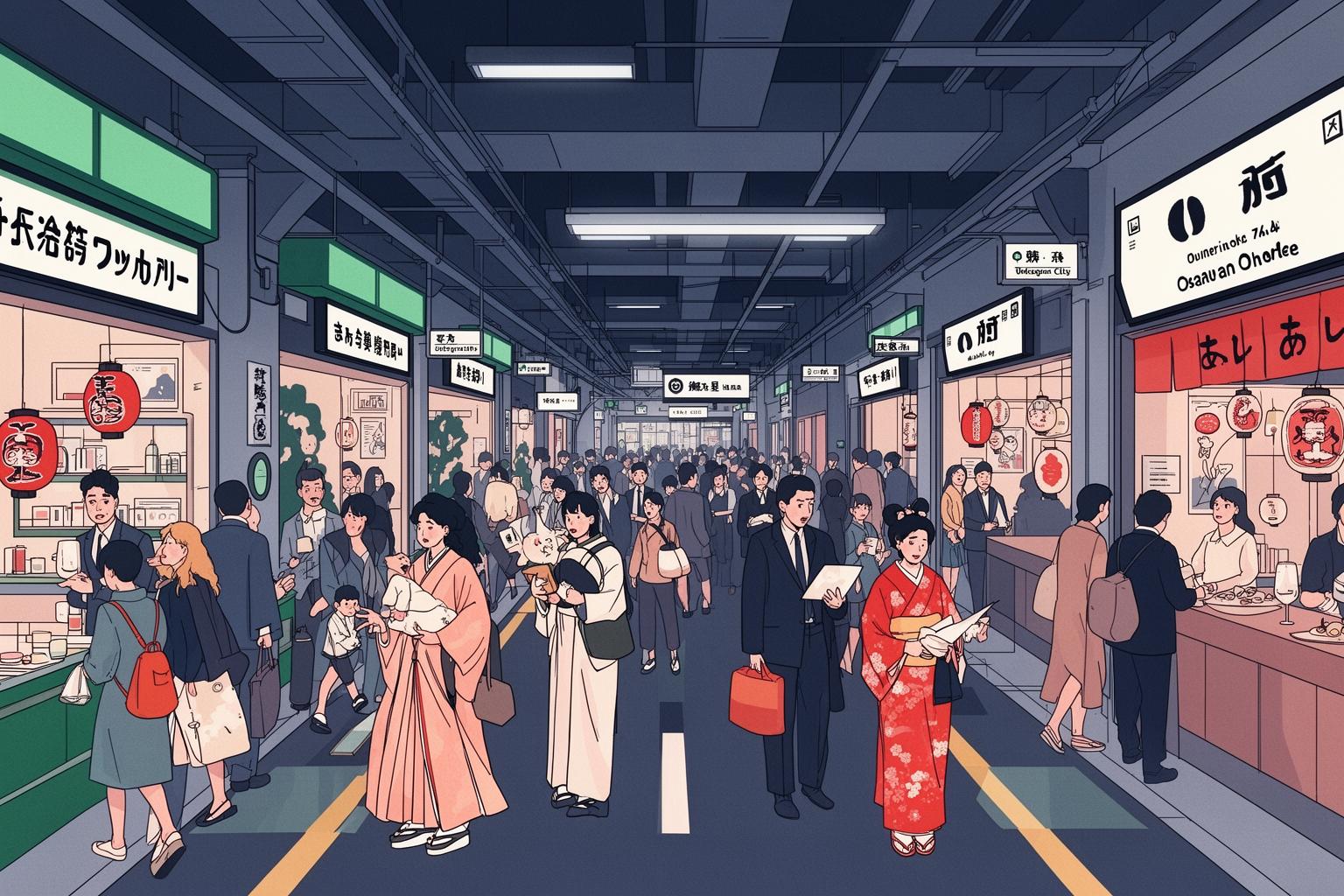
The contrast between Osaka’s expansive, unified chikagai and Tokyo’s fragmented network of station malls goes beyond simple urban planning. It is a tangible expression of a deep cultural divide. This is the tale of two cities with distinct histories, priorities, and fundamentally different worldviews. One is a city of merchants; the other, a city of bureaucrats. Their values are embedded in the very foundations of their underground realms.
Osaka’s Pragmatism vs. Tokyo’s Polish
Osaka’s chikagai stands as the ultimate symbol of pragmatism. It arose from a straightforward, practical need: in a city with hot, humid summers and rainy typhoon seasons, how can people stay comfortable and, crucially, keep shopping? The solution was to create a second city beneath the surface—a sheltered space where commerce could thrive regardless of weather. The seamless connectivity flows naturally from this logic. A connected system is more efficient, more convenient, and ultimately better for business for all involved. It is a bottom-up solution, an organic network that developed over decades to meet the needs of those who use it.
Tokyo’s underground, by contrast, often feels like the product of a top-down, corporate strategy. It is polished, organized, and designed to project modernity and control. Its fragmentation results from powerful, competing entities carving out separate territories. The main goal was not to create a unified public space but to efficiently manage passenger flow within each company’s domain. The outcome is beautiful and functional in its own way but lacks the messy, democratic, human-centered atmosphere of its Osakan counterpart. It reflects a culture that values order, appearance, and established hierarchies.
The ‘Human Smell’ of the Chikagai
There’s a Japanese phrase, ‘ningen-kusai,’ which literally means ‘human-smelling.’ It describes something earthy, unpretentious, imperfect, and deeply, authentically human. Osaka’s chikagai is profoundly ningen-kusai. You can smell the dashi broth wafting from a standing udon shop that has been there for fifty years. You hear raucous laughter spilling out of a tiny tachinomi. You see shopkeepers chatting with regular customers. Fortune tellers set up small tables in drafty corridors. It’s a space that feels lived-in, a bit worn around the edges, alive with the unglamorous, everyday realities of life.
Tokyo’s underground spaces, especially in newer developments, often lack this quality. They are scrubbed clean of imperfection. Lighting is flawless. Signage is beautiful. Shops are carefully curated. It’s an impressive feat of design and engineering, but can feel impersonal—a space you pass through rather than belong to. The ‘human smell’ has been deodorized and replaced by the clean, neutral scent of upscale retail. This is not a criticism but a fundamental atmospheric difference: Tokyo offers a polished ideal, while Osaka presents a vibrant reality.
What Foreigners Misunderstand
A common misconception among foreigners, especially those from Tokyo, is to see Umeda’s ‘Dungeon’ as merely a chaotic, poorly signed maze. They get lost, grow frustrated, and fail to appreciate the system’s brilliance. Expecting the clear, logical, top-down order of a Tokyo station, they instead encounter a seemingly anarchic, organic sprawl. They try to apply the logic of a train map to a living organism.
The error is judging it by the wrong standards. The chikagai’s goal isn’t to be immediately clear to first-time visitors. Its purpose is to serve the daily, habitual needs of the millions living and working there. Its logic is associative and landmark-based, learned over time. Its chaos is a mark of success—a sign of density, variety, and life. Complaining that Whity Umeda is confusing is like complaining that a forest lacks a grid system. You’re missing the point. The beauty lies in the wildness, the unexpected discoveries, and the sense of shared, secret knowledge that binds the community.
How This Shapes Daily Life
The presence of a truly functional, comprehensive underground city tangibly shapes daily life in Osaka, creating habits and attitudes distinct from those in Tokyo.
The All-Weather City
The most obvious effect is on people’s relationship with weather. In Tokyo, heavy rain or a scorching heatwave is a major conversation topic and a genuine logistical challenge. People adjust plans, grumble about commutes, and arrive at destinations soaked in rain or sweat. In Osaka, especially near the Umeda or Namba hubs, weather is often irrelevant. The typical response to a typhoon forecast is a shrug and the phrase, “Chika de iku kara” — “I’ll go through the underground.” The ability to navigate large parts of the city center in a climate-controlled environment fosters resilience and nonchalance. The city possesses an inbuilt defense against the elements, a luxury residents come to take for granted.
The Social Fabric Underground
The chikagai also acts as vital social space. In Tokyo, after-work drinks typically involve a deliberate trip to specific neighborhoods known for eateries, like Shimbashi or Ebisu. In Osaka, spontaneous, casual drinks are a cornerstone of social life, and the chikagai is the natural setting. The abundance of affordable tachinomi and izakaya at key commute hubs makes it easy to grab a quick beer with a colleague before heading home. This encourages a different kind of social interaction—less planned, more spontaneous, and more integrated into the daily rhythm of coming and going. The chikagai is a social lubricant, blurring the lines between work and leisure, public and private, in a relaxed, convivial way.
The Mental Map
Ultimately, the chikagai rewires your brain. It changes how you perceive distance and connection in the city. In Tokyo, the city is seen as points (stations) connected by lines (train routes). The mental map is the iconic subway map. In Osaka, the city center is a continuous, walkable space. Underground links neighborhoods that seem disconnected on surface maps. Kitashinchi, the upscale dining district, and Higashi-Umeda, a grittier nightlife area, lie side by side underground. This fosters a more fluid and integrated sense of the urban landscape. The city feels more compact, more accessible, and more unified. Osaka’s real map isn’t on paper; it’s the pathways, plazas, and shortcuts etched into the collective memory of its people—a shared secret just beneath the surface.
To walk through the chikagai is to journey through the subconscious of Osaka. It’s neither as grand as the castle nor as flashy as Dotonbori’s neon signs, but far more revealing. It stands as a tribute to a merchant culture that values practicality over prestige, connection over separation, and human vitality over sterile order. It is a sprawling, chaotic, wonderfully human system that, once you grasp its rhythm, makes you feel less like a visitor and more like part of the city’s beating heart. Tokyo built its underground to serve trains; Osaka built its underground to serve people. In that simple distinction lies the story of everything that makes these two great cities—and their inhabitants—so profoundly and fascinatingly different.