For anyone who has spent more than a week in Osaka, the name ‘Kuromon Ichiba’ comes loaded with a complex set of expectations. To the outside world, it’s a global icon, a five-hundred-meter-long artery of gastronomic delight, famously nicknamed ‘Osaka’s Kitchen’—天下の台所 (Tenka no Daidokoro), or The Nation’s Kitchen, in its more grandiose historical form. It’s the place you see on travel blogs and television shows, a vibrant, chaotic parade of grilled wagyu skewers, glistening sea urchin, and impossibly large crab legs. It represents the pinnacle of Osaka’s kuidaore culture—the idea of eating until you drop, or more accurately, until you go bankrupt from culinary indulgence. But if you actually live here, if you’re navigating the daily grind of grocery shopping, meal planning, and rent payments, a different question emerges, one whispered among fellow foreign residents and locals alike: Is this place still for us? The answer, like so much in this gloriously contradictory city, is a resounding ‘it depends.’ To understand Kuromon Market in the 21st century is to understand the very soul of modern Osaka: a city built on pragmatic commerce, fiercely proud of its heritage but never too sentimental to adapt when a better business opportunity comes knocking. It’s a story of tradition meeting tourism, and the messy, delicious, and often overpriced reality that results. This isn’t just a market; it’s a living case study in the evolution of a metropolis, a place that reveals more about the Osaka mindset than a dozen guidebooks ever could. So before you head down to Nipponbashi with your tote bag expecting a traditional shopping experience, let’s dissect the reality of Kuromon, separating the tourist-facing facade from the lingering utility for those of us who call this city home.
For a deeper look at the city’s spiritual side beyond its famed markets, consider planning a temple stay in Koyasan.
The Echoes of the Past: The Kitchen It Once Was
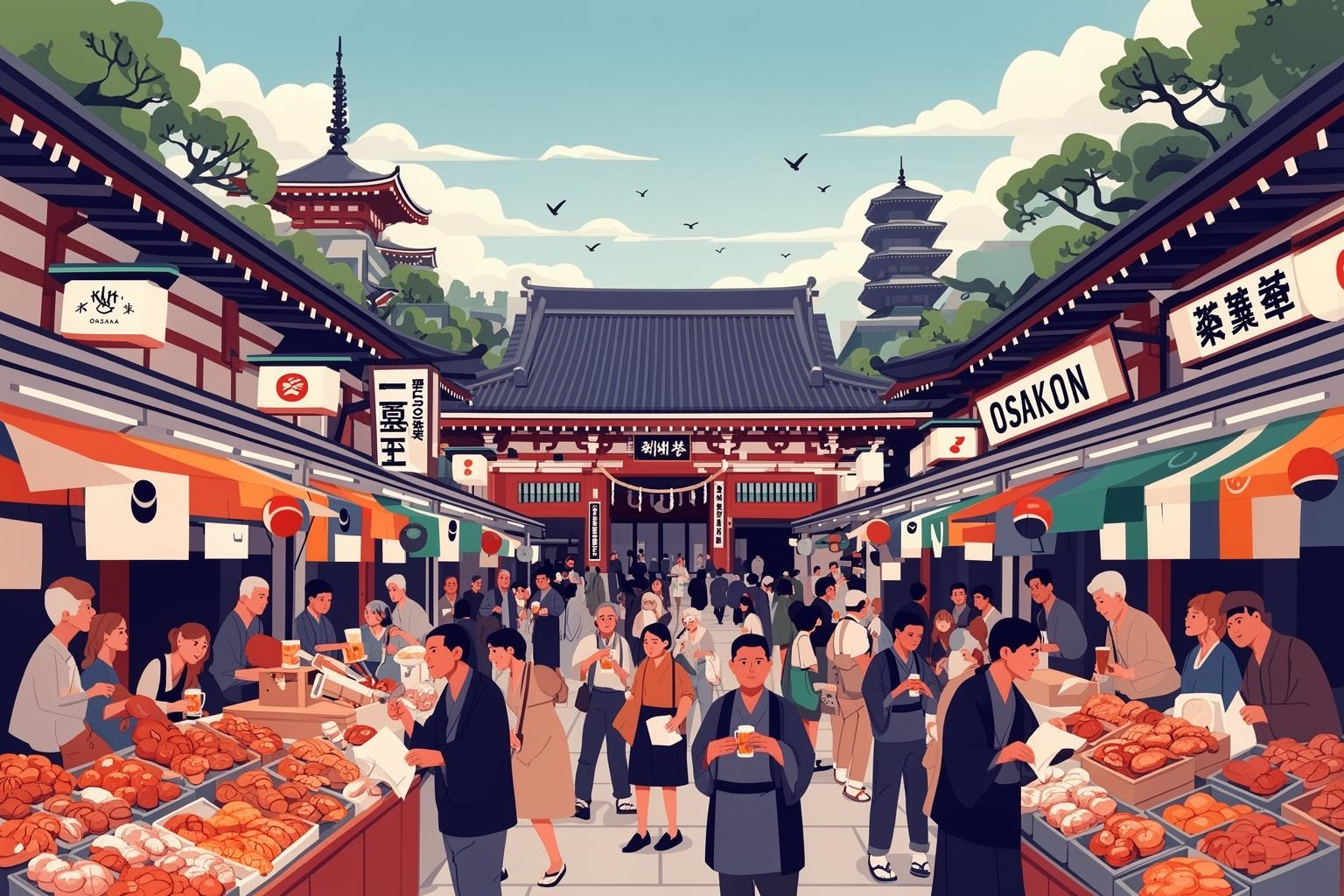
To truly understand Kuromon, you first need to know what it once was. For nearly two centuries, the market stood as the undisputed culinary center of Minami, Osaka’s southern downtown area. Its mission was straightforward yet vital: to provide the freshest, highest-quality ingredients to the city’s professional chefs and discerning home cooks. The nickname “Osaka’s Kitchen” was not just a catchy phrase; it described its very function. Picture the scene at dawn, long before tourists arrived. The air, heavy with the salty scent of the sea, was filled with the steady clang of knives striking wooden boards and the guttural shouts of vendors auctioning prized tuna. Men wearing rubber boots and aprons, stained with the evidence of their labor, expertly filleted massive fish in swift, practiced motions. This was no place for casual browsing. It was a place of business, of shoubai.
Shopkeepers were true experts, each mastering a single specialty. There was the tofu maker, whose shop was shrouded in steam, offering silky kinugoshi and firm momen tofu made fresh that very morning. Nearby, the tsukemono (pickles) shop displayed barrels of vibrant, pungent vegetables, their recipes handed down through the generations. These weren’t mere souvenirs; they were essential staples of the Japanese diet, sold by weight to housewives planning their weekly meals. Customers were regulars. A chef from a nearby kappo restaurant kept a running tab with a particular fishmonger, trusting him to reserve the finest cuts. A local grandmother frequented her favorite vegetable stand, where the owner knew exactly how she preferred her daikon radish. Conversations were brief, professional, and grounded in years of trust. Quality was the only currency that counted. Prices were negotiated, but the excellence of the product was never in question. This was the heart of the Osaka merchant spirit: a straightforward, no-nonsense bond between producer, seller, and buyer, all united by a shared passion for good food.
The Present Reality: A Theatre for Tourists
Strolling through Kuromon today feels like stepping into another world. The market’s original, practical purpose from the past has been layered with a dazzling—and sometimes overwhelming—performance. It is no longer primarily a place to purchase ingredients for later use, but a destination to eat on the spot. The main customers have shifted from local chefs to international tourists, smartphone in one hand and skewer in the other. This transformation exemplifies Osaka’s economic pragmatism. When inbound tourism surged in the 2010s, Kuromon’s merchants didn’t cling stubbornly to tradition. Instead, they recognized a new, highly profitable customer base and adapted with remarkable speed.
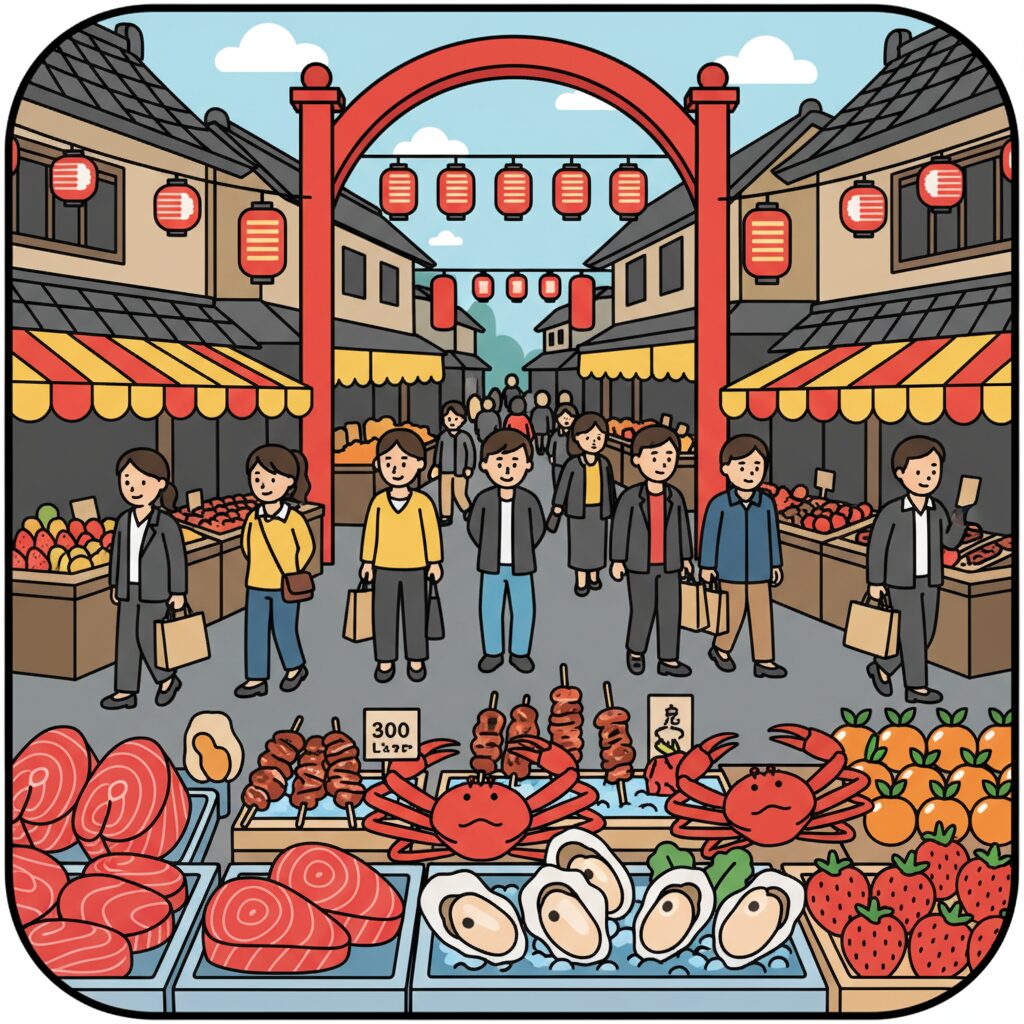
The signs are everywhere. Stalls that once sold whole fish now offer single grilled scallops, glazed with butter and soy sauce, for 800 yen each. Butchers showcase beautifully marbled Kobe and Wagyu beef not as steaks to take home, but as bite-sized cubes grilled to order and served on small plastic trays for 2,000 yen. Humble fish egg sacs, once simple ingredients, are now grilled and sold as delicacies. The most notable change is the rise of tabe-aruki—eating while walking (or more precisely, standing in designated corners). The market has turned into a grand open-air buffet. Uni is freshly shucked and served in its spiky shell, while O-toro tuna is sliced and placed on a single piece of rice, delivering a high-end sushi experience outside a restaurant. The sounds have changed as well. The sharp clang of fishmongers’ knives often gives way to the sizzle of blowtorches searing beef and the multilingual calls of vendors vying for attention: “Delicious! Number one! Very fresh!”
This shift brings a significant and unavoidable impact on residents: the price. The “tourist tax” is very real here. An 800 yen scallop might cost just 300 yen for a pack of three at a local supermarket. Fruit, while beautifully presented, is sold at a premium no local would pay for daily consumption. A single perfect white strawberry can command prices that could bring tears. This isn’t a scam; it’s market economics. Vendors price their goods for vacationers, for whom a 1,500 yen skewer is part of a once-in-a-lifetime experience, not a weekly grocery bill. For residents, the market has shifted from a utility to a novelty.
The Osaka Mindset on Full Display
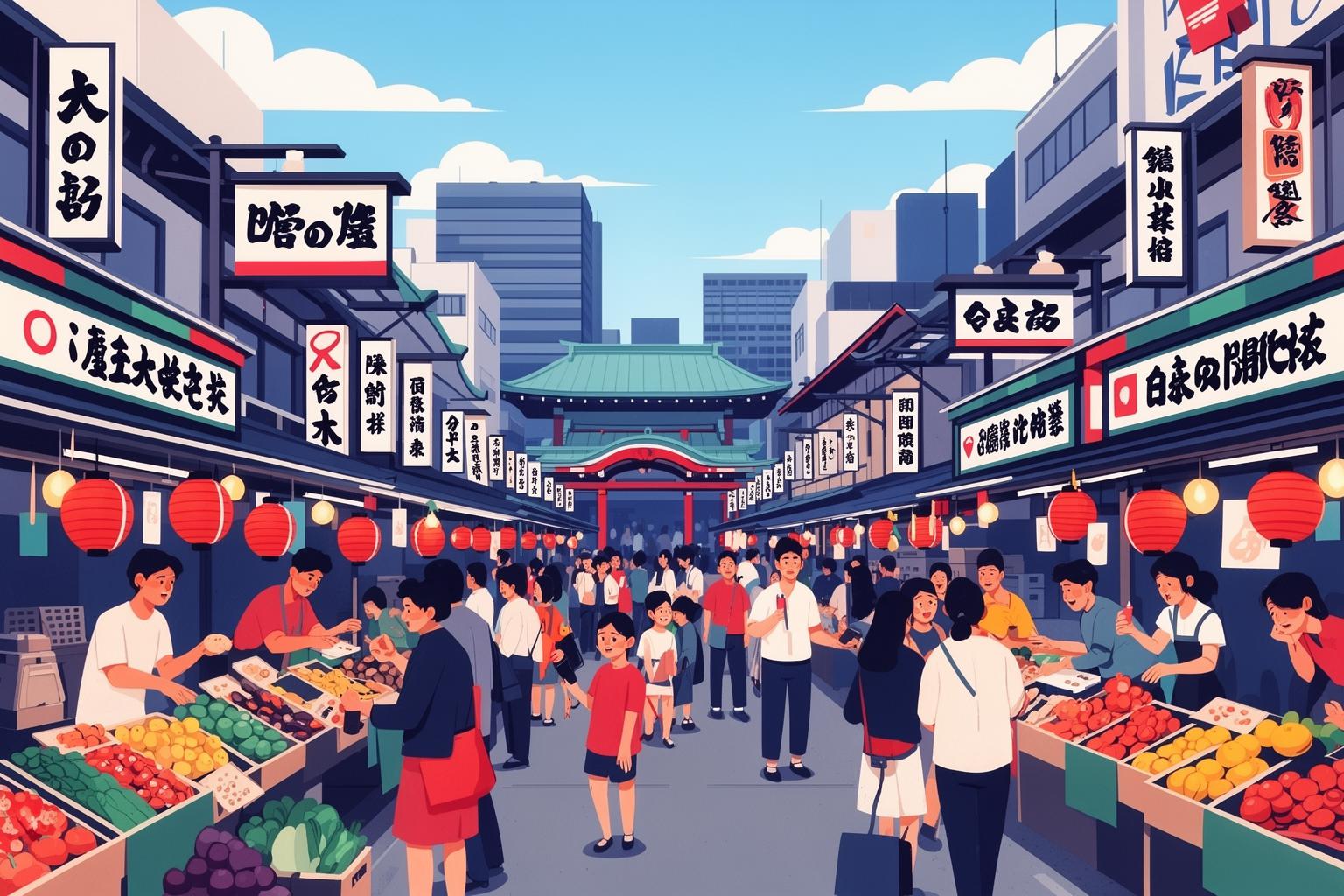
Kuromon’s transformation is arguably the best spot in the city to witness the fundamental principles of the Osaka mindset in practice. It serves as a living showcase of local culture, illustrating how this city thinks, functions, and prospers. While outsiders might view the change as a loss of authenticity, many Osakans see it simply as a clever business strategy.
H3: Pragmatism as the Supreme Virtue
If there is one defining trait of the Osaka merchant class, it is a deeply ingrained pragmatism. Unlike Kyoto, which can sometimes feel preserved in the amber of its own artistic traditions, Osaka’s heritage is commerce. The city’s history centers on merchants, not nobility. The primary objective is to conduct successful business, to flourish, to generate profit. When tourists arrived, pockets full of cash and eager for an ‘authentic’ experience, Kuromon’s merchants didn’t view them as a threat to their culture; they saw an opportunity. They recognized that selling one grilled shrimp for 500 yen to a tourist was far more profitable than selling a kilogram of raw shrimp to a local for 1,000 yen. Is it regrettable that the old way of life has diminished? Possibly. But as one shopkeeper might say with a shrug, “Nostalgia doesn’t pay the rent.” This pragmatic, clear-eyed business approach is quintessentially Osaka. The city honors success, and by any financial measure, the new Kuromon is a tremendous success. It’s an adaptation, not a defeat.
H4: Decoding Osaka ‘Friendliness’
The stereotype about Osaka is that its residents are friendly and outgoing, a sharp contrast to the perceived reserve of Tokyoites. This is true, but understanding the context is essential. The lively, boisterous engagement you experience in Kuromon is a form of professional friendliness. It is the art of the sale, refined over generations. The loud calls, the jokes, the easy smiles – all part of the shoubai performance. The aim is to lower your defenses, build rapport, and close the deal. It’s not disingenuous, yet it is transactional. This contrasts sharply with the quieter, slower-developing relationships you form with shopkeepers in your local shotengai (shopping street). There, friendliness grows from recognition and repetition. In Kuromon, it’s a high-energy, high-turnover version meant for a steady flow of strangers. It’s a crucial skill, and Osakans are experts at it. They’re not just selling you fish; they’re selling you an experience, an interaction, a memory of the ‘vibrant Osaka market.’
H4: The Transformation of Kuidaore
The idea of kuidaore is central to Osaka’s identity. Traditionally, it conveyed an intense, sometimes extravagant dedication to culinary excellence. It meant spending money on the best ingredients, supporting top chefs, and having a refined palate. It was about connoisseurship. The contemporary Kuromon experience signifies a shift in that philosophy. For many visitors, kuidaore has evolved into a form of gastronomic tourism focused on sampling and novelty. It’s about tasting a bit of everything, capturing it on social media, and moving along. The emphasis moves from savoring a single, perfect meal to enjoying a wide range of small, photogenic bites. It’s less about connoisseurship and more about consumption as entertainment. Does this diminish the original spirit? Purists might say yes. But pragmatic Osakans would argue that the city’s passion for food has simply taken on a new, highly profitable form. The essence remains—food is still paramount—but its expression has adapted to the times.
A Resident’s Guide: To Shop or Not to Shop?
So, we return to the fundamental question for those of us living here: without its appeal to tourists, does Kuromon Market have any practical value for residents? The answer is a qualified yes—you just need to know how and when to make the best use of it.
H3: The Very Real Cons: Why It’s Not Your Everyday Supermarket
Let’s be clear: for 95% of your grocery shopping, Kuromon is not the ideal choice, and the reasons are straightforward and convincing.
- Price: This is the biggest obstacle. Almost everything, from produce to meat to seafood, can be found more cheaply elsewhere. A short walk from the market will bring you to a professional-grade Gyomu Supermarket or a typical local chain like Life or Kohyo. Your wallet will appreciate that walk.
- Crowds: Navigating through the dense, slow-moving flow of tourists is frustrating. It’s simply not a practical setting for an efficient grocery trip. The narrow aisles are jam-packed with people stopping to take photos, making quick movement nearly impossible.
- Product Focus: The market’s selection increasingly targets immediate consumption. It’s easy to find a single grilled oyster but much harder to find a simple bag of them to take home and prepare yourself. Portions and preparations cater to snacking rather than stocking a home kitchen.
H3: The Niche Pros: When a Visit Is Worthwhile
Despite the disadvantages, dismissing Kuromon altogether would be a mistake. There are specific, strategic reasons why residents should keep it as an option.
- High-End, Specialty Ingredients: This is where the market truly excels. If you’re planning a special occasion—a New Year’s feast, an elegant dinner party—Kuromon is an invaluable resource. You can find cuts of tuna belly (o-toro) that would rarely be seen in a regular supermarket. You can purchase a whole, fresh pufferfish (fugu) from a licensed vendor. The traditional pickle shops, like the famous ‘Ise-ya,’ offer unmatched quality and variety of tsukemono. For professional-grade dried goods like kombu, katsuobushi, or shiitake mushrooms, the old specialty stores remain the best in the city.
- The Atmospheric ‘Splurge’: Sometimes, a visit to Kuromon isn’t about errands but an outing. Maybe you have out-of-town guests and want to provide the full ‘Osaka experience.’ You can go, soak in the atmosphere, and treat yourself to a few high-quality items. Pick up fresh oysters to shuck at home or a block of exceptional maguro for sashimi night. Used as a deliberate treat rather than a routine chore, the market can be a source of enjoyment.
- Discovering the Remnants: Look carefully past the flashy wagyu stands, and you’ll find the old Kuromon still survives in pockets. Small, unpretentious shops sell kitchenware, from professional knives to bamboo steamers. There are tea merchants and seaweed specialists who have been part of the market for generations. These places tend to be quieter, with clientele that is older and more local. Seeking them out offers a way to connect with the market’s living history.
A City in a Market: What Kuromon Tells Us About Osaka
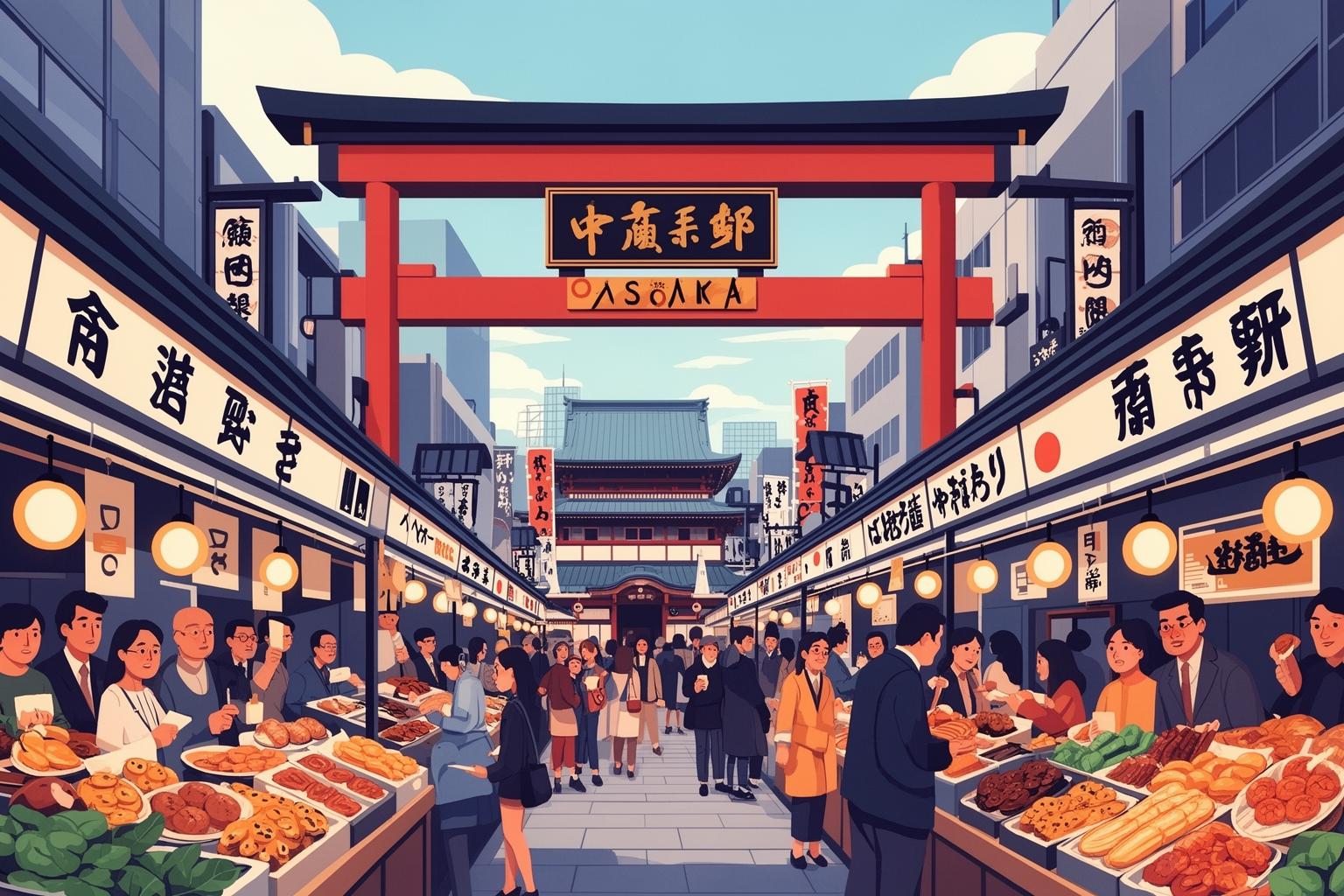
Ultimately, Kuromon Market serves as a microcosm of Osaka’s larger urban narrative. It is a city firmly rooted in the present. It honors its history not by keeping it frozen in time, but by reshaping it to meet the demands of today’s economy. The evolution of Kuromon reflects the transformation of Dotonbori from a local theatre hub to a global photo hotspot, as well as the ongoing commercial reinvention of the Umeda and Namba districts. Osaka is a city in constant flux, propelled by the force of commerce.
This starkly contrasts with Tokyo. While places like Tsukiji’s outer market have experienced a similar shift toward tourism, Osaka’s process feels more raw, more direct, and unapologetically commercial. The sales pitches are louder, the entrepreneurial energy more visible. There is less emphasis on preserving a curated image of ‘Japan’ and more focus on the lively, straightforward act of buying and selling. It is the legacy of a city built by merchants, for merchants—a spirit that Kuromon now broadcasts to the world.
Final Verdict: Know It for What It Is
For residents of Osaka, the key to maintaining a healthy relationship with Kuromon Market is managing your expectations. It is no longer the “Osaka’s Kitchen” it once was. The city’s true, everyday kitchens are now supplied by the sprawling, brightly-lit aisles of numerous neighborhood supermarkets and the modest, specialized stalls of smaller, lesser-known shotengai. These places reflect the genuine, unglamorous, and affordable reality of daily life in the city.
Instead, view Kuromon as a living museum showcasing Osaka’s commercial brilliance. Visit to gain insight into how the city functions. Visit to admire the quality of high-end specialty products. Visit on a special occasion to indulge in something extraordinary. But do not expect to do your regular weekly shopping there. Embrace it as a theater, a spectacle, a symbol of Osaka’s relentless ability to adapt and prosper. The old kitchen may be gone, but in its place stands a monument to the city’s enduring spirit. Understanding this distinction is essential to understanding Osaka itself.