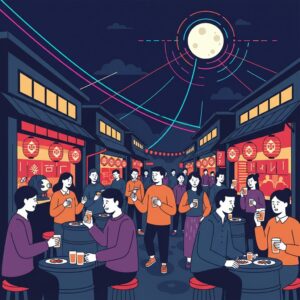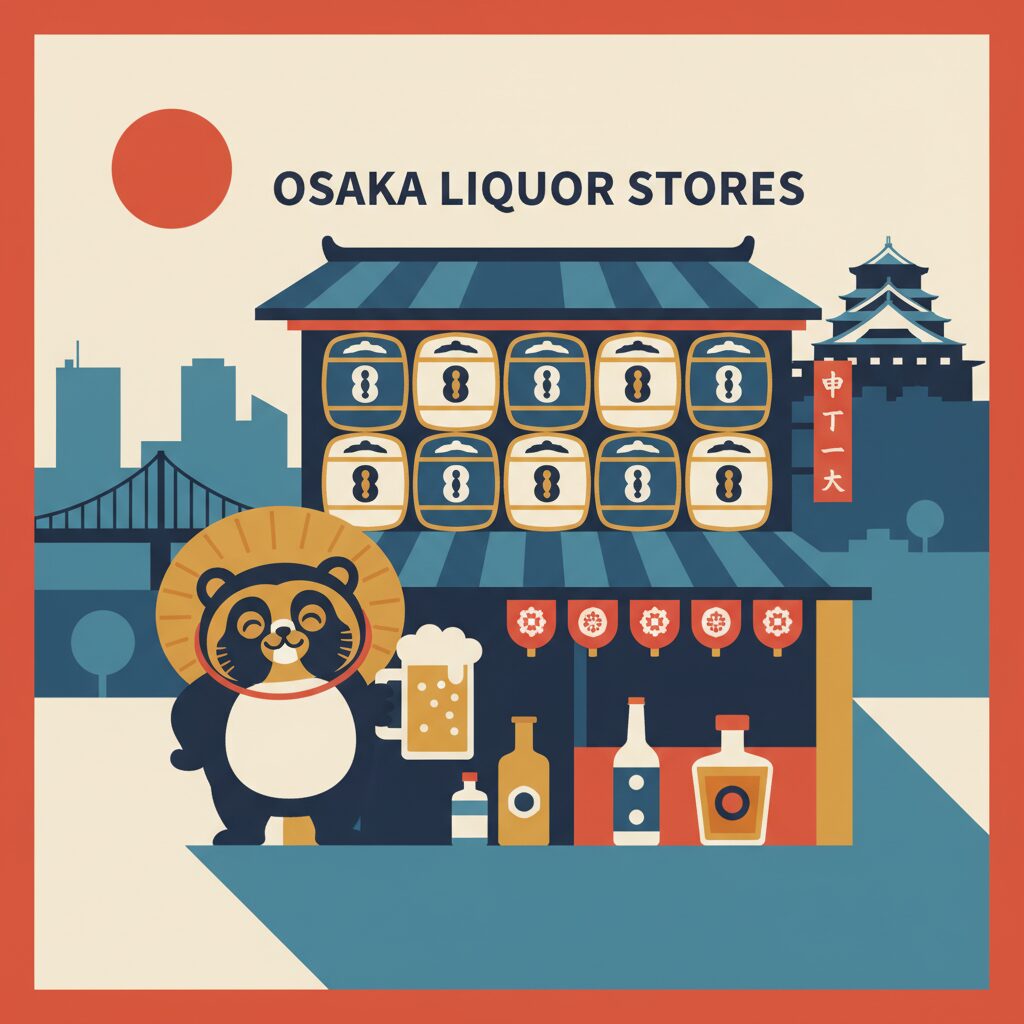
Walk with me for a moment. Picture this: you’re drifting through a covered shopping arcade, a shotengai, as the sun begins to dip, painting the sky in hues of orange and violet. The air is thick with the savory scent of takoyaki and the distant rumble of a train. You pass shops selling everything from fresh tuna to ¥100 dishware. Then you see it. A liquor store, its shelves packed with bottles of sake, shochu, and pyramids of canned beer. But there’s something else. Inside, clustered around a makeshift counter, a group of people are standing, drinking, and chatting with an easy familiarity. It’s not a bar, there are no stools. It’s not a restaurant, there’s no kitchen. This, my friend, is your window into the soul of Osaka. You’ve just stumbled upon a kaku-uchi.
This isn’t just about grabbing a cheap drink. Kaku-uchi, the tradition of drinking on-premises in a liquor store, is a living cultural institution. It’s a social pressure valve, an economic statement, and a crash course in the city’s unwritten rules, all rolled into one. It’s where you’ll find the unfiltered essence of Osaka’s pragmatism, its communal spirit, and its delightful disregard for pointless formalities. Forget the polished glamour of Tokyo’s cocktail scene; this is where real life happens, one quick, cold beer at a time. For anyone trying to understand what makes this city tick, learning the rhythm of kaku-uchi is more enlightening than a dozen guidebooks. So, let’s peel back the curtain and step inside.
Immerse yourself in the candid spirit of kaku-uchi, where experiencing Osaka’s direct communication style deepens your insight into the city’s vibrant social dynamics.
What Exactly is Kaku-uchi? More Than Just a Drink
At its essence, kaku-uchi is elegantly simple: you purchase your drink at retail price from the liquor store—the saka-ya—and consume it right there. It’s a transaction free of any pretense. You’re not paying for service, atmosphere, or a plush velvet seat. You’re paying for the beverage, and the space is a complimentary, practical bonus. This distinction is crucial. It’s the philosophical divide between a kaku-uchi and a standing bar, or tachi-nomi, even though to an untrained eye they might appear similar. The latter is a dedicated food and drink venue; the former is a retail shop that kindly allows you to become a temporary guest in its drinking nook.
The Anatomy of a Kaku-uchi Spot
Step inside and you’ll notice the intentional simplicity in design. The drinking area is usually just a corner of the shop, marked by a plain wooden counter darkened from years of use and occasional spills. Sometimes, there isn’t even a proper counter—just a few stacked beer crates or a repurposed plank of wood. The lighting often consists of the stark, honest fluorescent glow typical of retail spaces. The backdrop is the store itself: rows of colorful labels, boxes of stock, and perhaps a dusty promotional poster from a beer brand featuring a model from a decade ago.
The offerings are equally straightforward. Refrigerators hum with a standard selection of Japanese macro-brews—Asahi, Kirin, Sapporo—and a variety of chu-hai, the ever-popular canned highball. For sake enthusiasts, the real delight is often a large 1.8-liter bottle, an issan-bin, from which the shop owner, the tenshu, pours a glass for a few hundred yen. If food is available, it consists of what the Japanese call kanshoku—simple, shelf-stable snacks. Think small cans of seasoned mackerel, packets of beef jerky, triangles of processed cheese, dried squid, or rice crackers. You take what you want from the shelf, pay, and eat. It’s a system built on efficiency and trust.
The Name Game: Why “Kaku-uchi”?
The term itself, 角打ち, provides a hint to its rustic roots. It literally means “corner strike” or “corner hit.” Although its exact origin is debated, two popular theories paint a vivid picture of its history. One suggests it comes from the traditional way of drinking sake from a square wooden box called a masu. Patrons would place a small pile of salt on the corner of the masu, take a sip of sake, and then lick the salt, “striking the corner” with their tongue. Another theory holds that, in the old days, sake was sold directly from large barrels. Customers would pay by measure, and the shopkeeper would strike open a corner of the barrel’s lid with a mallet to serve them. Both stories convey a sense of directness—unrefined and immediate consumption—that remains the core spirit of the experience today.
The Unspoken Rules: Your Guide to Fitting In
A kaku-uchi may seem like a lawless zone compared to the highly organized service of a typical Japanese establishment, but it functions according to a strict, though invisible, code of conduct. Breaking these unspoken rules is the fastest way to mark yourself as an outsider. On the other hand, mastering them grants you the privilege of being treated like a regular.
Rule One: It’s a Pit Stop, Not a Destination
This is perhaps the most important rule of all. A kaku-uchi isn’t a place to settle in for a long night. It serves as a transitional spot. It’s the drink you have on the way home from work to unwind before dinner. It’s the quick beer you share with a colleague before you both catch separate trains. It’s a brief pause in your day. The average visit is short, usually lasting no more than 20 or 30 minutes—the time it takes to finish one or two drinks and a small snack. The clientele is in steady, gentle flux. People come in, have their moment, and move on. Staying for hours in the limited space is seen as bad manners. It’s like parking your car in a 15-minute loading zone for the entire afternoon. It simply isn’t done.
Rule Two: Keep It Simple, Keep It Clean
The system is self-service, and your independence comes with responsibility. The process is straightforward: you grab your own canned drink from the cooler, select your snack from the shelf, and bring your items to the counter to pay. The tenshu is there to facilitate transactions, pour a cup of sake, or answer simple questions, not to act as your personal server. When finished, you’re expected to be a considerate member of this temporary community. Empty cans go into the designated bin, trash is disposed of properly, and your spot at the counter should be left as tidy as you found it. This isn’t about formal etiquette; it’s about mutual respect for the owner’s space and for the patrons who follow.
Rule Three: Cash is King (and Quick)
Many traditional kaku-uchi establishments operate on a cash-only basis. Margins are slim, and transactions are brisk. Fumbling with a credit card or QR code app only slows things down. The preferred method is often cash-on-delivery, paying for each item as you get it. Have small bills and coins ready. It’s a straightforward, efficient system that keeps the pace flowing smoothly. Some places might allow you to run a small tab, settled when you leave, but the principle remains: be ready to pay quickly and simply. This isn’t the place for splitting a complicated bill among six friends.
Rule Four: Read the Room, Respect the Space
Each kaku-uchi has its own distinct atmosphere and social vibe. Some are lively and chatty, with regulars bantering with the owner. Others are quiet, reflective spaces where solitary drinkers stand comfortably in silence. Your role is to enter, observe, and adapt. Don’t be the loudest person in the room. Don’t force conversation on someone clearly seeking a moment of peace. The charm of kaku-uchi lies in its accommodation of both socializing and quiet solitude. Offering a polite nod to the owner and fellow patrons when entering and leaving is always a good idea. If conversation naturally arises, great. If not, enjoy the simple pleasure of your drink and the ambient neighborhood sounds. This is a shared space, not your personal stage.
Kaku-uchi as a Mirror to the Osaka Soul
Understanding kaku-uchi means understanding Osaka itself. This simple act of drinking at a liquor store profoundly expresses the city’s core values. It’s where economics, community, and a healthy dose of anti-establishment spirit all come together.
Practicality and Price: The “Mokkari-makka?” Spirit
A classic Osaka greeting often heard among merchants is “Mokkari-makka?” which roughly means “Are you making a profit?” It’s not rude; rather, it reflects a shared mindset grounded in commerce and pragmatism. Osaka has always been, and remains, a city of merchants. Value for money is not just a preference but an art form. Kaku-uchi perfectly embodies this principle. Why pay triple for a beer in a bar when you can enjoy the exact same product at retail price? It’s a beautifully logical, almost mathematical, solution to the desire for a drink. This sharply contrasts with Tokyo, where the experience, omotenashi (hospitality), and aesthetic presentation often hold as much value as the product itself, justifying higher prices. In Osaka, substance consistently triumphs over style. Kaku-uchi is the ultimate rejection of the markup.
A “Third Place” for Everyday People
Sociologists emphasize the “third place”—a space that is neither home (the first place) nor work (the second place). These places anchor community life, serving as informal spots where people can relax and connect. For many working-class Osakans, the kaku-uchi serves as this essential third place. There are no membership fees, no dress codes, and no social barriers. A construction worker in paint-splattered overalls can stand beside a salaryman who has just loosened his tie. It’s a truly democratic environment. This accessibility fosters a low-stakes form of community—a shared ba—where neighbors can enjoy fleeting but meaningful interactions, strengthening the neighborhood’s social fabric one canned chu-hai at a time.
The Anti-Hierarchy Hangout
Japanese society is often marked by rigid social hierarchies, especially in the corporate world. Formal drinking parties, or nomikai, are fraught with seniority and unspoken rules. Kaku-uchi serves as an antidote to all of that. Within the four walls of the liquor store corner, your business card means nothing; your title is irrelevant. It functions as a great equalizer. People are just people, sharing a simple pleasure. This reflects Osaka’s famously direct and informal communication style. Here, individuals are more likely to engage on a personal level, prioritizing authenticity over protocol. It’s a space where the city’s egalitarian spirit can breathe freely—a welcome break from a society that often demands you know your place.
Navigating Kaku-uchi as a Foreigner: Tips and Tricks
For someone who is not a Japanese resident, a kaku-uchi can appear intimidating. It is a deeply local space, and the concern about making a cultural misstep is genuine. However, with the right attitude, you can not only join in but also be warmly accepted.
Breaking the Ice Without Breaking the Vibe
Confidence is essential. Don’t hesitate nervously at the entrance. Step inside, make eye contact with the tenshu, and offer a friendly nod or a quiet “Konnichiwa.” The most useful phrase to learn is “Koko de nonde mo ii desu ka?” (“Is it okay to drink here?”). This shows respect and acknowledges that you realize you’re in a retail shop, not a public bar. For your first visit, keep things simple. Grab a canned beer from the fridge. It’s an easy transaction that lets you gauge the atmosphere and watch how locals behave. Once you feel more at ease, you can move on to asking the owner for a recommendation or sampling the house sake.
Common Mistakes to Avoid
First, remember it is not a bar. Don’t expect a menu, don’t request a cocktail, and don’t treat the owner like a bartender whose role is to entertain you. They are primarily a shopkeeper. Second, it’s not a wild party. While some places can be lively, many are calm. Match your energy to the mood of the room. If people are speaking softly, do the same. Third, don’t mistake Osaka directness for rudeness. The service may be brisk and straightforward. This isn’t a lack of hospitality; it’s an emphasis on efficiency. The owner is likely busy managing the entire store, not just the drinking area. A direct, no-frills interaction often shows respect rather than disregard.
Where to Discover These Hidden Treasures
You won’t find kaku-uchi featured in glossy travel guides. Your best approach is to explore on foot. Wander through the city’s numerous shotengai, especially in older, more residential areas. Watch near train stations, where commuters may stop on their way home. Look for simple signs like Tachi-nomi (standing drink), a traditional red lantern (akachochin) swaying outside, and, most clearly, people standing inside with drinks in hand. Neighborhoods like Kyobashi, Tenma, and those along the Nankai Line make excellent spots to hunt these down. Each place has its unique character, a tiny snapshot of its specific part of the city.
The Modern Evolution of Kaku-uchi
While the image of a middle-aged ojisan nursing a cup of sake is the classic kaku-uchi scene, the tradition is not stuck in the past. It is adapting, evolving, and gaining new life in the 21st century, demonstrating its lasting appeal.
The Rise of the “Neo-Kaku-uchi”
In recent years, a new style of kaku-uchi has emerged. These “neo-kaku-uchi” venues honor the spirit of the original while modernizing the concept for a new generation. The atmosphere may be a bit more stylish, often featuring an industrial-chic design. The drink selections tend to be more curated. Instead of standard lager, you might find a variety of local craft beers. Instead of basic futsu-shu sake, there may be a rotating list of premium jizake (regional craft sake) or natural wines from around the world. The snacks are upgraded as well, with artisanal cheeses, cured meats, or gourmet canned goods replacing the simple classics. These spots attract a more diverse crowd: younger office workers, groups of women, and curious foreigners, all drawn by the high-value, low-formality concept.
Why the Tradition Endures
So why, in an era of sleek cocktail bars and global coffee chains, does this humble tradition continue? Because it offers something increasingly rare: a genuine, unfiltered human connection. In a world that can feel isolating and overly commercialized, kaku-uchi serves as an anchor to a more analog way of life. It functions as a physical social network, a place where spontaneous interactions can take place. It symbolizes a small act of rebellion against the polished and impersonal. It stands as a testament to Osaka’s enduring belief that sometimes, the best things in life are the simplest: a good drink, at a fair price, in the pleasant company of your neighbors. It’s not just a place to drink; it’s a place to be. And in Osaka, that’s what matters most.