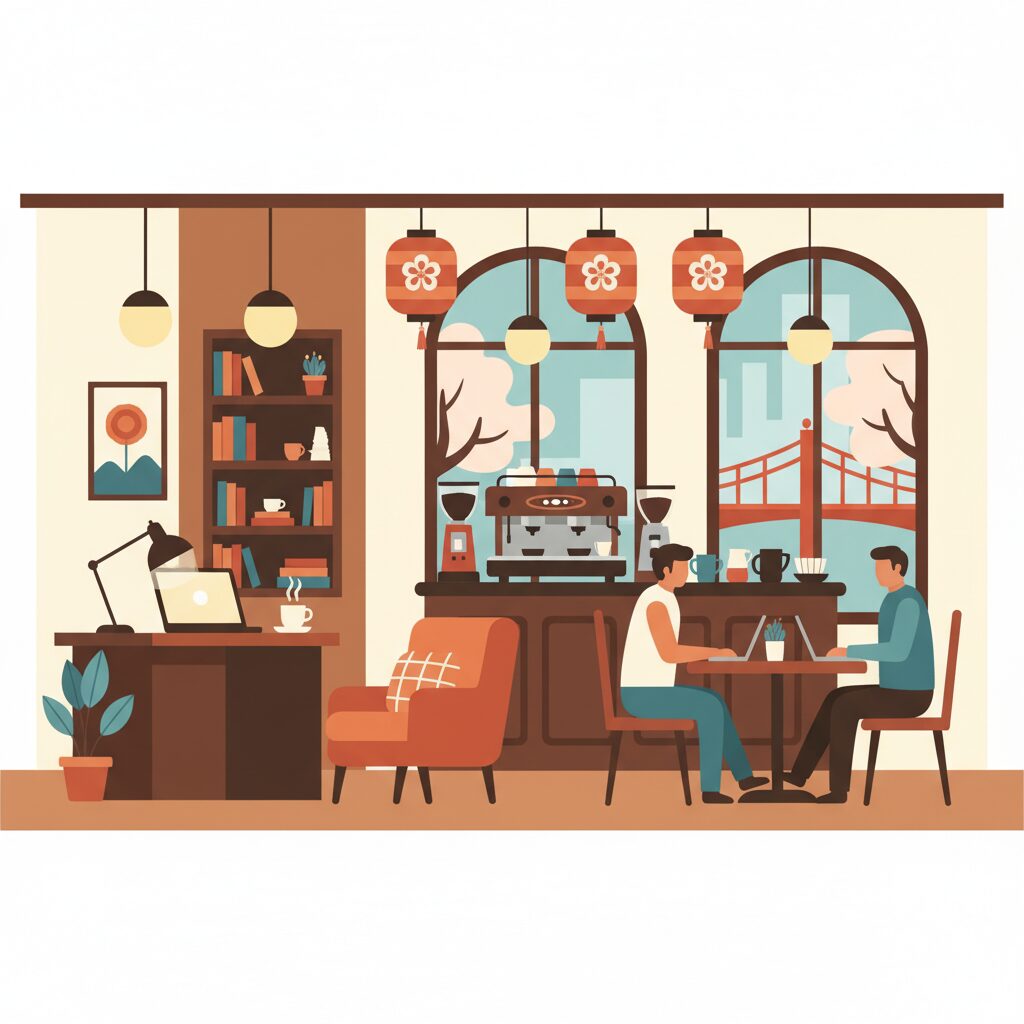
The scene is universal, a modern-day digital painting. The soft glow of a laptop screen reflects off your glasses. The air hums with the hiss of an espresso machine and the low-key indie pop piped through invisible speakers. You’re in a cafe, somewhere, anywhere. It could be Seattle, it could be Seoul, it could be Shinjuku. The clean lines, the minimalist furniture, the branded paper cups—it’s the global uniform of productivity. You came to Osaka to live a different life, to soak in a culture famous for its loud, unapologetic character. So why does your workday feel like it could be happening on a different continent? You’re tapping away in a bubble of bland, a sterile pod that keeps the real city at arm’s length. The question hangs in the air, tasting vaguely of over-roasted, ethically sourced beans: Is this it? Is this the Osaka life?
Step outside that familiar, air-conditioned box. Walk down a narrow side street, past the flashing lights of pachinko parlors and the savory smoke billowing from takoyaki stands. Look for a sign, often written in elegant, slightly faded katakana, with a name that sounds like a memory: “Cafe Arabiya,” “Grill & Coffee London,” “American.” Push open the heavy wooden door, a small bell announcing your arrival, and step across the threshold. You’ve just entered a kissaten. This isn’t just a coffee shop. It’s a time capsule. It’s a neighborhood’s living room. It’s an institution, a testament to a different era, and it might just be the best remote office you’ll ever find in Osaka. But it comes with its own set of rules, its own rhythm, its own soul. This isn’t a space designed for the grab-and-go efficiency of Tokyo or the optimized workflow of a global chain. It’s a place built for lingering, for conversation, for existing. And learning to work here, to find your groove amidst the velvet chairs and the siphon coffee brewers, is to understand the very heart of Osaka—its pragmatism, its warmth, and its stubborn refusal to be anything but itself.
Stepping outside the modern cafe bubble invites you to experience Osaka’s authentic vibe, where exploring the nuances of kappo dining deepens your connection to the city’s time-honored traditions.
The Anatomy of an Osaka Kissaten
Before working in a kissaten, you first need to understand what it is—and just as importantly, what it isn’t. It’s not a co-working space boasting better coffee, nor is it a library serving drinks. At its core, it is a commercialized version of a private space—a third place that feels more like a second home.
More Than Coffee, It’s a “Ba” (Place/Field)
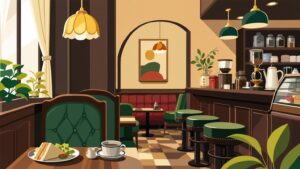
In Japanese, there is a concept called ba (場), which signifies a place, a field, or a setting. It goes beyond a mere physical location; it embodies the atmosphere, the shared context, and the energy generated by the people within it. A Starbucks has a location; an Osaka kissaten has a ba. From the moment you step inside, you sense it. The décor plays a vital role. Forget Scandinavian minimalism—think Showa-era maximalism. Deep red or green velvet armchairs shaped by thousands of patrons, dark polished wood panels permeated by decades of cigarette smoke and conversation, and intricate, sometimes gaudy, stained-glass lamps casting a warm amber glow. It’s a space that embraces you, inviting you to slow down and settle in.
The heart of this ba is the “Master.” He (and it’s almost always a he) is far from a 20-year-old part-timer trying to upsell you a pastry. He is the owner, the proprietor, the conductor of this small symphony. Moving with quiet economy behind a long wooden counter, he polishes glasses, brews coffee with a dramatic siphon that resembles a chemistry experiment, and keeps a watchful yet unobtrusive eye on his domain. He knows his regulars by name, their favorite coffee blends, and even how their grandchildren are doing. This is the foundation of Osaka’s social fabric. It’s not the fleeting, anonymous friendliness of a service worker; it’s the steady, dependable acknowledgment of being part of a community. The kissaten is his kingdom, and by choosing to sit here, you become his guest.
The Soundscape of Productivity (and Distraction)
If you’re accustomed to the hushed, library-like reverence of a Tokyo specialty coffee shop, where the loudest noise is the barista describing the tasting notes of a Geisha varietal, the Osaka kissaten will come as a surprise. It is not quiet; it is vibrant. The soundscape is a rich tapestry woven from the clink of porcelain cups on saucers, the rustle of a newspaper being folded (yes, people still read them here), the gentle bubbling of the siphon brewer, and the constant, low hum of conversation.
This is not the loud, boisterous chatter of an izakaya. Rather, it’s a softer kind of noise. It’s the Master catching up on an elderly regular’s health. It’s two salesmen in ill-fitting suits debriefing a meeting over a plate of Napolitan spaghetti. It’s a group of elegantly dressed older women discussing their latest travel plans. For many, this ambient noise serves as the perfect white noise for certain types of work. It’s less isolating than the dead silence of a home office and less distracting than the curated playlists of a chain café. It’s the sound of life unfolding around you. It connects you to the city’s heartbeat. To an Osakan, silence can be uneasy, while a gentle hum of activity offers comfort. It signals that business is thriving, people are interacting, and the world is turning as it should.
Reading the Room: The Unspoken Rules of Working in a Kissaten
So, you’ve discovered a charming, time-worn kissaten and want to set up your office there for the afternoon. This is where the cultural rubber meets the road. You can’t simply walk in, order the cheapest item on the menu, and occupy a four-person table for five hours. That would be a serious breach of the unwritten rules. To thrive here requires observation, respect, and a bit of strategic thinking.
Earning Your Seat: The Art of the Order
Your right to a seat corresponds directly to your patronage. This is a fundamental principle of Osaka’s merchant city spirit. It’s a fair trade. You’re not just buying coffee; you’re renting a comfortable chair, a pleasant atmosphere, and a slice of the Master’s time and effort. The first rule is straightforward: don’t be stingy. A single 500-yen “blend coffee” won’t secure you a full afternoon.
Instead, learn the rhythm of the kissaten menu. The cornerstone is “Morning Service” (mōningu sābisu), a concept that perfectly embodies Osaka’s love for a good deal. Typically available until around 11 a.m., ordering one cup of coffee gets you a thick slice of buttered toast and a hard-boiled egg for free. It’s a fantastic way to start your day. But it comes with an unspoken agreement: you’re here for the morning, not the entire day.
If you intend to stay longer, space out your orders. Begin with a coffee. After ninety minutes or two hours, when your cup is empty, it’s time to order again. This is a key moment. The Master won’t ask you to leave, but you may sense the subtle weight of his gaze. Order a slice of cheesecake, a colorful green cream soda topped with vanilla ice cream, or another coffee. This simple gesture shows respect. It says, “I recognize this is a business. I value this space, and I’m willing to pay for my continued use of it.” It’s a gradual transaction that keeps the relationship healthy and ensures you’ll be welcomed back.
The Wi-Fi Question and the Power Outlet Problem
Here lies the largest practical challenge for modern remote workers. Most traditional kissaten lack Wi-Fi. Many also don’t offer accessible power outlets. Your first reaction might be to see this as a fatal flaw. But try to reframe it as the kissaten’s greatest strength.
This is not a place for Zoom calls, endless scrolling, or cloud-based collaboration. It’s a place for deep work. It’s for writing that report you’ve been delaying. It’s for reading research without the siren call of social media alerts. It’s for sketching ideas in a notebook. The absence of connectivity forces focus on one. It disconnects you from digital distractions and connects you to your thoughts and the immediate, tangible world of the coffee shop around you. It’s a philosophy of work that runs counter to the modern cult of constant availability. Charge your laptop beforehand, tether from your phone if necessary, but embrace the chance to engage in the kind of focused work modern life rarely allows.
To Talk or Not to Talk: Engaging with the Master
In a sleek Tokyo cafe, initiating conversation with the staff beyond your order can feel like a social faux pas. The ambiance is cool and professionally distant. In Osaka, the boundaries are softer, warmer. While you shouldn’t interrupt the Master when he’s busy, a little engagement can transform you from an anonymous customer into a welcomed regular.
When the shop is quiet, a simple remark like, “This coffee is delicious,” or “I love the music you’re playing,” can open a door. The Master might ask where you’re from or what you’re working on. This isn’t small talk for the sake of it; it’s the start of a relationship. It’s how community is built in Osaka, one small, genuine interaction at a time. This is where the “friendly Osaka” stereotype holds true. It’s not indiscriminate or superficial friendliness. It’s a willingness to connect, to recognize the shared humanity in the ba. Learn a few phrases in Osaka-ben, show sincere appreciation for his craft, and soon your coffee will arrive just as you like it, perhaps with a small extra biscuit on the saucer. You’ve been accepted.
A Tale of Two Cities: Kissaten Culture in Osaka vs. Tokyo
The contrast between a kissaten in Osaka and a café in Tokyo perfectly encapsulates the differences between the two cities themselves. It’s a clash of philosophies—a tale of function versus form, pragmatism versus prestige.
Tokyo’s “Third Wave” vs. Osaka’s “First Wave” Soul
Tokyo’s coffee scene, especially in areas like Kiyosumi-shirakawa or Shimokitazawa, represents a global showcase of Third Wave coffee culture. These spaces are often bright, airy, and minimalist, crafted to look impressive on Instagram. The emphasis is sharply on the coffee itself: single-origin beans from a particular Guatemalan farm, elaborate pour-over techniques, and detailed tasting notes presented on small cards. It’s a highly aesthetic and intellectual experience. You’re there to appreciate the craft and quietly reflect on the complex acidity of your cup. The barista is regarded as a skilled artisan.
By contrast, Osaka’s kissaten culture is pure First Wave soul. Rooted in the post-war Showa era, these shops were essential social hubs. The coffee is important—often a dark, rich, strong brew made with a siphon or flannel drip—but it’s not the main focus. The atmosphere takes center stage. Comfort, consistency, and community are paramount. The experience isn’t about analyzing the bean; it’s about savoring a familiar taste in a familiar setting, accompanied by the gentle buzz of your city. It’s less about the artistry of coffee and more about the life that surrounds it. This reflects the core character of the cities: Tokyo, the sophisticated capital, constantly chasing the next trend and refining form; Osaka, the straightforward merchant city, prioritizing substance, comfort, and the human connections that enrich life.
The “Cost Performance” Mindset
No discussion of Osaka is complete without mentioning kosupa, a shortened form of “cost performance.” This concept runs deep in the city’s culture. It’s not about cheapness; it’s about expecting and valuing true worth for your money. An Osakan will gladly pay a premium for something of exceptional quality but has a cultural aversion to paying for hype, branding, or inefficiency.
The kissaten, especially with its mōningu sābisu, epitomizes kosupa. For the price of a single, often mediocre latte in a fashionable Tokyo café (where you might feel rushed to leave after an hour), an Osaka kissaten offers a robust coffee, a small meal, and a comfortable seat for several hours. It’s an unbeatable value. This isn’t merely a business model; it’s a social contract. The Master delivers a high-value service, and in return, customers provide loyal, regular patronage. This practical, value-driven approach is a direct legacy of Osaka’s history as Japan’s commercial kitchen—a city built by merchants who understood the value of a yen and the importance of a good reputation.
Finding Your Own Kissaten: A Neighborhood Guide to Your New Office
Osaka is a city defined by its neighborhoods, and the character of its kissaten shifts as you move through them. Finding the one that suits you is a journey of exploration and self-discovery.
Umeda & Kitashinchi: The Salaryman’s Sanctuary
The areas surrounding Osaka and Umeda Stations, including the upscale entertainment district of Kitashinchi, form the city’s corporate core. Kissaten here are fast-paced, practical, and often populated by salarymen in blue suits taking breaks or holding informal meetings. A heads-up: these spots often remain among the last to allow indoor smoking, so expect a smoky atmosphere. They’re perfect for an hour or two of focused, intense work, fueled by the energy of Osaka’s commercial hub. However, they may not be ideal for a long, leisurely afternoon.
Shinsaibashi & Namba: The All-Day Hub
Heading south into the vibrant retail and entertainment zones of Shinsaibashi and Namba, the kissaten grow larger and cater to a more varied crowd. Here, you’ll find shoppers resting, tourists seeking shelter, and locals gathering before heading to the movies. Established places like the iconic Marufuku Coffee Shop are local institutions, serving generations of Osakans with their famously strong, dark coffee. The anonymity here can be a plus; you can easily blend in and work for hours with few interruptions, as long as you keep ordering.
Nakazakicho & Tenjinbashisuji: The Hipster & The Hyper-Local
For a different vibe, visit Nakazakicho. This charming area of narrow alleys features beautifully preserved pre-war buildings, many transformed into quirky, independent cafes and shops. These venues often blend old and new, offering the retro charm of a classic kissaten alongside modern conveniences like Wi-Fi and non-smoking sections. Further north is Tenjinbashisuji Shotengai, Japan’s longest covered shopping street. The kissaten along this 2.6-kilometer stretch are as local as it gets. Patrons here include neighborhood grandmothers, shopkeepers on their breaks, and families who have been regulars for decades. Working here means fully immersing yourself—you won’t just be in Osaka; you’ll be part of the living, breathing fabric of the community.
The Payoff: Beyond a Desk and a Plug Socket
Choosing to work from an Osaka kissaten involves more than just finding a spot to set up your laptop. It’s a deliberate choice to reject the placeless, generic nature of contemporary work culture. It’s a commitment to rooting yourself in a real place, with genuine history and authentic people. You might not have the fastest internet or the most ergonomic chair. You might need to manage your battery life and come to appreciate the strong taste of dark-roasted coffee. But what you gain in return is beyond measure.
You gain a sense of place. You gain a third space that truly belongs to you, a small anchor within a vast city. You gain a casual acquaintance with the Master, a quiet understanding with the other regulars. You begin to recognize familiar faces and grasp the daily rhythms of the neighborhood. You become part of the environment, not just a temporary bystander peering through a window. This is how you move from merely living in Osaka to genuinely experiencing it.
A trendy Tokyo cafe might provide a perfect pour-over and dependable Wi-Fi. An Osaka kissaten offers you a connection—to the city’s Showa-era heritage, its practical, community-oriented people, and its warm, unpretentious, deeply human spirit. It’s a trade-off, certainly. But it’s a trade-off that reveals everything you need to know about what makes this city tick and what it truly means to call it home.