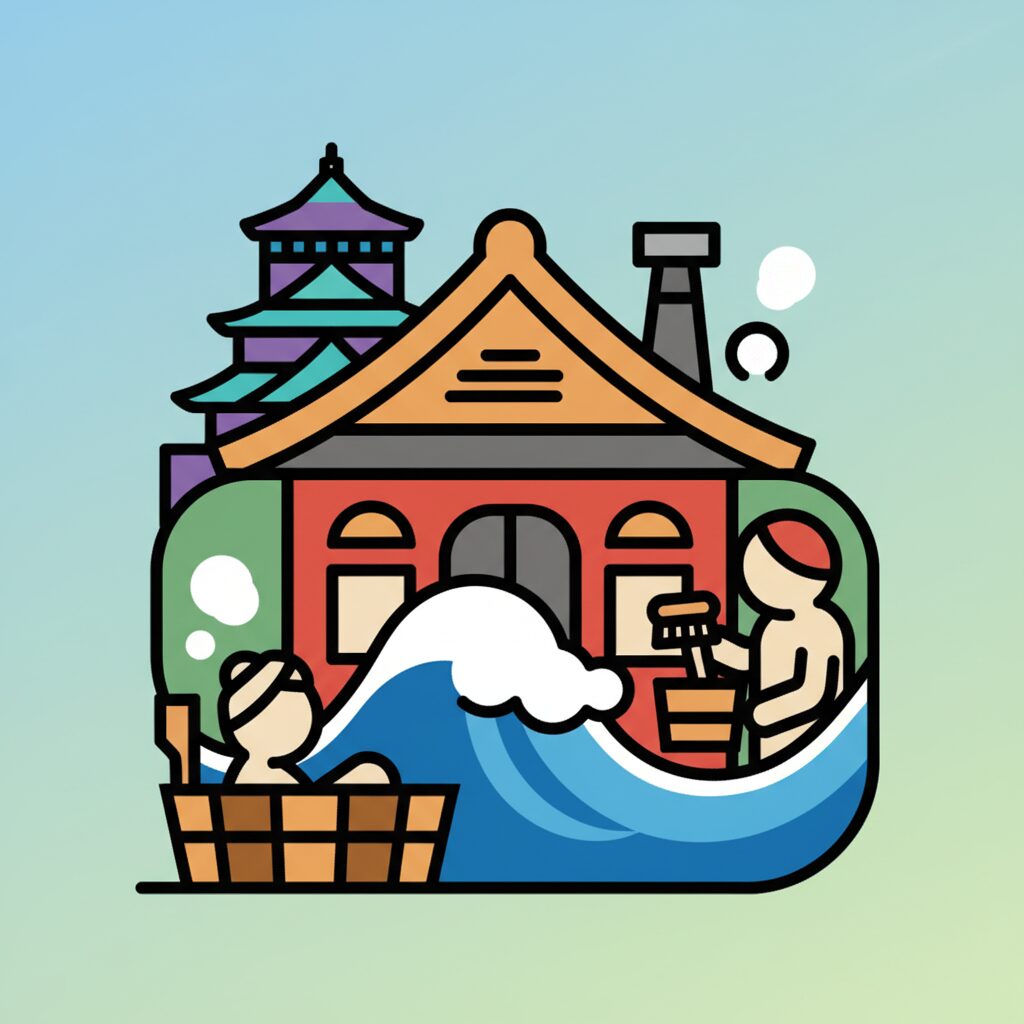
You see them every evening, just as the sun starts to dip and the neon signs of the shotengai shopping arcades begin to flicker to life. An elderly woman with a perfectly coiffed perm, walking slowly but with purpose. A middle-aged man in his work clothes, his shoulders slumped from the day. They’re each carrying a small plastic basket, a colorful caddy holding a neatly folded towel, a bar of soap, and a bottle of shampoo. They’re not going home. Not yet. They are making a small, sacred pilgrimage that happens thousands of times a night, all across the sprawling, beating heart of Osaka. They are going to the sentō, the public bathhouse.
For a newcomer to Osaka, this daily procession can be a source of quiet confusion. In a country as modern as Japan, doesn’t everyone have a shower? The answer is yes, most do. And that’s precisely the point. The persistence of the sentō, especially here in Osaka, has almost nothing to do with a lack of private bathing facilities. It has everything to do with the city’s fundamental social DNA. It’s a weekly, sometimes daily, ritual that serves as the neighborhood’s living room, its news station, its therapy couch, and its most brutally honest social equalizer. Forget the polite, reserved Japan you see in travel brochures. The real, unfiltered, and deeply human side of Osaka isn’t found in a temple or a skyscraper; it’s found in the steam, chatter, and clatter of a humble neighborhood bathhouse. This isn’t the serene, meditative onsen experience you might travel hours for. This is something else entirely. It’s loud, it’s functional, it’s intensely local, and it is absolutely essential to understanding how this city works.
To truly grasp the city’s social fabric, one must also explore Osaka’s underground city, another essential layer of its daily life.
The Sentō as a Social Thermometer
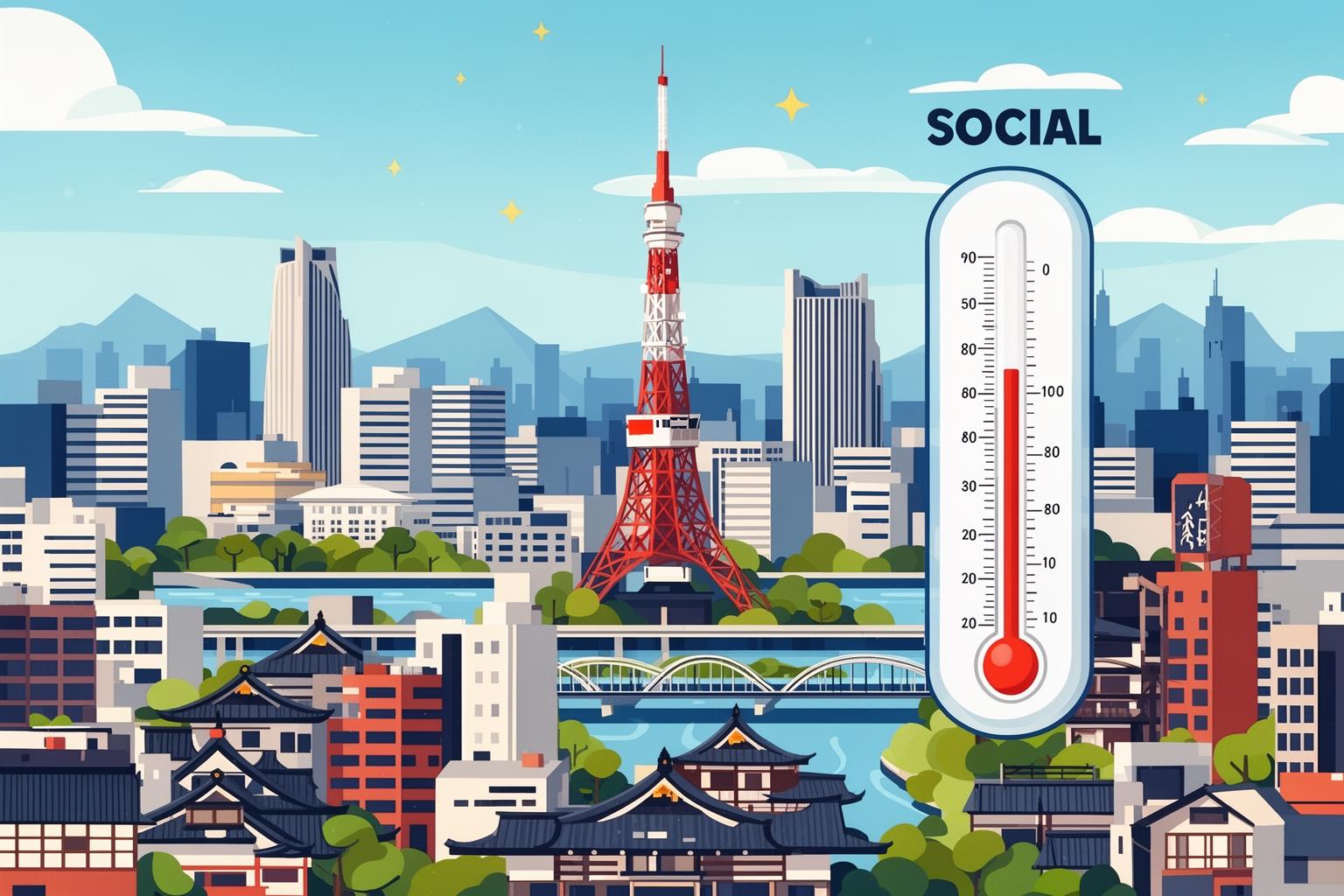
Consider the sentō not simply as a location, but as a tool. It serves as a social barometer that accurately gauges the health, mood, and rhythm of the nearby community. In Tokyo, a city driven by precise efficiency and respect for personal space, communal bathing often feels like a novelty or a nostalgic relic. In contrast, in Osaka, it remains an essential part of life. The moment you slide open the door, pay your 490 yen to the obachan at the high wooden desk called a bandai, and enter the gender-segregated changing rooms, you step into a unique facet of Japanese society.
Here, the city’s passion for direct communication and its rejection of pretension are laid bare—literally. The air is heavy with the scent of steam and soap, accompanied by a steady murmur of conversation. Inside the datsui-jo, the changing room, there is a delicate choreography of bare bodies and silent understandings, a dance of respect and casual intimacy that would likely surprise the average Tokyoite. People don’t just quietly undress and head to the baths—they greet each other and engage in conversation. The bandai-san, the person at the front desk, acts as more than just a cashier; they are the neighborhood’s central hub, managing gossip, news, and well-wishes along with entrance fees. They know who has been ill, whose daughter is getting married, and who’s been complaining about back pain again.
Inside, you encounter neighborhood types. A group of older women, the obachan, hold court by the lockers, seamlessly shifting their discussion from the rising cost of daikon radishes to the latest scandal on their favorite daytime TV show. They are the keepers of local knowledge. In the men’s bath, a cluster of veterans might passionately debate the latest Hanshin Tigers game with the intensity usually reserved for political debates. Fathers patiently teach their young sons the proper way to wash before entering the tub, a ritual passed down through generations. And yes, you will likely notice men with elaborate tattoos. This distinguishes the local sentō from more tourist-oriented onsens where tattoos are often banned. Here, the informal “no tattoo” rule is frequently overlooked—a practical, Osakan stance: as long as you’re not causing trouble, you’re just another neighbor. It’s a vivid reminder that you’re in a genuine, working-class city, not a polished resort.
The Unspoken Rules of Shared Space
The sentō operates under a complex system of unspoken rules that everyone seems to understand instinctively. For outsiders, this might feel daunting, but it is essential to the experience. The first rule is that the space is communal, though certain areas feel personal. Regulars—those who visit daily—have their preferred locker, favored washing station (often a corner spot), and their spot in the main tub. This isn’t about entitlement but about rhythm—a silent agreement that brings order to the chaos. A newcomer who unknowingly occupies a regular’s place won’t be shouted at but may receive a curious glance. The system maintains itself.
Greetings are crucial. A simple `Konnichiwa` or `Gokurosama` (a greeting acknowledging mutual hard work) to those around you in the changing room signals your awareness of sharing the space. It breaks down the invisible barrier common in most other public places in Japan. This is the Osakan way: silence breeds suspicion; a friendly word holds value. The physical closeness—elbows brushing at washing stations, sharing the same hot water—reflects Osaka’s social intimacy. People here maintain a smaller personal bubble. In the sentō, that bubble disappears entirely. Everyone sheds their work uniform, social rank, and daily armor. You’re simply people, aiming to get clean and soak away the day’s weariness. It is the great equalizer.
The Weekly Rhythm: More Than Just ‘Getting Clean’
The sentō is not a uniform, single experience. Its atmosphere shifts considerably depending on the day and time. To grasp its significance, you need to view it as part of a weekly rhythm. The weekday evening crowd forms the core community—the devoted regulars, the lifelong patrons. The pace is familiar, the conversations pick up where they left off the day before. It’s a quiet, comforting routine. This is where the deepest sense of belonging is felt. An elderly man might ask his bathing companion to scrub his back, a gesture rich with trust and familiarity.
Weekends bring a different energy. Saturday afternoons are for families. The splashing and laughter of children echo off the tiled walls. It’s louder, more chaotic, and festive. This is where bathing manners are taught and absorbed. You’ll find young couples, groups of friends, and people using the bath as a social gathering before heading out to dinner. It’s less about quiet reflection and more about shared enjoyment. The sentō becomes less a utility and more a destination.
But the most essential part of the ritual—what truly distinguishes Osaka’s sentō culture from a mere bathing experience—often occurs after everyone is clean. It’s the lingering after the bath. No one rushes to leave. After drying off and dressing, people gather in the lobby. This area is usually simple: a few worn vinyl couches, a whirring fan in summer, an old, rumbling massage chair, and the highlight—the glass-fronted refrigerator stocked with small bottles of milk.
The Sacred Post-Bath Milk
Drinking a cold bottle of milk after a hot bath is a tradition as steadfast as the sentō itself. The classic options are plain milk, coffee-flavored milk, or fruit-flavored milk. The act of standing there, one hand on your hip, downing the entire bottle in a few gulps is a shared cultural moment. And it’s in this milk-fueled post-bath glow that the real magic unfolds. This is where the conversations that began in the bath continue. It’s where plans are made, advice is exchanged, and bonds are strengthened. People don’t just grab a milk and dash off. They stay. They linger for ten, fifteen, even thirty minutes. They read the newspaper, watch the sumo match on the small TV, and simply… exist together. It’s the city’s decompression chamber. The sentō cleanses your body; the lobby conversations cleanse your mind of stress.
Osaka vs. Tokyo: The Sentō Divide
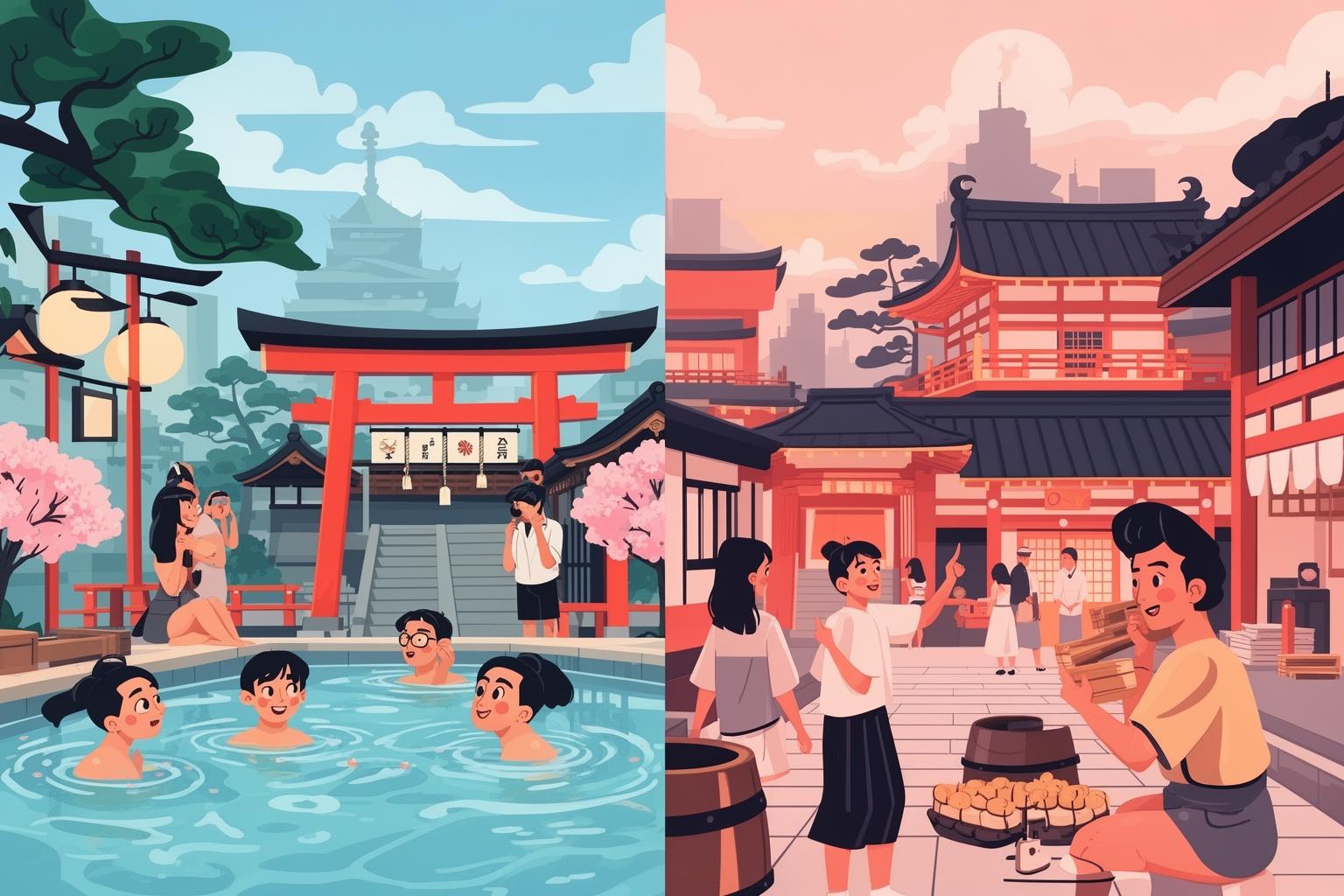
The cultural divide between Osaka and Tokyo is perhaps most evident in their respective public bath traditions. Simply put, Tokyo’s bathing culture tends to focus on the individual, whereas Osaka’s emphasizes the group. In Tokyo, many of the surviving sentō have transformed into “designer sentō,” featuring modern design, craft beer in the lobby, and an emphasis on a premium, personal experience. These baths often include a range of high-tech tubs, saunas with special “löyly” events, and an environment that promotes quiet relaxation. The implicit rule is to keep to yourself—people come in, bathe efficiently, and leave, with minimal conversation. It serves as an urban refuge for personal renewal.
In contrast, Osaka’s sentō are typically older, less polished, and unapologetically practical. The focus isn’t on aesthetics but on utility and community. The real “amenity” isn’t a carbonated spring bath, but the person beside you in the water. Osakans talk—they chat in the changing room, at the washing stations, and even in the bath itself. This might feel intrusive or disruptive to a Tokyoite, who expects quiet and solitude. Conversely, an Osakan would find a silent bathhouse unusual and somewhat lonely.
This difference reflects a deeper philosophical divide. In Tokyo, politeness often means non-interference—respecting others’ space and not disturbing them. In Osaka, politeness is expressed through interaction—acknowledging others, exchanging words, and fostering connection. The sentō embodies this philosophy perfectly. It’s a space grounded in what might be called “Kansai Intimacy,” a comfort with both physical and social closeness that contrasts sharply with the Kanto region. Nudity serves as a means to this end: with everyone naked, there are no barriers to hide behind—no clothes or job titles. This raw, direct form of human connection is something many Osakans yearn for, and the sentō remains one of the few places in modern life where it is consistently found.
Deconstructing the Sentō Experience: A Foreigner’s Field Guide
Stepping into a sentō for the first time can feel like entering a private club with a rulebook written in invisible ink. However, the system is logical and, once understood, remarkably welcoming. Here’s a practical guide for newcomers.
H3: The Entrance and the Bandai
The first thing you’ll encounter is the shoe lockers. Slide your shoes in, take the wooden key, and be careful not to lose it. Next is the main entrance, often adorned with a traditional noren curtain. Inside, you’ll find the bandai or front desk, where you pay the standard bathing fee (set by the prefecture, so it’s almost always the same). If you forgot your supplies, you can purchase a small bar of soap, single-use shampoo packets, and even rent towels in small or large sizes. The attendant will direct you to the appropriate entrance: 男 for men, 女 for women. A simple `O-negai shimasu` (Please) when paying is sufficient.
H3: The Changing Room (Datsui-jo): Organized Chaos
The changing room is a bustling space. Locate an empty locker; the keys usually come on an elastic band worn around your wrist or ankle during your bath. In some very old sentō, lockers are replaced by wicker baskets, reflecting an impressive level of communal trust. You simply place your clothes in the basket and leave them there—it speaks volumes about neighborhood safety. Undress completely, as swimsuits are not allowed here. The only items you carry into the bathing area are your small towel and washing supplies.
H3: The Washing Area: The Cardinal Rule
This is the most crucial part of sentō etiquette—the one rule you absolutely must never break. Before even thinking about entering the main tubs, you must wash your entire body thoroughly. The tubs are meant for soaking, not cleaning. Since the water is shared by everyone, entering it while dirty is the biggest faux pas. Find an empty washing station, each equipped with a small plastic stool, a bucket, and a faucet with a handheld shower head. Sit on the stool—standing and splashing others is considered rude. Use the bucket to rinse off your stool when finished. A little consideration goes a long way.
H3: The Tubs (Fune): A Hierarchy of Heat
Once you are completely clean, you can move on to the tubs, known as fune (ships). There is usually a variety to choose from. A typical layout includes:
- The Main Tub: A large bath at a moderate temperature, serving as the social hub.
- The Hotter Tub: For those who prefer a more intense soak. Always test the water first.
- The Jet Bath (Jacuzzi): Equipped with powerful jets targeting your back or legs. It’s common to wait your turn here.
- The Denki-buro (Electric Bath): A uniquely Japanese experience that may be startling if unprepared. Two plates on opposite sides of a small tub pass a low-voltage electric current through the water, causing your muscles to tingle and contract. It’s therapeutic for sore muscles but feels unusual—approach with caution!
- The Mizu-buro (Cold Plunge Pool): Typically next to the sauna (if available), this tub contains cold water. The ritual involves heating up in the hot bath or sauna, then plunging into the cold water. It’s definitely invigorating.
When entering a tub, use your small towel for modesty as you walk but avoid letting it touch the bathwater. You can either place it on the edge of the tub or, as many regulars do, fold it neatly and rest it on your head to keep it clean and out of the way.
The Language of the Bathhouse: Beyond Konnichiwa
While fluency in Japanese isn’t necessary, knowing a few key phrases can shift your role from silent observer to active participant. The sentō’s language centers on fostering a shared atmosphere.
- `Ee yu ya na~` (This is a good bath, isn’t it?): The ultimate icebreaker. Uttered with a contented sigh upon entering a tub, it invites anyone nearby to join in agreement. A simple nod and an `Ee yu desu ne` in reply are enough to create a brief connection.
- `Atsu-!` (Hot!): An almost instinctive reaction to stepping into a particularly hot tub. This shared moment of mild discomfort instantly builds camaraderie.
- `Maido`: The classic Osaka merchant’s greeting, roughly meaning “Thanks for your continued patronage.” Commonly heard at the bandai, it carries a warm, welcoming tone.
- `Shitsurei shimasu` (Pardon me/Excuse me): A helpful phrase for navigating the cramped washing area or when you accidentally cause a small splash.
By tuning into the flow of these phrases, you begin to see the sentō as a communal performance, where everyone plays a role in a script of mutual respect and shared experience.
Why Sentō Survive in Osaka: Economics, Community, and Stubbornness
In an era of modernization, why has this tradition remained so resilient in Osaka? The reasons blend the practical with the philosophical. Economically, many of Osaka’s older neighborhoods, the shitamachi (downtown districts), are filled with pre-war wooden houses (nagaya) and small post-war apartments built without private baths. The sentō was an everyday necessity. Even as these homes have been refurbished, the habit, the ritual, has stayed deeply rooted in the older generation.
More significantly, the sentō acts as a powerful remedy to urban isolation. In a city where people live layered on top of each other, genuine human connection can be difficult to find. The sentō offers a guaranteed, affordable, and accessible third place—a space that is neither home nor work—where people can simply be together. For the elderly, who often face loneliness, the daily visit to the sentō is a lifeline. It serves as a health check, a news update, and a social call all rolled into one.
Ultimately, it comes down to the Osaka spirit. There’s a certain stubborn pride in the city, a resistance to the sleek, impersonal trends frequently originating in Tokyo. Osakans appreciate things that are practical, unpretentious, and human-scaled. The sentō epitomizes these values. It’s not fancy, but it functions well. It’s inexpensive, warm, and fosters community. In a world growing increasingly digital and disconnected, the raw, analog, face-to-face interaction of the sentō feels more essential than ever.
The Sentō and the Foreigner: Common Misunderstandings
For non-Japanese residents, the sentō can be a source of anxiety. What if I do something wrong? What if people stare? These concerns are understandable, but most can be easily resolved.
- The Tattoo Issue: As noted, this is the biggest difference from onsen. While some super sentō (large, modern bathhouses) may have stricter policies, your typical neighborhood sentō in Osaka is far more lenient. The reasoning is practical: this is a local bath for local people, and some locals have tattoos. As long as you remain quiet and respectful, no one will trouble you. It’s a perfect example of Osaka’s ‘live and let live’ philosophy.
- The Staring: You might feel like you’re being watched, especially if you stand out as non-Asian. Reframe this feeling. It’s almost never hostile. It’s curiosity. In a place where faces are seen every day, your presence is a novelty. The best way to diffuse a stare is with a smile and a nod, or a simple `Konnichiwa`. In Osaka, this will almost always be met with friendliness. It can even spark a conversation.
- The Naked Conversation: The idea of a stranger making small talk while you are both naked can feel unsettling. But it’s vital to understand the context. Here, nudity is a uniform. It removes all external identifiers. You are not a foreigner, an office worker, or a tourist. You are simply another body in a hot bath. It represents the ultimate equality and allows for a more direct, unfiltered form of communication that lies at the heart of Osaka’s culture.
To truly understand Osaka, you must grasp its relationship with community, communication, and tradition. You won’t find the answer by only admiring the dazzling lights of Namba or the historic grandeur of Osaka Castle. You’ll discover it in the small, steamy rooms where neighborhoods gather to wash away the day. It’s in the rhythmic sound of water splashing against tile, the murmur of conversations in rich Kansai-ben, and the shared sigh of relief as people sink into water hot enough to melt their worries. The sentō is not a relic of a bygone era. It is the city’s living, breathing, and very warm heart. Go, get clean, and listen. It will reveal everything you need to know.