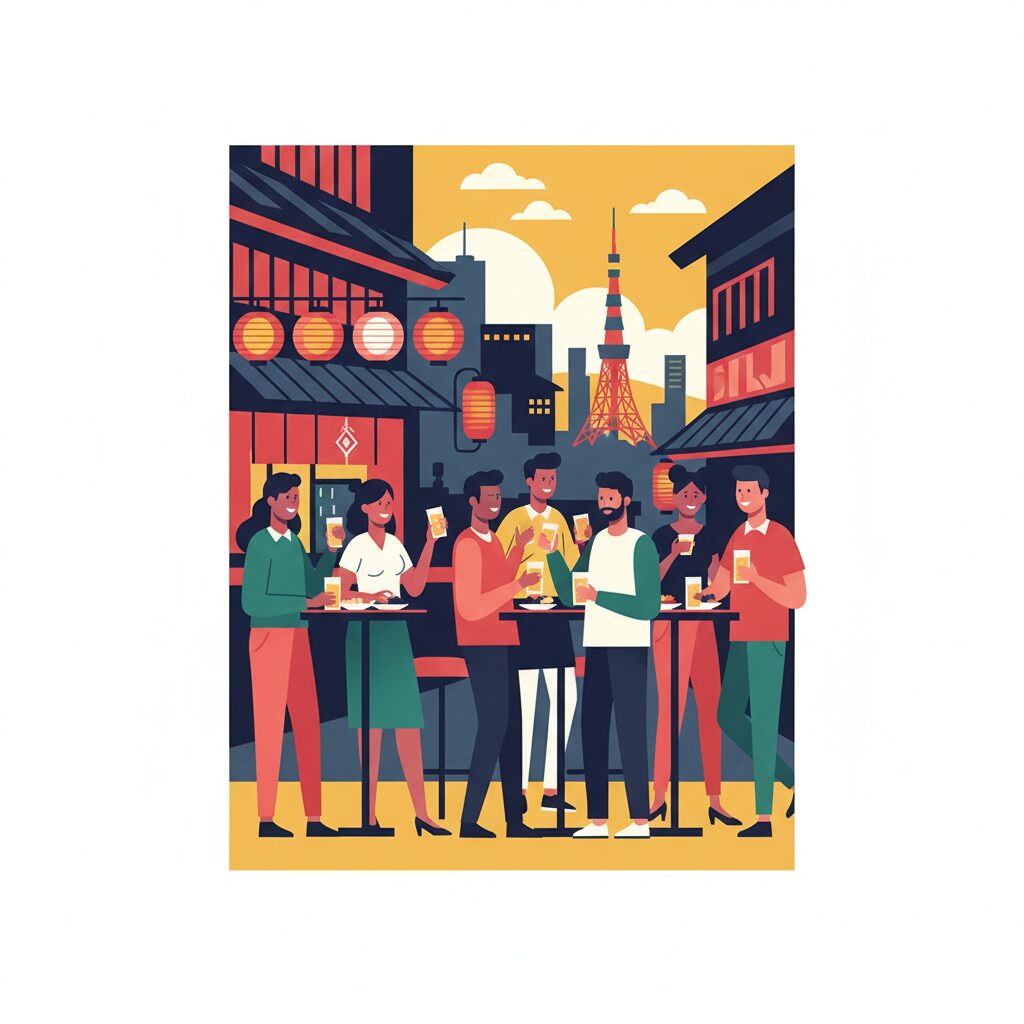
Walk down any scruffy, neon-lit shotengai in Osaka after five o’clock, and you’ll feel it. It’s a low hum of chatter and clinking glass spilling out from behind a fogged-up sliding door or a simple noren curtain. This is the sound of the tachinomi, the standing bar. On the surface, it’s just a place to grab a cheap drink without the formality of a chair. But if you’re trying to decode the software that runs this city, a tachinomi is your command line interface. It’s where Osaka’s raw, unfiltered personality is on full display. For a foreigner trying to find their footing, it can be either the most welcoming hub of instant community or a bewildering social gauntlet. It promises a dive into the “real” Japan, but it might just throw you into the deep end without a life vest. This isn’t a curated cultural experience; it’s a living, breathing, and sometimes uncomfortably close-up snapshot of daily life. The question isn’t just whether you’ll like the beer; it’s whether you can vibe with the chaotic, pragmatic, and surprisingly intimate rhythm of Osaka itself. Because in a space no bigger than a walk-in closet, you’ll find out exactly where you stand.
To truly grasp this rhythm, it helps to understand how Osaka’s merchant city culture shapes every interaction.
The Tachinomi Promise: More Than Just Cheap Beer
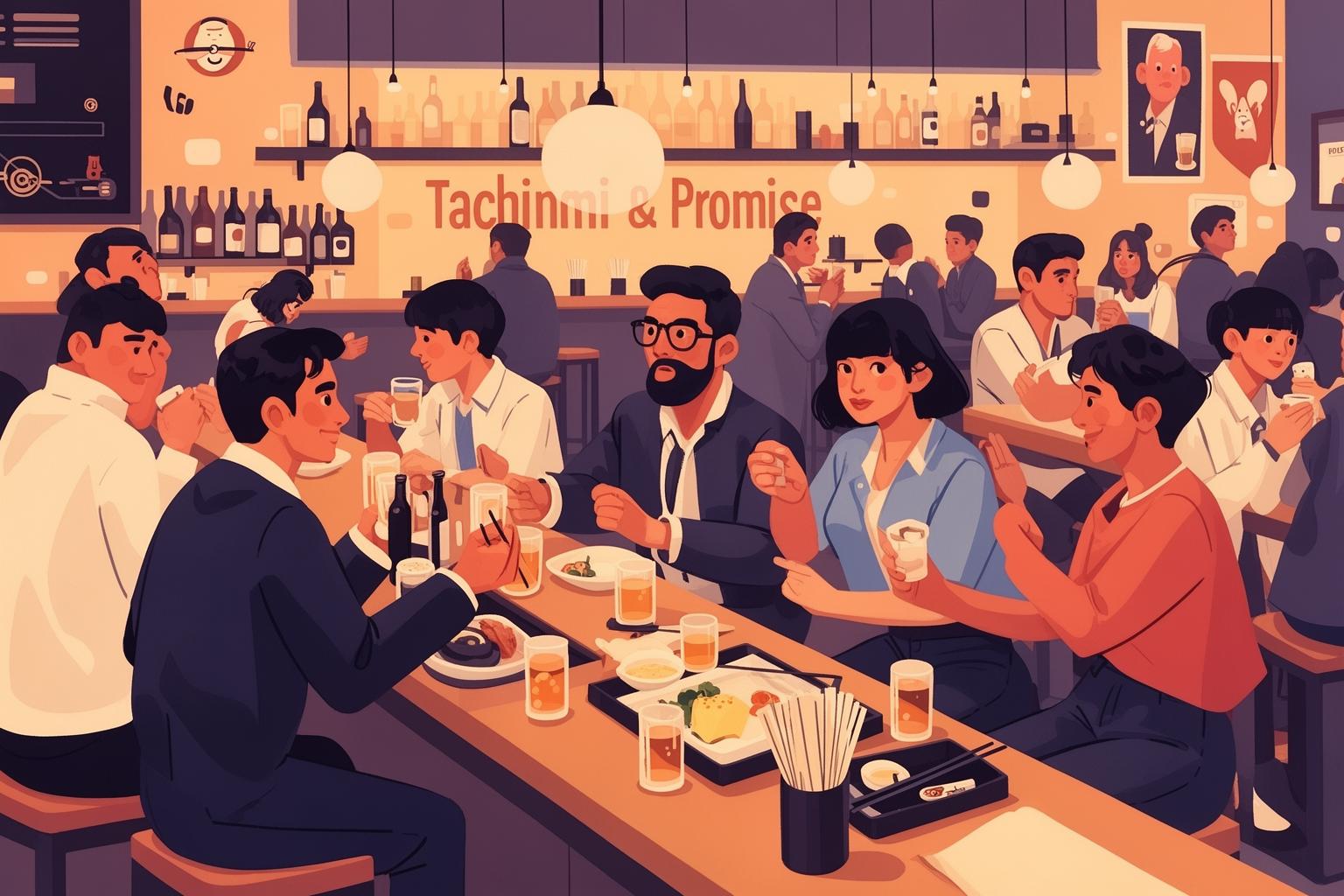
Before you even enter, you need to grasp the underlying philosophy. A tachinomi isn’t merely a bar without seats; it stands as a tribute to a particular kind of urban efficiency. It’s a system crafted for speed, value, and dense human interaction. Viewing it simply as a cheap spot to drink is like calling a sushi chef someone who just slices fish. You miss the intricate design that keeps everything running smoothly, a design that embodies the very spirit of Osaka.
The Economics of Efficiency
The most noticeable feature—the absence of seating—is a smart business move rooted in Osaka’s practical mindset. Without chairs, more people can fit into a compact space. More people mean quicker turnover. Faster turnover allows for lower prices while maintaining profitability. A draft beer at 300 yen and a plate of simmered beef tendon for 250 yen isn’t a happy hour deal; it’s the usual practice. This isn’t about being cheap just for the sake of it. In Osaka, this approach is called kashikoi—clever or savvy. Why bear the cost of chairs, spacious tables, and the slower pace they encourage when the main objective is a quick, satisfying experience? It’s a beautifully simple formula linking space, time, and money. In Tokyo, you’ll find sleek, minimalist standing bars designed for a fast, stylish post-work drink, often serving a corporate crowd. They feel transient and impersonal. An Osaka tachinomi, however, feels permanent, well-worn, and deliberately un-stylish. It serves as a social utility, as vital as the train station it likely neighbors. The low price point acts as a great equalizer, welcoming the 65-year-old pensioner, the young construction worker, the mid-level salaryman, and the curious foreigner to share the same counter space. This forced blend of demographics is uncommon and creates the fertile ground where the unique tachinomi culture thrives.
The Social Contract: A Crash Course in Proximity
Step inside, and the first thing you’ll notice is the absence of personal space. Your bubble vanishes. You will be elbow-to-elbow, back-to-back with strangers. This physical closeness demands a psychological adjustment. You can’t ignore the people around you. This is the essence of the unspoken social contract in a tachinomi. By stepping in, you agree to be part of a temporary, fluid community. You make room for someone to slip past, and nod a silent ‘thank you’ when they return the favor. You might accidentally bump into someone, and the resulting apology can easily turn into a conversation. This explains the cliché that “Osaka people are friendly.” It’s not an innate, boundless wish to befriend everyone. It’s a practical friendliness born out of necessity. When packed that tightly, ignoring each other takes more effort than acknowledging one another. It’s a form of situational intimacy. You’re all in this small, noisy, flavorful space together for the next half hour. This shared environment reduces the barrier to interaction to nearly zero. Elsewhere in Japan, such closeness would be met with silence and avoidance of eye contact. In an Osaka tachinomi, it sparks connection.
Navigating the Unwritten Rules: Your Tachinomi Survival Guide
Despite its chaotic energy, the tachinomi runs on a set of deeply ingrained, unwritten rules. Mastering these rules is essential to fully experiencing the place rather than merely watching from the sidelines. It’s a dance, and knowing the steps helps you avoid stepping on anyone’s toes, both literally and figuratively.
Ordering Like a Pro (or at Least Not Like a Tourist)
The pace at a tachinomi is relentless, especially during busy hours. Hesitation is your enemy. The ordering system is designed for speed. Frequently, you’ll encounter a system called kyasshu on (cash on delivery), where you place your money in a small tray on the counter, and the staff deducts the cost of each item as you order. Don’t wait for a bill—have your cash ready. Your first order should be simple and confident. “Nama hitotsu!” (One draft beer!) is the universal entry key. When it comes to food, don’t stress over a menu that might be hard to read. Instead, check out what’s displayed in large trays on the counter or observe what the person next to you is eating. Pointing isn’t rude; it’s an efficient way to communicate. Saying “Are, kudasai” (That one, please) works perfectly. The staff juggle a dozen orders at once and appreciate clarity and speed. This is Osaka’s merchant spirit in action: be direct, be quick, close the deal, and move on. There are no wasted words, but the interaction remains warm, often marked by a gruff yet genuine “maido!” (thanks for your business).
The Art of Conversation: To Talk or Not to Talk?
Here, the tachinomi experience diverges most sharply from other Japanese social settings. The noise level and tight quarters almost guarantee conversation. The question is how to initiate it or respond when one begins with you. The easiest way in is through a shared observation—a compliment on the delicious-looking food your neighbor ordered, a cheer for the local Hanshin Tigers if a game is on the small TV tucked in the corner, or a simple question to the staff about their recommendations. More often than not, though, someone will approach you first. “Niichan, doko kara?” (Brother, where are you from?) is a classic opener. This isn’t an invitation to a deep philosophical chat; it’s a social ping, a way to place you and establish a brief connection. The tone here is crucial. Osaka dialect is known for its playful, teasing nature, resembling a light-hearted comedy routine (manzai). Someone might joke about your broken Japanese or the drink you chose. This isn’t an insult but a form of social grooming—a sign they feel comfortable enough to tease you. Responding to this playful banter shows you’re a good sport. A flat, serious reply can kill the vibe instantly. In a quiet, formal Tokyo bar, a stranger’s unsolicited comment might feel intrusive, but in an Osaka tachinomi, your silence might be the most noticeable thing about you.
The Graceful Exit: Knowing When to Leave
A tachinomi is a waypoint, not a final destination. It’s a spot for a quick drink after work, a prelude to dinner, or one stop on a multi-bar crawl. The real cultural faux pas is lingering too long. Holding a prime counter spot for two hours with just one beer is a major no-no. It disrupts the flow—the continuous turnover of patrons that keeps the place alive. The ideal visit lasts about 30 to 45 minutes—enough time for one or two drinks and a small dish. You catch the rhythm. When you’re ready to leave, don’t just ask for a check. Catch the staff’s eye and say “Okanjo, onegaishimasu” (The bill, please) if you haven’t been paying as you go, or simply “Gochisousama deshita” (Thank you for the meal/drinks) as you prepare to go. The exit should be as swift as the entrance. You slide out of your spot, and before you reach the door, someone else has already taken your place. There are no long goodbyes, even if you’ve been chatting with your counter-mates for half an hour. A quick nod, a wave, and you’re gone, back into the flow of the city. The connection was real—but it was meant to last only for that moment.
The Dark Side: Why You Might Hate It

Let’s be frank. For every person who views the tachinomi as an exciting social haven, there’s another who experiences it as a personal ordeal. It’s a high-energy setting that can leave you feeling drained, bewildered, and downright unpleasant if you’re unprepared or if it simply doesn’t suit your personality.
The Overload: Sensory and Social
If you’re sensitive to sensory stimuli, a tachinomi can be a minefield. It’s noisy. The overlapping chatter of multiple conversations, sharp staff commands, the clatter of dishes, and the blare of the TV all blend into an overwhelming wall of sound. Many traditional tachinomi still permit smoking, making the air heavy and acrid. The constant physical contact and jostling for space can be highly stressful for those who cherish their personal space. For introverts, the social expectations can be exhausting. There’s a subtle but tangible pressure to be “on”—to engage, smile, and chat. Some evenings, you just want to unwind with a quiet drink and your own thoughts, but a tachinomi is rarely the place for that. The language barrier also feels sharper here. You’re not just trying to grasp textbook Japanese; you’re struggling to interpret fast-paced, slang-filled Osaka-ben amid a cacophony of background noise. It can make you feel more isolated than welcomed.
The Regulars’ Fortress: Breaking into the Circle
Every great tachinomi is anchored by its jouren-san—the regular patrons. They are the heart and soul of the spot. They have their reserved places at the counter, their drinks arrive without ordering, and their banter with the taisho (the owner or master) is a well-practiced performance. As an outsider, especially a foreigner, you’re stepping into their living room. Sometimes, it feels like crashing a private party. The atmosphere of the place is set entirely by the master and regulars. Some are warm and curious, eager to welcome a new face for the evening. Others form closed circles. You might sense a chill, a subtle barrier of indifference. This isn’t necessarily hostility; they’re simply in their space, and you’re not part of it. Being able to read the room within seconds of entry is a crucial skill. Does the master make eye contact and nod, or does he ignore you? Is the laughter inclusive, or the sound of inside jokes you won’t understand? Some nights, you’ll be the fascinating novelty; on others, just a tourist who doesn’t quite fit in. There’s no shame in leaving if the vibe feels off.
Tachinomi as a Mirror to the Osaka Soul
If you can persevere through the challenges, you’ll discover that the tachinomi is much more than just a bar. It’s a living museum of Osaka culture, a place where the city’s core values come alive every night. It’s where you can truly grasp what makes this city tick.
Pragmatism Over Polish
Take a look around a classic tachinomi. The walls are likely marked by decades of smoke. The counters have been worn smooth by countless elbows. The decor is an afterthought, if it was ever considered at all. This is Osaka’s historic identity as a merchant city expressed in tangible form. What counts isn’t appearance, but substance. The food is simple, tasty, and offers great value. The drinks are cold, affordable, and served without fuss. There is no pretense. This is a place judged by its function, not its form. A Tokyoite might be attracted to a bar’s aesthetic, its carefully chosen playlist, or its award-winning design. An Osakan is more likely to evaluate it by the quality of its doteyaki (simmered beef sinew), the warmth of its regulars, and the fairness of its prices. This is the practical, results-driven mindset that shaped this city. It doesn’t have to be pretty if it works well.
Community in Motion
The connections made in a tachinomi are as fleeting as the foam on a beer. You might share an incredible, hilarious conversation with a stranger for forty minutes, learn about their job and family, and then never see them again. And that’s exactly the point. It’s a network of weak ties, a series of brief but sincere human connections. This is the social fabric of Osaka. It’s a city where the barrier to initial contact is very low, but the expectation of future obligation is absent. This explains its “friendly” reputation. People are open to engage, share a laugh, offer advice, and then vanish from your life forever. It creates a feeling of collective effervescence, a sense of being part of a larger community, if only for a moment. It’s a way of making a vast, anonymous city feel like a collection of small, interconnected villages.
Finding Your Spot: A Neighborhood Guide
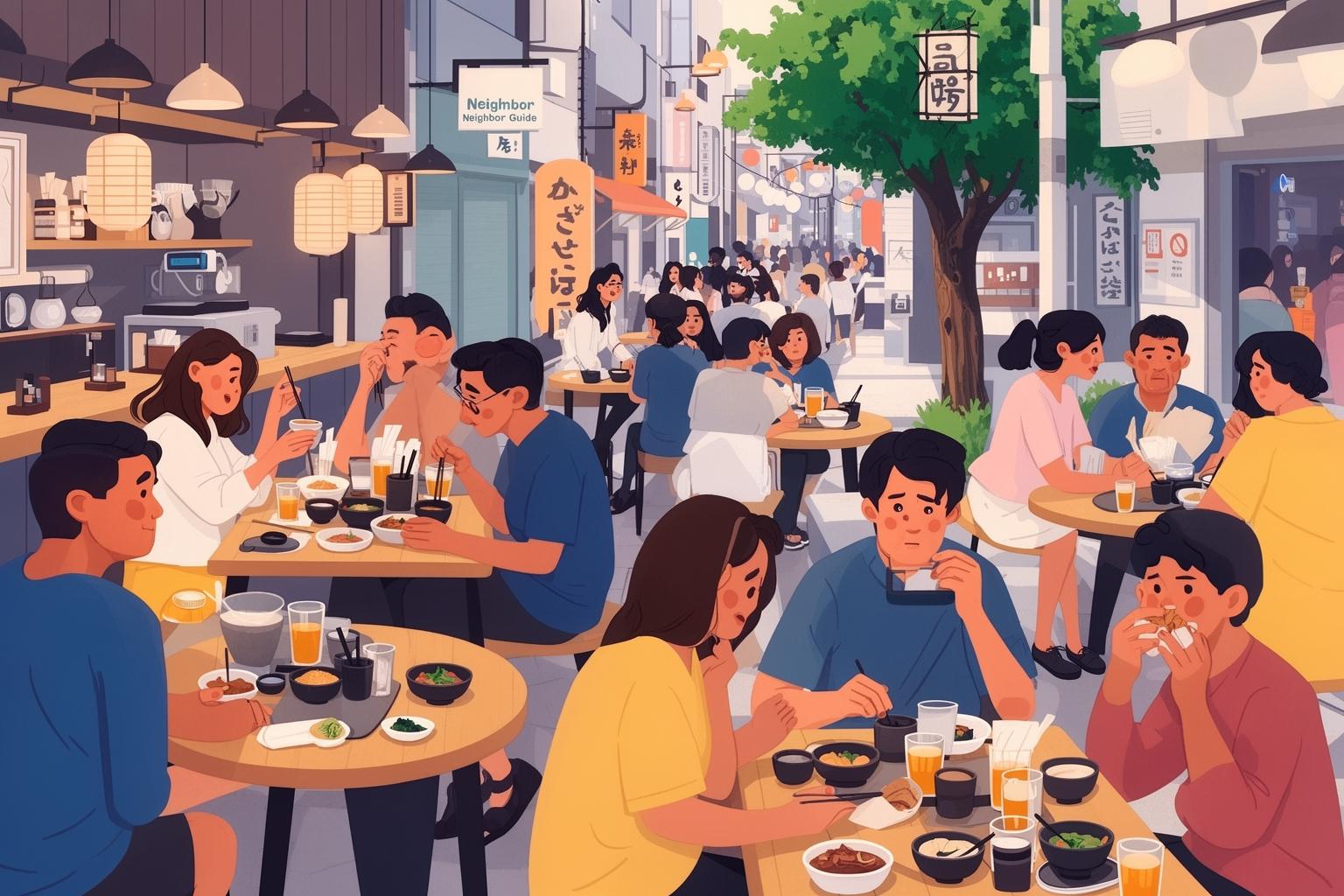
Not all tachinomi are made alike. The character of each bar is deeply connected to the neighborhood it resides in. Choosing the right one means aligning the area’s vibe with your own.
Tenma
This is the undisputed king of tachinomi districts—a vast, maze-like network of covered arcades and backstreets filled with hundreds of bars. The density is both a blessing and a challenge. It’s an ideal spot for bar-hopping, offering endless variety. From century-old sake establishments to trendy Spanish-style standing bars, you’ll find it all. The crowd is a diverse mix of young and old, adventurous food lovers and seasoned locals. It can be overwhelming, but it’s the perfect place for a comprehensive taste of the scene.
Kyobashi
If Tenma feels like a festival, Kyobashi represents the everyday grind. This is where salarymen find their spiritual home. The tachinomi here are rougher, older, and completely unpolished. It’s the place to experience authentic, after-work drinking culture. The prices are extremely low, the atmosphere loud and smoky, and you’ll probably be the only foreigner around. It’s less about curated experiences and more about total immersion. Your Japanese will be challenged, but the payoff is a profound sense of authenticity.
Ura-Namba
Just behind the flashy tourist center of Namba lies a network of alleys called Ura-Namba. This area showcases the modern evolution of tachinomi bars. The bars tend to be a bit more stylish, often with a distinct concept—a natural wine bar, a craft beer spot, or a place specializing in smoked treats. It’s an excellent introduction for those who might find the rougher vibe of Kyobashi intimidating. The crowd here is younger and more accustomed to seeing foreign faces, making it a more welcoming first stop.
Shinsekai
Drinking in Shinsekai feels like traveling back in time. With the Tsutenkaku Tower looming overhead, this neighborhood is steeped in Showa-era nostalgia. The tachinomi bars here reflect the area’s uniquely gritty and theatrical vibe. You’ll drink alongside locals who have known the area for generations, day laborers, and the occasional curious tourist. It’s an intense, cinematic experience, though perhaps not the easiest place to begin. It’s best to have your Osaka social skills well-honed before diving into Shinsekai’s deep end.
Your Personal Tachinomi Verdict
A tachinomi is not simply something to consume; it is a social experiment in a glass, a real-time challenge testing your ability to tune into Osaka’s unique frequency. It is definitely not for everyone. If you need personal space, quiet reflection, and predictable interactions, you will likely find the whole experience chaotic and stressful. It may even confirm your deepest fears about being an outsider.
However, if you’re willing to exchange comfort for connection, if you want to grasp the city’s authentic rhythm—its unapologetic pragmatism, its rapid pace, its love of a good bargain, and its knack for forming warm, fleeting communities in unexpected places—then you must step inside. Here’s the best advice: go alone, just once. Choose a spot that intrigues you, slip into an empty seat, and order a beer. Hold your ground, stay alert, and see what unfolds. In those thirty minutes, you will learn more about the soul of Osaka than any guidebook could teach you. You’ll discover whether this city’s heartbeat is one you can truly dance to.