You’ve found the perfect apartment in Osaka. The rent is right, the station is close, and there’s a killer takoyaki stand just down the street. You’re ready to sign the paperwork, a mountain of documents filled with dense Japanese characters. Your real estate agent, a blur of helpful efficiency, points to a small, recurring fee on the contract. “Ah,” he says, “and this is the `chōnaikai-hi`.” Neighborhood association fee. It’s only a few hundred yen a month, so you nod, smile, and sign, mentally filing it under “miscellaneous Japan costs.” You’ve just unknowingly opted into one of the most fundamental, perplexing, and deeply revealing aspects of daily life in Japan. This isn’t just a fee; it’s a social contract. And in Osaka, that contract comes with its own distinct, unwritten bylaws, a blend of fierce pragmatism, surprising warmth, and a complete lack of patience for nonsense. Forget what you think you know about quiet, harmonious Japanese communities. We’re about to dive into the world of the Osaka chonaikai, the invisible operating system that governs everything from your garbage disposal to your social standing on the block.
The chōnaikai fee is only the beginning of understanding Osaka’s lively community ties, where even everyday exchanges serve as a form of social currency that enriches local life.
What Exactly is a Chonaikai? The Community Glue You Didn’t Know You Paid For
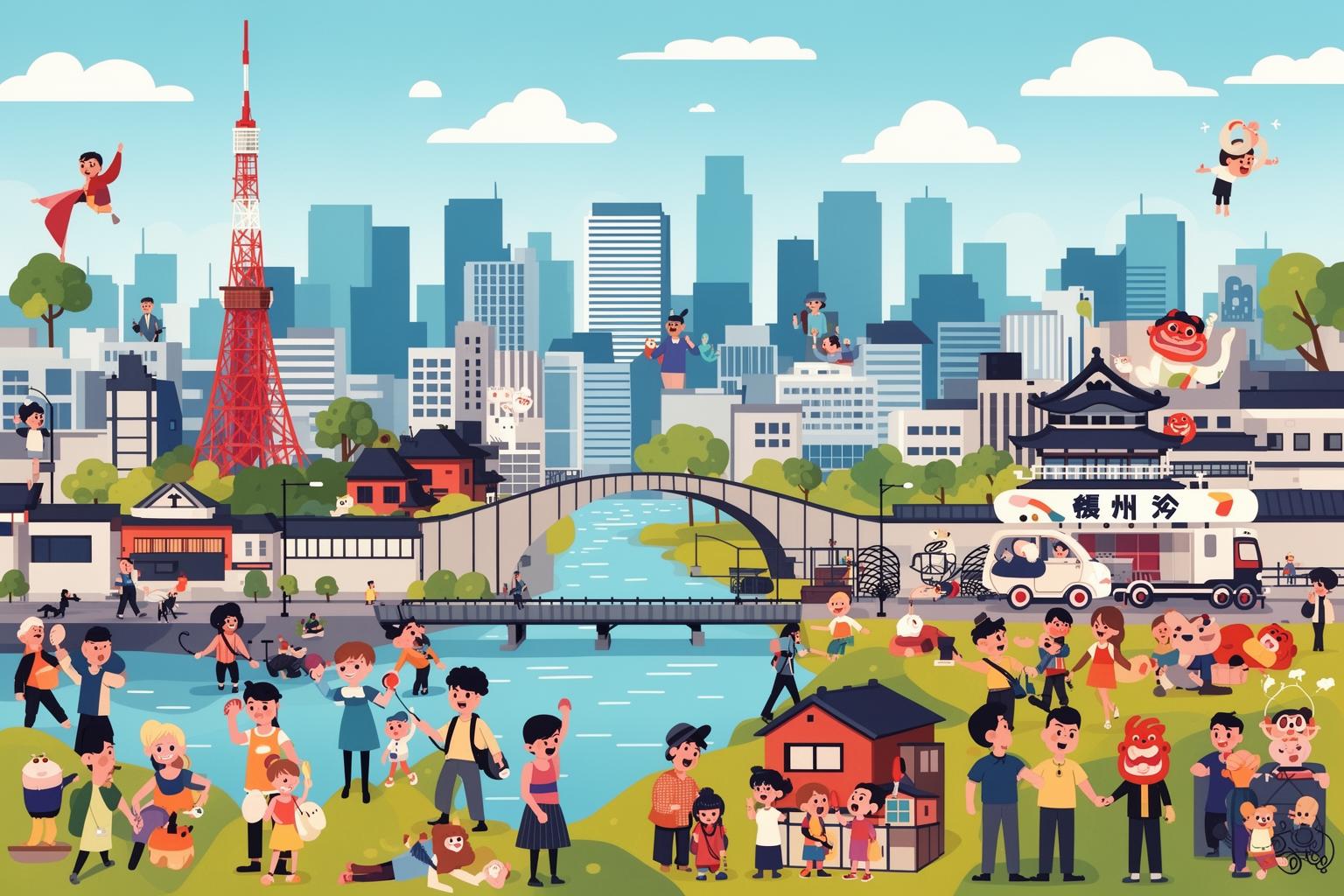
Before diving into the specifics of Osaka, let’s first establish a baseline. A `chōnaikai` (町内会), or neighborhood association, is a hyper-local volunteer group. We’re talking very small—your specific apartment building, your block, or maybe a few nearby streets. Think of it as the most basic, granular level of civic administration. Its members are the residents themselves, and its role is to manage shared aspects of community life that the city government doesn’t address directly. This isn’t just a quaint, optional social club for the elderly, though they often make up its most devoted members. It’s a functional, essential part of social infrastructure.
So what exactly do they do? The list is long and surprisingly practical. They organize the local summer `matsuri` (festival), complete with paper lanterns, game stalls for kids, and plenty of beer. They manage the communal garbage collection points, which is more important than it might sound. They carry out safety patrols, often just a few people with armbands and flashlights checking that everything is in order. They serve as the primary communication channel for disaster preparedness, distributing information on evacuation shelters and emergency supplies. And they maintain the `kairanban` (回覧板), a circulating clipboard of local news that acts as the analog heart of the Japanese neighborhood.
For a Westerner, there’s no exact equivalent. It’s not a Homeowner’s Association (HOA) because renters are almost always included, and its authority is social rather than legally binding in the same way. It’s not just a neighborhood watch, because it also organizes social events. It’s not a city council, because its members are your neighbors, not elected officials. The monthly fee, the `chōnaikai-hi`, supports these activities. It might cover paper for the community bulletin board, drinks at the festival, or new nets to keep crows away from the garbage. It’s a small tax for the benefit of a smoothly running micro-society.
The Osaka Twist: Community with a Side of Pragmatism
Now, let’s discuss Osaka. The basic structure of the chonaikai is similar here to other parts of Japan. The responsibilities remain much the same. The clipboard still circulates. However, the feeling, atmosphere, and unspoken norms—that’s where Osaka distinctly departs from the formal rigidity you might encounter in Tokyo. Life in Osaka is guided by the spirit of `shōbai` (商売), a merchant’s mindset. It emphasizes practicality, efficiency, straightforwardness, and fair deals. This philosophy influences everything, including the neighborhood association.
In a Tokyo chonaikai, the focus is often on `wa` (和), or group harmony. Procedures are meticulously followed. Meetings occur with solemn decorum. The aim is a smooth, frictionless experience. By contrast, an Osaka chonaikai prioritizes results: Is the neighborhood functioning well? Is it clean? Safe? Is the festival enjoyable? The outcome matters more than the process. This creates an atmosphere that may come across as refreshingly frank or surprisingly blunt, depending on how you view it.
Here’s a classic example. Suppose you put your garbage out on the wrong day. In Tokyo, you might find a politely worded, anonymous note taped to your door explaining the rules in detail. More likely, a neighbor quietly corrects your mistake while harboring silent frustration, generating unspoken tension. In Osaka? Expect a knock on your door. An older woman you haven’t met will be there. She won’t necessarily be angry but will be direct: “Hey, you. It’s plastic day tomorrow, not today. Bring it back inside.” There’s no passive aggression. The issue is identified, the solution given, and everyone moves on. For Osakans, this is efficient and honest. For an unprepared foreigner, it can feel like being scolded by a stranger.
This merchant spirit also means the chonaikai is often closely linked with the local `shōtengai` (shopping arcade). The summer festival isn’t just a community gathering; it’s a crucial economic event for the local butcher, tofu shop, and bookstore. Participation supports your neighbors’ livelihoods. There’s a strong sense of “we’re all in this together,” not from lofty ideals, but because my success depends on yours. It’s a deeply pragmatic community based on mutual benefit rather than abstract values.
Your Rent, Your Duties: How Chonaikai Impacts Your Apartment Life
So, how does all of this affect your life as a renter? That small fee you paid serves as your entry pass and comes with responsibilities often known as `tōban` (当番), or rotating duties. Your landlord or building manager has probably signed up the entire building for the chonaikai, incorporating the fee into your rent or management charges. This is more convenient for everyone, but it also means you’re a member whether you want to be or not. And with membership come obligations.
The most important is the `gomi tōban`, or garbage duty. In many buildings, residents take turns cleaning the communal garbage collection area. This is the spot where everyone deposits their carefully sorted bags for pickup. Your turn may come around once every few months. The task usually involves arriving early on garbage day, unlocking the cage or rolling out the bins, putting up the protective net to keep crows away, and then, after the truck has been, tidying up. This includes sweeping up any loose trash, hosing down the concrete pad if needed, and leaving the area spotless for the next person. It’s not glamorous, but neglecting it is a serious breach of neighborhood etiquette. It’s a clear, visible sign that you’re not contributing your share and is by far the most crucial duty you’ll have.
Next is the `kairanban`, the circulating clipboard. This modest plastic and paper item will arrive at your door one day, passed along from a neighbor. It’s a physical chain letter of information. On it, you’ll find flyers for the local festival, public health updates, police crime alerts, and minutes from the last chonaikai meeting. Your task is simple: read it (or at least skim it), sign or stamp your `hanko` (personal seal) in the designated space on the attached roster to confirm you’ve seen it, then pass it on to the next person. For foreigners, this can be a source of mild anxiety. Who’s next? What if they’re not home? The stress is understandable, but this process is a cornerstone of local communication. It ensures that even those not digitally connected receive important information.
Lastly, there’s participation in events. No one will force you to pound mochi at the New Year’s celebration, but your absence will be noticed. In Osaka, community is about showing up, known as `kao o dasu` (顔を出す), literally “show your face.” Simply attending the summer festival for an hour, buying a plate of fried noodles, and having a quick chat with the organizer makes a significant deposit in your social capital. It signals that you’re part of the community—not just a temporary resident living there.
Navigating the System: To Participate or Not to Participate?
This may all seem overwhelming, and a common question among many foreigners is, “Do I really have to do all this? Can’t I just opt out?” Legally, yes. Membership in the chonaikai is voluntary. In theory, you can refuse to join or participate. But theory and reality are very different in Japan. Opting out brings significant, unspoken social and practical consequences.
The most immediate issue is often the garbage. The chonaikai manages the collection point, setting the rules and cleaning schedule. If you’re not a member, they have the right to tell you that you can’t use it. This causes a logistical headache—where are you supposed to put your trash? The city won’t pick it up from your doorstep. This one issue is often enough to keep everyone as members.
Beyond the practical concerns, you risk becoming a social ghost or, worse, “that foreigner who doesn’t care.” Your neighbors might stop greeting you, and you’ll be excluded from important information loops. In the event of an earthquake or typhoon, the chonaikai is the first line of response: they do headcounts, check on the elderly, and distribute emergency supplies. Being outside that system means you’re on your own. It might seem trivial on a sunny day, but it’s a frightening prospect when disaster strikes.
In Osaka, this is seen through a lens of fairness. Osakans have little patience for freeloaders. If you benefit from clean streets, a safe environment, and the community events the chonaikai organizes, you are expected to contribute your fair share of money and effort. It’s a straightforward, transactional view of community. Refusing to participate is viewed as selfish and disrespectful to your neighbors’ efforts.
So what should a foreigner do? My advice is to lean in, but strategically.
- Pay the fee. It’s non-negotiable. Think of it as part of your rent.
- Master the core duties. Learn the garbage schedule inside and out. Do your `gomi tōban` with enthusiasm. Pass the `kairanban` along promptly. These are the most visible and least time-consuming tasks.
- Learn the power of a greeting. You don’t need deep conversations. A loud, cheerful `Ohayō gozaimasu!` in the morning or `Otsukaresama desu` in the evening makes a big difference. It shows you acknowledge the people around you.
- Show your face. Attend the summer festival for just 30 minutes. Let neighborhood leaders see you there. That’s all it takes. You’ve done your part.
- When in doubt, ask. Osakans appreciate those who try. If you’re unsure about garbage duties, knock on a neighbor’s door and say, “Sumimasen, I want to do this right, can you please show me?” They will almost certainly be happy to help someone making an effort.
The Verdict: Is the Chonaikai a Burden or a Benefit?
There are times when the chonaikai feels like an outdated burden. It represents an additional expense, an extra task, and another set of rules to follow in a country that already has many. These responsibilities can seem like an intrusion on your time and privacy, designed for a different era of lifelong residents rather than for the global nomads of the 21st century. All of this is true.
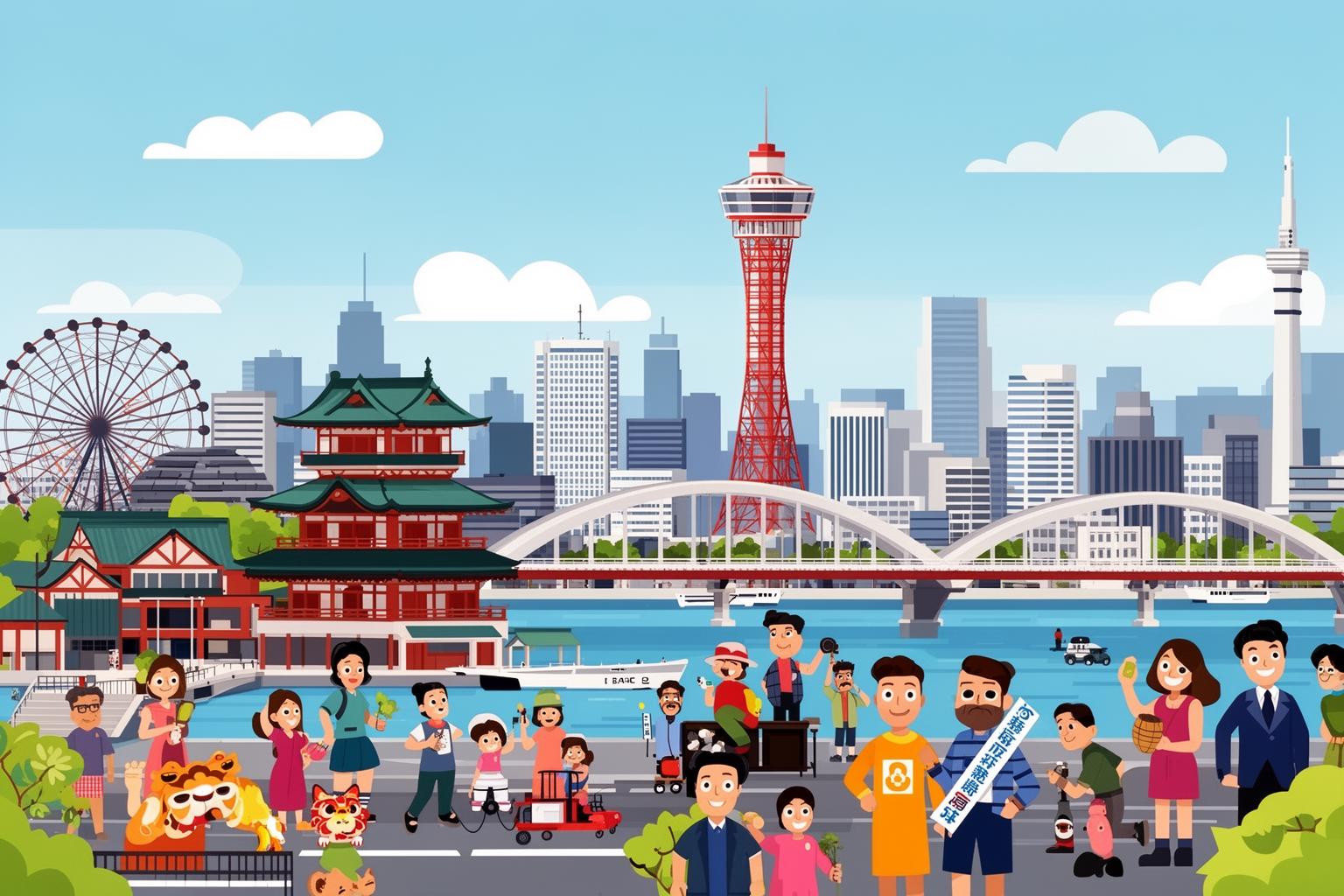
However, it is also your most valuable resource for truly integrating into your local community on a personal level. It’s the safety net you don’t realize you need until the moment comes. In a country where people can be reserved, the chonaikai offers a structured, low-pressure way to connect with your neighbors. It’s how you find out whose child is starting elementary school, who is caring for an elderly parent, and who makes the best pickles in the neighborhood. It turns a group of anonymous apartment doors into a real community.
In Osaka, the chonaikai represents the city’s character to the fullest. It isn’t about blind conformity; it’s about practical cooperation. It’s a system of mutual responsibility that keeps the complex workings of urban life running smoothly—not through strict hierarchy, but through a shared understanding of give and take. To grasp the chonaikai is to realize that life in Osaka isn’t only about the bright lights of Namba or the history of Osaka Castle. It’s about the quiet, collective effort happening on every street, in every apartment block. It’s about who steps up with a broom after the festival ends and the shared nod that says, “Thanks. We got it done.”