It happens when you least expect it. You’re in a crowded izakaya in the backstreets of Kyobashi, the air thick with the smell of grilled skewers and laughter. The owner announces closing time. Or you’re sitting in on a meeting in a small manufacturing office in Higashi-Osaka, watching the final seal get stamped on a contract. The tension breaks. Maybe you’re at a local neighborhood festival, watching the last portable shrine get hauled back into its storehouse, the participants dripping with sweat but beaming with pride. In any of these moments, just when you think it’s all over, a voice will cut through the chatter. It’s usually a man, a leader, the shop master or the company president, and he’ll shout with a gravelly, joyous authority: “O-te wo haishaku!”
And then, it begins. A sudden, sharp, unified sound. A rhythmic explosion of hands clapping together, not in polite applause, but in a powerful, driving beat. It’s punctuated by more shouts: “Uchimasho!” Clap-clap. “Mō hitotsuse!” Clap-clap. “Iwōte sando!” Clap-clap-clap. The whole room, from the oldest veteran to the youngest newcomer, is locked in this momentary ritual. It’s over in seconds, but the energy it leaves behind is palpable. It’s the sound of unity, of a job well done, of shared good fortune. This is Osaka-jime, the city’s signature ritual hand-clapping, and it’s one of the first and most confusing cultural signals you’ll encounter when you start to live here. It’s not just noise. It’s a language. And understanding it is key to understanding the very rhythm of life in Osaka, a city that runs on a different beat from the rest of Japan.
To truly feel this unique rhythm, you might also want to experience the slower, contemplative pace found in a classic Osaka kissaten.
The Sound of a Deal Done: Osaka-jime in the World of Business
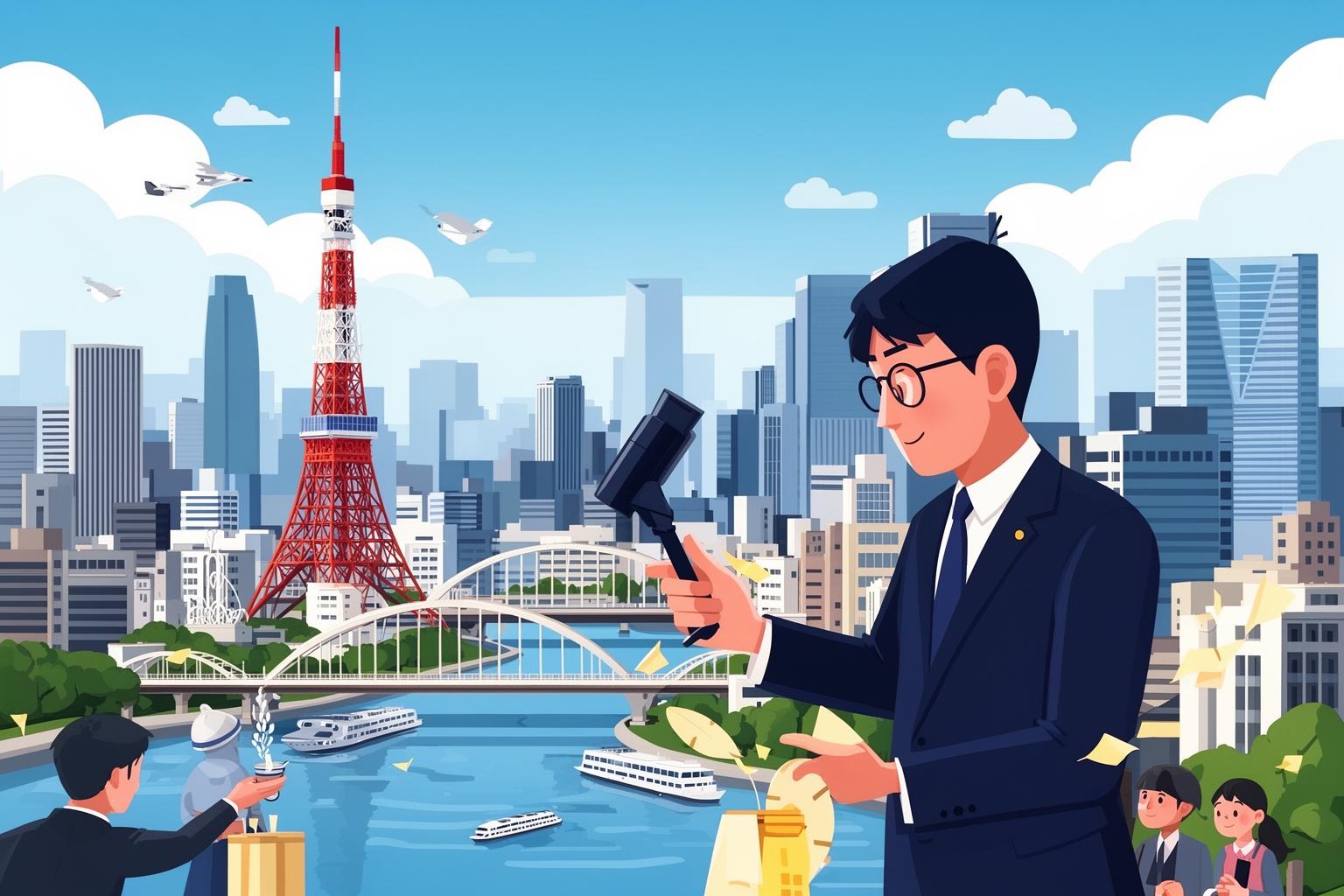
The soul of Osaka-jime is most vividly expressed in the business world. Osaka was, and in many respects still is, Japan’s merchant capital. It’s the tenka no daidokoro—the nation’s kitchen—a city shaped not by samurai or bureaucrats, but by traders, artisans, and entrepreneurs. Here, a business agreement has never been merely a piece of paper. It represents a relationship, a bond of trust between individuals. The Osaka-jime serves as the ultimate affirmation of that bond.
Picture a small factory in Yao, a city on Osaka’s eastern edge known for its small and medium-sized enterprises, the chūshō kigyō that underpin Japan’s economy. The air is thick with the scent of machine oil and determination. The president, a man whose hands are calloused from decades of labor, has just finalized a major order with a new client. Handshakes are made. Bows are deep. But the deal isn’t complete—not yet. He grins, his eyes crinkling, and calls everyone to set down their tools. Gathering the factory workers, the client, and the sales team into a loose circle, he calls for their hands, and for ten seconds the noise of machinery is replaced by a unified clap. That clap conveys more than any contract ever could. It says, “We are in this together. Your success is our success. We will deliver.” It is a promise made audible.
The Heartbeat of the Merchant City
This custom runs deep. In historic merchant areas like Senba, where textile wholesalers have operated for centuries, deals were often sealed with a drink and a clap. There was a shared understanding that a man’s word, along with the collective energy of a te-jime (a general term for ritual clapping), was as binding as any written contract. While Tokyo’s business culture evolved from the formal hierarchies of the samurai, favoring decorum and restraint, Osaka’s grew from a lively, competitive, and intensely human marketplace. In that marketplace, trusting the person you do business with is essential. You need to build rapport. You need to celebrate a successful deal with genuine, shared emotion.
The Osaka-jime is the exclamation point on that emotion. It’s loud, somewhat boisterous, and deeply communal. A Tokyo business meeting might end with a polite, almost silent bow. But an Osaka meeting, especially one involving long-term partners, feels unfinished without the clap. It removes any residual tension from negotiations and realigns everyone around a common goal: mutual prosperity. It is the sound of money being made, yes, but more importantly, the sound of relationships being forged.
From Factory Floors to Modern Offices
This tradition is not just a relic of old factories. Step into a modern office in the Umeda skyscraper district, a tech startup or a design agency. After a successful project presentation or landing a major client, the team leader might call for an Osaka-jime. Though the context is different, the meaning remains the same. It marks a victory, shares the credit, and rallies the team for the next challenge. The rhythm might be quicker, the shouts less gruff, but the spirit is identical.
For foreigners working at an Osaka firm, this can initially be surprising. You’re conditioned to view business as a formal, serious affair. Suddenly, your boss is leading a rhythmic chant. But embracing it, joining in the clap, is one of the quickest ways to gain acceptance. It shows you understand that in Osaka, success is something to be celebrated loudly, together. It signals that you are part of the team, not merely an observer.
More Than Just Business: The Clap That Binds a Community
If Osaka-jime were limited to the office, it would seem like an unusual business custom. However, its real significance comes from its widespread presence. It extends beyond boardrooms, reaching into every aspect of civic life. It acts as the bond that unites communities, marking the start and finish of collective efforts with a surge of shared energy.
Consider a local festival, a matsuri. Take the Kishiwada Danjiri Matsuri, one of Osaka’s most famously intense and spirited celebrations, where teams of men drag enormous, ornate wooden floats at breakneck speed through narrow streets. The danger is real, and the physical effort immense. After the final run, once the floats are parked and the exhausted, battered teams gather, an Osaka-jime will inevitably break out. It’s a release of all the adrenaline, a celebration of endurance and achievement, a way for every participant to acknowledge each other’s contributions. It’s a clap that says, “We did it. We are a team. We are this neighborhood.”
Celebrations Big and Small
You’ll hear it at weddings, after the final speeches, wishing the newlyweds a bright future. It rings out at the close of a successful school sports day, led by the principal, thanking parents and students alike. You’ll even find it in the most ordinary settings. A neighborhood association meeting discussing recycling rules might conclude with a clap. The successful installation of new equipment at a community center might be marked by one. It’s a ritual that scales up or down effortlessly. It can seal a multi-million yen business deal or simply celebrate everyone showing up to clean the local park.
This is often what distinguishes daily life in Osaka from other cities. There is a deeply rooted belief that any collective effort, no matter how small, deserves a lively, proper conclusion. It draws a clear line beneath an event, turning a simple gathering into a shared memory. It’s truly democratic. For those few seconds, everyone is equal. The boss and the intern, the elder and the child, the long-time resident and the newcomer—all are simply hands coming together to create a single, united sound.
In the Alleys and Izakayas
Some of the most delightful encounters with Osaka-jime happen at the end of the night. You’re at a tiny tachinomi (standing bar) in the Tenma district, squeezed shoulder-to-shoulder with strangers. Over a few hours and several drinks, conversations have sparked. You’ve shared stories with the salaryman to your left, the shopkeeper to your right. When the bar master announces last call, one of the regulars might shout, “Taisho, o-te wo haishaku!” The whole bar—maybe ten people in total—joins in the clap. It’s a thank you to the owner for his hospitality, a toast to the good time shared, and a farewell to the temporary community formed in that small space. It transforms a simple transaction of buying drinks into a shared experience. It’s in these spontaneous, small moments that the true warm and communal spirit of the city is felt.
The Rhythms of Unity: Deconstructing the ‘Uchimasho’ Chant
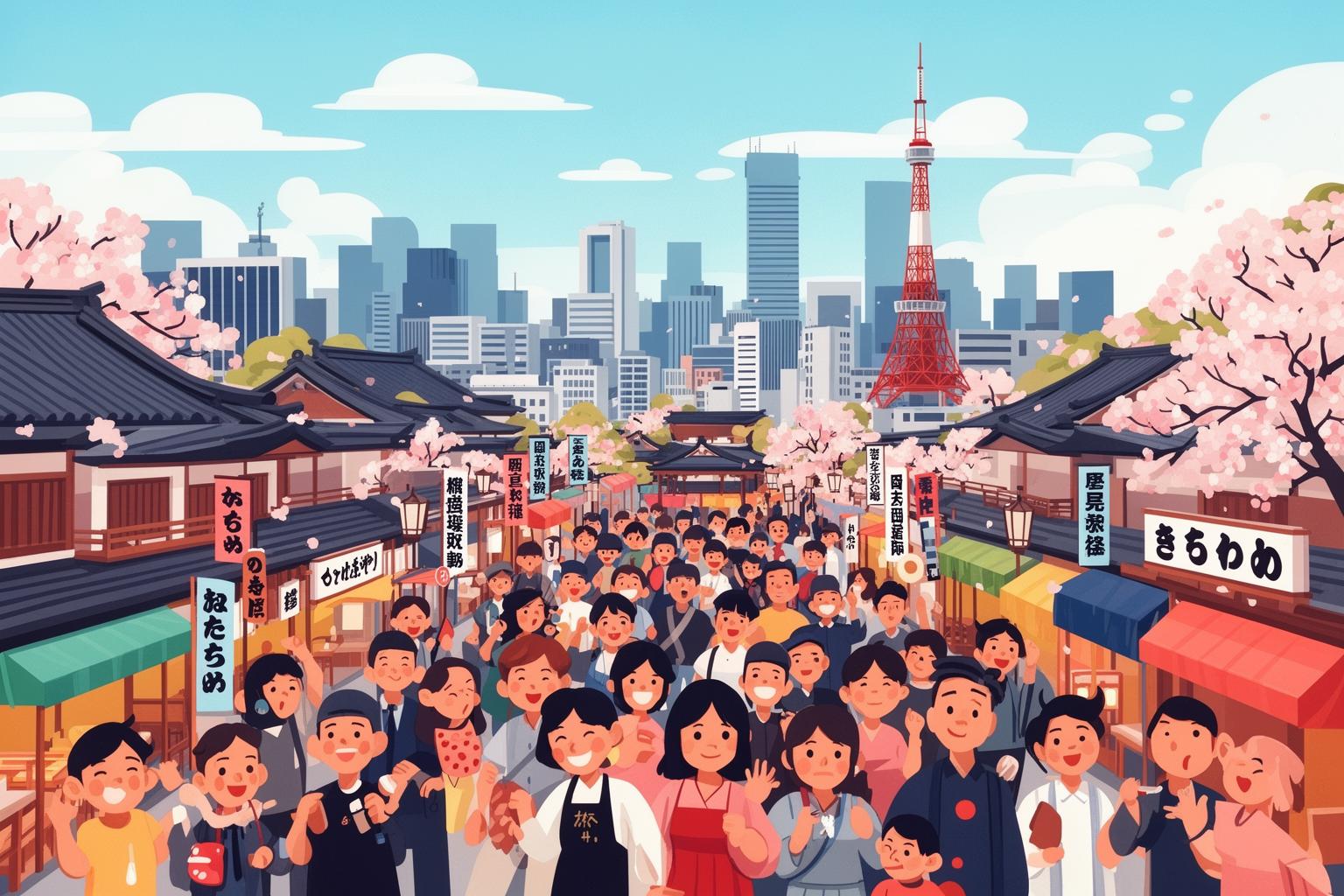
To the untrained ear, the chant may sound like a chaotic series of forceful shouts. However, like any language, it possesses its own grammar and subtleties, deeply embedded in the local dialect and customs. Analyzing it reveals the philosophy behind the practice.
“O-te wo haishaku” (お手を拝借)
This is the opening call. Literally, it means “I shall borrow your honorable hands.” The crucial words here are haishaku suru, a humble form of the verb “to borrow.” This is not a command but a polite request. The leader is asking for the privilege of using everyone’s hands to create this unifying sound. It instantly sets a tone of mutual respect. The leader is not above the group; rather, they are simply the one initiating the ritual on behalf of everyone.
“Uchimasho!” (打ちましょ)
Following the opening request, the leader shouts, “Uchimasho!” which means “Let’s strike!” or “Let’s clap!” The “-masho” ending is volitional, serving as an invitation to act together. It’s inclusive. This is followed by the first two claps: Pan-pan. This pattern forms the base rhythm, the foundation upon which the energy is built.
“Mō hitotsuse!” (もひとつせぇ)
Here, the Osaka dialect, or Osaka-ben, truly comes through. This classic local phrase means “Let’s have one more!” or “Give it one more go!” The standard Japanese equivalent would be something more formal, like “mō ichido onegai shimasu.” The “~se” ending is a playful, energetic command form used in Osaka. It is a call to build momentum and double down on the positive energy. This is followed by another Pan-pan.
“Iwōte sando!” (祝うて三度)
This is the grand finale. It means “Celebrating with three claps!” or “To celebrate, three times!” The verb iwau means to celebrate or congratulate, while sando means three times. This final call raises the clapping from a simple rhythm to an act of celebration. The last three claps—Pan-pan-pan—are often louder and more emphatic than the earlier ones. They serve as the final, powerful declaration of success and good fortune. The number three is also considered lucky in Japanese culture, adding an auspicious layer to this concluding act.
Understanding these phrases isn’t just about memorization. It’s about grasping the emotional progression of the ritual: a polite request, an inclusive invitation, a surge of energy, and a celebratory close. Even if you stumble over the words or the rhythm, appreciating this flow lets you join in with the spirit of the practice.
Osaka vs. Tokyo: A Tale of Two Claps
To truly understand what makes Osaka-jime distinctly Osaka, you have to compare it with its more renowned counterpart from the east: Tokyo’s te-jime. Many foreigners, and even Japanese from other regions, tend to group all ritual clapping together, but the styles and feelings are vastly different, reflecting the profound cultural divide between Japan’s two major cities.
Tokyo, the center of government and corporate Japan, has its unique clapping forms, mainly ippon-jime and sanbon-jime. These are much more structured and rhythmically intricate.
Ippon-jime (一本締め), or “single clap,” follows a 3-3-3-1 pattern: pan-pan-pan, pan-pan-pan, pan-pan-pan, pan. Sanbon-jime (三本締め), or “triple clap,” is essentially the ippon-jime pattern repeated three times with pauses in between.
Precision vs. Passion
The difference lies not only in the rhythm but in the entire philosophy. Tokyo’s te-jime emphasizes precision, order, and formality. It resembles a carefully rehearsed musical piece conducted with sharp, clean movements. It serves to bring an event to a neat, official close. It’s the sound of a flawlessly executed plan, a final, definitive full stop to a formal statement. There is a sense of restrained dignity, with everyone clapping in perfect unison, demonstrating group harmony through discipline.
In contrast, Osaka-jime centers on passion, emotion, and participation. Its rhythm is simpler (2-2-3), making it easy for anyone to join in, no matter their experience. It isn’t about perfect technique but about a collective, joyful noise. If Tokyo’s clap is like a symphony orchestra, Osaka’s is more like a festival chant. It values spontaneity over discipline, expressing a shared, lively burst of feeling. It’s not a period; it’s a string of exclamation points. It sounds like a spirited celebration rather than a formal ritual.
Creating the Air vs. Reading the Air
This distinction ties into a key concept in Japanese communication: kuuki wo yomu, or “reading the air.” In Tokyo, there is considerable social pressure to gauge the atmosphere and behave appropriately, often meaning to remain reserved and not stand out. The goal is to blend seamlessly with the existing mood.
In Osaka, while people still read the air, there is a much stronger focus on creating the air, or as they say, nori wo tsukuru. Nori is a wonderfully untranslatable term encompassing vibe, mood, rhythm, and group energy. Osaka culture is about actively generating a positive, lively nori. Osaka-jime is a prime example of this. It doesn’t just mark the end of an event—it injects a powerful surge of good energy into the room, ensuring everyone leaves feeling uplifted. A Tokyoite might wait for the right moment to act; an Osakan will create the right moment.
Common Misunderstandings: What Newcomers Get Wrong
For anyone new to Osaka, experiencing Osaka-jime can be quite puzzling. It’s loud, abrupt, and follows a set of unspoken rules, which can easily lead to some common and understandable confusion.
“Is this some kind of religious ritual? Am I being disrespectful?”
This is a common worry. The clapping does superficially resemble the kashiwade, the two claps performed at a Shinto shrine to invite the gods. Historically, te-jime does have origins in Shinto purification and celebration practices. However, in today’s context, Osaka-jime is almost entirely secular. It’s a cultural and social ritual rather than a religious one. The “gods” invoked are really symbolic of good fortune, prosperity, and community spirit. You are not taking part in a religious ceremony but in a communal celebration. There’s no need to feel uneasy about your personal beliefs; what matters most is a spirit of goodwill.
“This sounds frighteningly loud and intense. Are they angry?”
For those accustomed to applause as the typical group sound, the sharp claps and forceful shouts can seem aggressive. But the feeling behind it is quite the opposite. It expresses pure joy, unity, and satisfaction. The volume is a reflection of the group’s enthusiasm. A soft, muted Osaka-jime would be seen as a failure, indicating a lack of wholehearted participation. The loudness is an intentional feature, not a flaw. It’s an unreserved expression of positivity.
“It feels compulsory. What if I get it wrong?”
This is the biggest concern for many foreigners. You’re suddenly put on the spot, expected to join a ritual you don’t fully understand. Here’s the key: no one expects you to do it perfectly. What they do value is the effort. Joining in, even if your clapping is a little off-beat, shows your willingness to be part of the group. A smile and an enthusiastic (even if clumsy) attempt will win far more goodwill than standing silently on the sidelines. The spirit of Osaka prizes participation over precision. It’s an invitation, never a test. Just follow the leader, clap when they clap, and smile. You’ll be just fine.
How to Participate (Without Feeling Awkward)
So, imagine yourself in a situation where an Osaka-jime is about to begin. What should you do? Here are a few straightforward guidelines to follow.
Rule 1: Follow the Leader. There will always be a leader who starts the clap. They are your cue. When they raise their hands, you raise yours. When they shout, you listen. Their timing is your cue.
Rule 2: It’s Not Just Applause. This is the key difference. Applause is for a performer. You clap for them. Osaka-jime is a group activity. You clap with everyone. You’re not an audience member; you are part of the act. Keep your hands high, in front of your chest, not down by your sides. Make your claps sharp and purposeful.
Rule 3: Don’t Be Quiet, Be Loud. The strength of the ritual comes from the collective sound. One person clapping loudly might feel odd, but a whole room clapping loudly is powerful. Your participation counts. Don’t hold back. Dive into the noise and become part of the energy.
Rule 4: Your Smile is Essential. More than perfect rhythm, your expression conveys everything. Look happy and engaged. Make eye contact with others and share a smile. You’re sharing a moment of collective celebration or joy. Your smile shows you understand the spirit of the moment, even if the details are unfamiliar.
The Future of a Tradition in a Changing Osaka
In a globalized world, are these local traditions disappearing? In some parts of Osaka, yes. In large multinational corporations with offices in the city, a handshake and a formal email are more likely to seal a deal than a rhythmic clap. A younger generation raised on global culture might consider it somewhat old-fashioned.
However, to declare Osaka-jime extinct would be a serious misunderstanding of the city. Venture just beyond the gleaming business districts, into the neighborhoods and industrial parks that truly drive the city. Attend the local shotengai (shopping arcade) meetings. Visit a family-run business passed down for three generations. The tradition remains vibrant. Why? Because it continues to fulfill an essential human purpose.
In an era of digital contracts and remote work, Osaka-jime is a powerful, tangible affirmation of human connection. It is a ritual that requires people to be present in the same space, to share the same atmosphere, and to create something together, even if it is just a sound. It strengthens relationships in a way an email never could.
So, the next time you hear the sudden call of “O-te wo haishaku!”, don’t shy away. Embrace it. Raise your hands, take a breath, and join the rhythm. In that moment, you won’t just be a resident or a visitor in Osaka. You’ll be an active participant in its living, breathing culture. You’ll feel the city’s true heartbeat—a rhythm of commerce, community, and connection, one celebratory clap at a time.