Welcome to Umeda, the glittering, beating heart of northern Osaka. This isn’t just a district; it’s a universe unto itself. A dazzling constellation of towering skyscrapers, subterranean shopping arcades, and a web of train lines that connect you to literally everywhere. When people talk about the modern, sophisticated face of Osaka, they’re painting a picture of Umeda. It’s the city’s primary business hub, its most glamorous shopping destination, and arguably the most convenient place to plant your feet in the entire Kansai region. But beneath the shimmering glass and the constant, rhythmic pulse of millions of commuters, there’s a question every prospective resident asks: What does it actually cost to live here? To call this nexus of commerce and culture home? Forget the spreadsheets and dry statistics for a moment. We’re about to embark on a deep dive, a real-world journey into the financial fabric of life in Umeda. From the moment you sign that apartment lease to your weekend splurge at a rooftop bar, we’ll uncover every yen, explore every expense, and give you the full, unvarnished story of what your budget will look like in Osaka’s most dynamic neighborhood. This is your complete guide to the cost of living in Umeda, crafted for those ready to trade daydreams for a door key.
For a different perspective on Osaka’s vibrant neighborhoods, consider exploring the creative community in nearby Nakazakicho.
The Umeda Vibe: Why Settle in Osaka’s Northern Hub?
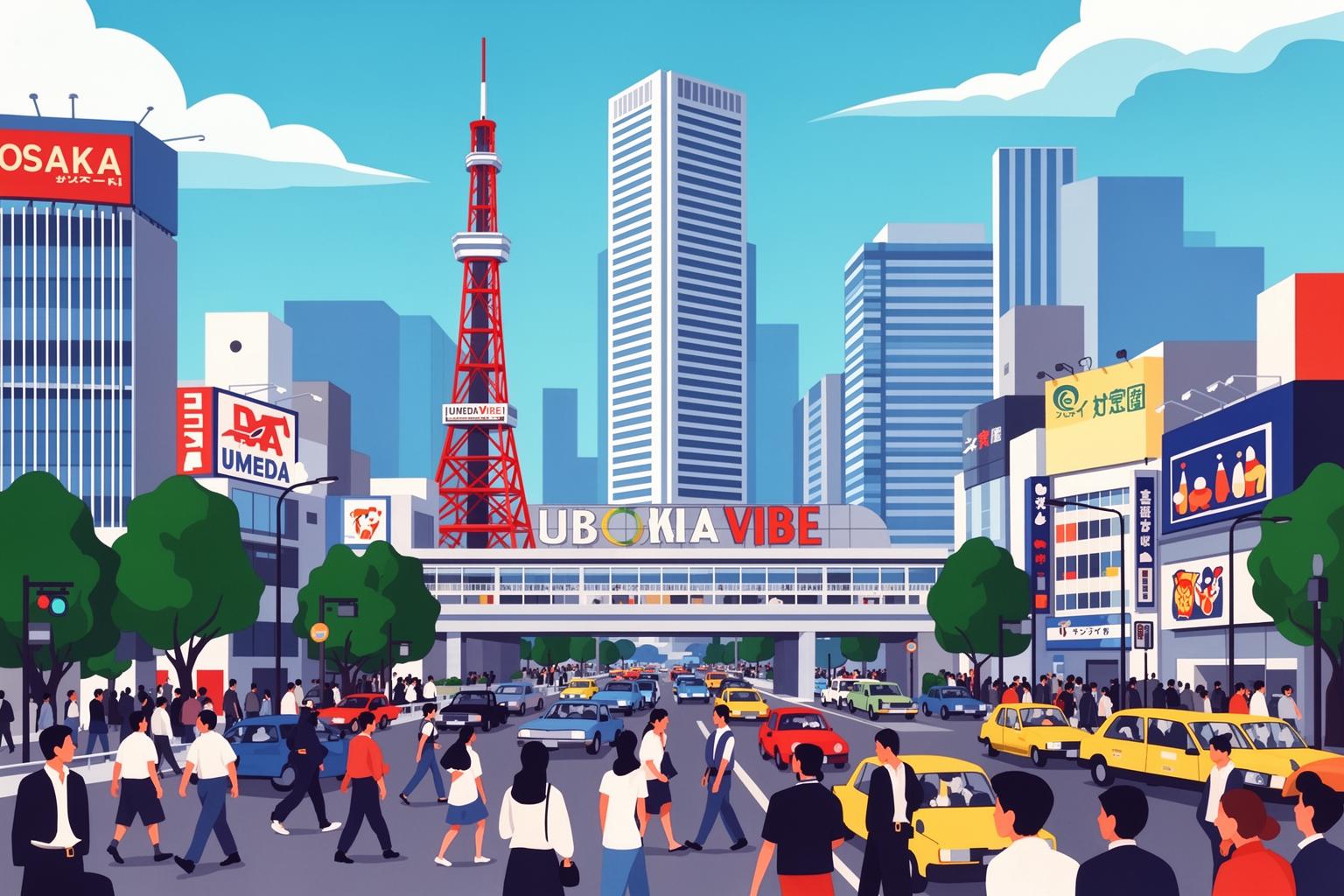
Before we dive into numbers, let’s set the scene. What does Umeda feel like? In one word: electric. It’s a place defined by purpose and refinement. By day, the streets flow with professionals in sharp suits, moving in and out of the architectural marvels that house corporate headquarters. The energy is tangible—a steady hum of ambition, meetings, and deals being made. This sharply contrasts with Namba, the city’s southern hub, which pulses like a 24/7 street party with its neon lights and vibrant crowds. Umeda is like Namba’s sophisticated older sibling; it swapped ripped jeans for a tailored blazer, yet still knows how to have a fantastic time after hours.
As evening falls, Umeda undergoes a transformation. Office workers loosen their ties and spill into a maze of exceptional restaurants, stylish bars, and cozy izakayas hidden in the most unexpected corners. The district is known for its iconic landmarks. There’s the Umeda Sky Building, a futuristic giant with a floating garden observatory that offers stunning panoramic views. Grand Front Osaka and LUCUA are sprawling retail hubs—more like self-contained cities of shopping and dining. At the heart of it all is Osaka Station City, a marvel of modern design built over and around the station, seamlessly blending transportation, shopping, and entertainment. Living in Umeda means having all this right at your doorstep. It’s ideal for those who thrive on convenience, want to feel the city’s pulse, and appreciate the ability to go anywhere, anytime, with unmatched ease. It draws young professionals, international business people, and anyone who values a lifestyle where the best of urban living is just an elevator ride away.
The Big Ticket Item: Unpacking Housing Costs in Umeda
Alright, let’s dive into the core issue. Your single largest expense—by far the one shaping your budget—is housing. Umeda is prime real estate, and its prices reflect its status as the city’s most connected and commercially vital district. However, costs can vary widely depending on the apartment’s size, age, and proximity to the action. Let’s unravel the layers of the Umeda rental market.
Understanding Apartment Types and Rent Prices
Grasping Japanese apartment layouts is key. The terminology is straightforward once you get used to it. ‘R’ means Room, ‘L’ stands for Living, ‘D’ for Dining, and ‘K’ for Kitchen. The number preceding these letters indicates how many separate bedrooms there are.
For solo dwellers or minimalists, the go-to options are a 1R (One Room) or 1K (One Room with a small, separate kitchen). These are essentially studio-style apartments—compact and efficient, perfect for a single occupant. In central Umeda, a short walk from Osaka Station, a modern 1K in a relatively new building might cost between ¥70,000 and ¥110,000 a month. This price depends heavily on factors like the building’s age (newer buildings with enhanced earthquake resistance and better amenities typically cost more), floor level, and exact distance from the station. An apartment 15 minutes on foot away will be noticeably cheaper than one just five minutes from your morning train. These units usually range from 20-25 square meters, so you learn to maximize your space smartly.
If you need more room, perhaps for a home office or a couple sharing the apartment, a 1LDK (one bedroom plus separate Living, Dining, and Kitchen areas) is what you’ll be aiming for. This represents a noticeable upgrade in both space and price. Here, you get a dedicated bedroom that can close off from the living area, offering a stronger sense of home. A 1LDK in a good Umeda location will usually cost between ¥120,000 and ¥200,000 or more. At this price point, units generally span about 35-50 square meters, featuring a more modern kitchen, a larger bathroom, and often enhanced building amenities like auto-lock security, package delivery lockers (an absolute lifesaver), and sometimes a small gym.
For families or those needing multiple bedrooms, 2LDK apartments and larger are far less common and significantly costlier in Umeda’s core. Expect to pay anywhere from ¥200,000 to over ¥400,000 for such units. Most people seeking this level of space tend to choose one of the excellent neighboring districts, where they can get greater value while still remaining close to Umeda.
The Notorious Initial Costs: More Than Just Your First Month’s Rent
This part often catches newcomers off guard. Renting an apartment requires a substantial upfront payment, often totaling four to six times the monthly rent. It’s a financial challenge you should be ready for. Let’s break down this often confusing array of fees.
First comes Shikikin (敷金), or the security deposit. This resembles deposits common in many Western countries. Generally, this is one to two months’ rent, covering any damage beyond normal wear and tear. If you leave the apartment in good shape, most or all of this is refundable.
Next is the uniquely Japanese Reikin (礼金), meaning “key money” or “gratitude money.” This non-refundable one-time payment is given to the landlord as a thank-you for letting you rent their property. It’s a holdover from post-war housing shortages. Although its necessity is frequently debated, it remains common. Reikin usually runs from zero up to two months’ rent. The good news is that many newer buildings, especially those looking to attract foreign tenants, are dropping this fee. Always look for listings advertising “reikin-nashi” (no key money), if possible.
Following that is the Chukai Tesuryo (仲介手数料), the real estate agent’s commission. This covers their work finding you an apartment, processing paperwork, and negotiating terms. The standard fee is one month’s rent plus consumption tax.
Many landlords hesitate to rent to foreigners without a Japanese co-signer, so you’ll almost certainly need to use a Guarantor Company (保証会社, hoshogaisha). This company guarantees rent payments to the landlord if you default. The initial fee is usually 50% to 100% of the monthly rent, plus a smaller annual renewal fee of about ¥10,000.
On top of these, you might also face smaller charges like a lock replacement fee (¥15,000–¥25,000), mandatory fire insurance (about ¥20,000 for two years), and occasionally a prepaid cleaning fee for when you move out. Let’s consider a practical example: for a ¥100,000 per month apartment with typical fees, your initial cost might look like this: First Month’s Rent (¥100,000) + Security Deposit (¥100,000) + Key Money (¥100,000) + Broker’s Fee (¥110,000) + Guarantor Fee (¥50,000) + Insurance/Lock Costs (¥40,000) = an eye-watering ¥500,000. This makes it essential to save up well in advance before starting your apartment search.
Location, Location, Location: Umeda vs. Its Surrounding Neighborhoods
Living right in Umeda (officially part of Kita Ward) offers unparalleled convenience but comes with a premium price tag. However, you can save a significant amount by settling in one of the nearby charming neighborhoods, often without compromising much on commute time or lifestyle.
Take Nakatsu, for example, located just one subway stop north or a pleasant 15-minute walk from Umeda. It has a somewhat calmer, more residential vibe with a creative, artsy edge. You’ll find excellent cafes and independent shops here. Rent tends to be 10-20% cheaper than in prime Umeda, offering an excellent cost-to-convenience balance.
To the west lies Fukushima, which has surged in popularity and is now one of Osaka’s top foodie hotspots. The streets are packed with fantastic izakayas, Michelin-starred restaurants, and trendy wine bars. With its own JR station on the Osaka Loop Line, it’s extremely well connected. While prices have risen, you can still get better value here than in Umeda, especially for larger apartments.
Going east, you’ll find Tenma. This neighborhood has a more local, down-to-earth feel. It’s home to the Tenjinbashisuji Shotengai, Japan’s longest covered shopping arcade stretching over two kilometers. The atmosphere is more traditional, rents are lower, and the food scene is famous for being tasty, affordable, and lively. Tenma is an excellent choice for those on a tighter budget who still want proximity to the city center.
Fueling Your Life: The Daily Grind of Utilities and Bills

Once you have secured your apartment, you’ll need to power it, get connected, and maintain a comfortable living environment. These monthly bills are predictable but essential components of your budget.
Keeping the Lights On: Electricity, Gas, and Water
Your utility expenses will naturally vary with the seasons. Osaka’s summers are notoriously hot and humid, causing your air conditioner to work extensively. In contrast, winters, though not severe, can be chilly and will require heating. Electricity costs for a single person in a typical 1K apartment usually range from ¥4,000 to ¥7,000 per month. These costs tend to be lower during the mild spring and autumn months and higher during the peak summer and winter periods. For a couple living in a larger 1LDK apartment, a monthly electricity bill between ¥7,000 and ¥12,000 is a reasonable expectation.
Gas is mainly used for cooking and heating water for showers and dishwashing. Most modern buildings in Umeda use “toshi gas” (city gas), which is cheaper and more efficient compared to LP (liquefied petroleum) gas, more common in rural areas. Your monthly gas bill will likely range from ¥3,000 to ¥6,000, depending on your cooking habits and shower duration.
Water is the most stable utility and is conveniently billed every two months. A single person can expect a bill around ¥3,000 to ¥5,000 every two months, translating to a manageable monthly cost. Altogether, a safe monthly budget for basic utilities for one person would be about ¥10,000 to ¥15,000.
Staying Connected: Internet and Mobile Phone Plans
In a technologically advanced city like Osaka, fast and reliable internet is essential. The standard home internet is fiber optic, known as “hikari” in Japanese. You’ll typically sign a two-year contract with providers such as NTT, SoftBank, or au. The monthly fee for a high-speed plan is reasonable, usually between ¥4,000 and ¥6,000. There may be an initial installation fee, but providers often waive this charge during promotional campaigns.
For mobile phones, there is a broad range of options. The three major carriers—Docomo, au, and SoftBank—offer extensive coverage and premium services, generally costing ¥7,000 to ¥10,000 per month for a data-rich plan. A more budget-friendly choice for most people is to opt for a Mobile Virtual Network Operator (MVNO), smaller carriers that use the infrastructure of major networks. Providers like Rakuten Mobile, Y!mobile, and UQ Mobile offer competitive plans with ample data at a fraction of the price, typically between ¥2,000 and ¥4,000. Their service quality and coverage in a major city are excellent and nearly identical to those of the big carriers.
Getting Around: The Cost of Transit in a Hyper-Connected Hub
One of the primary reasons to live in Umeda is its unmatched access to public transportation. You find yourself at the very heart of the Kansai region’s transit network. While this convenience comes at a price, it also likely eliminates the need for one major expense: owning a car.
The Train is Your Domain
Living in Umeda enables you to reach almost any destination with ease. Osaka-Umeda Station is a vast hub serving multiple operators. You have the extensive JR West network (including the Loop Line and routes to Kyoto, Kobe, and Nara), the private Hankyu Railway (ideal for northern Osaka, Kobe, and Kyoto), the Hanshin Railway (another connection to Kobe), and the Osaka Metro Midosuji Line, the city’s main north-south subway artery. A single subway ride usually costs between ¥190 and ¥300. If you commute daily for work, your company will often reimburse the cost of a Teiki (定期), or monthly commuter pass. If not, factor this into your budget. For instance, a one-month pass from Umeda to Namba on the Midosuji Line runs around ¥9,000. For casual, non-commute travel, a rechargeable IC card like ICOCA is commonly used. Budgeting ¥5,000 to ¥10,000 per month for casual train usage around the city is a sensible estimate.
To Own or Not to Own a Car?
The simple answer: absolutely not. Car ownership in central Umeda is a substantial and unnecessary financial strain. Public transportation is so efficient that a car quickly becomes redundant. The costs tied to car ownership in Japan are staggering. Beyond the purchase price, there are mandatory biannual inspections (shaken, 車検), which can exceed ¥100,000, compulsory and optional insurance, fuel, and tolls. The single largest expense is parking. A dedicated monthly parking space (gekigime chushajo, 月極駐車場) in the Umeda area can range from ¥30,000 to ¥60,000 per month—almost equivalent to a second rent payment. Skip the car, rely on the train, and save a significant amount of money.
Bicycles: The Locals’ Secret Weapon
For getting around the immediate neighborhood, nothing beats a bicycle. A simple, sturdy mamachari (ママチャリ) is a staple of Japanese urban life. You can buy one new for ¥20,000 to ¥30,000 or much cheaper used. It’s ideal for grocery trips, exploring nearby spots, and light exercise. Registration costs a few hundred yen, and if you park it at the station, there’s a small fee for bicycle parking, but these are minimal expenses. It’s the most economical and often fastest way to navigate your local part of the city.
The Flavor of Umeda: Your Food and Grocery Budget

Now, onto my favorite topic: food. Osaka is famously known as “Tenka no Daidokoro” (The Nation’s Kitchen), and living in Umeda places you right in the heart of this culinary haven. Your food budget can be as extravagant or as economical as you prefer, with an impressive range of options available at every price level.
The Supermarket Sweep: Groceries and Home Cooking
Although Umeda is celebrated for its upscale department stores, there are plenty of supermarkets to cover your everyday needs. You’ll find premium stores like Hankyu Oasis, Seijo Ishii, and Ikari Supermarket, excellent for top-quality produce, meats, and imported items, though they tend to be pricier. For more affordable shopping, supermarkets like LIFE provide good value. A typical grocery basket might include a 5kg bag of quality rice for about ¥2,500, a loaf of soft shokupan (white bread) for ¥200, a liter of milk for ¥220, a 10-pack of eggs for ¥250, and 100g of chicken breast around ¥120. Cooking at home remains by far the most cost-effective way to eat. A single person preparing most meals at home can comfortably manage a grocery budget of ¥25,000 to ¥40,000 per month. For a couple, a budget of ¥50,000 to ¥70,000 is reasonable. Keep in mind that imported products such as Western cheeses, cereals, and certain spices will be considerably more expensive than local alternatives.
Eating Out: From Quick Bites to Fine Dining
This is where the temptation really lies. Umeda’s dining scene offers a vast array of choices. For a quick, affordable, and filling meal, lunch sets or teishoku (定食) can’t be beaten. For ¥800 to ¥1,500, you get a well-balanced meal including a main dish (such as grilled fish or tonkatsu), a bowl of rice, miso soup, and some pickles. A coffee from a chain like Doutor for a caffeine boost costs around ¥300, while a specialty cafe brew might be closer to ¥600.
Dinner presents an even broader range. A tasty, comforting bowl of ramen will cost between ¥800 and ¥1,200. A lively night out at an izakaya (Japanese gastropub), sharing small plates and enjoying a few drinks, typically runs ¥3,000 to ¥6,000 per person. Dining at a mid-range Italian or French restaurant will usually be ¥5,000 to ¥8,000 per person. And if you want to celebrate, there’s no limit. Luxury hotels and shopping centers in Umeda feature world-class fine dining venues where a meal can easily cost ¥15,000 to ¥30,000 per person or more.
One of the best food tricks for living in Umeda is the depachika (デパ地下)—the extensive food halls found on the basement level of department stores like Hankyu, Hanshin, and Daimaru. They offer an incredible range of gourmet foods, from exquisite bento boxes to fresh salads, high-end sushi, and artisanal baked goods. After 7 p.m., many of these items are discounted, allowing you to enjoy restaurant-quality meals at home for a fraction of the usual cost.
The Lifestyle Ledger: Entertainment, Shopping, and Self-Care
Your budget is not just about getting by; it’s about flourishing. While this category is quite personal, it’s essential to consider the expenses involved in enjoying the fantastic lifestyle that Umeda provides.
Entertainment and Social Life
A standard movie ticket at the huge TOHO Cinemas costs around ¥1,900, though most theaters offer discount days. Spending a few hours singing karaoke with friends typically runs between ¥2,000 and ¥4,000 per person, including a couple of drinks, with lower prices available on weekday afternoons. A beer at a regular bar usually costs ¥500 to ¥800, while a well-crafted cocktail at a trendy bar starts at ¥1,000. For a cultural experience, admission to the Umeda Sky Building’s observatory is about ¥1,500, and there are various museums and galleries nearby with different entry fees.
Retail Therapy: Umeda’s Shopping Scene
Umeda is a shopper’s dream, which can be tempting for your budget. Large department stores like Hankyu and Daimaru offer luxury brands from around the globe. Malls such as Grand Front Osaka and LUCUA feature a wide range of Japanese and international fashion, lifestyle items, and cosmetics. Yodobashi Camera, a massive electronics store, sells anything from laptops to advanced rice cookers. It’s easy to get caught up in the retail buzz, so setting a clear monthly shopping limit is a smart idea.
Health and Wellness
Staying fit is convenient in Umeda. Gym memberships vary considerably. You can visit local city-run gyms for a few hundred yen per session or join a 24-hour chain like Anytime Fitness for about ¥8,000 per month. For grooming, a men’s haircut may cost between ¥3,000 and ¥5,000, while a women’s cut and color at a quality salon can range from ¥8,000 to ¥15,000. It’s relatively easy to find English-speaking stylists in an international area like Umeda.
Most importantly is National Health Insurance (NHI), compulsory for all residents in Japan. The monthly premium depends on your income from the previous year. In your first year in Japan, the premium will be very low and will adjust in your second year once your Japanese income is recorded. NHI is a great system, covering 70% of most medical and dental expenses, making healthcare quite affordable.
Tallying It All Up: A Sample Monthly Budget
Let’s combine all these elements into two sample monthly budgets. Keep in mind, these serve as templates; your individual spending habits will shape the actual outcome.
The Solo Professional on a Mid-Range Salary
This individual enjoys the convenience of Umeda, cooks a few times weekly, but also likes eating out and socializing.
- Rent (Modern 1K near the station): ¥90,000
- Utilities (Electricity, Gas, Water): ¥12,000
- Communications (Phone & Internet): ¥8,000
- Food (Combination of groceries and dining out): ¥50,000
- Transportation (Local train trips, no commuter pass): ¥7,000
- Health Insurance & Pension (Estimate): ¥30,000
- Personal & Entertainment (Shopping, hobbies, social): ¥40,000
Total Estimated Monthly Cost: ¥237,000
The Expat Couple (Dual Income, No Kids)
This couple prefers a bit more space and enjoys the dining and shopping options Umeda offers.
- Rent (Modern 1LDK): ¥160,000
- Utilities: ¥20,000
- Communications: ¥14,000
- Food (Cooking together and frequent dining out): ¥80,000
- Transportation: ¥12,000
- Health Insurance & Pension (Combined estimate): ¥65,000
- Personal & Entertainment: ¥80,000
Total Estimated Monthly Cost: ¥431,000
Final Thoughts: Is the Umeda Price Tag Worth It?
There’s no sugarcoating it: living in Umeda is an investment. It is one of Osaka’s most prestigious and, consequently, most expensive neighborhoods. You pay a premium for unmatched convenience, endless options, and the vibrant, sophisticated energy that fills the district. The price of that apartment isn’t just for the physical space; it’s for the luxury of having numerous train lines at your disposal, world-class shopping and dining just an elevator ride away, and for residing at the very crossroads of western Japan.
So, is it worth it? The answer depends entirely on what you value. If you thrive in the heart of the action, loathe long commutes, and want the best of a modern global city within reach, then the Umeda price tag can certainly be justified. The lifestyle it offers is one of effortless connectivity and endless possibility. It’s a place where you can finish work, meet a friend for dinner at an excellent restaurant, and then spontaneously hop on a train to Kyoto for an evening stroll. That kind of freedom and spontaneity is the real reward of living in Umeda. It’s not just an address; it’s a launchpad to everything this incredible city and region have to offer.