Hey everyone, Sofia here! Close your eyes for a second and imagine this: the air is thick with the sweet, savory scent of street food, the rhythmic beat of a massive drum pulses through the ground beneath your feet, and a river of people, dressed in vibrant summer yukatas, flows through ancient streets. Overhead, a sky ablaze with fireworks mirrors a river below, which is itself a constellation of a hundred lantern-lit boats. This isn’t a dream; it’s the heart of summer in Osaka. It’s the Tenjin Matsuri, a festival so grand, so deeply woven into the city’s spirit, that to experience it is to experience the very soul of Osaka itself. Centered around the venerable Osaka Tenmangu Shrine, this is one of Japan’s three greatest festivals, a spectacular celebration that has danced through the city for over a thousand years. It’s more than just a party; it’s a living, breathing story of faith, community, and the irrepressible joy of a city that knows how to celebrate. Get ready, because we’re about to dive into a spectacle of history and light that will capture your heart and fill your camera roll!
If you’re already dreaming of the festival’s incredible street food, you’ll love exploring more of Osaka’s culinary scene, including the vibrant Halal food options along Tenjinbashisuji Shopping Street.
The Sacred Heartbeat: Osaka Tenmangu Shrine
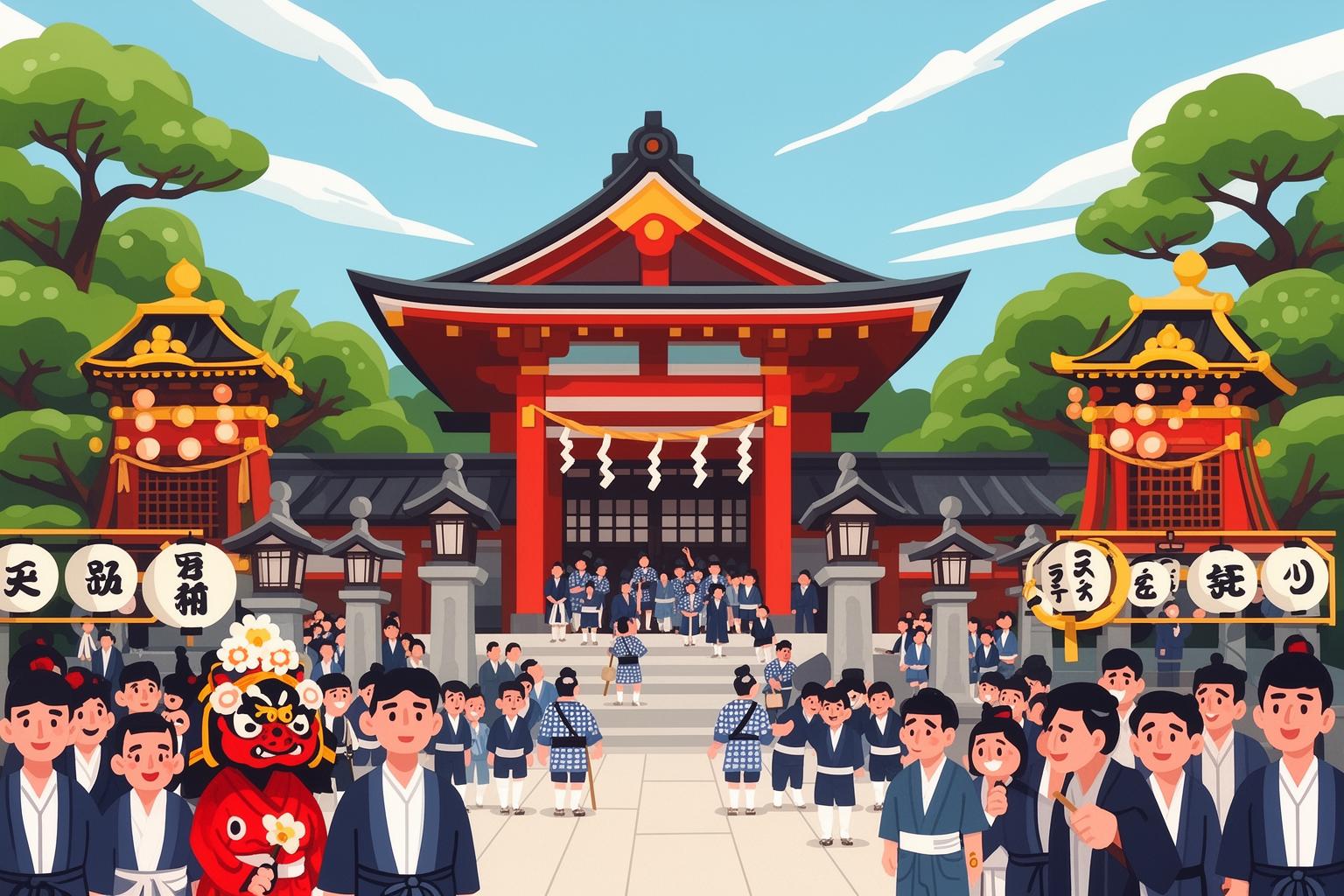
To truly grasp the festival’s wild, exuberant energy, you must first encounter its quiet, dignified core: Osaka Tenmangu Shrine. Nestled in the city’s Kita ward, this sacred place serves as the foundation for the entire celebration. On a typical day, the shrine grounds offer a peaceful refuge. Sunlight filters through the branches of ancient trees, casting dappled shadows on the stone paths. The air carries a subtle, sweet aroma of incense and the gentle clinking of prayers written on small wooden plaques, or ema, swaying in the breeze. The architecture is breathtaking, featuring gracefully curved roofs, intricate wooden carvings, and a grand main hall that emanates a sense of calm strength.
This is the residence of Tenjin-sama, the deified spirit of Sugawara no Michizane, a real historical figure. He was neither a warrior nor an emperor, but something perhaps even more revered in Japanese culture: a brilliant scholar, poet, and statesman from the 9th century. His life was marked by remarkable accomplishments, yet also by tragic political intrigue that led to his wrongful exile. Following his death, a series of calamities struck the capital, believed to be the result of his vengeful spirit. To appease him, he was posthumously pardoned, elevated in court rank, and eventually enshrined as Tenjin, the god of scholarship, literature, and the arts. Today, students from across Japan visit Osaka Tenmangu to pray for success in their exams, their hopeful faces bowed respectfully before the deity who embodies the power of knowledge. It is this spirit of Michizane—learned, artistic, and deeply revered—that the Tenjin Matsuri aims to celebrate and honor.
A Festival Rooted in Water and Prayer
The tale of the Tenjin Matsuri begins not with a parade, but with a single sacred spear. Over a thousand years ago, shortly after the establishment of Osaka Tenmangu in 949, a divine halberd, a hoko, washed ashore near the shrine. The villagers held a ritual, setting the hoko afloat on the river to observe where it would come to rest. The spot where it landed was considered sacred, and a temporary altar, or otabisho, was erected there to welcome the spirit of the deity. This modest ritual, the Hokonagashi Shinji, was the seed from which the entire festival sprouted. It was a simple act of purification and guidance, a means for the community to connect with their guardian deity.
As Osaka grew into a thriving commercial center, known as the “City of Waterways,” its festival developed alongside it. The proud and wealthy merchants of the Edo period invested their resources and competitive vigor into the celebration. They sponsored ornate floats, commissioned exquisite boats, and transformed the modest river procession into a grand exhibition of civic pride. The festival came to embody the city itself: vibrant, occasionally flashy, and deeply communal. It evolved from a solemn religious ceremony into a magnificent urban spectacle—a two-day burst of color, sound, and tradition showcasing the prosperity and resilient spirit of the people of Osaka. It withstood fires, wars, and modernization, with each generation adding its own layer to the tradition, ensuring that the echoes of that first sacred halberd continue to resonate in the magnificent pageant we witness today.
A Symphony in Two Movements: The Festival Unfolds
The Tenjin Matsuri is a story told over two extraordinary days, each with its own unique rhythm and atmosphere. It begins with a hum of anticipation and builds into a roaring crescendo that sweeps you up in its joyous flow.
Yoimiya: The Eve of Anticipation (July 24th)
The first day, called Yoimiya, is all about setting the scene. Energy begins to crackle around Osaka Tenmangu. The day’s key event is the re-enactment of the festival’s origin, the Hokonagashi Shinji. Early in the morning, Shinto priests, accompanied by two chosen children, board a small wooden boat and row to the middle of the Dojima River. There, with solemn prayers and ancient rituals, they cast a simple wooden halberd into the water, just as their ancestors did a thousand years ago. It’s a beautifully serene, deeply spiritual moment—a quiet reminder of the festival’s sacred origins before the grand festivities commence.
Back on land, the pace quickens. The streets around the shrine come alive. You’ll witness the powerful Shishimai, or lion dance, where performers in elaborate costumes mimic a mythical lion, its fierce jaws snapping to ward off evil spirits and bring good luck. The sound is incredible—a percussive blend of flutes, gongs, and drums that you can feel reverberate in your chest. Meanwhile, processions of people in traditional dress, including men carrying a portable shrine topped with a golden phoenix, weave through Tenjinbashisuji Shopping Street, Japan’s longest covered arcade. The arcade transforms into the festival’s heart, its usual commercial hum amplified by lively music and swelling crowds. Food stalls, or yatai, fire up their grills, sending delicious-smelling smoke into the air. This is the day to wander and absorb the atmosphere as the city holds its breath, awaiting the main event.
Honmiya: The Grand Pageant (July 25th)
If Yoimiya is the prelude, Honmiya is the stunning main performance. On this day, the entire city bursts into celebration, a grand spectacle that moves from land to water in a dazzling display of tradition.
Rikutogyo: The Land Procession
The afternoon starts with Rikutogyo, a massive land procession that feels like a scene from a historical epic. About 3,000 people, dressed in exquisite costumes representing the imperial court from the 8th to 12th centuries, depart from Osaka Tenmangu Shrine to escort the spirit of Sugawara no Michizane through the city. The sound announcing its approach is unforgettable: the thunderous beat of the Moyoshidaiko drums. The drummers, wearing distinctive tall red hats, strike massive drums while leaning back at impossible angles. Their rhythm is the procession’s heartbeat—a powerful, primal sound announcing the parade’s arrival long before it’s visible.
Leading the way is an enchanting figure with a long red nose, blending mischief and authority: Sarutahiko, a Shinto deity who rides a horse and clears the gods’ path. Behind him flows a vibrant parade of characters. Samurai warriors clad in full armor, courtiers in silken robes, graceful shrine maidens, and children dressed as traditional dancers all follow. The procession’s centerpiece is the Gohoren, an incredibly ornate palanquin carried by dozens of men. Inside this portable shrine, adorned with a golden phoenix, rests Michizane’s divine spirit, ceremoniously carried from the shrine to bless the city. The sheer scale and detail are mesmerizing—the colors of silk kimonos, the lacquered palanquins’ glint, and the sounds of traditional flute and drum music offering a complete sensory immersion in ancient Japan.
Funatogyo: The Celestial River Procession
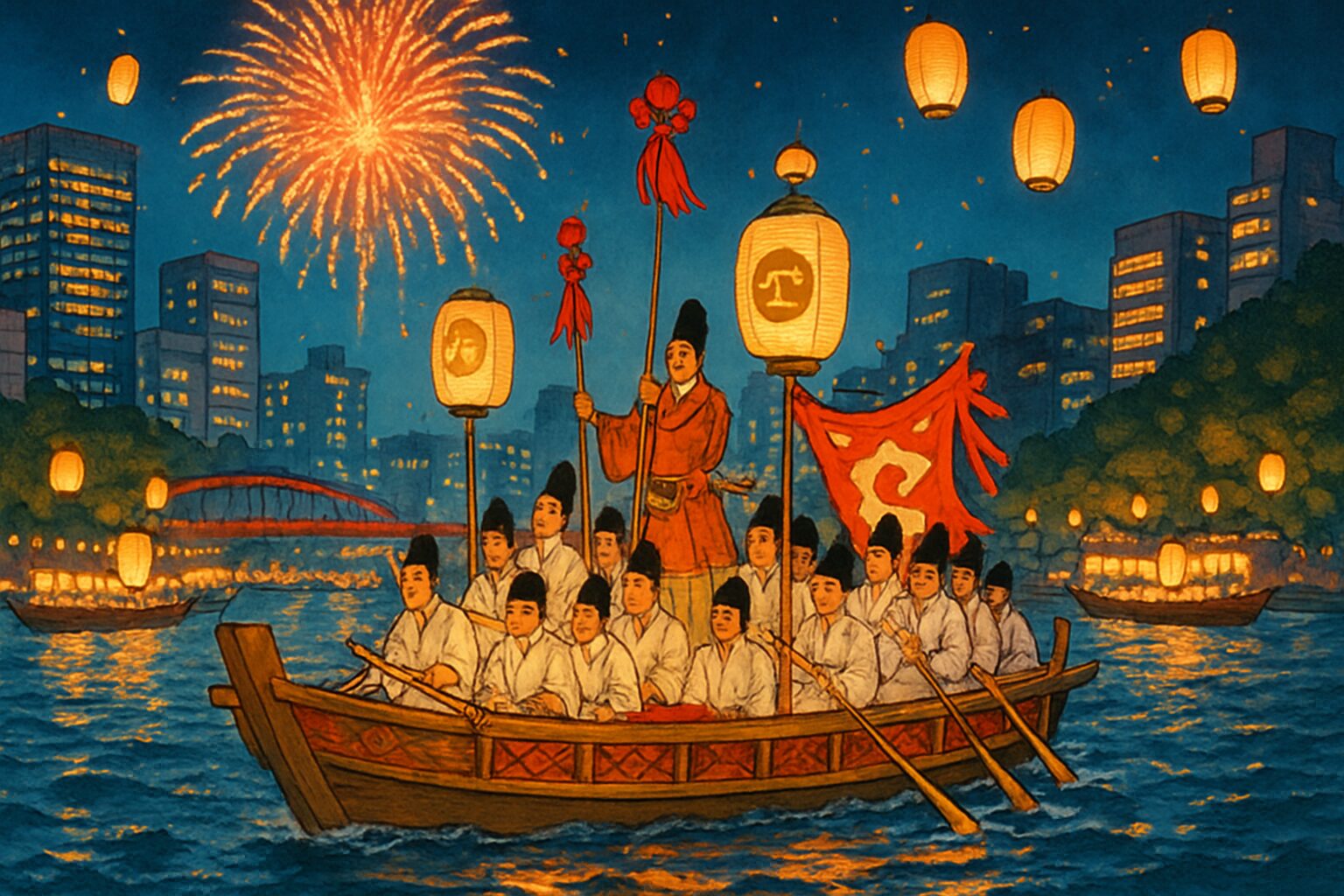
As dusk falls, the festival undergoes a magical change. The land procession reaches the Okawa River’s banks, and the celebration moves to the water for Funatogyo, an awe-inspiring river procession. This marks the climax of Tenjin Matsuri and, for me, one of the most beautiful sights in the world. The 3,000 participants board a fleet of around 100 boats, parading up and down the river.
These boats are not ordinary vessels. Each acts as a floating stage, adorned with hundreds of crimson and white paper lanterns, their gentle glow dancing upon the dark surface of the Okawa River and casting long, shimmering reflections that ripple with every current. The most important boat is the Goho-ren, carrying Michizane’s spirit, but other boats are equally fascinating. There are Bunraku boats, featuring traditional Japanese puppetry performances, Rakugo boats filled with storytellers, and stages for Noh theater. Many boats are sponsored by local companies competing to outshine each other with dazzling displays of light and music. As this fiery flotilla moves along the water, festival music, chants, and songs drift across the river, creating a dreamlike, ethereal atmosphere. It feels as if you’ve entered a celestial festival—a gathering of gods on a river of stars.
Hanabi: A Fiery Offering to the Heavens
As if the lantern-lit river wasn’t spectacular enough, the night concludes with a massive fireworks display, the Hanabi. But this is no ordinary fireworks show—it’s a sacred offering, a hanabi shinji, dedicated to entertaining Tenjin-sama. Thousands of fireworks burst into the night sky in breathtaking explosions of color and light, directly above the lantern-bedecked boats. Some fireworks are even crafted into unique shapes, like the red plum blossom, Michizane’s favorite flower. The visual symphony overwhelms in the best way: the brilliant explosions above, the serene river of lanterns below, and the thunderous booms echoing off the city’s buildings. It’s a finale that leaves you breathless—a perfect, explosive crescendo to a day of unforgettable pageantry.
The Spirit and Style of the Festival
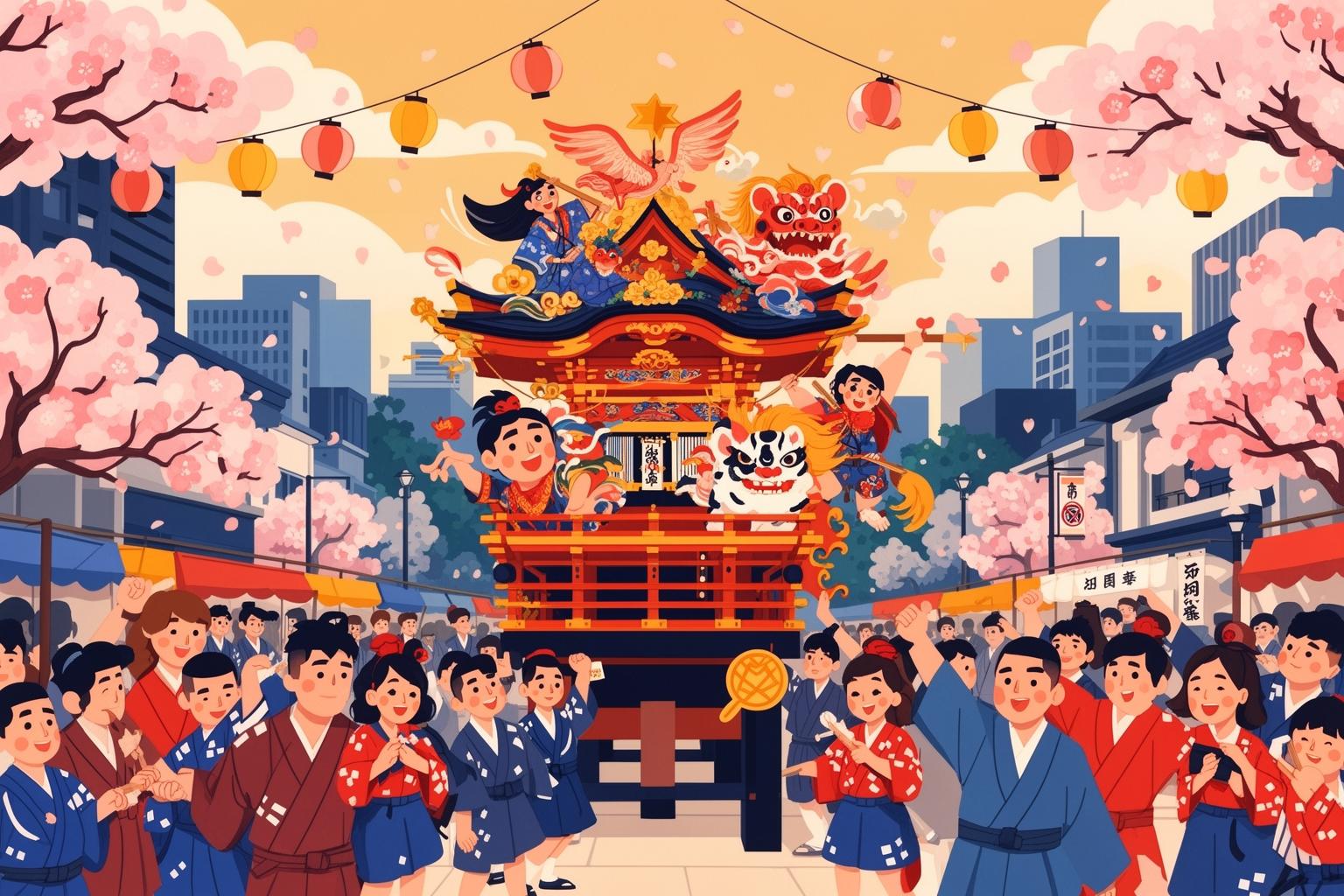
What truly sets the Tenjin Matsuri apart is the spirit that brings it to life. It goes beyond being a mere historical reenactment; it is a vivid expression of Osaka’s distinctive identity. The festival pulses with the energy of its people—their warmth, humor, and deep pride in their city. This spirit is perfectly embodied in the Osaka-jime, a distinctive rhythmic handclap heard throughout the festivities. It’s a lively, cheerful clap accompanied by a chant, used to seal business deals, celebrate achievements, and during the festival, to foster a sense of unity and shared happiness. Learning it and joining in immediately makes you feel part of the community.
To fully embrace the festival’s atmosphere, you need to dress the part! The streets are a stunning array of people clad in yukata, the light cotton summer kimono. The variety is breathtaking—from traditional indigo patterns to bright, modern floral designs. Couples, families, and groups of friends all roam the streets with fans in hand, wholeheartedly embracing the festive spirit. Don’t feel left out! Many shops in Osaka offer complete yukata rentals for the day, including wooden geta sandals and a charming little bag. It’s a fantastic way to engage rather than just watch—and trust me, it’s perfect for capturing unforgettable photos! You’ll immediately feel connected to the timeless tradition of a Japanese summer festival.
Your Guide to a Perfect Tenjin Matsuri
Navigating a festival of this size might feel overwhelming, but with a bit of preparation, it’s completely manageable. Here are my personal tips to help you get the most out of your visit.
The Essentials: When, Where, and How
First off: the Tenjin Matsuri takes place on the same dates every year—July 24th and 25th. Rain or shine, the festival continues! The main venues include Osaka Tenmangu Shrine and the section of the Okawa River between Tenjinbashi Bridge and Sakuranomiyabashi Bridge. Getting there is very convenient thanks to Osaka’s excellent public transportation. The nearest subway stations are Minami-morimachi on the Tanimachi and Sakaisuji Lines, and Osakatemmangu on the JR Tozai Line—both drop you right in the center of the festivities.
Finding the Best View
For the Rikutogyo (land procession) on the 25th, one prime spot is just outside the main gate of Osaka Tenmangu Shrine, where the procession begins. The energy there is palpable. Alternatively, find a place along the procession’s main route toward the river. Just be ready for crowds and arrive early to secure a good vantage point.
Regarding the Funatogyo (river procession) and fireworks, the bridges are the most sought-after spots, but they get extremely crowded and police often keep people moving. A better option is to settle in one of the nearby riverside parks, such as Kema Sakuranomiya Park, which provides a wonderful, slightly more relaxed view of the boats and fireworks. For guaranteed comfort and seats, you can purchase tickets for designated seating areas along the riverbank, though these sell out quickly, so booking ahead is essential!
A Feast for the Senses: Festival Food
No Japanese festival is truly complete without savoring the delicious offerings from the yatai food stalls! The entire area around the shrine and river transforms into a vast outdoor kitchen. Be sure to try Osaka’s signature dishes: takoyaki (grilled octopus balls) and okonomiyaki (savory pancakes). Also, look out for yakisoba (fried noodles), ikayaki (grilled squid on a stick), and for a sweet treat, choco banana or kakigori—a mountain of shaved ice topped with flavored syrup, perfect for a hot, humid July day!
My advice? Don’t be afraid to try something new—just point to whatever looks tasty. Bring cash, as very few stalls accept credit cards. And remember to stay well hydrated! Vending machines are plentiful, offering everything from water and green tea to a wide range of sodas.
What to Pack for the Day
Pack light and practical. Comfortable shoes are essential since you’ll be walking and standing a lot. Wear lightweight, breathable clothing—or better yet, your rented yukata! A folding fan (sensu) or paper fan (uchiwa) is invaluable for keeping cool. Bring a portable battery charger for your phone because you’ll want to capture countless photos and videos throughout the day. Lastly, a small towel or handkerchief is handy for wiping away summer sweat. Embrace the heat—it’s all part of the genuine summer festival experience!
Beyond the Festival: Exploring the Neighborhood
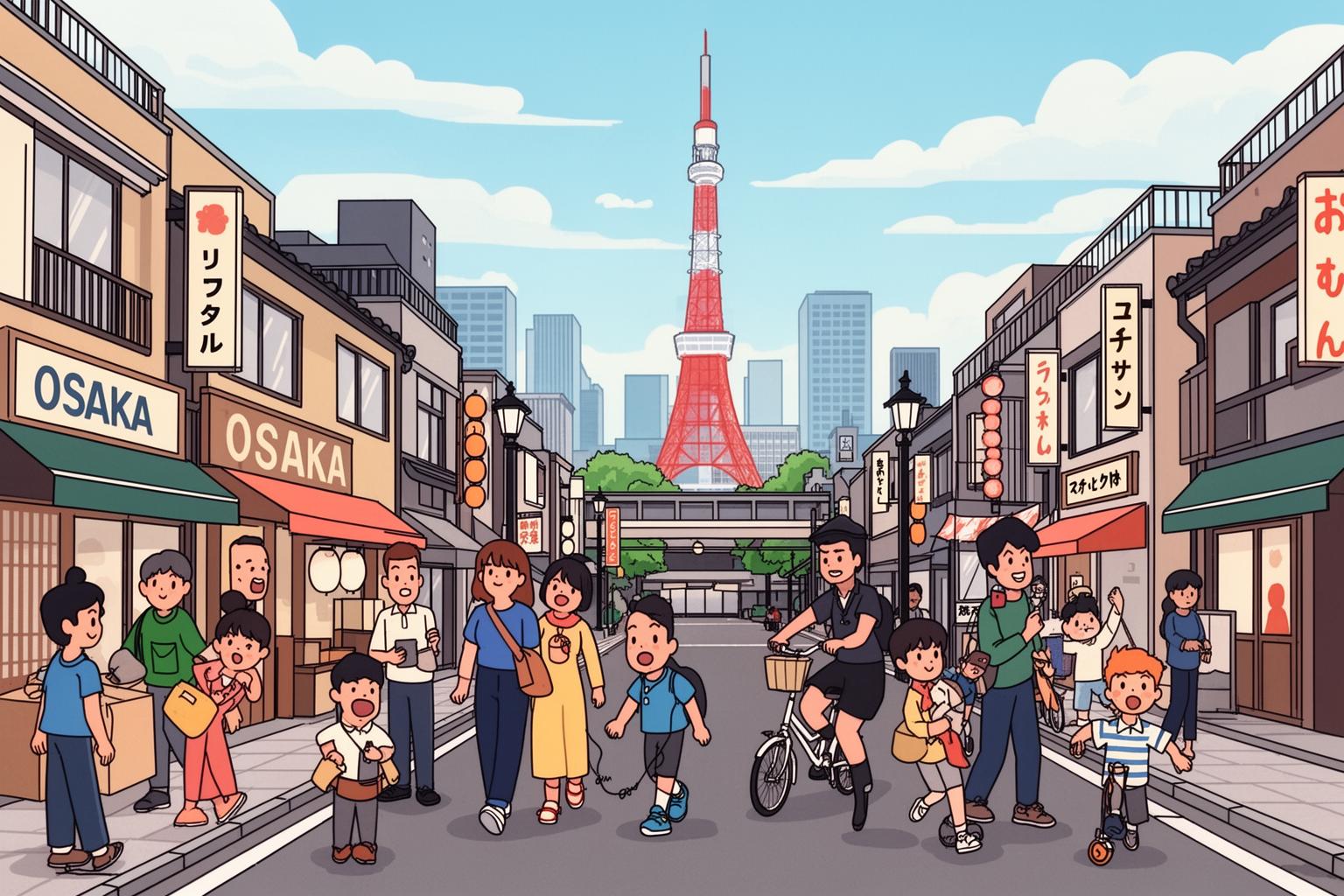
While the festival is the main attraction, the area surrounding Osaka Tenmangu is delightful to explore. Take a walk along Tenjinbashisuji Shopping Street. Stretching 2.6 kilometers, it is the longest shopping street in Japan and offers a captivating glimpse into local life. You’ll discover everything from traditional knife shops and tea vendors to quirky cafes and contemporary boutiques. It’s an excellent place to find unique souvenirs and experience the everyday rhythm of Osaka.
For a touch of history, visit the nearby Osaka Museum of Housing and Living. It features a life-sized recreation of an Edo-period Osaka townscape, providing great context for the historical costumes worn during the festival procession. For a tranquil moment, head to Nakanoshima Park, a beautiful green island nestled between two rivers. Known for its rose garden, it’s an ideal spot to relax before the evening festivities ramp up.
A Connection Across Time
Standing by the Okawa River, watching lantern-lit boats drift past as fireworks illuminate the sky, you feel a deep sense of connection. You realize you are witnessing a tradition that has endured for over a thousand summers. You share a moment of joy with more than a million others, all part of a living story that links modern, bustling Osaka to its ancient, sacred past. The Tenjin Matsuri is far more than a festival; it’s a beautiful, chaotic, and profoundly moving celebration of a city’s history, its faith, and its enduring spirit. It’s the vibrant, thundering heartbeat of Osaka in summer, an experience that lingers long after the final firework fades from the sky. It’s a rhythm you’ll never forget.