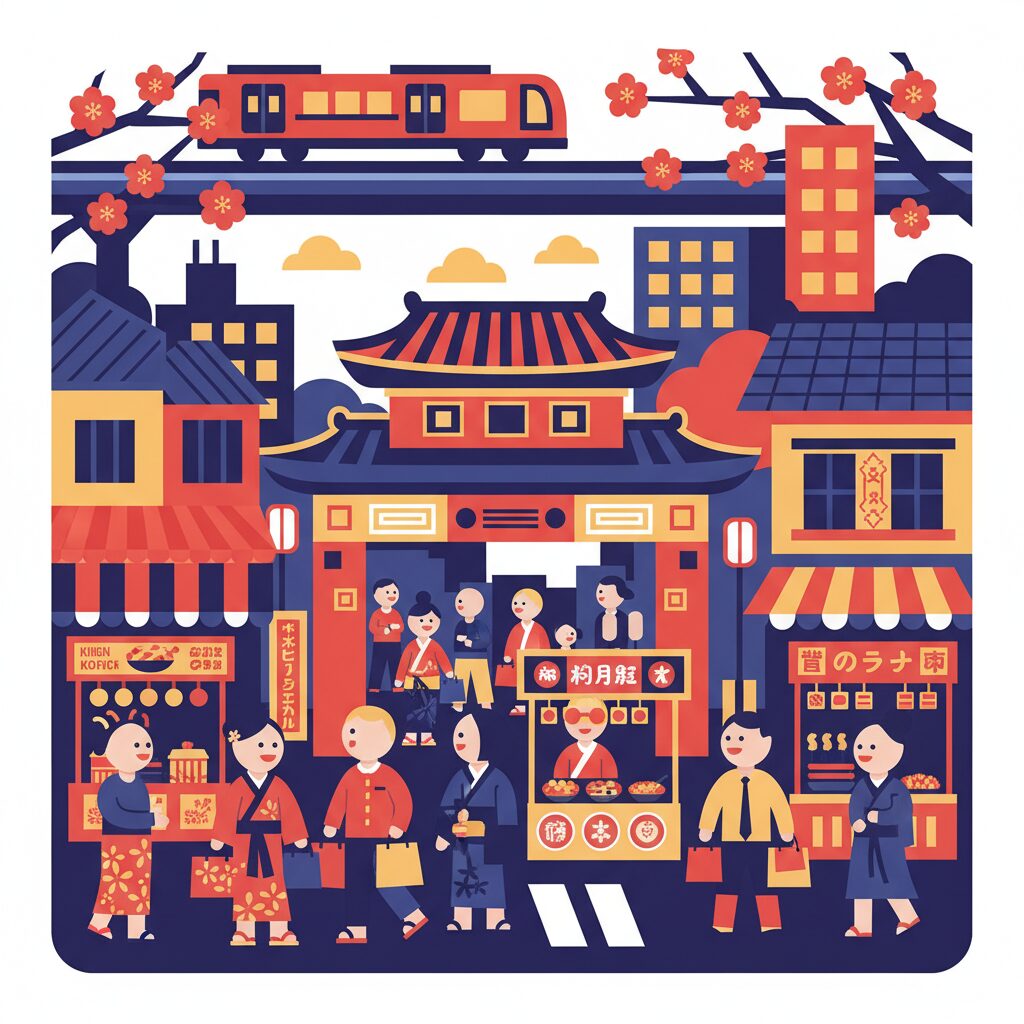
Step off the train at Tsuruhashi Station, and Japan, as you thought you knew it, dissolves. It doesn’t fade gracefully; it’s immediately, violently replaced. The air, thick and heavy, hits you first. It’s not the neutral, sanitized air of a Tokyo subway platform. This is air with texture, with weight. It carries the savory, fatty smoke of grilled meat—yakiniku—billowing from countless doorways, a scent so pervasive it seems to emanate from the very asphalt. Woven through it is the sharp, fermented tang of kimchi, a spicy promise that cuts through the richness. Below that, a baseline of dried fish, savory broths, and something vaguely sweet, like roasting chestnuts. The sound comes next. A cacophony. The rhythmic clatter of the train you just left is swallowed by a wall of human noise: vendors hawking their wares in a gruff, melodic Osaka dialect; the high-pitched chatter of teenagers navigating narrow alleys; the sizzle of meat on a hundred grills; and, underneath it all, a constant, energetic hum of commerce and conversation in both Japanese and Korean. This isn’t the Japan of quiet temples and minimalist design. This is Tsuruhashi. And to understand this place is to understand a fundamental, often overlooked, truth about Osaka itself.
For many foreigners, especially those whose image of Japan was forged in the polished districts of Tokyo or the serene landscapes of Kyoto, Tsuruhashi can be a shock. It feels chaotic, almost lawless. It’s a labyrinth of covered shopping arcades, or shotengai, that branch off from the station in every direction, seemingly without logic or design. But this isn’t just a place to eat Korean barbecue. Tsuruhashi is a living museum of Osaka’s history, a testament to its identity as a city of merchants, immigrants, and pragmatists. It’s a place where the city’s soul is laid bare, stripped of the politeness and pretense you might find elsewhere. This isn’t a tourist attraction designed for consumption; it’s a functioning, breathing neighborhood where generations of a community have carved out a life, and in doing so, have created one of the most uniquely Osakan spaces in the entire city. To navigate its alleys is to learn how Osaka thinks, how it does business, and how it has built its identity on the foundation of what is practical, what is profitable, and, above all, what is delicious.
While Tsuruhashi offers a raw, unfiltered look at Osaka’s soul, for a more structured analysis of another iconic district, consider reading this honest guide to the pros and cons of visiting Dotonbori.
The Architecture of Commerce: Navigating the Labyrinth
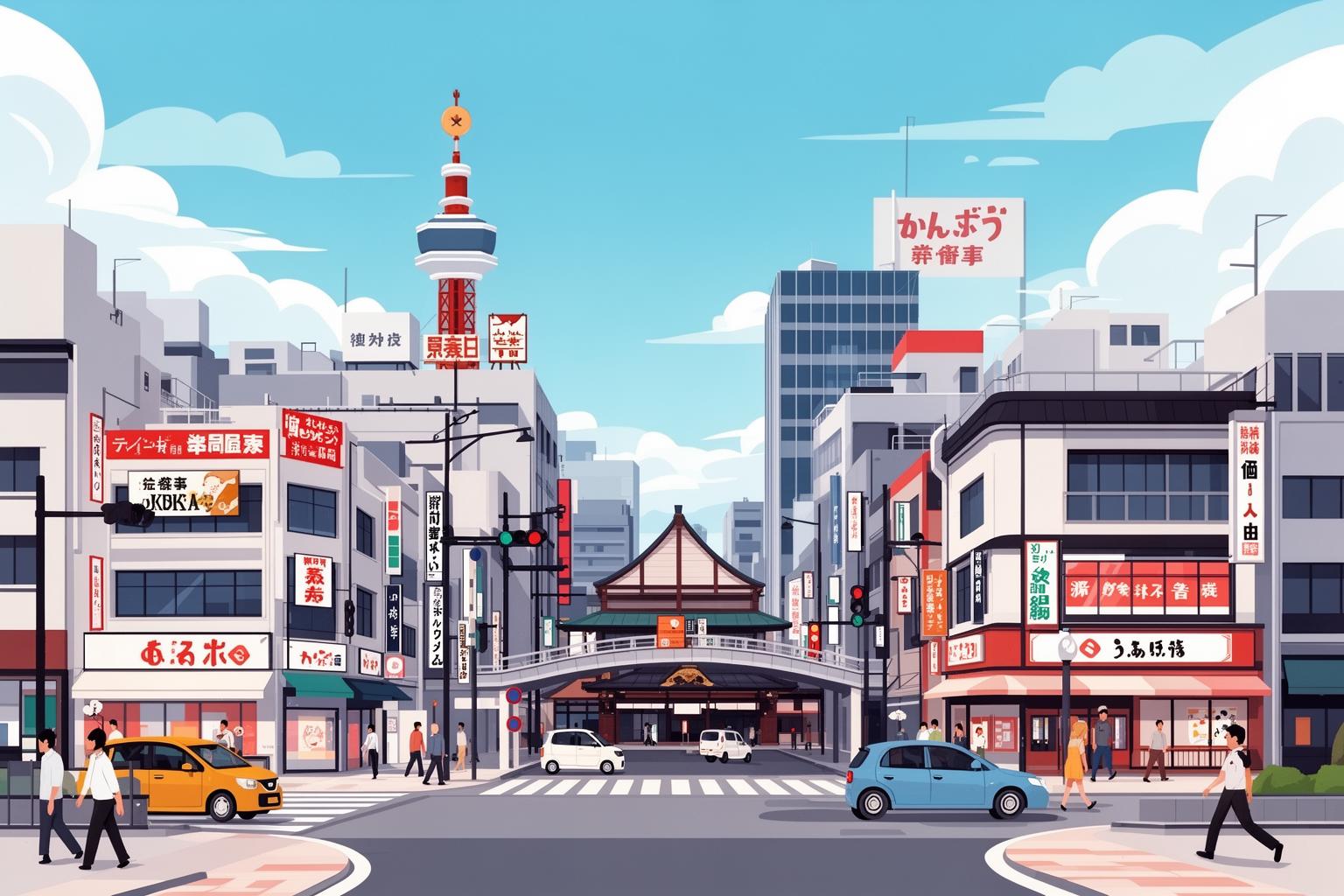
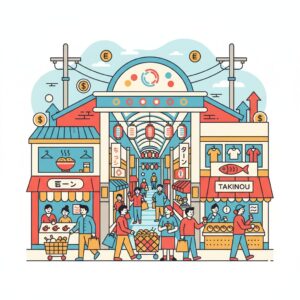
To truly understand Tsuruhashi, you must first familiarize yourself with its physical form. The area is dominated by an extensive network of shotengai, covered shopping arcades that serve as the lifeblood of many older Japanese neighborhoods. Yet, the Tsuruhashi shotengai feel distinct. They are tighter, dimmer, and more tangled than most. The moment you step beneath the corrugated plastic roofing, daylight becomes more of a suggestion than a reality. The air stills, trapping smells and sounds, intensifying the experience. These are not grand, airy passageways designed for leisurely strolling. Instead, they are narrow, functional corridors of commerce, constructed with a single purpose: to maximize business potential within limited space. The floors are worn concrete, the walls a patchwork of metal siding and aged tile, while above, a chaotic tangle of electrical wiring and fluorescent lights hums continuously. This is architecture born of necessity, not aesthetics, reflecting the Osakan mindset profoundly.
More Than a Market: The Shotengai as a Living Organism
The Tsuruhashi market is not a single, cohesive entity. Rather, it is a collection of smaller markets and alleys that have merged over decades, each carrying its own subtle character. You might find yourself in the main market, famous for kimchi and butcher shops, then take a sharp, unmarked turn into a section devoted entirely to colorful Korean dresses, the chima jeogori. Another turn leads into a passage so narrow your shoulders nearly brush both sides, lined with tiny stalls selling pig’s feet, blood sausage, and various inscrutable offal. This organic, almost haphazard layout directly reflects how the community developed. It wasn’t planned by a city developer with blueprints and a vision. Instead, individual families built it, shop by shop, generation by generation. A butcher set up here, a fishmonger there, a clothes seller next door. They created what they needed, where they could, forming a living organism that has adapted and evolved over time.
This sharply contrasts with commerce in Tokyo. Tokyo neighborhoods might have clean, orderly shotengai, but often real commercial energy has shifted to towering, multi-story shopping complexes owned by massive corporations. These places are efficient, predictable, and sterile. Tsuruhashi stands as the antithesis of this: defiantly human-scaled, messy, and unpredictable. There is a sense that the market directly extends from the people who run it. Each shopkeeper’s personality is stamped on their small patch of real estate. There are no uniform storefronts or corporate branding guidelines—only the raw, unfiltered expression of individual enterprise. This environment fosters a distinct kind of shopping. It’s not about anonymous consumption; it’s about interaction, exploration, and the thrill of discovery. You don’t just visit Tsuruhashi to buy something—you go to experience the market itself.
The Logic of Chaos: Why Everything is Everywhere
A first-time visitor might be confused by the apparent lack of organization. A high-end butcher specializing in marbled Kobe beef might sit right next to a humble stall heaped with spicy pickled squid. Across the way, a shop blasting the latest K-pop hits and selling idol merchandise shares a wall with a quiet, old-fashioned pharmacy. This seeming chaos actually follows its own logic—the logic of a community built from the ground up. In a planned commercial district, zoning separates food, clothing, and services. In Tsuruhashi, the organizing principle is history and family. The K-pop shop exists because a younger generation of a market family decided to pivot their business. The butcher remains because his grandfather set up the shop seventy years ago, and the business has long been a community cornerstone.
This organic arrangement reflects a core Osakan trait: a deep-rooted belief in pragmatism and individual hustle. The city has always been defined by its merchants, the akindo. Unlike the samurai-dominated culture of Edo (Tokyo), where social hierarchy and strict rules governed life, Osaka was a place where success depended on making deals, innovating, and meeting people’s needs. The layout of Tsuruhashi is a physical embodiment of this spirit—a monument to countless individual decisions, adaptations, and risks taken over the last century. It tells a story of resilience, of finding a niche and making it work no matter how unconventional the location. The market thrives not despite its chaos, but because of it. The constant juxtaposition of old and new, traditional and trendy, creates an energy impossible to replicate in planned environments. It serves as a reminder that a city is not just a collection of buildings, but a network of human relationships and histories layered atop one another in a beautifully complex mess.
The Sound of Tsuruhashi: Language, Laughter, and Haggling
Close your eyes in Tsuruhashi market, and you can navigate the neighborhood just by listening. The soundscape is as rich and intricate as the array of aromas. It’s a place of constant verbal exchange, a sharp contrast to the often-quiet politeness found in public spaces elsewhere in Japan. The dominant noise is human voices—a symphony of languages and dialects narrating the community’s story. Here, silence isn’t valued; it’s a missed chance for connection, a sale, or a shared laugh. This auditory environment is one of the defining features that distinguish Tsuruhashi—and by extension, Osaka. It’s a city that speaks candidly, loudly, and with emotion.
A Symphony of Voices: Japanese, Korean, and Osaka-ben
The primary language you hear is, naturally, Japanese, but it has a distinct flavor. It’s Osaka-ben, the regional dialect, delivered with a rapid and melodic rhythm that can be surprising to those used to the flatter, more formal tones of standard Tokyo Japanese. Osaka-ben is expressive, straightforward, and filled with unique vocabulary. Phrases like meccha oishii (incredibly delicious) and honma ka? (really?) are exchanged freely between vendors and customers. The dialect carries a warmth and earthiness; it’s the language of merchants and comedians, not bureaucrats or emperors. It’s crafted for quick, clear, and often humorous communication.
Overlaying this is the sound of Korean. Older shopkeepers, first- or second-generation Zainichi residents, speak among themselves and with Korean-speaking customers in their native tongue. The sounds flow rhythmically, continually reminding listeners of the neighborhood’s deep cultural roots. Younger people might seamlessly mix Japanese and Korean in a single sentence, a form of code-switching that reflects their dual identity. This bilingual environment is not a recent trend brought on by the popularity of K-dramas but the outcome of a century’s history, with a community preserving its heritage while fully woven into Osaka’s fabric. Such an effortless language blend is rare in much of Japan, which often prides itself on homogeneity. In Tsuruhashi, linguistic diversity isn’t a novelty; it’s simply the everyday reality.
The Art of the Deal: Osaka’s Commercial Spirit in Action
The interactions between buyers and sellers in Tsuruhashi resemble street theater. This is far from the quiet, deferential customer service seen in Japanese department stores, where staff bow deeply and speak in highly polite keigo. Here, the exchanges are much more direct and personal. A butcher, noticing your hesitation, might shout, “Nee-chan, kore oishii de! Yakiya!” (“Hey sis, this is delicious! Grill it!”). A kimchi vendor, an obachan with a sparkle in her eye, won’t wait for you to ask—she’ll thrust a toothpick with a piece of pickled radish into your hand, insisting, “Tabete mite!” (“Try it!”). This isn’t seen as aggressive or rude but is expected and welcomed as the proper way to do business.
This lively interaction is at the heart of the Osakan merchant spirit, the akindo no tamashii. Business is not a cold, impersonal exchange; it’s a relationship. Vendors aim not only to sell you a product but to impress you with their expertise, personality, and the quality of their goods. They take great pride in what they offer and want you to understand and appreciate it. This often involves playful banter, some friendly back-and-forth, and occasionally a bit of haggling, especially when buying in bulk. While serious price negotiation is less common than in the past, the spirit lives on in the practice of omake—giving a little something extra for free as a goodwill gesture. Buy three types of namul (seasoned vegetables), and the vendor might slip in a scoop of a fourth, with a wink and a “Kore wa saabisu” (“This one’s on the house”). This is how customer loyalty is nurtured in Osaka—not through loyalty cards or point systems, but through genuine human connection, shared laughter, and the feeling you got a good deal from someone you trust.
The Taste of a Community: Beyond Yakiniku
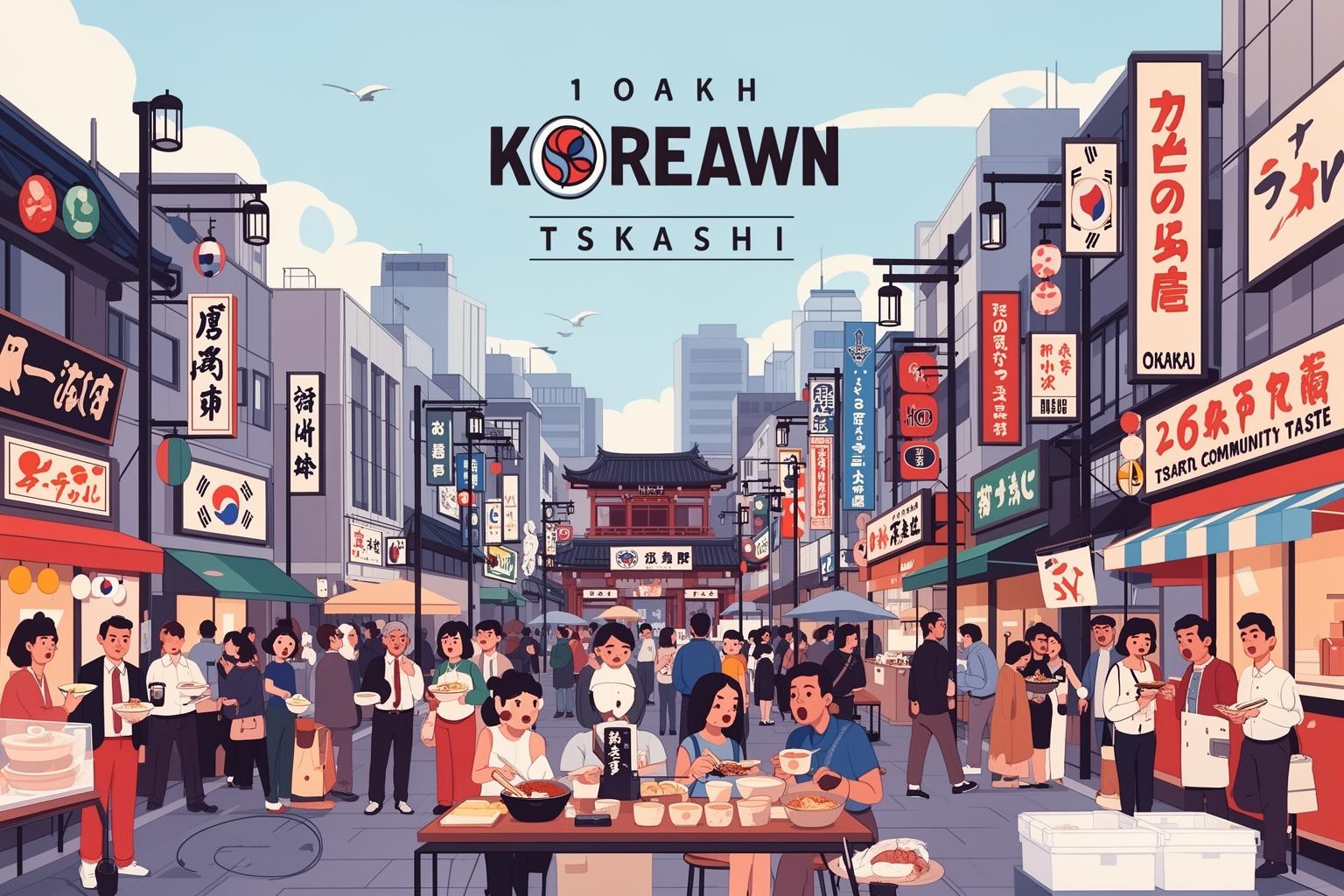
While the aroma of yakiniku may be Tsuruhashi’s most well-known sensory hallmark, reducing the neighborhood’s culinary identity to grilled meat alone overlooks the bigger picture. Food here is not merely nourishment; it embodies history, culture, and identity transformed into something edible. The flavors are bold, pungent, and unapologetic—much like Osaka itself. This isn’t the delicate, subtle fare of Kyoto kaiseki, where balance and seasonal aesthetics are key. Instead, it’s cuisine designed to deliver a powerful, satisfying impact. It is food for the people, deeply rooted in tradition and perfected over generations of family recipes. Tasting Tsuruhashi’s fare is to savor the story of its community, one spicy, savory, and profoundly satisfying bite at a time.
Kimchi: The Heartbeat of Tsuruhashi
At the very center of Tsuruhashi’s culinary essence is kimchi. The market hosts dozens of specialized kimchi shops, each a tribute to the craft of fermentation. Passing by these shops offers a visual and olfactory feast. Large stainless steel and plastic containers brim with glistening heaps of red. But to think of kimchi as merely spicy pickled cabbage is a serious misconception. The classic hakusai (napa cabbage) kimchi is there, but so are kkakdugi (cubed daikon radish), crunchy and refreshing; oi sobagi (stuffed cucumber kimchi), crisp and spicy; and more adventurous varieties crafted with squid, octopus, or oysters, lending a briny marine depth. Each shop has its own distinctive recipe for the spice paste, a closely guarded secret passed down from mother to daughter. Some are fiercely hot, others offer a subtle fruitiness from apple or pear, while some possess a deep, pungent complexity from fermented shrimp paste. The obachan overseeing her kimchi stall is not just a vendor; she is an artisan and the guardian of her family’s culinary heritage. Purchasing kimchi here is an essential Tsuruhashi ritual. You don’t simply point at a container; you engage. You share what you want—something to eat tonight, or something to ferment for weeks to come for stew. They offer a taste, watching your reaction closely. The transaction is a dialogue, an exchange built on trust. You are not just buying a product; you are acquiring a piece of their family’s history.
Yakiniku: Smoke, Fire, and Communal Feasting
Naturally, one cannot overlook the yakiniku. The streets around the market are packed with grilled meat restaurants, ranging from tiny, standing-only counters to larger, livelier establishments. The air is forever tinged with fragrant, meaty smoke. Yet the story of yakiniku in Tsuruhashi is closely tied to the history of the Zainichi Korean community and Osaka’s practical spirit. After World War II, when food was scarce, many Zainichi Koreans began grilling and selling cow parts usually discarded by the Japanese—the offal, or horumon. The name derives from the Kansai dialect phrase hōru mono, meaning “discarded things.” This represents the ultimate Osakan spirit of mottainai (avoiding waste). Why throw away something perfectly edible and delicious? The Zainichi community transformed these unwanted cuts—intestines, tripe, liver, heart—into a cherished culinary tradition. Today, Tsuruhashi yakiniku restaurants are famed for their horumon, but they also serve every other cut of beef imaginable. Eating here is a visceral, communal experience. You sit at a small table with a grill in the center, and the raw meat arrives for you to cook yourself. The room is lively, filled with the sizzle of meat, clinking beer mugs, and boisterous conversation. It’s not a refined dining affair; it’s a primal one—centered on the pure joy of fire, meat, and shared company. It’s about letting your guard down, getting your hands dirty, and enjoying food with an unpretentious enthusiasm that is thoroughly Osakan.
More Than a Meal: Food as Identity
Beyond kimchi and yakiniku, Tsuruhashi’s alleys offer a rich encyclopedia of Korean cuisine, all seamlessly integrated into the local Osakan diet. Vendors sell chijimi or pajeon (savory pancakes) fresh from the griddle, stuffed with green onions, seafood, or kimchi. There are shops specializing in kimbap, Korean seaweed rice rolls akin to Japanese maki sushi, perfect for a quick, portable meal. Stalls offer hotteok, sweet, chewy pancakes filled with brown sugar, cinnamon, and nuts, especially popular in colder months. Each dish tells part of the community’s story. For Tsuruhashi’s Zainichi residents, this food is a direct, tangible link to their cultural heritage—a way to preserve and celebrate their identity in a country where they have often faced marginalization. For the wider Osaka population, it has simply become… Osaka food. The lines between “Japanese” and “Korean” cuisine here are blurred. If it tastes good and is lovingly made by local hands, it belongs. This culinary blending is a powerful metaphor for Osaka’s character—a city with a remarkable ability to absorb outside influences, especially from nearby Asian neighbors, and make them its own. It’s a cultural metabolism that values flavor and substance over purity and origin, crafting a rich, complex, and incredibly delicious local identity.
The People of the Market: Layers of History and Identity
To truly grasp Tsuruhashi, you must look beyond the food and the bustling storefronts to see the people. This neighborhood is neither a theme park nor a recent development; it is a community shaped by over a century of hardship, resilience, and deep-rooted history. The story of Tsuruhashi is closely intertwined with the history of the Zainichi Korean population in Japan, a narrative often misunderstood or overlooked in mainstream Japanese society. Acknowledging this history is essential, as it provides context for the neighborhood’s distinct character and helps explain the very nature of Osaka’s social fabric.
Understanding the Zainichi Story
The term Zainichi Kankoku-Chōsenjin (在日韓国・朝鮮人), commonly shortened to Zainichi, refers to long-term residents of Japan of Korean descent. Their history in Japan is complex and fraught with challenges. Most trace their origins to Japan’s colonial rule over Korea (1910-1945), during which millions of Koreans were brought to Japan—many forcibly—to work as laborers in mines and factories supporting the Japanese war effort. Osaka, as a major industrial center, became home to a significant portion of these communities. After the war and Korea’s liberation, many Koreans returned home, but a considerable number stayed for various reasons—some had established lives in Japan, some lost their homes in Korea, and the political turmoil and division of their homeland made returning difficult or impossible. These individuals and their descendants, now into the fourth and fifth generations, are the Zainichi. Despite being born and raised in Japan, speaking Japanese as their first language, and being culturally Japanese in many respects, they were not automatically granted Japanese citizenship. For decades, they faced systemic discrimination in employment, housing, and marriage. Tsuruhashi, located in Ikuno Ward, emerged as a place where this community could not only survive but thrive. The market became an economic haven. Barred from many traditional jobs, people opened their own businesses—such as butcher shops, restaurants, and clothing stores. It grew into a self-sufficient ecosystem grounded in strong community bonds and a remarkable work ethic. The energy, noise, and fierce pride you sense in Tsuruhashi today are direct legacies of this history of struggle and perseverance. It is far more than a trendy Koreatown; it symbolizes a community’s enduring spirit.
The Osaka Embrace: A City of Outsiders?
The history of the Zainichi community does not stand alone; it resonates with Osaka’s broader historical identity. While modern Japan often portrays itself as a unified culture, its history is much more regional and complex. Osaka has long defined itself in opposition to Japan’s political and cultural centers—first the imperial court in Kyoto, then the shogunate in Edo (Tokyo). Known as the nation’s kitchen (tenka no daidokoro), Osaka was a city of merchants, artisans, and entertainers. Its social hierarchy valued wealth and skill over noble birth. This fostered a culture that was pragmatic, less formal, and more accepting of those who did not fit the rigid samurai-dominated social order. It was a city of outsiders—a place where one’s background mattered less than their ability to contribute to the city’s commercial vitality. This historical background helps explain why a large, visible community like the Zainichi Koreans was able to establish deep roots in Osaka. Although discrimination did exist, the city’s core character—its focus on business, down-to-earth nature, and identity as a cultural underdog—offered a more fertile environment for such a community to flourish compared to the more conservative and class-conscious atmospheres of Tokyo or Kyoto. Among Osakans, there is a tacit understanding of being “not Tokyo.” This creates a unique social compact that likely accommodates otherness, provided it is accompanied by a strong work ethic and contributes to the city’s energetic, chaotic vibe. The famed friendliness of Osakans is therefore not merely superficial. It is grounded in this history—a transactional yet genuine openness toward others, a willingness to engage and build relationships, because for centuries, this was the city and its people’s key to survival and prosperity.
Tsuruhashi Today: Navigating Tradition and Trend
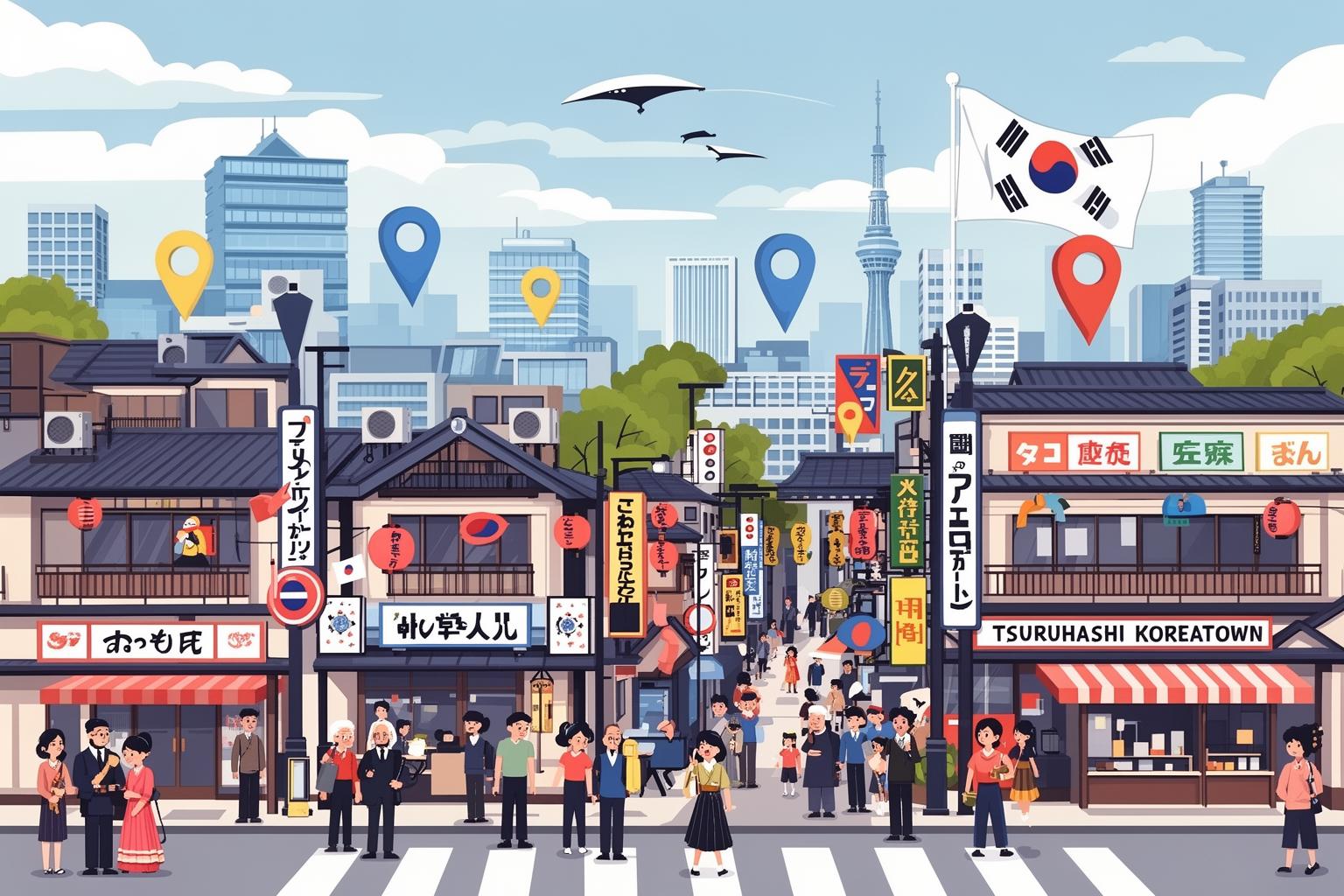
The Tsuruhashi of the 21st century is a neighborhood full of intriguing contradictions. It exists caught between its rich historical roots and the powerful global currents of contemporary pop culture. The traditional shotengai, filled with the scents of fermented bean paste and grilled offal, now stands alongside streets that resemble a miniaturized version of Seoul’s Myeongdong district. This vibrant mix of old and new does not signal the neighborhood losing its essence. Instead, it represents the latest phase in its long tradition of adaptation and practical evolution—an approach that is, once again, distinctly Osakan.
The Hallyu Wave Meets the Shotengai
Just a few blocks from the primary covered market, the atmosphere shifts noticeably. Narrow, shadowy alleys give way to wider streets lined with brightly illuminated shops. The calls of produce vendors yield to the pulsating beats of K-pop music. This is Tsuruhashi’s new face, driven by the Hallyu, or Korean Wave—the global surge in popularity of South Korean pop music, dramas, and cosmetics. Here, stores overflow with merchandise featuring BTS, BLACKPINK, and other idol groups. Entire shops focus on Korean skincare and makeup, their shelves adorned with vibrant packaging of creams and serums. Trendy cafes offer colorful drinks and desserts like bingsu (shaved ice) and dalgona coffee, crafted to be Instagram-ready. The crowd is noticeably younger, filled with teenagers and young adults from across the Kansai region drawn to immerse themselves in contemporary Korean culture. This fresh layer of Tsuruhashi feels worlds apart from the gritty, old-school market just around the corner. It is clean, modern, and propelled by global trends rather than local tradition. Yet, it undeniably forms part of the neighborhood’s current identity, injecting new energy and a unique form of economic vitality into the area.
The Tension of Change
This blend of old and new is not without friction. The two worlds clearly collide. Groups of high school students clutching bags of K-pop posters pass by elderly butchers meticulously trimming beef. Some long-standing shop owners in the traditional market view these changes with cautious curiosity and skepticism. They notice the influx of young visitors who flock to the area but avoid entering the old market, treating it more as a photo backdrop than a place to shop. There is worry that the authentic neighborhood culture might be watered down, turned into a caricature for mass consumption.
Nonetheless, the prevailing Osakan pragmatism tends to prevail. Change is unavoidable, and if it brings more visitors and revenue, it should be managed, not resisted. Many businesses are evolving: a traditional Korean restaurant might introduce a trendy cheese dak-galbi to appeal to younger diners, while a kimchi shop could begin selling its products in smaller, modern packages. This is not a tale of traditional culture being destroyed by gentrification, as seen in other major cities. Rather, it is a more nuanced negotiation. In Tsuruhashi, the new does not simply replace the old; it grows alongside it, forming a vibrant, sometimes chaotic, and often contradictory environment. This capacity to embrace new trends without losing its core identity may be Tsuruhashi’s greatest asset. The neighborhood recognizes that survival depends on adaptation. The akindo spirit is not about freezing the past in time; it’s about figuring out how to do business tomorrow and the day after.
To stroll through Tsuruhashi is to experience a living symbol of Osaka itself. It’s a place that defies easy classification. It is both Japanese and Korean. It is both old and new. It embodies hard work and deep heritage, while also offering youthful enjoyment and transient trends. It overwhelms your senses with its aromas, sounds, and bold flavors. It operates on its own unique logic—one shaped by commerce, community, and an unapologetic passion for life’s pleasures. It doesn’t put on a polished facade for visitors; it shows itself as it is, take it or leave it. In Tsuruhashi, you encounter the raw essence of Osaka: pragmatic, resilient, and deeply human. It’s loud, a bit disorderly, and utterly unforgettable.